Ruin-hunting in Delhi
Channeling Indiana Jones in the heart of one of the world’s largest cities
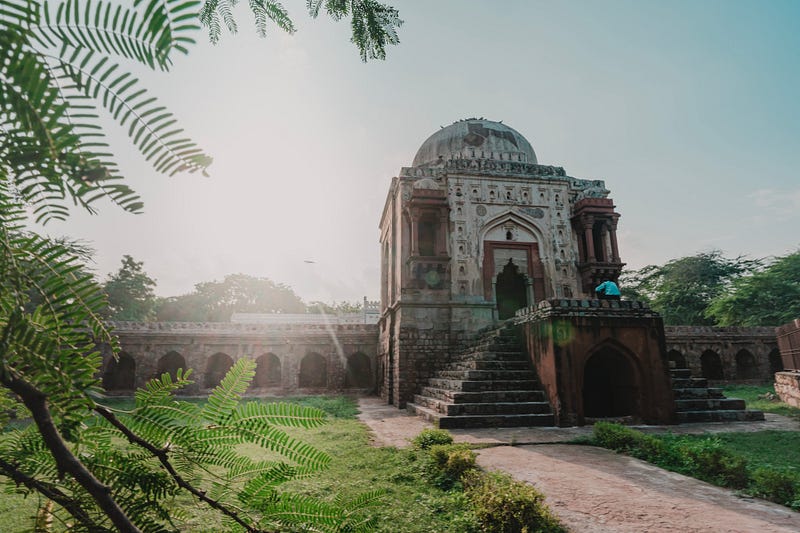
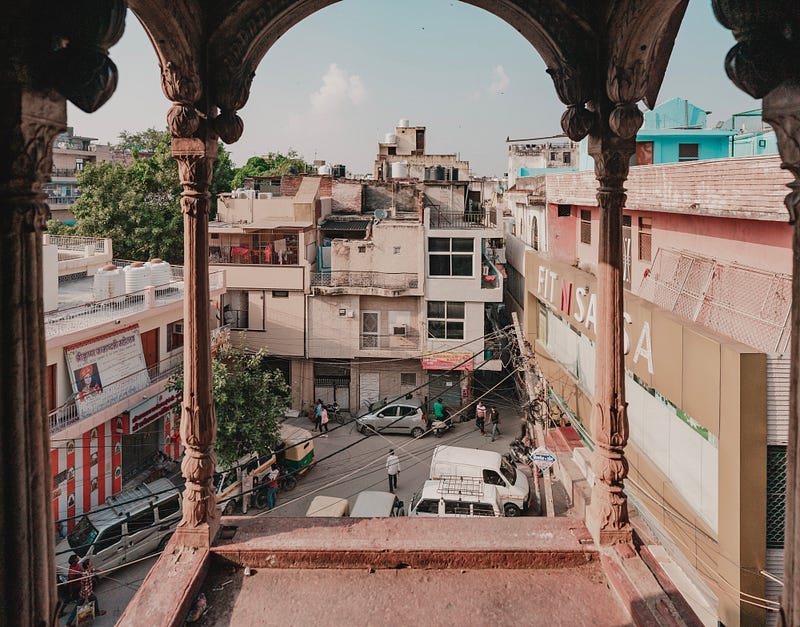
Riding doubled up on Ajaz’s scooter, we flew through the narrow maze of alleyways that is the Malviya Nagar neighborhood of New Delhi. Even Ajaz — born and raised in New Delhi — hadn’t been to the lost mosque we were seeking, and he asked for directions at every corner as we neared our destination. We dismounted outside an old, nondescript stone wall opposite unassuming apartment blocks wreathed with a rats’ nest of powerlines. The incessant honking of horns and eruptions from the surrounding city ring out as we take off our helmets, ascend the worn steps, and pass through a threshold into another time.
In a significant world capital with such rich history, it can be hard not to feel like you’re sharing each experience with the masses. Long lines of tourists armed with selfie sticks; having to keep track of various admission tickets and locker tokens… But if you know the right places to look, you can see Delhi in such a way that makes you feel like you’re uncovering something lost to history. I relied gratefully on the expertise of a local: my friend, Ajaz. I’ll introduce him next, and then share with you a few of my favorite unknown monuments that we explored together. I omit many, however, as an entire book could be written to catalog these treasures.
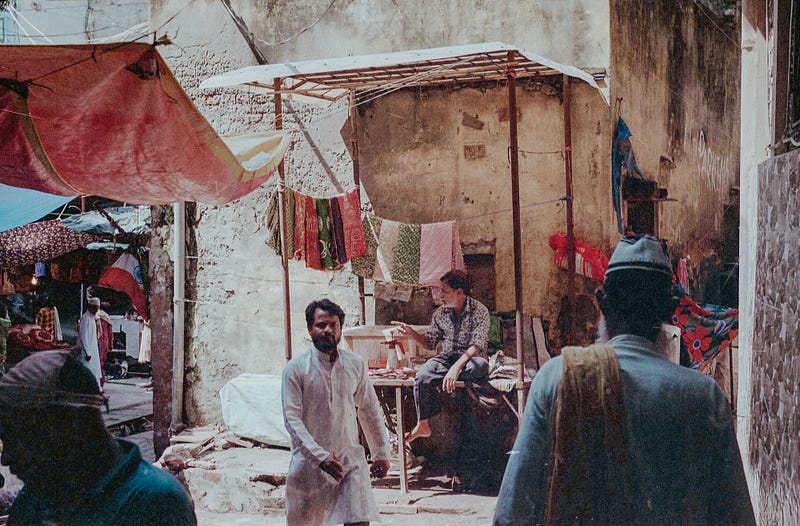
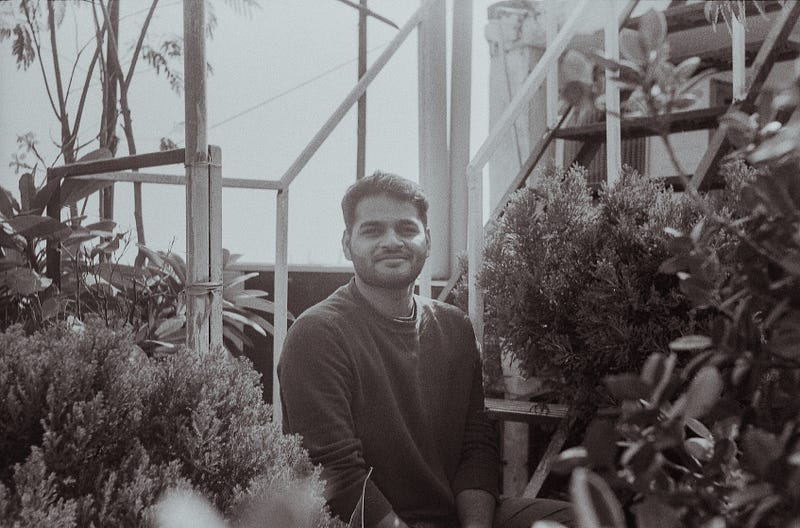
I had first met Ajaz four years ago, on my first trip to Delhi, and he had been my tour guide through the sprawl of old and new and destitute that is Delhi. In a city of such unparalleled intrigue, beauty and tragedy, having a studious, local guide is the only way to come away with any semblance of understanding. At the time I was living in Delhi myself, and looking for work — and Ajaz was hoping to scout out untouched and undiscovered monuments, in order to be able to provide much more intimate and unique tours for his business. And so several times a week, he would pick me up on his scooter, and we’d zoom through the lush boulevards and crowded alleys hunting for monuments to photograph.
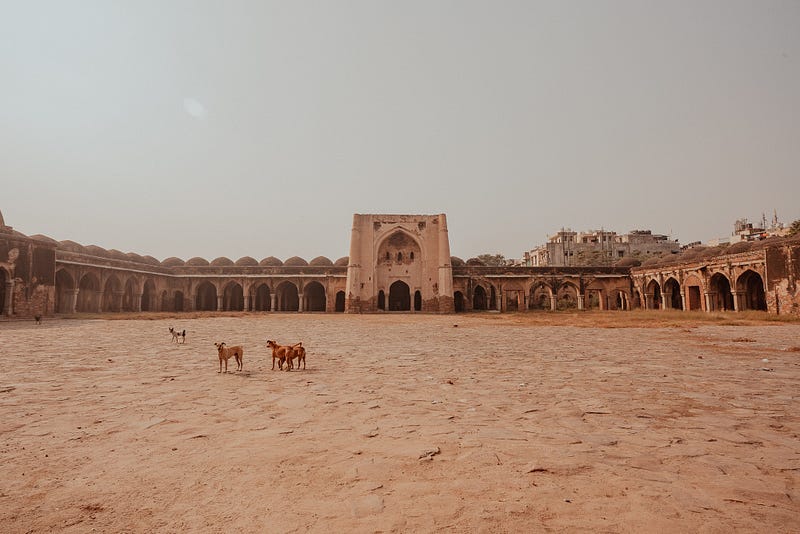
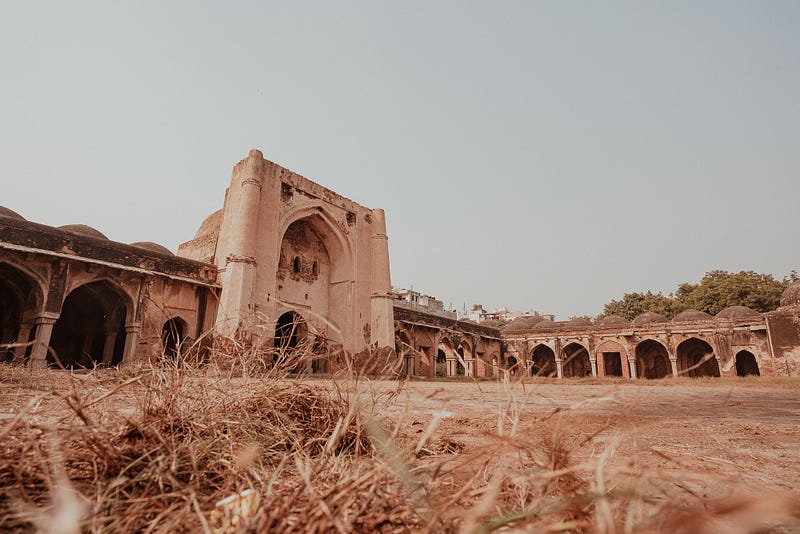
One of Delhi’s largest mosques — Begumpur is an unlikely sanctuary in the middle of the bustling city. Once you step inside, you feel transported to another place and time, as the din of Delhi slowly dies away, and you share the sprawling complex with only a pack of dogs and a loiterer or two (in our case glassy-eyed druggies, Ajaz suspects). It’s truly haunting to try and picture this ruined mosque at the time of its pinnacle and imagine the masses of worshippers who would have filed into this mosque on a daily basis.
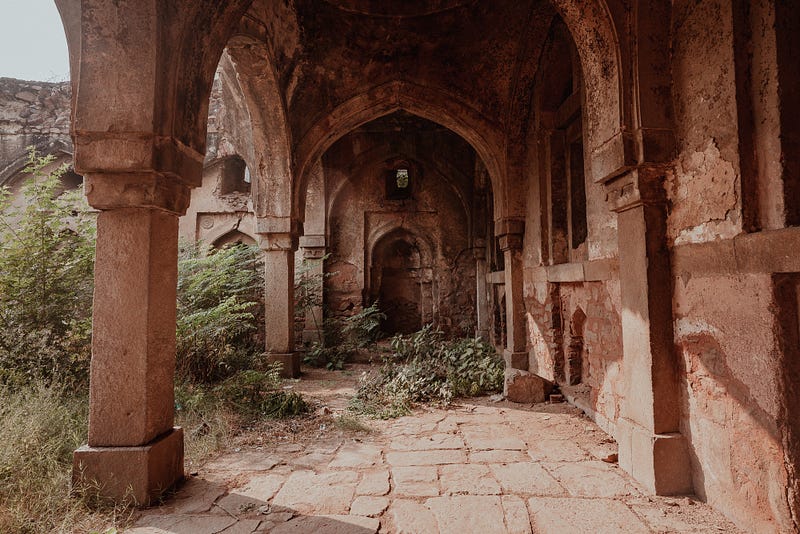
It’s remarkable yet a bit sad how out of necessity, the city has had to keep up with the demand for housing by putting up new structures within and on top of monuments that in other contexts would be protected. At the time, I had been reading “The Last Mughal” by William Dalrymple, a book about the mutiny of 1857 that expedited the end of the Mughal dynasty (I would highly recommend reading this). And while reading, I learned to my surprise that the former summer palace of this disgraced emperor was just two streets down from my apartment in Mehrauli. I set my book down mid-chapter and jogged over to examine the palace, which I almost couldn’t find because it is completely crowded out by apartment complexes.
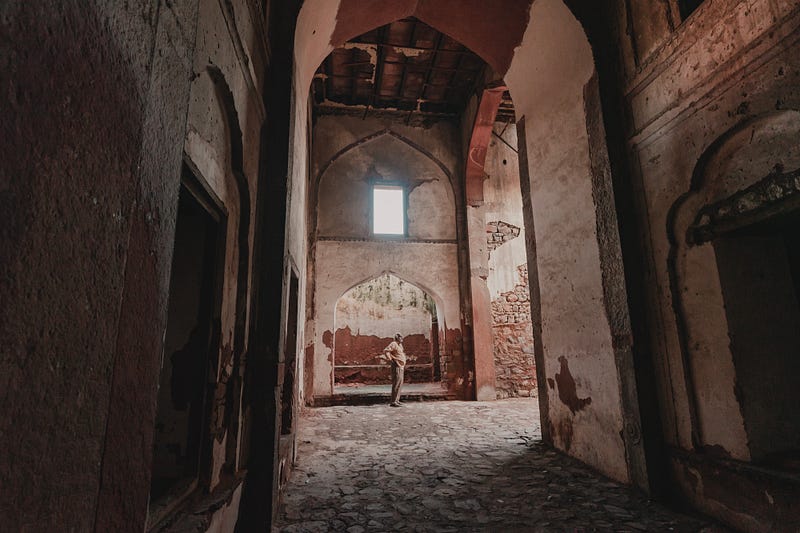
I tried to imagine the sorrow of this gentle old man, who was a lover of art and poetry, as he watched the mighty dynasty of his ancestors crumble around him while he suffered continuous humiliation by his power-hungry British subjects. What if he could be here now, and see the weeds and tenements that have choked out his former palace of solace? I followed an old man who examined the ruins with an air of melancholy, and I couldn’t help but notice his resemblance to the portrait of Shah Zafar on the cover of my paperback. Could this have been the Shah reborn, wandering his old palace with a grieving heart?
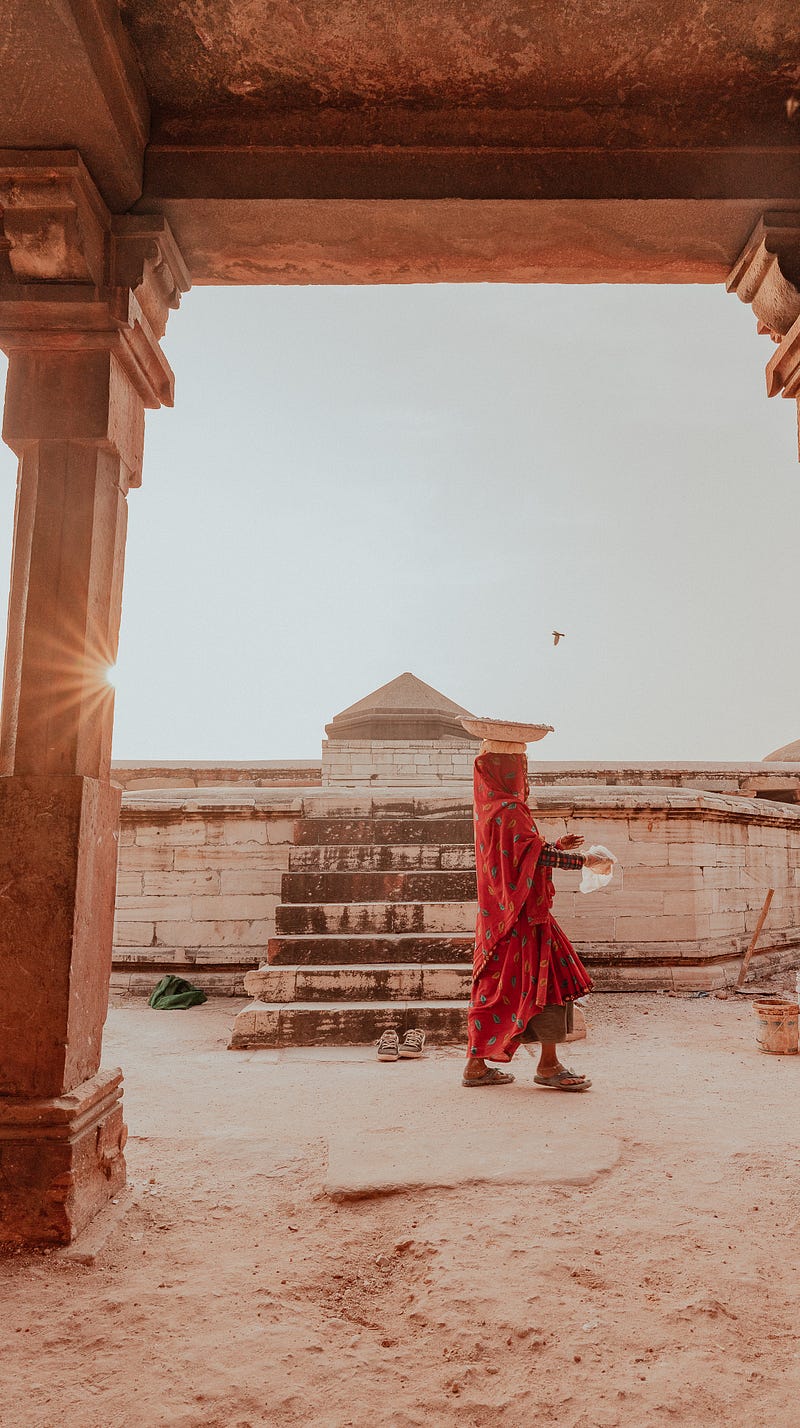
Sultan Ghari is thought to be the first tomb in [the outskirts of] Delhi, predating even the Mughal era (built in 1231 AD for Prince Nasiruddin Mahmud). In the middle of the jungle, Ajaz and I visited it during a state of renovation — women laborers in colorful saris were redistributing loads of broken stones with basins balanced on their heads. Perhaps the tourism authorities realize what an untapped treasure they have on their hands, and are preparing to start receiving visitors in the new future.
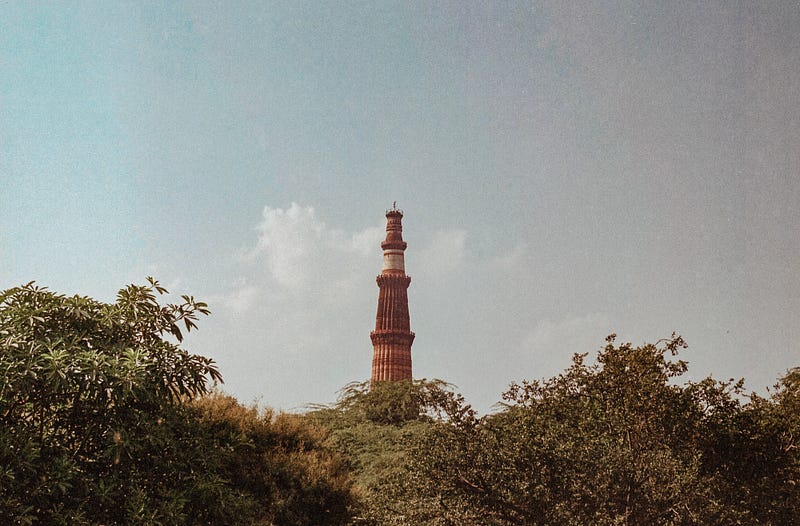
The suburb of Mehrauli is a veritable treasure trove. It is an ancient village that is bordered by a jungle, and both have been swallowed up into the sprawl that is modern New Delhi. Nearby is the famous Qutub Minar, and the archaeological park, a verdant, green park scattered with dozens of monuments. It would take separate articles to discuss each of those on their own.
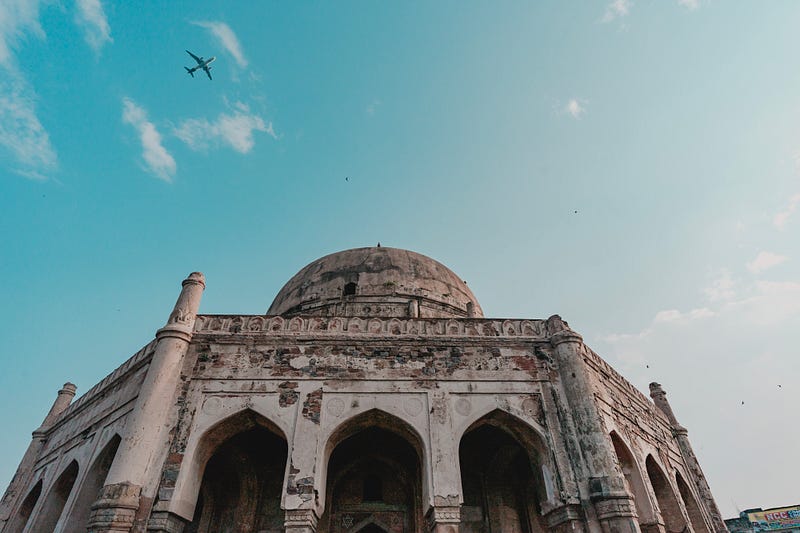
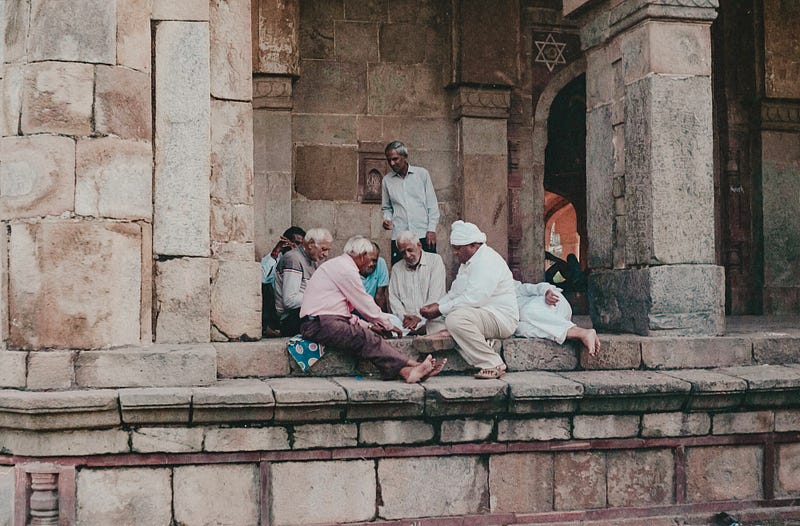
Bhool Bhulaiya is a tomb on the outskirts of Mehrauli. Right on the edge of a bustling fruit market near the bus station, you’re unlikely to find other tourists here but are sure to be noticed by the locals, many of whom make this monument their regular hangout spot. I see why they do, as it is the perfect place to sit and watch life unfold in this village within a city.
Hopping off the scooter outside my apartment with a belly full of chole bhature, and a few more monuments in my photo catalog, I gave Ajaz a fistbump before he disappeared in a flash into the packed alleyways.
While my piece is a look at these monuments from a distance, through the eye of a foreigner, I’d highly recommend Vidya Sury’s article, which offers a close-up look at a temple complex in Karnataka, through the eyes of an Indian national: https://readmedium.com/a-day-trip-to-the-13th-century-80c46510e63c
Though not a part of the May challenge, I also enjoyed Brad Yonaka’s article about one of my favorite cities, Sarajevo. (The haunting, ruined Olympic bobsled track above the city would make a great ruins exploration itself) https://readmedium.com/beautiful-sarajevo-3946db4a041
You can see more of my work on my personal blog on transformative travel as well as on Instagram.
Thank you for reading, and safe travels.
Related to my article (my time in Delhi) :