
Beautiful Sarajevo
The city that has endured everything
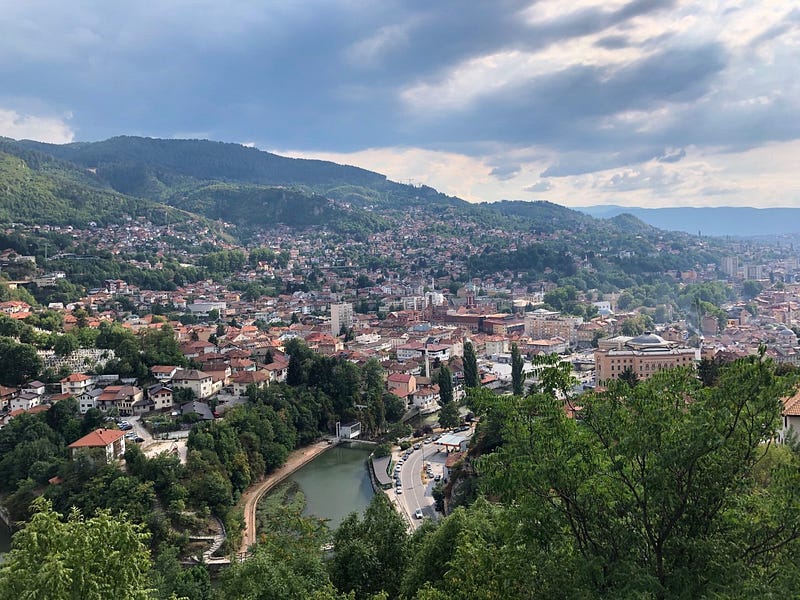
The bus ride we took to Sarajevo, in the country of Bosnia and Herzegovina, ended at the relatively new, spacious train station. This was still a long way from the part of town we needed to go. The taxi that took us onward to the Baščaršija district smelled of spices and the driver played Turkish music. He wanted to tell us the entire history of his city during our short ride, and when I said I didn’t understand Bosnian, he just spoke louder.
I felt as though I had been transported out of Europe, to somewhere vaguely in the Middle East. Sarajevo would do that to me every so often during our stay, fleetingly, like a familiar scene rushing by outside a train window.
The name Sarajevo has come up a few times in 20th-century news for all the wrong reasons. It was where Archduke Franz Ferdinand of Austria was assassinated in 1914, one of the trigger events for World War I. It also became synonymous with conflict during the Bosnian War (1992–95). Sarajevo infamously withstood the longest siege of any city in modern times, at 1,425 days. Roughly 20 percent of the population perished or fled. The aggressor was the Army of Republika Srpska, the ethnic Serb faction that dominates in the rural areas south and east of the city.
The known history of the city goes back to the Illyro-Roman wars when the early Romans struggled through this mountainous terrain in their efforts to pacify it. Much later it served as an ideological battleground between the Orthodox and Catholic churches, as they wrestled for religious domination. Then the Ottomans swept in, leaving both the legacy of Islam and a strong cultural influence that endures today.
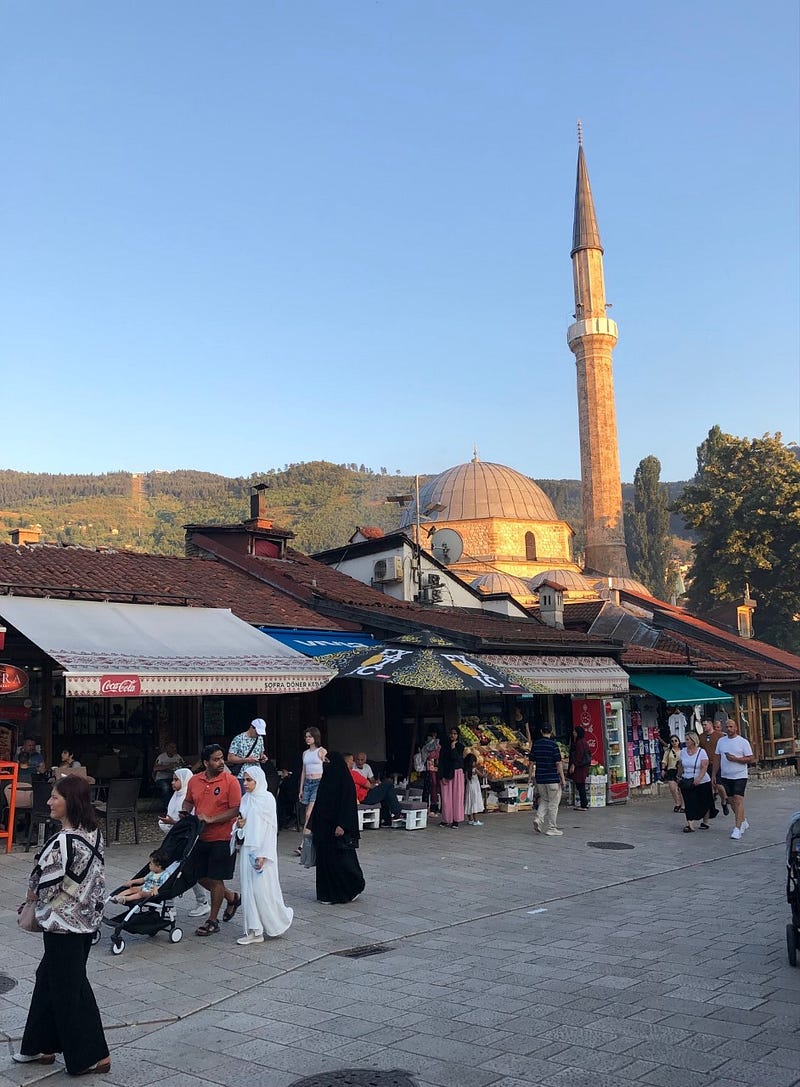
Given what this place has gone through in the last thirty years, I was expecting it to show more scars. But the Baščaršija district, part of which resembles a Middle Eastern bazaar, was vibrant and colorful. The composition of visitors here was very mixed, with a sizable contingent from Arab countries. The streets were well maintained, and public transport trollies made it easy to get here from other parts of town. We celebrated our arrival in town by sitting on tiny stools eating baklava, and drinking the potent sludge that is Turkish coffee.
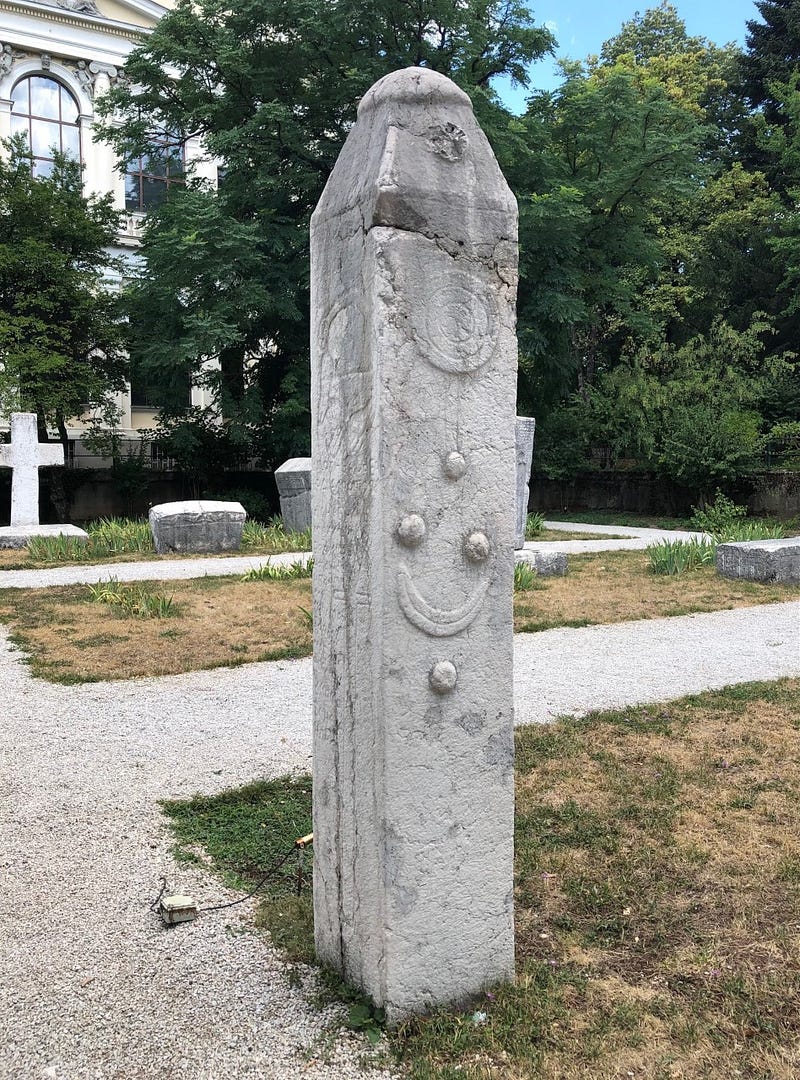
One of the venues that pleasantly surprised me in Sarajevo was the National Museum of Bosnia and Herzegovina. The museum dates to 1888, but like every other part of the city, it was partially destroyed during the war. Numerous donations allowed for repair and re-opening. It houses thousands of artifacts dating back to Roman times, is well organized and labeled, and has a comprehensive natural history section. The central courtyard, with a pond and gardens, was a relaxing place to rest between exhibits.
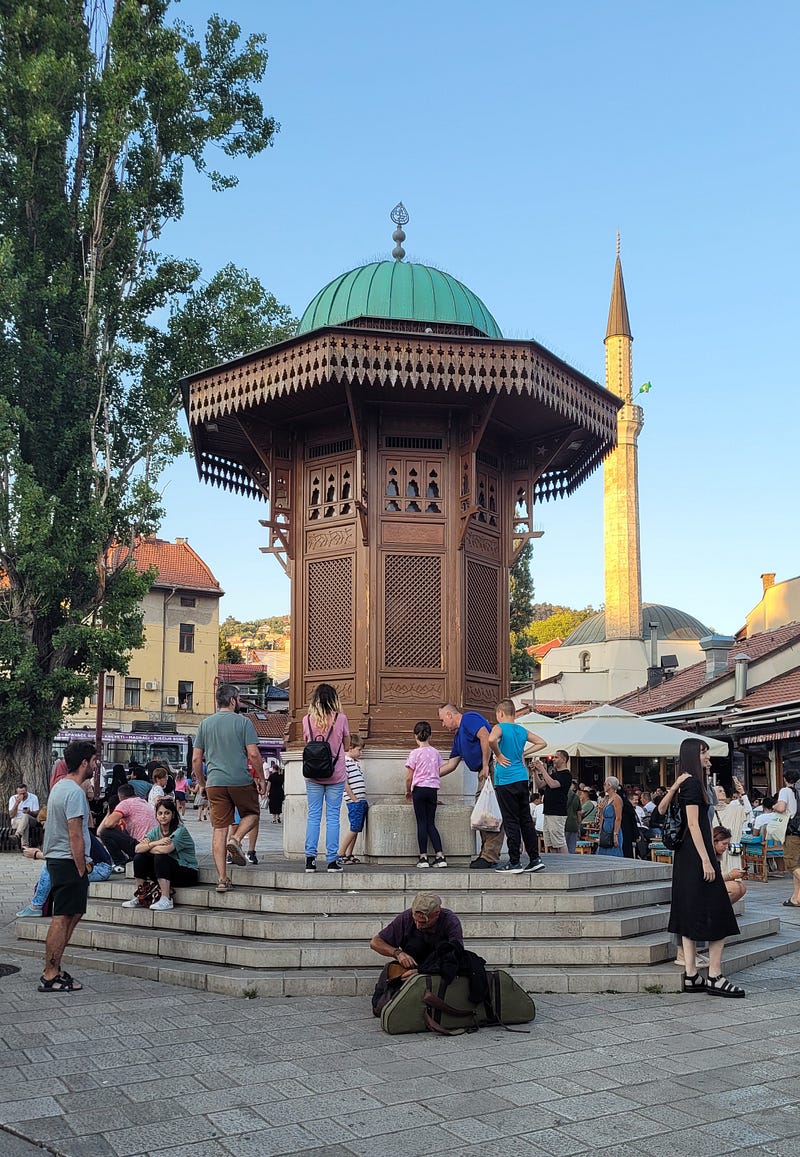
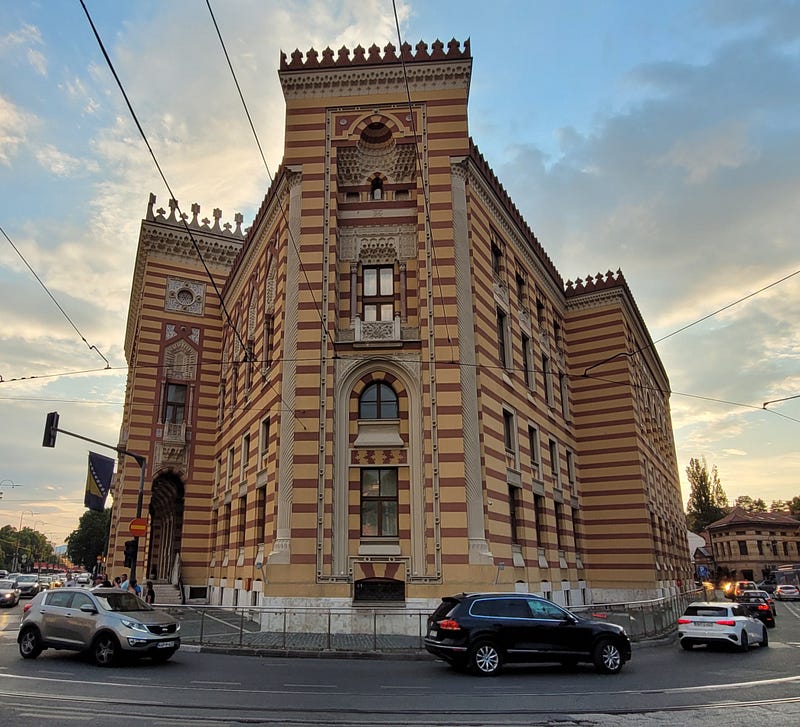
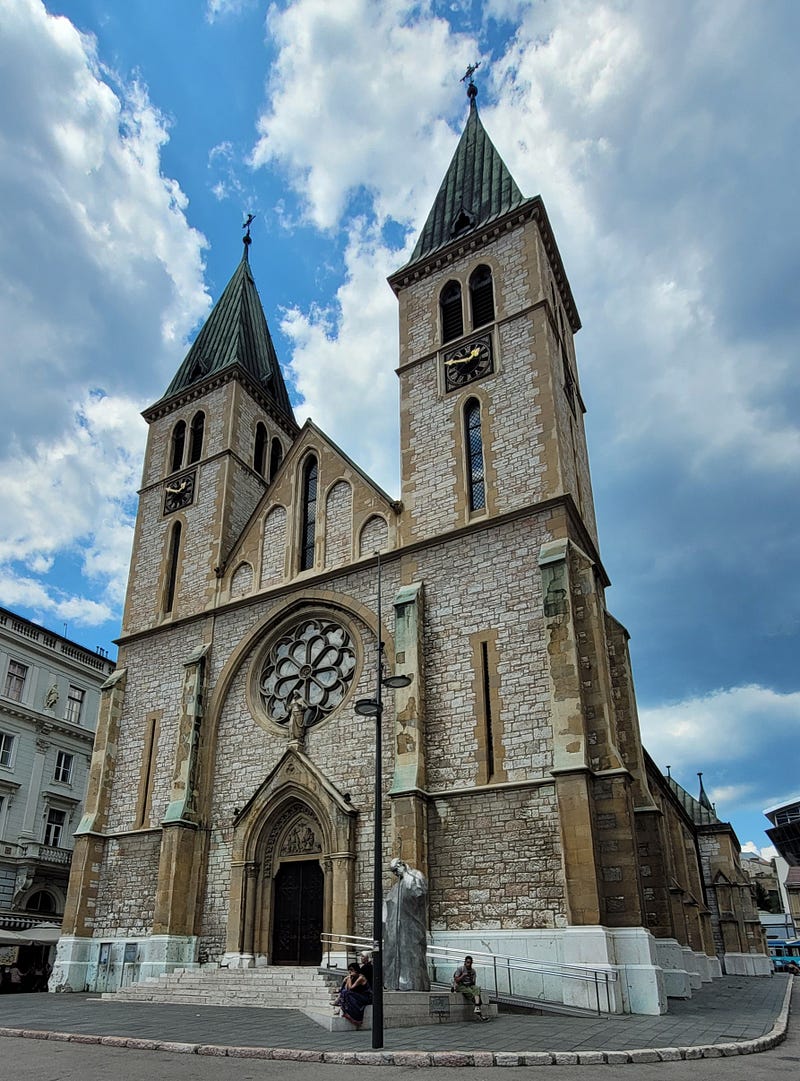
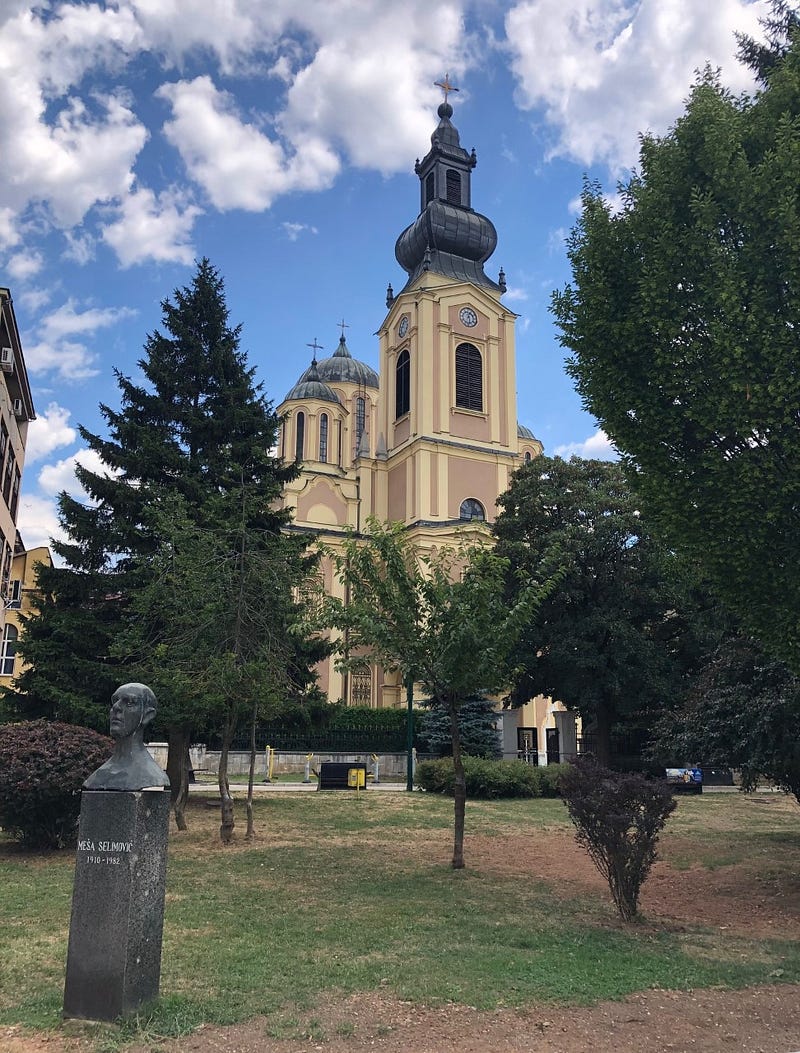
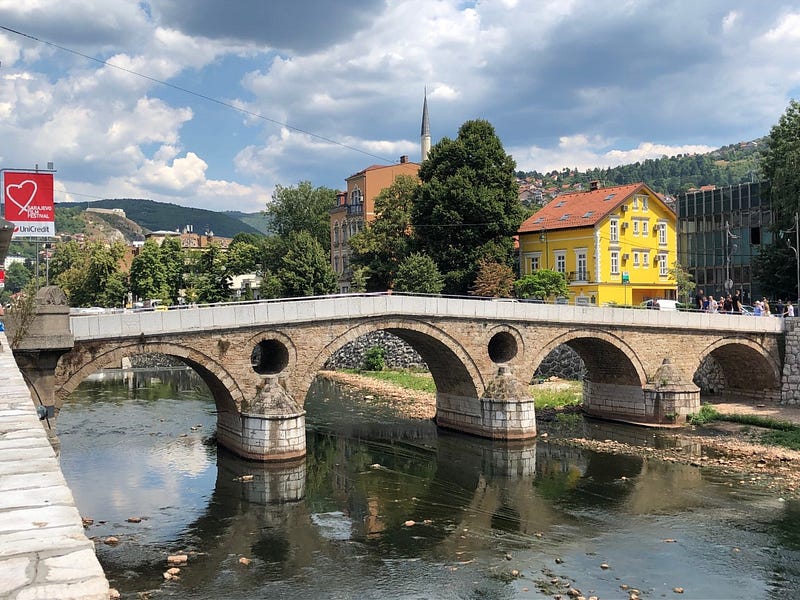
For those interested in architecture, Sarajevo has a lot of photographic fodder to offer. Both Islamic and Christian influences are everywhere.
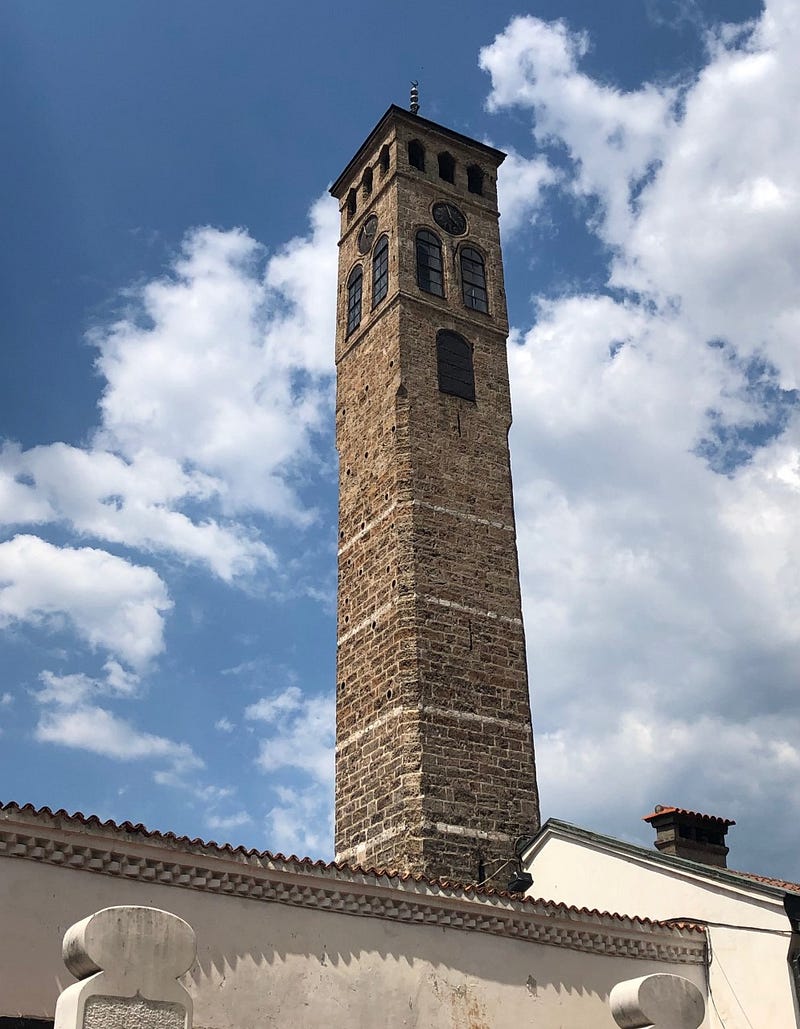
One of the most significant historical structures in Sarajevo is Gazi Husrev-beg’s Mosque. It is the largest mosque in Bosnia & Herzegovina, built in the classic early Ottoman style in 1530. As would be expected, it was a prime target for destruction during the Bosnian War but was rebuilt with donations from the Saudi Arabian government in 1996.
One venue that left an impact on us was Gazi Husrev-beg’s Library. It contains some very old books by Islamic scholars, copied by hand. During the Bosnian War, due to the targeting by Serb artillery, the books were carried by hand from one location to another on several occasions to save them from destruction. This task was complicated by the presence of snipers, who for much of the siege shot anyone they could see roaming the streets.
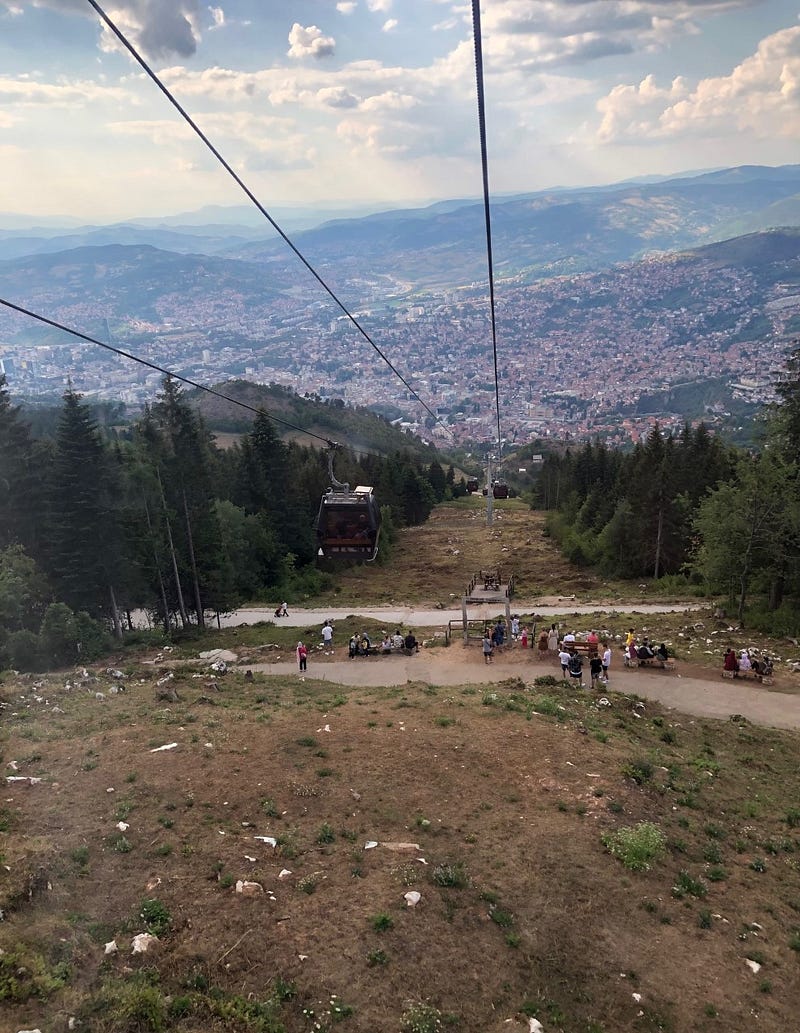
The Sarajevo Cable Car station is on the south side of town. It goes up the mountain, and from here there are spectacular views. It was worth the long line to get into a gondola. This was the area where the Serbian artillery was positioned during the war. Trails through the forests up here cross into Republika Srpska, although the border is not marked.
It was obvious to me during our stay in Sarajevo that the city has found its footing in the post-war world. The monumental task of reconstruction has borne fruit, bringing back the atmosphere and color of its past. At the same time, the war has not been allowed to fade from the collective consciousness. The Museum of Crimes Against Humanity and Genocide 1992–1995 and the War Childhood Museum, among other venues, are there to keep people from forgetting.
That is not to say it is easy to promise a great future here, or anywhere else in Bosnia and Herzegovina. Younger people, like in other Balkan nations, are restless and find their way into other, richer parts of Europe for opportunity. Several older people I met lamented this drain but feel helpless to stop it.
As for asking younger people their opinion, the only ones I spoke to weren’t even in Bosnia and Herzegovina anymore but working instead in Croatia!
They can’t be blamed for this. Before the trip my family and I took there, I kept track of the news and knew that domestic affairs were not much better than they’d ever been. The country has an almost ungovernable tripartite presidency, in which a Serb, Bosniak, and Croat rotate through the job every eight months. The presidents and members of parliament operating alongside them are completely beholden to the ethnic groups they represent. Younger people are a great deal less enthused about perpetuating historical grievances, and their disinterest fuels the exodus.
But as for a travel destination, I found Sarajevo, and its complex history, a city of great cultural richness. And beautiful in its unique way.
Another article relevant to travel in the Balkans:
Please check my profile for other travel-related articles at Brad Yonaka, and consider joining Medium to read many great stories by using my referral link. I receive a portion of your subscription fee.