
Globetrotters | Travel | May Monthly Challenge — Ruins of the World
A Day Trip To The 13th Century
Let’s Go To the Ruins of Somanathapura, Karnataka
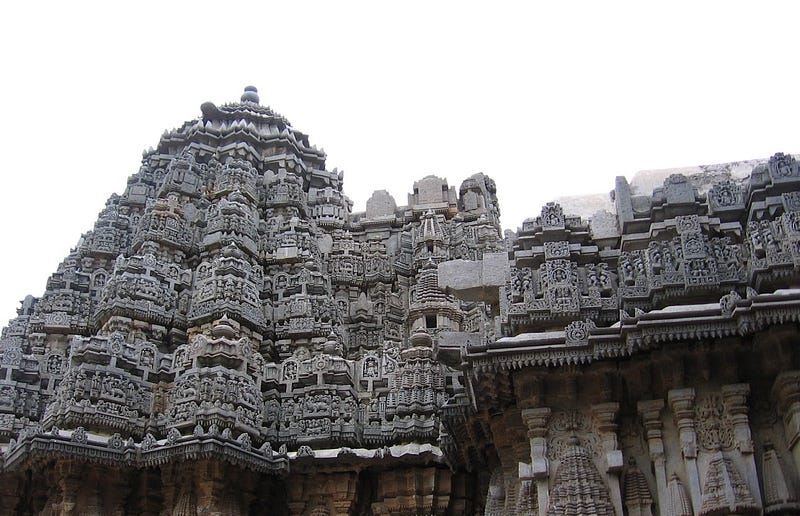
India is replete with majestic ruins that are now heritage sites. Karnataka, the state I live in, is known for its gorgeous ruins — some other examples are Belur, Halebid, Lepakshi, etc.
Today, I am taking you to the breathtakingly beautiful Chennakesava Temple in Somanathapura, Karnataka, India, built in the 13th century. Kesava is another name for Lord Vishnu.
Now grab a coffee (or the beverage of your choice) and sit back for the story of this temple. This Vaishnava Hindu temple sits on the banks of River Cauvery and is protected under The Ancient Monuments and Archaeological Sites and Remains Act, of 1958.
Here is the entrance to the temple — bounded by high stone walls. Little would you expect the sight inside.
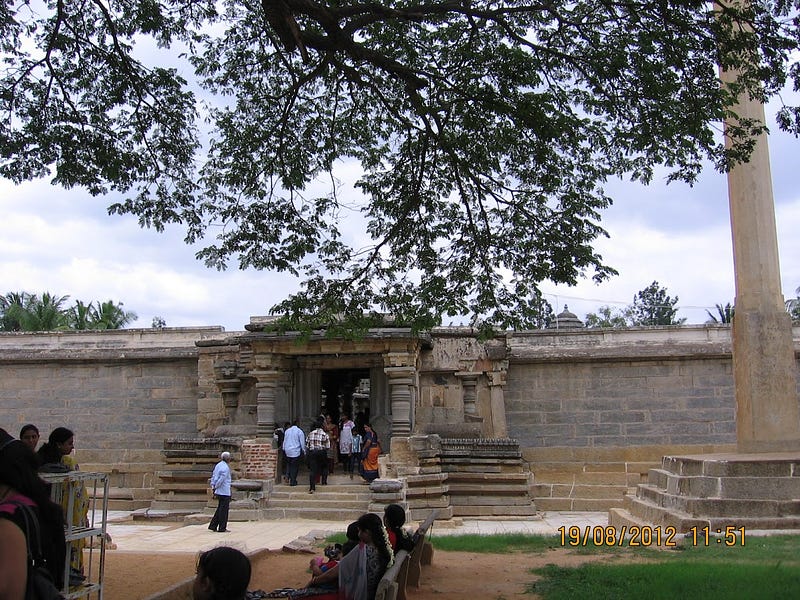
Somanathapura is a small village on the banks of the river Cauvery and about 130 kilometers from Bangalore which makes for a great day trip. This trip was a picnic from our condo. We hired a bus and about forty of us set off at 6 am in the morning with three destinations in mind.
Somanathapura is best known for the Chennakesava Temple, a grand representation of the Hoysala architecture — built around 1258 A.D. Now, the Hoysala Empire is known for its grandeur as evidenced by the gorgeous temples at Belur and Halebid in Karnataka.
So anyway — the powerful King Narasimha III (1254–91 A.D.) ruled South India (fun fact: his full name is really a paragraph and I dare you to read it quickly! “Sri Vishnuvaradhana, Pratapa Chakravarti, Hoysala Bhujabala, Sri Vira Narasimha, Maharajadhiraja, Raja Paramesvara, Sanivarasiddhi, Giridurgamalla” etc.). Imagine how they must have announced his arrival! He ruled at the time when his army commander, Somnath built the Kesava temple.
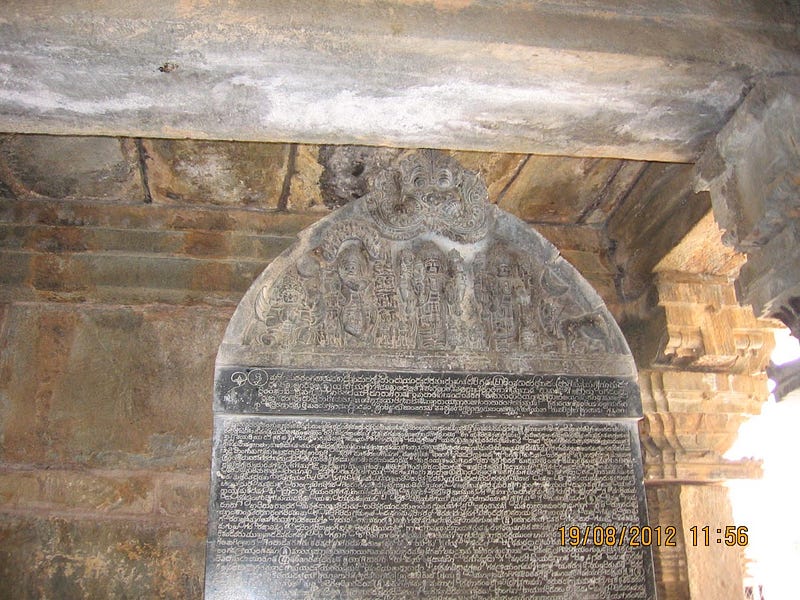
This commander created a village and called it Somnathpur after himself. All this is written on a stone slab in the old Kannada script just inside the entrance of the temple. Look at the symmetry!
And here is the temple. Was surprised to see there was quite a crowd there — probably because of the long weekend.
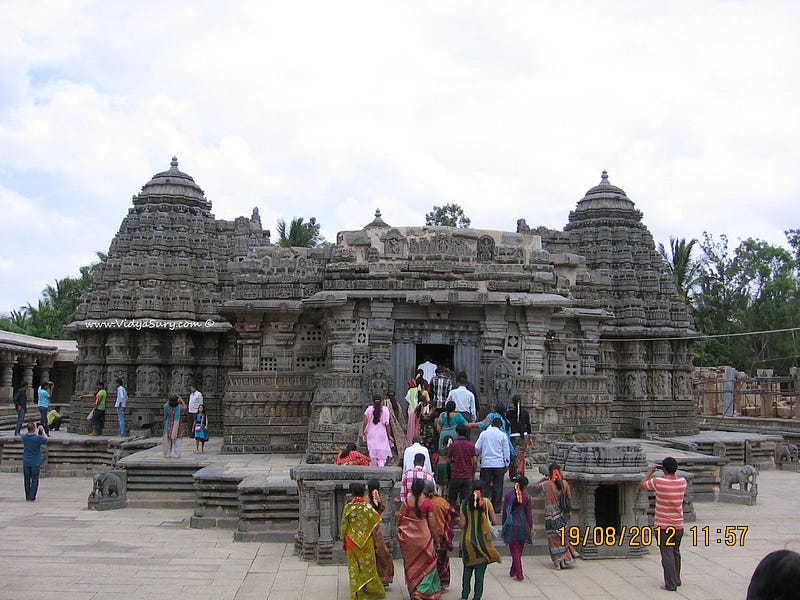
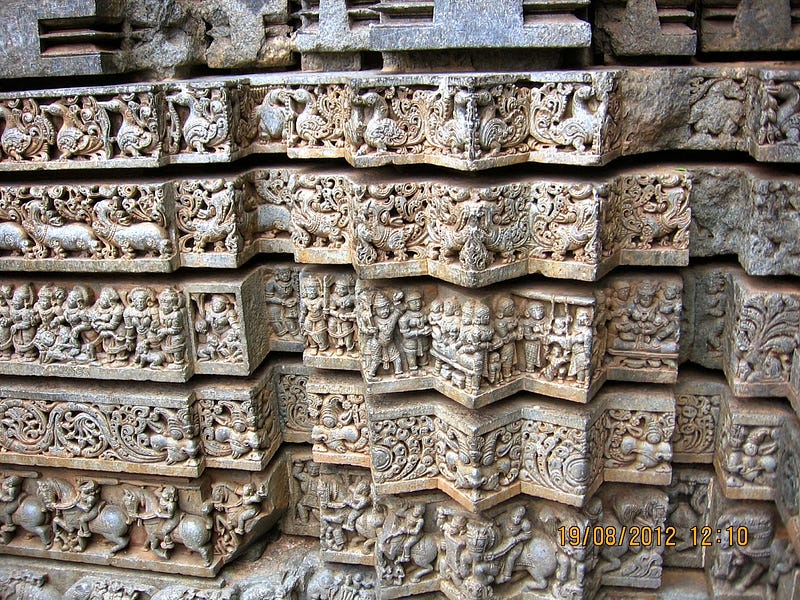
The temple stands on a raised platform and represents a “Universe” and there are scenes on the walls depicting Gods, Goddesses, animals, and lots more. The sculpture is unique and perfectly symmetrical. These are made of soapstone. The guide told us that they were carved on panels and then fitted together — interlocked — just like Lego. The detail in the carvings is stupendous and it takes more, much more than the four hours we spent gazing at the interiors and exteriors of the temple.
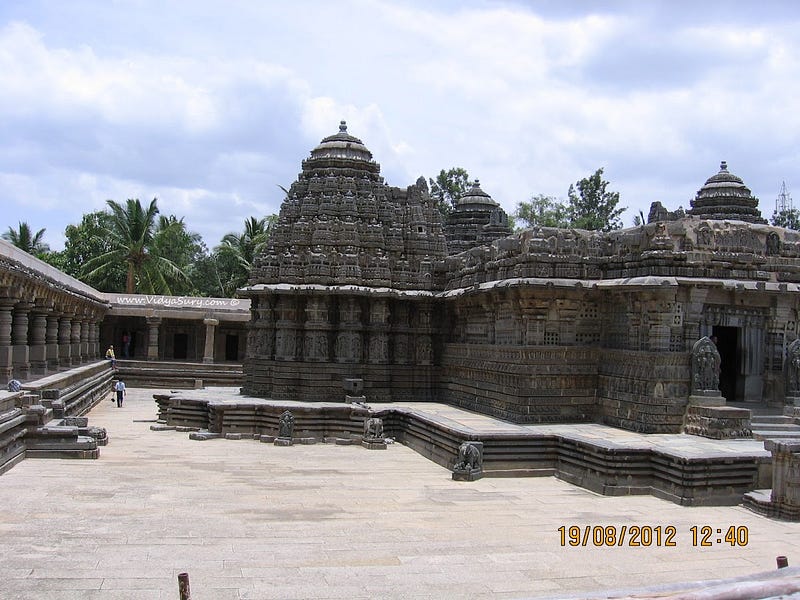
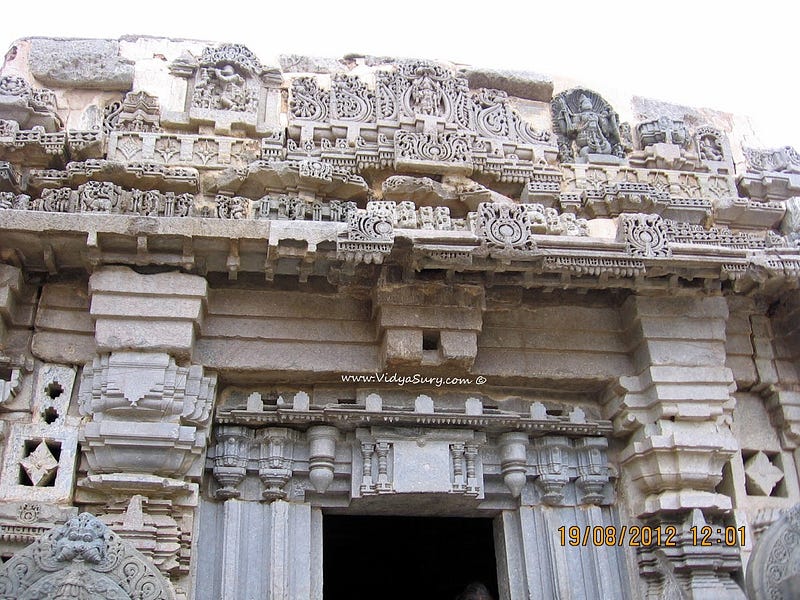
The outer walls have star-shaped folds on which the carved soapstone plaques are placed. There are three sanctum sanctorums inside the temple with gorgeous idols of Kesava, Janardhana, and Venugopala. The Kesava idol is missing today. See the little elephants holding up the temple? Here’s the temple’s entrance into the sanctum:
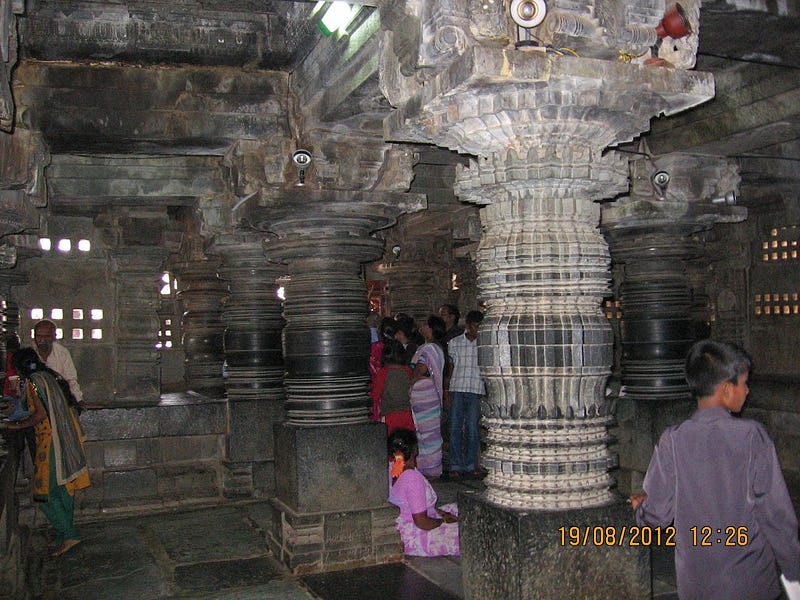
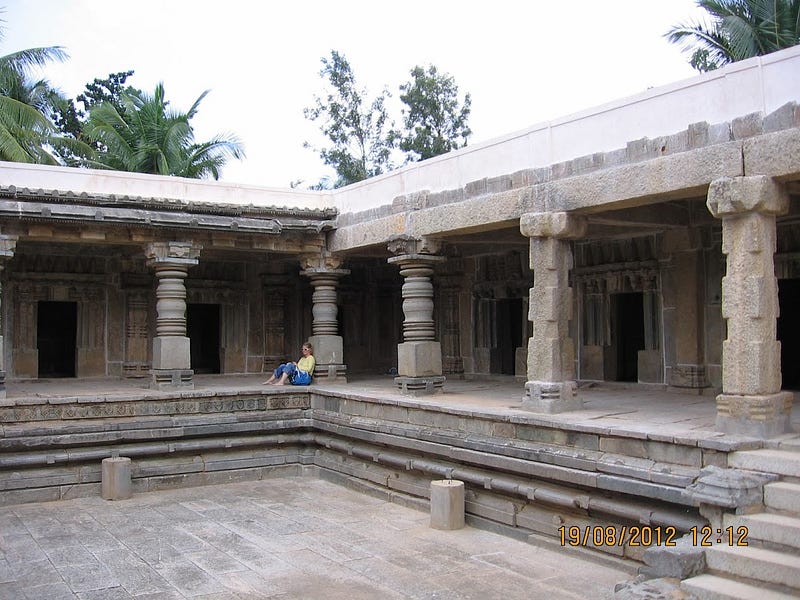
Look at the pillars! There were two types. Fantastically lathed and carved.
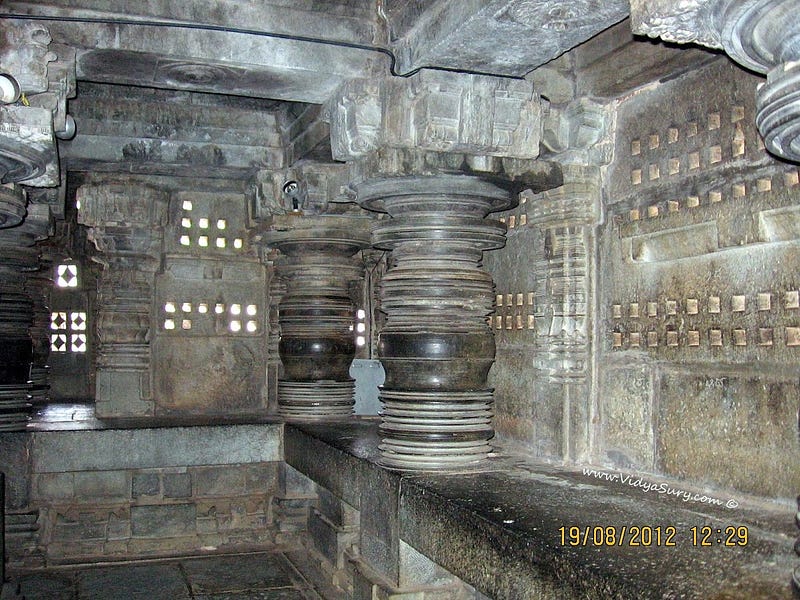
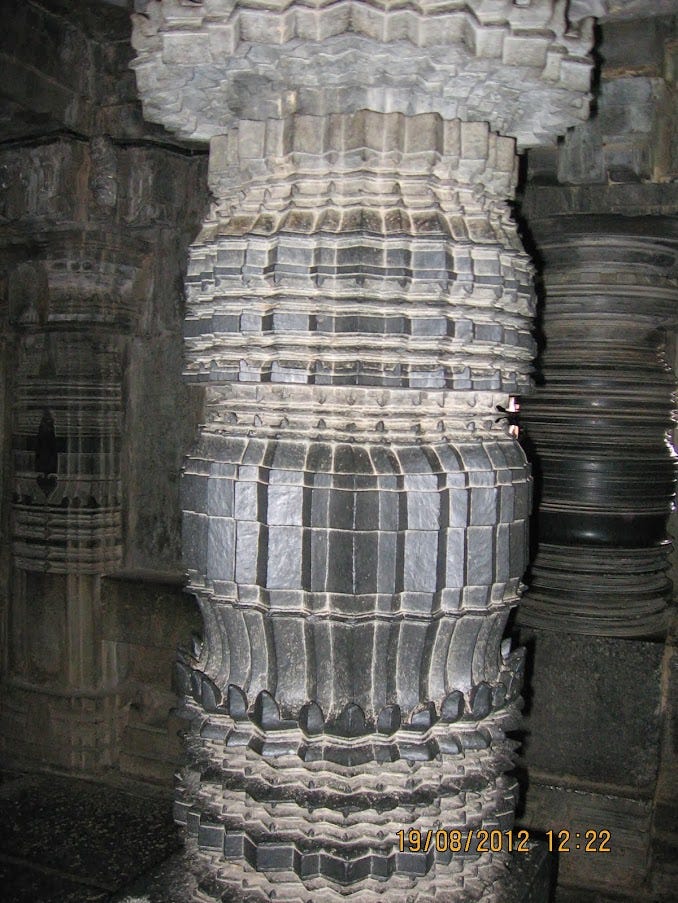
You know, inside the temple it was pitch dark and I simply aimed and clicked.
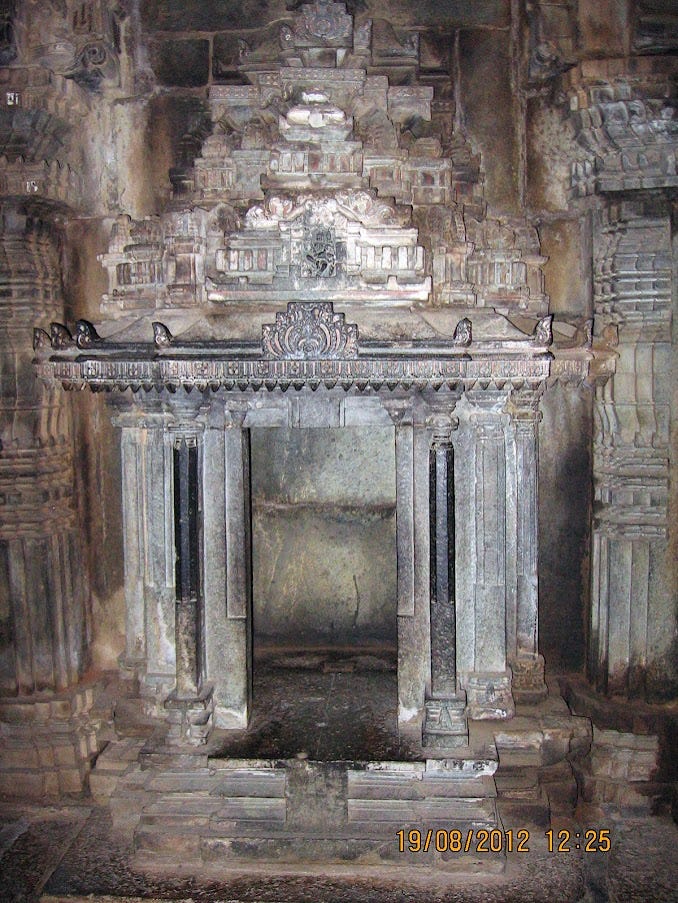
Thanks to the flash — I could actually see these! Nobody’s home in this shrine.
It was pretty hot outside and visitors enjoyed the coolness inside the temple — and sat there, relaxing.
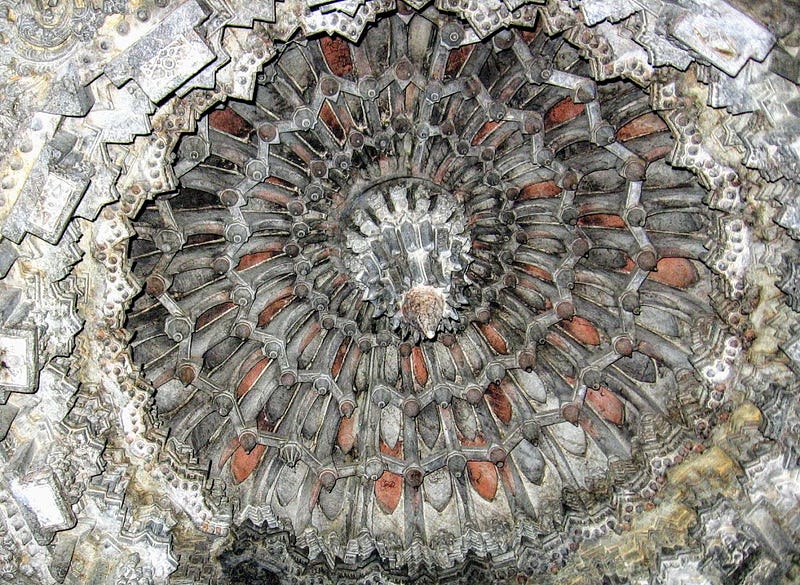
The ceiling was full of these — supposed to represent the insides of a slowly blooming lotus flower. This one is halfway there.
We’ll take a tour around the outside of the temple. The darkened space is the entrance and we’re taking a right turn to see the soapstone sculptures. On the left is our guide, who reeled off stories nonstop.
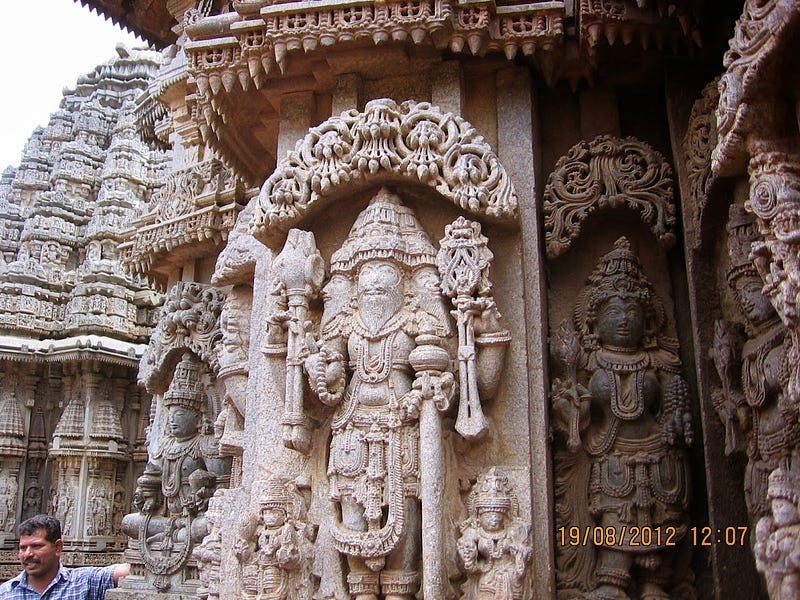
They depict stories from the epics of Mahabharata, Ramayana, Dashavatara — and many mythological tales.
Lots of foreigners visit the temple — to take photographs and videos and to simply take in the beauty of the serene surroundings. The locals are quite blasé about the temple.
Sadly Muslim invaders — Muhammad Tughlaq’s army — destroyed most of the temple and defaced every idol. There is no worship at this temple as Hindus do not worship a broken idol. And believe it or not — there is not a single idol that is not damaged. Every single sculpture/idol has its nose cut off!
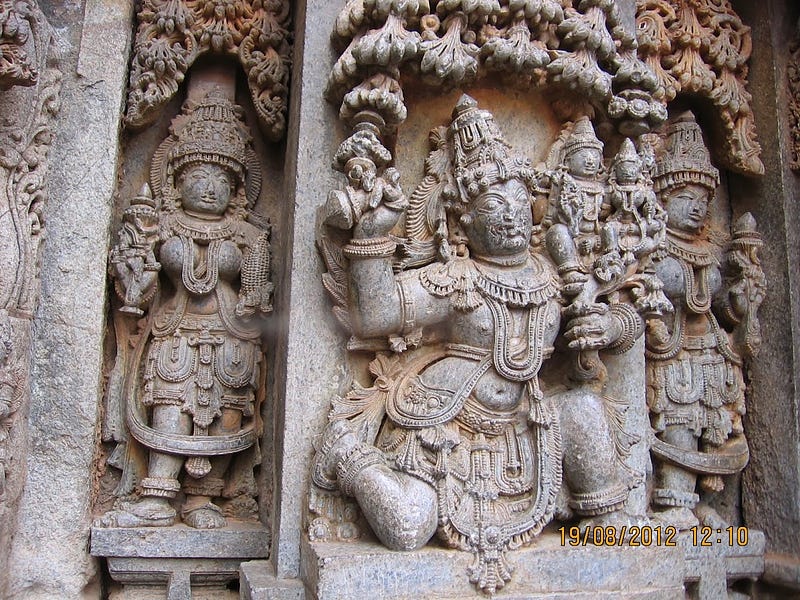
Still, this 13th-century Keshava Temple in Somnathpur is the best-preserved most complete monument of Hoysala architecture.
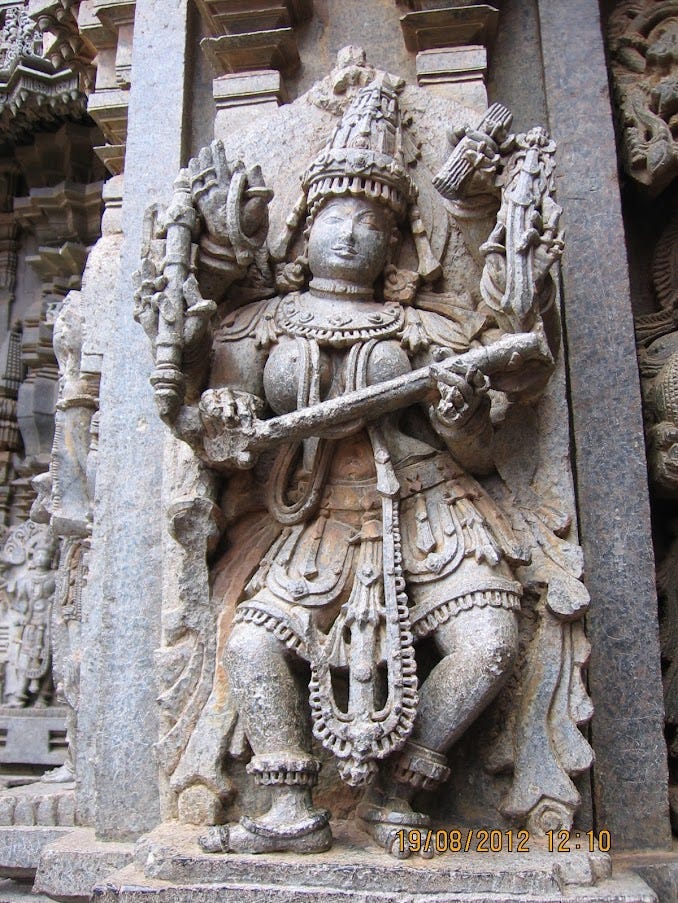
I couldn’t possibly not show you a photo of the Goddess Saraswati, right? She’s my namesake, after all!
Lots of renovation work is going on right now to recreate the original beauty of this temple.
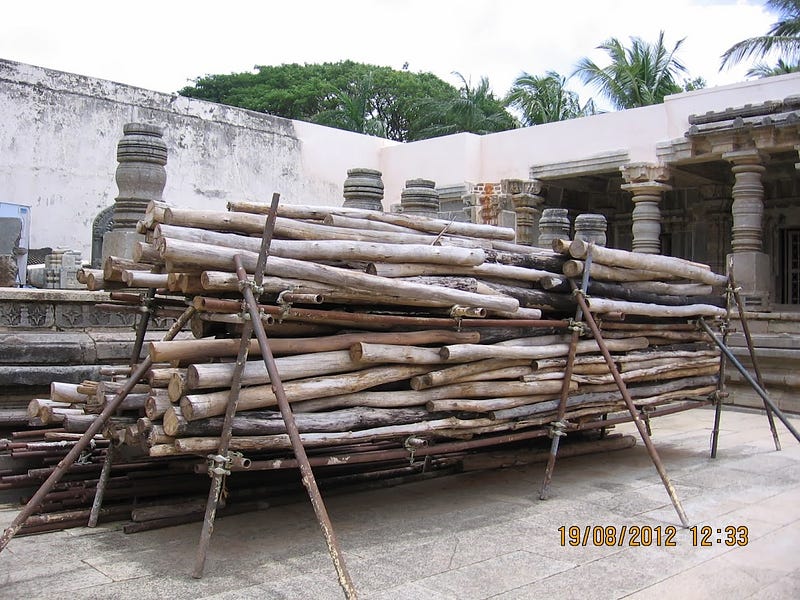
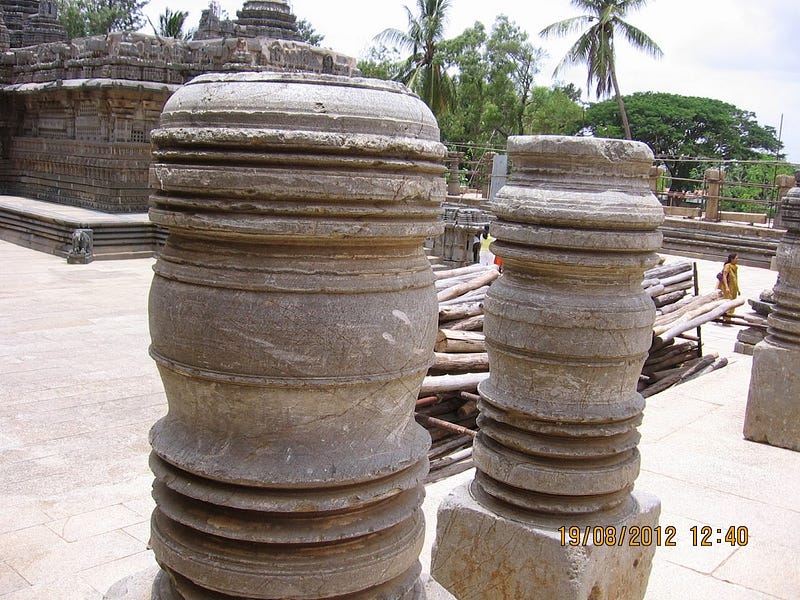
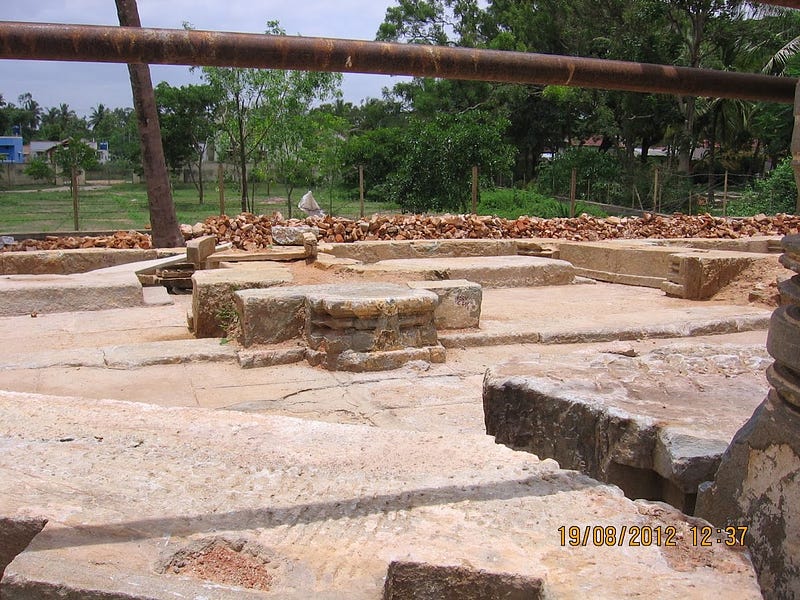
I could go back and gaze at the sculptures all day. I might actually do that. I had a tough time picking photos to post. As it is, I think this may be an overload. What to do? I have more than two hundred to choose from. Sigh.
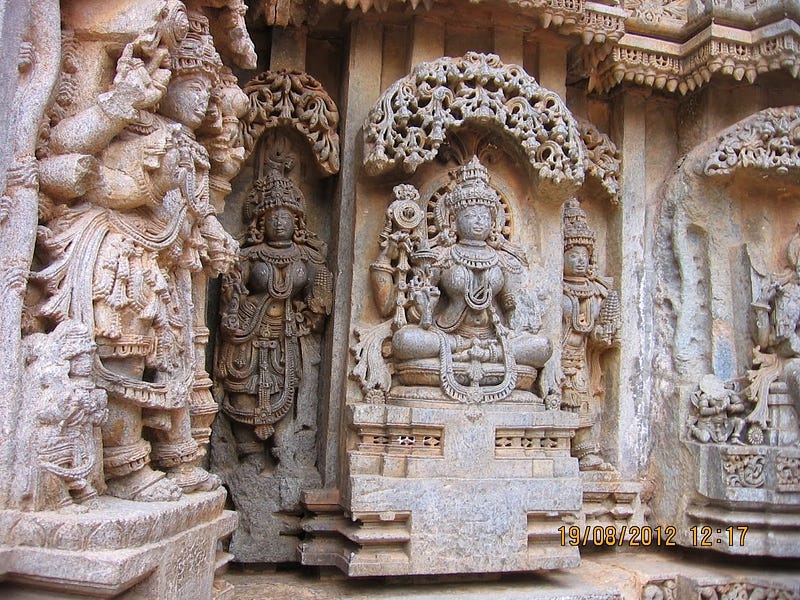
I hope you enjoyed these pictures. Next week, I’ll take you to another place that has an even more interesting story than this one.
Thank you Globetrotters publication editors ❤ JoAnn Ryan, Adrienne Beaumont, Anne Bonfert, Jillian Amatt - Artistic Voyages, and Michele Maize
Vidya Sury, Collecting Smiles ❤ Did you smile today?
Help me support underprivileged children via Ko-Fi. Thank you!
Let’s connect! Website | Twitter | Instagram | Pinterest | Facebook | Mastodon Follow my publication on Medium Subscribe to my Medium posts Enjoy my one-minute motivational tip posts on Substack
Do read Adrienne Beaumont’s post about Volubilis — I had not even heard of the place!
Here’s Anne Bonfert’s announcement of Globetrotters’ May’s monthly challenge
Scott-Ryan Abt enthralls with his trip to Amman and his introduction is just as exciting as the rest of his post.
Claire Elizabeth Levesque’s trip to Colchester Castle is enchanting.


