
MONTHLY CHALLENGE
Ruins of the World
I look for them everywhere.
Australia is a young country. Well, actually it’s a very old country inhabited by its original indigenous population for 60,000 years or so. But they left nothing to become ruins. They were mostly nomadic hunter-gatherers so didn’t build homes to last. The only things that remain of their history are their cave paintings and their middens. Even houses built in the 1800s have been knocked down for progress. A few remain — Ormiston House and Wolston House are two that are open to the public. I’ve taken my classes to them a few times.
We have a couple of historical villages. The closest one to me is Old Petrie Town. The houses here are all weatherboard timber as most early homes were. Slab huts were common among the first white settlers but not being fire-resistant, they didn’t last forever. I learned a lot of Australian history at school and some European history after 1815. There were centuries of history in other countries. I’m always fascinated by historical places and the history associated with them. Japan was the first of these countries.
Then came the United Kingdom. People told me I’d soon tire of seeing castles and churches. They were wrong! I still haven’t seen enough.
The first castle I’d seen in my whole life was Raglan Castle — in ruins. Here’s what I wrote at the time: Raglan Castle — amazing — I loved it! I bought postcards and fridge magnets and T-shirts and a history of the castle. Went mad really but the whole lot cost £19 which seemed so cheap. (But later calculated that was around AUD47
The very next place I visited was Tintern Abbey — in ruins. Here’s what I wrote at the time: Awe-inspiring! Fascinating! Loved it! Bought postcards 20p, a book on Tintern Abbey £3.50 and a book of Welsh proverbs for £4.99.
This was the start of my addiction to ruins of any type or even castles and churches and cathedrals that were older than 200 years — basically everything in Europe!
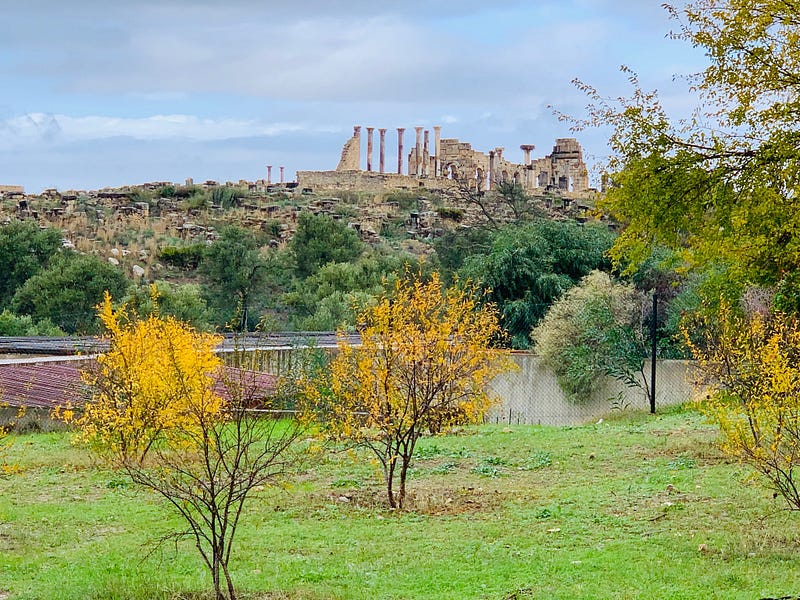
But the ruins I want to tell you about today are a Roman city that has been excavated. No, it’s not Pompeii but that’s really worth seeing nor is it Ephesus or Pergamon or Troy but it’s in Africa. In Morocco, to be exact. It’s Volubilis.
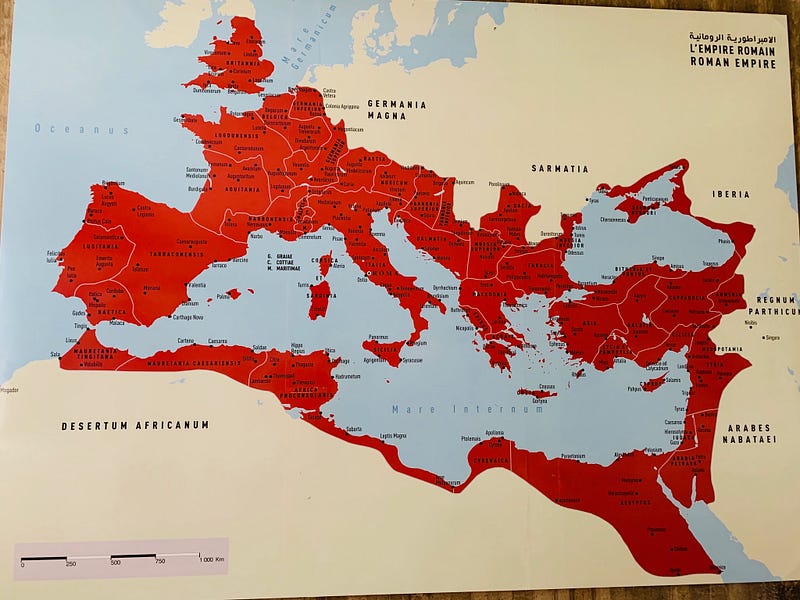
If you look closely, in Mauretania Tingitana (now Morocco), you can find Volubilis.
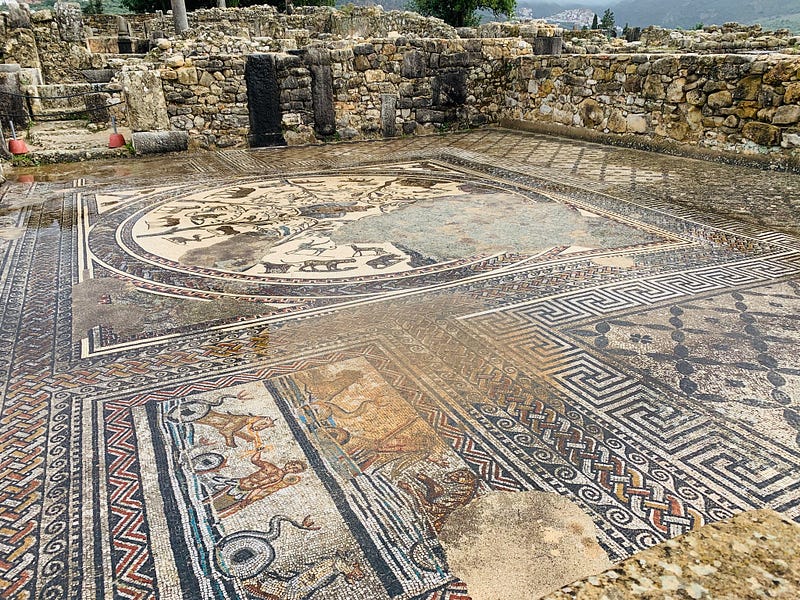
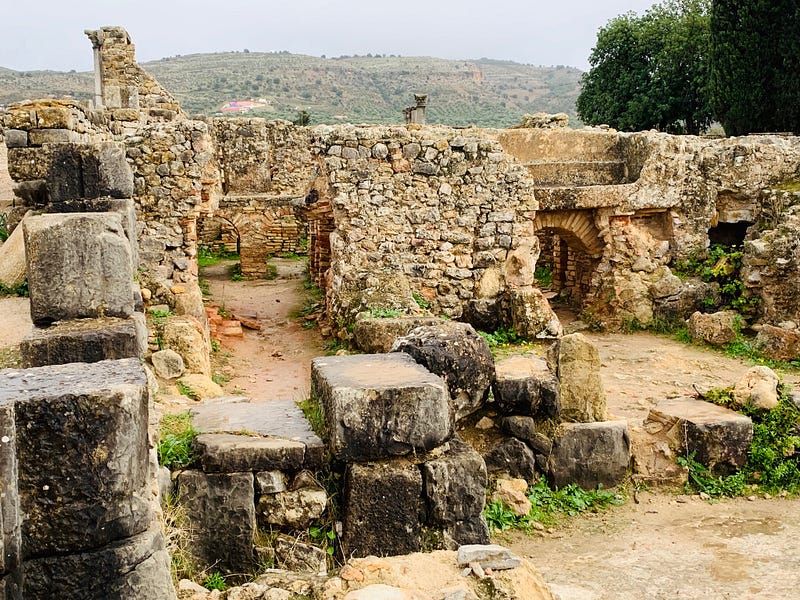
Volubilis an excavated site of a Roman city at the southwestern extremity of the Roman Empire. Important to the Romans because of the fertile olive-growing surrounding farmlands, it was inhabited by many wealthy merchants, whose presence can be seen in the many fine townhouses with their magnificent mosaic floors. They now lie open to the elements so they won’t stay beautiful forever. It’s a UNESCO site so needs more capital investment if it’s to be preserved.
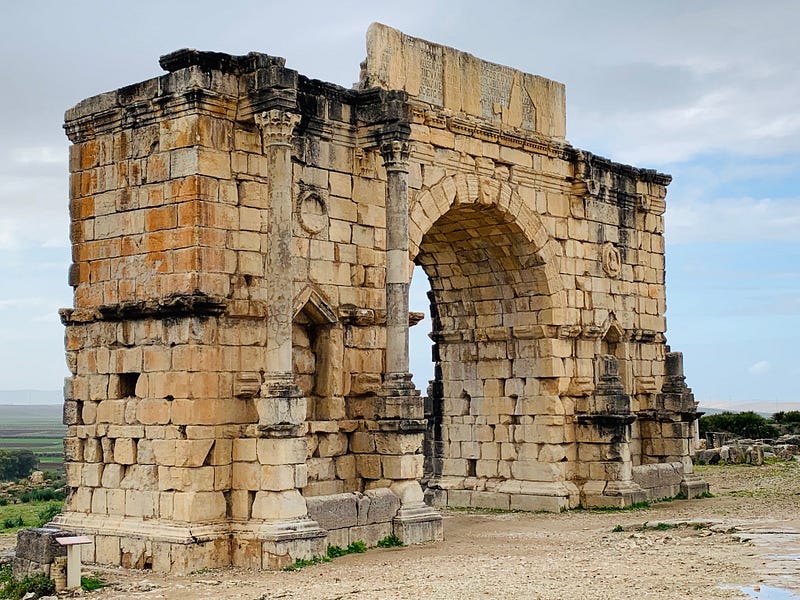
In Roman times, it was home to some 25,000 inhabitants and sported a temple as well as a basilica and a beautiful triumphal arch. Volubilis covered about 42 hectares with a 2.6km circuit of city walls. The city was taken over by local tribes in the third century and the Romans never bothered returning. By the 11th century, Volubilis was abandoned after the seat of power was moved to Fès. In 1755, the deserted city was destroyed by an earthquake and was covered in rubble.
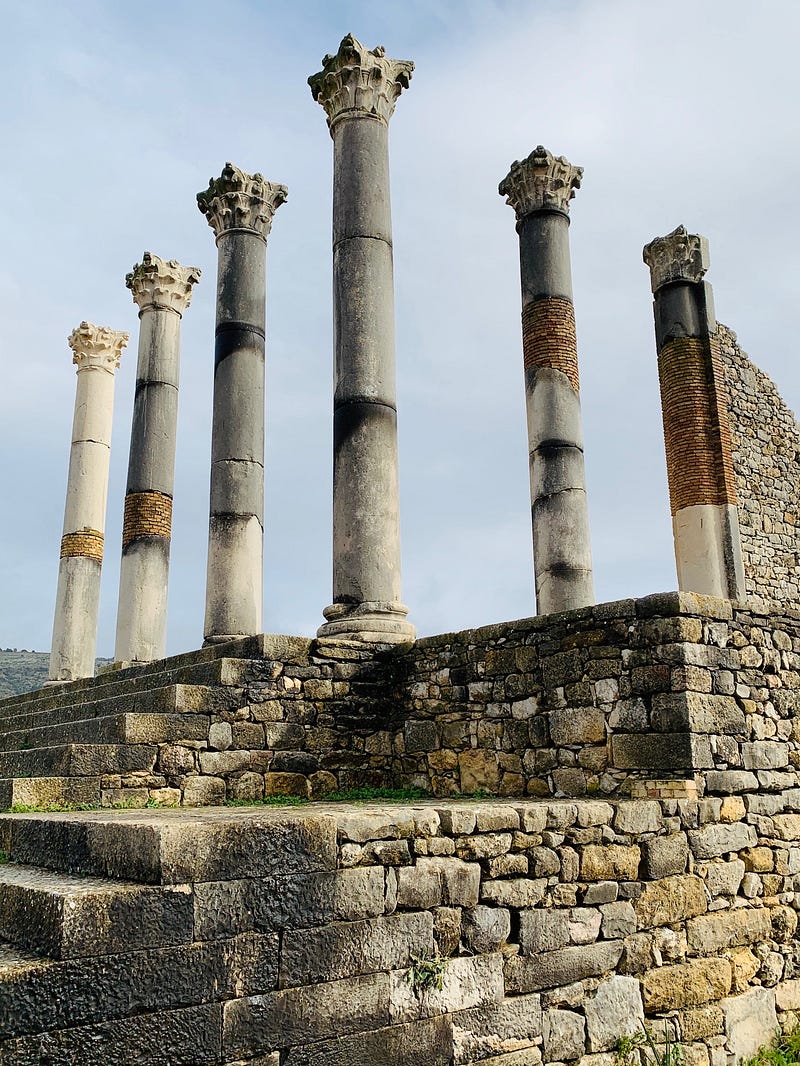
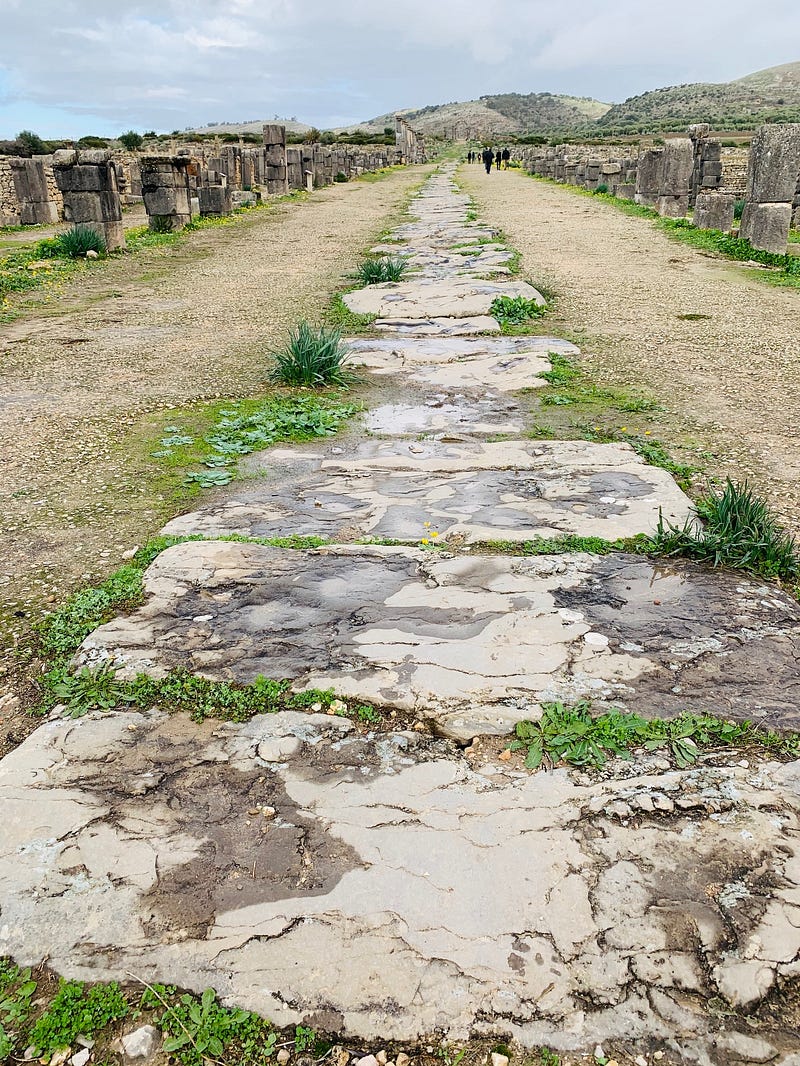
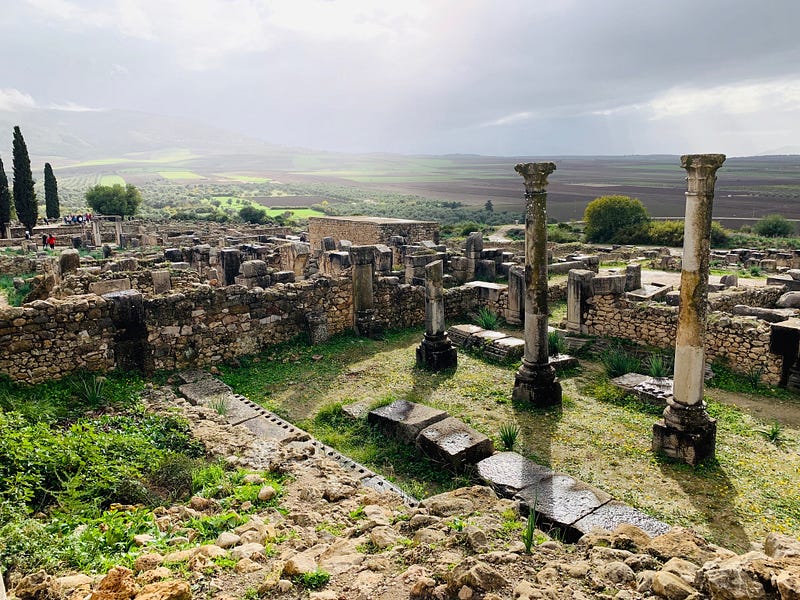
Our guide, Abdulhai, was a fount of knowledge, not only of the Roman ruins but Morocco in general. He answered every question I threw his way.
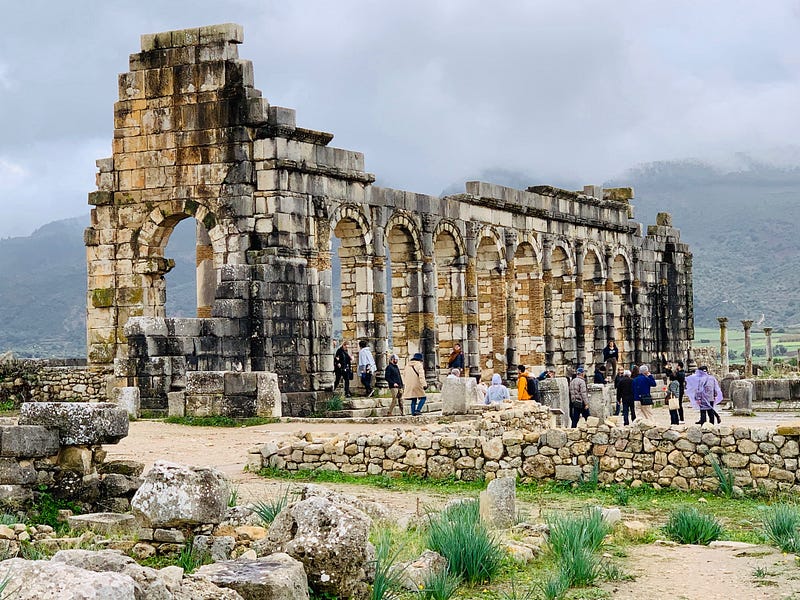
It was a rainy day and the people you see here came from a bus tour and walked around the ruins for about 10 minutes before boarding the bus again. We spent at least an hour here in the rain, probably longer. I had never heard of Volubilis before so every snippet of knowledge was new to me. I didn’t know the Roman Empire extended as far as it did. I loved the mosaic floors of the wealthy merchants’ houses and marvelled at the beauty of the designs. I was blown away by the plumbing and waste removal systems.
As always, I’m fascinated by not only how the Roman Empire collapsed, but how all of the engineering and architectural knowledge was lost and Europe was plunged into the Dark Ages. I’ve written about Pompeii here.
And so has Ophélie Quillier.
Alejandro Cuba Ruiz writes about the ruins of Athens — another place I absolutely adore.
This was a writing prompt response to our May monthly challenge. Read the submission rules below:
If you like what I write, and would like to read to your heart’s content, please consider joining Medium through this link. Thanks. 😆


