
Visiting the Acropolis of Athens, in restoring ruins
A journey through history and preservation efforts of this lasting legacy
When restoration work is complete to bring the Acropolis of Athens closer to its former glory, the existing ruins will continue intact in museums and photographs like the ones featured in this article.
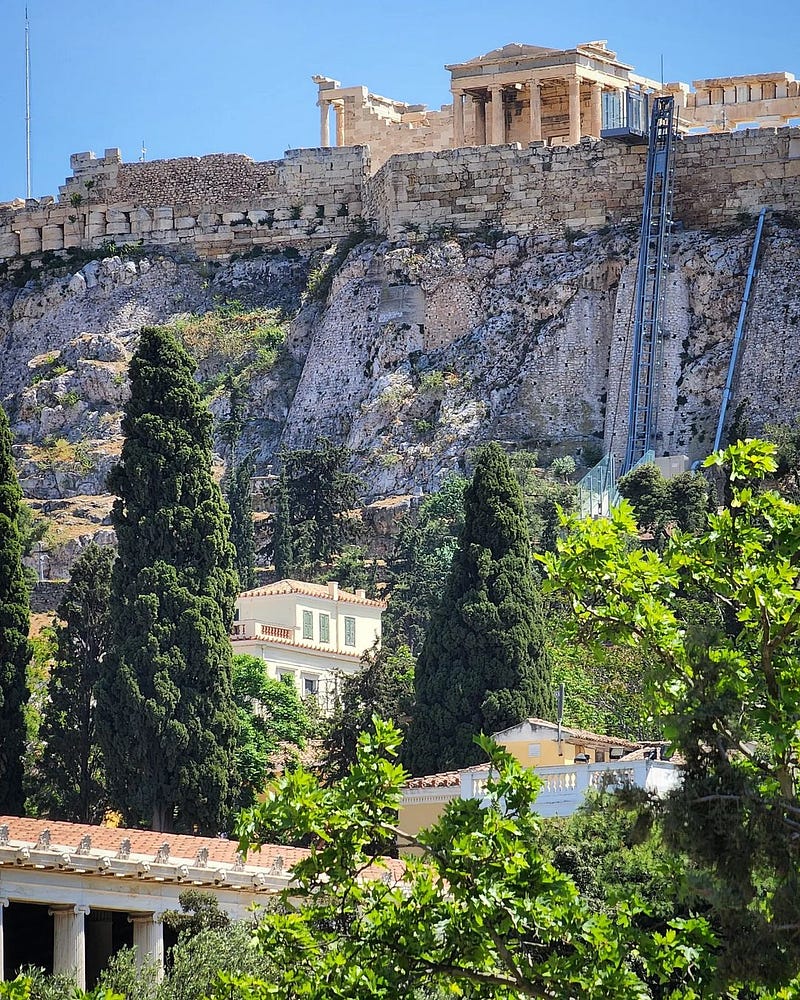
I have fond memories of my 4-week stay in Athens during the Spring of 2022 and photos I took with my smartphone camera, which I’d love to share. I invite you to join me on a journey through the impressive history of the Acropolis, a complex built over several centuries, frequently destroyed, and many times rebuilt.
Access through the neighborhood of Plaka
As soon as my partner and I arrived in the city and settled our belongings, we had Google Maps showing us the walking route to the Acropolis. It was getting dark, so we didn’t enter the Acropolis until a few days after.
It didn’t matter, though; the view from below was breathtaking. The spectacle of the ancient structures lit up against the night sky was a sight to behold.
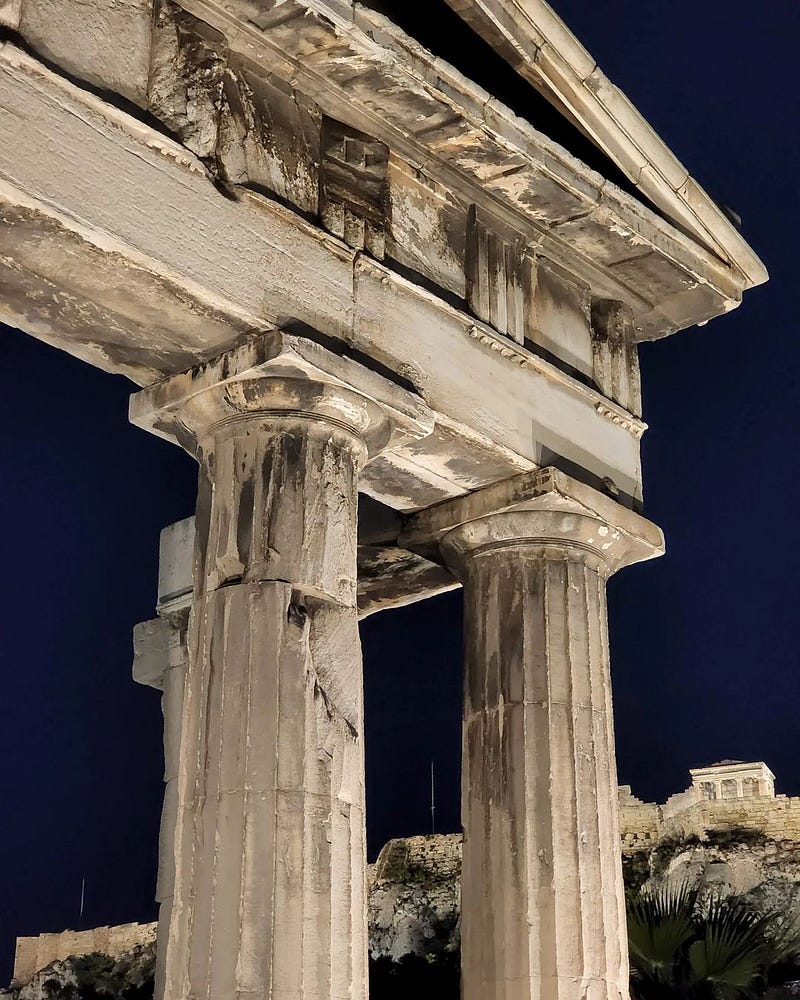
The Acropolis was once a grand and imposing complex of structures that stood tall above Athens. Today, the historic neighborhood built on top of the ancient city and located at the foot of the rocky outcrop is named Plaka.
Their streets are lined with traditional Greek buildings, many of which are painted in bright colors and adorned with climbing plants. This picturesque neighborhood is filled with narrow, winding streets, perfect for exploring on foot.
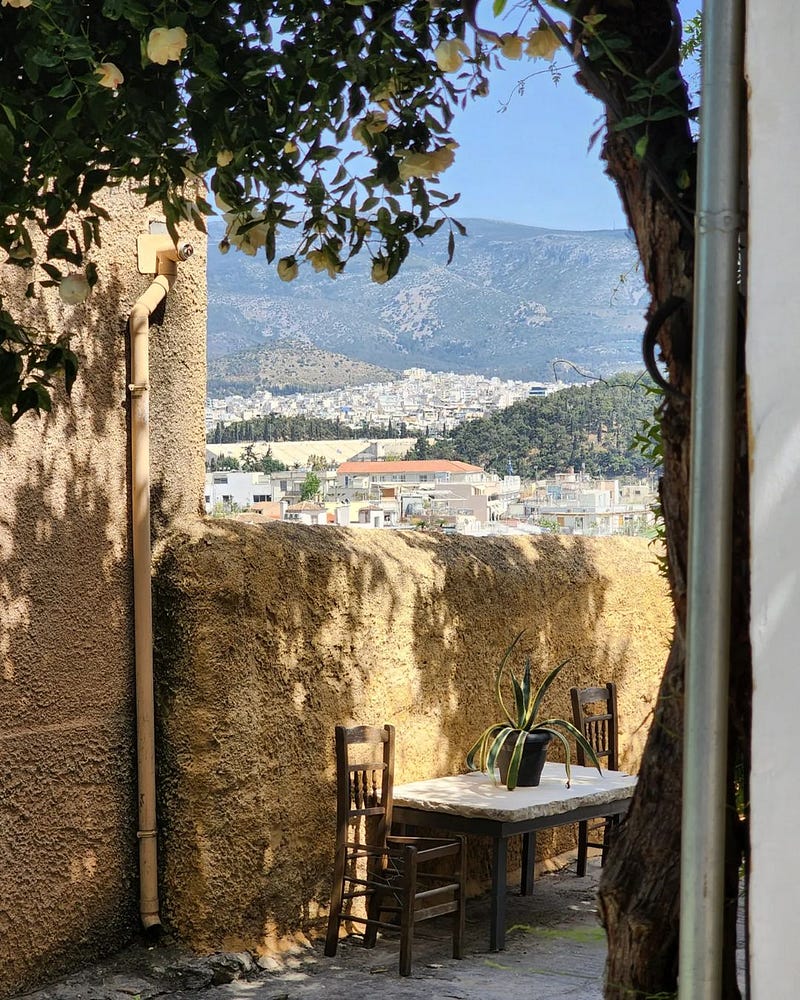
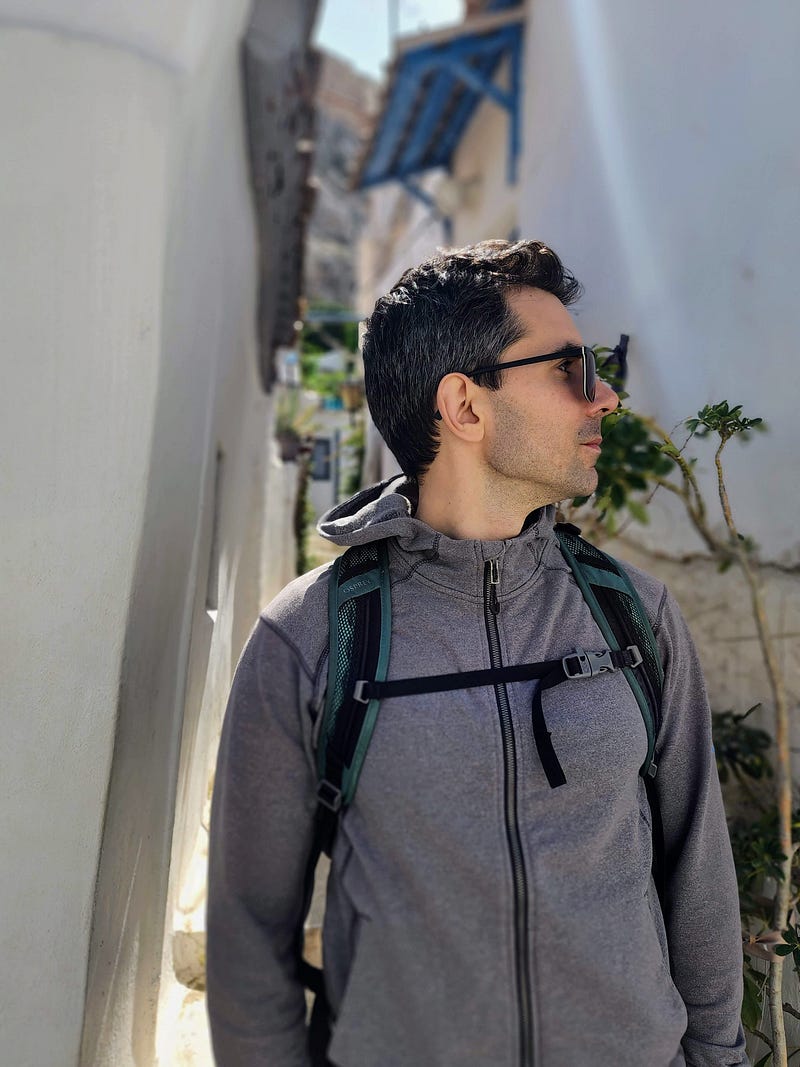
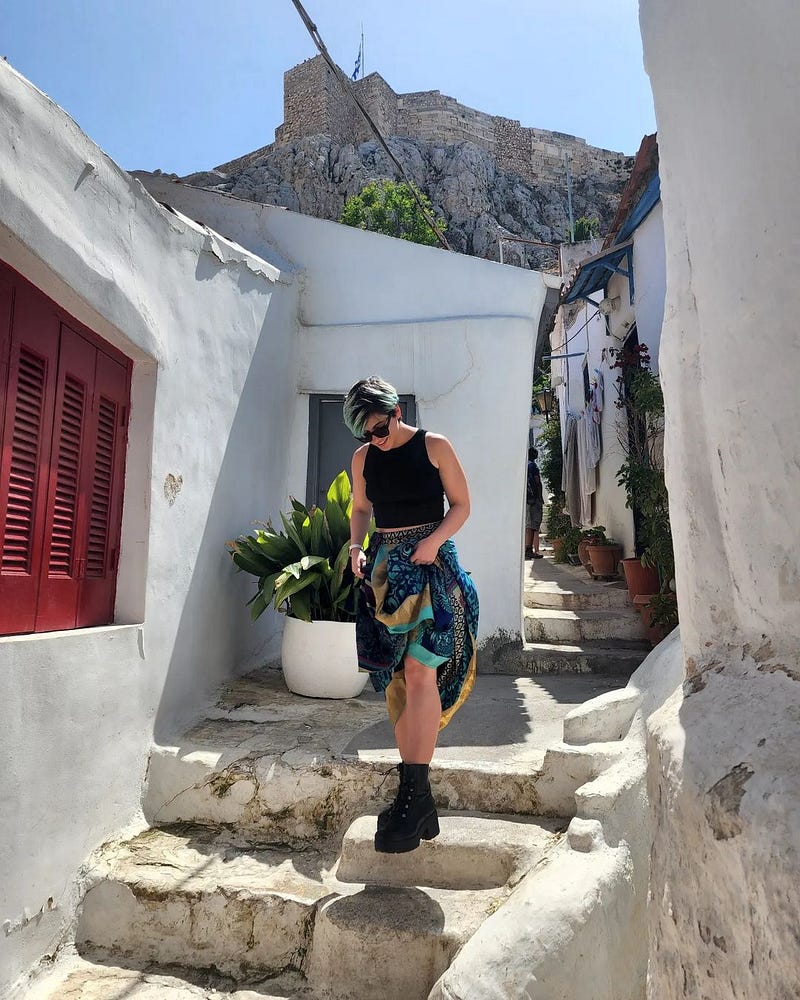
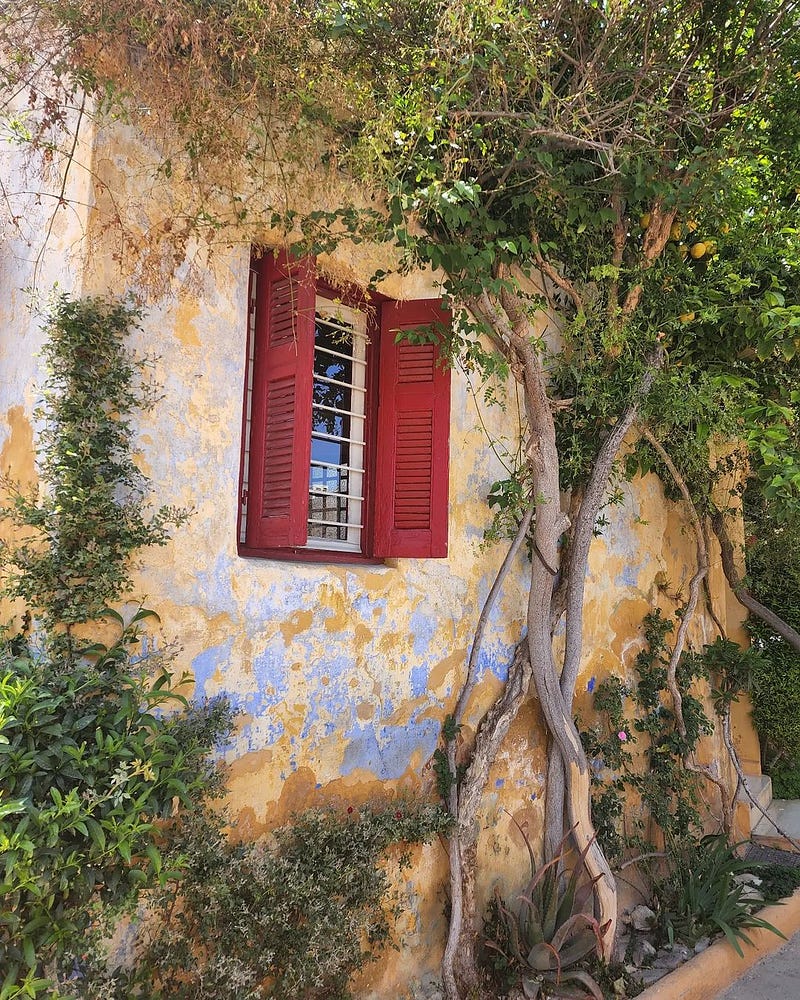
The sights and sounds of Plaka made our way up to the Acropolis to take in some of the city's most beautiful views.
The new museum
We felt ready to go up the hill a few days after exploring the surroundings. Prior to entering the archaeological site, one of the best decisions was to visit the modern Acropolis Museum, built in 2009, to gain a deeper understanding and appreciation of what we were yet to see.
Since its inauguration, the Acropolis Museum has become the center of the controversy around whether the Acropolis relics owned by foreign entities should be returned to Athens. Almost half of the surviving fragments and sculptures are in the British Museum. Many other pieces can be found in other museums across Europe.
The Greek government has been especially advocating for the repatriation of the Parthenon Marbles, which were taken away between 1801 and 1812 from the Acropolis by a British diplomat, Lord Elgin, with the permission of the Ottoman authorities who were in control of Greece at that time. The diplomat then transported the artifacts to Britain and sold them to the British Museum in 1816.
Currently, many argue that the Parthenon Marbles were obtained through illegal means. The Greek government maintains that these artifacts are vital to the country’s cultural heritage and should be returned to be exhibited in the new Acropolis Museum.
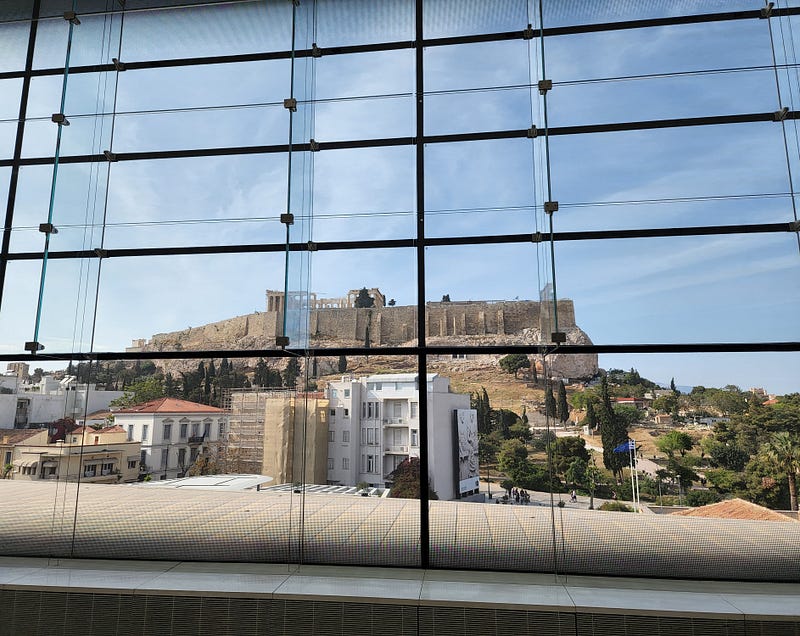
Entering the archeological site
Since ancient times, people have used the buildings in this complex for all sorts of activities, such as religious worship, holding important gatherings, as a fortification during military conflicts, and even as a harem before the Greek independence. Today, the Acropolis of Athens is considered one of the world's most significant cultural and historical landmarks, attracting millions of visitors annually.
I recommend getting the bundle ticket that grants you access to the Acropolis and six other archaeological sites. They are located nearby and worth visiting, including Hadrian’s Library, the Ancient Agora, and the Lykeion -just discovered in 1996- where Aristotle established his school of philosophy.
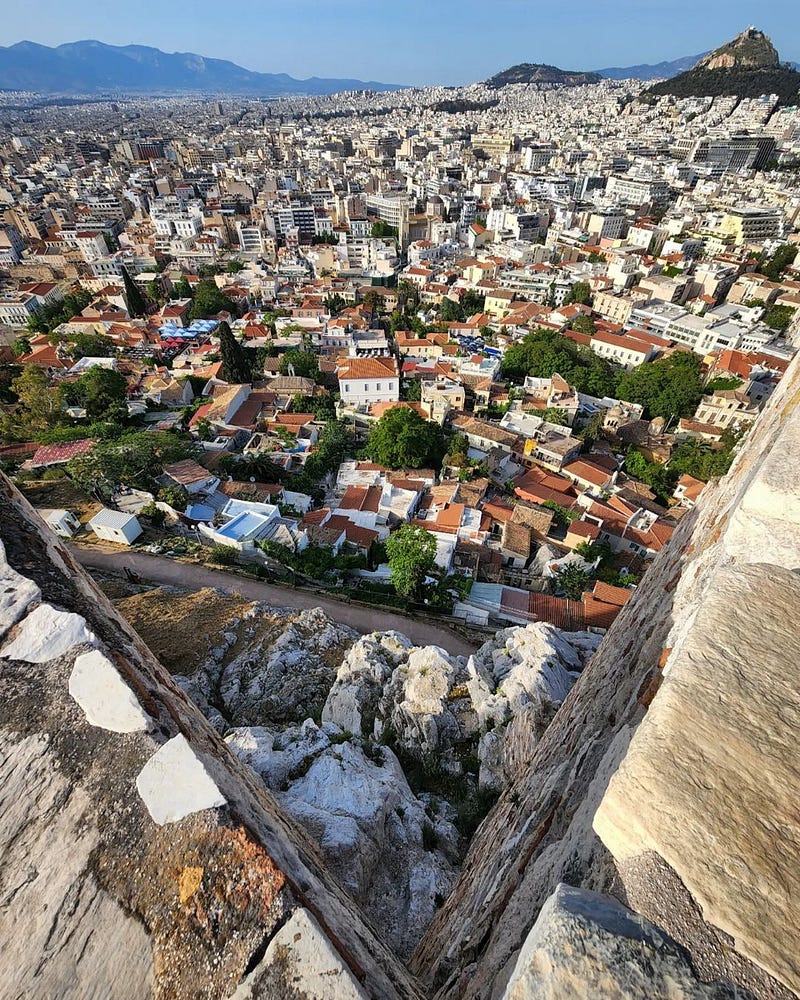
Built, destroyed, and rebuilt again
As we hiked up the southern slope towards the summit of the Acropolis, I reflected on one of the key things I had learned at the museum: that despite its rich cultural heritage, the structures built on this iconic landscape have been destroyed and recreated multiple times over the centuries, mirroring the rise and fall of human civilization.
Based on archeological findings, the history of the Acropolis probably began with the first humans arriving in the Neolithic over 8,000 years ago. A few millennia later, the people who now we call the Mycenaeans built the earliest significant structures on the top of this rock around the 13th century B.C.
A megaron palace complex and the massive Mycenaean Fortification Wall were among the long-gone constructions. Due to the use of perishable materials and the subsequent buildings layered on top, almost every piece of these original edifications has been lost.
The first stage of construction of the structures that can be seen today began with the building of the massive “Cyclopean Walls” between the 8th and 7th century B.C. These imposing walls were constructed using large blocks of limestone and, according to Greek mythology, were built by a few of the giant one-eyed Cyclops.
In reality, enslaved people were forced into the quarrying and transporting materials to the top of this rocky outcropping, which stands at an average height of 156 meters above sea level. They worked alongside Athenian freemen and skilled artisans to create the impressive structures built in the following decades and centuries.
The construction of the Theater of Dionysus, considered the first theater in the world and the birthplace of Greek tragedy, took place in the 6th century B.C. on the southern slope of the rock. As the name suggests, it was dedicated to the god of wine, fertility, and theater. Today it is one of Greece's most well-preserved ancient theaters, still retaining its essence. It is a memorable experience to sit in the grandstand and imagine witnessing one of the plays by Sophocles, Aeschylus, or Euripides that premiered here.
From the history books, we know that in 480 B.C. — after the defeat of the renowned Spartan force holding the pass of Thermopylae — the empire led by King Xerxes proceeded to take over Athens. The Persian invaders burned and plundered this city, leaving the Acropolis in ruins for the first time ever.
A few years later, the Athenians were determined to rebuild their beloved citadel. They worked tirelessly to restore the structures, and by 449 B.C., the Acropolis was once again a symbol of the city’s power and wealth. The most iconic structure of the Acropolis, the Parthenon, was built in celebration of the Greek victory during the Greco-Persian Wars.
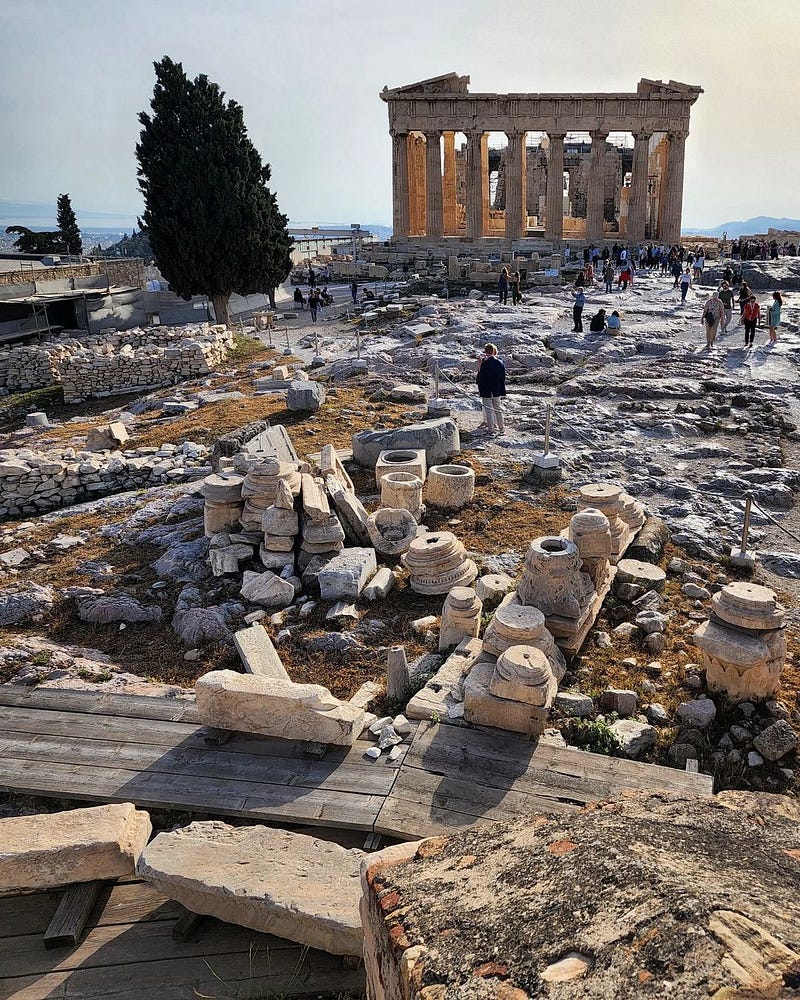
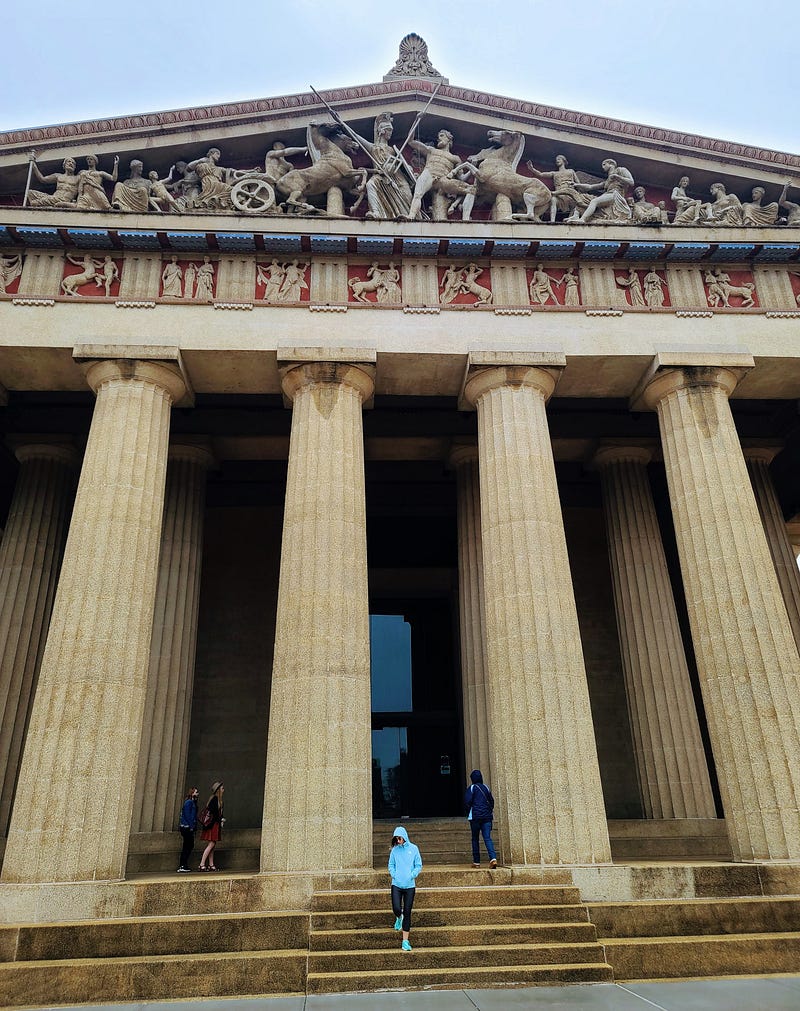
The white marble of this temple was originally covered in a layer of gold and ivory dedicated to the goddess Athena. Her figure stood inside and was considered one of the most valuable statues in ancient Greece. Sadly, the colossal Athena Parthenos is believed to have been entirely destroyed. Today, there is a full-scale interpretation of what it might have looked like on display at The Parthenon in Nashville, USA.
A year before visiting the original structure, we had the opportunity to enter this surprising building, erected in 1897, to become part of the Tennessee Centennial Exposition.
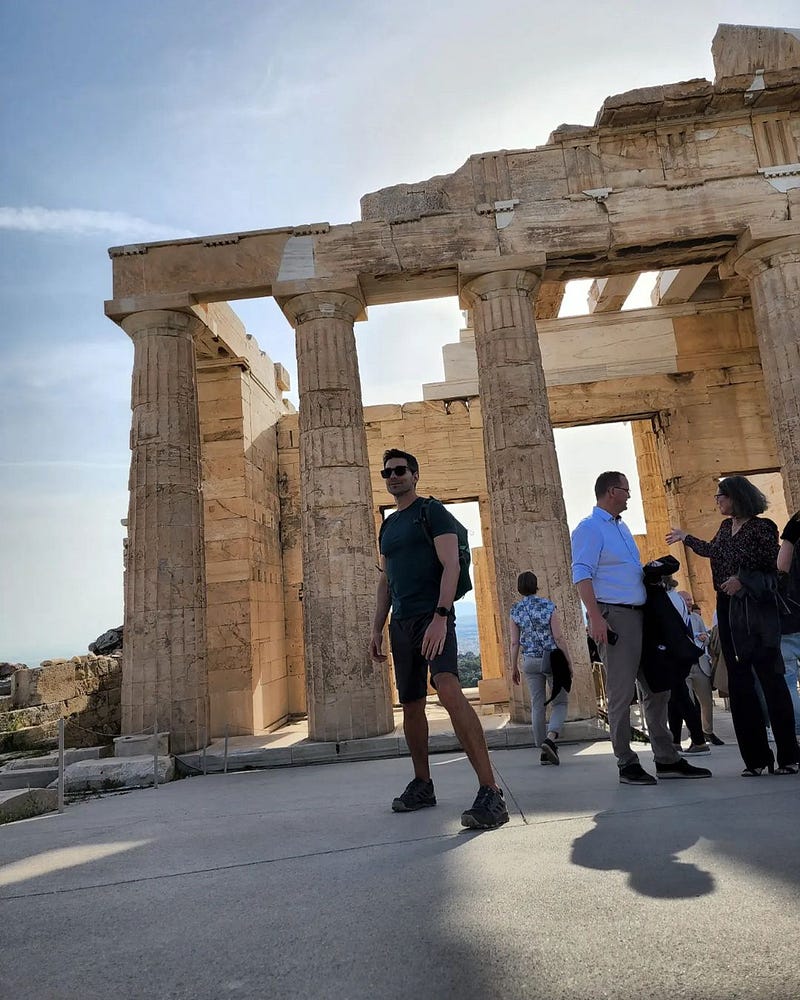
Back in the 5th century B.C., a monumental gateway project adorned with intricate carvings and sculptures began once the Parthenon was almost completed.
The Propylaea, built under Pericles' rule, still serves as the entrance to the Acropolis and allows visitors first to catch a glimpse of the magnificent structures that lay ahead. Here is precisely where I had to pause to take in the stunning sight of the original Parthenon remains.
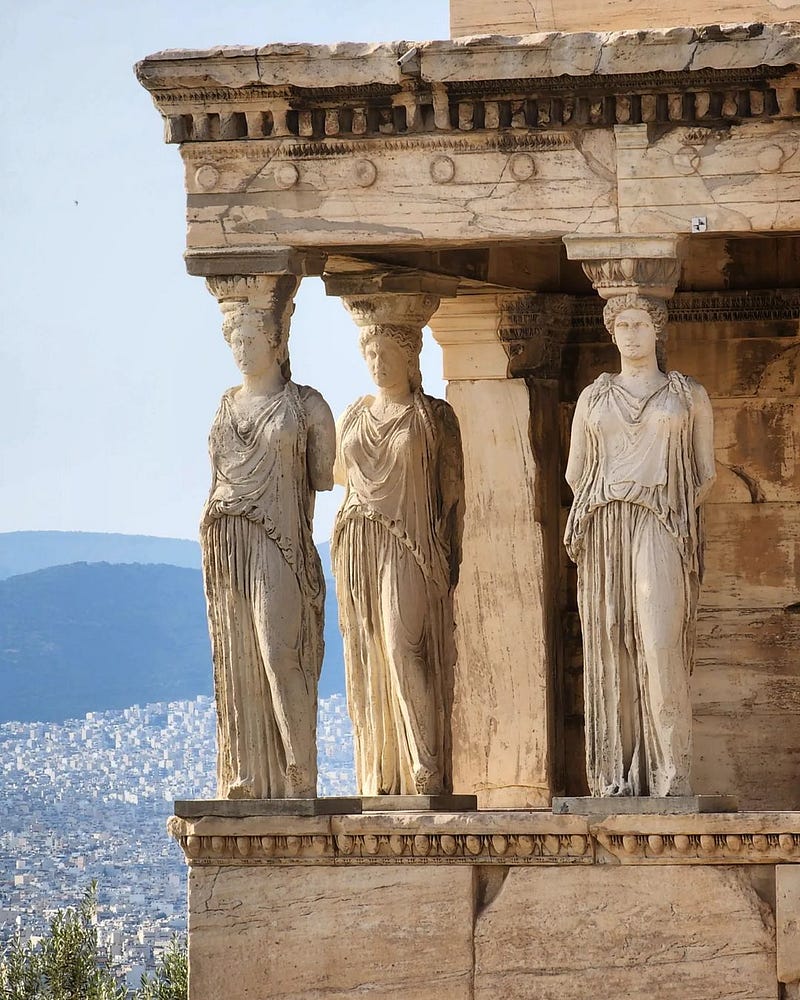
Right next to the Parthenon stands out another remarkable temple: my favorite. The Erechtheion was initially dedicated to Dionysus and Aphrodite, the goddess of love and beauty. This religious structure is unique in its design, with a porch supported by six caryatids, which are sculpted female figures serving as an ornament and architectural support.
Five of the original caryatids are now preserved in the Acropolis museum, exposing their identical replica to the weather.
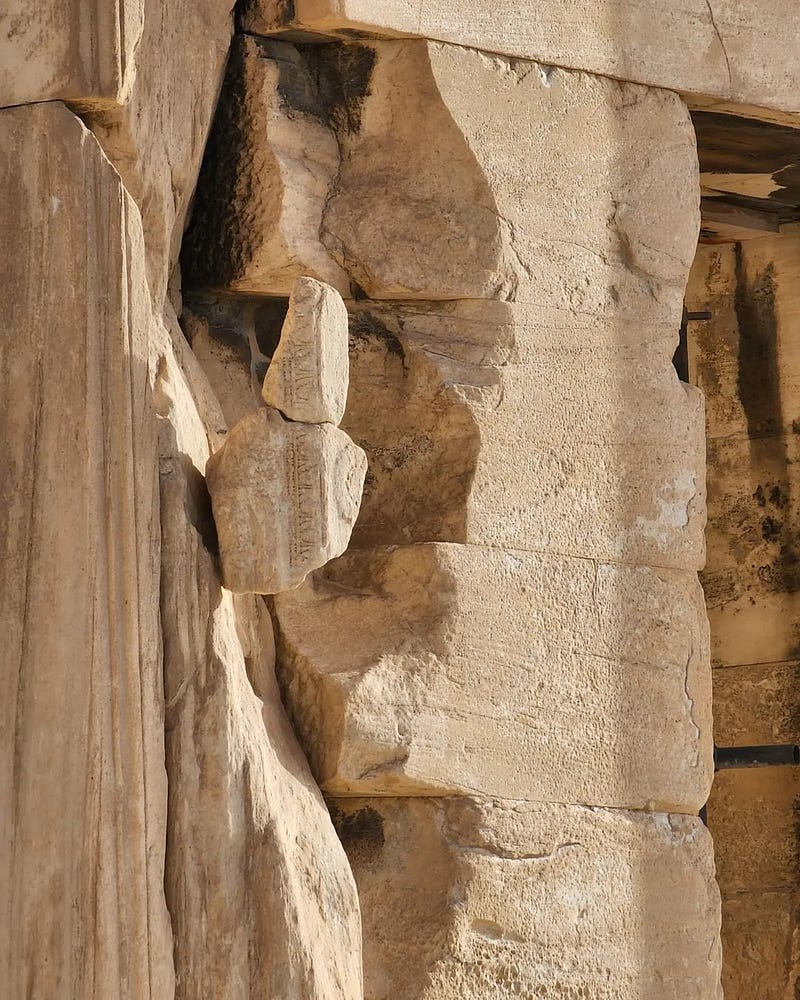
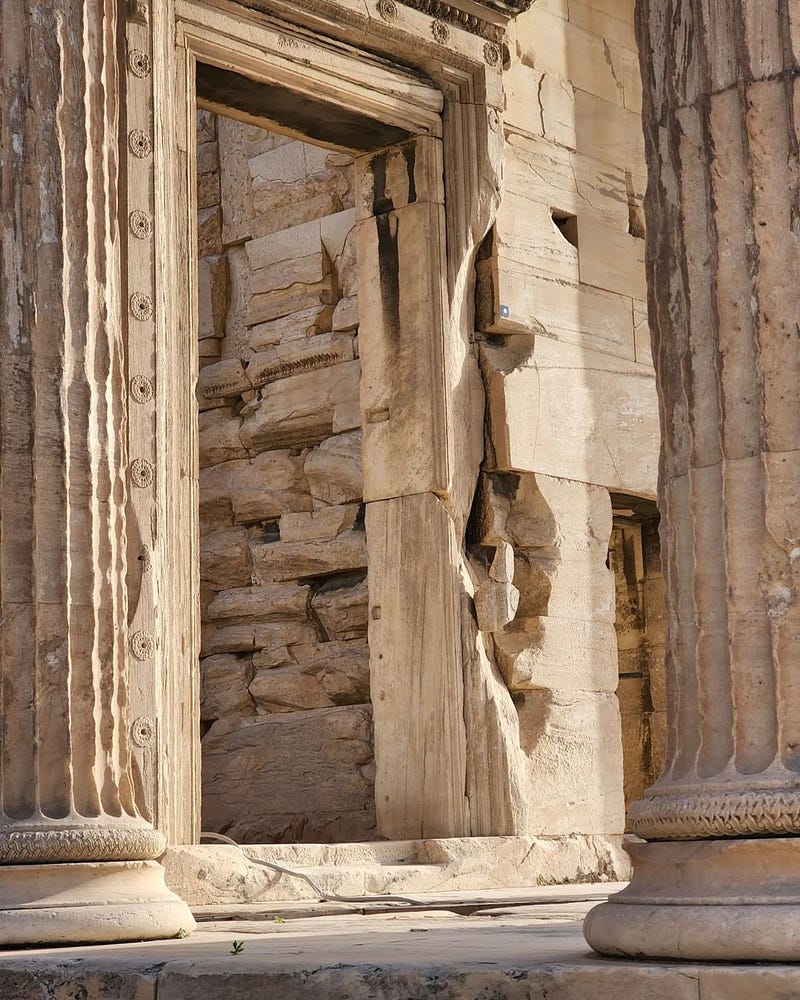
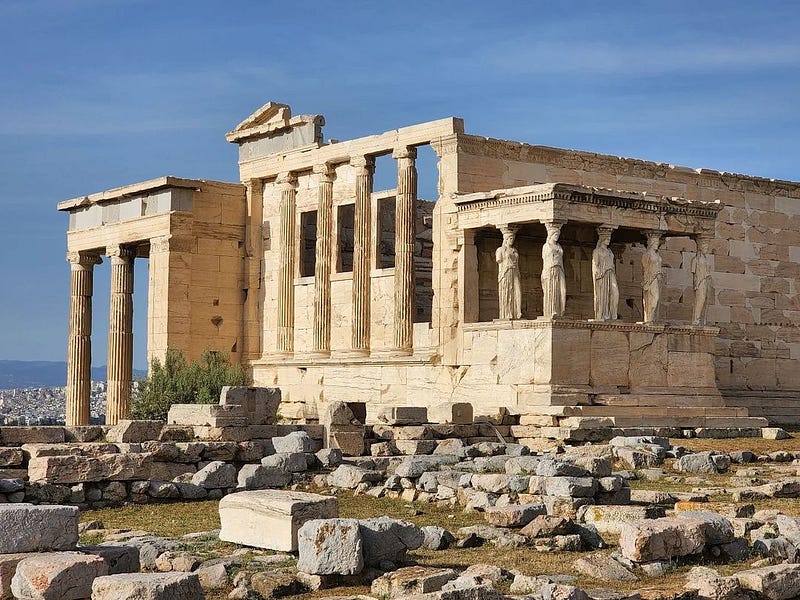
The last of the classical structures, the theater Herodeion used for musical and poetic performances, was built in the 2nd century B.C. by the wealthy Athenian Herodes Atticus as a gift to the city.
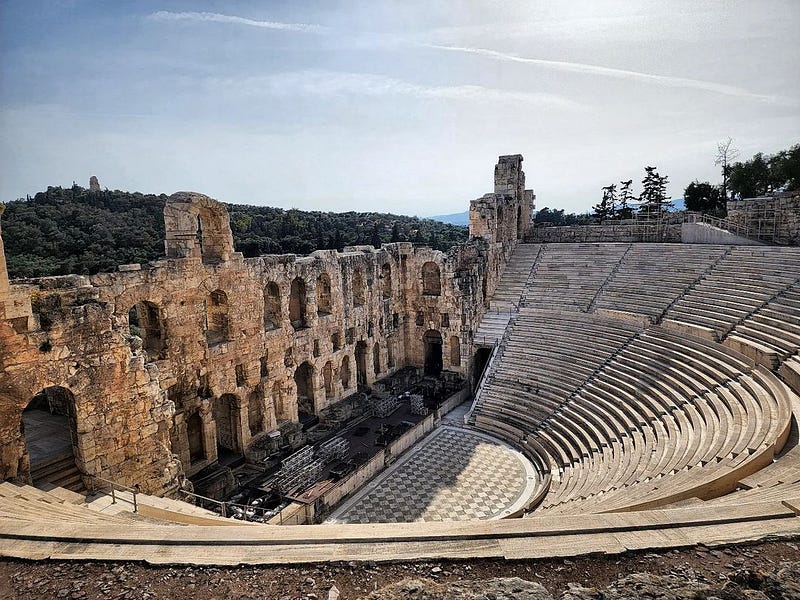
The Roman Empire, with its vast military and economic power, was able to conquer and absorb the Greek city-states by 146 B.C. The Romans were deeply impressed by the architectural and cultural achievements of the Greeks. Many of the structures on the Acropolis were studied by Roman artists and engineers, who adopted numerous elements of Greek architecture into their building styles.
Not long after the Roman conquest, the Heruli, a Germanic tribe, sacked Athens and caused significant damage to the city’s monuments, including those on the Acropolis.
The site was subsequently abandoned on multiple occasions, allowing for vegetation to overtake the ruins and for natural elements to cause damage to the complex. Additionally, the stones of the Acropolis were commonly used as building materials for other nearby constructions, resulting in a depletion of the structures.
After Christianity was established, particularly in the 6th century A.D., the temples were converted into Christian churches. The Parthenon was dedicated to the Virgin Mary, serving as the city’s cathedral in the 11th century. The Temple of Athena Nike became a chapel, and the Propylaia an episcopal residence.
Centuries later, in 1204 A.D., the Fourth Crusade arrived in Athens. The crusaders sacked the city in their pursuit of treasure, and the Acropolis was gradually transformed into a castle.
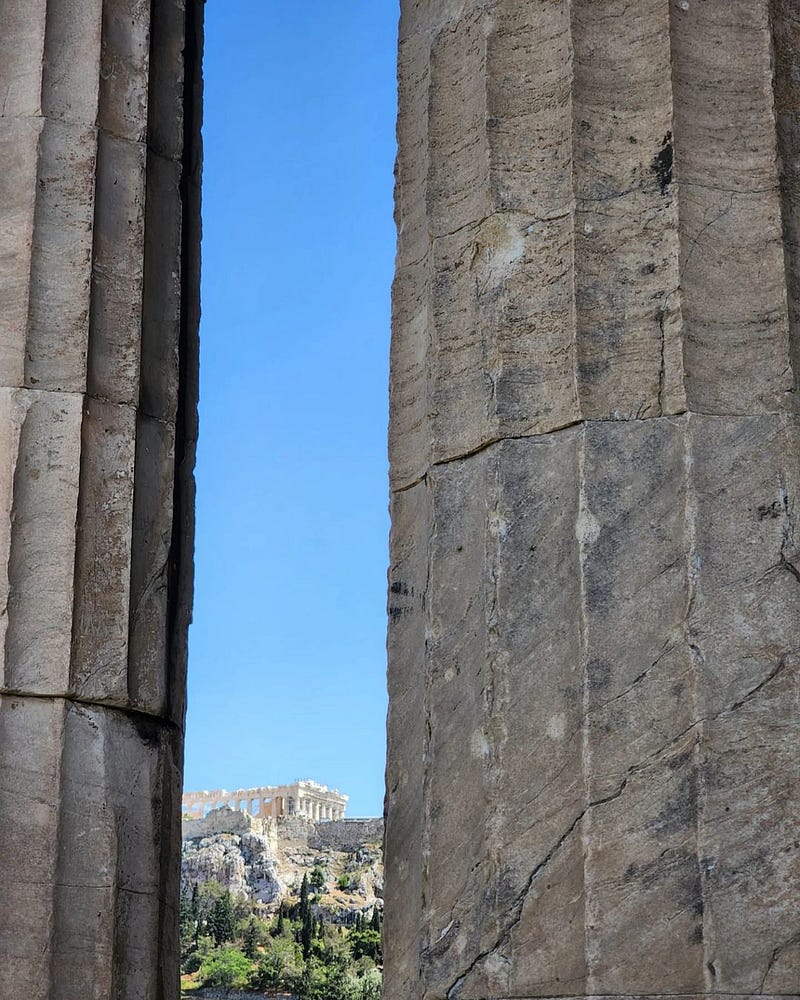
The Acropolis underwent more changes during the Ottoman era, spanning from the 15th to the 19th century. The Ottoman Empire utilized it as a military base, adding new fortifications to make the rock more defensible. The Parthenon was converted into a mosque for Islamic worship, minarets were added to the temple, and even a harem was established on the site.
In 1687, the Parthenon was used as a gunpowder arsenal by the Ottomans and was severely damaged by the Venetian’s siege of the city. A cannonball struck the temple and caused an explosion that made the roof collapse and destroyed many sculptures and architectural features.
By the 19th century, during the Greek War of Independence, the decaying Acropolis played an essential role in the conflict. In 1822, the Greeks captured the fortifications on this rock. The Ottomans, in turn, bombarded it with artillery. The military operations lasted for several months, but the Greeks managed to hold off the Ottoman forces and maintain control of the fortress.
During the war spanning over eight years, the Acropolis suffered significant damage. Many of the ancient structures were severely affected by the artillery shells. The conflict finally ended with the recognition of an independent Greek state in 1832, and the Acropolis became a symbol of the country’s freedom and sovereignty.
The ongoing restoration
After the independence war, modern works on the Acropolis began. Renewed interest in Greece’s classical past sparked the beginning of excavations and restoration of the original structures.
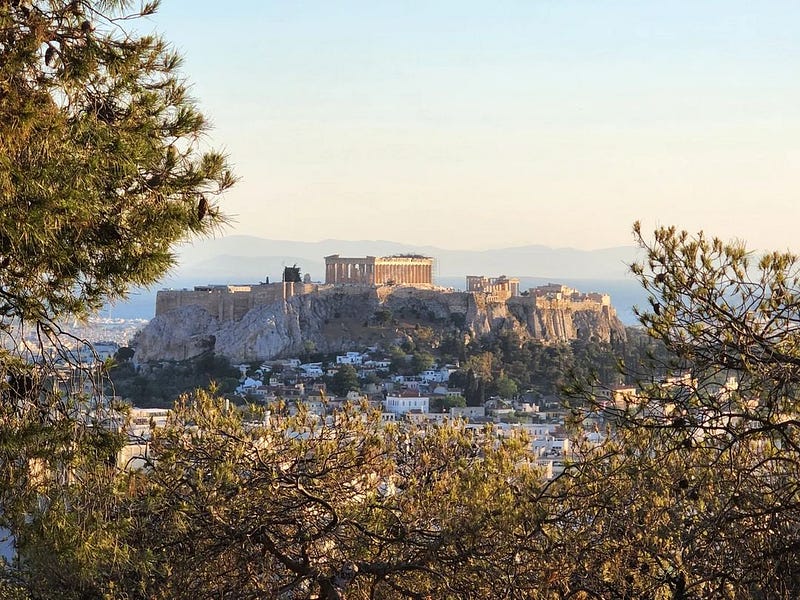
During World War II, the Acropolis was quickly occupied by the German army and used as a strategic point of defense. The Nazis built fortifications and trenches on the archeological site, and tragically the Parthenon was used again as a storage facility for ammunition.
Mortar bombs and shells exploded in the Acropolis area, and the new invaders looted many ancient pieces. Finally, thanks to the resistance from guerilla defenders across the country, and the military assistance from the Allies, the Greek Prime Minister Georgios Papandreou arrived in 1944 at the Acropolis to celebrate the liberation.
Since then, Germany has returned to Greece over 10,000 artifacts removed illegally by Nazi archaeologists from various sites across Greece. These artifacts, dating back to Neolithic times, were repatriated as a gesture of goodwill and to help restore cultural heritage.
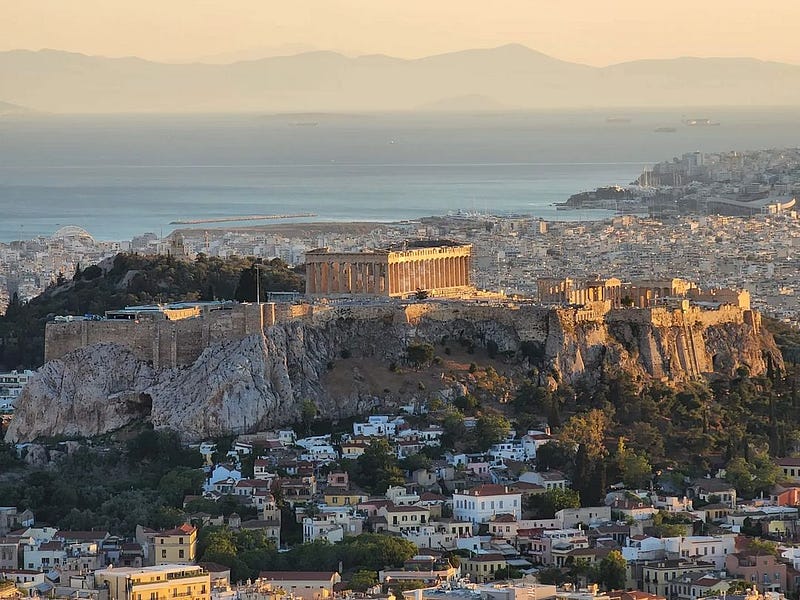
In the late 20th century, the Acropolis gained more recognition as an important archaeological and historical site.
The Acropolis Restoration Project, driven by a multidisciplinary scientific panel of experts since 1975, was established to reverse the damage caused by military actions, natural disasters, industrial pollution, and previous restoration attempts. The goal is to make the classical buildings look like they did when they were first built, using new materials very carefully with the assistance of state-of-the-art technology.
The Acropolis of Athens was declared a UNESCO World Heritage Site in 1987, boosting restoration endeavors to preserve these ancient buildings for future generations to admire and learn from.
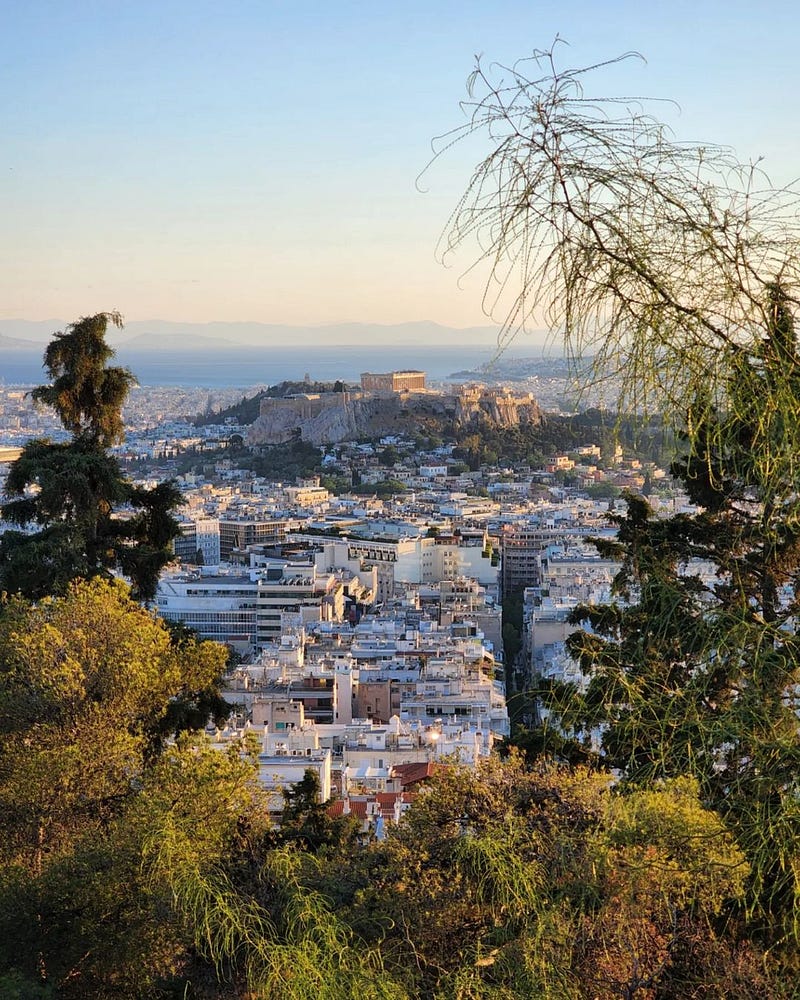
I eagerly anticipate a second opportunity to visit the Acropolis of Athens to witness further progress in preserving this living symbol of ancient Greek civilization.
You can view more pictures from my experiences in Greece and other unique locations on my Instagram photoblog.


