
Twilight of the Skeptics, Part IV
Seeing What You Want to See
A skeptic’s indignant charge that a New Yorker story about the Pentagon and UFOs is ‘absurdly credulous’ is a textbook example of confirmation bias in action.
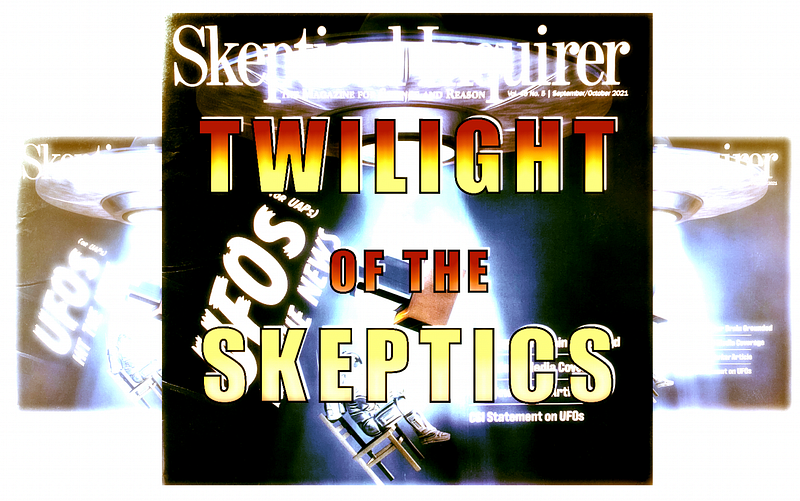
This is the fourth article in an occasional series Trail of the Saucers is publishing this fall looking at Skeptical Inquirer magazine’s September/October issue, which challenges the “credulity” of mainstream media coverage of UFOs and extols the virtues of “skepticism” in looking at the phenomenon. — The Editors
Our first installment looked at how “veteran UFO skeptic” Robert Sheaffer’s explanation of the 1965 Kecksburg incident ignores statements by virtually everyone from Kecksburg. Our second article showed how Sheaffer tried to explain away the November 2006 Chicago O’Hare UFO by chalking it up to a weather phenomenon where one couldn’t have existed and wouldn’t have been visible if it had. Our third installment examined how skeptics justify ignoring the work of UFO and other paranormal investigators.
Today, we return to the alleged “credulity” of the media and in particular the triggering article that appeared in The New Yorker last spring. But first, the big picture of the September/October issue of Skeptical Inquirer is worth considering. Half a dozen articles and columns, along with two unpublished letters to The New Yorker. Because only after you read all of it do you realize that there’s a lot of invective but very few specific, substantive complaints.
“Serious though incomplete reporting has appeared in mainstream news media,” laments Guy Harrison. The New York Times, USA Today, the Associated Press and 60 Minutes were among those outlets, he writes that produced little more that produced “smoke and noise.”
“Unless you have been hiding under a rock,” declares Sheaffer in another article (they gave him two; in one, he quotes himself from the other), “you have no doubt noticed that news media have been filled with gushing, uncritical articles proclaiming the glorious new reality of UFOs.” These reports, Sheaffer continues, display “a congenital lack of journalistic skepticism or curiosity as well as a lust for sensationalism and ratings.”
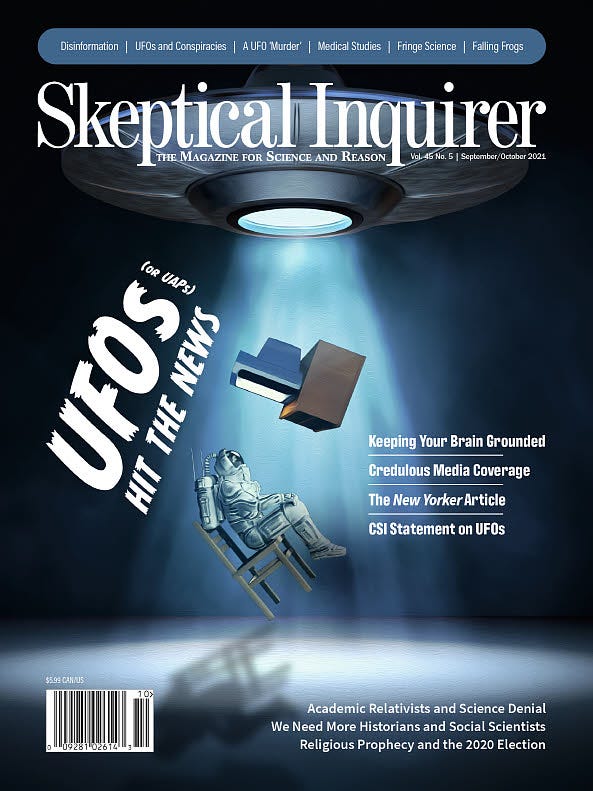
An example of this “sensationalism,” ironically, graces the cover of Skeptical Inquirer itself: The image of an astronaut seated in a chair watching TV, suspended in mid-air as the entire tableau is sucked into the underbelly of a UFO, across which “Skeptical Inquirer, The Magazine for Science and Reason” is emblazoned. Physician, heal thyself.
Curiously, in an article entitled UFOs Explode in Credulous Media, Sheaffer then goes on not to give us examples of this alleged credulity, but to ladle gruel from media outlets whose coverage was sufficiently incredulous: The New Republic (featuring Jason Covalito), his own blog, National Review, and an appearance by fellow skeptic Mick West on CNN.
Indeed, given the vague generalizations about credulity and a perceived lack of scientific context with few specifics, one gets the sense that the real reason the magazine is up in arms is because the media is reporting on the issue at all. This view is actually articulated by journalist Keith Kloor, who provides what Sheaffer hails as “the best explanation of what is happening.” The reason UFOs “will never, ever go away,” Kloor ludicrously claims, is because the pesky media keeps covering them.
It is The New Yorker article, however, that appears to have most offended the magazine’s pseudo-skeptical sensibilities. Describing it as “absurdly credulous,” Sheaffer says it constitutes nothing less than a “hagiography” of journalist Leslie Kean.
He supports his thesis by cherry-picking phrases and sentences to make it appear as if author Gideon Lewis-Kraus were a newly minted journalism school graduate starstruck by the subject of his profile (Kean) and dazzled by UFO woo.
Not surprisingly, he neglected to mention a few things.
Confirmation bias is a term that is most frequently encountered in the realm of human psychology and has been the subject of much study, for good reason. Because it’s a natural instinct that’s been documented one way or another all the way back to antiquity, it has ramifications in virtually every realm of human activity: Finance, politics, law and even scientific inquiry — which means even skeptics are not immune from it. Skeptical Inquirer has frequently cited confirmation theory in their coverage of various paranormal topics but also as it relates to other issues, such as the pandemic and vaccines.
Encyclopedia Britannica defines it thus:
Confirmation bias, the tendency to process information by looking for, or interpreting, information that is consistent with one’s existing beliefs. This biased approach to decision making is largely unintentional and often results in ignoring inconsistent information.
Obviously, it is useful in looking at allegations of media “bias.” Liberals claim the media coddles conservatives; conservatives charge that the media is liberal, “socialist,” whatever. It’s been going on for decades. Watching Twitter unfurl a viral shitstorm over the latest outrage reported by the mainstream press is to witness confirmation bias displayed in spectacular fashion.
Monday Morning Quarterback
Which brings us to Sheaffer’s Monday morning quarterbacking of the article by Lewis-Kraus in The New Yorker. Clearly feeling that the journalist dropped the ball and wasn’t nearly as incredulous as he ought to have been, Sheaffer let him have it with both barrels.
For example, Lewis-Kraus “mentions only in passing” something he should have spent more time on (Kean’s book on life-after-death scholarship). In one section, Sheaffer reveals his own previously undisclosed psi-like talents and divines the author’s true intentions: “He doesn’t want to tell us” the name of a British researcher who claims to have debunked Rendlesham. (The fact that Lewis-Kraus seems to concur with the debunking is, apparently, irrelevant).
Red flags abound. Lewis-Kraus finds his conversations with Kean “greatly pleasurable distractions”; there’s a “subtle put-down” of fellow skeptic Mick West comparing his calm demeanor to a mental health worker, etc. Also, Sheaffer presumes that he is one of the UFO debunkers Lewis-Kraus describes as “overtly hostile” and hilariously spends nearly a quarter of a page defending himself against the charge. One could go on (as he does) but you get the idea.
Sheaffer read The New Yorker article and saw what he perhaps didn’t want to see, but what he expected to see: more credulous UFO coverage from those buffoons in the media, coming on top of the embarrassing slop dished up by the New York Times, 60 Minutes and the rest. All that was required of him to make the case of “credulity” was to go for the low-hanging fruit of a reporter’s sincere attempt to be fair.
So let us now embark on the road less traveled (or rather the one Sheaffer skipped altogether) as he prepared his report on The New Yorker’s alleged trail of shame, the embarrassing “credulity” of journalist Gideon Lewis-Kraus. The following is a compilation of sentences, turns of phrases, and observations made by Lewis-Kraus that Sheaffer left out to give his “analysis” a clear and open glide path:
— Lewis-Kraus begins the piece with a stage-setting device: Steven Greer’s May 2001 National Press Club presentation, at which Leslie Kean was present. Her supposedly credulous take on it (quoted by Lewis-Kraus and ignored by Sheaffer) is this: “There were some good people at that conference, but some of them were making outrageous, grandiose claims.”
— Continuing, Lewis-Kraus writes that: “Greer’s ‘Executive Summary’ was woolly.” A few sentences later: “One obvious question seems not to have occurred to Greer: Why, if these spacecraft are so advanced, do they allegedly crash all the time?”
— “Ufologists have a perpetual faith in the imminence of Disclosure, a term of art for the government’s rapturous confession of its profound U.F.O. knowledge.”
— Lewis-Kraus concludes a section on the flurry of media reports of UFOs that followed the Kenneth Arnold sighting in 1947 by quoting a scientist interviewed by The New York Times: “…Gordon Atwater, an astronomer at the Hayden Planetarium, who attributed the flurry of reports (in the 1940s) to a combination of a ‘mild case of meteorological jitters’ and ‘mass hypnosis.’”
— After noting that twenty percent of UFO reports lacked earthbound explanations, Lewis-Kraus concedes: “On the other hand, there was no dispositive evidence — the wreckage of a crashed saucer, perhaps — and, as a scientist at the RAND Cooperation reasoned, interstellar travel was simply infeasible.”
— Lewis-Kraus notes that legitimate concerns about “genuine excursions over U.S. territory could be lost in a maelstrom of kooky hallucination.”
— Writing about how the media in the 1960s was enlisted to assist with the government’s debunking efforts, Lewis-Kraus concludes that this manufacturing of consent “culminated in a 1966 TV special, ‘UFO: Friend, Foe or Fantasy?,’ in which the CBS anchorman Walter Cronkite patiently consigned U.F.O.s to the oblivion of the third category.” [Younger readers might here be advised that the late Cronkite was once regarded as “the most trusted man in America” — DB]
— “Ninety-five percent of supposed U.F.O.s really did have a garden variety derivation: uncommon clouds, weather balloons, atmospheric temperature inversions. Luminous orbs were attributable to Venus; silent triangles could be connected to classified military technology.”
— Weighing in on Roswell, Lewis-Kraus describes it as a case “where any solid evidence that might once have existed had become hopelessly entangled with mythology.”
— In 2014, Kean “had begun breaking stories … with an atypical recklessness.”
— UFO believers have (like debunkers) “a tendency to discount or overlook inconvenient facts.” [It is worth noting that here Lewis-Kraus essentially walks the same walk as Skeptical Inquirer, referring to “UFO believers” in a way that conflates UFOs with aliens; we address this problem in Part III — DB]
— Although Sheaffer admonishes The New Yorker for not identifying the British debunker who has written extensively on Rendlesham, Lewis-Kraus is sufficiently unambiguous in interpreting that work: The researcher, he writes, “exhaustively demystified the case ….”
— Lewis-Kraus: Robert “Bigelow believes, as one source put it to me, that ‘there are aliens walking around in the supermarket.’” [What is the point of such a line, other than to imply the author’s suspicion that Bigelow is out of his mind? — DB]
— “Kean is unwavering in her belief that she and an insider exposed something formidable, but a former Pentagon official recently suggested that the story was more complicated: the program she disclosed was of little consequence compared with the one she set in motion.”
—Lewis-Kraus reports that (Luis) Elizondo’s successor did not want to be identified, “lest U.F.O. nuts swarm his doorstep.”
— In July 2020, Kean’s UFO reporting with Ralph Blumenthal “veered into fringe territory.”
— “The former Pentagon official told me that he found Kean’s evidence wanting. ‘There are terms in Leslie’s slides that we don’t use — stuff that we would never say,’ he said. “It doesn’t pass the smell test.”
It is easy to imagine that somewhere out there are die-hard “pro-UFO” ideologues (“believers”) who read Lewis-Kraus’s article last spring and were convinced (by excerpts like those above) that The New Yorker had formed an unholy alliance with Sheaffer and the entire skeptical community and that the author had happily swallowed the Blue Pill and was probably chuckling to himself as he wrote, trying to undermine all those UFO “nuts” who occupy “fringe territory” in the heart of “a maelstrom of kooky hallucination.”
The fact-checking apparatus at The New Yorker is well-known in the news industry. Decades before Skeptical Inquirer magazine was lecturing Americans about skepticism, The New Yorker employed editors to go through every single line of writers’ prose to make sure they were accurate. In the early 2000s, around the time that the size of American newsrooms peaked, The New Yorker reportedly employed more than a dozen of them.

Kean has described a similarly rigorous, exacting editing process at The New York Times in which she and colleague Ralph Blumenthal face a “How-do-you-know-this?” grilling with virtually every assertion they make. Does Skeptical Inquirer really believe that mainstream outlets like these (along with 60 Minutes) aren’t approaching this topic with their eyes wide open?
Skeptical of what, exactly?
It is fascinating, reading Sheaffer’s snarky prose, how he chooses to focus and limit his skepticism. For him, “the important thing to keep in mind” is the Pentagon’s AATIP program’s origin story — not the phenomena that the office was charged to investigate!
He runs through it at the end of his article slamming The New Yorker:
It happened because of Robert Bigelow and Senator Harry Reid (D-NV, who was then the Majority Leader in the U.S. Senate). Reid arranged a sweetheart $22 million government contract for his major campaign contributor Robert Bigelow. Leslie Kean found out about it and coauthored several articles about Pentagon UFOs in The New York Times. The rest, as they say, is history. Drunk history, actually.”
A few observations:
- With the exception of the fact that Bigelow was a campaign contributor, virtually every detail of this (and a lot more detail) appears in the article that Lewis-Kraus wrote.
- Sheaffer’s capacity for skepticism (and this applies to most skeptics on the UFO issue) about what the government is up to never extends to larger and far more relevant questions: What information do government officials have that compels universally respected public servants like Luis Elizondo and Christopher Mellon to hit the podcast circuit and all but come out and declare we’re being visited by aliens? What have they seen? What do they know? What are the national security constraints that they claim prevent them from going into more detail? Does Sheaffer seriously believe that it’s all just a power play for more money from Congress? Lacking the clarity of Skeptical Inquirer standards of proof, that sounds like a conspiracy theory.
- Sheaffer argues that this behind-the-scenes deal brokering between a Congressman and one of his wealthy contributors was, apparently, the only reason for ATTIP — “not because ‘the Pentagon’ or ‘the Navy’ was concerned about UFOs (or ‘UAPs’ as they prefer).”
How does one even respond to this? This is not skepticism; this is a toxic marriage of pure cynicism and delusion. Sheaffer would apparently have us believe that Elizondo, Mellon, Alex Anne Dietrich and other Navy pilots, sensing equipment operators (one of whom experienced PTSD because of what he saw) and other witnesses are all either lying, insane or breathtakingly stupid — all of them!
Let’s be clear about skepticism, which is not in and of itself bad. In the field of ufology, it is essential — with regard to both the phenomenon itself and to claims made by investigators. It is also a non-negotiable prerequisite for journalists, the best of whom come armed with finely tuned bullshit detectors.
So let’s end with a comment from one: Ross Coulthart, the Australian investigative reporter whose professional credentials and body of work on non-UFO topics speaks for itself and whose military and intelligence contacts rivals (and possibly exceeds) those of Kean.
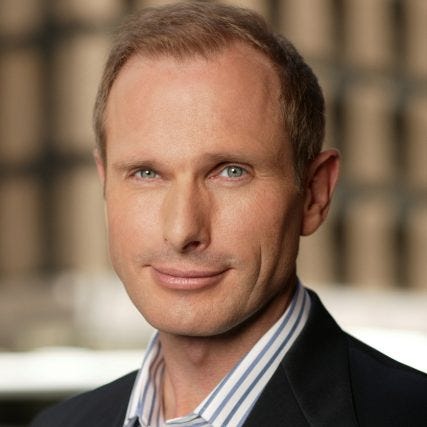
He was interviewed recently on the Theory of Everything podcast, hosted by the endlessly inquisitive Curt Jaimungal. Here, Coulthart muses about what he “believes” UFOs are and the accusation that he’s already made up his mind that they are “aliens.”
“It may very well still be that America really does have anti-(gravity) technology. Maybe they’ve developed this on their own, maybe it’s got nothing at all to do with aliens, and maybe there’s been a clever disinformation program to try to spread the notion around the world that America is invincible because it somehow has alien technology. I mean, I just don’t know, but I think we should really keep an open mind. I was amused, I got (hammered by) some dweeb debunker the other day who said I believe in aliens and I believe in UFOs. I don’t necessarily. What I’m doing is I’m exploring the mystery, which is what journalists should be doing. And there’s a fundamental misunderstanding here, I think this is one of the things that has scared journalists off. Because there’s a tendency I think for people to assume that because I’m engaging with this subject matter and taking it seriously — and I do think it should be taken seriously — that I believe credulously everything that everybody says. I’m sorry, but I don’t, and I don’t think we should.”
On the subject of UFOs and ufology, Skeptical Inquirer will no doubt continue their armchair refereeing. But Coulthart, Kean, Lewis-Kraus and others have skin in the game and sources Sheaffer, Covalito and Harrison can only dream about. Best keep an eye on the ones who are actually moving this ball.

Trail of the Saucers is edited by writer/producer Bryce Zabel and published by Stellar Productions. Zabel co-hosts the popular new podcast Need to Know with Coulthart and Zabel that can be found on all major platforms.


