
Science Through the Art of Glass
We don’t know how Leopold and Rudolf Blaschka made such astonishingly beautiful, delicate, and scientifically accurate models out of glass.
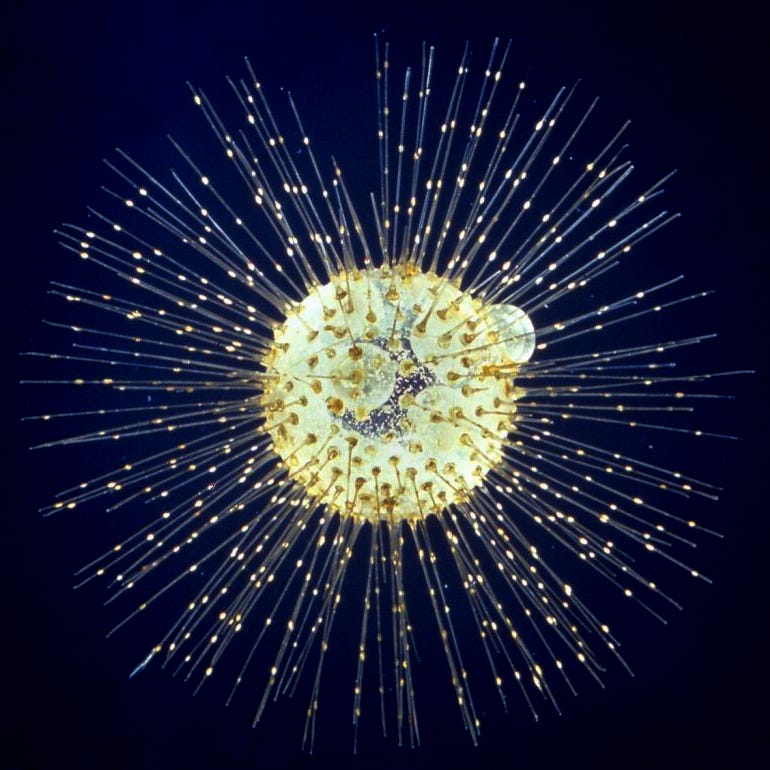
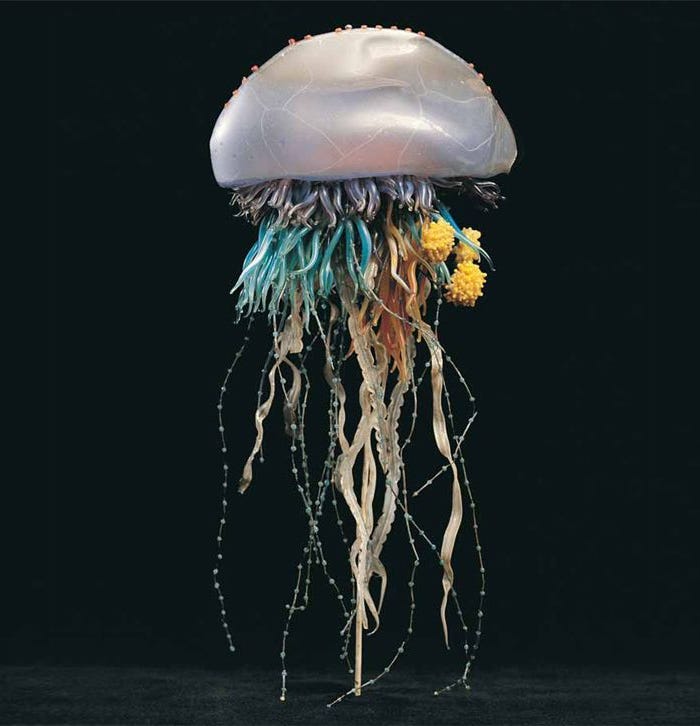
It’s hard to believe that the super-detailed scientific replicas, collectively known as The Blaschka Models, are made from glass. Firstly, the mind boggles at the sheer skill and precision. Secondly, one wonders how they’ve survived for a century or more. I mean, imagine handling one of the life-size jellyfish models, or the magnified models of microscopic single cell radiolarians with their hair-fine spines. Imagine making one! Which is all we can do, because the unique techniques employed by the father and son duo have been forgotten.
Glass has always held magical connotations, ever since its early use by the ancient Egyptians more than four-and-a-half millennia ago. It’s thought that glass was first revered as a gift from the gods, fallen from the heavens. They sought the spots where shooting stars had struck the earth, sometimes finding beads of natural silicate glass when the heat of meteorite strikes vitrified desert sand. It wasn’t until the first-century that Roman artisans learned to manipulate molten glass, shaping it by stretching and ‘blowing’. Their alchemists also experimented with adding various metal oxides to colour it.
Much of this knowledge was lost during the decline and fall of the Roman Empire and not rediscovered until the early Renaissance when Venetian glass became much sought after. For a time, their methods were a trade secret so precious that Venetian glass-workers were sworn to secrecy and forbidden to leave the country. Incredibly, it wasn’t until January of 2021 that scientists began to understand what happens when glass transitions between liquid and solid, discovering a state of matter new to physics. [citation]
Bohemian born Leopold Blaschka started out as a goldsmith and gem cutter before continuing the family business of making decorative glassware and ornaments. He soon discovered a steady sideline in glass eyes, initially for the taxidermy trade and then for human prosthetic replacements. For this, he honed his skill in creating colour and patterns in glass to match the colours and markings of the recipient’s original iris. He also began making glass models of flowers for his own amusement and to advertise his skill and precision.
During the 1840s he developed a new making method he described as ‘glass-spinning.’ Which, as far as I can ascertain, was similar to making spun-sugar and could produce very fine and intricate forms in glass. By the end of that decade, his first wife, their baby son, and his father all died in swift succession. He was debilitated by grief and, to remove himself from familiar surroundings, went to America.
During the voyage, the ship was becalmed at sea for two weeks and Leopold became fascinated with marine life, studying and sketching what could be caught or observed from the decks. He appreciated how difficult it was to represent the sheen and translucency of jellyfish. Perhaps, he thought, glass models could achieve the best approximation to a living specimen.
By 1854 he had remarried and was back in business. He’d developed a keen interest in the emerging scientific field of ‘natural history’ and spent many hours studying the flora and fauna of the surrounding countryside. He set himself the challenge of replicating the most delicate and transient structures in glass and found it could faithfully captured the colours and translucency of flower petals and foliage.
At the time he was earning income with ‘lampwork’ — which involves blowing and shaping glass objects over a very hot flame. He was still the go-to supplier of glass eyes and also produced scientific apparatus, such as test tubes and flasks, whilst upholding the family tradition of ornamental goods. A glass-worker in the mid-Victorian era was in great demand and although he wasn’t selling his botanical models at the time, they were seen by his many and varied clientele. Word-of-mouth eventually led to a commission from Prince Camille de Rohan for 100 glass orchids to decorate a palace in Prague.
The Prince shared Leopold’s enthusiasm for natural history and had associates who either taught in this emerging field of science, or were involved with the patronage of expanding museum collections. Such royal approval was a powerful publicity and marketing tool and the natural world had become the hot topic, since the publication of Charles Darwin’s theories in his seminal book, On the Origin of Species, in 1859.
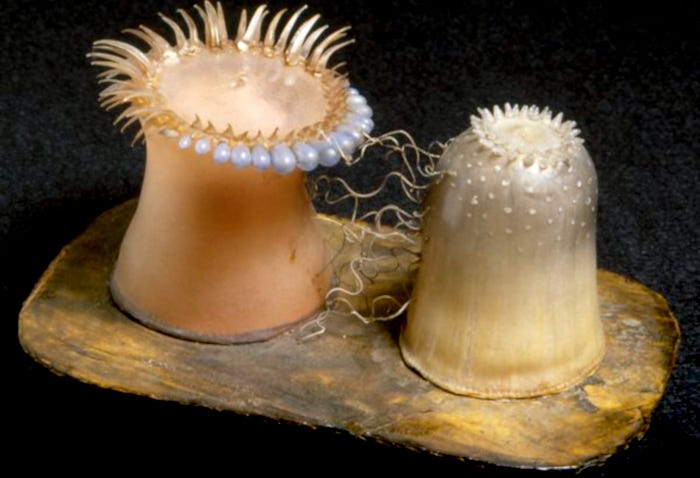
Leopold Blaschka received his first academic commissioned from Professor Ludwig Reichenbach, director of Dresden’s Natural History Museum who requested models of soft-bodied marine invertebrates for use in lectures. Preserved specimens quickly lost colour and structure, rendering them useless for demonstration or display. He was so impressed with the life-like accuracy of Blaschka’s first glass sea anemones that he suggested the ‘lampworker’ dedicate his practice entirely to the making of similar scientific models. He assured him there would be no shortage of commissions. Soon, Blaschka was supplying bespoke glass replicas to educational institutions around the world. By mail order. His packaging design must’ve been ingenious!
Seeing Blaschka’s global business success, other ‘lampworkers’ attempted to jump on the scientific glass replica bandwagon. However, his reputation was unassailable — none of his competitors could match the faithful precision in form, colour, and controlled translucency. Leopold also had the advantage of a naturalist’s eye and always worked from life if at all viable. He was known to keep a marine aquarium and through meticulous observation discovered behaviours new to science. For example his replica of two anemones interacting (see above) was the first time this territorial behaviour had been observed and recorded.
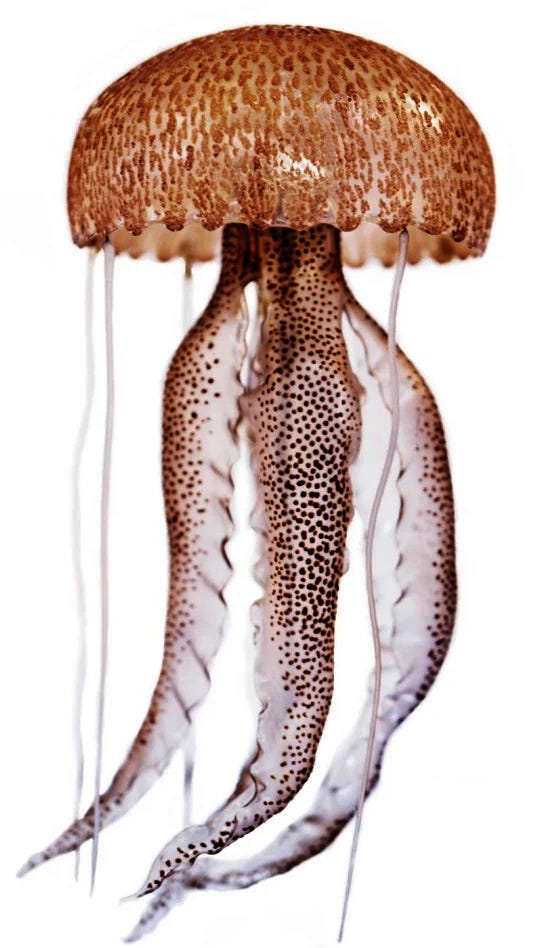
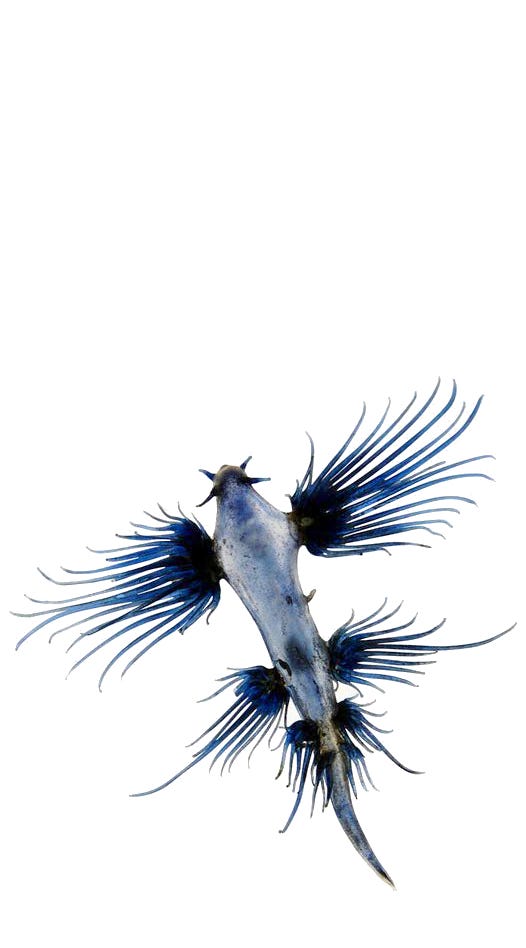
The scientifically flawless facsimiles of marine creatures combined a variety of processes and techniques. The glass components were blown to create orbs, domes, and spheres often in layered forms, one inside another. They were then combined with fronds, spines, and tentacles produced by various methods including ‘glass-spinning’. Sometimes fine wires were used to shape and support delicate details and other materials, including paper, were introduced to create an illusion of internal structures. Coloured details were mainly created using the alchemy of minerals and oxides introduced during the glass-making stage, but sometimes painted onto internal surfaces.
By the 1880s his models were famous the world over and he was supplying most of the most prestigious establishments, now with the assistance of his son, Rudolf. In 1887 they were contracted to spend half their time on an ongoing task producing botanical models for Harvard University. Over the next decade they made models of plants from 164 taxonomies including faithful renderings, not only of the flowers, but of all parts including leaves, seeds, fruits, and roots — sometimes showing different stages in the species life cycle and essential processes such as pollination, decay, and symbiosis. In the USA, this collection is still what the Blaschka’s are best remembered for.
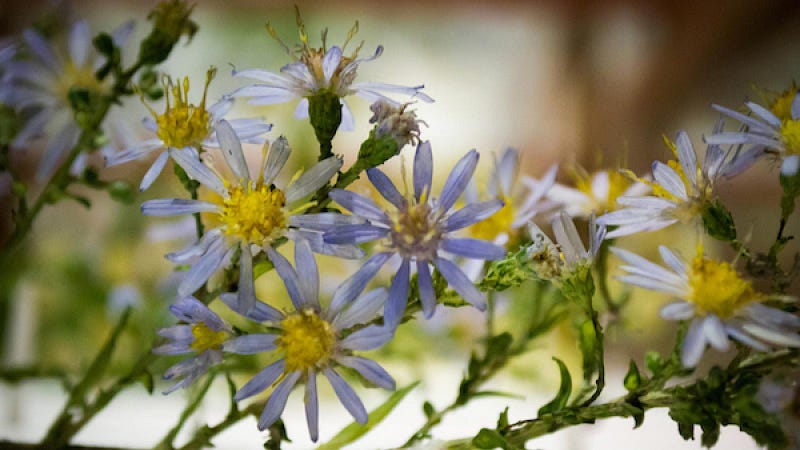
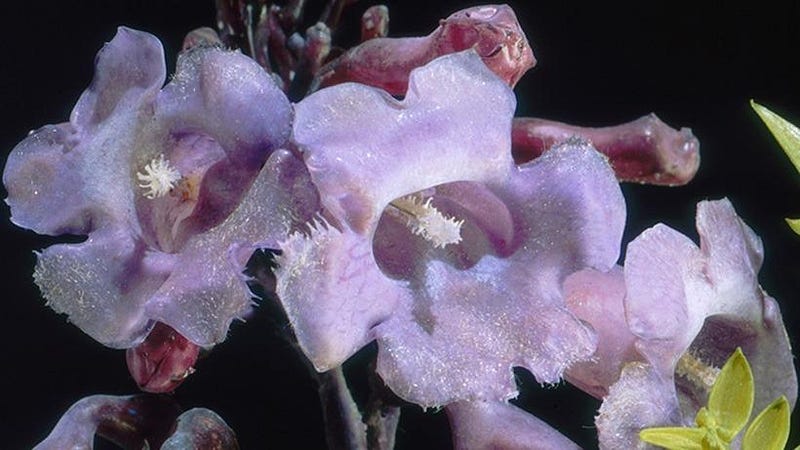
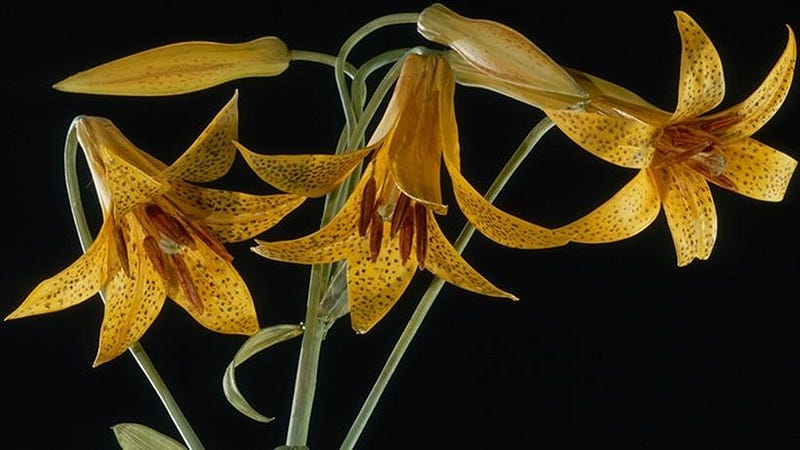
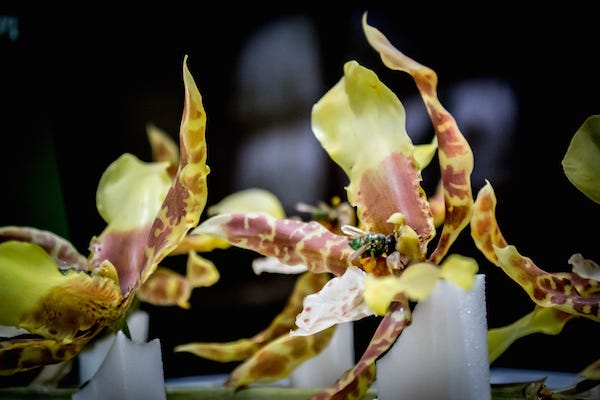
A Blaschka catalogue issued in 1888 offered 700 standard designs. Leopold taught Rudolf all he knew and praised his son’s skill, eventually proclaiming that it surpassed his own. He also pointed out that they used no special equipment and the superiority of their models relied entirely on ‘the touch’ combined with observation, invention, and unique techniques learned through ongoing experimentation.
Rudolf continued working after his father’s death in 1895 and never stopped innovating and improving. By 1908, he was mixing and making his own glass from raw materials to improve the accuracy in fine detail, colour, and textures. He was still supplying botanical replicas to Harvard as late as 1938, when he decided to retire at the age of 80. By then, the Blaschkas had produced something like 10,000 glass models of marine creatures and well over 4,000 botanical specimens.
Rudolf had no children to inherit the family business and had never taken on an apprentice. No one else had ‘the touch’ and the technical secrets of their work died with them. During the Second World War, many of their delicate models were destroyed, most notably in the carpet bombing of Dresden, where their studio was based and where most of their earliest replicas were displayed at the University, Zoo, and Aquarium.
This makes those that have survived all the more wonderful and precious. On a recent research visit to the National Museum in Cardiff, I was lucky enough to experience their Blaschka Glass Models collection up-close. The fragile, fine detail is just exquisite. The life-size models look… alive. The enlargements of microscopic creatures are astonishing in their accuracy and finesse.
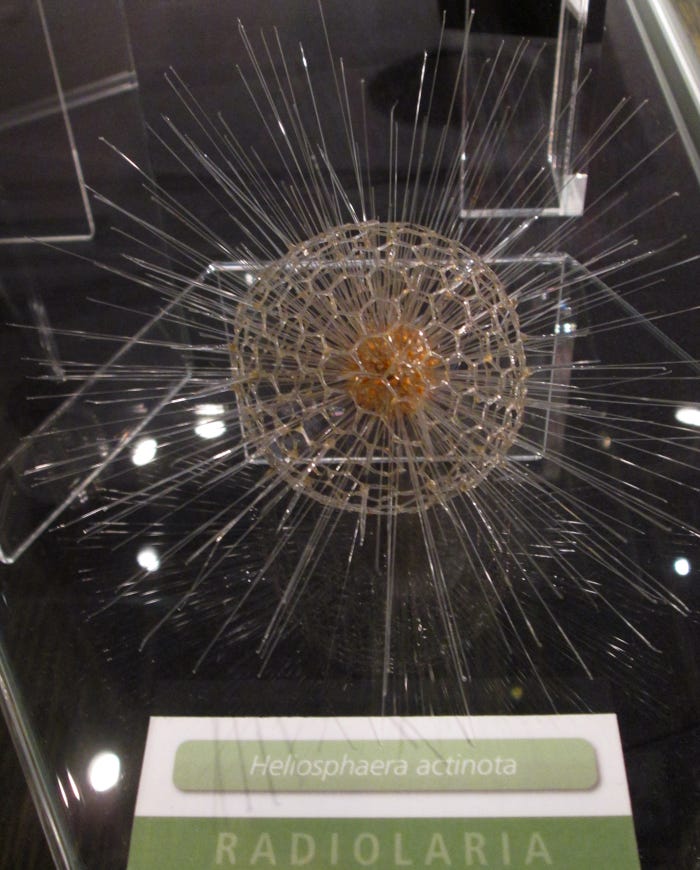
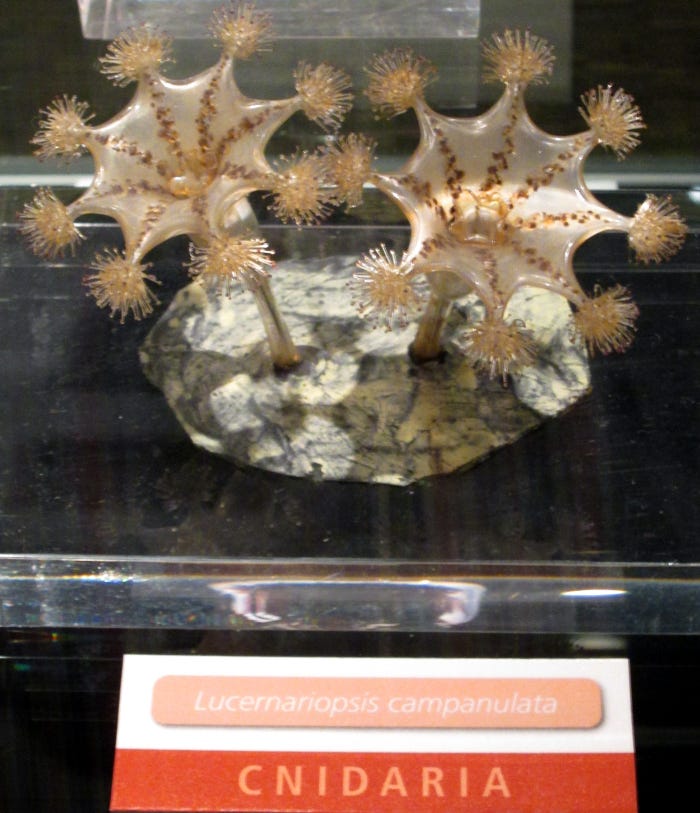
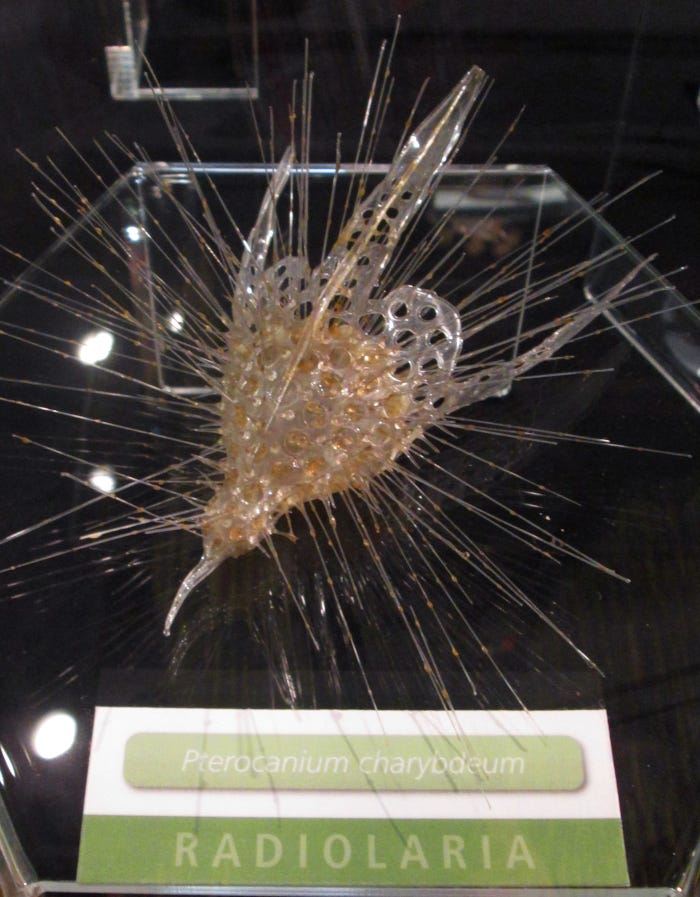
It’s impossible to fully appreciated them in photographs. Though the Museum has produced a beautiful, 40-minute, 4K video of some of the Blaschka pieces, serenely rotating. [Watch on YouTube.]
The Blaschka Glass Models are as much art as science, continually influencing both fields to this day. This is particularly evident in Luke Jerram’s current series, Glass Microbiology. Since 2004, the artist has been creating elegant, sculptural enlargements, in glass, of things that the Blaschkas couldn’t see. Such as viruses, which were only discovered in the latter years of the nineteenth-century.
The Clutha Glass Vases of botanist and designer Christopher Dresser have been discussed by Remy Dean previously in Signifier.
The pioneering botanical art of Maria Sibylla Merian and Beatrix Potter have been discussed by Kim Vertue previously in Signifier.
* All images are of works in the Public Domain, sourced from Public Collections, and presented here for educational purposes under fair usage policy.