
Beatrix Potter’s Field Studies
Considering the art and science of a pioneering mycologist better known as the beloved children’s author and illustrator, Beatrix Potter
A country walk in the Northern Hemisphere at this time of year reveals an abundance of mushrooms. Fungi’s fruiting bodies, which appear so swiftly and mysteriously, have long fed (when foraged with knowledge and care to avoid poisoning and death!) and offered ‘mystic experiences’ for humans. The first drawing of mushrooms dates back to an Algerian cave paintings made 9,000 years ago, which depict a shaman festooned with fungi and clasping mushrooms in both hands.
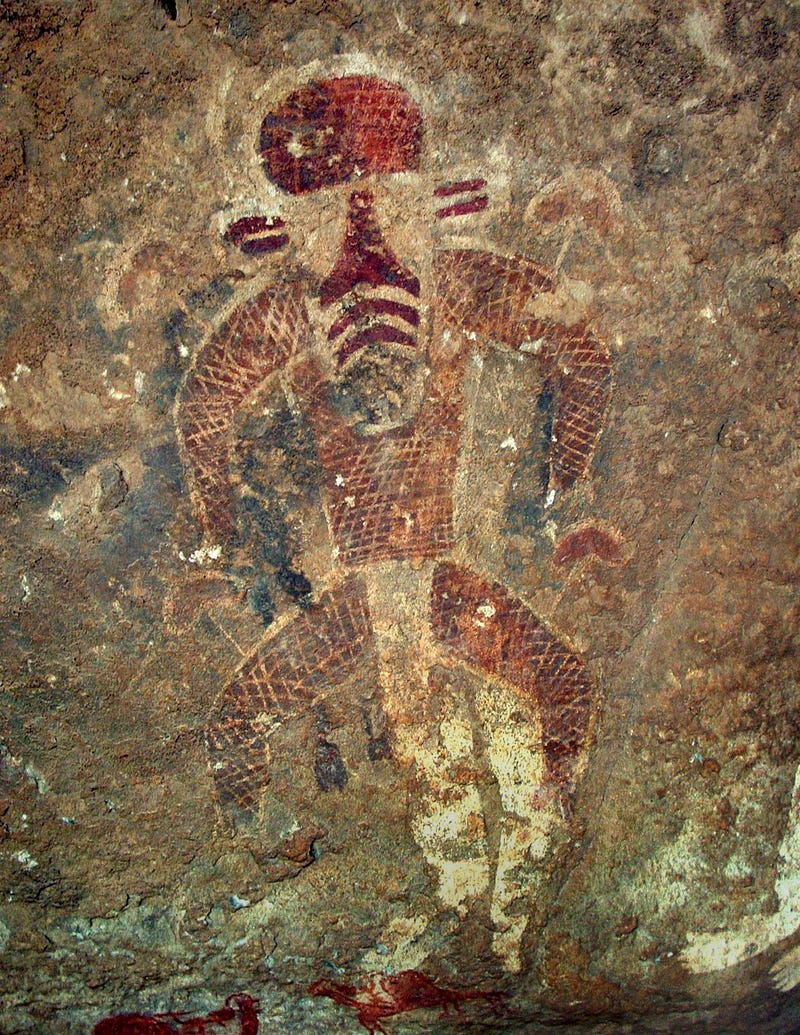
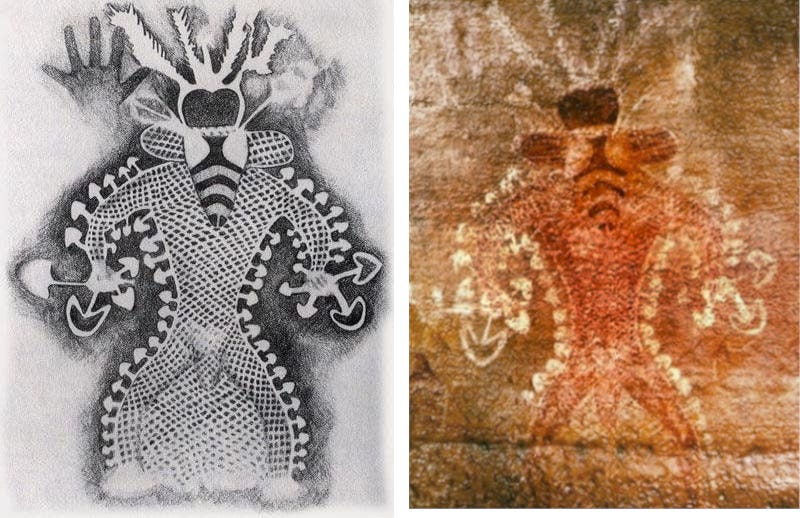
In the late nineteenth century, mushrooms began to fascinate a young woman, who studied and painted meticulous illustrations of fungi still consulted by mycologists today. Her name was Beatrix Potter.
Potter grew up in an affluent Victorian family. Isolated except for her governess and younger brother she kept a variety of pets — including a snake, a bat, and her beloved rabbits Benjamin Bouncer and Peter Piper — which she studied and drew from life and from all angles. When her pets died, she would boil the bones and reassemble them to draw these and ensure her drawings were anatomically correct! In later life she observed, ‘Thank goodness I was never sent to school; it would have rubbed off some of the originality.’ A family friend was the pre-Raphaelite painter John Everett Millais, who is known for including accurate botanical details in many of his works. Potter was partly influenced by his style, but also drew and painted from life, later visiting the British and Victoria and Albert Museums as well as Kew Gardens.
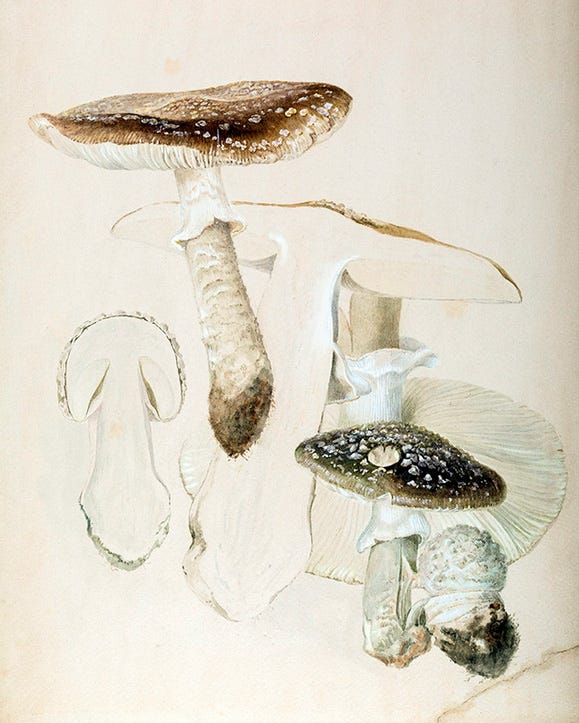
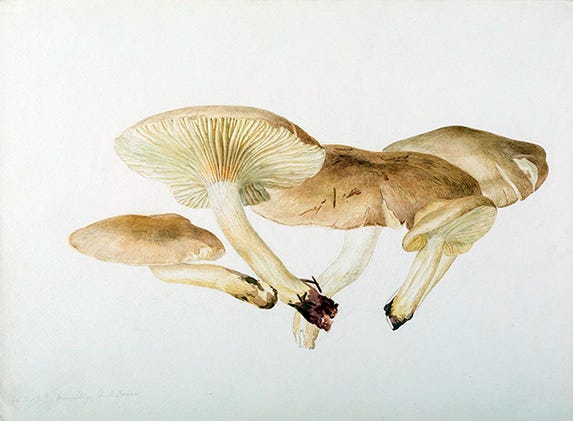
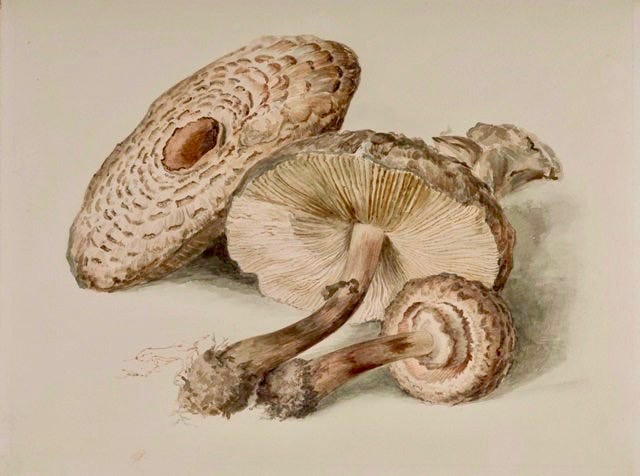
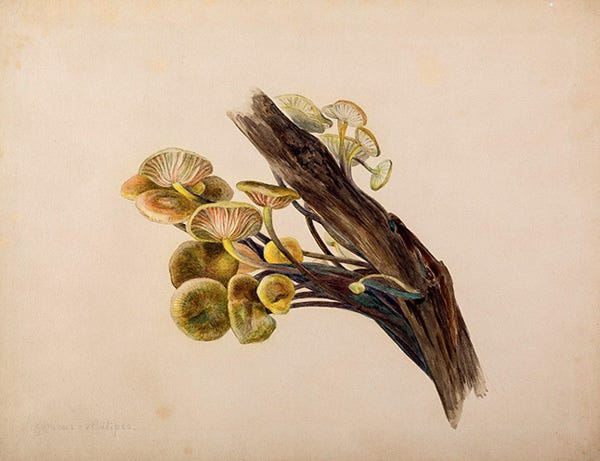
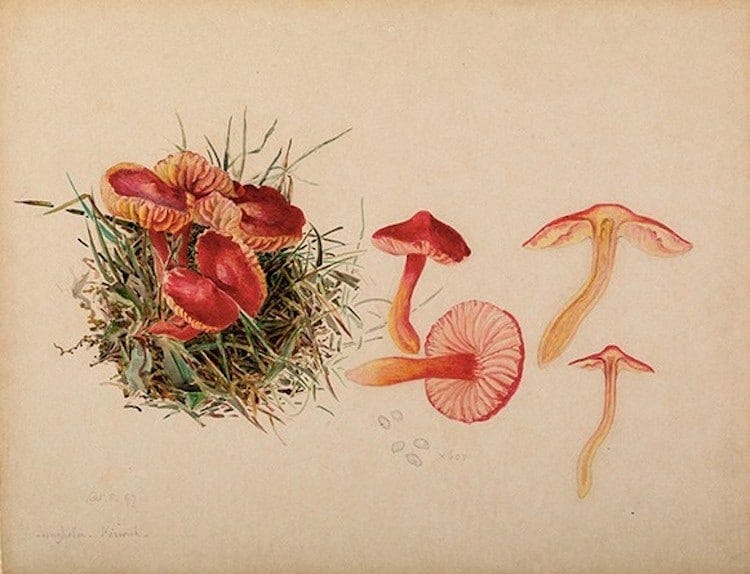
Her first painting of mushrooms dates from 1887. The family spent summer retreats in Scotland and by 1892 she had met the composer Charles Macintosh, a respected amateur naturalist and mycology expert who shared and encouraged her interest. She collected all manner of mushrooms on her walks — boletes, agarics, jelly fungi, the aptly named ‘artists palette’ bracket fungi... She dissected them and studied them under a microscope.
She also researched their propagation through spores — she found the fungi, which are not quite plant and not quite animal, absolutely fascinating. The beauty and lifelike quality of her meticulous illustrations are stunning and clearly express her fascination. Much of her work is still consulted by mycologists, used in identification books, and held in museum collections.
She was encouraged by her uncle, Sir Henry Roscoe FRS, Vice Chancellor of the University of London, to write up her pioneering findings on spore propagation and he presented her paper to a meeting of the Linnaean Society in 1897 as women were not allowed to attend. The paper was not taken any further, or published, and no record of the paper now exists. A century later, the executive secretary for the Linnaean Society admitted that Potter’s work ‘had been treated scurvily.’
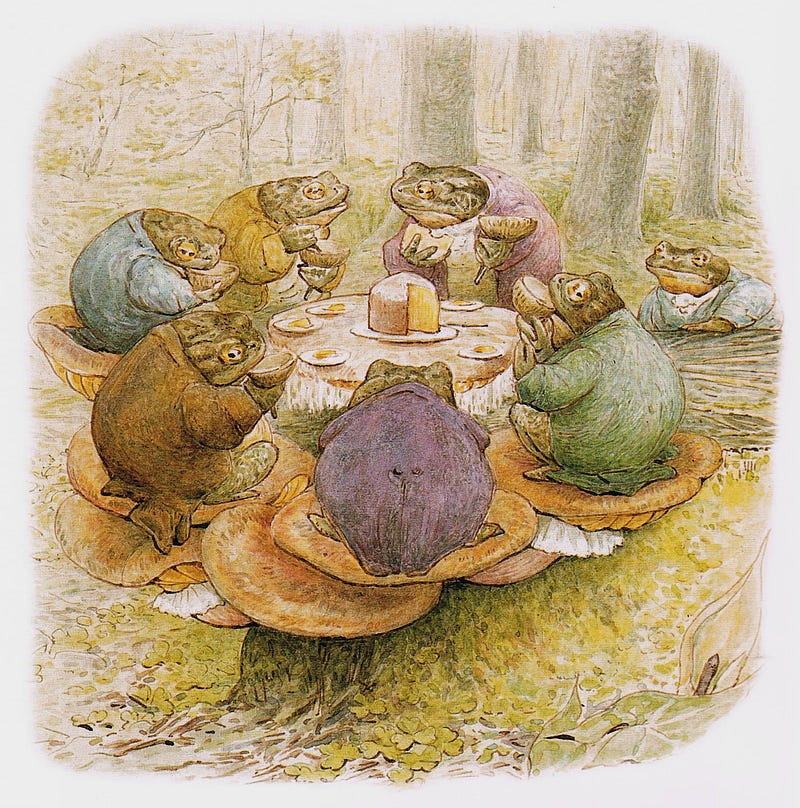
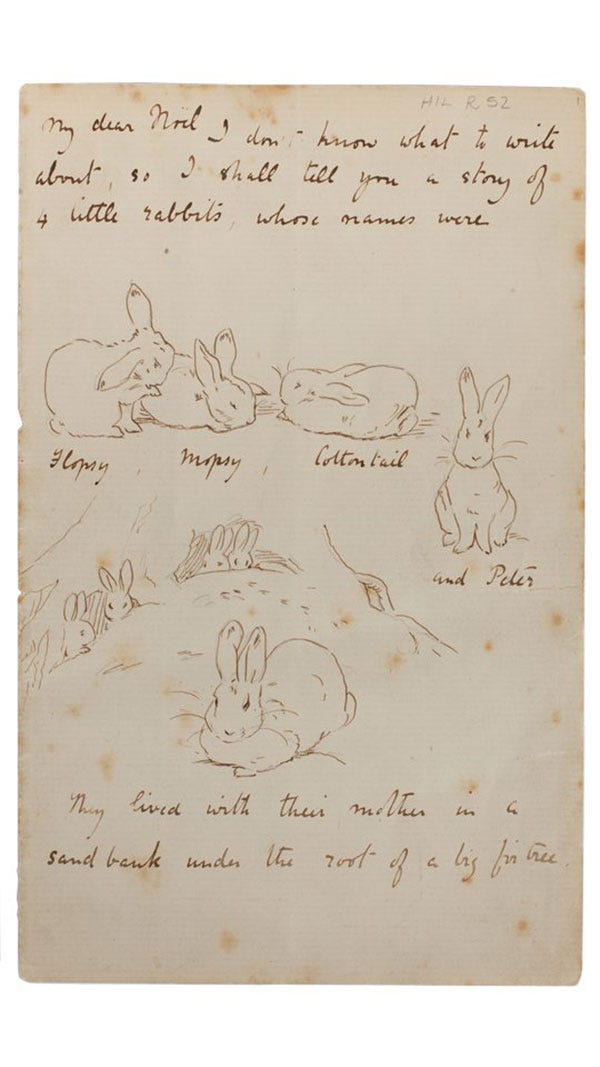
Despite this setback, Potter continued to study and paint fungi but also found another way to use her talents. The Tale of Peter Rabbit, which was originally written in an illustrated letter to a sick child to cheer them up, was expanded with her distinctive illustrations and published in 1902. Many more ‘little books’ followed, including one which contained an illustration of a toad’s tea party which uses a tree stump festooned by realistic bracket fungus for the toads’ table and chairs!
Fame, and income from her children’s books, allowed her to purchase Top Hill Farm in the Lake District. As an early environmentalist, she was enthusiastic about preserving the land and traditional farming practice. During the 1930s when struggling farmers were selling their property to the Forestry Industry, she bought more farms, allowing farmers to continue working and to preserve the landscape. She also did this herself and bred Herdwick sheep — the famous ‘smiley sheep’, a hardy breed that could survive in Cumbria. Herdwick pasture grazing had helped shape the landscape for centuries and their meat is now prized by top chefs, perhaps served with foraged mushrooms.
On her death in 1943, Potter bequeathed 4,000 acres of land to The National Trust, on condition that they continue with these traditional farming practices and keep Herdwick sheep to preserve the landscape. The National Trust honour this mission to this day. One of these properties, Yew Tree Farm, was used in Miss Potter, the 2006 film biopic, and is a tourist attraction.
* All images are used with permission or presented here for educational purposes under fair usage policy.


.jpg)