
Retro Rewind: “Loser” and the Deconstruction of College Movies
“Loser” is an oft-forgotten movie from the turn of the millennium featuring key players from American Pie as the leads, plus some memorable cameos. It also unfairly scorched Amy Heckerling’s career and helped usher in the death of the college movie.
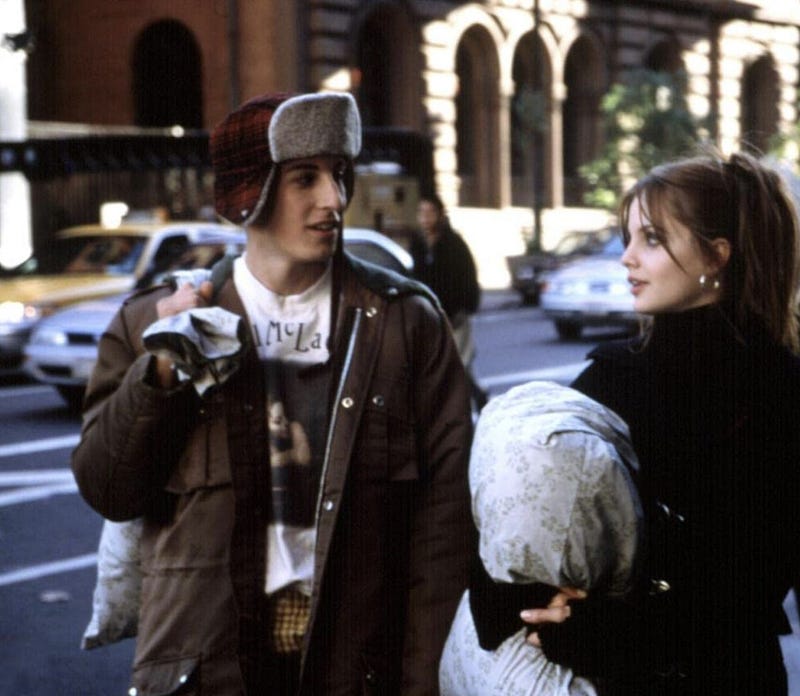
At the time of writing, I had my memory jogged by unearthing an RPG I hadn’t opened in 20 years due to compatibility issues. Despite that time of my life being not the greatest, I was prompted to revisit other media from this era. And as FanFare’s expert on 1990s and 2000s portrayals of New York City in film, the notion of seeing Loser again was impossible to resist.
Are you an elder Millennial who graduated high school between 1999–2003?
Do you remember that never-ending procession of high school and college movies that came out around this time, like the American Pie series, Van Wilder, Road Trip, and so many other portrayals of cishet white frat boy antics as the perspectives of other-ed groups navigating their teens and twenties were definitely not being explored in mainstream film much at the time?
Well, you may not be entitled to cash compensation, but we can absolutely gape in horror at all the homophobia, transphobia, and encouragement of rape culture that was on display yesteryear in comparison to the stories being told in film and TV today that center young people.
As a New Yorker who came of age right when these movies came out, it’s definitely impossible for me to revisit Loser without that context. But as someone who’s now in the entertainment industry like I always dreamt of, albeit on the other side of the country, not only can I re-examine it with a media crit lens today but there’s interesting things that happened behind the camera which explain why this movie turned out the way it did.
And if American Pie was the return of the teen sex comedy and the birth of reboot culture, this lesser-known movie that tried to ride its coattails with two principal cast members from the very franchise was actually the harbinger of the DEATH of the college movie.
I remembered Loser being sort of a trainwreck: something about a girl who’s over 18 trying to get emancipated like abused high school students do, a predictably sappy love story, the douchey fratboys and professor, and a convoluted plot about date rape drugs? But it was an enjoyable trainwreck that was compelling to watch over and over because of the setting and premise, and even the sappy love story had layers.
Watching it again about 20 years after it came out, I totally ate some crow since I’m in California now and pizza here isn’t like home. Bonus that I traded watching pigeons on my air conditioner for murders of crows on my roof.
Even if this movie was the victim of executive meddling and poor box office performance as a result, the cut of Loser that ended up making it into theaters and home video was a more realistic depiction of the harsh sides of the college experience than what Millennial audiences had previously seen. There were several scenes where this film even seemed self-aware it was flagellating the college movie genre!
No matter how you cut it though, Loser is a beautifully horrific (or horrifically beautiful?) time capsule of pre-9/11 New York City.

“Time capsule” is the best possible descriptor no matter how you feel about the characters, plot, or what this movie could’ve been given what you’ll read later.
The soundtrack, the wardrobe, the entire premise of a naïve country bumpkin facing a culture shock when he starts his first semester at NYU: it’s all very turn-of-the-millennium. I think the music clearance alone ate most of the production budget.
Loser came out between the first two American Pie movies so we got Jason Biggs as the leading man once more but with Mena Suvari as his love interest, Dora Diamond. She played Heather in the American Pie movies but her role was very condensed in American Pie 2, absent in American Wedding, then expanded in American Reunion.
Not only were the actors were unable to escape their extremely recognizable roles from the franchise (along with Suvari hitting the big time with her role in American Beauty), but there was a tie-in with a song I hope to see on Todd in the Shadows’ One-Hit Wonder mini-documentary series soon enough, Wheatus’ “Teenage Dirtbag”.
“Teenage Dirtbag” features prominently as the song accompanying the film’s opening credits, but what’s odd in the music video is that Biggs and Suvari reprise their roles as Paul and Dora…but in a high school. It doesn’t feature actual scenes from Loser, as was common with music video tie-ins from the 1980s through the early 2000s. But from the looks of it, the music video borrowed the rough sleep scene when he fell asleep on the apartment stairs and this is what he dreamt of.
The comments on the “Teenage Dirtbag” official Vevo say that Loser is underrated and younger audiences are starting to look it up now that this song is seeing a resurgence at the time of writing. I must say, that Amy Heckerling’s entire production team brought their A-game. The music will tickle Millennial nostalgia bones, but the songs also just fit each scene incredibly well whether you’re into each genre or not.
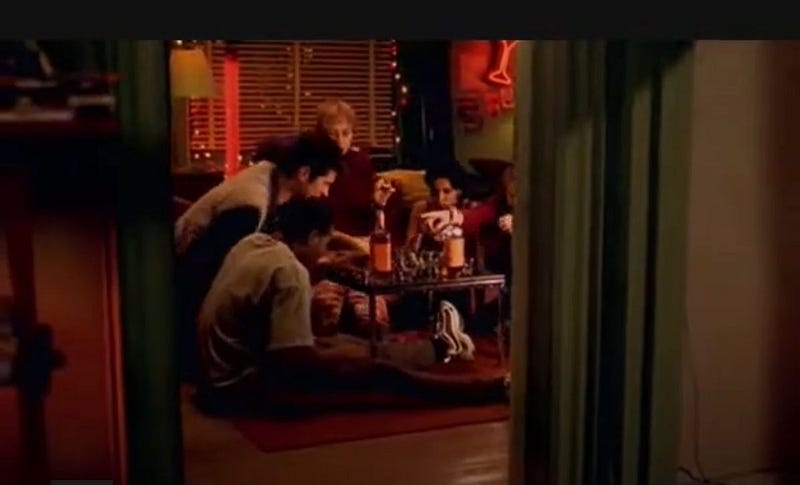
Loser was half-filmed in New York, half in Toronto, and some scenes got really convincing (just look closer whenever Dora or Paul rides the subway). Check out the lighting and set design in the screenshots: it’s absolutely representative of how NYC bars and apartments below 23rd Street looked back then. Christmas lights and disco balls were a permanent fixture of Millennial bedrooms, dorm rooms, and first apartments or shared rooms. Some of us STILL have them!
And the CLOTHES.
Amy Heckerling chose Mona May as the costumer for Loser after they worked together on Clueless, and she’s the sartorial genius behind how the outfits from Clueless tell so much about the characters and remain iconic styles to this day. Check out her IMDb page: she’s ALSO responsible for the memorable looks in Romy and Michele’s High School Reunion!
Clothes can absolutely tell a story and Loser is no exception. Dora’s alternative but can pass for mainstream, depicting how alternative women were unfairly judged in this era but men still wanted us — even if they were ashamed and made that a dirty little secret. This changed decades later now that we’re in a more cross-cultural world, but may I point out that the world’s richest man threw shitfits and pulled in and out of buying a major social media platform because an alternative woman left him?
Paul’s clothing gets made fun of, most notably his ski hat. When Dora says he needs to get rid of the hat and he replaces it with a vintage-looking trilby, he certainly becomes bolder and more apt to say what he’s actually thinking instead of restraining himself out of politeness.
The rich asshole roommates Chris, Adam, and Noah wear interesting and stylish clothing rather than the basic or athletic-inspired garb you’d normally see frat boys wearing.
Take it from someone who essentially lived in the Village from 2000 through the fall of our institutions around the early 2010s: these guys wear the kinds of clothes you could’ve bought at Freaks’ Lounge, Funhouse, and 8th Street Lab as these were all closer to the NYU campus than the main alternative quarter on St. Marks and the amazing thrift stores east of 2nd Avenue. (All of the above gone and missed.) They appropriate many punk and goth aesthetics, like creepers, vinyl, and bondage pants, which offended the living crap out of me when I saw this in my teens.
Did those scenes have their share of trash that needed to be taken out? Oh yes. But I can personally vouch that of all the people I knew who religiously listened to Agnostic Front, The Casualties, and The Independents never used date rape drugs to get laid.
But in a strange way, May’s wardrobe choices wound up being a predictor that in 20 or so years, the punk scene would splinter into a camp of those of us who staunchly remained true to our values regardless of aesthetics and another that would become straight-up reactionary.
Chris, Adam, and Noah appropriate some rebellious aesthetics while upholding the status quo, which is that their rich parents can open whatever doors they need them to open and the rules don’t apply to them.
Fashions aside, Loser is a time capsule, alright.
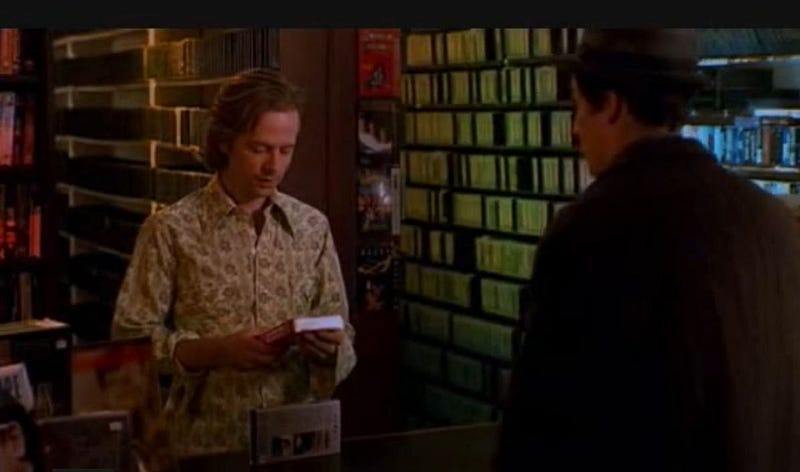
The second the movie kicks off with Paul’s high school graduation party, you’re immediately transported back to the era of boy bands vs. nu-metal. But while I certainly miss what the Village (and lower Manhattan period) was in this point in history, some aspects of Loser are just plain timeless:
The arrogant professor who abuses his power to sleep with students, but he gets away with it on account of being a respected and fairly handsome white man.
“Bridge and tunnel girls” in compromising or even predatory relationships to avoid the commute. Yes, this was a thing even before Cuomo completely let the MTA go to shit.
And oh yes: all the wild parties and disgusting behaviors, with an innocent kid from the country flopping like a radioactive fish outta the Hudson after moving to the big city.
The narrative and characters get a little narmy and hyperbolic at points. But Loser actually deconstructs many of the tropes about college movies, particularly in the late 90s and early 2000s: namely, that the protagonist is there to study and not party.
NYU is always a convenient choice to set virtually any New York City college movie. From a filming standpoint, it’s got a sizable campus and interiors that were practically designed for crews. Other colleges in the city have been featured in movies (Manhattan College cosplayed as Harvard in A Beautiful Mind and infamously, a scene from Debbie Does Dallas was shot in Pratt Institute’s library) but NYU is virtually always the default.
The campus is optimal for transforming into a film set all while it provides an automatically dynamic backdrop with the Village, plus downtown Brooklyn nowadays post-MAGNET expansion. Not to mention it’s also a culture shock for countless students who don’t fit in with the rest of the student body based on their origins, income, and other factors.
While this could be true of nearly any university one leaves home to attend, it’s especially palpable at NYU.
So we’ve got Paul Tannek as the hero of this story, a country bumpkin on a full-ride scholarship to NYU. It’s alluded that he’s the first to college in his large family and therefore, isn’t well-prepared for it. Which is a concept we should've seen explored more in college movies!
His motivation isn’t just to keep his scholarship. He’s actually stoked to be there and meet new people, although he quickly finds out how much college life and Gotham City want to do nothing but dick-slap him in return.
While Paul’s caring nature appeals to everyone back home and eventually to Dora, it also causes people to walk all over him.
The winners of the douchebag Olympics who Paul’s stuck rooming with treat him like something they puked up after one of their parties. There’s an infamous gross-out scene where he wakes up to find his toothbrush is inside a used condom: it’s literally the top search term that people use to look this movie up on IMDb, apparently!
The clothes tell a story again when we see them with the resident advisor and they look like a golf tour on an acid trip, making up stories to get Paul kicked out of the suite even though the joke’s on them because he can’t wait to get away from those bags of dicks though they unfortunately follow.
Loser had a degree of class consciousness I just didn’t see in a lot of movies that came out in the 90s and 2000s.
Times were still good for the middle class when this movie came out. The mythos of vaunting wealth was de riguer in media production as a result. But Loser completely subverted the brushing aside of familial wealth in the American Pie movies, and was a total departure from the depiction of wealthy Beverly Hills teens in Heckerling’s prior directorial masterpiece, Clueless.
Paul’s roommates aren’t just assholes, they’re rich assholes who mock him for his working class upbringing and not having money to participate in even just the little things, like chipping in for pizza with them.
Professor Alcott is even more amoral and arrogant than I recalled him being, not to mention more anal about his designer clothes, fancy coffee, and tea rituals than some disgraced inbred member of Britain’s Royal Family.
Pretty much, all of the wealthier characters in this movie are shown to have the same regard for human decency as the average Internet troll about to become a mass shooter while we cheerlead for our proletarian heroes Paul and Dora, who have kind hearts while they lack big trust funds. They may all attend the same prestigious university, but with drastically different experiences and expectations.
The sharp contrast of how each group lives their college experience is blatant: Chris, Adam, and Noah are always partying, never study, take the absolute easiest classes, and blackmail their professors into better grades. In an interesting subversion of turn of the millennium homophobia and gender expectations, they also spend a lot of time pampering themselves at hair and tanning salons.
Whereas Paul and Dora are seen working their asses off and taking abuse at every turn. Whether it’s from those obnoxious roommates, the higher education system itself, or demanding bosses.
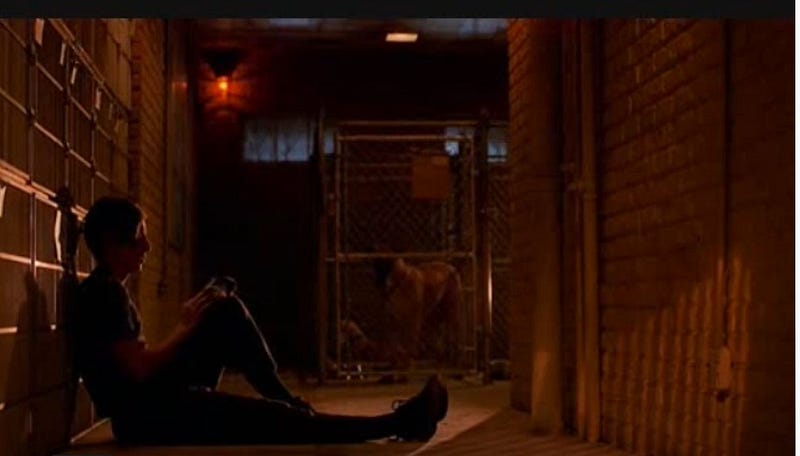
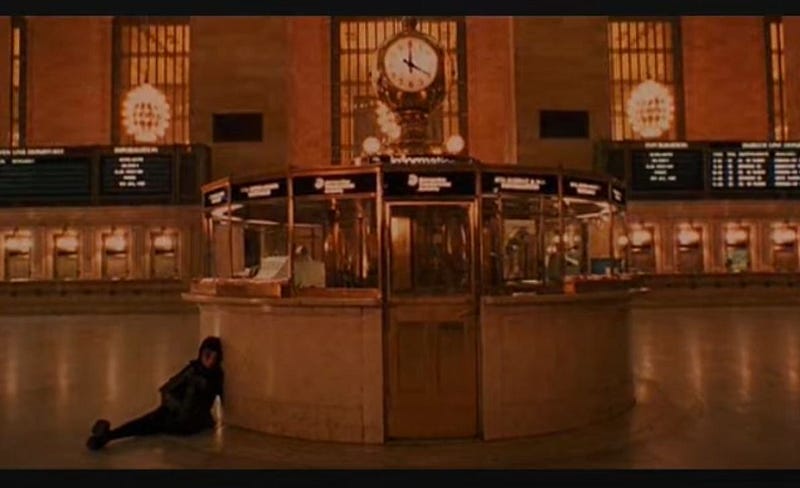
There’s this incredibly apt montage of Paul and Dora rough sleeping in the dorm building’s stairwell and Grand Central Station respectively, as the roommates made it impossible to get any quiet time and Dora missed the last train home. Making that last train out of Grand Central or Penn was serious business in those days, before we had Ubers that would cross multiple city and state borders.
This scene even has some fridge brilliance in that Dora didn’t simply sleep in the station out of avoiding Alcott’s place due to their fight, or his resistance to her taking up more space in his home and life by staying the night. Dora lies to her mother by claiming she’s staying in a friend’s dorm but she doesn’t actually have friends on campus. She’s too busy working, commuting, studying, and having post-screaming fight sex with this douchenozzle professor who loves to misinterpret Kafka to bother making friends there.
Like many poorer students attending an expensive school like NYU, Dora needs her bartending job to afford tuition as her mother is unable to help her. It’s implied they live somewhere in Westchester or Putnam County since there’s no way she could’ve afforded out-of-state rates on a bartender’s pay if she lived in Jersey or Connecticut.
Despite this, Dora finds out she doesn’t qualify for financial aid. She tells the counselor that student placement jobs pay too little and she makes far more at the nightclub, but can’t put more hours in because of her commute. The counselor acerbically informs Dora that just because you’re accepted, it doesn’t mean you can actually attend this school.
It was after this line that I was just, “Woah, this movie aged like a freaking Bordeaux!”
The counselor suggests emancipation and now it makes sense why I was confused about this as a teen, as FAFSA language changed to “independent student” since. Andy Dick makes a cameo as the City Hall employee who informs Dora that if she wants to qualify for work study via emancipation, she needs to prove she’s supporting herself and doesn’t live with her parents.
This is part of how American culture entails parents having too much control over their children’s lives because it persists even after they turn 18. You have to be 24 years old to leave them off your FAFSA forms and considered an independent student, even if you don’t actually have access to their money! If you’re under 24 and weren’t emancipated while a minor, the process is even more convoluted as that linked article describes.
Obviously, the movie couldn’t spend hours going over the finer bureaucracy but it had to communicate that Dora is basically screwed if all her money goes to tuition and commuting, yet she’s still living at home. And the film wouldn’t have been as exciting or full of tension if she just went to a public university like Hunter College.
She’s then devastated by losing her job at the nightclub because like Paul, her caring nature ends up screwing her. Desperately needing work if she wants to continue at NYU, we see Dora pound the pavement looking into almost any job that’s flexible or has a graveyard shift to avoid commuting. Then she does what many cash-strapped young women still gravitate to on Craigslist and with private brokers: looks into becoming an egg donor as the huge payout would enable her to focus on just school and help her mom out.
While his romantic attraction towards her certainly bolsters his concern, Paul cares about Dora enough to look into the risks of egg harvesting and what he discovers worries him. Even after 20 years of medical advancement since Loser was released, egg donors face aggressive cancer risks and fertility issues if they decide to have children of their own in addition to numerous short-term medical risks. Is that risk worth it just to be able to attend college?
College movie conflict usually did not get this deep or class-conscious. But this is a devastating choice that many young people made in the days of a burgeoning Internet, and still make today as tuition only skyrocketed since.
In addition to all the college movie tropes that get deconstructed and satirized, the makeover trope is also flipped with Dora and Paul patently rejecting others’ efforts to change them.
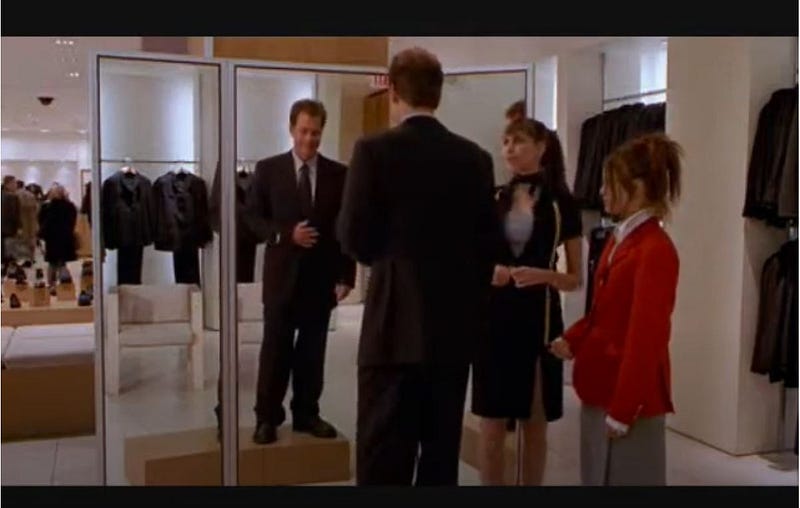
What’s interesting is that the frat boys tease Paul at the idea of a makeover, then Dora convinces him to change hats and his behavior DOES change. She gets this makeover foisted onto her from a pushy man who obviously likes to fuck her but doesn’t like her.
Dora makes like a tree and gets the fuck outta there when she realizes both the strength of Paul’s character and that Alcott is just trying to mold her into what he thinks she should be — all while he doesn’t even respect her as a person. Hell, he claimed not to know her when the hospital called! So she skips that hair appointment that he made for her as she runs straight to Paul and the happy ending.
Given that the makeover scene is often shoved onto a female character without her consent while the man gets to remain the same, Dora’s rejection of it was pretty powerful and unheard of in a movie from this time.
In spite of his spiffy new hat and adopting some of the rich assholes’ slang, Paul still dresses the same and doesn’t give up on being himself. Dora resists change as well, and they get their happily ever after as one of the “microscopic number of lucky people who actually madly love each other”.
Sappy as it is, that line still affects to me to this day. While there’s more categories than “sad and alone” and “couples who settled for each other” before you reach the rare group of “lucky people”, it definitely encapsulated that uniquely elder Millennial brand of hope co-existing with cynicism.
Long before we had post-recession media that dove into Millennials’ miserable finances like Broad City, Loser definitely popped the bubbles that propped up college movies in both subtle and overt ways. The whole “college is the best time of your life” mythos was utterly destroyed in this movie, and now I love it 10,000 times more than I did when I actually was submitting college applications and had it in regular rotation on the VCR.
“College is an awesome bacchanalian if you have wealthy parents and don’t give a damn about anyone but yourself” is the real message here.
Even though this myth about partying for years while floating between majors that don’t help with employment still persists. It’s why people are such obstinate assholes about student loan forgiveness!
Oh, and the rich frat boy dicks who us real freaks who hung around St. Marks would never allow to sit in the graveyard with us? They use date rape drugs at their parties because it’s the only way they can get girls in bed, proving that money can’t buy personality and game. The real denouement is when Paul swaps out their roofies for gingko pills before the next party, and it always felt like there was supposed to be more to this subplot but it still made sense.
In an homage to the original college antics movie, Animal House, we get a “where are they now” montage after Paul and Dora’s happy reconnaissance and before the credits roll. Unlike in real life most of the time, the rich assholes in this film get their comeuppance and it’s satisfying to see.
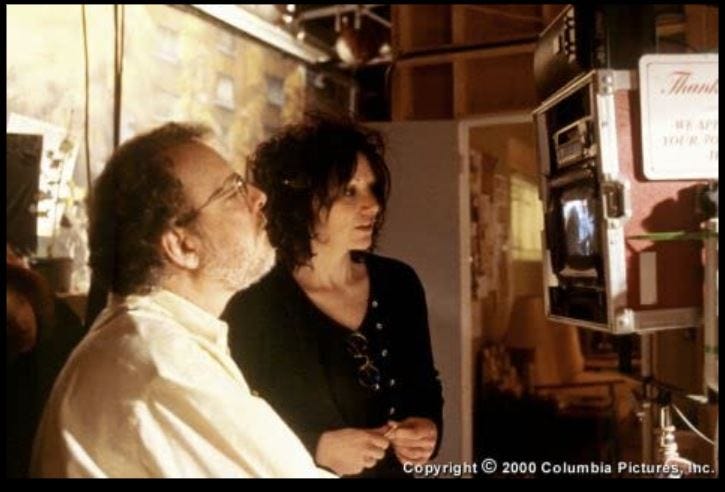
Amy Heckerling, who brought us classics like Fast Times of Ridgemont High and Clueless, was the writer-director of Loser. She was ultimately jobbed out by the producers and it tanked at the box office.
I didn’t know who made this movie when it came out, I just remember my sister wanting to rent it at Blockbuster because it had the same actors as American Pie and I was drawn in by a potential chronicling of NYC goth girls, how could we not watch?
So when I found out Amy Heckerling was the creator, things made sense. You’ve got a compelling and cohesive youth-oriented story where the adults in charge are out of touch or simply don’t care how the youth are being failed. I can definitely see traces of that slice-of-life style that was used in Fast Times, and an immersive world with its own slang and over the top fashions while centered in a real place like Clueless.
But there were aspects that seemed a little…off, like Professor Alcott being hyperbolically condescending. The date rape drug subplot felt a little rushed and like there were more scenes that were meant to go in but it concluded with the library showdown before runtime got too long.
According to this interview, the studio completely messed with the film Heckerling really wanted to make.
In her own words, “it was ruined in post” because the marketers were hellbent on having a college comedy with a PG-13 rating instead of the serious and more tongue-in-cheek R-rated flick she intended to create. Despite their fuckery, it was still a compelling and underrated movie that seems to be finally finding its audience two decades later!
It just infuriates me that she didn’t get another chance to direct a movie again for a long time after Loser flopped at the box office. Of course, male directors who’ve produced flops after successes like she did would get umpteenth chances while she had trouble getting films made at all despite making such iconic movies previously.
But just because a woman director makes a highly lucrative movie, it doesn’t mean she’ll be rewarded for it. This is slowly changing, but we’ve got a ways to go.
There’s definitely things I miss from the turn of the millennium. The rampant misogyny of the era complete with a lack of female directors and producers sure isn’t one of them.
While I remembered Loser as something of a narmy trainwreck I still enjoyed, I was pleasantly surprised at what a layered and class-conscious film it actually is beneath the college movie veneer with a predictable love story.
I think that the world just wasn’t ready yet in 2000 for an unexpected and scathing commentary on wealth inequality and how predatory the higher education system is in America. 9/11 hadn’t even happened yet, much less the Great Recession, and soaring inequality became the generation-defining issue for Millennials. Freddy Got Fingered is another movie from the same era that knocked polite conventions on their ass, and so many creatives related to it to the point it’s been redeemed with the passage of time. It was before we had Adult Swim and intentionally weird content not meant to be taken at face value. The world was definitely not ready for that movie in 2001, either!
Even though Loser didn’t turn out the way the creator intended, I think that this incredible time capsule that made so many spot-on observations about inequality in the college experience is definitely getting a new audience two decades later: both Gen Z who grew up totally aware of what a racket higher education is in America, and Millennials revisiting the past and remembering the hope we once felt despite the lack of meritocracy around us.
That someday, we too could be those lucky people Dora talks about.