
Sex and the City Revealed Which Stories Get to Be Told
Sex and the City was groundbreaking at the turn of the millennium and hasn’t aged well in many respects, but there’s a buried lede in criticisms about the show.
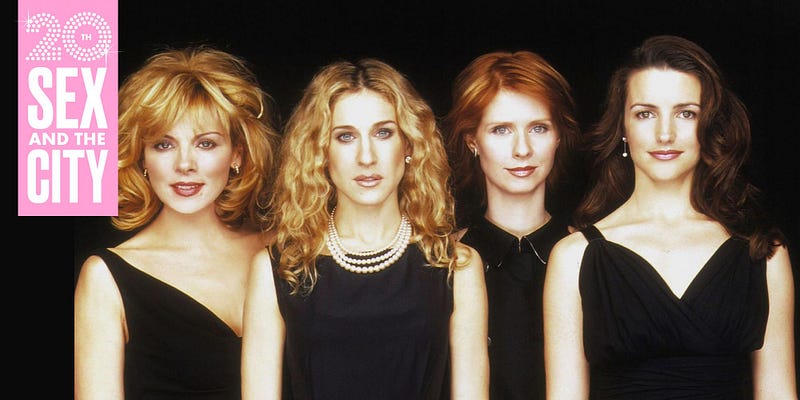
So there’s a Sex and the City reboot coming sans the one character who was actually sexually adventurous compared to the rest of the main cast.
As one would expect, the take machine has been a-churning about reboot culture, the numerous flaws in the show’s original run, and how it both revolutionized the way women discussed sex yet was still quite conservative. I mean, come on: Carrie Bradshaw addressed any kind of sexual activity that wasn’t hetero and vanilla with the same statecraft as The Iron Sheik doling out some Monday Motivation on Twitter.
But as someone who’s now been in the games industry for a decade and is about to go into film, I’ve been thinking about Sex and the City on meta and pre-production levels more than the actual content of the six seasons and two feature films in light of this news.
Because while the show was indeed revolutionary in many respects, it also got much deserved flack. But why was it deserved? Why were these production decisions made in the first place?
It’s all about who actually gets to tell their stories and who guards those gates. And it’s something that’s frankly been underdiscussed.
Sex and the City’s Source Material Gets Ignored in the Ceaseless Criticism
Browse any number of online publications geared at Millennial and Gen X women, and you’ll find barb after barb about how Sex and the City was too white, straight, and wealthy to be plausible. And to be fair, most of them make valid points!
The Take did yet another brilliant video about some of the worst things about Sex and the City, such as the way the show upheld conflicting messages about women being strong and financially independent yet a woman’s grandest prize was landing a rich man to marry, and minority actors were mostly cast as set dressing or characters who had some role of servitude.
But the video and those numerous thinkpieces don’t talk about the why behind these casting and story decisions: Sex and the City actually was a form of sexual anthropology about the dating habits of Manhattan socialites who lunched at the hottest restaurants, could call in favors from politicians, and cavalierly bought new purses at Barney’s like a pack of paper towels at Target. You can still read them in the New York Observer’s archives!
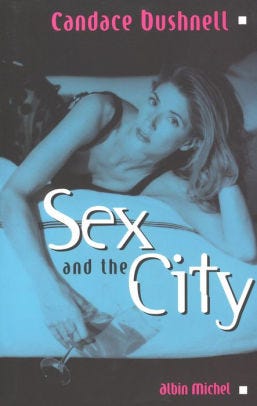
Candace Bushnell wrote a column about the glitterati of Gotham and several books, most notably the eponymous Sex and the City that was an anthology of said columns. This led to her work being optioned into a TV show that ran for six seasons with the first motion picture coming four years after it went off the air, and one more sequel before news of the reboot came 11 years later.
But it wasn’t the only work of hers that would get optioned. The prequels to Sex and the City, The Carrie Diaries and Summer in the City, became a CW series that delved into Carrie’s youth before she became a sex columnist. One of Bushnell’s other books, Lipstick Jungle, a fiction tome about powerful women in New York, also got optioned and turned into a TV show starring Brooke Shields, Lindsey Price, and Andrew McCarthy. (Put a pin in that — we’re coming back to Lipstick Jungle later.)
Having watched both Sex and the City and Lipstick Jungle plus read several of her books, I can attest that Candace Bushnell is indeed a brilliant and poignant writer. She creates really evocative settings and tells of the characters’ goings-on in a way that makes me feel like I’m having a salacious, boozy business lunch at the Russian Tea Room with a really cool friend who lives in the same city as me but it feels like another planet. Like, “Get out! Of course some Wall Street hotshot has this really bizarre fetish! And naturally a lady who makes three million bucks a year running a film studio and lives in some $10 million brownstone in the Village actually really hates her life!” After lunch concludes, she’ll get in a cab back to the fantasy land on Park Avenue and I’ll see the waiter on the subway on my schlep back to The Bronx.
So don’t get me wrong, she’s one talented creator. But how many get THAT many of their works optioned on major networks plus movies like that?
Before we had Netflix originals, Amazon having their own film and TV production, or even just being able to upload your own videos on YouTube, your only choice was to go through the gatekeepers stationed in New York and Los Angeles. And let’s be frank: those gatekeepers wanted stories they could relate to rather than what the average viewer wanted. So of course they adored white, wealthy stories.
The lede has been buried in all the criticism of Sex and the City being about rich people and their whiny rich people problems, what, we’re supposed to be sympathetic to these four white women who are incredibly successful but still have problems with dating? The source material was originally all about the quirks of dating rich people in Manhattan’s social scene. Which is well…white, rich, thin, cisheteronormative, and pretty insulated from the real world.
Of course, any show that has a large viewership and professional production from a huge network, and thus impact on people and cultural consciousness, is ripe for criticism. Much of the criticism lobbed at Sex and the City is valid, be it about how Carrie is incredibly immature and emotional, it’s simply unrealistic that four professional women in their thirties in this godforsaken city get together that often unless they basically live on the same block, and it’s whiter than a conservative Congressman eating powdered donuts in a correctional fluid factory.
But I think that criticism is missing the context of the source material which definitely doesn’t provide a class-agnostic or class-realistic portrayal of the diverse and chaotic New York most of us regular people know. It simply can’t, and I say this as an old timer New Yorker who did tax returns for the wealthy Upper East Siders discussed in the actual book.
Just like how movies are a directorial medium — where the director is basically the author of the film without necessarily writing it, unless you’re doing the writer-director thing like Quentin Tarantino or Mel Brooks— the concept is similar for showrunners. But while a movie can be financed as a one-time deal from investors, the distributor could have a lot of faith in you and let you do your thing, or if you’re Tommy Wiseau and just self-fund the shit out of it so no one tells you how to run your own production?
You have far more chickens pecking at the script and weighing in on production decisions with making a TV show. You’re beholden to the network funding it, and that funding can stop if the show is losing too many viewers over time or it just fizzles out. The network can compromise that directorial vision of the showrunner.
So when Darren Star was the original showrunner for Sex and the City when the show kicked off in 1998, he kept it fairly close to the book. Like that episode “A Turtle and a Hare” where Samantha dates “The Turtle” and Charlotte infamously decides she might be off men forever because of the The Rabbit which is now a household name? All that was in the book!
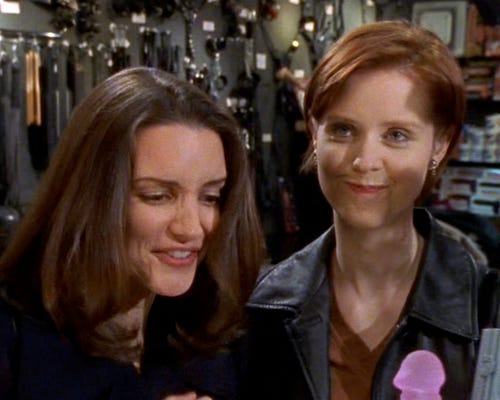
Come the third season in 2001, Star was out and replaced by Michael Patrick King who took the show in a completely different direction but with the same main characters. Sex and the City was now less about Candace Bushnell’s observations of the New York elite and more about these four successful women living dream lives in dream Manhattan apartments navigating the vagaries of sex and dating, all framed in Carrie’s column. She stopped breaking the fourth wall to talk to the audience and instead narrated her experiences and observances with voiceover, which gave the episodes a distinctly more authored feel.
Rather than episodic adventures about random sexual dalliances, there were now major character arcs and development with more emphasis on both the women’s friendships and their other interpersonal relationships. So changing showrunners and some executive meddling may not always be a bad thing!
But it still ultimately boils down to this story being told instead of so many others about love and sex in New York in your thirties. So why was it about a well-off writer, lawyer, gallery manager, and businesswoman lunching at Balthazar and vacationing in the Hamptons, instead of a paralegal from The Bronx who makes $40,000 a year, shops at Payless, and that’s considered “making it” where she’s from?
It all harkens back to the source material, but the 1990s were as much of a force for cultural change as the 1960s. The Spice Girls told little girls they could be anything they wanted to be with messages of Girl Power, and many of our mothers were trying to climb the corporate ladder like Miranda with zero road map for how to do so. As Samantha says in the very first episode, it’s the first time in history that women can now make as much money and control their lives as much as men.
It definitely needed new media that drove this idea home and normalized the idea of successful women in the wake of shows like Murphy Brown, even as it confusedly held onto those old world ideals like that you still needed to marry a man to anchor your life even if your girlfriends had such a major role.
But what of this hyper-materialistic portrayal of single life in your thirties in New York?
The Fetishization and Over-Portrayal of Wealth in 1990s Media
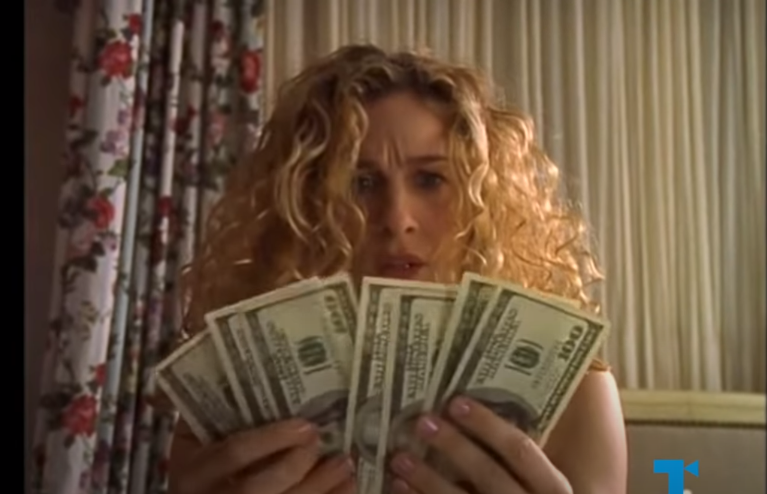
Something else that just isn’t discussed enough is how much media of the 1990s really vaunted wealth.
Sure, you had your first foray into class-conscious media like Roseanne and The Simpsons which is why they were such groundbreaking shows at the time. But overall, I remember the 90s and the turn of the millennium being that last vestige of a stable and prosperous era where the Boomers were able to maintain this illusion of the Great Society until 9/11 and the dot-com bust ground everything to a screeching halt, then Millennials got their death warrant in the Great Recession.
Before all that, wealth was often cavalierly portrayed in popular TV shows and movies. Many people know of the Fresh Prince of Bel-Air as a show borne of Will Smith’s unpaid tax bills, but did you know that much of the content came from Quincy Jones wanting a TV show that his daughter and her private school classmates could relate to? Same deal as prior greenlighting by the gatekeepers, but with a wealthy Black story instead.
Even movies aimed at children like the Home Alone movies also had this veneer of wealth that most kids probably couldn’t relate to, which I briefly touched upon in this essay. The McAllister family isn’t simply comfortably middle class; they live in a damn fortress in one of the most affluent suburbs in America.
Some of this was done solely as escapism: living in a bigger house is a fantasy if you have to share a room with your siblings like I did. On a production standpoint, it’s also easier to film in a real mansion or even a McMansion compared to your average single-family home. Manhattan apartment? Baby, that’s a soundstage. A single-camera rig would take up half my living room/office/where I eat at my computer desk because there’s no place for a separate table.
Actors who have the time and money for personal trainers, top-notch grooming, professional hair and makeup, and beautiful designer clothes instead of whatever you didn’t pull out of the hamper? The entire idea is to get away from your present life, and portraying that kind of affluence was just how it was often done in the 90s and the turn of the millennium where excess was celebrated.
So it’s not surprising at all that source material aside, Sex and the City would represent this total fantasy version of New York that most of us don’t get to live. Fabulous Manhattan apartment, shopping at the most expensive stores on Fifth Avenue, being part of this insular social circle of the rich and evasive, yet still being down to earth enough to drunkenly enjoy a slice of pizza at 2AM after a night of drinking and cry over that fuckboy who’s doing that “will he or won’t he” thing again.
But by the time Sex and the City got its first revival, we weren’t interested in the fantasy for sale.
Changing the Narrative and Who Tells the Story
Millions of Millennial women who were likely exposed to Sex and the City in college when it was just wrapping up suddenly had their dreams of financial stability hurled out the window of Carrie’s pre-war apartment. We really didn’t want to see her try on one down payment sized designer wedding dress after another as we waited by our flip phones for a callback from IHOP about that waitressing job despite having an aerospace or finance degree.
We saw billionaires just destroy the economy and our futures, the last thing we wanted was yet even more media about how we should aspire to be them or their lapdogs who make about $600K a year and never got the memo that they still have more in common with a McDonald’s worker than Jeff Bezos.
The 1990s was the last vestige of media being this illusory, for both better and worse. Viewers were now hungry for media about women getting to fuck up but still have some humility, and figuring out the roles that friendships and romantic relationships would have in their lives in the big city. Broad City was such an important show for this reason: it wasn’t just a more realistic portrayal of life in New York in a post-2008 economy, but it actively tackled social issues and the way that white women often respond to them in a well-meaning but terrible way.
So that actually brings me back to Lipstick Jungle, time to remove that pin placed earlier.

This Candace Bushnell creation didn’t get as much love or recognition as Sex and the City and its prequels. There were several factors that contributed to its demise, such as seeming too similar a premise to Sex and the City where it just follows around three wealthy, successful women as they navigate maintaining their relationships instead of dating, and there’s more emphasis on their career decisions. The Writers’ Guild strike in 2007 threw production off then the Great Recession happened, viewership tanked, then the show just abruptly canceled with no time to pencil in a half-assed conclusion.
But Lipstick Jungle fell flat because the Gen Xers who lived by Sex and the City had moved on and if they were impacted by the recession too, they also didn’t want to see yet another TV show about rich ladies with high-power jobs. The worship of wealth was gone now that the shades had been pulled off, especially if you literally witnessed the day of the Bear Stearns collapse in real time like I did.
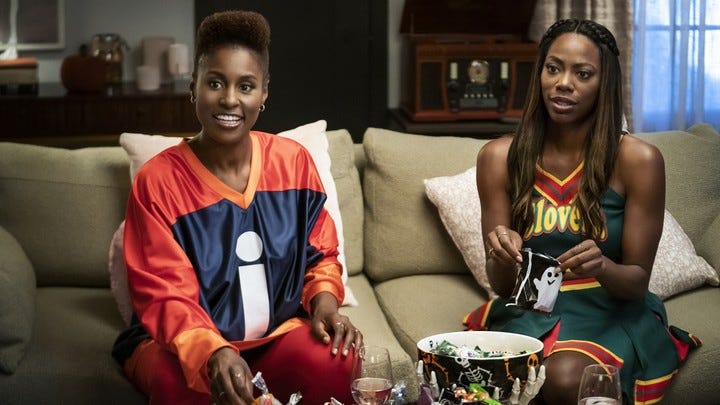
Millennials were uninterested in the latest Bushnell adaptation as well. Not only were we blasé to finding a Mr. Big of our own as our lives had more turbulence than a Spirit jet in a Chicago wind tunnel, but we didn’t want to just see shows that were more realistic about women in their twenties and thirties living it up and screwing it up in culturally dominant cities like New York. We also wanted more shows about women in groups that largely have gone unrepresented — like Black women on Insecure, fat women on Shrill, and queer and neurodiverse women on Atypical.
Characters that were one-offs, set dressing, or cheerleaders to the rich, thin, and cishet white women of Sex and the City and Lipstick Jungle are finally having their own stories told.
Sex and the City was absolutely a groundbreaking and important show that provided a safe space for Gen X women (and even some Boomer and Millennial women) to explore their sexuality and interpersonal relationships. It absolutely changed the way women talk about sex with their girlfriends, source material notwithstanding. This even includes self-pleasure: shy inquiries about the Rabbit transformed into a sex tech industry where vibrators require network upgrades and even experience DDoS attacks, and there’s entire blogs dedicated to them. Women and femmes discuss sex toys as complex as Teslas on my Twitter timeline with the same nonchalance as what they made for dinner. Sex and the City definitely propelled that, despite its issues.
But it still told a story about a fantastical side of Manhattan that most of us would simply never get to live out, which shows like Broad City challenged and made more realistic. That illusion of New York life is dead, as is the illusion of many friendships and relationships as well.
Now that we talk to people online daily and find things out in a few swipes, the smoke has cleared from the mirrors. Freelance writers engage in caldera-like seething at the mention of Carrie’s $4/word gig at Vogue as anyone halfway aware of today’s economy rages about how she embodied the conservative straw woman argument and manosphere-born misogynist epithet that she can’t afford to buy her apartment once it goes co-op because of her poor choices. And since we all sighed about our shitty social lives even before the pandemic, Millennial women in their mid-thirties who hoped for single and/or childfree bliss with a tight-knit girlfriend group in an urban center find themselves dreaming about mornings in the coffee shop together more than finding an Aidan or Mr. Big.
Most of all, now that some of the gatekeepers have realized that diverse and more class-conscious stories are where the money is these days, deciding who gets to tell their stories is still an impactful decision. There’s more mediums and means for people to tell their stories, and marginalized groups are still systemically shut out from many of them. But as the reliance on major network TV optioning your writing to make it has started to go the way of flip phones, what with Netflix and numerous other digital distributors?
That influence on our culture still ultimately comes down to who gets to tell their stories and who decides to boost them.
Candace Bushnell was simply in an era where people wanted to lose themselves in the lifestyles of the rich and private. Now we want entertainment that straddles both realism and fantasy with casts and crew that look like their diverse audiences and speak from their experiences. People who’ve never seen anyone who looked like them on TV growing up are more likely to have that chance now.
With or without a major publisher or TV network, get out there and tell your story. You never know who’s going to lift it up.


