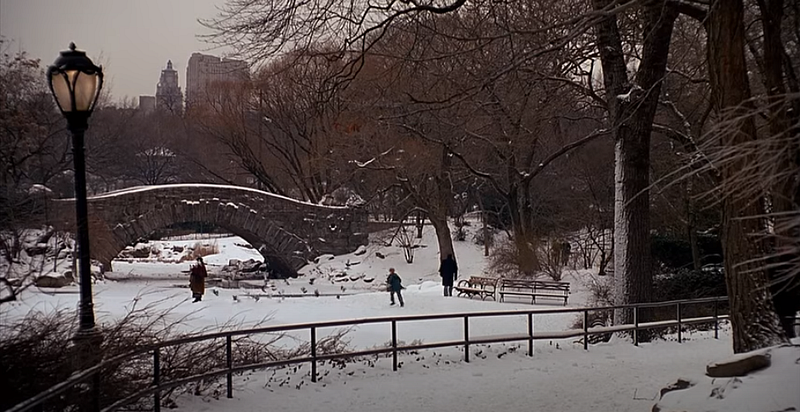
Home Alone 2 is a Love Letter to the Old NYC I Sorely Miss
Upon revisiting that old love letter, I found myself uncontrollably sobbing several times at this time capsule of the city my family called home for over 130 years.
Christmas movies are a genre spanning timeless cinematic masterpieces that now reside in the Library of Congress, to forgettable dreck that barely earned enough at the box office to buy a cheese pizza.
There’s also the cult classics adored by millions, and the countless cheap Hallmark movies about a cosmopolitan businesswoman in New York or LA who just needs some fine dicking down from a small town guy to make her rediscover the magic of the birth of Jesus.
Home Alone 2 belongs in those primary and tertiary categories.
It wasn’t just a financial success that raked in $359 million against its $28 million budget, according to its Wikipedia page. Home Alone 2 has been firmly stamped in Millennial consciousness as the ideal Christmas movie. For many of us, it’s also the preeminent example of a sequel that was better than the original despite the original Home Alone dwarfing it by over $100 million at the box office.
But hey, box office numbers don’t always tell the whole story about an enduring fandom.
Of all the notable children’s movies of the 90s, particularly Christmas ones, Home Alone is one that gets discussed on YouTube and social media easily the most often today: and its Gotham-based sequel seems to get even more love than the original.
Other classic Christmas movies show up on my timeline like National Lampoon’s Christmas Vacation, Gremlins, and Die Hard, but whenever Home Alone comes up? It’s virtually always the second one instead of the first, but both movies have been emblazoned into Millennial consciousness.
Every year like clockwork, at least 3–5 film geeks and other media people I follow on Twitter post a picture of themselves flipping off Trump in that now-infamous scene where Kevin asks him where the lobby is at the Plaza Hotel.
There’s entire Twitter, Reddit, and IMDB threads dedicated to how the entire premise would be unwound by the most basic smartphone and the fact that the 90s were the last time children had any semblance of independence (and even that was fleeting by 1992). As my generation grumbles at our nerfed spending power, we cruise Twitter and Reddit for those discussions of whether Peter McAllister was a hedge fund manager or perhaps a mob boss, because how the hell could he afford this compound-size home in Winnetka — an affluent Chicago suburb that Bloomberg dubbed one of the wealthiest places in America — plus that many tickets to Miami for such a large family before we had things like Trivago and Orbitz with a hefty dose of deregulation?
It’s alluded that while his family didn’t hurt financially when he grew up, he’s certainly more successful than his parents were. On the way to Paris in the first movie, Peter tells Kate that he never flew anywhere as a kid and had more down-to-earth family vacations in a station wagon. His brother Rob is even wealthier, what with having an employer that sends him to a lavish apartment in Paris after a big promotion while his Upper West Side townhouse is being renovated...and he can shell out to send his entire extended family to France FIRST CLASS alongside his daughters, who were hanging out at the McAllister pad for some reason? (Well, the parents went first class anyway. All the kids were shoved in coach, pure Boomer move right there.)
Huh, kids who came of age after the Great Recession don’t realize just how much media geared towards younger viewers showed us upper middle class or flat-out insanely wealthy families most of us couldn’t relate to.
But in spite of that, Home Alone and Home Alone 2 are absolutely my quintessential Christmas movies and they’re considered timeless classics. The sequels don’t exist to us die-hard fans, and watching Home Alone 2 again just immediately catapults me back to 1992 and some of the rare bright spots of my rough childhood: the big Christmas party at school and how my teachers basically checked out in the days leading up to it, every single TV station airing Christmas specials, and winter recess which meant it would be at least two weeks until class was session again, free from the pricks who’ve made my therapist quite wealthy in my thirties.
But even though I felt detached from the actual “meaning of Christmas” as the sole Jew in my class, a facet that would color how I viewed a lot of media growing up despite not being raised very religiously, the Home Alone movies were the great equalizer. We came together as American kids who couldn’t wait to get the fuck away from school so we could watch these new classics and have hot cocoa after playing in the snow. We did not Tik and did not Tok, it blew our minds that Lemmings had a Christmas version and fit on one floppy disk, and the unadultered joys of winter recess were not coiffed and curated for our parents’ Instagram.
As we now inhabit a world of reboots and pop-ups designed to take us back to that oddly stable and prosperous era when we were sold Dunkaroos-sweet false hope about our futures, the Plaza Hotel even sold a vacation package mimicking “The Kevin McAllister Experience” from late 2017–2018, as a marketing ploy for the 25th anniversary DVD that had just come out. I don’t think many Millennials took part, given that there’s more economical lodging to be found in midtown Manhattan where you can watch old mafia movies on your own device and Postmates a fancy sundae from Serendipity for far less than room service.
That package didn’t even include a limo ride around the city with your own cheese pizza waiting in the backseat. Which come on, that was one of the hallmarks of Kevin’s dream vacation before it got dark and edgy on the Upper West Side real quick!
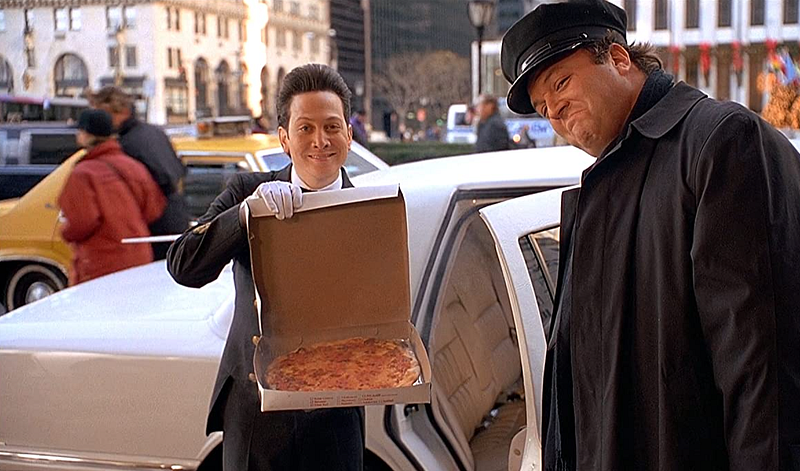
Which was REALLY what Kevin wanted after he had enough of people shunting him off to the side in the first movie, and never leaving that poor kid any pizza: literally and metaphorically!
Besides, the actual luxury suite Kevin stays in was in a Hilton in Chicago, Duncan’s Toy Chest was also in Chicago, as was the pool in the Four Seasons because despite the Plaza costing more for one night than what I paid in rent on my first real apartment, it doesn’t even have a pool!
I’m dead serious. Technically, a night here was $8 more than my old rent according to www.usinflationcalculator.com. I come from a time when that’s how much a rent-stabilized studio in The Bronx around the corner from the subway used to cost.
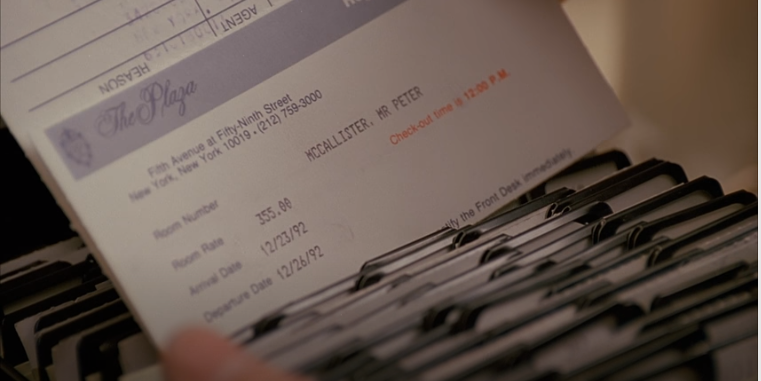
Whether it intended to or not, Home Alone 2 isn’t just a fantastic and comforting Christmas movie, but this innocent portal to the city I once knew. Even if Kevin doesn’t really go off the beaten path, or to many of my old haunts in particular. But something about his adventure and that above reservation card made me insanely nostalgic, even though a paperless society is better for all of us and I must’ve walked past the Plaza Hotel dozens of times en route to prior jobs and when I took the D then hoofed it to grad school.
The story in the first Home Alone could’ve been told anywhere. But only New York could host the second movie.
When I was at a GDC talk a while back, the speaker said you had to be careful with pop culture and political references so you don’t risk your project becoming totally dated. But I disagree. What makes archived TV, video games, and film so compelling is because we look at them in the future and compare them to the world and society we live in now to see what changed.
Not just in terms of which institutions still remain, which On the Set of New York examines thoroughly for several titles so we can determine what’s gone, relocated, what was shot on a sound stage, and total goofs (you don’t see the Manhattan skyline from LaGuardia or JFK). But we also look at technology, sociopolitical currents, social mores, and other factors! They change so much, that it’s impossible for every work to ever be purely timeless.
If I wanted to get on a really granular level about what’s changed in New York in the past three decades, Moonstruck would probably be a better example (let me know in the comments if you want to see this!) since New York was not home for Kevin. But it was for me for five generations and I fought to return at his age, and did just that.
Let’s face it though, the first Home Alone could’ve taken place anywhere in a deciduous climate. The hilarious scenes where the legendary John Candy drives Kate from Scranton to Chicago on his polka band’s way to Milwaukee are probably the only thing that make it seem patently Midwestern at all. And if you grew up in Winnetka or Glencoe and feel nostalgic seeing the first movie, that’s totally valid. But the story could’ve been easily transposed to an equally tony suburb of a major American city, like Scarsdale or Wellesley.
But aside from “Lost in Philadelphia” or “Lost in DC” just not having the same ring as “Lost in New York”, these cities are nowhere near as huge and don’t have the same reputation for being hard. (Or at least not as hard.) They’ve got their own unique histories and dynamics, and I love visiting. But New York has that reputation for a reason. This place is known for making life intentionally hard. Sure, you could have some beautiful cinematography showing the Washington Monument or Liberty Bell, or filming in Boston with Kevin not having as much fun by himself in Fenway Park as he thought it would: but would it have actually told the same story?
I’m a fifth-gen New Yorker who’s known this city in times of poverty and wealth, seen it in four different decades so far, have over a century of stories from my family dating back to fleeing the Pale of Settlement, and most all, have had times of not having a minute to myself then weekend after weekend alone. Experiencing loneliness at any age has this duality in New York that can’t really be replicated in any other city. It’s damn near indulgent.
You’re boxed in by millions of people who come and go alongside millions who’ve been here longer than every single pre-war building still standing. We’re known for being aloof or even assholish. (Forgive us, we’re already in a pressure cooker that’s only been worsened by Cuomo’s MTA.) It’s a loneliness that can be all-encompassing in a way that just doesn’t strike you in any other American city, or even a foreign one. At least if you’re in Paris, can’t speak French, and don’t know a soul, you expect to be lonely. You can live here for decades and be crushed by it without thinking life could be any different: but something will give based on that sheer density alone.
So no, Home Alone 2 wouldn’t have held up in any other city while the first Home Alone could’ve been filmed anywhere.
Our judgment can get fogged by nostalgia and personal significance. It certainly did for me when I watched this beautiful movie again, and I tried to see it through adult eyes that got an audience for doing loads of nerdy analysis about games and movies, and how they touch our lives relative to how their creators made them come to fruition.
Home Alone 2 has so much personal significance to me as someone who grew up incredibly depressed and abused in New York and New Jersey. So it’s virtually impossible for me not to imbue my analysis with that lived experience, and someone who remembers how the world and technology were in 1992.
There’s times I’ll leave Christmas movies and cartoon specials playing on YouTube for seasonally appropriate background noise as I get my work done or make dinner. But my brain does not process Home Alone 2 as background noise. It’s impossible. Hearing John Williams’ lilting and oh so Christmas-y yet beautifully ecumenical score is so comforting. When I was dying to go home and be with my grandparents instead of in the culturally sterile shithole within Jersey swampland I was exiled to, I’d watch it again and again. I longed to go home.
But now that almost two decades passed since I did just that, it hit me that I never had my big happy McAllister-style family reunion. Hell, I somehow managed to do the complete inverse of what most Millennials want and bought a home in this land where I’m deeply-rooted; and now I’m dying to put 2,300 miles between my present and the past. It’s been a strange thing to reconcile with.
Upon revisiting Home Alone 2 in adulthood, I still feel that indelible comfort it would always surround me with, like a perfectly fluffy bedspread that’s warm without being too heavy or cloying. But I watched it as a child when I wanted to be home, and to feel the familial love Kevin clearly feels despite how often he’s shunted off to the side. Upon watching it now, it makes me long for the city I recall in the 90s that I feel no longer exists: and I now relate to Pigeon Lady more than Kevin.
Home Alone 2 may have been half filmed in Chicago and half in New York out of expedience, but the attitude that shines through in the final result is 100% the New York that was, a brutal city with as much toughness as there is beauty.
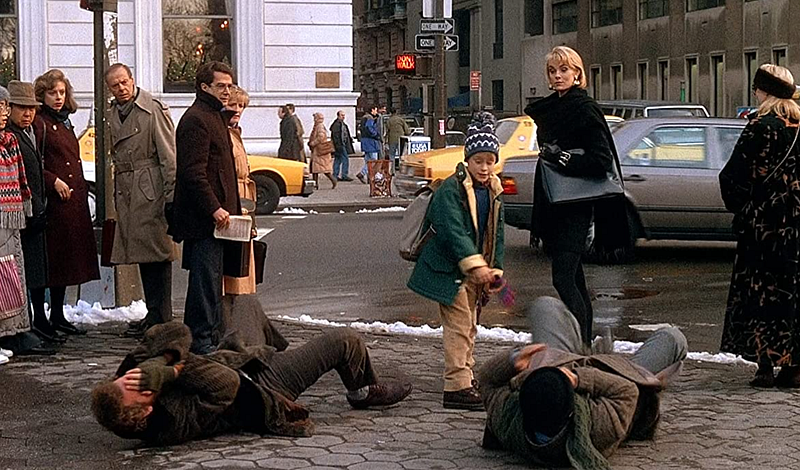
Okay, before I actually dive into Kevin’s journey in being forgotten by his family on vacation for a second time, I just need to point something out. I chose this screencap on purpose because it’s obvious that the writers never actually spoke to any women who’ve been catcalled, ever.
I was taught to be very “shoot first, ask questions later” when it came to men harassing me on the street; to always assume the worst. That’s how a lot of Boomers in New York were raised, and quite a few raised their Millennial children similarly, my family was no exception. That I should retaliate if I was physically touched, but to otherwise get the hell away as soon as possible, even if that meant leaving my purse or other belongings behind.
Any woman who’s been catcalled? Absolutely lived vicariously through Leigh Zimmerman’s non-speaking role where she just squarely punches Marv in the face twice, and Harry for good measure when they meet a second time.
Seeing this as an adult filled me with a sense of awe. Sure, it’s not realistic given how many women go to jail for attacking their abusers if they don’t end up dead from rejecting men. Most of the time, we’re also just caught so off-guard by it that facepunching isn’t our first reaction. But despite her silence, she punches an evil man out cold twice. This just feels powerful to me as an adult.
But I digress.
Although this scene was not very realistic, it’s still indicative of that attitude that was more common in the early 90s than today. After a rash of violent crime in the 70s and 80s following the city’s fiscal crisis, violent crime had largely decreased in this era. While “broken windows” policing was praised at the time for this, it was really due to the economy entering a boom time. The 1990s were the last somewhat prosperous and stable decade, even though things like poverty and crime have always persisted because that’s just capitalism.
Nevertheless, living through these crimewaves traumatized a lot of New Yorkers. It had made my parents somewhat paranoid and adopt that “shoot first, ask questions later” mentality that they more or less instilled in me.
So I don’t mean to totally romanticize the toughness aspects here. While violent crimes at the time of writing are nowhere near what they were in those apocalyptic days when The Bronx burned, there’s still been an uptick as a result of economic unrest in the wake of COVID.
But I suppose it’s this fantastically tough image of yesteryear that I recall, a woman fighting back sans consequence, that makes me remember an alternate history before cell phones and being able to publicly shame these creeps.
As for Kevin’s journey into this tougher, seedier underbelly of the city once he’s been ripped from the decadence of the Plaza Hotel and sightseeing from the safety of a taxi or limo, it made me think of that tough reputation that was amped up to 11 at this particular point in history.
The people he encounters along Central Park West are *hyperbolically* awful to him.
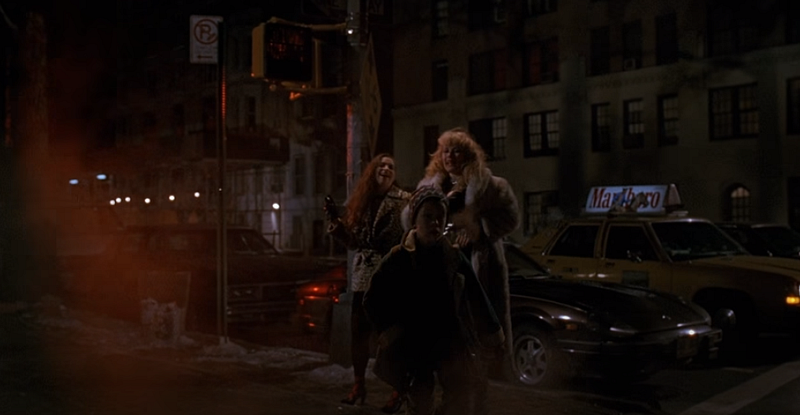
Even as much as I remember other adults being assholes when I was a kid and saying utterly inane and/or infantilizing things to me, I don’t think I ever had as many get in my face as people do with Kevin once it sets in that it’s dark, he’s all alone in this inimitably gargantuan city.
After all, the city’s reputation aside, being by yourself hundreds of miles from home and surrounded by total strangers is a scary prospect for a 10-year-old! Especially when you’ve graduated from accidental toothbrush theft to a 5-star hotel accusing you of credit card fraud!
In a city full of dualities, there’s also this stark duality Kevin experiences that becomes more obvious seeing it again as an adult.
It’s that Kevin is treated so awfully at home, but he’s now being treated with respect.
Seeing this in the first movie was almost downright triggering for me as a child abuse survivor. It made me recall how much I related to Kevin, who seemed to be unfairly picked on and just treated like complete garbage by his own family.
Sure, much of the respect he now gets is quite transactional and acted to stay consistent with the over-the-top service one would expect at legendary luxury accommodations like the Plaza Hotel. He’s only 10 years old but everyone refers to him as “sir”, even the limo driver whose friendliness seems far more genuine.
This is a place known for kicking you in Jimmy Choos while you’re down, or elevating you to the point you can touch the sky. Kevin certainly does both in the course of this movie, and it was a thrill reliving his excitement. I go to an even number of nice and shitty hotels for all the business travel I signed up for, once lived my dream of getting room service grilled cheese when an on-site restaurant was full, and don’t have to worry about being accused of credit card fraud when I present my plastic at the desk. All things I take for granted now. It’s just plain mind-blowing when you’re a kid, and doing this by yourself in NYC pre-cell phones takes it to a whole other level. I consider things like being stranded in your average suburb with a car I have to constantly dump money into and culture I don’t align with to be a lot scarier than trawling Central Park West by myself at night.
Upon seeing Home Alone 2 again, it wasn’t just this time capsule of early 90s NYC perfection. Kevin looks up Uncle Rob and Aunt Georgette on the Upper West Side to find that the place is empty, and undergoing a complete gut renovation. It took me until my thirties to realize this was metaphorical for my own life.
First I watched this movie so I could go home when I wasn’t actually able to. Now I watch it to remember that sheer hope for a better future that seems to amplify around the holidays.
There really is this magic in this city around the holidays, despite how lonely and even downright horrible many aspects of it can be, and it could’ve only been exemplified through story in this Rotten Apple.
The rentier class may have ruined my homeland with a million banks and Pret a Mangers. But they’ll never take away the wholesome magic of intergenerational friendship and the dualities that make Gotham’s heart beat.