
Retro Rewind
From the Death of the Teen Sex Comedy to Reboot Culture: The American Pie Quadrology
The 1999 flick is said to be one of the greatest teen sex comedies of all time. It spawned numerous sequels and had a huge impact on our lexicon. The franchise also inadvertently birthed and killed some distinct trends in film production.
Retro Rewind is a weekly series that reconsiders pre-2000 pop culture. More here.Preface to This Long Bubble Bath Read: An Era As Awkward As Our Teen Years
The timing of the American Pie movies happened to align with the exact years I was in high school: the first one came out the summer before I started ninth grade in 1999, and American Wedding right after I graduated in 2003. American Reunion was just one year shy of when my actual 10-year reunion would’ve been if I actually wanted to attend.
Despite feeling a disconnect to a lot of pop culture at the time on account of my Iron Curtain-esque household still residing in the disco era, then willfully disengaging upon falling into subculture and embracing all the obscure and niche media I could get my hands on, I still couldn’t help but feel that the series followed me through what’s commonly a painful chapter of life.
Seeing Jim, Oz, Finch, and Kevin have their misadventures in Great Falls then continue them when they went off to college made it seem like this was indeed going to be the best time of our lives, despite the awkwardness and not really knowing who we are yet. Millennials would later blow the lid on this whole “best time of your life” mythos, given the lack of autonomy many of us still had at this age and now see Zoomers struggle with given the total wasteland they inherited. Nonetheless, late 90s-early 2000s teen movies then college movies were at a fever pitch with this messaging and consistent tropes.
It got to the point that we were already lampshading it as early as 2001 with titles like Not Another Teen Movie. It was critically barbecued when it came out, but is finally recognized for its well-researched ribbing of this trend in filmmaking in the mid-80s that resurged at the turn of the millennium.
American Pie reinvigorated interest in the teen sex comedy rife with gross-out moments, then the genre transformed into something rawer and realer by the mid-00s with movies like Juno that beautifully juxtaposed humor and vulnerability while utterly eradicating the formulaic tropes we’d seen in the 90s and the turn of the millennium. But I posit that we wouldn’t have had Juno, Superbad, and so on if it hadn’t been for some of the realness seen in American Pie despite the blatant injection of male fantasy in several parts.
College comedy also wasn’t a totally new genre, what with Animal House still being culturally significant. But there was something about the way this cohort of movies released at the turn of the millennium centered an often-hyperbolic portrayal of the college experience. It distinctly clung to the coattails of late 90s teen movies and felt perfectly in line with how I dubbed a college many of my classmates attended “13th grade”. This was even exemplified in American Pie 2 with most of the gang save for Finch attending the same college in Michigan.
Assuming you headed straight to college then, these elements of pop culture followed you. This was particularly encompassed in early 2000s college movies like Van Wilder and Road Trip, and American Pie 2 counts although most of it took place off-campus. We were catching up with the same groups some time after finishing high school. It only helped that we had a new “Brat Pack” of sorts for my generation, with many of the same actors appearing in these movies: Seann William Scott played a role similar to Stifler in Road Trip, Tara Reid played another love interest in Van Wilder but with a more nuanced role, John Cho was the co-lead in Harold and Kumar Go to White Castle with Eddie Kaye Thomas also playing an eccentric friend, and Jason Biggs and Mena Suvari were romantic leads in the delightful trainwreck Loser (which I may cover sometime because it’s a schmaltzy time capsule to pre-9/11 NYC, which I’m now known for covering on FanFare!).
Looking back on the era now, the turn of the millennium was this incredibly awkward time that was clinging to what the 20th century was while it tried to embrace the forward thrust of technology. Coming of age then only magnified this feeling. Now imagine it triply so if you were a girl and/or in any other marginalized group.
Reflecting as someone who both lived in this time then saw the entire medium evolve, I think that the American Pie series didn’t just result in the end of the teen sex comedy (which it actually briefly rebirthed). It actually changed storytelling across a series, and set the stage for the huge wave of reboot culture that would come.
We didn’t know it at the time, but American Pie was also the harbinger of phasing out movies that showed your teens and early twenties as this completely carefree time of your life.
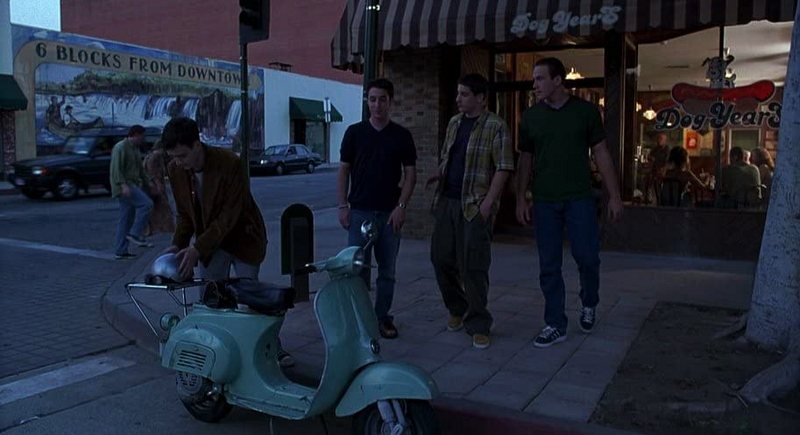
There was definitely this fantastical element of carefree-ness that I haven’t seen in many youth-focused movies since this point in time.
Because come on, did ANYONE actually throw and attend that many huge, wild parties when we were 16? Millennials grew up in the first vestiges of “stranger danger”, but nowadays these goddamn Karens call the police on teenagers just using a sidewalk unaccompanied. I was aghast when Gen Z kids on my timeline talked about how they weren’t even allowed to be in malls unsupervised unless they worked there. While I wouldn’t want to relive being the deeply traumatized teenager with untreated mental illness that I was, even if you offered me endless funding for all the games I could possibly want to make, I’m so glad I came of age at a time that wasn’t so consumed with paranoia just yet.
Then we got the prom night rager at Stifler’s mom’s lake house, where she’s actually present and well aware that there’s underage drinking going on. (I also couldn’t help but think as an adult watching this, “Jesus, she’s totally grooming Finch.”) Plus the second movie culminating in yet another lake house blowout, which at least seemed more realistic given their ages and circumstances.
I bring up these parties for a reason: in looking at my own screenwriting adventure for a film taking place in the same era, writers and directors put those party scenes in for a multitude of reasons. From a filmmaking standpoint, there’s simply lots of exposition and conflict that can take place at a party. Parties can be packed with action or just provide a change of scene. While they can be stressful to film, they can also just be a LOT of fun to film! Extras need to be paid, and who wouldn’t want to get paid to stand around having a beer at a party instead of just doing another street or crowd scene? Someone with a bit part in a party scene who says a memorable line can end up becoming a superstar, or at least an Internet meme, if the movie’s a hit.
But we also put them in movies to make up for how we wished our younger years could’ve gone down. People have a tendency to misremember this time of our lives as being rosier than it actually was. So if you’re a creator, you put those party scenes in so you can do now what you wished you could’ve done back then.
That and the mid-late 1990s was just this incredibly decadent time. The economy was great. The shit hadn’t quite hit the fan yet until after 9/11, then it really went down the drain after 2008. I think this is well-reflected in how many party scenes flooded movies in these two decades.
But enough about that.
I went through the entire American Pie quadrology (I’m not counting those direct-to-DVD sequels, nope) so you don’t have to.
I looked in both marvel and horror, joy and anguish alike, as I journeyed back to 2001, 20 years prior to the time of writing. When I put these movies on again with the convenience of streaming it on my desktop, it was like I opened up a time capsule to the chain letters about Y2K and hoarding Pop-Tarts, and dreaming of filling my college dorm and first apartment with inflatable furniture.
It was truly a strange cross between where we are today and where we were in the 1990s, economically and technologically speaking. Frosted tips, pop punk on the car radio with no Spotify, early webcams powered by unstable modem connections when being online was a process, and hilarious VCR mishaps: some of our worst fears as teenagers were on that screen, which spares the franchise from being an unintentional period piece.
So, what changed in life and filmmaking since?
1999, A Senior Year Pact
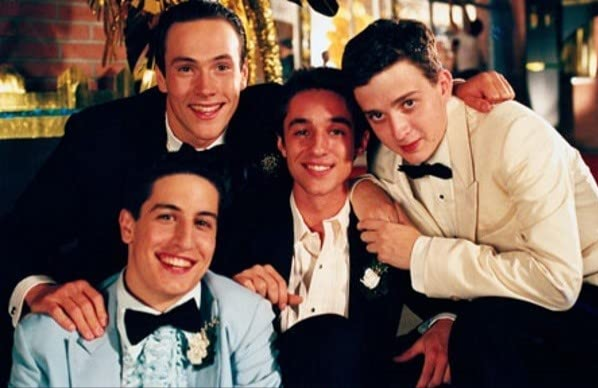
First, let me say that now I see why it gets heralded as the greatest teen sex comedy of all time.
American Pie has way more heart than I remember, and while some of that hallmark turn of the millennium misogyny is present, there’s actually a pleasant lack of slut-shaming! Let me tell you, that was practically unheard of in 1999.
I actually hadn’t remembered that much of the first movie. I mean, there’s the obvious reference in the title: that infamous scene where Jim fucks a pie after Oz tells him it’s what the inside of a vagina feels like, Eugene Levy as the silver screen’s best bumbling dad walks in, and Jim says “It’s not what it looks like” which becomes a catchphrase. The title also had a double meaning in that losing your virginity on prom night is a concept that’s supposedly “American as apple pie”.
I remembered the second movie more strongly, so I actually completely forgot about the whole plot driver here. It wasn’t just about Jim fucking a pie in a failed bid to practice simulating sex, and getting into other humiliating mishaps. It was about four teenage boys making a pact to lose their virginity before they graduate.
Like the wild parties, I don’t think such pacts were as common as media of the time made them seem. But there was absolutely pressure to have sex before you were ready just because it seemed like everyone else was doing it. Both the alarmist Boomers in my life and the media they created made it seem as though teenage girls literally couldn’t go anywhere unless we were beating boys away with sticks, and that every high school was like a rave and an orgy inside an abandoned Crazy Eddie store.
Social media and online life wrought a veritable Pandora’s Box upon the world, but one amazing thing it did is that it made people who didn’t lose their virginity until well after high school feel less alone about this. Because teen-centered media of the 1990s seriously made it sound like we were all having more sex than the average porn star. Come on, “rainbow parties” were a bit of alarmist blather on Fox News. You really think we were going to waste those tubes of MAC Fast Play before they discontinued it?!
But upon seeing American Pie again, expecting some of the worst given all of the bigotry that was acceptable back then, I was actually pleasantly surprised.
Sure, it’s whiter than a conservative Congressman having a vanilla frappucino in a suburban Starbucks then demanding to speak to the manager. There’s an uncomfortable amount of Stifler calling things “gay”, but it does get lampshaded later. There were also fantastical elements like the parties, the overall lack of parental influence despite Eugene Levy’s memorable repeat performances as Jim’s dad, and how characters like Jessica talked more like women in their thirties than your average teenage girl who has a little more sexual experience than her friends.
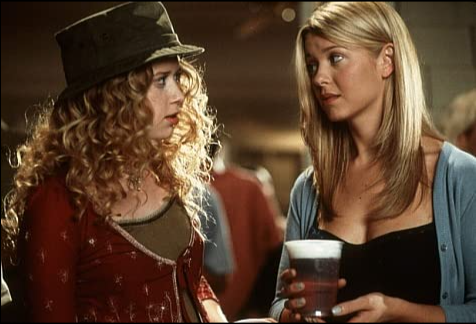
But American Pie actually did a great job at showing both the bravado and total insecurity of a bunch of teenage boys who care more about simply losing their virginity than who they do it with, or the context of the encounter.
Nonetheless, I was literally barely six minutes in and already thinking, “Woah, they’d think twice about putting that in a movie these days.” Just watch Stifler make the rounds at his party that starts right after seeing these guys actually go to school like normal teenagers.
I also completely forgot about the iconic opening scene where Jim’s trying to get some alone time with a scrambled porn channel, setting us up for technical foibles to come. Oh, kids these days don’t know the trouble their forebears went through prior to being forever online. But we’ll revisit all that awkward tech soon enough.
While there was a relieving lack of slut-shaming, it hit me that the scene where the boys make the pact — with Kevin as the de facto leader of the pack — the morning after Stifler’s party? It totally reads like an incel manifesto.
They’re motivated by Kevin thinking he’s entitled to sex because he put time in with Vicky like she was some kind of pension fund that produces a payout, instead of an actual person (who eventually enthusiastically consents once Kevin puts the work in to please her, thanks to the guidance from his brother). Then we got Oz’s hilariously awful sappiness that turns into “Suck me, beautiful”, and seeing uber-dork Chuck “Sherminator” Sherman come downstairs and leave with a pretty girl. This aspect turned out to be pretty realistic in that it turns out Sherman lied about sleeping with her to show off to the other boys, but it hurts him in the end when the girl finds out and tells everyone at prom that it didn’t happen but that he did fuck a grapefruit and wets his pants when he’s afraid. Insecurity got the better of him, and we have some schadenfreude at this revelation.
But the movie got oddly realistic in other ways, despite a notable absence of financial woes that we’d see depicted more in future films post-recession. We didn’t actually see much portrayal of the deeper sides of male friendships in the late 90s aside from minor conflicts in bro comedies, and I think this had a lasting impression on the entire medium. The timespan you watch them interact as characters aside, most male friendships on screen at the time weren’t portrayed with the same degree of intimacy: American Pie went below the crust.
Then there’s the usual worries teenagers have, like when Vicky wonders if Kevin will still be in her life once she goes off to college in Ithaca. Heather and Oz have no idea what they’re going to do for majors and careers. Oz also seems manipulative of Heather at first — but then he actually shows hidden depths in addition to musical talent, and even leaves the lacrosse game to be in the recital with her. While he wasn’t the first or last portrayal of the “jock with hidden depths”, Oz is definitely among the most memorable of that era because he showed genuine change.
While Jessica is written like she’s far older than she actually is, I actually liked that they weren’t afraid to show “normal” teenage girls having just as much sexual desire as boys without shaming them for it. This was rarer than gold Zelda cartridges in all forms of media back then. Because often, women with sexual desires outside of a monogamous relationship will be portrayed as evil or manipulative! Or that she needs to be punished for having sex too soon after meeting a guy, and there’s few groups male screenwriters love to drag more than those slutty teenage girls and 20-somethings they want to “teach a lesson” to via trauma or some other comeuppance they think she deserves.
But nope. While there’s plenty of cringey male gaze in certain scenes and totally unrealistic elements like Nadia changing in Jim’s room? I credit Adam Herz with making these girls unabashedly horny, and not punishing them for it. It DESERVED credit for the time.
It’s evident in the cynical Jessica, foreign exchange student Nadia even though there was some gross “exoticism” with this, and horny band geek Michelle who doesn’t show it til the very end. They’re just as excited about sex as the boys and have no shame in it, at least on the surface.
Vicky has the same desire as them, but also so much hesitance, and it was pretty groundbreaking that her prom night with Kevin was depicted as realistically awkward.
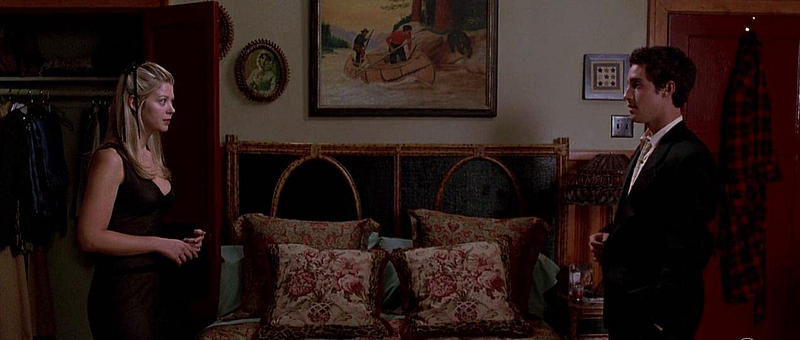
Often, a scene like this would be skipped in a teen movie due to runtime limits, child labor laws if one or more of the actors is under 18, or just thinking it doesn’t add to the story. (Plus you know, the whole implication of someone getting off to TEENS HAVING SEX even though the actors were in their twenties.) But you can actually see how Vicky and Kevin are both changed by this experience, and it’s realistically stilted.
Kevin eventually becomes an artifact since his character wasn’t as well-developed, and thus as memorable, as Oz, Finch, and Stifler. Before we even see more of his backstory and progression in the other movies, it’s obvious Stifler is a complete asshole to everyone because he doesn’t really have close friends. He may have also been a portrayal of the “broken divorced kid” because he feels insecure about all these guys who want to bone his mom (Finch notoriously succeeds, making the rumor come true.)
Jim and Oz show genuine character development in that they both say that the extreme pressure to have sex before they graduate is turning them off from wanting to have it. Notably, Oz actually comes to care about Heather and show her a different side of himself that he doesn’t get to with his friends and the lacrosse team. Of course, this was handled with the kind of homophobia that was common in the 90s when Stifler calls him “gay” and a “cuck”, predating the latter’s wider usage on the darker side of the Internet.
Which is an area where this movie was quite ahead of its time!
So in the now-infamous scene where Nadia seduces Jim in his bedroom and he prematurely ejaculates twice while the entire school saw it, you have to keep in mind that the concept of a “viral video” wasn’t anywhere on our radar yet. I remember wondering why you’d even share that kind of link on a school address, given that a lot of teens communicated by AOL at the time and my underfunded school barely had email for teachers, let alone the student body.
Nevertheless, the prospect of your entire school seeing you naked or doing something totally embarrassing was purely the stuff of your worst nightmares. I bet it still is, but now that we can share things instantaneously, quickly burn out on content overload, and today’s video chat seems like the stuff of science fiction by 1999 standards — American Pie absolutely defined the millennial experience by showing both the capability and limitations of technology of the day.
And while the creators were shockingly respectful to women despite the obvious male gaze-y elements, one thing belied that which was unfortunately realistic: Jim only came up as an embarrassing footnote in a PTA meeting by the next movie, Nadia was instantly sent back to Czechoslovakia for consenting to getting naked and being sexual with Jim despite having no idea she was being streamed on Jim’s webcam. This is something that just pissed me off, as it’s a common fear for many women, especially in the age of revenge porn and burner phones being easily hidden in your apartment and what have you.
After Jim and Oz blow up at Kevin at the prom about the pressure to have sex, where an all-white band uncomfortably appropriating Middle Eastern culture plays 80s prom hits, the big denouement comes at Stifler’s mom’s lakeshore cottage with one hell of an after-prom party where anything goes.
While you got that artfully awkward scene with Kevin and Vicky, no real implication if Heather and Oz had sex or just cuddled all night, and Finch fucking Stifler’s mom on the pool table and it mostly being played for laughs, Jim got the big finish with a hilariously uncomfortable sex scene. He initially asked Michelle to go to the prom with him mostly out of desperation, then is shocked when he finds out how sexual she is — the big wham line with all her band camp stories — and that she even leaves him the morning after. Which once again, was also pretty damn revolutionary for the time. Sex and the City had only been on the air for about a year then, and hadn’t even gotten around to showing Samantha doing this. You especially did NOT see that in a movie centered around young people.
So with prom concluded, the film ends with the boys’ joy and incredulity that they made it through prom and graduation with the pact fulfilled. They toast to “the next step” at Dog Years, which would’ve been a satisfying ending on its own but also teased the possibility of a sequel.
I suddenly smiled, remembering thinking about how I couldn’t wait to take my own “next step” upon graduation. And I think that this right here is why so many people tend to lionize high school and college years: we’d love a chance to start over that young, and have our whole lives ahead of us. That whether we did or didn’t get laid by graduation, life’s just beginning and there’s so many possibilities.
Taking a “next step” has a completely different meaning at 25, 35, or 50 than it does at 18. But that hopeful optimism of both the era and that time of their lives is beautifully captured, and went surprisingly deeper than just your average Hollywood interpretation of high school dotted with toilet humor, absent parents, and awkward sexual awakening.
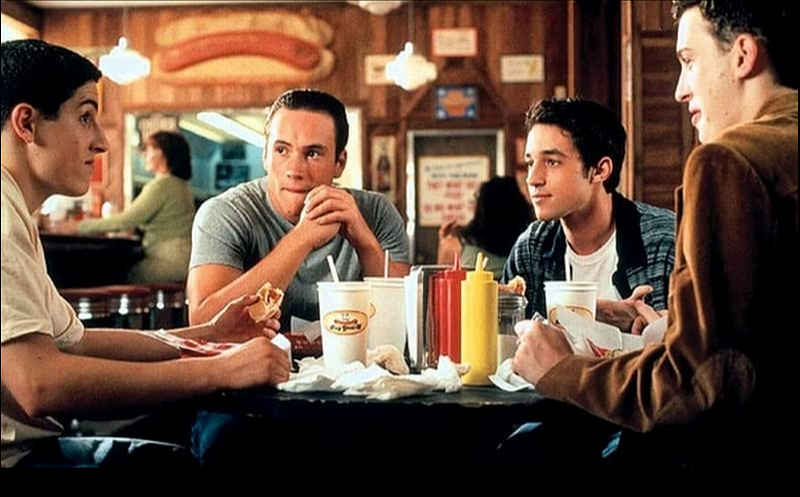
2001, College Years and Character Development
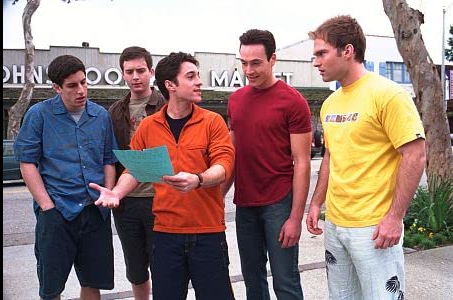
So, the sequel picks up roughly a year where we left off. College is out for the summer and Stifler’s up to his usual antics. Kevin and Vicky definitely broke up before she went off to Cornell, as it was implied. Heather and Oz’s relationship is also tested when she decides to study abroad in Spain for the summer, and we get a lovely little pre-9/11 relic of him actually dropping her off at the airline gate.
We get a dose of realism when Stifler throws another one of his parties just to get shut down by the cops…which is partly what motivates the gang to rent a cottage along Lake Michigan and turn it into party central.
When I used to watch American Pie 2 in high school, I found myself asking how the hell a bunch of college students could afford to spend a whole summer in a beach house unless they had trust funds (even though they’re shown getting part-time jobs). At least throwing an epic rager in a beach house before you go back to campus is more plausible than those wild high school parties.
Even though it was mostly portrayed in these movies with the magic of California Doubling, Great Falls, Michigan is apparently a fictional suburb based on screenwriter Adam Herz’s upbringing in East Grand Rapids. Which according to its Wikipedia page, has a median family income of $98,967. That doesn’t go as far today, but in 1999, that certainly would’ve afforded the ability to send your kids to college and off to the shore for the summer without crushing debt. (Check out my work on Sex and the City for deconstructing the mythos of wealth in a lot of our media!)
Now that we’ve gotten the economic veneer out of the way, we don’t have as strong of a premise as we did in the first movie. It’s just the gang catching up after their first year in college and going to Kevin’s brother once more for advice, so they go to Lake Michigan where they hope we have the party of the century. But a premise arises when Nadia suddenly returns, saying that she wants to meet up with Jim to finish what they started by summer’s end.
He doesn’t want to repeat what happened last time, even with the assurance there’s no cameras. This motivates him to seek out Michelle at band camp because she’s clearly more sexually experienced, and he assumes there’s no emotional attachment since she left him the morning after.
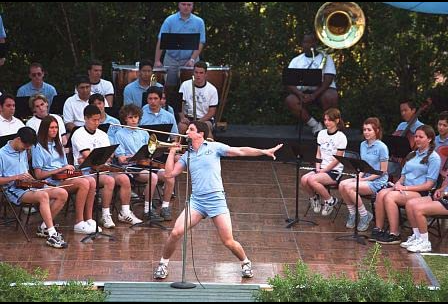
Michelle says that she left him the morning after because she didn’t want things to be awkward, or putting up with him suddenly pretending to be in love with her just to get laid. Holy shit, I never identified so hard with anything ever put on celluloid and I must repeat: THIS WAS GROUNDBREAKING IN 2001.
I engaged in this behavior well into my late twenties. Because I was confused as hell by guys who complained about how a girl they slept with suddenly thought they were a couple, yet they pretended to be in love with her just to get her in bed. I rarely found that explored in any medium, even in media made 20 years later you’re still going to find that women who love casual sex will be sooner pathologized than celebrated for it. While American Pie largely lacked the slut-shaming of many of its contemporaries, this chapter did get into the “rule of three” — where you must assume that a man slept with three times fewer women than he claims, but a woman slept with three times more.
But Jim and Michelle do eventually fall in love after pretending to be a couple to prime him for sleeping with Nadia once he recovers from the mucilage mishap. Michelle’s slightly jealous of her but when Jim finally gets his chance, he starts telling band camp stories and that ultimately reveals who he actually got to know and wants to be with.
Meantime, as Heather and Oz test their relationship while she’s in Spain and not much else happens with their characters, Kevin seems to be having remorse that he and Vicky are no longer together.
Just like how these movies were groundbreaking in showing girls being unabashedly horny, so is this arcing insecurity. Vicky thought that Kevin would be the one surrounded by pretty college girls, forgetting about her once she’s 700 miles away — the OPPOSITE happened.
He does a total heel-face-turn in that he demonstrates some hurt given that she clearly moved on from him and had something of a glow-up while she’s been away at Cornell. He postures about having slept with three different girls on campus just to admit the rule of three applied to him, and he didn’t hook up with anyone.
Finch practices tantra and takes his bizarre antics up several notches as he awaits the return of Stifler’s mom. He’s had other sexual experiences while away at college in New York, including sleeping with one of his professors (something often portrayed with the genders reversed, like in Loser). This aspect of him is totally Flanderized, going from a mildly quirky hipster with uptight tendencies to one of those obnoxious NYU kids who just discovered that cultures outside of America exist.
It plays really well with Stifler as the foil, the tension between them on account of sleeping with his mother notwithstanding.
Ah, Stifler’s infamous scenes. Since I’m not queer, I don’t want to give much commentary on the whole “lesbian” subplot — though as a straight woman, it just read as really cringey male fantasy to me, and it was portrayed in a lot of media back then opposed to genuine stories and subplots centering queer women. But regardless of sexuality, two women who suddenly found the four college boys they hired to paint inside their bedrooms would be freaking the fuck out. (They do, but it quickly fades.)
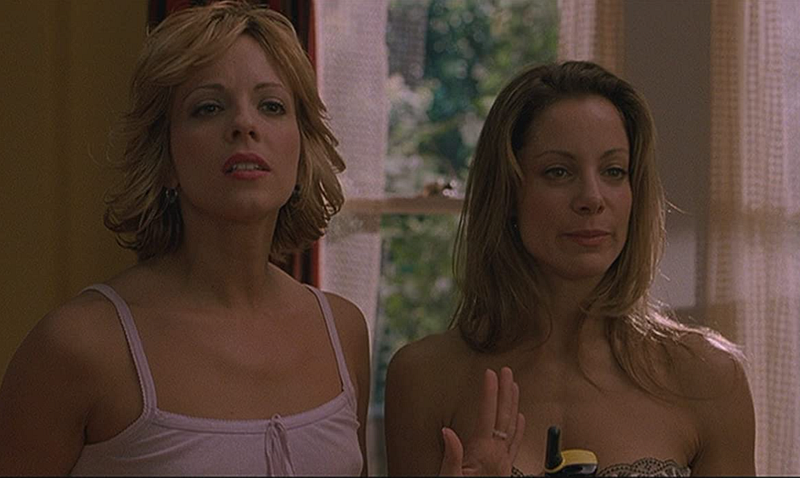
While it’s so obviously a male gaze copout, I do like how it does show some character development in Stifler calling everything “gay” in the first movie to suddenly being all too willing to “take one for the team”. Then mirroring how Jim’s misadventure with Nadia was broadcast to the entire school, people who can pick up CB radio frequency are listening in on what’s happening thanks to the walkie-talkies that came with the painting job.
Tech was in such an awkward place at the time. Walkie-talkies are still used today but when the first American Pie came out, it was a revolutionary concept to have a webcam and just be easily visible online. Going online was still a process and not something people did routinely yet. Heather and Oz having awkward phone sex over a landline and different time zones is something that actually got addressed in the pandemic age with couples split apart by risk and travel restrictions, we don’t think twice about Zoom and Snapchat sex now. Though with call waiting and Stifler picking up the line, subsequently killing the mood, it probably makes us appreciate these advances more than people who didn’t grow up watching communications evolve.
We close with Jim declaring his love for Michelle at the final band camp concert, Heather and Oz reunite at the party of the century at the lake house, Kevin and Vicky remain friends as she goes on to date other people, Finch bones Stifler’s mom once again, Nadia hooks up with Sherman, and Stifler indeed takes one for the team and reflects on what a great summer it was as they pack up to return to Great Falls and their lives.
Shockingly, American Pie 2 beat the first movie by more than $50 million at the box office, if their respective Wikipedia pages report accurate numbers. This is despite less than lukewarm reception from critics and only having about a 50% rating on Rotten Tomatoes several years later.
Normally, interest wanes after the first movie in a franchise — and we had no idea it was going to BECOME one yet. On the one hand, a highly successful movie would expect to be able to milk a sequel and this is reflected in getting almost triple the budget that the first film raised. On the other, the audience has high expectations that could lead to poor box office performance if they think it’s just a low-effort milked sequel (which some did).
But while most of the character development of the gang took place by the halfway point or third act of the first movie, it’s still evident in this sequel and it’s got a place in my heart. I wasn’t into pop punk at the time and got pretty snobby about THE REAL UNDERGROUND STUFF, but Blink 182, Sum 41, and Fenix Tx also got a place in my heart. I hear those songs and it just codifies to me that summer’s arrived and it’s time to get into lots of stupid adventures and party, and hook up or possibly find the love of your life.
May we all get a summer this epic after 15 months of lockdown.
2003, Life Beyond College, But With a High School Mentality
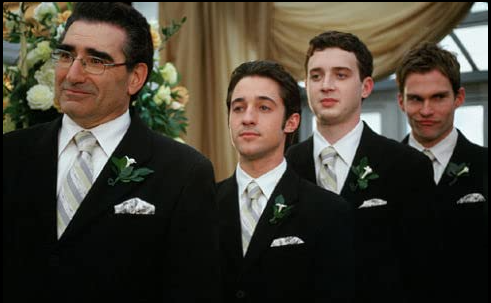
American Wedding is arguably the weakest movie in the series.
We can already surmise that there’s going to be bachelor party hijinx as Jim’s marrying Michelle, and after watching the gang’s antics in high school and college already? It already seems like a tired concept, even if we’re happy to revisit the Great Falls boys who saw a lot of us through our formative years.
It’s also tonally different from its predecessors in so many ways. The lighting seems so much darker compared to the first two movies that were bright, cheerful, and full of action even when there was minimal conflict or not many people in the scene. Given that American Wedding takes place after everyone’s graduated college, this could be symbolic of there suddenly being less possibility compared to when they were 19–20 and living it up that first summer out of college. They’re all grown-ass adults now who have to think about jobs, bills, if you’ll marry, and whatnot.
There’s no ultra-memorable pop punk soundtrack except for a hot second when “Anthem” plays on the way to the wedding. (The soundtrack page says otherwise, with Sum 41 and New Found Glory in the credits, but it wasn’t pointedly set to specific scenes the way “Flagpole Sitta” and “Fat Lip” just conjure up memories.) The music choices are from totally different genres and eras, like the dance-off at the gay club. There’s some familiar sets and locations we recall, but about half the movie is spent in Chicago and the country club resort further out in Michigan. We’ve got far less of the original ensemble cast driving the action, more from new characters like Michelle’s parents and sister.
The characters have developed, and there isn’t much more to do with them. Stifler’s an even more cartoonish version of himself, Finch is more acerbic than “refined but sarcastic”, and Kevin’s barely involved. We hear a peep from him that he’s got a girlfriend and is in law school, but he got demoted from leader of the pack to a glorified extra. Oz is also absent because the writers didn’t think he had enough to do and it was hard to keep this ensemble still going as it was, then it was capped by Chris Klein having a schedule conflict anyway.
While we got this realistic portrayal of Kevin’s insecurity and jealousy over two movies, he wasn’t as interesting or well-developed of a character as the rest of the gang. Then once Oz went through his journey in the first movie, there wasn’t as much for him to do now either. Michelle is the only woman from the original ensemble, as the conflict now mostly centers around Finch and Stifler both trying to sleep with her sister, Cadence.
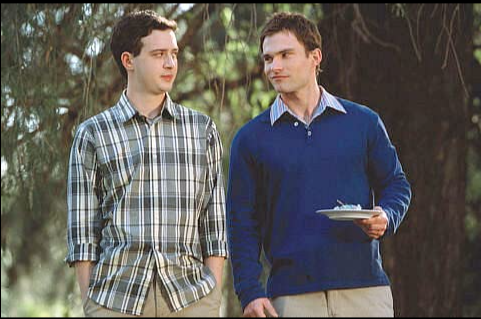
But while we didn’t know American Reunion would be on the horizon at the time, it seemed oddly fitting. We don’t take all of our friends and the people in our general social orbit with us into different phases in life. In fact, it’s even directly told to the audience that Jim was specifically trying to keep Stifler out of his life once college was wrapping up, although he kept coming back.
That endless partying is also lampshaded when there’s the engagement party at Jim’s house and one of the MILF guys says he’ll be an usher at the wedding. Jim then bluntly says he doesn’t know half these people, but at least they brought gifts.
Finch is all too pleased about Stifler not being invited to the wedding, just to have him walk into the engagement party with an extreme reprisal of “It’s not what it looks like!”
With both the total Flanderization of Stifler and that turn of the millennium misogyny, he demands to get hooked up with a bridesmaid at the wedding. (Obviously Cadence, who’s still in college and fresh off a break-up.) Stifler adopts a fake nice persona to woo her, and Finch even picks up on some of his behaviors. His antics and the over-the-top bachelor party he throws are all comeuppance for Jim not inviting him to the wedding, and trying to cut him out of their lives overall.
Even with the major tonal shift, Stifler definitely symbolizes that person you went to high school with who’s mentally still there. He shows another side in offering to teach Jim how to dance, though not without doing so just to get what he wants. While he does redeem himself in the end, he still doesn’t demonstrate much character development compared to what the main cast goes through in the first two movies.
We also get a little jaunt to Chicago as Michelle is seeking an appointment with a renowned dressmaker, which leads to the gang being uncomfortable in a gay club. Just like the whole thing with the “lesbians” scene in the last movie, I’ll leave commentary on this to queer people. As a straight person, I feel that these scenes could’ve gone worse given what era this movie’s from? But it definitely felt like using LGBTQ culture as a spectacle to gawk at, while Stifler’s just disrespecting their space.
The conflict is much weaker and less compelling compared to the pressure of the virginity pact, and wanting to see if they’d reach their love and sex goals by summer’s end. The audience goes in pretty much knowing that Jim and Michelle will prevail as a couple no matter what her parents think, and that there’s going to be this over-the-top bachelor party with Stifler involved.
While learning and growth is a lifelong deal, it’s often so much more palpable in your teens and early twenties and movies of the time reflected this. Now that we’re constantly talking about storytelling, you’re more likely to see these emergent narratives with older characters.
Here, we’re just along for the ride watching these guys we remember from high school and/or college give Jim his big send-off before he ties the knot.
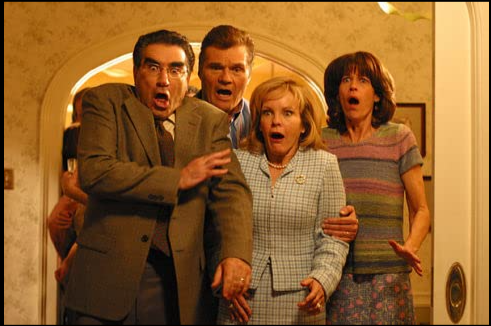
There’s also a bonus for Jewish viewers — the Jewish wedding trope.
So the only other mainstream work I can think of that successfully uses this trope is Sex and the City, when Charlotte marries Harry. Instead of lampshading, they bluntly state that they’re following through on Jewish tradition by all this disaster happening before the big day and even on it, and you WANT this because it means the marriage will be great. You’re getting all the bad parts over with now.
Jim’s grandma disapproves of the wedding because Michelle isn’t Jewish, which is hilarious in hindsight given that Alyson Hannigan has a Jewish mother, and played Willow Rosenburg on Buffy. Jim’s dad is expectedly aghast when Mr. Flaherty says “May we sit many happy shivas together!”
But when Jim laments about the chaos he’s been getting into leading up to the wedding, Kevin remarks that Jim frequently got himself into terrible situations, then found his way out and in an even better position than he was in before.
Jim fulfills both the Jewish Wedding trope and this prophecy when Stifler redeems himself by getting the Great Falls lacrosse team to fix everything he ruined at the venue. He also graduates to this ascended form of Chew Toy when Jim’s series of misfortunes rub off onto him to the point that he winds up having sex with Jim’s grandma after Cadence said she’d meet him in the closet (apparently, planning on standing him up as she’s seen running off).
We get the happy ending we’re expecting with the wedding scene after a heartwarming twist on the talks Jim would have with his dad, when the latter helps Michelle write her vows. Then of course, Finch has another reunion with Stifler’s mom, which they both acknowledge is meant to be an occasional sexual thing and nothing more.
But overall, it wasn’t just a tonal shift: it lacked the heart and depth of the first two movies. It was less about Jim and Michelle potentially having conflict as a couple and now a blended family, or even the guys just having conflict and growing pains as a friend group: it was really Stifler’s story! The gross-out gags and improbable situations seemed like they were just trying too hard, opposed to the actual comedic tension in the first two flicks that spoke more to the realistic fears of young people and genuinely embarrassing things they’d get into in the name of pleasure-seeking.
American Wedding did okay at the box office, making a tad less than the first movie did against a $55 million budget. It was really banking on that captive audience which was evident from American Pie 2 outperforming its predecessor, and other movies aimed at young people started getting second and third installments around this time as well. But a bigger budget doesn’t always equate to a better movie, especially if the production values are fairly simple and you’ve deployed California Doubling, but it’s characters rather than caricatures that drive the story and events.
It had a few good moments, but lacks everything that made the first two films and even American Reunion more memorable.
2012, The Reunion and Onslaught of Reboot Culture
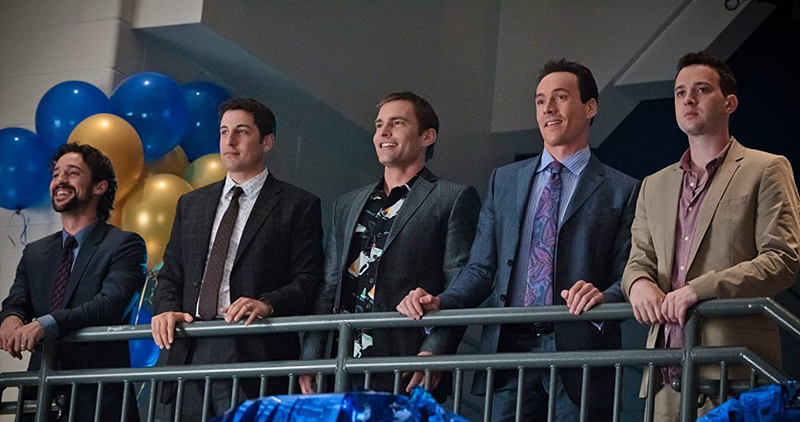
Just shy of a decade after Jim gets married, we got an unlucky 13th high school reunion, far from the days of awkward web cam footage and a carefree summer by the lake with nary a cell phone in sight.
We get another send-up to each movie opening up some kind of awkward sex or masturbation fiasco, only this time it’s with both Jim and Michelle (and their poor son Evan getting a visit from Jim’s trusty tube sock).
While American Wedding banked on a captive audience still being captive two years later, American Reunion banked on nostalgia. I was 27 when it came out, it stood to reason that most people seeing it would be in their late twenties or early thirties and likely settled into careers, getting married, having kids — or given the hellworld Millennials inherited, possibly lamenting that we didn’t have these things.
By this point as well, several direct-to-DVD movies borrowing from the American Pie name had come out, which followed suit in the “over the top college comedy” genre without actually starring any of the original characters save for Eugene Levy as Jim’s dad, and The Sherminator making a brief appearance in American Pie Presents: Band Camp. While the stoner comedy genre was alive and well in this age, Millennial audiences were losing interest when we saw that college wasn’t exactly the bacchanalian full of close friendships, tough but fair professors, and sex on tap prior to meeting your true love that these movies promised us.
“Sequelitis” and franchising weren’t new concepts in 2012, but now that the elder waves of Millennials had grown up despite journalists insisting we were still college students, producers wanted to milk the direct-to-DVD era as hard as they could with the advent of Redbox and Netflix.
Netflix was just establishing its reputation as a powerhouse that would soon fund its own productions to really bank on Millennial nostalgia, similarly to how Hollywood of the late 80s and early 90s cashed in on Boomer nostalgia. Except now there was this massive change in movie-making that relied on franchises with built-in audiences and the triangulation of companies like Netflix and Amazon picking up the tab when the Hollywood old guard got reticent.
The fourth OFFICIAL American Pie starring the guys we grew up with just so happened to kick this new wave off, as it would be one of several canon reboots to come in the ensuing decade. The execs learned from the direct-to-DVD era that a familiar title alone wouldn’t cut it, even though these spin-offs were still freaking being made as late as 2020.
Now we’re mired in reboot culture, which only heightens this feeling that Millennials have been held back in every way and can’t move forward.
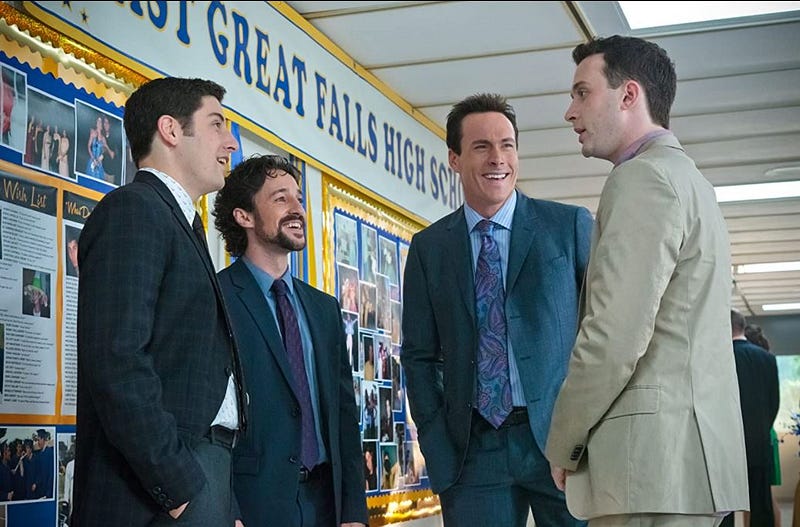
American Reunion is well aware it’s banking on nostalgia, as it frequently lampshades and bluntly refers to events of the previous movies. While the characters have now flatlined because they’ve been developed, there is arguably more demonstration of how this manifested with them as they grew up. The story and characters were definitely handled with more care than in American Wedding. Even after peeling back the cloying veneer of turn of the millennium nostalgia, this was abundantly clear and it certainly had the heart that was evident in the first movie. While we got some new characters, it’s really that original ensemble who we wanted — and they delivered.
The main story centers Jim once again, as he and Michelle have lost their spark in the bedroom as busy parents who’ve been married almost a decade. They now live in Chicagoland, but can’t resist driving back up to Great Falls to see old friends and family for the high school reunion. Which while that house in Long Beach still masquerades as Jim’s childhood home, Georgia Doubling replaced California Doubling: this was resultant of a 2008 Georgia tax law change that gave filmmakers up to a 30% tax break, which caused big and small productions alike to relocate from Hollywood, and continued throughout the 2010s.
We reconvene with Kevin, whose eventual lack of character development and presence may have been lampshaded by making him something of a house-husband to a new character, Ellie. (He also freelances as an architect, I guess law school didn’t work out or the writers completely forgot about it.) Oz moved to LA and has an incredibly successful career as a sportscaster, and is married to a proto-influencer supermodel type (“influencer” actually had a more serious and positive connotation around 2012 and wasn’t used much) who loves drugs and doesn’t seem faithful. Finch has an air of mystery as few people have heard from him at all, and alludes that he’s traveled the world without needing a real job. (This later turns out to be a huge lie.)
We’re tricked into thinking Stifler’s the CEO of a large consulting firm, but he’s simply a temp gofer with an abusive boss, who still lives with his mother — who we actually see him interact with this time, unlike all the other movies. This movie came out only four years after the Great Recession, so it makes sense that they had to make Stifler the butt monkey with a more relatable situation than the other characters (possibly save for Finch and Selena, a band geek who becomes an attractive bartender).
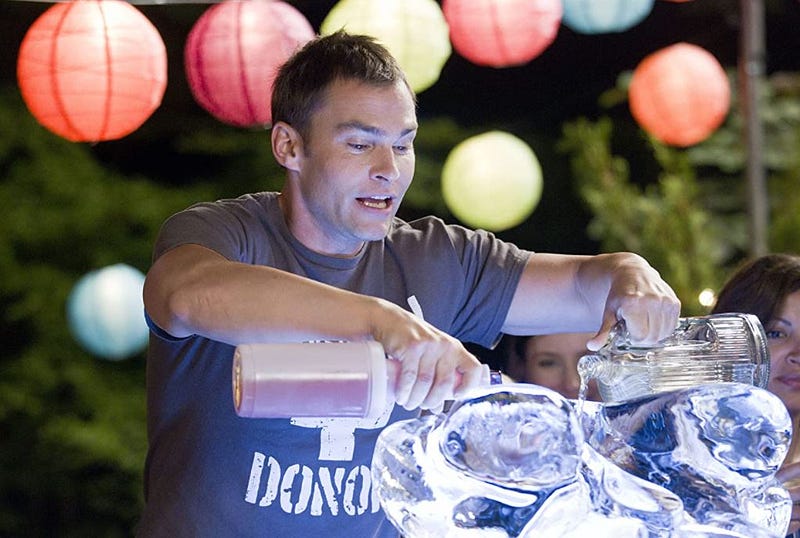
There’s no real urgency, like the pact to have sex at prom: it’s mostly a slice-of-life story about a group of people we’re familiar with reconvening at their high school reunion. You know there’s going to be at least one big party at Stifler’s, plus the reunion itself…and loads of shenanigans in between. And yes, it does deliver!
Got a kiddie pool-deep plot of “where are they now, what were they up to, what will happen when they meet again”, but it doesn’t leave the parents out this time. We get a heartwarming inverse of the talks with Jim’s dad, when Jim tries to tell him about online dating and other options for getting back out there since his mother died three years ago. It was also hilarious watching Stifler get Jim’s dad drunk and just genuinely having fun with him, then he suddenly meets a woman his own age — Stifler’s mom. This honestly made me smile thinking about how my own dad got back out there after my mother died, although I was still in high school when it happened and he waited until I moved out.
A major theme is that Stifler is still stuck in that high school mentality. It was obvious in American Wedding, but now the melancholic parts are in your face. However, he’s shown with more candor and vulnerability, plus actually seeing consequences for his actions. At his big party, he runs into two of his old lacrosse teammates who married each other and reveal that half the team was gay and he simply had no idea. He can’t get away with the homophobia that was commonly seen in 90s media, and also has to think about how he’s overcompensating for his own cocksureness.
When he’s up to his usual antics that involve messing with a kid who’s still in high school, and Kevin even points out that the girls he’s checking out at the lakeside party are half his age, it doesn’t read as creepy so much as sad. He’s a guy who was at his apex in high school who’s fallen even harder after Jim’s wedding. Despite how much bullies often get rewarded in the governor’s mansion or the boardroom in reality, he just kept getting his comeuppance. But Stifler’s good qualities do come out, and even save the day like they did in American Wedding except he didn’t cause the problems this time.
While you also know that Jim and Michelle are going to happily resolve their marital issues by the end, we do get tested…in a manner I honestly find disturbing.
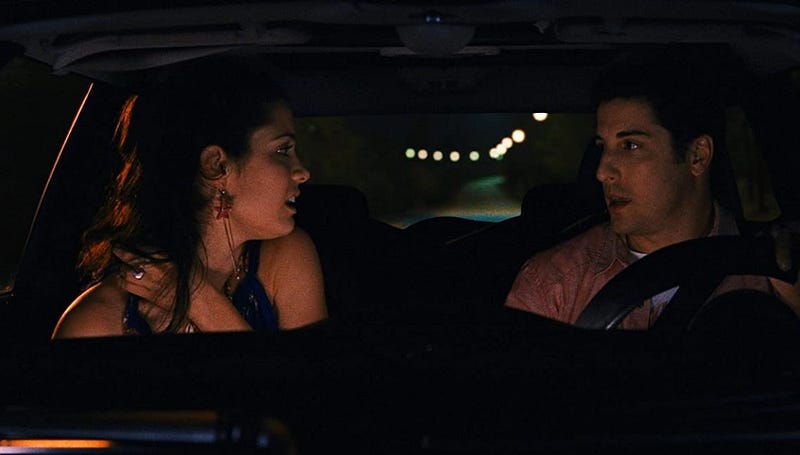
Didn’t we already have the whole “middle-aged married guy fantasizing about the teenage girl next door who wants to fuck him” deal in American Beauty in literally the same exact era? (Which coincidentally, was Mena Suvari, who plays Heather?) While Kevin states in exasperation that they’re grown men who shouldn’t have to be getting into fights and sneaking naked drunk girls back home, Stifler creepily suggests doing nonconsensual things with her, all while it unfortunately sets things up to look like Jim is going to do something unsavory with Kara.
But to get back to the adult women present, sometimes, we’re meant to be with our high school sweethearts — if we had them—if not immediately, perhaps at a later time in our lives. I think the contrast in this situation is beautifully shown because it mirrors the second movie where Kevin still has feelings for Vicky, they make it clear they Facebook-stalk each other. The tension rises when he wakes up next to her, which makes the audience wonder if anything went down.
They simply fell asleep in the same bed after Kevin was drunk and fell in the lake, and just like old times, Vicky’s angry that Kevin would think so little of her that she’d sleep with a married man who’s blackout drunk. But at the reunion, he says that while he’s happily married to Ellie now, Vicky was his first love so she’ll always have a place in his heart.
Whereas Heather and Oz were clearly meant to get back together. Before it’s even on the radar, we can see that old feelings are resurging even though they both have different partners now and Heather was the one who left him when she got into med school. Even though Oz is a fixture of sports TV now, he’s not interested in the celebrity culture and pomp that his wife Mia lives for. He was on a send-off of Dancing with the Stars that he’s not proud of but people go apeshit over it, and it’s evident that Heather’s boyfriend Ron is quite jealous and subjects him to humiliation at Stifler’s party by playing the DVD of the show. Heather now sees her boyfriend’s an asshole, and Oz is clearly done with Mia. But their break-ups won’t be as simple as when they were teenagers or twenty-somethings making their first career shifts.
Finch reveals that he’s an assistant manager at a Staples in Bayonne, New Jersey and his international man of mystery deal was all a façade. While his cultured side was taken to ridiculous levels in American Pie 2 then we got to see his raunchier and petty aspects in American Wedding, I actually loved the turn this took. A lot of people who are cultured and interesting get stuck in menial jobs, or are unable to live their dreams of travel and adventure because of money and other constraints. But if you want it bad enough, you’ll find a way, and he does by falling for Selena and the two plan a trip together. What’s especially poignant about the two of them falling for each other is that at Stifler’s party, you can see him staring the past in the face as Stifler’s mom’s portrait looks back at him: but he doesn’t want to be like Stifler, he knows he has to move forward with Selena.
The reunion comes and we get cameos from Jessica, who’s now out of the closet, plus Nadia and the Sherminator. Stifler ends up redeeming himself once again by looking out for Oz and Heather via a swift facepunch to Dr. Ron, then his lacrosse buddies ask him to help plan their wedding and inform him he was born to be a professional party planner. To top it off, while Jim and Michelle harken back to their band camp days, Stifler finally gets back at Finch by boning his mom: a fitting end to a franchise that followed elder Millennials through their lives, as even the MILF guys reunite to cheer them on!
It even book-ends nicely with toasting to staying in each others’ lives at Dog Years, just like the first movie did, only Stifler joins them this time.
The Legacy of American Pie
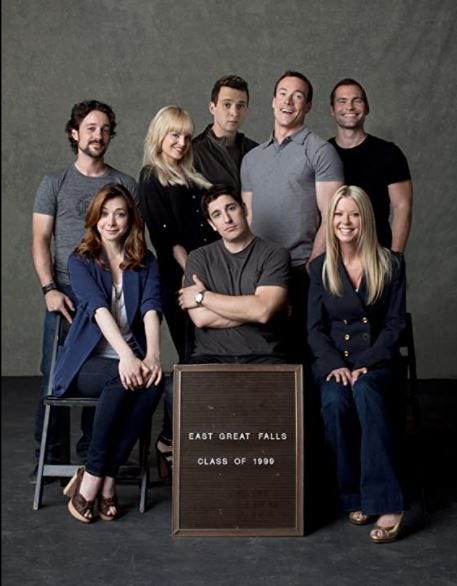
American Pie didn’t just change the way that movies were made about young people and portraying teen sex: it also had a major impact on our lexicon at the time, and some of it has even persisted.
Now that geeks have inherited the earth, we know they’re horny. There’s more crossover with geek culture now, it’s mainstream. At the time, a subcultural girl like me couldn’t admit all the dorky shit she was into. But in 1999, girls being flagrantly sexual — even if it was for the male gaze — was still revolutionary if she wasn’t punished for it, and Michelle’s adventures with a flute became such a memorable wham line that T-shirts proclaiming “This one time at band camp” were found in head shops and mall vendors all over America. It became such a persistent joke among Millennials and the youngest end of Gen X that I’m 99% certain the indie band hosting site Bandcamp would probably have a different name if the franchise hadn’t existed.
“MILF” was also already in use as a porn category, but American Pie is what really brought it to mainstream consciousness and was so popular, I remember being bombarded with early Internet porn ads for “MILF Hunters” in the days of that less puritanical Wild West Internet. Throughout the early 2000s, “MILF” was plastered on shot glasses, shirts, and beer cozies at Spencer’s Gifts and gone-and-missed Bang Bang. Bumper stickers proclaiming that the driver was a MILF were a common sight.
American Pie came of age in the same awkward era in tech and media as its core audience. While franchises weren’t new, this one proved the power of audiences and memes, and that while you had a built-in audience for a reboot — the medium for constant reboots hadn’t quite come yet, but it managed to hop on in the nick of time.
Tara Reid, who played Vicky, claimed in 2018 that a fifth canon American Pie movie was in the works. With more movies going direct to streaming media now, it isn’t the franchise suicide that it was in the direct-to-DVD era. So getting fifth or even sixth installments isn’t as far-fetched as it would’ve been when Reunion came out.
But would we really want the gang to get together again?
The thought honestly has some appeal: we’re revisiting something that comforts us, which has been a survival tactic throughout the COVID era. If you’re emotionally invested, you’ll want to see if Jim’s dad and Stifler’s mom work out, Kevin possibly getting back with Vicky, and odd couple Finch and Stifler taking a long and stupid road trip, Alexander Payne style.
But there’s so many different love, slice-of-life, and coming of age stories out there now, and that have yet to be created, by women writers and directors and people in marginalized groups who haven’t had as many chances to tell their stories the way well-off white men have. We had our fun with the stories of Great Falls that are whiter than a box of powdered donuts, and they were indeed revolutionary at the time. But we’re long past the era of the teen sex comedy as a rising number of “puriteens” have shown an oddly sex-negative streak on social media, plus we’re no longer in that awkward point in history when we were still in the Great Society dreamworld with a toe poking into what would come.
On a personal note, I remember watching the first two movies at home all the time by myself and with my sister. I actually saw the second two in the theater when I was fresh out of high school, then almost done with grad school but otherwise didn’t see them again til now. The person I saw American Wedding with is still in my life but we’re practically estranged, the one who saw American Reunion with me is no longer in my life. It feels symbolic for how revisiting people from the past can be saddening just as much as it can be comforting, and that some things are best left in the past.
As I was writing this, I was actually in my old stomping grounds in the Village and “In Too Deep” was playing with other songs from the 2000s at a restaurant that I’m glad survived both the pandemic and completely out of control rents downtown. I took it not only as a sign to write this Vanity Fair length treatise, but it hit me that my hopeful 17-year-old self still lives there even if she never got to have that dream apartment near all the action. The girl who did some pretty wretched things to survive, and watched these movies and hoped for a better life where she could hopefully tell her own stories for a living, in games, print, movies, or all the above. It was rough going back to my teenage headspace ruled by invalidated trauma, wondering what could’ve been if I had a more loving and less turbulent upbringing, and didn’t have my trauma responses screw up my younger years.
But I’m happy to say I’m living that dream, even if my creative process takes a while. I’m moving to LA like Oz, and I got the means and career type to do 12 weeks on Lake Michigan in my thirties. Let’s get a writer group together and throw a party of the century, Stifler style. Life’s too short for loneliness and living in the past.
We hope you enjoyed this edition of Retro Rewind! Come back next week as Simon Dillon sets phasers to stun on Star Trek II: The Wrath of Khan. Check-out our schedule for upcoming columns!


