avatarJenn L.

Free AI web copilot to create summaries, insights and extended knowledge, download it at here

6061

Abstract

ly hungry in relationships and that ups and downs were equivalent to passion. I began to see <a href="https://medium.com/@lu.jennifer/moving-towards-safe-relationships-5911aba6733?source=friends_link&amp;sk=a9b15068248ee2e2983265ef55543d91">stable relationships</a> and partners not as boring, but essential to <a href="https://jennifersinparis.medium.com/moving-towards-safe-relationships-5911aba6733?sk=a9b15068248ee2e2983265ef55543d91">fulfilling relationships</a>.</p><p id="266a">Another big breakthrough I had was coming to the understanding that I was free to choose safe people to rely on. When I was a child, I didn’t have a choice who <a href="https://jennifersinparis.medium.com/how-i-fixed-my-strained-relationship-with-my-mother-7853ff2a85eb?sk=204b1d915141773600924d5986c791c8">my parents</a> were and had to rely on them no matter how scary they were, how much they yelled, or how many hurtful things they said. As an adult, I can choose to select people different from this. I was allowed to choose supportive people who would be emotionally available, kind, and calm when I needed support, and whose support came without judgments or criticisms. With their support always there, I came to the next conclusion that I could always survive despite heartbreak because I have a <a href="https://jennifersinparis.medium.com/shame-and-asking-for-help-ff978cfd0a64?sk=07e835dfd9cdbe65470866cdb7ca781b">strong support system</a> with me.</p><p id="cb31">I eventually learned to be more <a href="https://readmedium.com/being-in-a-secure-relationship-7b06399e64ef?sk=4570ca001754fa6ac63828e0e9a1f750">secure</a> in my relationships after making this conscious effort. I learned to accept the ambiguity that naturally comes with dating and let a relationship grow organically, not jumping the gun to demand decisions before both parties were ready. I got better at identifying people who would be able to meet my emotional needs and not leave me constantly on edge because they were not making me feel safe. Along the same lines, I was more observant of red flags and staunchly let people go when they revealed their unsafe character. I gained the confidence to be <a href="https://drjonicewebb.com/the-seven-false-beliefs-about-relationships/">vulnerable about my past traumas</a>, knowing the right person would be able to help me make peace with my family issues and contribute to building our own family with me.</p><p id="19a4">My two biggest stumbling blocks in romantic relationships are fear of abandonment and a lack of confidence in my abilities as a romantic partner. According to Amir Levine and Rachel Heller’s book <a href="https://www.goodreads.com/book/show/9547888-attached"><i>Attached</i></a>, I have the typical anxious attachment style. I am afraid that my partner will leave me, making me constantly anxious and preoccupied with the relationship, afraid to trust, and leading me to seek much reassurance from my partner. A friend said to me once, <i>“Jennifer, I know it’s hard to change yourself and let go of anxiety, but everyone is going to need their own space. Your next boyfriend will be the same. I guess to figure out how to end all heartbreaks is to find out why do you feel anxious? Do you think they will cheat? Do you think they will leave you for another?”</i></p><p id="bafc">My confidence in relationships is severely limited by a <a href="https://youtu.be/gGuZVuUBeiQ">critical inner voice</a> in my head telling me the reasons I wouldn’t succeed. The voices were loud when I was with a past partner, stifling my bubbly, fun-loving, open, and caring personality. It undermined my ability to be myself, enjoy the moment, and be light and happy. The <a href="https://www.psychalive.org/4-steps-to-conquer-your-inner-critic/">critical inner voice</a> distorted my perception of what was happening in the relationship and was constantly <a href="https://www.goodreads.com/book/show/187634.Love_Is_Letting_Go_of_Fear">playing a scary tape</a> in my head. Examples of what my critical inner voice says are:</p><ul><li>“You don’t know how to have a good relationship, what are you doing?”</li><li>“He’s losing interest in you. He’s forgetting about you. He’ll meet someone else.”</li><li>“He thinks what you’re doing is stupid.”</li><li>“He doesn’t love you.”</li><li>“He’s getting angry at you. This argument means the relationship is going to end soon.”</li></ul><p id="3d19">I realized I occasionally <a href="https://www.psychalive.org/how-to-deal-with-relationship-anxiety/">withheld affection</a> from my partner. For example, I may know an apology is in order, but be slow to give it. Or I may realize my partner needs reassurance and find it feels unnatural to make a reassuring gesture. My critical inner voice warns me my efforts may be overlooked, or that they are just a silly idea and I should not follow through with it. Even with friends, it sometimes took me months to apologize to a close friend. My hesitation comes down to a fear of intimacy and being vulnerable, which itself is founded on fears of being invisible, <a href="https://readmedium.com/forgiving-my-father-c084e7c9a0cf?sk=23c1da37e0e9eea48c131b1af651ede9">misunderstood</a>, unskilled, being hurt, and <a href="https://readmedium.com/i-am-reversing-loneliness-293e277c8d2?sk=72ccae3ef525db31cfaecd8c2433256f">unlovable</a>.</p><p id="36a2">My parents’ marital struggles, which took up very much space in my childhood, can partly explain my fears. Their marital struggles consumed a great part of my relationship with my parents well into my adulthood and were the hallmark subject of almost all our conversations. This didn’t leave room for me to seek guidance about my relationship difficulties and sent me the unconscious message that my own needs were invisible and not important enough to be prioritized. When I realized in <a href="https://medium.com/@lu.jennifer/my-psychotherapy-experience-3a475a0666e2?source=friends_link&amp;sk=c3f97b4e961904b9964df4244bbf9433">therapy</a> how abnormal and negatively impactful this situation was to

Options

me, I asked <a href="https://medium.com/@lu.jennifer/forgiving-my-asian-parents-e14ddf223f7d?source=friends_link&amp;sk=ad6ce3a4736e65261c84ae0285976fb9">my parents</a> to stop bringing up this subject with me. Although they occasionally forget and I need to sternly remind them, it has taken a weight off to not hear about any of their issues anymore.</p><p id="4f1a">Anxiously attached individuals tend to form relationships with avoidant partners and I followed the same pattern. Most of my past partners had avoidant attachment styles, and the typical tug-of-war <a href="https://youtu.be/OYoIVCHVwKI">dynamics of anxious-avoidant relationships</a> played out in our relationship. My partners would not be well-equipped to meet my emotional needs, and I would feel unbalanced and anxious because my emotional needs aren’t being met. Then I would expend a lot of emotional energy seeking reassurance, which my avoidantly attached partner was reluctant to give. The excessive energy I spent worrying about the relationship made it become a central part of my life, and I inevitably let some of my hobbies go. This in turn made me a more one-dimensional and needy person. My friends have commented on my absence with them when I’m in a relationship.</p><p id="512d"><i>Attached </i>recommends that individuals with anxious attachment styles like me find a partner who could act as a “secure base”. This type of partner would have a secure attachment style, be reliable and consistent, and good at providing reassurance. A person who I could depend on to reassure me when my anxiety spikes by being readily emotionally <a href="https://readmedium.com/how-im-fixing-disrespect-in-relationships-daa0a881d67e?sk=dda9001344c3675901b80a0b0abf8320">available</a>. As they would make me feel safe, I would be able to open up and be loving. With a reassuring person, it would be easier to overcome my shyness about intimacy and return a loving look at my partner. I would feel confident in sharing my affection with my partner and feel that they would be well-received.</p><p id="b232">With a person who is a true “secure base,” it would be much easier for me to take respectable actions in a relationship. I would be triggered much less often and not be compelled to act out based on unmet needs. The critical inner voice would still pipe up and scare me into wondering if I made a “mistake” and “ruined the relationship,” but I would be able to rebuff this voice with affirmations of my own, telling myself “I deserve to be happy and receive love and attention. There is nothing wrong with me. I can get a bit anxious, but it is also in my power to address the root causes of these issues and fix them.” I could think to the secure couples I have observed and ask myself how they would respond to the same situation.</p><p id="0ea2">Finally, I made a seemingly small but very important pivot in my thought-process and am allowing myself to pursue more happiness than my parents have. I have normal goals — live a full life with my partner, a dog, a cat, a few kids, and some close friends — yet my intuition tells me these things are not what I would be able to obtain if I followed my parent’s wishes. My parents’ turbulent marriage and their PTSD as <a href="https://readmedium.com/mental-trauma-persists-in-ethnic-enclaves-31356d8f1543?source=friends_link&amp;sk=84e24d850d4c58a75736d9aa03930335">refugees</a> carry a legacy of fear, guilt, and <a href="https://jennifersinparis.medium.com/how-i-recovered-from-trauma-330e5dbc5b4d?sk=a768a8ba868b02b1fe7e4fc6d6d35376">suffering</a>. The notion of pursuing and achieving more happiness than my parents felt like a betrayal of them for a time. The reluctance of surpassing one’s parents in success or happiness is not exclusive to me. This is a common <a href="https://www.theschooloflife.com/thebookoflife/23246-2/">unconscious yet limiting belief</a>.</p><p id="77af">I have decided that I will accept happiness and be grateful for it. I will find relationships where I can feel calm and at ease. I will not feel guilty about enjoying my happiness and joy. I can experience happiness and fulfillment that my parents likely never experienced. It is not a betrayal of my parents and <a href="https://jennifersinparis.medium.com/the-downsides-of-obedience-ee6f146205b3?sk=6f11d2dc514d6141eda36012a5689c18">grandmother</a> if I live more happily than they do, and do it differently than they envisioned. <i>“Happiness is a choice. Joy is all about experiencing life as it happens and learning to embrace each special moment,” </i>according to abuse survivor and author of <a href="https://www.goodreads.com/book/show/51936083-finding-your-voice"><i>Finding Your Voice</i></a><i> </i>Mannette Morgan.</p><p id="64fd">I made a promise to myself with the help of <a href="https://blog.usejournal.com/there-are-not-enough-asian-therapists-735622ba63a3?sk=a8094ff304270b76bb4a0c42dad2625d">my therapist</a> to always take care of myself, including being true to my wishes and desires. Imagining speaking to my 10-year-old self, I said, “<i>Jennifer, we’ve been through some difficult shit and the adults were too wrapped up in their problems to take care of us emotionally. But don’t worry, because I will be here for you now and I will always prioritize taking care of you emotionally and physically. Everything is fine now. We are safe.” </i>This powerful exercise helps me to feel safe within myself and to eventually feel safe with a partner.</p><p id="0ffd">📝 Save this story in <a href="https://usejournal.com/?utm_source=medium.com&amp;utm_medium=noteworthy_blog&amp;utm_campaign=wellness&amp;utm_content=guest_post_read_later_text">Journal</a>.</p><p id="c9a8">🍎 Wake up every Sunday morning to the week’s most noteworthy stories in Wellness waiting in your inbox. <a href="https://usejournal.com/newsletter/noteworthy-in-wellness/?utm_source=medium.com&amp;utm_medium=noteworthy_blog&amp;utm_campaign=wellness&amp;utm_content=guest_post_text">Read the Noteworthy in Wellness newsletter</a>.</p></article></body>

Relationship Struggles When Your Asian Parents Were Emotionally Absent

Insecurity and fears of abandonment color my relationships because my Asian parents weren’t emotionally available
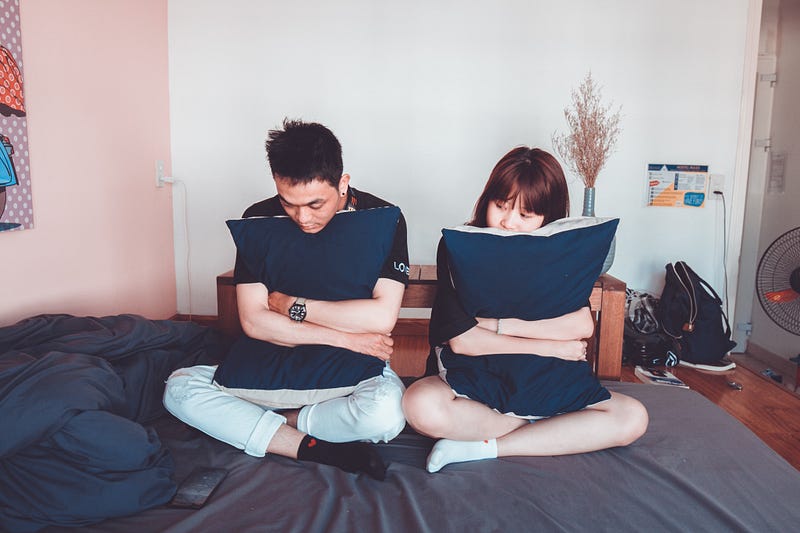
Photo credit: thiszun

I have struggled in romantic relationships to feel secure and be emotionally available to my partners. I believe this is because I didn’t have emotionally available parents growing up, and I realized after several unsuccessful relationships that I was missing a lot of the vital ingredients required to build a happy and fulfilling relationship. I also operate with a critical inner voice constantly putting me down and extinguishing affection. It sometimes made me take clingy, jealous, and controlling actions towards my past partners. My off-putting actions only served to push the other person away.

My first heartbreak in life was not from one of my romantic relationships. It was unintentionally inflicted by my parents when they weren’t able to consistently meet my emotional needs as a kid. Their inconsistency meant that I was not soothed when I was distressed and I didn’t receive enough words of warmth and affection. As an adult, it formed me into an individual who felt insecure in relationships. I constantly demanded reassurance from my partner and had trouble trusting their words of comfort. I had rigid ideas in my mind of how my partner should act because I was afraid that unexpected actions could mean they were rejecting me.

After one particularly painful breakup, I decided I needed to spend a lot of time examining how I contributed to the demise of my relationships, why I was doing this (because it was often unconscious and difficult to control), and how I could change some of my more harmful habits into healthier ones. One concrete step I took was to find secure couples who had well-balanced lives to be models for me. I spent time with them observing how they interacted with each other and how they responded to tricky situations. These couples were together for many years already, and clearly respected and trusted each other completely. In some ways, they exhibited habits that were the opposite of what I observed from my parents’ marriage growing up.

Want to read this story later? Save it in Journal.

One major thing I noticed was how well secure partners responded to each other’s bids and generally maintained a calm rapport in the relationship. Their relationships were like boats smoothly sailing on still waters. No wonder they lasted many years. I was used to seeing a relationship full of drama and unmet needs coupled with unclear communication turning into arguments. Each side of the relationship in my parents’ marriage was in fight or flight mode all the time which contributed to the erosion of the relationship. I somehow inherited the belief that it was normal or acceptable to constantly feel emotionally hungry in relationships and that ups and downs were equivalent to passion. I began to see stable relationships and partners not as boring, but essential to fulfilling relationships.

Another big breakthrough I had was coming to the understanding that I was free to choose safe people to rely on. When I was a child, I didn’t have a choice who my parents were and had to rely on them no matter how scary they were, how much they yelled, or how many hurtful things they said. As an adult, I can choose to select people different from this. I was allowed to choose supportive people who would be emotionally available, kind, and calm when I needed support, and whose support came without judgments or criticisms. With their support always there, I came to the next conclusion that I could always survive despite heartbreak because I have a strong support system with me.

I eventually learned to be more secure in my relationships after making this conscious effort. I learned to accept the ambiguity that naturally comes with dating and let a relationship grow organically, not jumping the gun to demand decisions before both parties were ready. I got better at identifying people who would be able to meet my emotional needs and not leave me constantly on edge because they were not making me feel safe. Along the same lines, I was more observant of red flags and staunchly let people go when they revealed their unsafe character. I gained the confidence to be vulnerable about my past traumas, knowing the right person would be able to help me make peace with my family issues and contribute to building our own family with me.

My two biggest stumbling blocks in romantic relationships are fear of abandonment and a lack of confidence in my abilities as a romantic partner. According to Amir Levine and Rachel Heller’s book Attached, I have the typical anxious attachment style. I am afraid that my partner will leave me, making me constantly anxious and preoccupied with the relationship, afraid to trust, and leading me to seek much reassurance from my partner. A friend said to me once, “Jennifer, I know it’s hard to change yourself and let go of anxiety, but everyone is going to need their own space. Your next boyfriend will be the same. I guess to figure out how to end all heartbreaks is to find out why do you feel anxious? Do you think they will cheat? Do you think they will leave you for another?”

My confidence in relationships is severely limited by a critical inner voice in my head telling me the reasons I wouldn’t succeed. The voices were loud when I was with a past partner, stifling my bubbly, fun-loving, open, and caring personality. It undermined my ability to be myself, enjoy the moment, and be light and happy. The critical inner voice distorted my perception of what was happening in the relationship and was constantly playing a scary tape in my head. Examples of what my critical inner voice says are:

  • “You don’t know how to have a good relationship, what are you doing?”
  • “He’s losing interest in you. He’s forgetting about you. He’ll meet someone else.”
  • “He thinks what you’re doing is stupid.”
  • “He doesn’t love you.”
  • “He’s getting angry at you. This argument means the relationship is going to end soon.”

I realized I occasionally withheld affection from my partner. For example, I may know an apology is in order, but be slow to give it. Or I may realize my partner needs reassurance and find it feels unnatural to make a reassuring gesture. My critical inner voice warns me my efforts may be overlooked, or that they are just a silly idea and I should not follow through with it. Even with friends, it sometimes took me months to apologize to a close friend. My hesitation comes down to a fear of intimacy and being vulnerable, which itself is founded on fears of being invisible, misunderstood, unskilled, being hurt, and unlovable.

My parents’ marital struggles, which took up very much space in my childhood, can partly explain my fears. Their marital struggles consumed a great part of my relationship with my parents well into my adulthood and were the hallmark subject of almost all our conversations. This didn’t leave room for me to seek guidance about my relationship difficulties and sent me the unconscious message that my own needs were invisible and not important enough to be prioritized. When I realized in therapy how abnormal and negatively impactful this situation was to me, I asked my parents to stop bringing up this subject with me. Although they occasionally forget and I need to sternly remind them, it has taken a weight off to not hear about any of their issues anymore.

Anxiously attached individuals tend to form relationships with avoidant partners and I followed the same pattern. Most of my past partners had avoidant attachment styles, and the typical tug-of-war dynamics of anxious-avoidant relationships played out in our relationship. My partners would not be well-equipped to meet my emotional needs, and I would feel unbalanced and anxious because my emotional needs aren’t being met. Then I would expend a lot of emotional energy seeking reassurance, which my avoidantly attached partner was reluctant to give. The excessive energy I spent worrying about the relationship made it become a central part of my life, and I inevitably let some of my hobbies go. This in turn made me a more one-dimensional and needy person. My friends have commented on my absence with them when I’m in a relationship.

Attached recommends that individuals with anxious attachment styles like me find a partner who could act as a “secure base”. This type of partner would have a secure attachment style, be reliable and consistent, and good at providing reassurance. A person who I could depend on to reassure me when my anxiety spikes by being readily emotionally available. As they would make me feel safe, I would be able to open up and be loving. With a reassuring person, it would be easier to overcome my shyness about intimacy and return a loving look at my partner. I would feel confident in sharing my affection with my partner and feel that they would be well-received.

With a person who is a true “secure base,” it would be much easier for me to take respectable actions in a relationship. I would be triggered much less often and not be compelled to act out based on unmet needs. The critical inner voice would still pipe up and scare me into wondering if I made a “mistake” and “ruined the relationship,” but I would be able to rebuff this voice with affirmations of my own, telling myself “I deserve to be happy and receive love and attention. There is nothing wrong with me. I can get a bit anxious, but it is also in my power to address the root causes of these issues and fix them.” I could think to the secure couples I have observed and ask myself how they would respond to the same situation.

Finally, I made a seemingly small but very important pivot in my thought-process and am allowing myself to pursue more happiness than my parents have. I have normal goals — live a full life with my partner, a dog, a cat, a few kids, and some close friends — yet my intuition tells me these things are not what I would be able to obtain if I followed my parent’s wishes. My parents’ turbulent marriage and their PTSD as refugees carry a legacy of fear, guilt, and suffering. The notion of pursuing and achieving more happiness than my parents felt like a betrayal of them for a time. The reluctance of surpassing one’s parents in success or happiness is not exclusive to me. This is a common unconscious yet limiting belief.

I have decided that I will accept happiness and be grateful for it. I will find relationships where I can feel calm and at ease. I will not feel guilty about enjoying my happiness and joy. I can experience happiness and fulfillment that my parents likely never experienced. It is not a betrayal of my parents and grandmother if I live more happily than they do, and do it differently than they envisioned. “Happiness is a choice. Joy is all about experiencing life as it happens and learning to embrace each special moment,” according to abuse survivor and author of Finding Your Voice Mannette Morgan.

I made a promise to myself with the help of my therapist to always take care of myself, including being true to my wishes and desires. Imagining speaking to my 10-year-old self, I said, “Jennifer, we’ve been through some difficult shit and the adults were too wrapped up in their problems to take care of us emotionally. But don’t worry, because I will be here for you now and I will always prioritize taking care of you emotionally and physically. Everything is fine now. We are safe.” This powerful exercise helps me to feel safe within myself and to eventually feel safe with a partner.

📝 Save this story in Journal.

🍎 Wake up every Sunday morning to the week’s most noteworthy stories in Wellness waiting in your inbox. Read the Noteworthy in Wellness newsletter.

Relationships
Mental Health
Twin Flame
Psychology
Self
Recommended from ReadMedium