
Quickie: Your Kissing Skills May Ruin Your Relationship Before It Begins
When bad kissing kills budding romances
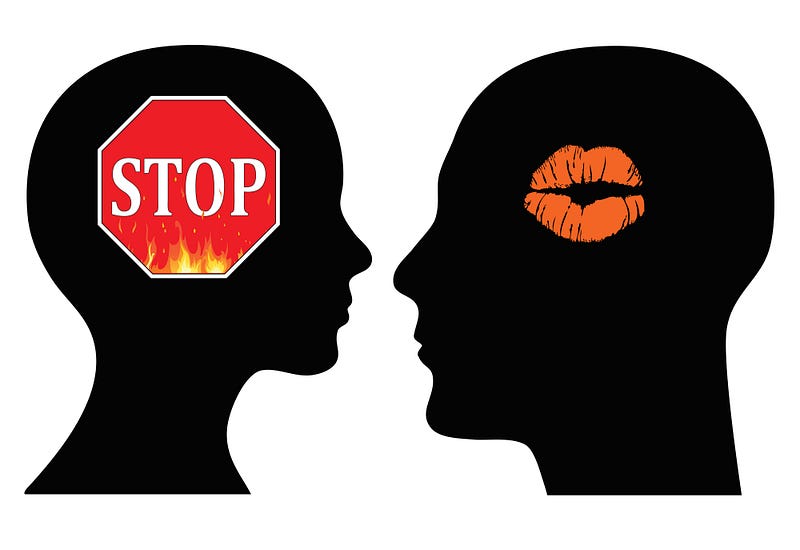
Two people meet and feel an instant connection. With stars in their eyes, they begin getting to know each other. That magical moment happens when they share their first kiss and then….
Nothing.
In fact, it’s worse than nothing. The kiss is so horrible that the romance fizzles out before it had a chance to really begin.
Although this sounds like the plot of a bad romance movie or novel, according to a study by the State University of New York at Albany, this scenario can actually happen because a kiss isn’t just a kiss — it’s a relationship barometer of sorts.
“While many forces lead two people to connect romantically, the kiss, particularly the first kiss, can be a deal breaker,” said researcher Gordon G. Gallup, Jr. “Kissing is part of an evolved courtship ritual. When two people kiss, there is a rich and complicated exchange of information involving chemical, tactile, and postural cues. This may activate evolved mechanisms that function to discourage reproduction among individuals who are genetically incompatible.”
“While many forces lead two people to connect romantically, the kiss, particularly the first kiss, can be a deal breaker.”
However, the feeling of incompatibility depends on the kisser. Gallup, along with his colleagues Susan M. Hughes and Marissa A. Harrison, surveyed 1,041 college students and found that women were more likely to have their attraction sour based on the quality of a first kiss. Also, these respondents said they would not begin a sexual encounter without kissing first, and they preferred smooching during and after sex.
On the other hand, the men in the study saw kissing as a vehicle to get to where they wanted to go, so they tended to use kissing as a way to initiate sex or make up with a partner after an argument. Also, unlike women, they had no problem having sex with someone they thought was a bad kisser.
More from Kiki Wellington:
Source:
A Kiss Is Still A Kiss — Or Is It? ScienceDaily. https://www.sciencedaily.com/releases/2007/08/070830121629.htm