
People with similar faces show genetic similarities, even if actually unrelated
A study facilitated by matching pairs of look-alike humans through the internet and by quantifying human similarity through artificial neural networks.
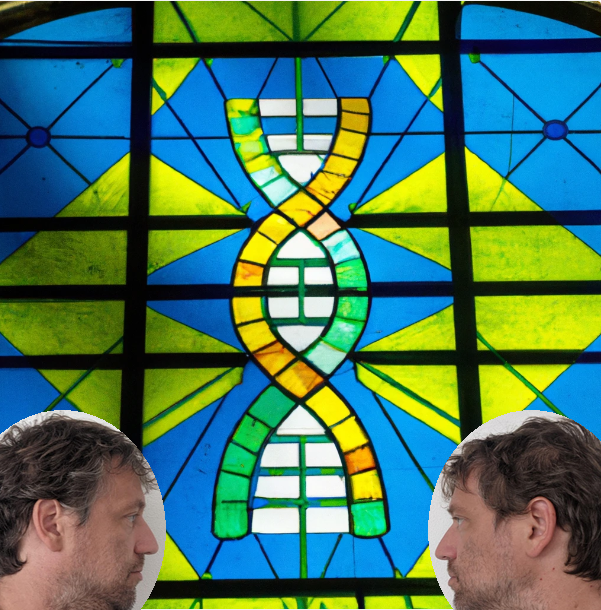
A very interesting paper by Joshi et al in Cell Reports delved into a very interesting topic that is hard to experimentally probe as scientists normally do on animal models: What factors make people more or less similar?
In particular, the study tackled this specific question: do look-alike persons who are not family, still share genetic signatures? The short answer: probably yes -but read on.
The discussion about the relative impact of the natural intrinsic traits of a human being and of the environment on human development and health still remains largely unsolved. Even “natural” and “environmental” contributions have multiple components to discern upon, and even worst, they can entangle. For example, the base sequence of DNA (“genome”) is not the only “genetic” factor, because for example its methylation state, which plays a substantial role in gene regulation, is inheritable (“epigenome”). Likewise, environmental contributions can include “physical” and “psychological” components, such as varying access to food and care. Moreover, every animal lives together with billions of bacteria that make up its normal “microbiome”, which is itself essential to protect the individual.
The study
In their study, Joshi et al recruited look-alike humans from the work of an artist who has collected pictures of look-alikes all around the world, for over 20 years (An interesting story and project in itself, see François Brunelle and his website http://www.francoisbrunelle.com/webn/e-project.html). They retrieved photographs shot by the artist for pairs of look-alikes, and then quantified their similarity objectively by using three face recognition programs. They next filtered pairs of look-alikes that scored highly in the three tests, and proceeded to their studies on 16 pairs, i.e. 32 total subjects.
For each subject, the authors obtained saliva and studied the DNA extracted from it (which includes the subject’s own human DNA plus DNA from the microbiota that live in the mouth) by genotyping human DNA with a standardized array that maps over 4 million standardized forms of genetic variation, probing human DNA methylation with arrays sensitive to 850,000 methylation sites, and doing metagenomics-like DNA sequencing to characterize the microbiota of the saliva.
Surprisingly, clustering of the genetic variation data returns 9 pairs of strongly similar samples that correspond to 9 of the 16 look-alikes. The authors dub these 9 pairs as “ultra look-alikes”. The other 7 also presented genetic similarities, albeit less marked. And very importantly, there was little to no effect of the methylation state and microbiota compositions. Thus, the genome (sequence of bases in the DNA) would be ruling over the epigenome (methylation state of the bases), and the microbiota, despite essential for life, would likely be not important to define morphology.
Also interesting but less explored, the authors find some evidence that traits like height, weight, smoking habit or level of education also correlate better in look-alikes. Could probably similar genetics and/or similar faces redound in also more similar physical and behavioral phenotypes? The authors propose this, but it of course needs much more study. The main, solid conclusions of the study apply to the shape and features of faces, and is limited by the small number of studied individuals on top of other confounding effects as the authors describe. Yet, it is interesting and will surely foster more interesting research.
For the full peer-reviewed article
Check the full article as published in Cell Reports:
For more blog articles like this one
I routinely summarize scientific papers at a level higher than what you find in regular newspapers and blogs -yet of course not going as technical and deep as the original article!
I am a nature, science, technology, programming, and DIY enthusiast. Biotechnologist and chemist, in the wet lab and with computers. I write about everything that lies within my broad sphere of interests. Check out my lists for more stories. Become a Medium member to access all its stories and subscribe to get my new stories by email (original affiliate links of the platform for which I get small revenues without special costs to you).


