
A data-driven neuromechanical model of the fruit fly that promises to advance studies in neurosciences
New paper interfacing data science and modeling with physics and biology.
A team led by authors Lobato-Rios and Ramdya al EPFL in Switzerland just published in Nature Methods a data-driven, flexible computational model of the fruit fly’s neural mechanics, which is expected to be of great utility to advance studies in computational and experimental neurosciences.
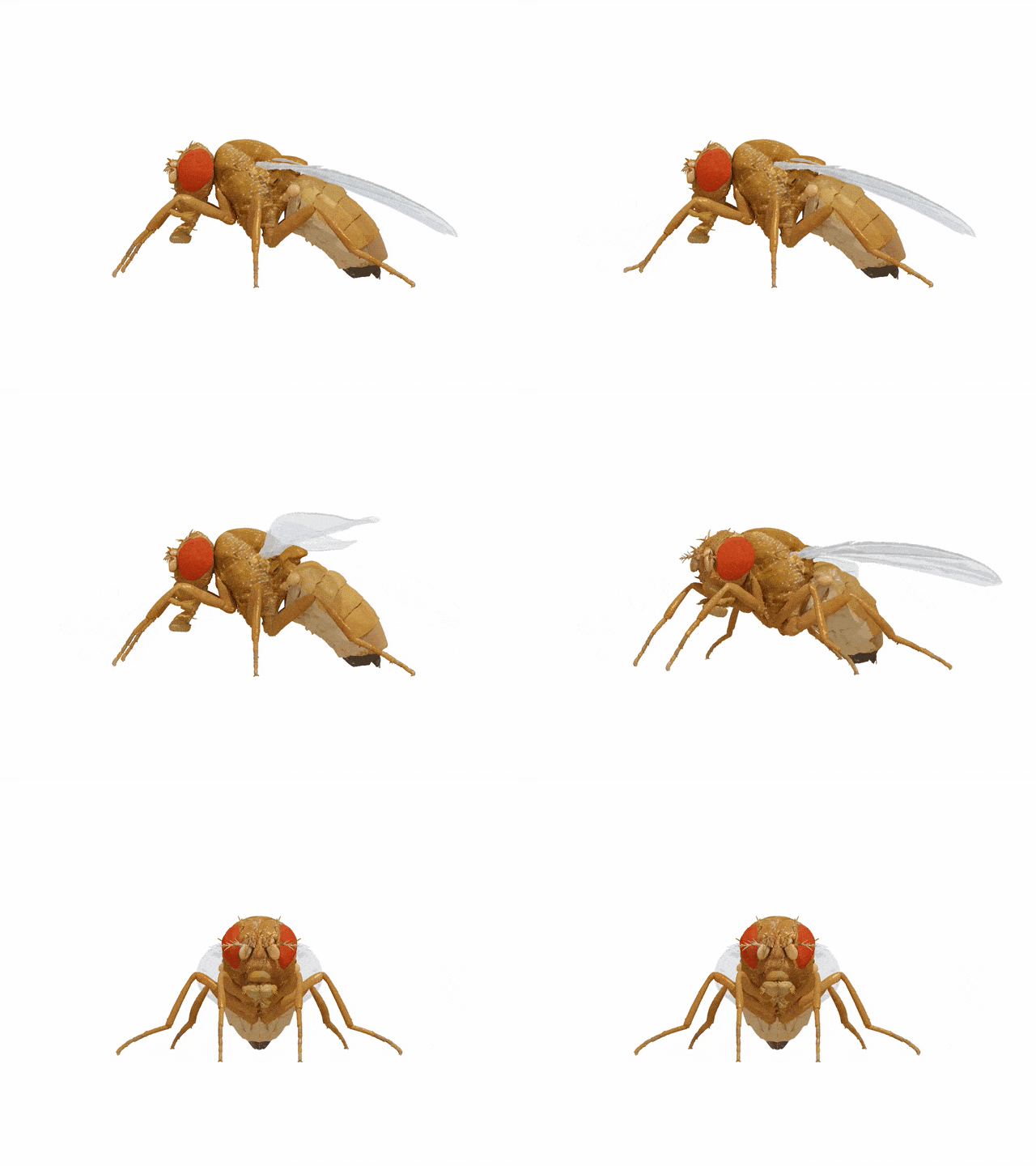
Called NeuroMechFly, the model describes the neuromechanical components of adult Drosophila melanogaster flies (a.k.a. fruit flies) in 3D with great morphological realism. The fruit fly is a model organism widely studied as a surrogate for more complex animals in biology. In the work presented here, the scientists built a detailed 3D model of the fly by digitizing X-ray microtomographic data into an exoskeleton. The model is dissected into 65 articulated segments including the antennae, head, wings, abdominal and leg segments, among other body parts. The model even includes joints that enable it to undergo realistic motions upon simulation, after training with data obtained on real flies.
The whole study resulted in a morphologically realistic model of adult flies, that the researchers further used to perform neuromechanical simulations. These simulations allow studying the interactions between organisms and their physical surroundings, and how these interactions give rise to what’s commonly referred to as “behavior”. A super interesting question, not only to understand basic biology but perhaps also to confer behavior to future artificial intelligence entities.
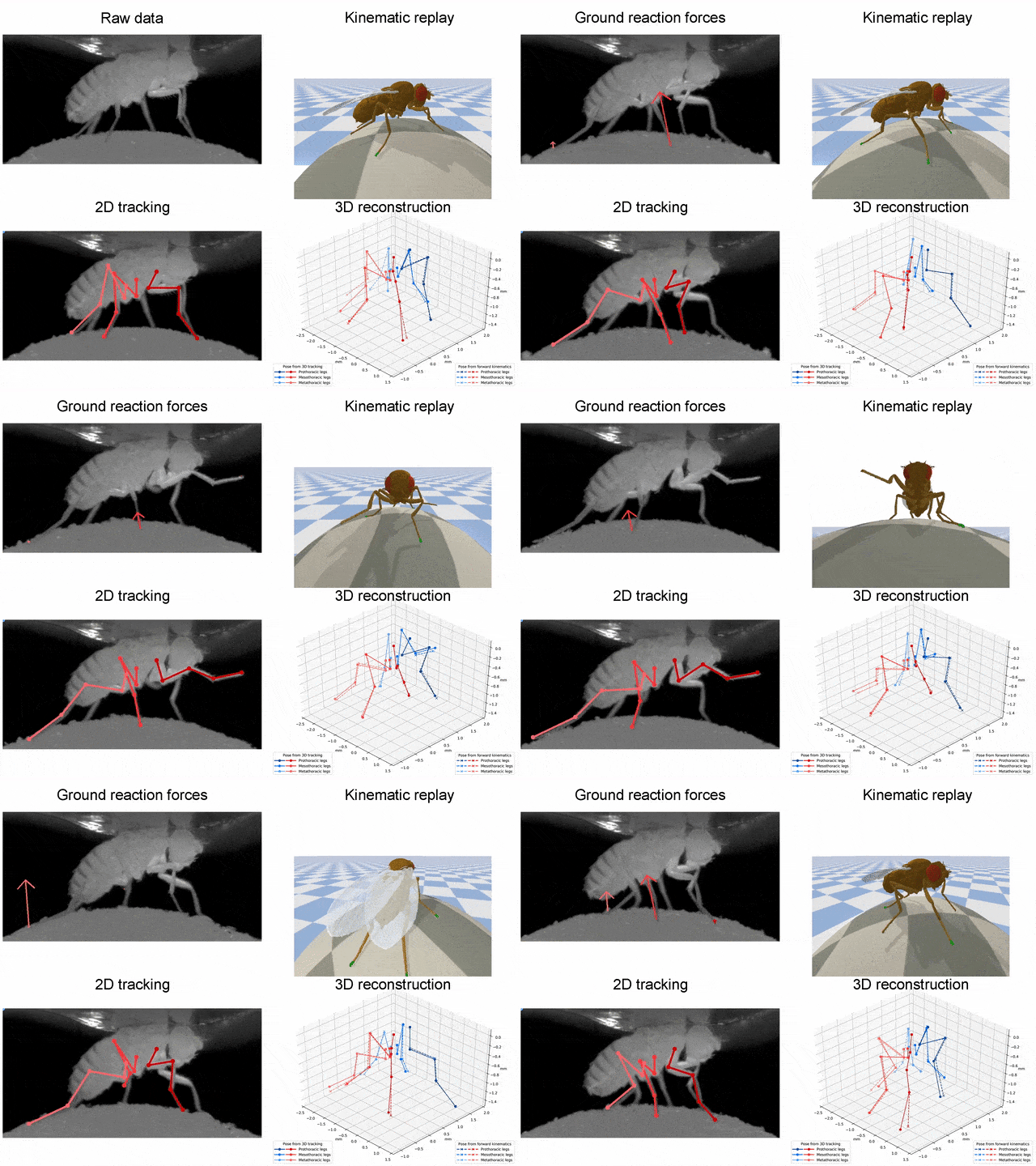
Through simulations, the researchers could fit and compare measurable physical data about the mechanics of flies walking on treadmills and doing other exercises, and they could then infer other physical quantities that are much harder to obtain experimentally. The “cherry on the cake” is that the researchers used this model to train a neural network, which naturally generated the central pattern of coordinated limb motions that allow flies to walk.
The model is usable right in Python, and it is available in open access on an Apache 2.0 license here:
You can get to know more about the code and how to run it here at CodeOcean, where the authors also posted animated GIFs of the articulated model and of the kinds of readouts you can obtain from simulations:
Further reads
The original article in Nature Methods:
A summary of the article in the same journal:
Curious about how insects coordinate motions?
Other paper summaries that you may like
www.lucianoabriata.com I write and photoshoot about everything that lies in my broad sphere of interests: nature, science, technology, programming, etc. Become a Medium member to access all its stories (affiliate links of the platform for which I get small revenues without cost to you) and subscribe to get my new stories by email. To consult about small jobs check my services page here. You can contact me here.