
HOW TO PAINT IN WATERCOLOUR — PENCILS
Painting with Watercolour Pencils
Also — finding room to paint
From One Extreme to Another — Space-Wise
Painting with watercolour pencils combines nicely with the messages I’ve received about having space to paint. Or — not having so much space to paint.
The ‘How to Paint in Watercolour’ publication was started with an article about the gear you’ll need.
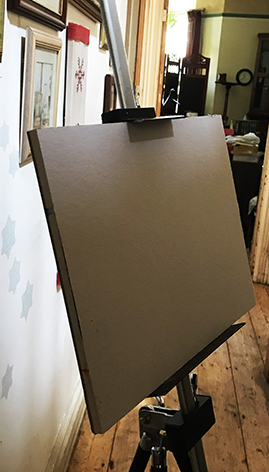
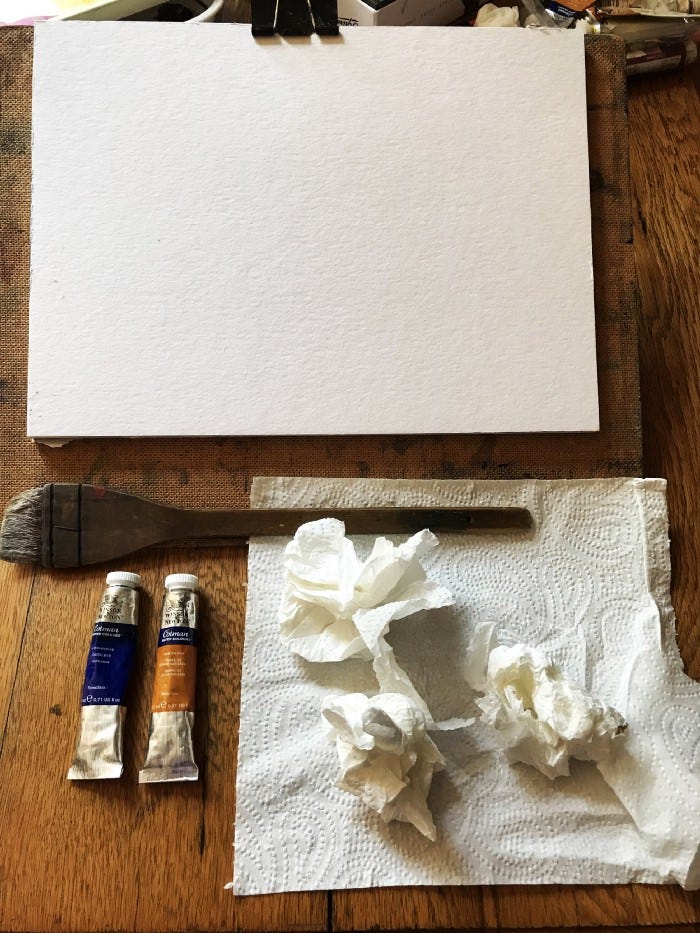
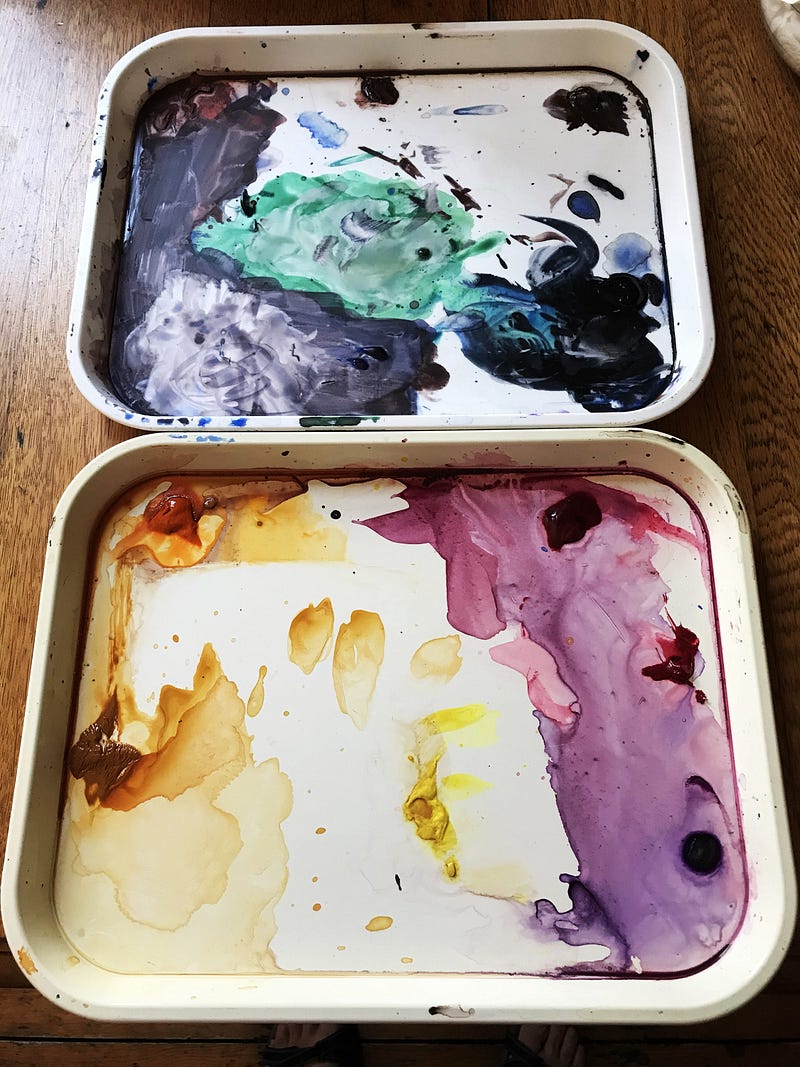
The gear in that article includes an easel, big pads of paper, butchers’ trays for palettes; and the main brush is 2 inches wide. Oh, also, big tubes of paint to splash about.
And, as ever, the most invaluable tool of all — lots of kitchen towel.
However, that’s the gear I need when I want to paint ‘big-brush’ pictures, and when teaching.
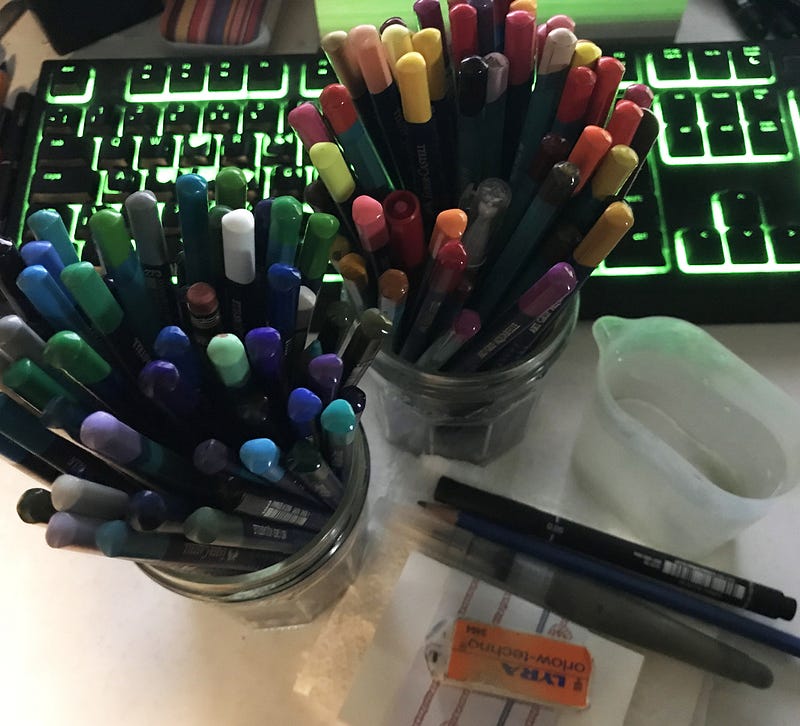
Most of the time, though, I paint at my desk in amongst all the clutter that just seems to appear on there all the time — it changes, the clutter, but it doesn’t appear to diminish.
The picture above shows all the kit I need to do my small paintings — a bunch of watercolour pencils, a drawing pencil, a drawing pen, a small container of water, a water brush — that is, a plastic tube filled with water that is connected to a brush-pen head. Also, an eraser, and a pack of small, already-cut watercolour paper blanks.
The watercolour blanks are the size of ACEOs, or artists’ art cards — that is 2.5x3.5 inches — see this article about art cards:
And, as ever — lots of kitchen towel — this time, each sheet is cut into four. Also, as ever — lots of scrap paper to try out paint colour and techniques before applying to your watercolour paper.
ACEOs (art cards) are what I tend to paint the most because they don’t take up much space, and it’s easy to get all the gear together. It all lives on my desk as part of the clutter.
Watercolour pencils are fabulously versatile. I use them in two different ways — I have no doubt other artists will use them differently, too.
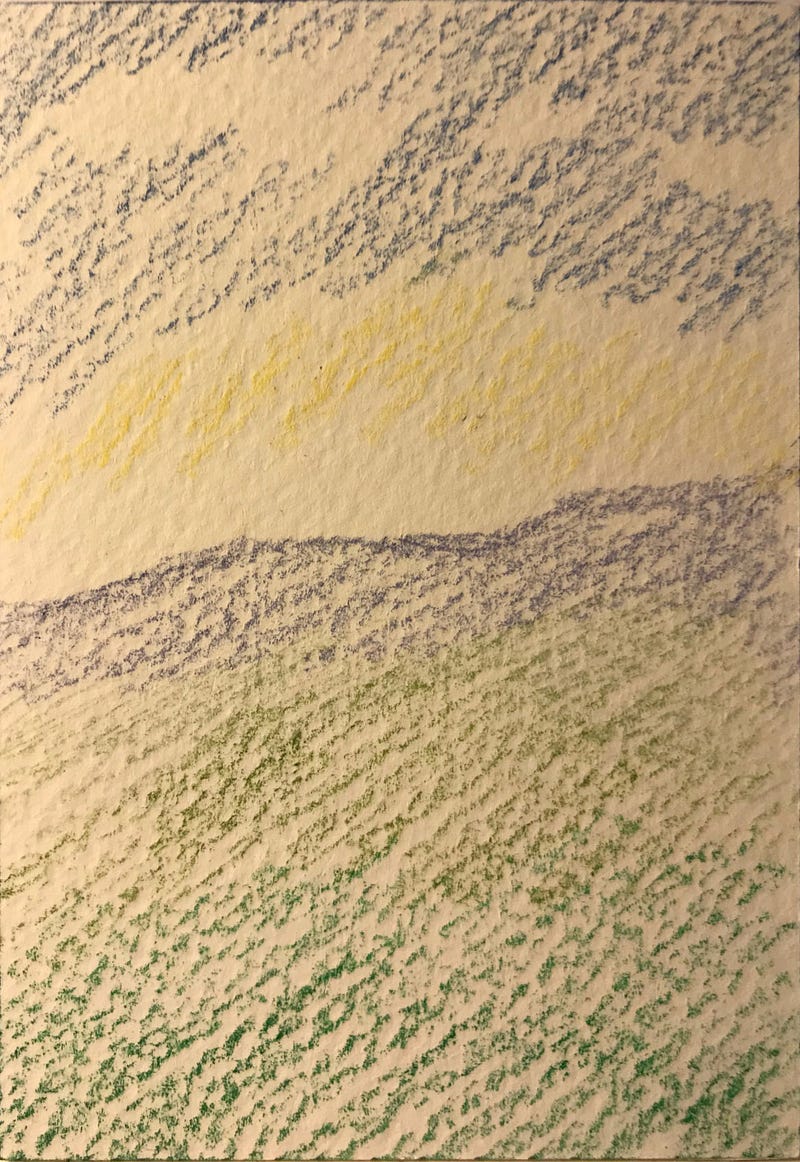
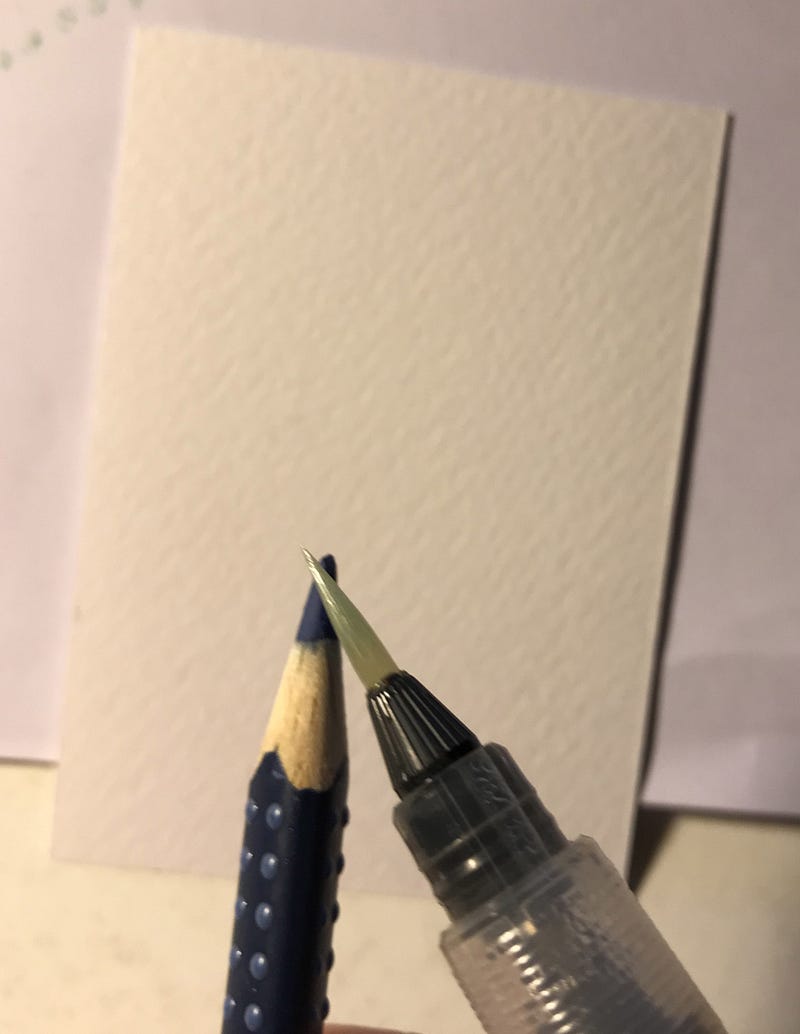
The first way — on left above — just apply the pencil — lightly — directly to the paper and apply water later. The second — right above — use the water-brush to mix the paint on the pencil lead itself (as if the pencil lead is the palette) and apply to the paper.
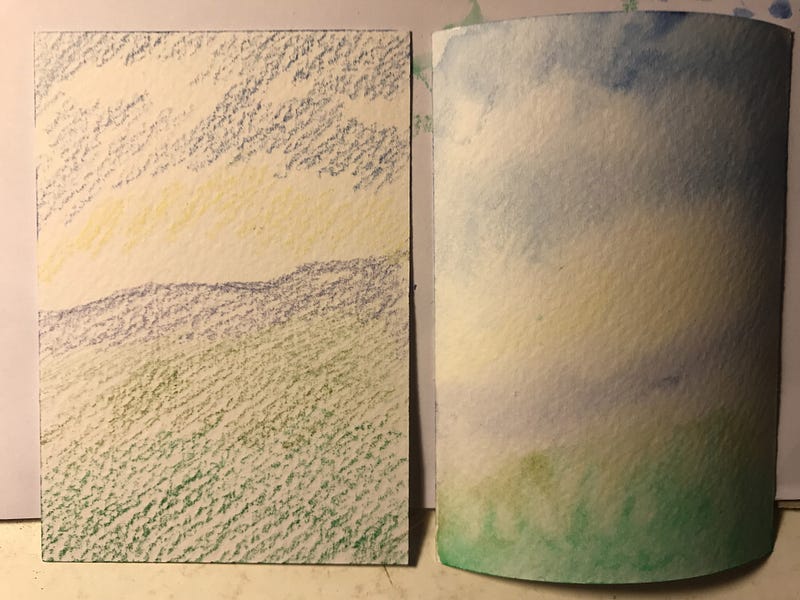
Above are both methods in the first stage. You can see by the effect, and by the way the paper has curved up, that the right hand one had water put on it, and the left only pencil. (By the way, please ignore the terrible composition on the left of half land and half sky. Eek!) See article below for a more pleasing composition than that:
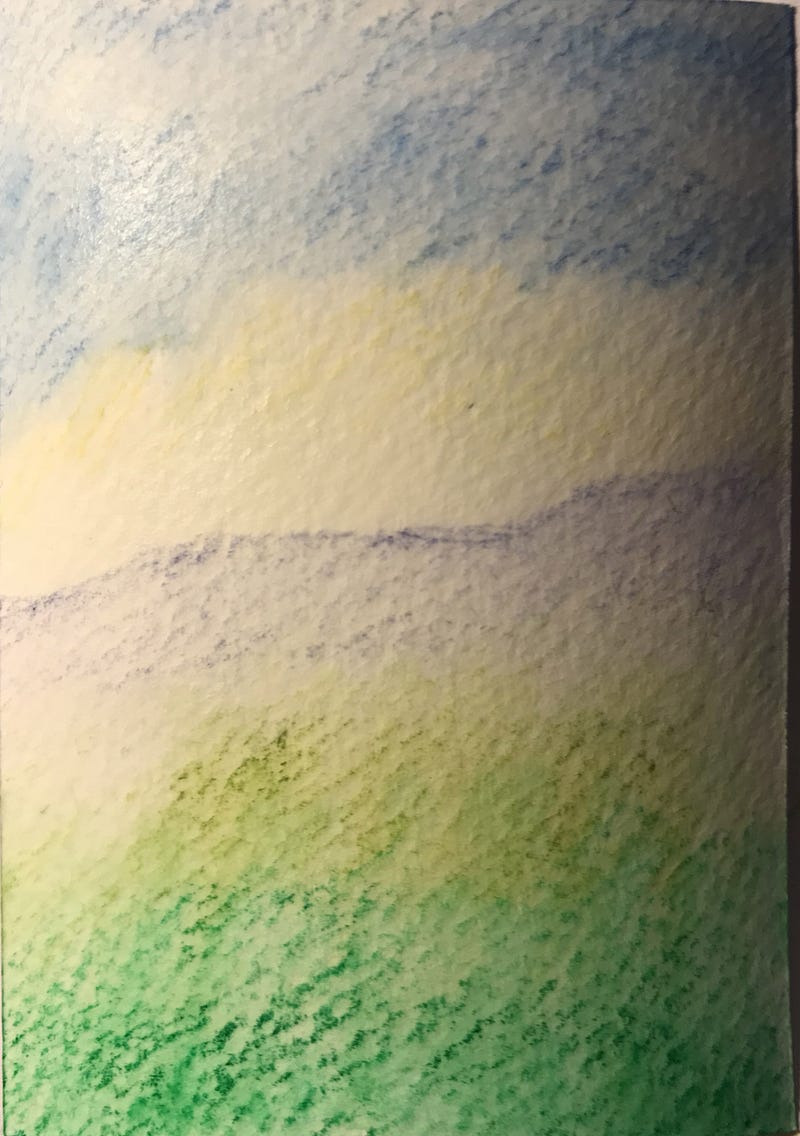
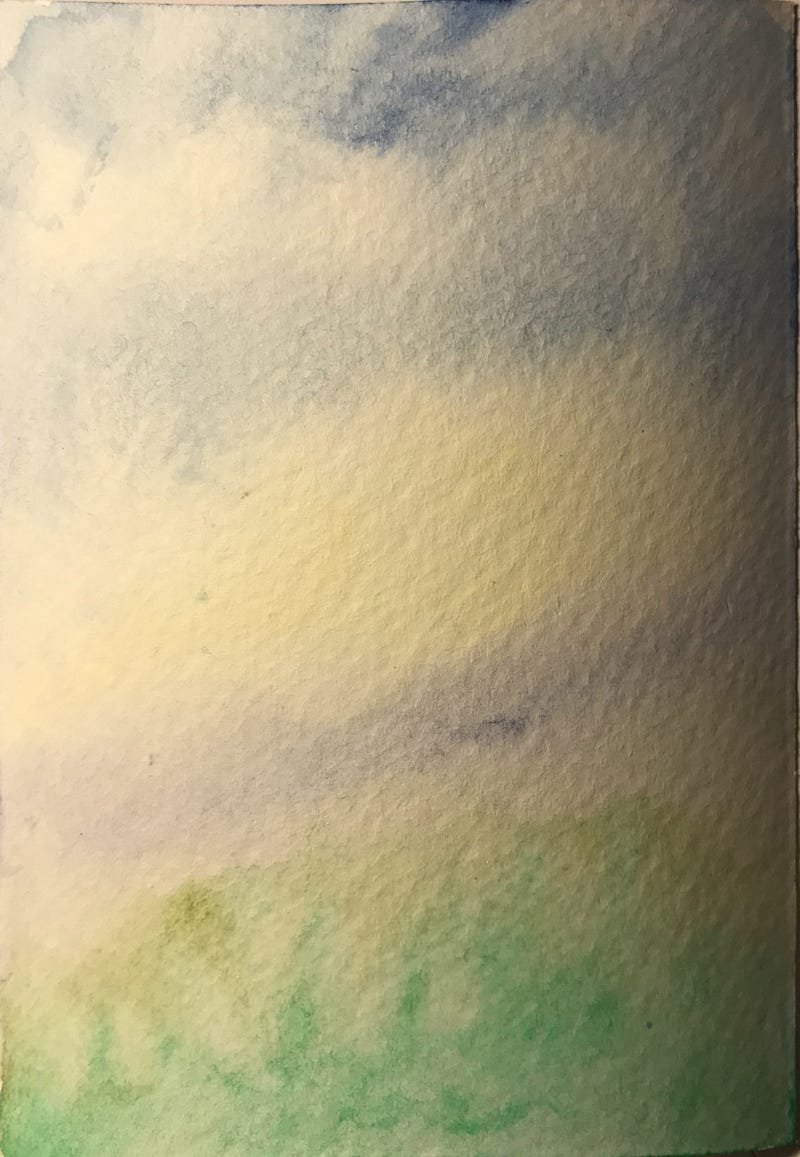
When you then put water onto the pencil already applied to the paper you’re, in effect, mixing the paint then. Doing it this way you get left with more texture than if it was watery paint directly applied. As you can see above in the differences between the two.
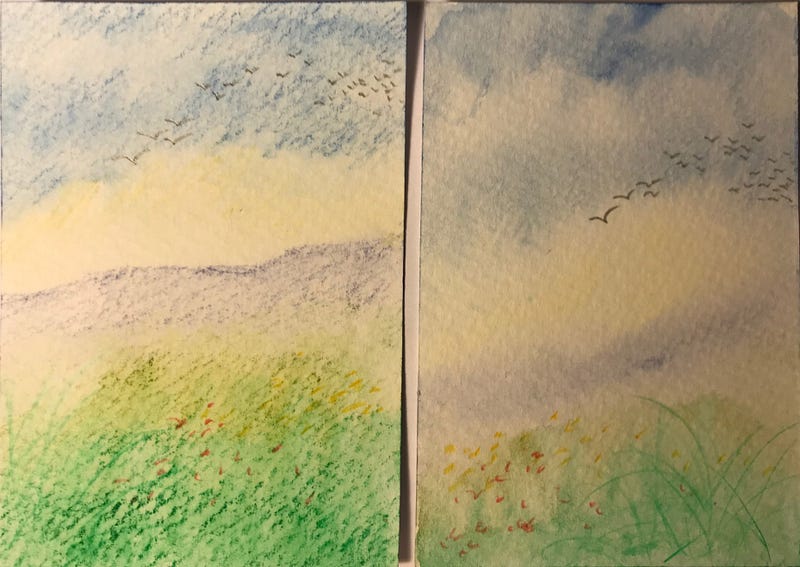
Then the pencils can be used as pencils to add the suggestion of some red and yellow flowers and some birds in the sky.
These are five-minute demonstrations to show you two different methods of using watercolour pencils.
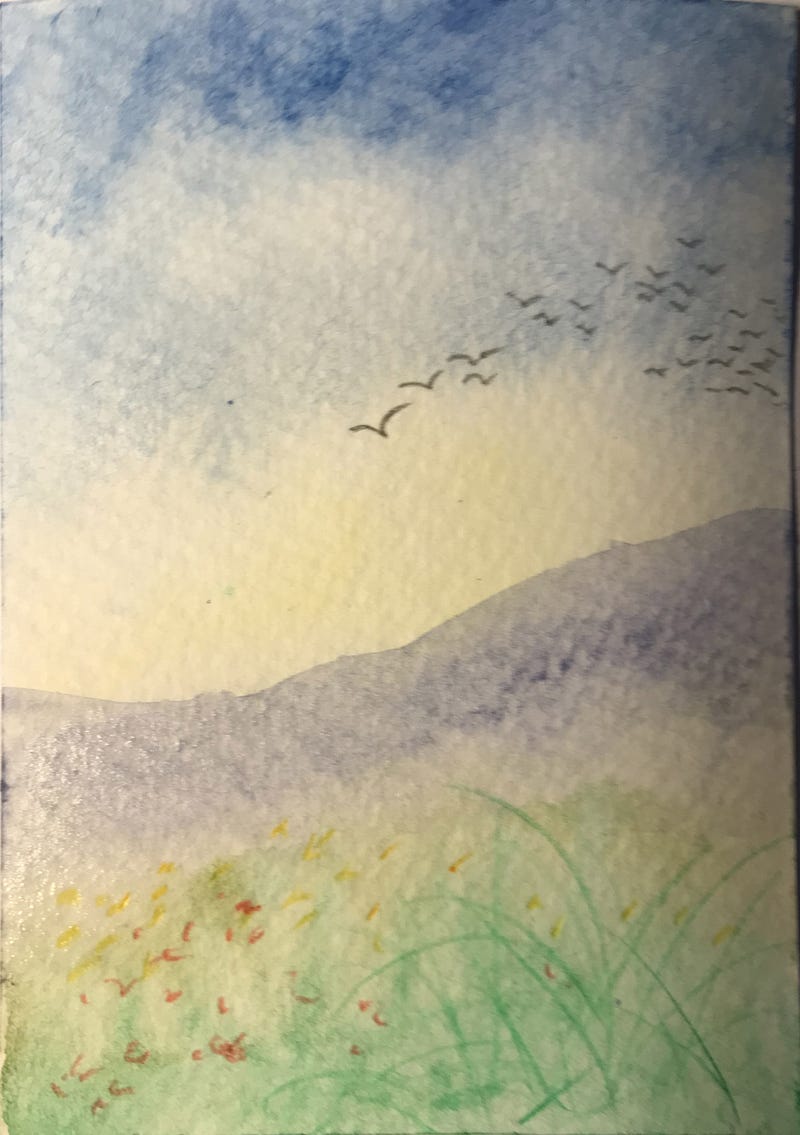
It’s only a demonstration painting sketch, but even as such, it was too peely-wally to leave it like that, so I mixed up a bit more paint on the pencil to put some more dark at the top of the sky and to make the far hills more definite.
You can also see in the picture above where it’s not a good idea to hold the pencil you’re mixing above the painting itself because you’ll end up with splats of paint where you don’t want them.
As with any pencils, though, please do your level best not to drop them. Just imagine their little bones breaking inside their wooden cases. If they’ve broken badly it’s impossible to use them because every time you sharpen the pencil the lead falls out.
Watercolour pencils are brilliantly versatile in many ways but mostly because you can easily carry your entire studio in your pocket if you wish, and set it up anywhere.
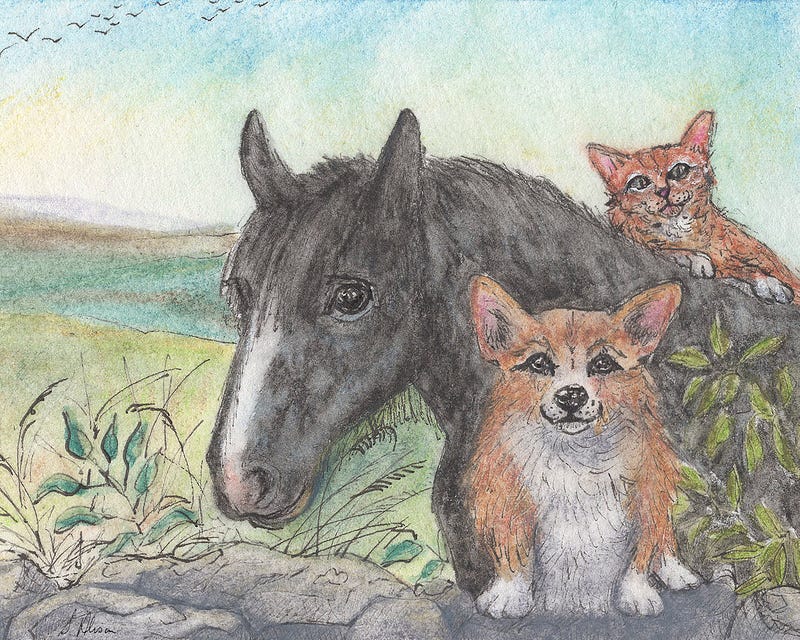
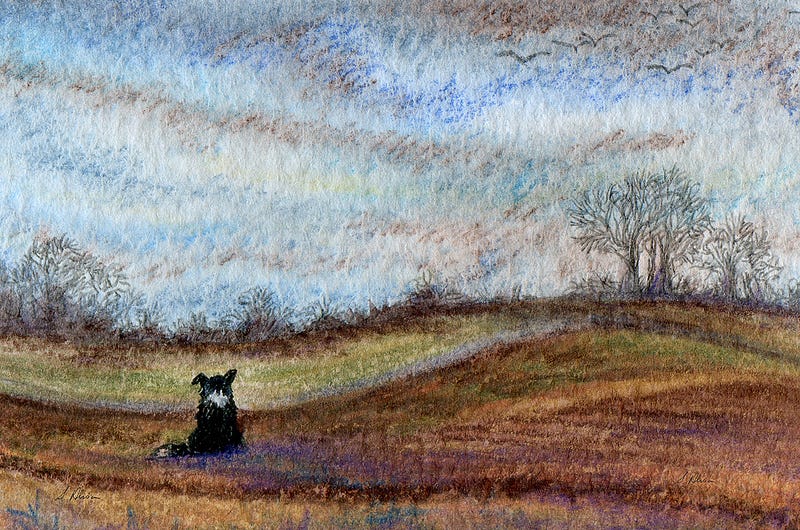
All photos and paintings are by Susan Alison.
I will write some articles detailing the different stages of painting an ACEO.
Susan’s Amazon Page / Etsy Store closed til Jan 2022/ newsletter sign-up
Read more from me: © Susan Alison 2021


