MY TRAVEL DIARIES
Oh, Calcutta!
Seeing the City of Joy in Gray
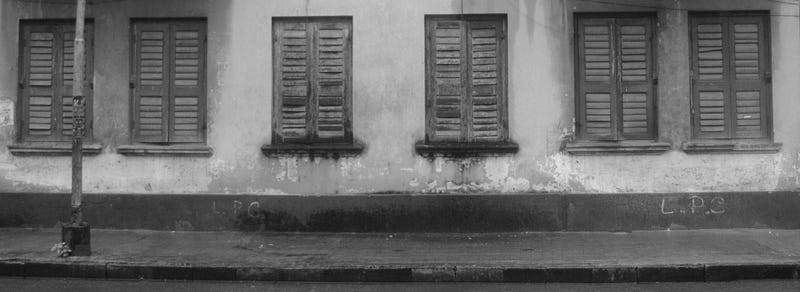
In the 1980s, Dominique Lapierre wrote The City of Joy, which soon became an international bestseller. The book set in a slum in Calcutta in India, tells the story of the people of Anand Nagar (which translates to the City of Joy), who live in hellish conditions, yet see life as a gift worth living. So, Calcutta also came to be known as the City of Joy, reflecting the city’s innate ability to live life as a joyous celebration.
But Calcutta, or Kolkata as it has been officially renamed, was a great city before The City of Joy was written. It became Fort William under the East India Company and would set in motion events that would decide the fate of the British Empire in India for the next 200 hundred years. It was also the capital of the British in India, and in its heyday, was the second largest city of the British Empire after London.
But it was The City of Joy that put Calcutta on the map for many travelers. When I was a student at the London School of Economics, more of my classmates had traveled to India to see Calcutta than to visit the Taj Mahal.
“Have you been to Calcutta?” was a question I was often asked. I hadn’t at that time. But as I often tell people, India is not a country, but a continent of experiences. It is quite possible to have lived in India all your life and not seen all its great cities or landmarks.
I did finally visit Calcutta some years ago. Given its reputation as the City of Joy, I should have probably photographed it in color. But I came back seeing it in gray, with the feeling that there was no city in India more suited for black-and-white photography than Calcutta.
When I wrote about Seeing India in Gray earlier, I did want to go into some of the stories deeper. I could resist that urge with all of them. Except Calcutta.
Calcutta is a city where time stands still, and if you listen hard enough, you will discover every street corner has a story. Here are some of the ones that I explored.
My first stop when I went to Calcutta was the iconic College Street. It gets its name because the city’s most highly regarded universities are off this street. But it's more famous because it is the largest secondhand book market in the world. It is also the largest book market in India and Asia. Some of it is housed in decrepit buildings, but if you are a book lover, what a marvelous collection of books. And what better way to see an alley full of old bookshops with rare, fading manuscripts than in gray?
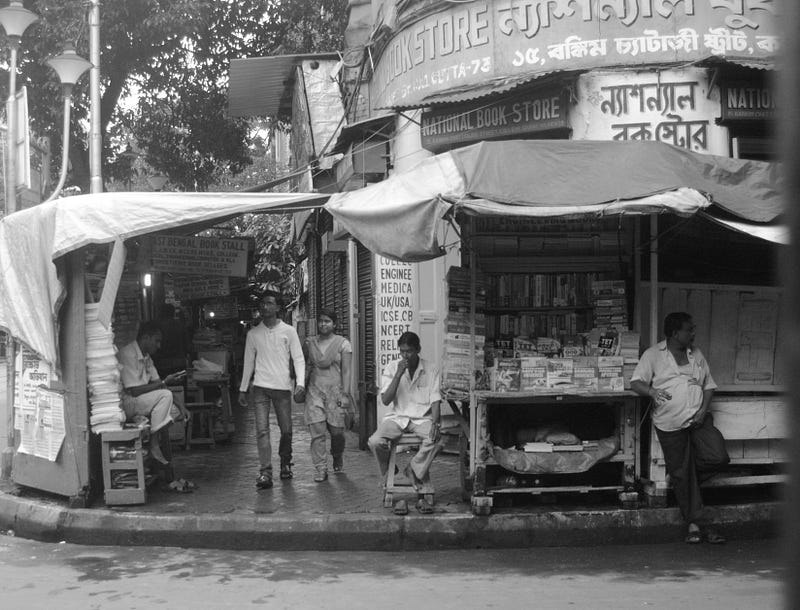
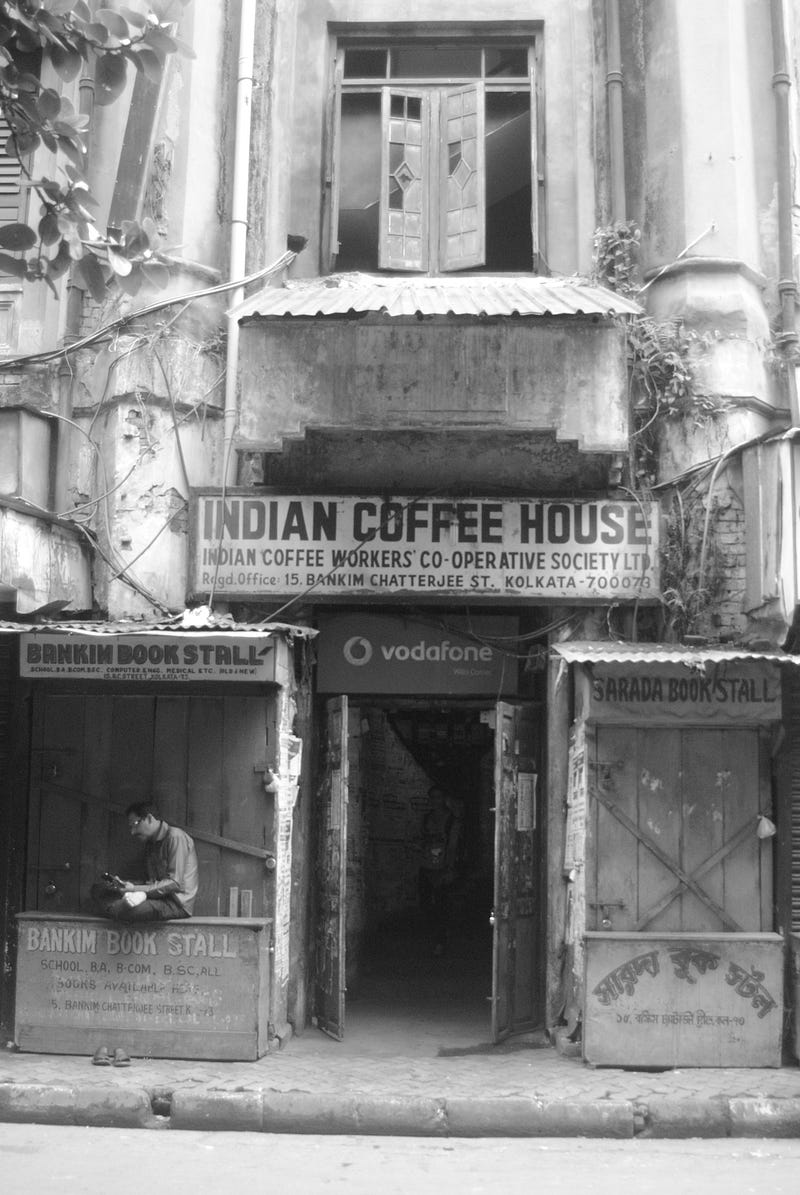
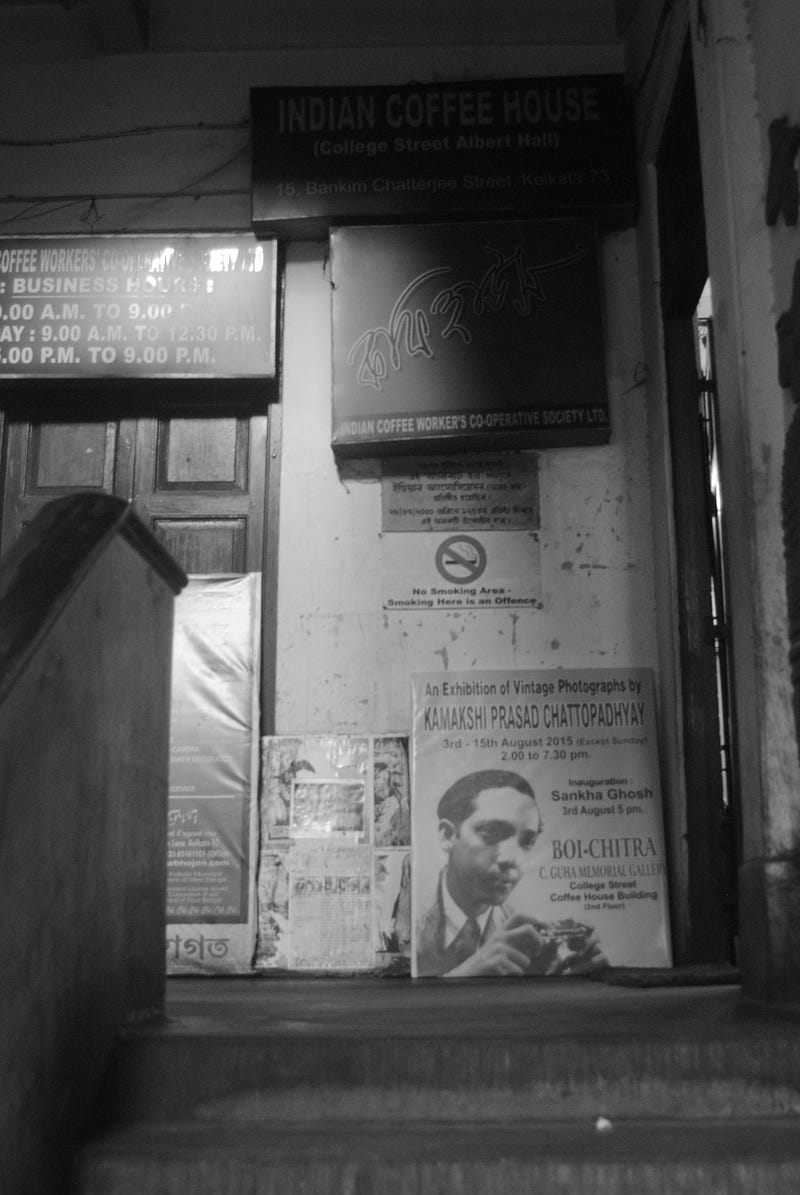
So, where would the city’s most iconic coffee house be located in an Indian city that celebrates the love of books like no other? Obviously, on College Street. The Indian Coffee House was first established as Albert Hall in 1876. Since then, the coffee shop’s patrons have been both university students from the adjacent institutions and the city’s best-known intellectuals. The other interesting detail about this coffee shop and any other Indian Coffee House in any city is that it has a cooperative model. This means it is run by the staff and all profits are distributed amongst them as well. And what better way to see a revered century-old coffee shop than in gray?
In a city that values coffee, books, and conversation, it should come as no surprise that it has built great museums. One of my favorites is the Indian Museum. It was established in 1867 as a place where “man-made and natural objects collected could be kept, cared for and displayed”. The museum with its thirty-five galleries is the oldest and largest museum in India and Asia. It is also the ninth oldest museum in the world. You need a day to explore this museum completely. I saw this museum in gray because monochrome seemed to accentuate its neoclassical style and take you back in time. It also reflected its stillness. In a city bustling with 14 million people, the Indian Museum is mostly empty. It is an oasis of calm in a swirling city. I couldn’t think of a better way to reflect this.
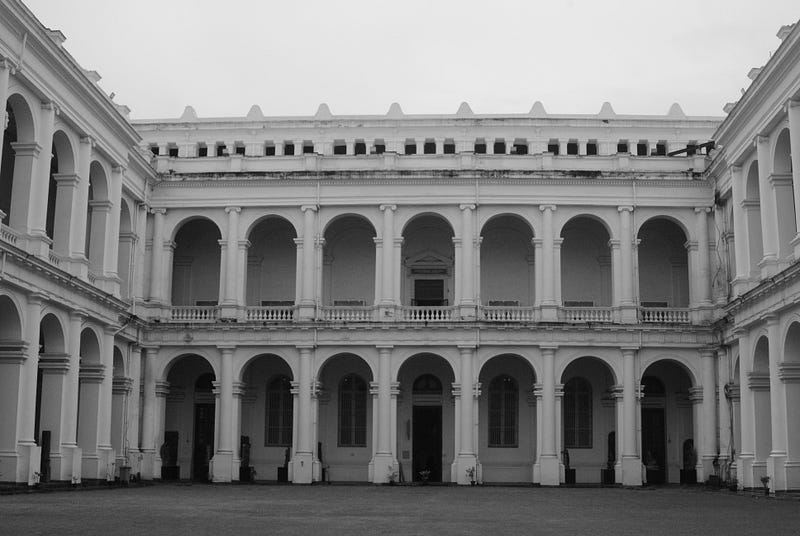
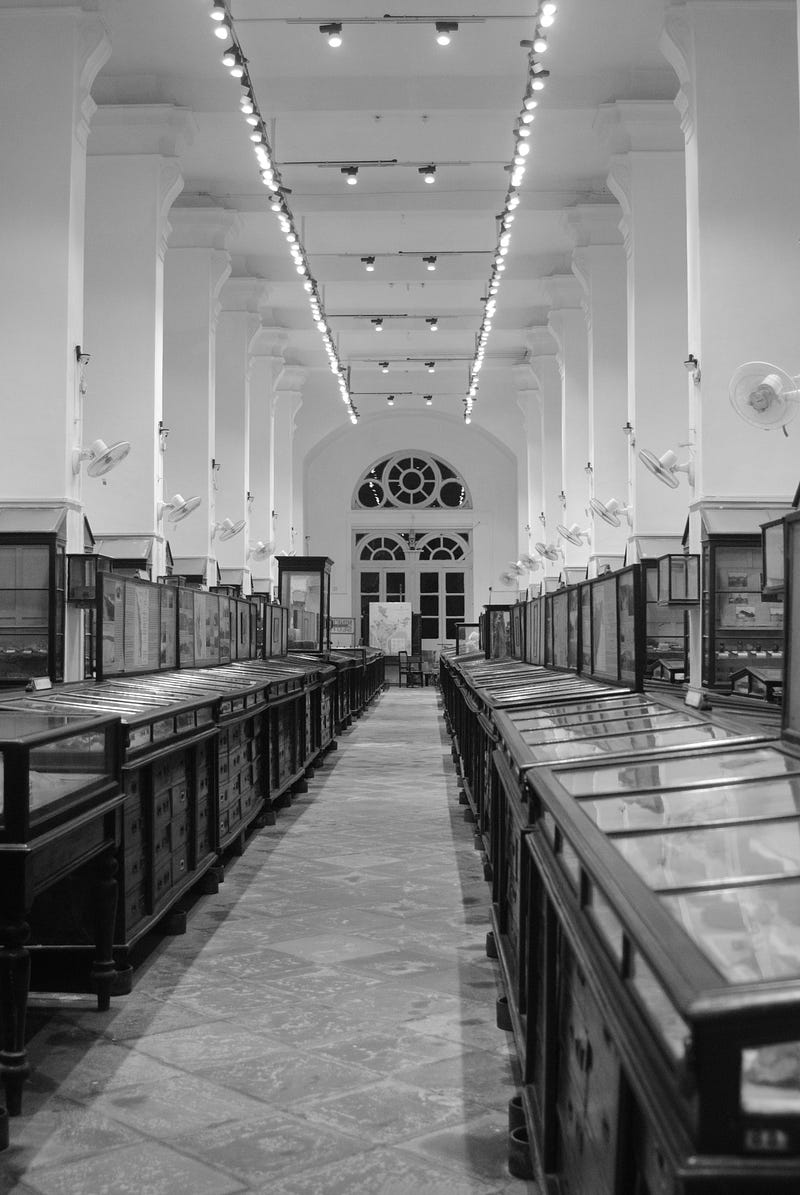
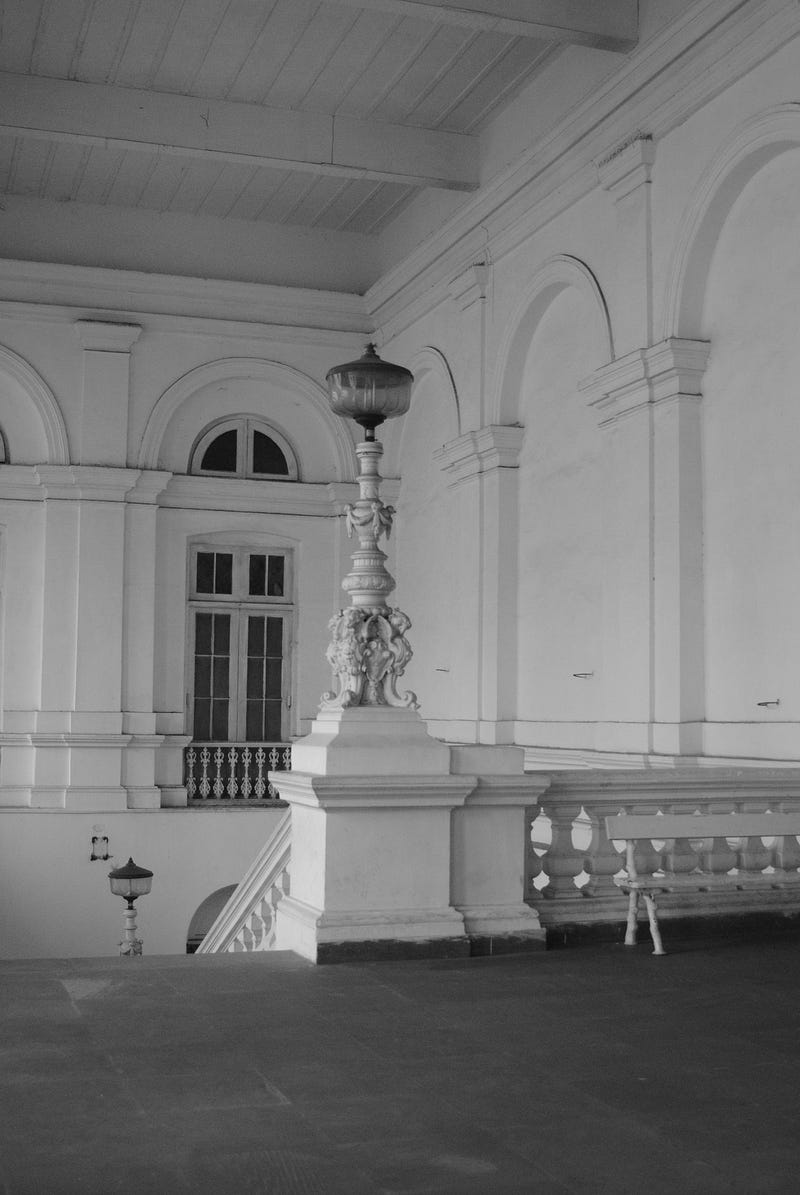
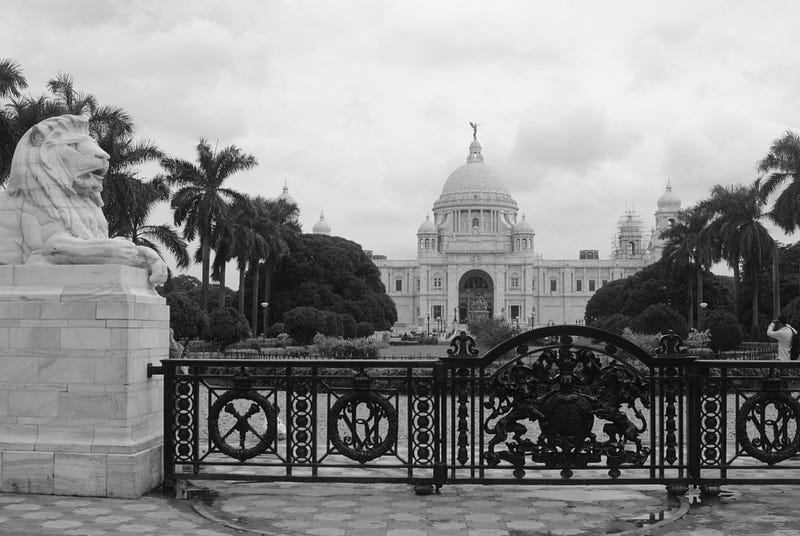
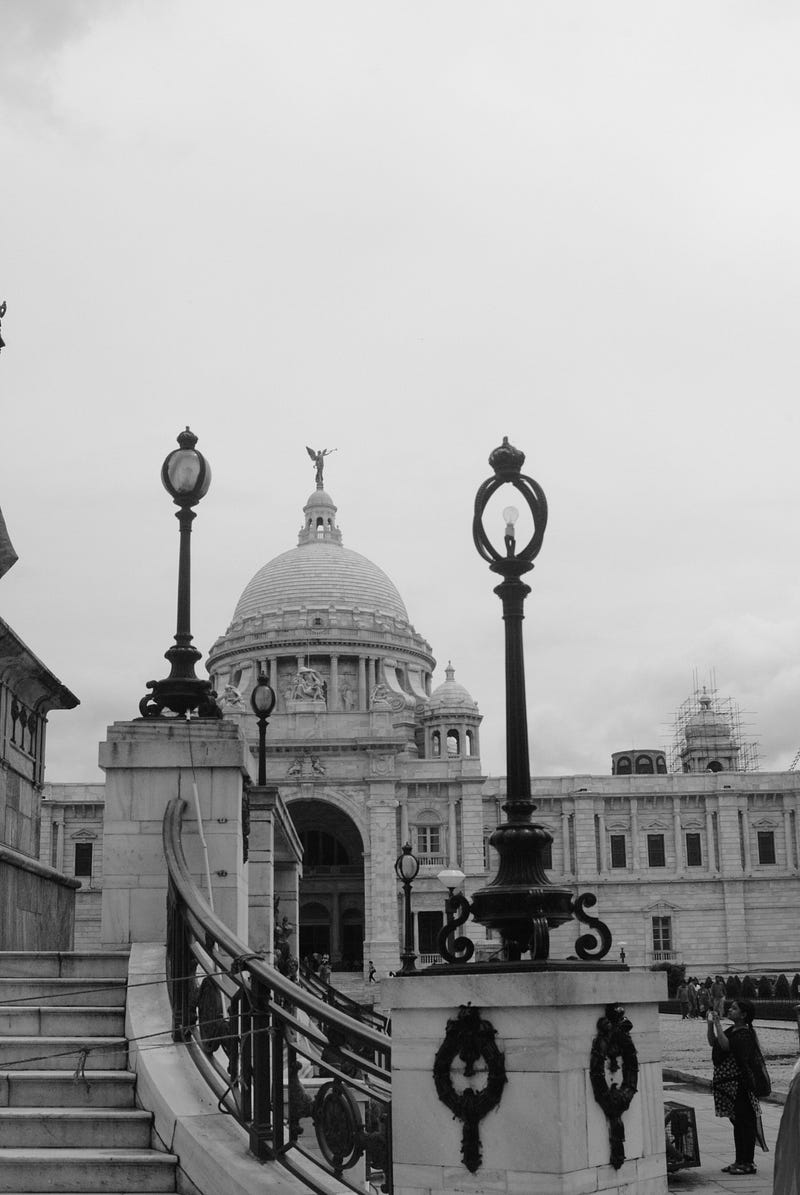
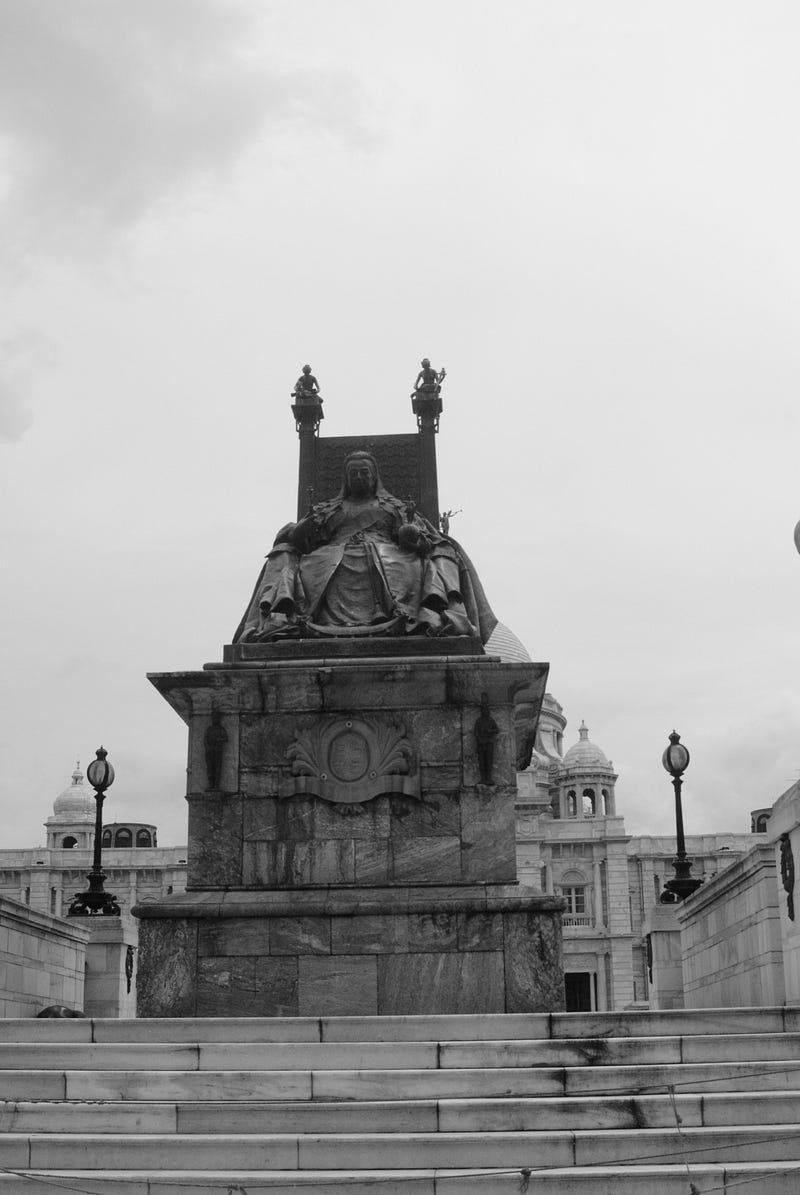
But if the Indian Museum is where you go to explore Indian art, archaeology, anthropology, geology, zoology, and economic botany, the place where you understand Calcutta and West Bengal’s history is at the Victoria Memorial. Initially, set up in honor of Queen Victoria after her death, the memorial spread over 64 acres of gardens is the largest such monument dedicated to a monarch anywhere in the world. It reflects the vast ambitions of the British. But what remains fascinating today are its enormous museums, which retell the history of Calcutta and Bengal. We needed a day to explore all of this completely. And what better way to reflect the great romance Victorian England had with Calcutta than in classical gray? It is a timeless, forgotten love story.
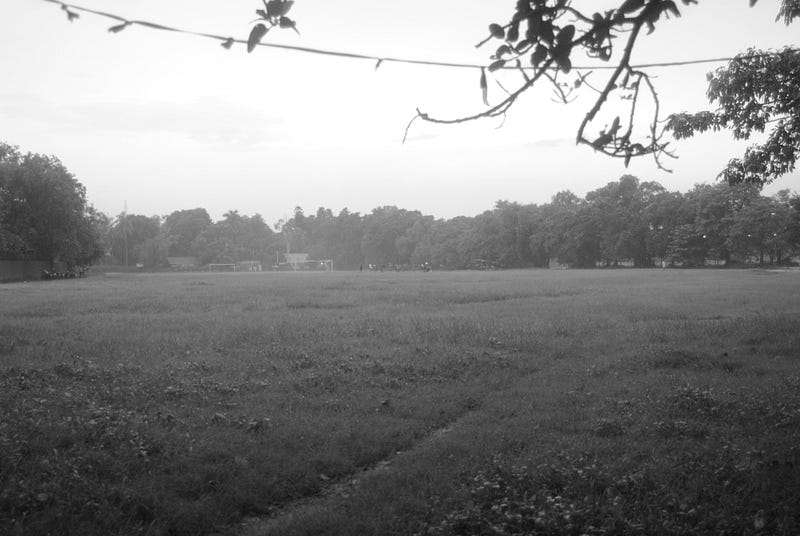
The other great love affair the city of Calcutta has is with cricket and football. This is played out on the city’s Maidan, which means an open field in Bengali and is the city’s largest green space. The city’s beloved stadium Eden Gardens, which has been the scene of its best-loved matches, is at the periphery of the Maidan. On a rainy evening, I liked reflecting on the romance of this great love affair in gray.
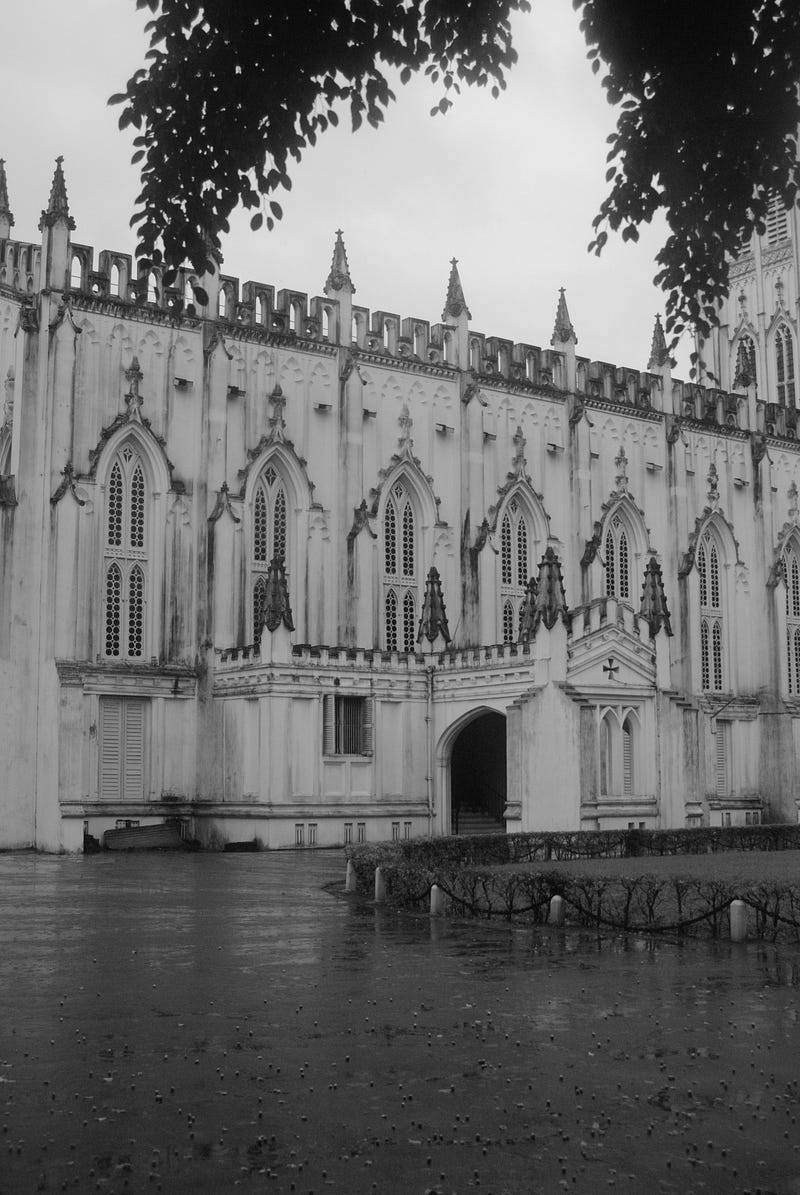
Also at the edge of the maidan and in direct line of sight from the Victoria Memorial is St Paul’s Cathedral. It is not the oldest church in Calcutta, but it is the first Anglican church in Asia, established in 1839. It is also the largest church in Calcutta. The beauty of its gothic architectural style was accentuated and became a story when I saw it in gray.
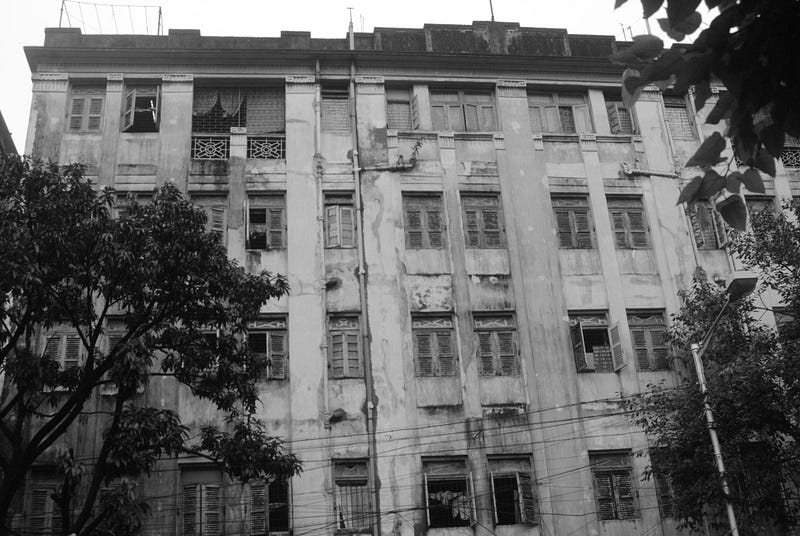
But beyond all of this, it’s the city’s old mansions, rising into the skyline that give the city its unique character. Kolkata stands lost in time. I loved using gray to paint its otherworldliness and its streets of character that tell a story.
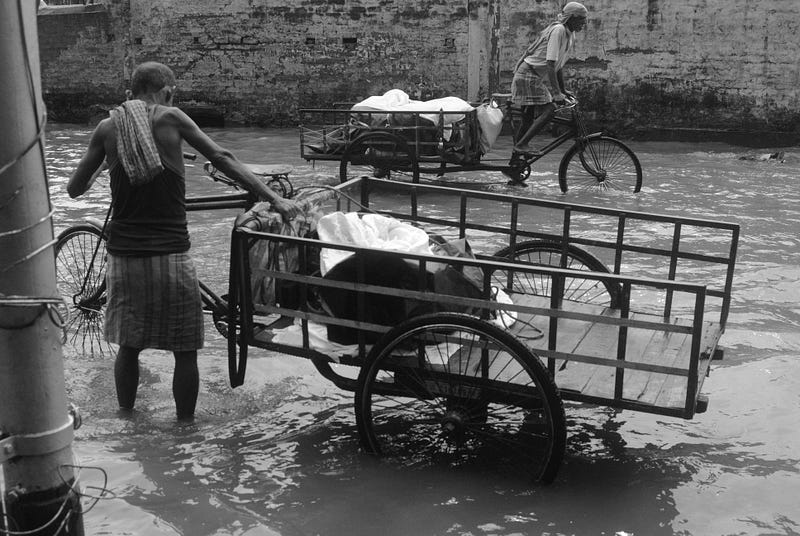
Time stands still in other ways too. Calcutta is one of the only places in the world where you will see both cycle rickshaws and hand-pulled rickshaws still in use. On a rainy morning, as the streets flooded, there was no better way to reflect the harshness of life here but in gray.
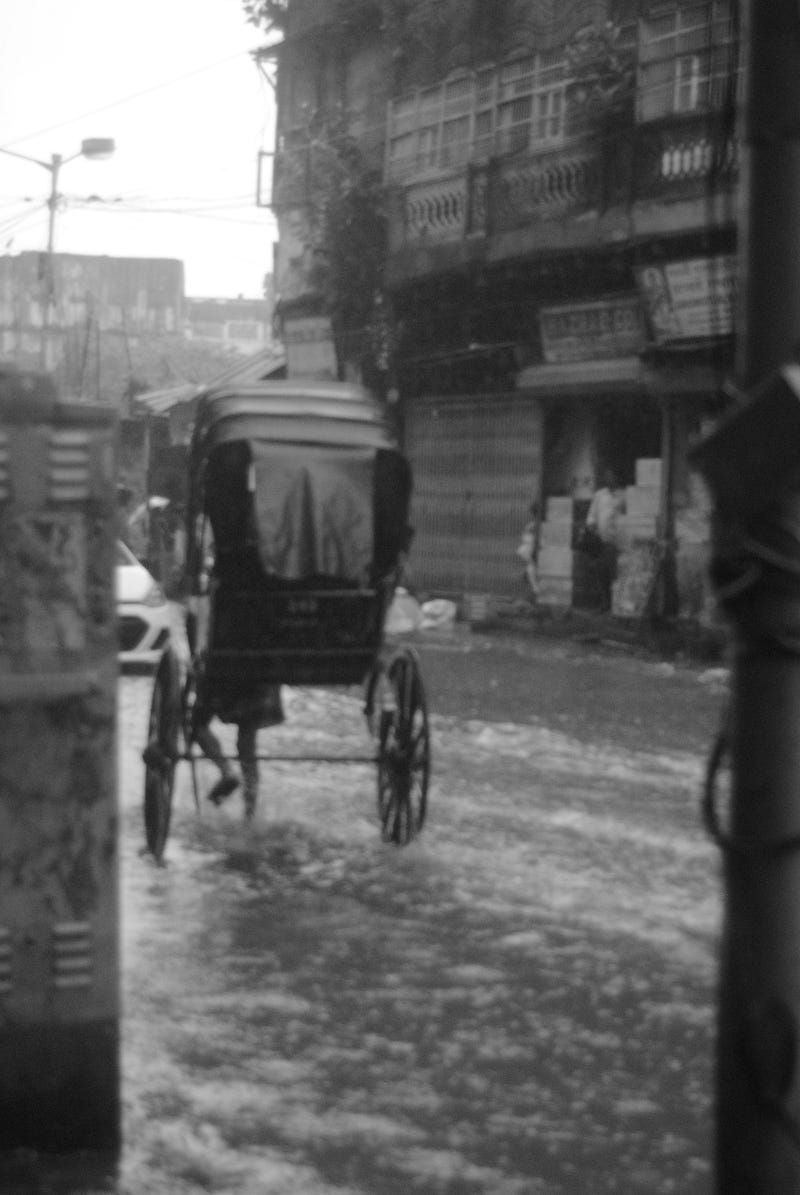
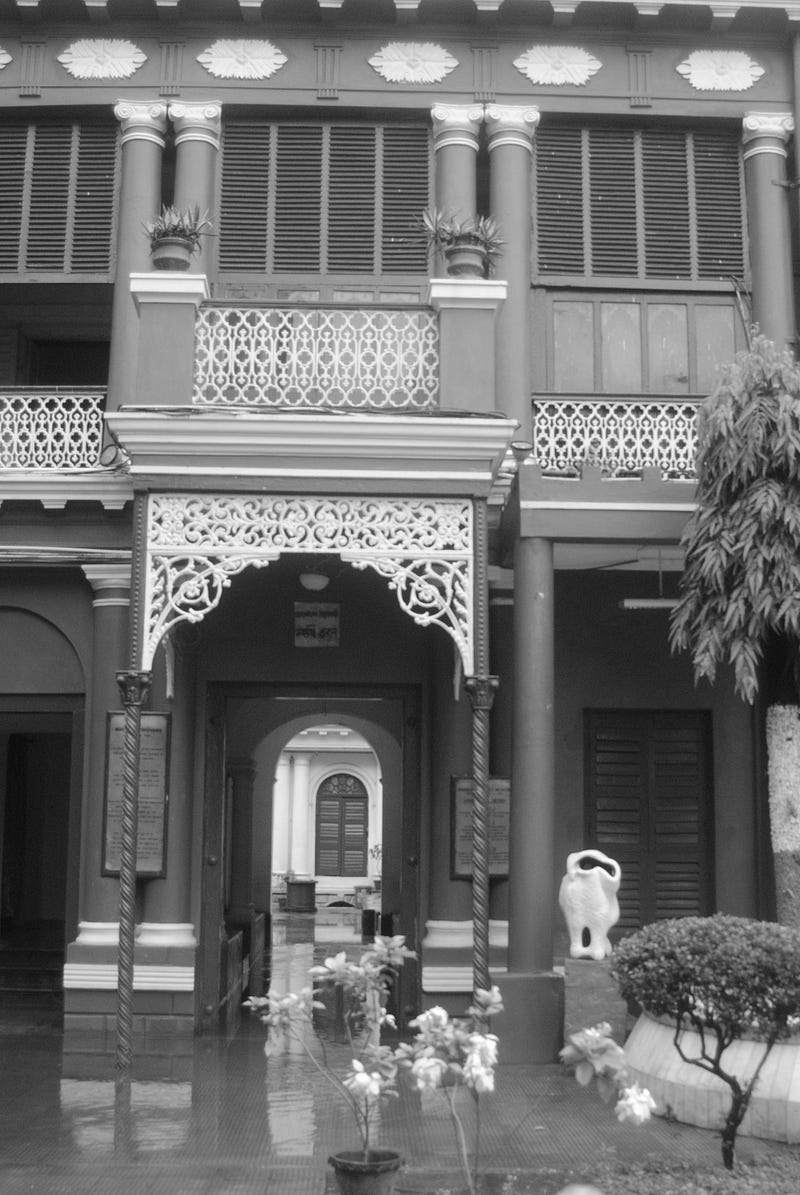
Yet even in that harshness, there are islands of beauty in the City of Joy. Standing on the other end of this lane was the house of the great poet, philosopher, and social reformer Rabindranath Tagore. He was both the first Indian and non-European to win the Nobel Prize in Literature in 1913. So great was his influence on Bengali literature that he is the author of both the Indian and Bangladeshi national anthems. A visit to Calcutta cannot be complete without a visit to his home and in typical Bengali style it has been converted into an elaborate museum. We needed half a day to complete exploring it. As we stepped out and got ready to wade with our backpacks through the rain, I turned back for one last look and saw this oasis of calm lost in time, I had to shoot it in gray.
The only splash of color had to be Kolkata’s iconic yellow taxi. There was no way, I could tell this story in gray.
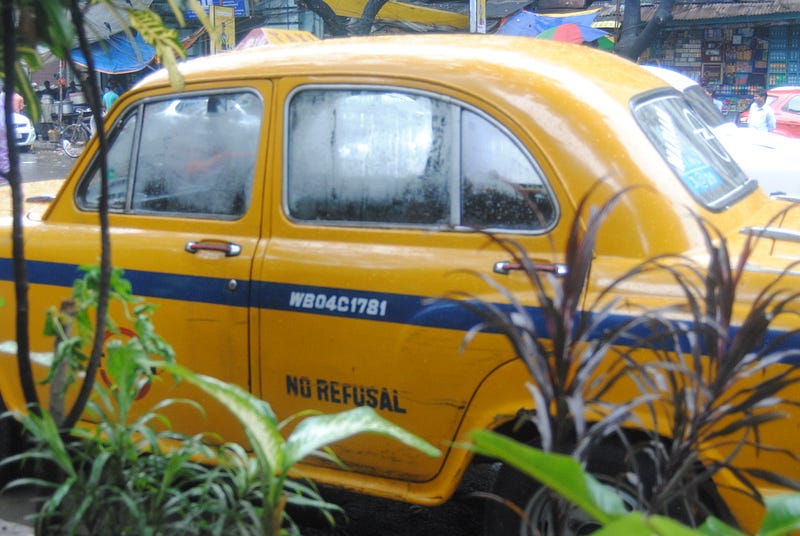
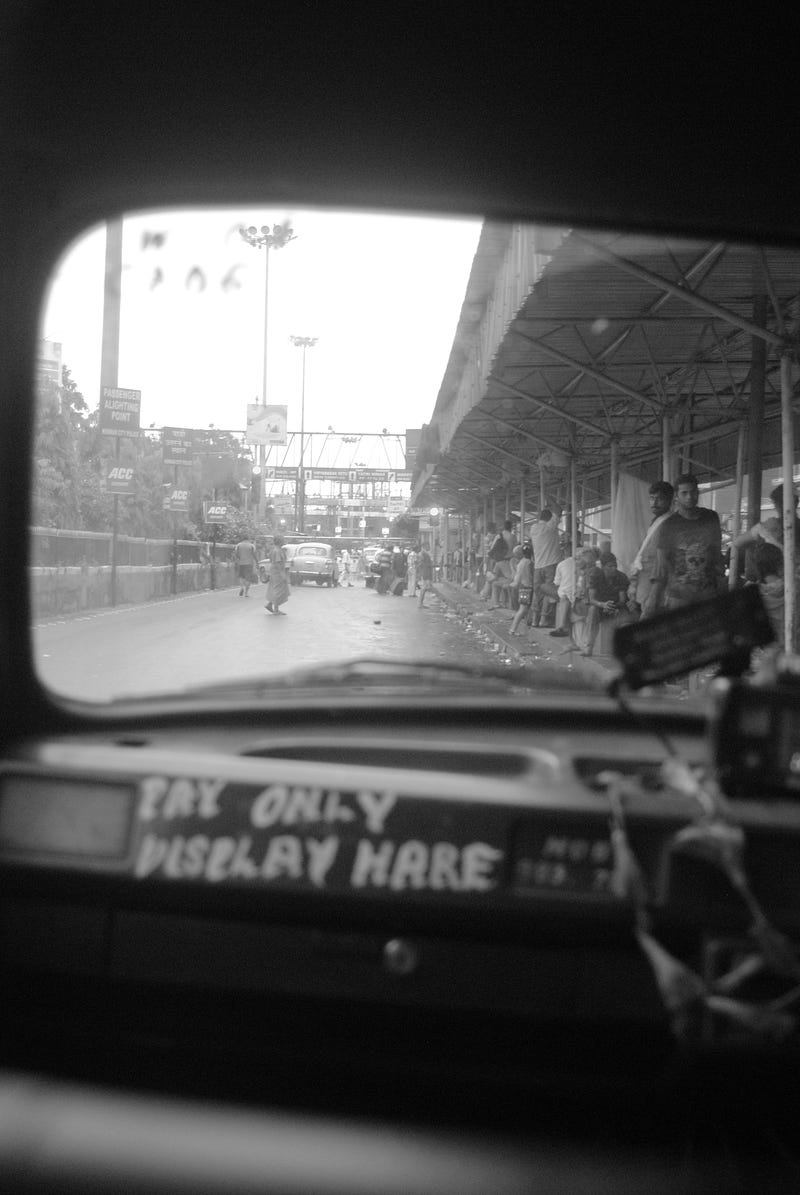
We also stopped at the bustling Howrah Station. It is the oldest railway complex in India and one of the busiest in the world. More than 600 passenger trains and one million passengers pass through the station every day. As I looked at the confluence of both crowds and chaos, I framed the story in gray.
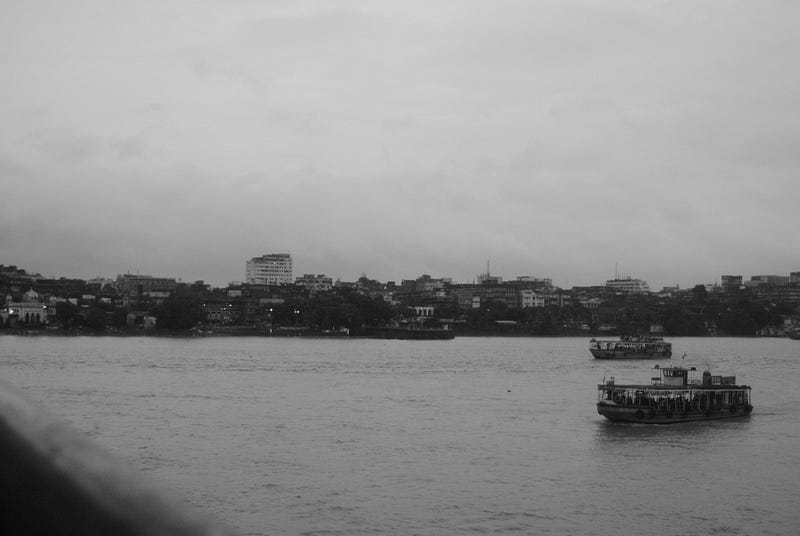
But in the background, oblivious to all of this chaos, quiet flows the Hooghly. The river Hooghly is a distributary of the river Ganga, which is a lifeline for much of North India. Settlements have existed in what is today known as Calcutta for the last two thousand years. The river was the cradle of civilization, and trade and ultimately became the center of the British Empire in India. But when the British left India, Calcutta’s role as a hub of economic activity declined. Today, like in the city of Kolkata , time stands still over the Hooghly as one contemplates the passage of time.
In a final tribute to this vast, philosophical, layered city, still enveloped in an old-world charm, I framed it in grey.
A shout-out to some of the other responses to this challenge.
I found Matthew David’s account of his first travel exhibition interesting because it explains black-and-white photography well, both its challenges and pleasures.
I also liked these interpretations of the word gray by Jody Lynn McBrien and Oksana Kukurudza's Sunflowers Rarely Break. These are important stories, and I am so glad they were written.
Finally, thank you Anne Bonfert for the wonderful prompt. It has helped me to relook at all my black and white photographs of India, and think about what I would like to do with them.


