
Octopuses (part 4): The Deadly
Octopuses are fascinating creatures with a variety of incredible abilities. However, some octopuses are not just fascinating, but also deadly.
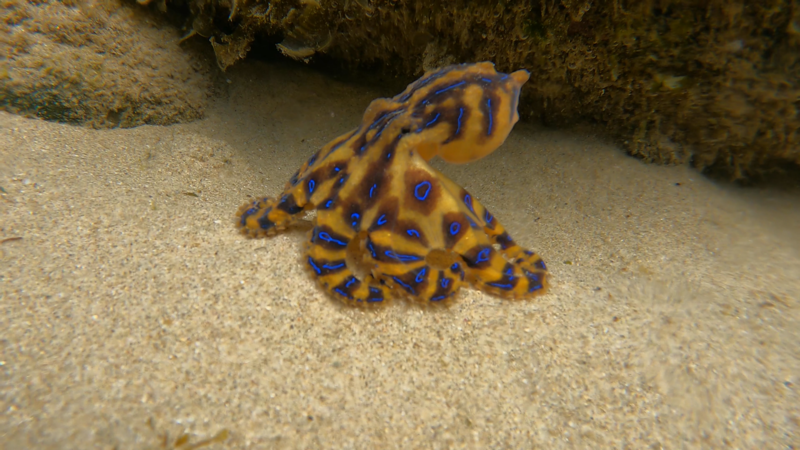
The Blue Ring Octopus is a highly venomous cephalopod found in the Pacific and Indian Oceans, specifically in the waters surrounding Australia, Japan, and the Philippines. These small creatures are only about the size of a golf ball but can be incredibly dangerous due to their potent venom which is powerful enough to kill a human..
Blue Ring Octopuses typically live in shallow, sandy tidal pools or coral reefs, and are usually found in the shallows less than 20 meters deep. They are most commonly found in the warm, tropical waters of the Indo-Pacific region, including the coasts of Japan, Australia, and the Philippines.
One of the distinguishing features of the Blue Ring Octopus is their bright blue rings, which serve as a warning sign to predators and potential prey. When they feel threatened, the octopus will display these bright blue rings to warn others to stay away. It’s important to note that the blue rings are not always visible, as they only become apparent when the octopus is agitated or under stress.
The blue-ringed octopus uses its bright blue rings as a warning sign to potential predators or threats, and if provoked, it will bite and inject its venom into its prey.
Its venom can cause paralysis and respiratory failure, leading to death within minutes if left untreated.
The venom of the blue-ringed octopus contains a potent neurotoxin known as tetrodotoxin (TTX), which is also found in pufferfish and other marine animals. TTX works by blocking the flow of sodium ions in nerve cells, preventing them from transmitting signals to the muscles. This results in paralysis, which can affect the respiratory muscles and lead to respiratory failure and death.
The victim will begin to experience a loss of feeling and numbness, followed by paralysis and eventually death from respiratory failure.
The process of death from Blue Ring Octopus venom is extremely rapid and can occur within minutes of being stung. Symptoms of envenomation may include nausea, vomiting, difficulty breathing, paralysis, and cardiac arrest.
When a blue-ringed octopus attacks a human, it typically delivers its venom through its beak, which is located in the center of its eight arms. The venom is contained in small sacs called salivary glands, which are located near the beak. The octopus uses its beak to bite through the victim’s skin and inject the venom into the wound.
Once the venom enters the body, it quickly affects the nervous system. Symptoms typically appear within minutes and can include numbness or tingling in the mouth and extremities, nausea and vomiting, difficulty breathing, and muscle weakness. As the venom spreads, the victim may become increasingly disoriented and confused, and may experience seizures or loss of consciousness.
Treatment for blue-ringed octopus venom poisoning involves the administration of antivenom as soon as possible after the bite. However, antivenom can only be effective if administered within a few hours of the bite, and even with treatment, the mortality rate for blue-ringed octopus venom poisoning is around 50%.
The venom of the blue-ringed octopus is a potent neurotoxin that acts on the nervous system to cause paralysis and respiratory failure. The octopus delivers its venom through its beak, and symptoms of poisoning can appear within minutes. Treatment with antivenom is essential to prevent death, but early intervention is critical for a successful outcome. Anyone who encounters a blue-ringed octopus should exercise extreme caution and seek medical attention immediately if bitten.
To stay safe from Blue Ring Octopuses, it is important to avoid handling or disturbing them in any way. If you see one, it is best to keep your distance and observe from a safe distance. Divers and snorkelers should be particularly cautious, as these creatures can be difficult to see and may be hiding in coral crevices or under rocks.

If you enjoyed this article and would like to support me please consider becoming a medium member via my affiliated link:
More From This Series:
And Similar


