avatarVibrant Jellyfilsh

Free AI web copilot to create summaries, insights and extended knowledge, download it at here

3789

Abstract

light.</p><p id="f010">But it’s not just their size that sets octopus eyes apart. They also have a complex and sophisticated structure that allows them to see the world in remarkable detail. Each eye has a lens that is made of a flexible, transparent material similar to the one in our own eyes. Octopus lenses are able to change shape to focus on objects both near and far, allowing them to see clearly in a range of different conditions.</p><p id="6c9c">In addition to their lenses, octopus eyes also have a unique set of photoreceptor cells that allow them to see in a wider range of colors than humans can. Octopuses can see colors from the ultraviolet to the infrared spectrum, which is particularly useful for navigating in the dimly-lit environments where they often hunt.</p><p id="7cee">Perhaps the most interesting feature of octopus eyes, however, is their similarity to our own. Scientists believe that octopuses and humans evolved from a common ancestor over 500 million years ago, and that their eyes have evolved in parallel ever since. Octopuses have a highly-developed optic nerve and a retina that is similar in structure to ours, despite the fact that we are vastly different creatures.</p><figure id="2f47"><img src="https://cdn-images-1.readmedium.com/v2/resize:fit:800/1*1APrBw3m5Ajv3YDl9_8X8g.jpeg"><figcaption>Photos by: <a href="https://commons.wikimedia.org/wiki/User:AgainErick">AgainErick</a> from <a href="https://commons.wikimedia.org/wiki/File:Octopus_vulgaris_-_Gewone_octopus_-_Oceanium_-_Diergaarde_Blijdorp_-_Rotterdam_-_hiding_between_the_rocks.jpg">https://commons.wikimedia.org/wiki/File:Octopus_vulgaris_-_Gewone_octopus_-_Oceanium_-_Diergaarde_Blijdorp_-_Rotterdam_-_hiding_between_the_rocks.jpg</a></figcaption></figure><h1 id="7ad5">Food</h1><p id="70b7">Octopuses are carnivorous and feed on a variety of prey, including crustaceans, fish, and other octopuses. They have a beak-like mouth that they use to crush and tear apart their food, and can also inject venom to immobilize their prey.</p><p id="8460">They are opportunistic feeders, meaning that they will eat whatever is available to them at the time.</p><p id="5005">Octopuses have a unique way of hunting and feeding. They are able to capture their prey using their tentacles, which are equipped with suction cups that allow them to grasp their prey tightly. They are also able to paralyze their prey using their venomous saliva, which contains enzymes that can break down the tissues of their prey. Once the prey is immobilized, the octopus will use its beak to tear off pieces of flesh and eat them.</p><p id="5367">Octopuses have a high metabolism, which means they need to eat a lot to sustain themselves. In the wild, octopuses can spend up to 70% of their time hunting for food. They are able to adjust their diets depending on what is available in their environment. For example, if there are fewer crabs available, they will eat more shrimp and other crustaceans.</p><p id="6db2">One interesting aspect of octopus diets is their ability to change their color and texture to blend in with their environment. This is called camouflage, and it helps the octopus avoid predators and sneak up on prey. Some species of octopus are able to change their color and texture so well that they can virtually disappear into their surroundings.</p><p id="53a5">Octopuses are fascinating creatures with unique diets and feeding behaviors. Their ability to adapt to their environment and use tools is a testament to their intelligence and ingenuity. Studying these amazing creatures can give us a better understanding of the complexities of the natural world and the incredible diversity of life on our planet.</p><figure id="0376"><img src="https://cdn-images-1.readmedium.com/v2/resize:fit:800

Options

/1*mvN1EqeMeX3NI8M1x66-KA.png"><figcaption></figcaption></figure><p id="1a12">If you enjoyed this article and would like to support me please consider becoming a medium member via my affiliated link:</p><div id="01b8" class="link-block"> <a href="https://medium.com/@valuable_mindaro_jellyfish_659/membership"> <div> <div> <h2>Join Medium with my referral link - Vibrant Jellyfilsh</h2> <div><h3>Read every story from Vibrant Jellyfilsh (and thousands of other writers on Medium). Your membership fee directly…</h3></div> <div><p>medium.com</p></div> </div> <div> <div style="background-image: url(https://miro.readmedium.com/v2/resize:fit:320/0*IwcD-3INGnqJeRRd)"></div> </div> </div> </a> </div><figure id="83f6"><img src="https://cdn-images-1.readmedium.com/v2/resize:fit:800/1*mvN1EqeMeX3NI8M1x66-KA.png"><figcaption></figcaption></figure><p id="6052">More From This Series:</p><div id="91f4" class="link-block"> <a href="https://readmedium.com/all-about-octopus-part-1-fe794ad849b"> <div> <div> <h2>All About Octopus! (part 1)</h2> <div><h3>Octopuses are fascinating creatures that belong to the class Cephalopoda, which also includes squids, cuttlefish, and…</h3></div> <div><p>medium.com</p></div> </div> <div> <div style="background-image: url(https://miro.readmedium.com/v2/resize:fit:320/1*sb4P38SQEiA2qcjqGLeN-g.jpeg)"></div> </div> </div> </a> </div><div id="64d8" class="link-block"> <a href="https://readmedium.com/octopus-part-3-escape-artists-9fffa89ff467"> <div> <div> <h2>Octopus (part 3): Escape Artists</h2> <div><h3>Octopuses are known for their intelligence, problem-solving skills, and their ability to escape from tanks.</h3></div> <div><p>medium.com</p></div> </div> <div> <div style="background-image: url(https://miro.readmedium.com/v2/resize:fit:320/1*BLpx89-a6jIbV8_-UkPOgQ.jpeg)"></div> </div> </div> </a> </div><div id="3030" class="link-block"> <a href="https://readmedium.com/octopus-part-4-the-deadly-eb6d73f962eb"> <div> <div> <h2>Octopus (part 4): The Deadly</h2> <div><h3>Octopuses are fascinating creatures with a variety of incredible abilities. However, some octopuses are not just…</h3></div> <div><p>medium.com</p></div> </div> <div> <div style="background-image: url(https://miro.readmedium.com/v2/resize:fit:320/1*vAry7d5Z_tvA3EPsflbtyw.png)"></div> </div> </div> </a> </div><p id="410b">Similar Stuff:</p><div id="4cf0" class="link-block"> <a href="https://readmedium.com/moths-3-horror-movie-worthy-moths-to-invade-your-nightmares-part-1-c2831db29765"> <div> <div> <h2>Moths: 3 Horror Movie Worthy Moths To Invade Your Nightmares (part 1)</h2> <div><h3>Whether you find moths fascinating or frightening, there’s no denying their ability to capture our imaginations and…</h3></div> <div><p>medium.com</p></div> </div> <div> <div style="background-image: url(https://miro.readmedium.com/v2/resize:fit:320/1*5GmJk-IBQxpXgS2QOu-luw.jpeg)"></div> </div> </div> </a> </div></article></body>

Octopuses (part 2): Reproduction, Eyes and Food

Octopuses are fascinating creatures known for their remarkable intelligence, impressive camouflage abilities, and flexible tentacles. However, their reproductive strategies are just as interesting and unique as their physical characteristics.
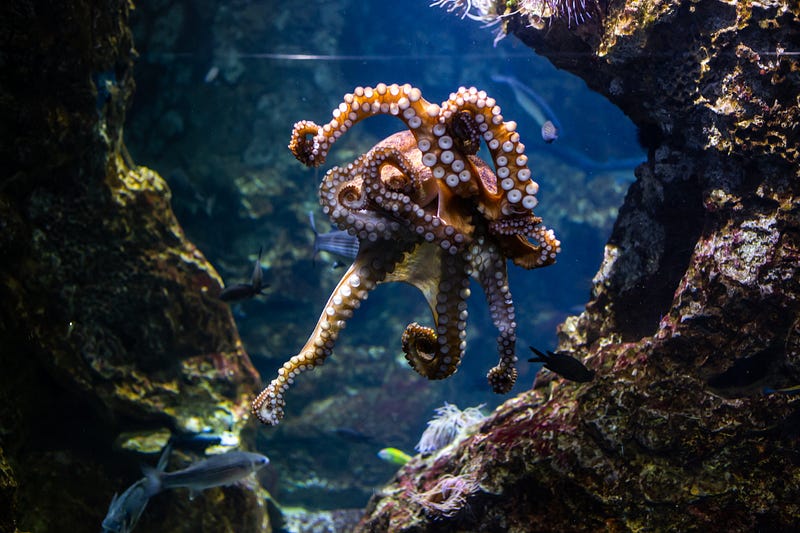
Photo by Ann Antonova: https://www.pexels.com/photo/octopus-in-the-water-near-the-coral-reefs-5986729/

Reproduction

Unlike most animals that mate through external fertilization or internal fertilization with the use of copulatory organs, octopuses use a variety of methods to reproduce, including complex behaviors and specialized reproductive structures.

One of the most notable features of octopus reproduction is the male’s specialized arm called a hectocotylus. The hectocotylus is used to transfer sperm packets, or spermatophores, to the female’s oviduct. During mating, the male will detach the hectocotylus and insert it into the female’s mantle cavity, where it deposits the spermatophores. Interestingly, some species of octopuses will detach multiple arms to use as hectocotyli, which can regenerate over time.

After mating, female octopuses will lay eggs in a secure location, such as in crevices or on rocks. The female octopus will typically guard her eggs and carefully tend to them, ensuring that they receive enough oxygen and are protected from predators. This process can take anywhere from a few days to several months, depending on the species.

Another fascinating aspect of octopus reproduction is that they have a short lifespan and are semelparous, meaning they only reproduce once before dying. This unique reproductive strategy is known as terminal investment, where the animal invests all its energy into reproduction, increasing its chances of passing on its genes to the next generation.

In addition to these fascinating reproductive strategies, octopuses have also been observed exhibiting maternal behavior towards their eggs, which is a rare occurrence in invertebrates. Female octopuses have been observed cleaning and aerating their eggs, as well as fanning them with their arms to ensure they receive enough oxygen.

Overall, the reproductive strategies of octopuses are just as unique and fascinating as their physical characteristics and intelligence. From the male’s specialized hectocotylus to the female’s maternal behavior towards her eggs, octopuses continue to surprise and intrigue scientists and marine enthusiasts alike.
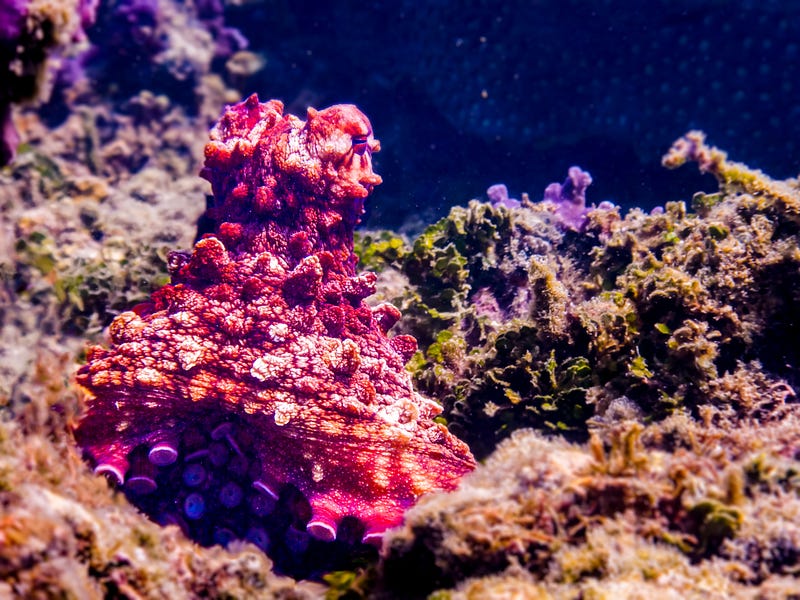
Photo by Elliot Connor: https://www.pexels.com/photo/common-octopus-emerges-from-den-12999372/

Octopus Eyes

Octopus Eyes are equally impressive and deserve recognition in their own right. In fact, octopuses have some of the most advanced eyes in the animal kingdom, with a unique structure that has evolved over millions of years to suit their needs as intelligent and agile predators.

One of the notable features of octopus eyes is their size. The eyes of a colossal squid can be as large as basketballs. This allows them to gather as much light as possible, which is especially important since they live deep in the ocean where there is very little light.

But it’s not just their size that sets octopus eyes apart. They also have a complex and sophisticated structure that allows them to see the world in remarkable detail. Each eye has a lens that is made of a flexible, transparent material similar to the one in our own eyes. Octopus lenses are able to change shape to focus on objects both near and far, allowing them to see clearly in a range of different conditions.

In addition to their lenses, octopus eyes also have a unique set of photoreceptor cells that allow them to see in a wider range of colors than humans can. Octopuses can see colors from the ultraviolet to the infrared spectrum, which is particularly useful for navigating in the dimly-lit environments where they often hunt.

Perhaps the most interesting feature of octopus eyes, however, is their similarity to our own. Scientists believe that octopuses and humans evolved from a common ancestor over 500 million years ago, and that their eyes have evolved in parallel ever since. Octopuses have a highly-developed optic nerve and a retina that is similar in structure to ours, despite the fact that we are vastly different creatures.
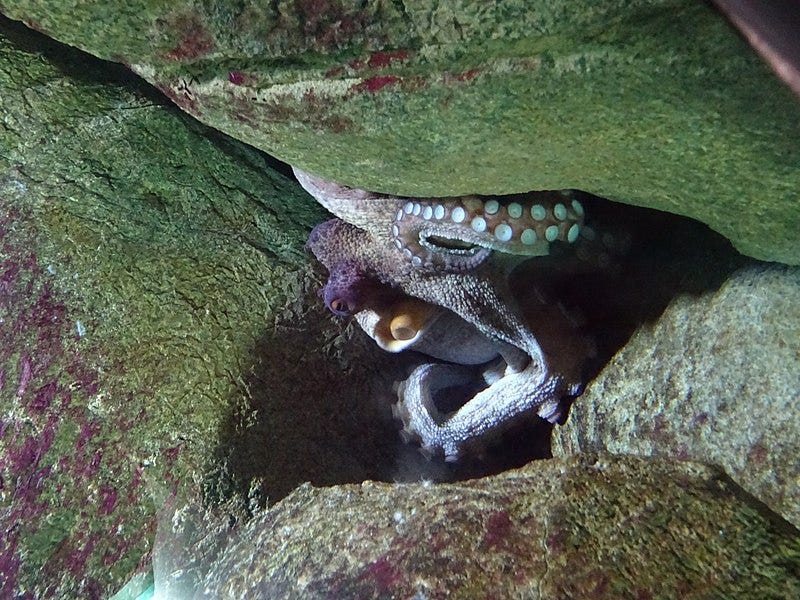
Photos by: AgainErick from https://commons.wikimedia.org/wiki/File:Octopus_vulgaris_-_Gewone_octopus_-_Oceanium_-_Diergaarde_Blijdorp_-_Rotterdam_-_hiding_between_the_rocks.jpg

Food

Octopuses are carnivorous and feed on a variety of prey, including crustaceans, fish, and other octopuses. They have a beak-like mouth that they use to crush and tear apart their food, and can also inject venom to immobilize their prey.

They are opportunistic feeders, meaning that they will eat whatever is available to them at the time.

Octopuses have a unique way of hunting and feeding. They are able to capture their prey using their tentacles, which are equipped with suction cups that allow them to grasp their prey tightly. They are also able to paralyze their prey using their venomous saliva, which contains enzymes that can break down the tissues of their prey. Once the prey is immobilized, the octopus will use its beak to tear off pieces of flesh and eat them.

Octopuses have a high metabolism, which means they need to eat a lot to sustain themselves. In the wild, octopuses can spend up to 70% of their time hunting for food. They are able to adjust their diets depending on what is available in their environment. For example, if there are fewer crabs available, they will eat more shrimp and other crustaceans.

One interesting aspect of octopus diets is their ability to change their color and texture to blend in with their environment. This is called camouflage, and it helps the octopus avoid predators and sneak up on prey. Some species of octopus are able to change their color and texture so well that they can virtually disappear into their surroundings.

Octopuses are fascinating creatures with unique diets and feeding behaviors. Their ability to adapt to their environment and use tools is a testament to their intelligence and ingenuity. Studying these amazing creatures can give us a better understanding of the complexities of the natural world and the incredible diversity of life on our planet.

If you enjoyed this article and would like to support me please consider becoming a medium member via my affiliated link:

More From This Series:

Similar Stuff:

Octopus
Animals
Océan
Nature
Sea
Recommended from ReadMedium