
Moths: 3 Horror Movie Worthy Moths To Invade Your Nightmares (Part 1)
Whether you find moths fascinating or frightening, there’s no denying their ability to capture our imaginations and inspire terror in even the bravest of souls.
Parasitic Wasps
Did you know that there are parasitic wasps that lay their eggs inside living caterpillars? The eggs hatch and feed on the caterpillar from the inside out, eventually killing it. It’s like a real-life horror movie!
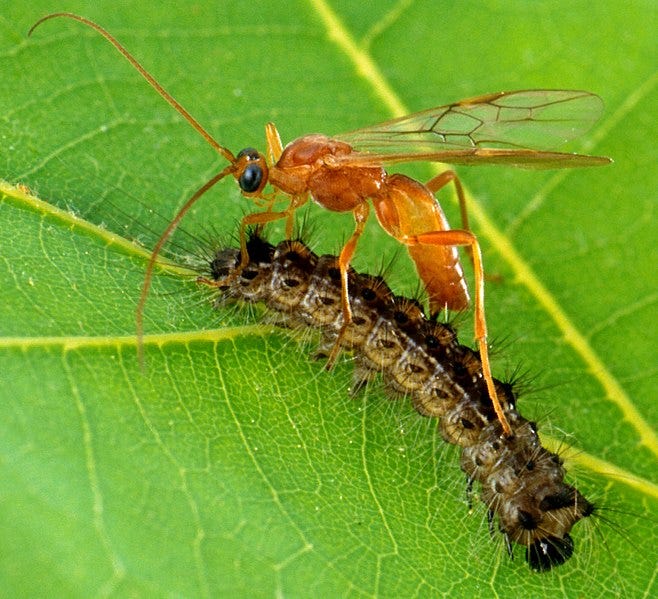
They belong to a group of insects called parasitoids, which are known for their gruesome and fascinating life cycles.
Parasitoid wasps have a unique way of reproducing — they lay their eggs inside the bodies of other insects, such as caterpillars or other types of larvae. Once the eggs hatch, the wasp larvae feed on the host from the inside, eventually killing it.
One example of a parasitoid wasp that preys on caterpillars is the braconid wasp. Female braconid wasps use a long ovipositor, which is like a needle, to inject their eggs into the body of a caterpillar. The wasp larvae then feed on the caterpillar’s tissues and fluids, growing larger and eventually killing it. Once the larvae have matured, they spin cocoons inside the host’s body and emerge as adult wasps.
Despite their gruesome behavior, parasitoid wasps play an important role in controlling pest populations in agricultural ecosystems. In fact, some species of parasitoid wasps are even used as biological control agents in integrated pest management programs.
So while the idea of a wasp laying its eggs inside a living caterpillar might seem like something out of a horror movie, it’s actually a fascinating example of the intricate relationships between different species in nature.
The Emerald Cockroach Wasp
The emerald cockroach wasp (Ampulex compressa) is a species of wasp found in tropical regions around the world. Although small, this wasp has a particularly gruesome method of reproduction that has earned it a reputation as a creature straight out of a horror movie.
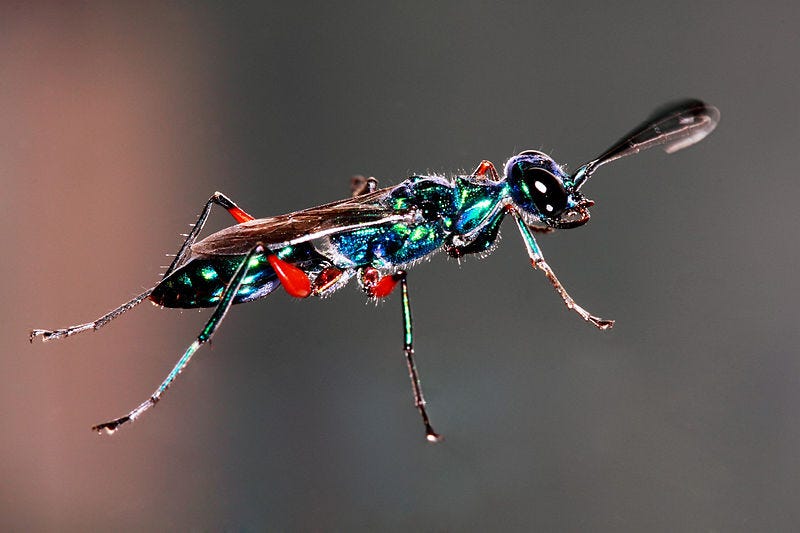
Female emerald cockroach wasps hunt cockroaches as a food source for their developing larvae. However, they also use cockroaches as a nursery for their offspring. The wasp will sting the cockroach in a very specific location in the brain, rendering it docile and submissive. The wasp then leads the cockroach by its antenna to a burrow, where she lays a single egg on the underside of the roach’s body.
The wasp larva hatches from the egg and begins feeding on the still-living cockroach. It specifically targets non-vital organs, such as the fat body, which serves as the primary source of nutrients for the developing wasp larva. As the larva grows, it feeds more aggressively, eventually consuming vital organs like the heart and nervous system. Remarkably, the cockroach remains alive throughout this entire process, apparently unable to move or defend itself due to the effects of the wasp’s venom.
Once the larva has consumed enough of the cockroach, it pupates and eventually emerges as an adult wasp. The cycle then begins anew as the wasp searches for another cockroach to parasitize.
The emerald cockroach wasp’s method of reproduction is undoubtedly gruesome, and has earned it comparisons to creatures from horror films. However, from a scientific perspective, it is a fascinating example of the complex interactions that occur between different species in the natural world.
Murder Hornet
Some species of wasps are known for their large size and painful stings, which can certainly make them seem like creatures out of a horror movie.
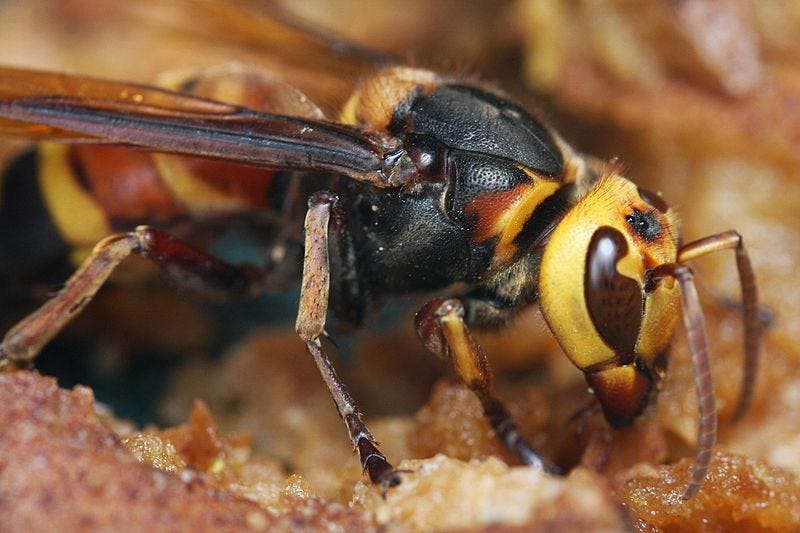
One such example is the Asian giant hornet, also known as the “murder hornet.” This species is native to Asia but has recently been discovered in parts of North America, causing concern among researchers and the general public alike.
The Asian giant hornet is one of the largest species of hornet in the world, with some individuals reaching over two inches in length. Their venom is highly potent and can cause severe pain, tissue damage, and in some cases, even death. What makes them particularly frightening is their aggressive behavior when they feel threatened, which can include swarming and attacking in large numbers.
Despite their terrifying reputation, it’s important to note that Asian giant hornets are not usually aggressive towards humans unless they feel threatened or provoked. However, their presence in new areas has led to concern about their impact on native bee populations, as they are known to attack and kill honeybees in large numbers.
Overall, while the Asian giant hornet may seem like a creature out of a horror movie, it’s important to remember that they are simply a part of the natural world and play an important role in their native ecosystems.

If you enjoyed this article and would like to support me while becoming a medium member and being able to read unlimited medium, Please consider becoming a member via my affiliated link:


