
Dirt, Tomatoes, and Family Traditions
A Garden Widow’s Tale: The Supportive Spouse of a Gentleman Farmer
From Garden to Table: Culinary Arts and Homegrown Delights
It’s time to escape.
There’s no need to shower. I’ll be drenched soon enough — especially with the humidity.
I slip into the dawn with stained faded blue jeans and a long-sleeve shirt. Freebie grocery gloves caked in dirt flap in my back pocket. I try to discover the location of some happy wren.
Dirt from the previous day stains my fingertips. That’s something that eternally abides — the dirt.
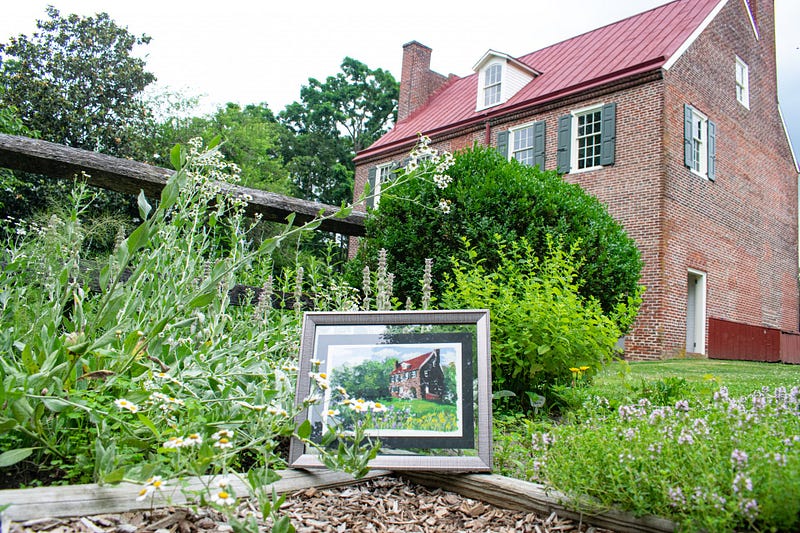
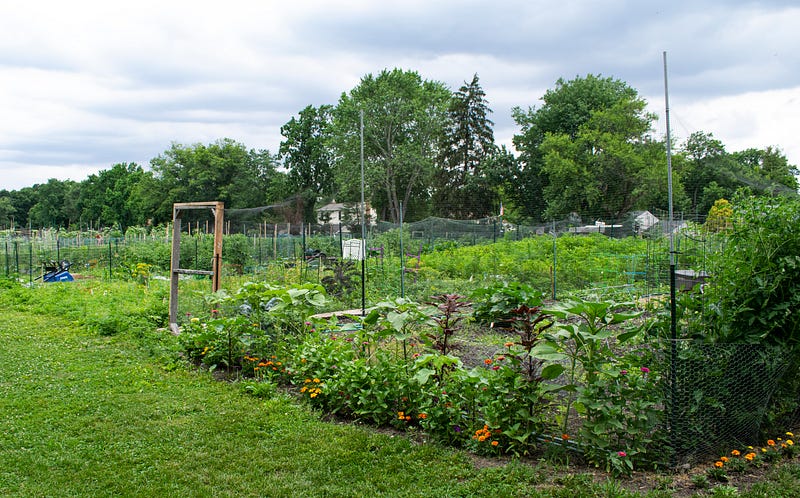
By the time I approach my garden at Barclay Farms, the dimmer switch of the sun has slowly revealed the reds and the yellows and the oranges of the sunflowers. The flowers tower like a Hong Kong skyline in this garden oasis of Cherry Hill, New Jersey — The Garden State.
We’re only ten miles east of Philadelphia, but here, I feel hundreds of miles away in the country.
The walk from my house in the Barclay neighborhood takes just five minutes — an amenity not mentioned on Trulia.com when we bought our home in 2011. I am alone — or at least, the only human out this early. Not even the early morning joggers or the dog walkers or the hardcore gardeners are awake with activity.
The grass is still damp. Yellow finches dart and dive between the sunflower skyscrapers like British Spitfires from 1940. The fields and skies are buoyant with birds.
Gentleman rows of rainbow zinnias have blossomed overnight — alerting the birds to the feast. I admire that someone had the time and the inclination to provide such a stellar service to the birds.
And to me.
The ethereal spires of weeds surround the leaf mulch pile. That pile had been my free sandbox in the spring — courtesy of composed leaves from the township. It’s why I like the garden. I can make a mess — and it’s my mess.
It’s my first year with the Cherry Hill Plant-A-Patch program — a community garden in the center of the sprawling suburb. Most days, as I’m here most days, I feel like the Barclay Farmstead is my actual estate. Am I some gentleman farmer? Would such an estate only cost $30 a year as rent? Why do I need more than a 425-foot square lot?
Simplify, right? Take care of every foot.
I’m sure real farmers would call this “cute,” but for me, with sixteen years of gardening like a dilettante around the home, the Plant-a-Patch was my entree into the Major Leagues — or Premier Football.
I had enough of demonic squirrels nibbling on tomatoes they actually detested. Between the limited space and the backyard vandals, I needed a larger pitch dedicated to the sport of gardening.
My dear wife Mary Jane calls herself a garden-widow. But she has been so supportive. She’s also a trained dietitian who appreciates daily organic produce.
There are much more expensive hobbies, she conceded. “We don’t have a yacht. You don’t gamble or drink heavily.”
Still, she could complain about the bags of manure in the car, right? Even if it is organic.
It’s amazing to see the transformation of a plowed field in March. I think about that incredible novel — The Good Earth by Pearl S. Buck. I was so anxious to break the earth as if the earth can ever be broken.
I was the first gardener staking out my claim — tossing down lime to reduce the acidity of the soil. I staked simple fencing. Would such fencing keep Nature at bay? No — but we foolishly fence out of some naive ignorance or the right of land ownership.
As I walked to my plot, I take note of other gardens. Sunflowers line the two-foot common walk between the plots. I’m careful not to bang them because of the orgiastic bees feasting. And I know how angry I get when I’m feasting.
After an hour of weeding and watering, I spot Joyce, my garden neighbor, who has arrived and enjoys books on tape. Another garden neighbor plays National Public Radio. An older gentleman, one of those master gardeners, plays with his grandchildren on his four incredibly productive and ordered plots. Again, I take notes — and borrow ideas.
Another garden neighbor has five plots in a row. The good earth is tilled. There’s a high fence. Much higher than mine. I saw him once or twice. There are no weeds, but the earth is brown and ready but bare.
Why did he even bother to till the ground without planting a single plant?
I picked more than 40 Roma tomatoes, a few Beefsteak tomatoes, and a Rutgers variety. That will soon be sauce. I cut back the wild Tomatillos, or husk tomatoes — the green ones that Joyce bequeathed me to make salsa verde, but that gift has turned into a curse. The plant reaches into every orifice of the garden.
I cut eggplant for my stepdad who loves to eat his Italian South Philly heritage. I pick through the yellow wax beans. They will be on our plates tonight for dinner. Farm to table — and no pesticides.
My wife also teaches culinary arts so we often cook together. It’s where our two passions merge — my herbs and my produce and her cooking skills.
Walking back before the real heat and humidity of the day settle over New Jersey and Barclay, I speculate on three lessons:
Never underestimate the power of weeds. Never underestimate the growth of a plant. And never, ever tell the wife you’ll be right back.
As soon as I’m home, I dump the tomatoes on the counter.
“What happened?” my wife asked.
“Water happened — and sun — lots of sun!”
“Dad,” my daughter Nancy said, “You have dirt on your nose.”
“I’m a farmer,” I replied. “Okay, a gentleman farmer. And someday, perhaps, a master gardener.”
For more Nature and Gardening essays on The Environment, check out:
You can also share your love and concerns for this lovely planet. Just click the below image and write for The Environment


