
Turn Those Brown Fall Leaves into Black Gold
It’s quite easy to compost your leaves and to leave your soil healthy without chemicals or pesticides
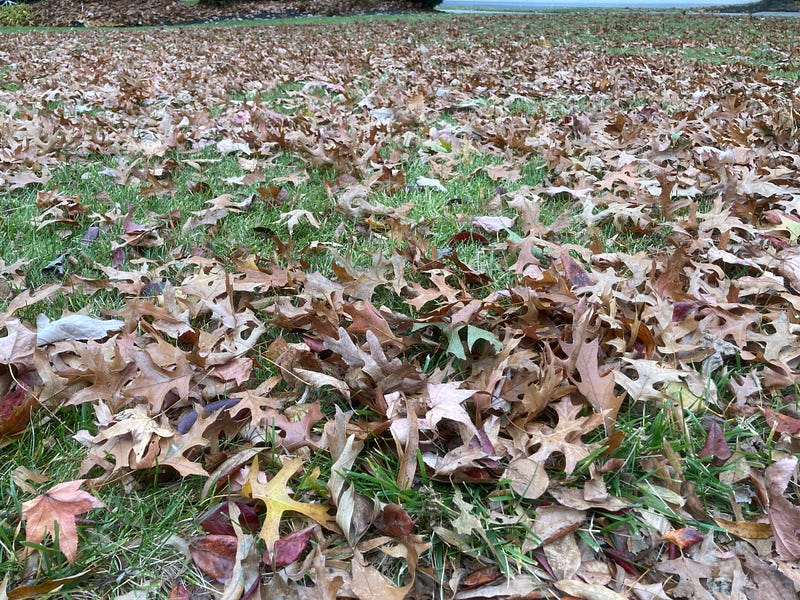
Hey, everyone! It’s self-proclaimed Master Gardener Walter “The Worm Man” Bowne here to help you not only protect Mother Nature but also save you money on needless and costly bags of nitrogen-draining wood mulch and costly and harmful chemicals on your lawn and plants.
So much of my education comes through practice and learning from the experts — like Mike McGrath from NPR’s “You Betcha Garden,” and books on composting and from my brother, Dave, the ecologist.
It also just makes common sense — something humans lack when thinking about how we care for our environment. Why allow nature to do what it does so well when humans can really mess it up and place toxins in our water supply and keep depleting forests for wood mulch with shades of phony colors that do not exist in Nature?
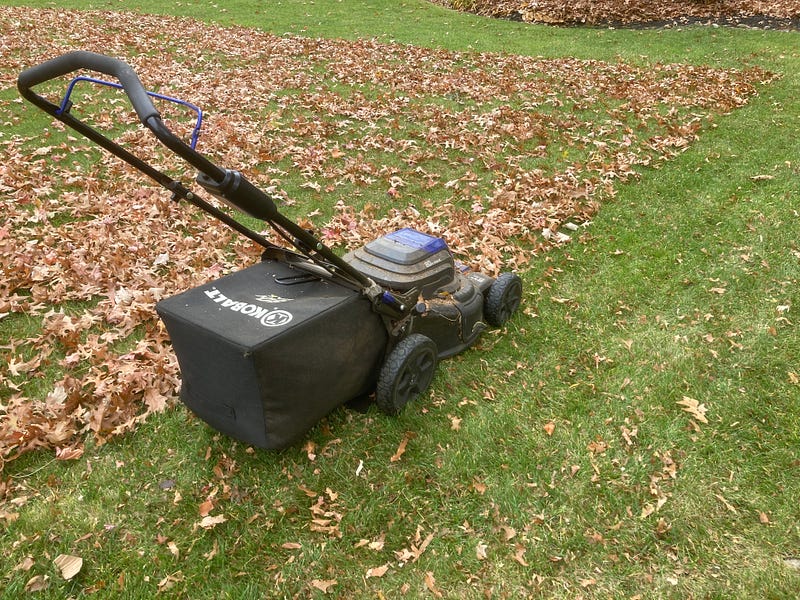
Forget the rake and the trash bags of fallen leaves
Okay — unless you really want an upper-arm workout or you missed the chance at Planet Fitness, you may want to consider “mowing” your leaves. Believe me: I have a ton of leaves in my New Jersey home from three trees — a huge oak, a red maple, a Sweetgum, plus the trees of neighbors which blows the leaves helter-skelter across the lawns.
Does Nature care for township zoning?
I once made a mistake of asking my younger daughter to collect all the Sweetgum “balls” — seeds from the front lawn. I would give her a penny for each. She handed me a bill for $30 bucks!
In my unenlightened age, I would rake — and have my daughters rake — or even my mother-in-law — God bless her — and sweep them onto a large tarp, and drag the mass of dead to the curb. The township would then come to collect the piles, every two weeks or so, and then I would faithfully drive to the township for leaf mulch.
It was free. It was great for the plants and the soil, but why not cut out the middle man? Why was I even paying for new soil to be delivered to my house for fresh, raised beds? Could I not generate golden soil — full of nutrients — right from my own yard?
Yes — of course.
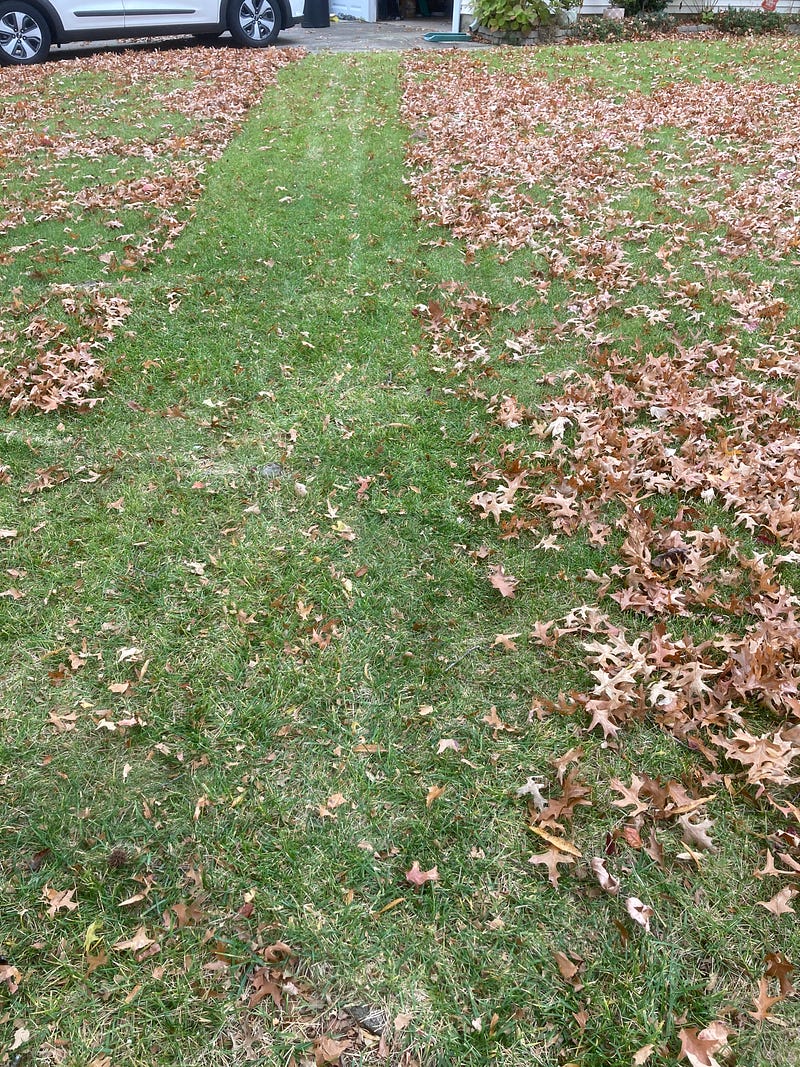
So years ago I decided to no longer bring the whole yard to the curb
I would use what Nature gave me for free. I use a very powerful battery-powered lawn mower that I swear by. No oil. No gas. No waking the neighbors at eight in the morning with its loud and annoying sound. It’s all charged on an 80 volt battery.
Since I have several tools that use an 80 volt battery, including a trimmer, an air blower, and a chain saw, I can have two batteries charging at the same time, and then just swap the batteries. That’s not only economical, but so much better for the environment. My only wish now is to have my home electricity come primarily through renewable energy.
But I’m getting there.
I’m a huge fan of battery-powered machines. I always get neighbors that want to stop and chat about its effectiveness and power. I convince almost everyone who is open-minded and who doesn’t want to worry about pulling the chain to start the damn motor with that toxic waft of fumes making one fuzzy for a moment.
I happen to love the Kobalt series, commonly found at Lowes. Just don’t get the corded type of mower. I had one. It was absolutely horrible. I constantly moved the damn cord and tripped over that damn cord!
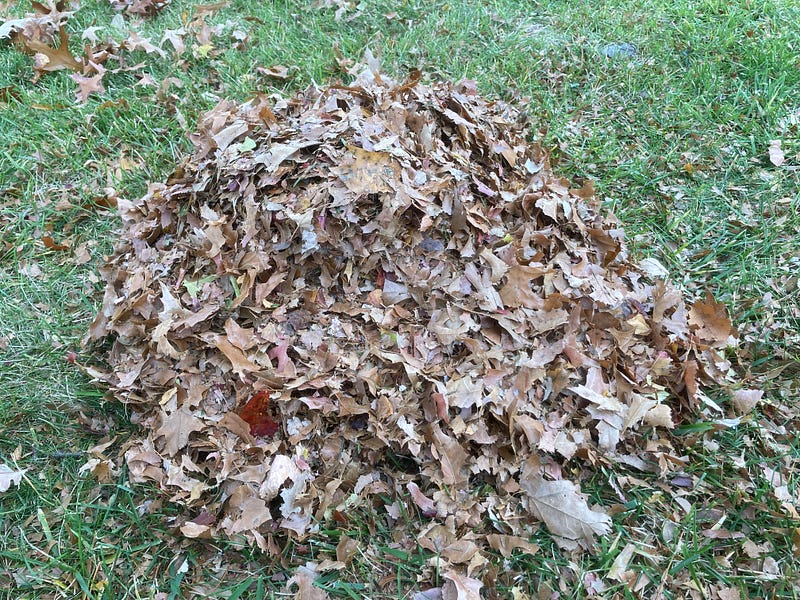
The Thrice-Mowed Technique breaks down the volume and increases decomposition
And then I empty the bag on the lawn, especially an area that seems to need some love and nutrients, and then mow over the leaves again. And then I do this a third time. It reduces the original volume of leaves down to almost two-thirds of its original size.
There is a reason for this. What I don’t collect for compost for my worms and my compost containers and my garden beds, is torn up enough to fertilize my lawn over time. That’s what nature does.
It also increases the decomposition process. When looking at the lawn, the lawn doesn’t look like it still contains leaves, but under close inspection, one could see the little bits of leaves in the grass. Over the winter and early spring, these leaves will not even be seen.
My brother, Dave, the ecologist and professor at Elizabethtown College, said the major nutrients in fallen leaves include —
“nitrogen, phosphorus, potassium, calcium, magnesium, and sulfur. The amounts depend on the plant leaves that are being decomposed. All of them have to go from being tied up in plant matter (organic) to being in inorganic forms. This process is called mineralization, done mostly by your friendly neighborhood bacteria.”
I stopped fertilizing the lawn a few years ago. I worried about weeds and crab grass, but learning from the Nature experts really works. The few weeds I do get can be handled, or just simply let go — letting Nature be Nature.
My brother Dave was always a Nature guy. It took me some time to understand its Power, even though my science background is still in the rudimentary stages.
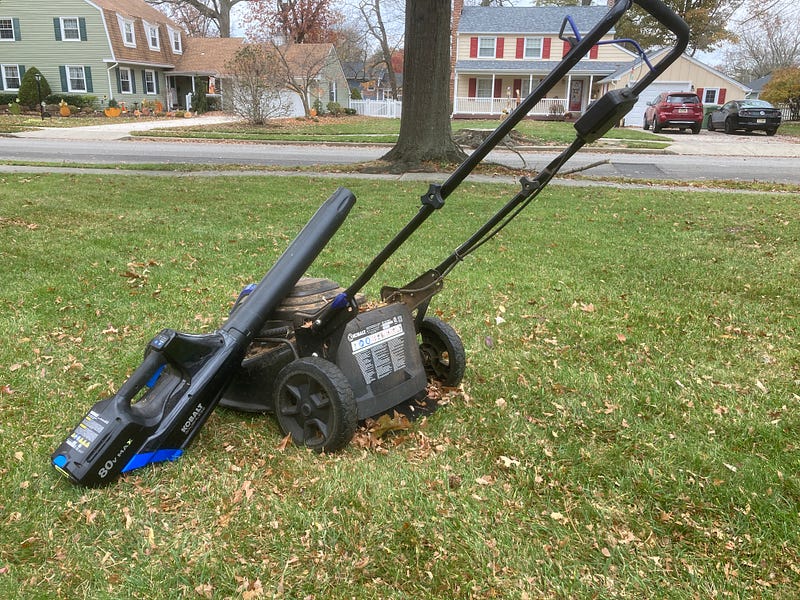
With my 80 volt leaf blower, I scatter the leaf fragments around the yard
I also use the leaf blower to move smaller pile of leaves to a larger area to mow. It’s also electric, and does such a great job. It runs through a battery quickly, which is why it’s great to have extra batteries charged and ready to blow.
I could use the leaf blower anytime of day, and I don’t think the neighbors would complain about the noise. Yeah — but I still don’t. Just common courtesy, right?
It also works great on garden pathways and on the patio and deck. I also blow leaves in the backyard underneath the wisteria as a natural type of mulch. It will keep the weeds down, provide warmth for the wisteria, and decaying nutrients will feed the wisteria.
In fact, the feeding has been a little too much — and nothing needs more pruning that a crazy wisteria. But the purple and the odor in late spring after the lilacs is so worth it!
In the backyard, especially where rain water tends to puddle, I mulch leaves several times and scatter the leaves in the low areas. This will eventually — and quickly — turn into soil.
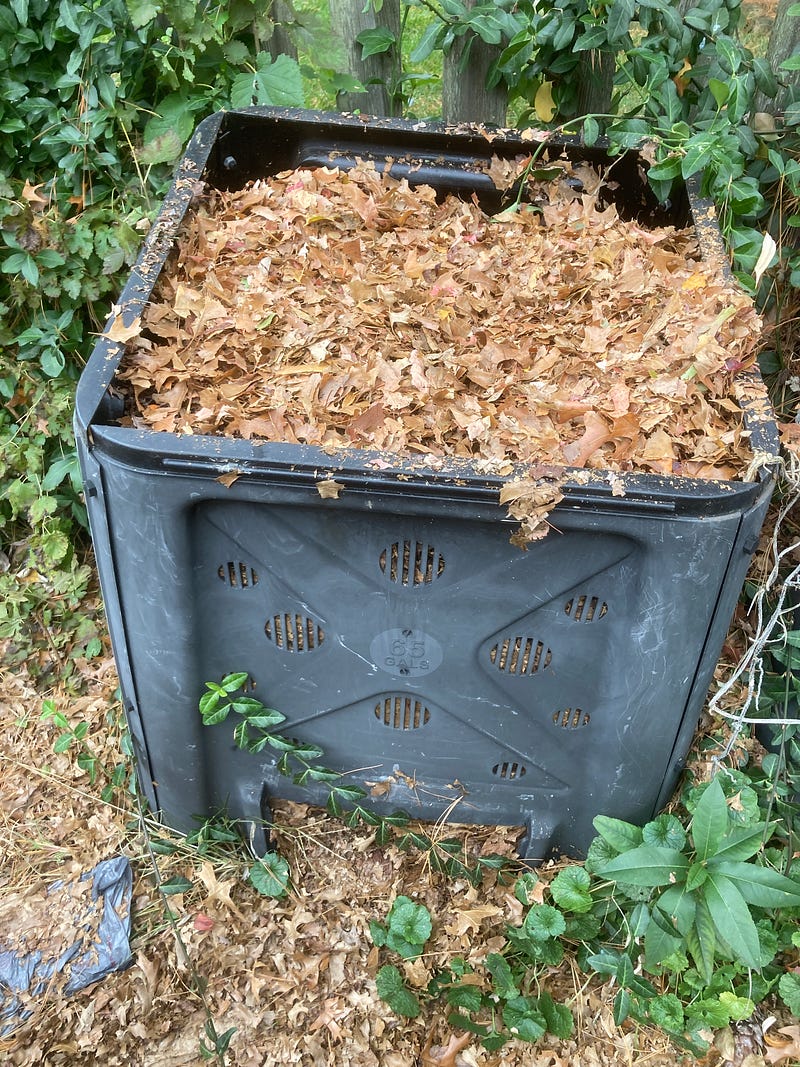
I use many receptacles to store my thrice-mulched leaves
I have the one above that’s used just for leaves. Keep the leaves watered. The heat from the black bin — as well as added worms and such — will drastically reduce the leaves. But this takes time. Heat is needed. And decomposition usually stops when it gets cold. Think: hibernation.
But that’s okay — the leaves aren’t going anywhere. And as soon as it gets warm in the spring, I use leaves from this compost pile as a soil additive. Rather than chemicals, I use Nature. Just make sure you don’t layer too much leaf mulch on the plants. It will over-feed the plant.
Believe me: I know. I also know now how not to use mushroom compost. It’s great for some plants, but a killer for other types — like blueberries, camellias, and azaleas. It also did a number on a few of my rhododendron and Rose of Sharon tree.
I also place my thrice-shredded leaves in Amazon boxes in the garden. The worms will help with cardboard and leaves, believe me. The decaying cardboard is better than in some landfill. I also use flattened cardboard boxes as walkways and then over the cardboard with leaf mulch.
Can you say, free? Can you say, convenient?
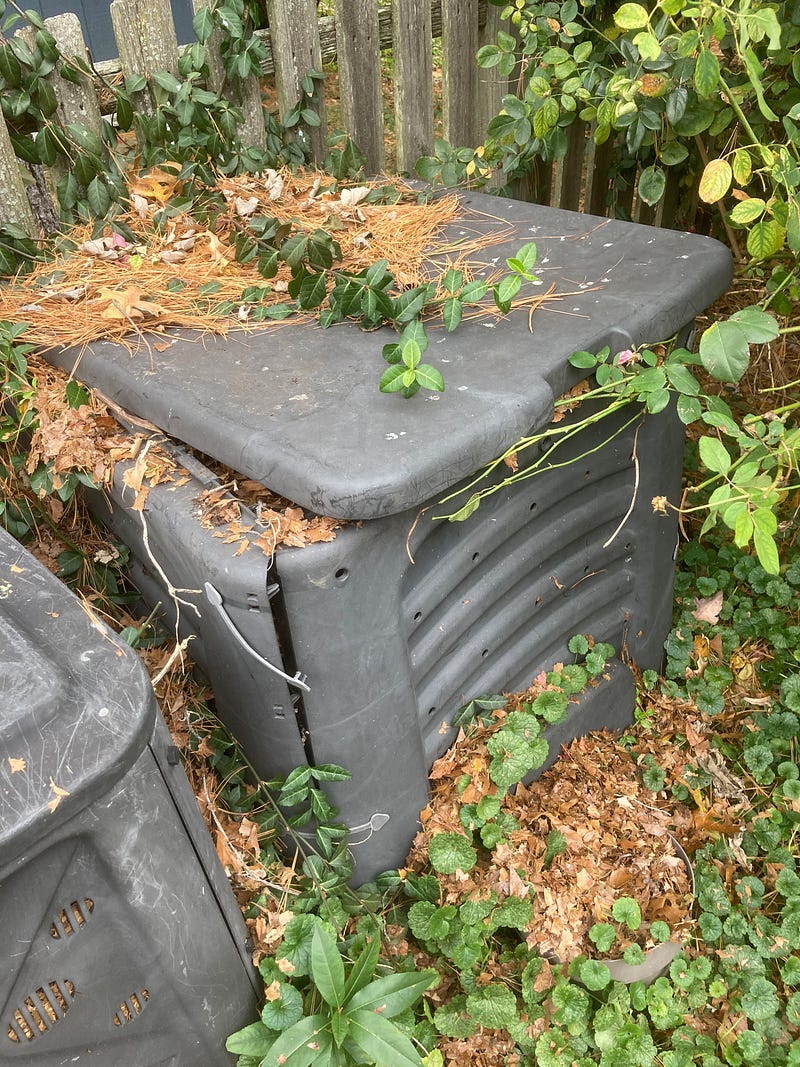
My older compost bin is used for leaves, coffee grounds and tea bags, and all vegetable matter from the garden — including deceased plants
I was able to raise an entire gardening bed with the soil from this compost bin last year. Friends provide me coffee grounds and other vegetable matter. I keep washed eggs separate because I have plants — like tomatoes — that need direct hits of calcium.
Keep any meats or dairy out of the compost bins. Do you really want raccoons and skunks in there — not to mention the smell!
I also compost — or just collect — the pine needles that fall from Craig’s pine tree next to my yard. My acidic loving plants — the azaleas and the rhododendron just love this as a natural mulch.
If you’re ever walking through a place like Longwood Gardens — my glory spot just west of Philadelphia — you’ll see the real Master Gardeners using the same types of leaf and pine mulch on the beds. You’ll never see wood mulch, unless it’s a natural mulch from the bark of a tree.
So much of what I’ve learned has come through direct observation and talking with Master Gardeners — which may be a retirement plan after teaching English.
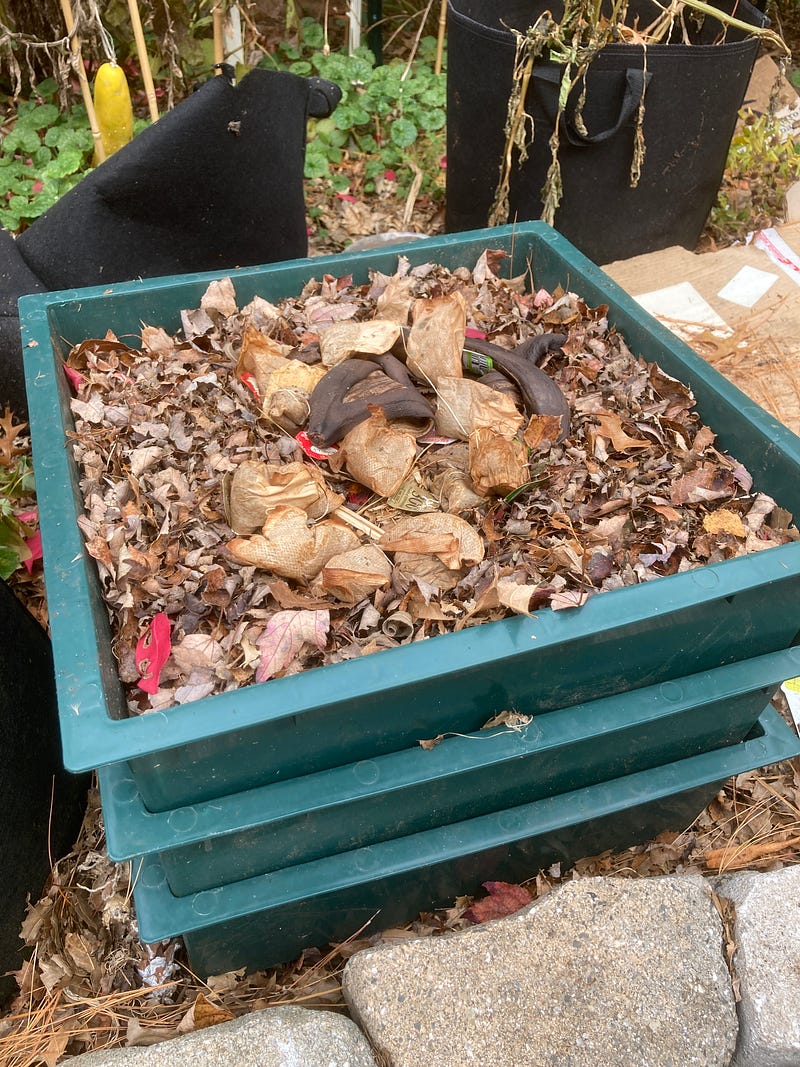
I also use shredded leaves in my indoor worm composter — along with fruits and veggies
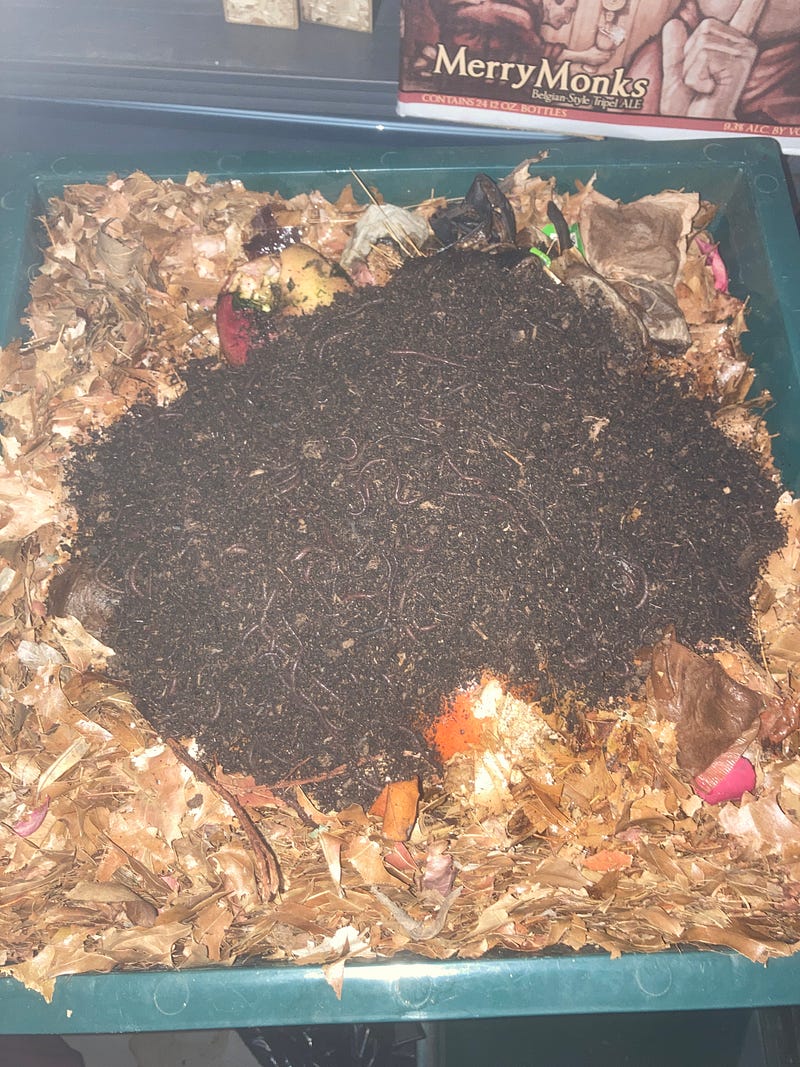
This is where the magic happens fast and furious. With my Worm Hotel Composter in the basement year-round, I get black gold all of the time. Make sure you get red wigglers from a reputable dealer, and make sure the worm compost bins stay moist but not too wet.
You don’t want to grow crazy bugs — like soldier bugs.
You also want to keep the bins mostly brown — leaves are the best, as well as shredded newspaper. Sometimes I even microwave unused or old vegetable matter to break down the cell walls of the plant — like bananas.
Just ask the wife or the husband — or roommate — if they mind the odor. The worms also love the warm food. Just cover with leaves or ripped cardboard from Amazon deliveries.
I avoid placing citrus in my worm bins. Worms are fussy about citrus. They avoid it. I also avoid eggshells. The calcium, like bones, do not break down. I save that, again, for my tomatoes and peppers, about twelve shells per plant, buried deep.
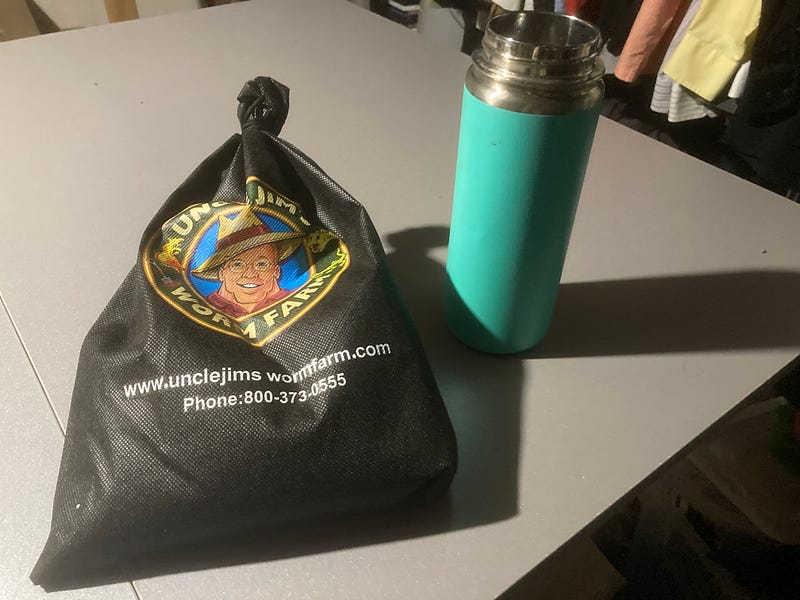
It’s the little things that make me happy — but a fresh shipment of 250 red wigglers from Uncle Jim’s Worm Farm
The worms in peat moss are largely hibernating until I release them into the warmth of the compost bin and use water to hydrate the super eaters. This bag and water remain on my wife’s sewing table in the basement only momentarily.
When I release the worms, I spread them out, and I search the bag in the corners for a few little worms that may be missing. A worm can eat its size in a day. The worms, of course, grow and multiply and both in between the trays.
I rotate the bins, adding fresh, organic matter as well as new leaves. In a few months, I check a tray that may be totally “black gold” — worm casings— what I joke is “worm poop” and I use this on my outside and indoor plants as a natural soil additive.
My plants are amazing — even resurrecting what had seem to be dead into a hearty and thriving organism. Nothing goes to waste, man.
Hey — with pot being legalized in many states and countries — maybe I can take my green thumb and my black gold and make some serious bank. I don’t smoke it, but as they say — there’s riches to be made, right?
Retirement Plan B?
When my wife taught pre-school, I brought in my worm composter and told them all about the natural cycle of worms. I had them hold the worms, and said they really love munching down on organic matter.
When I find worms in the garden, I often place them in my compost bins — not mixing with the inside red wigglers.
I shock them by showing them “worm tea” and the “worm casings” and show them how leaves and banana peels and tea leaves can turn into “soil” for plants. They called me “The Worm Man.”
Then I read them the great children’s book, Diary of a Worm.
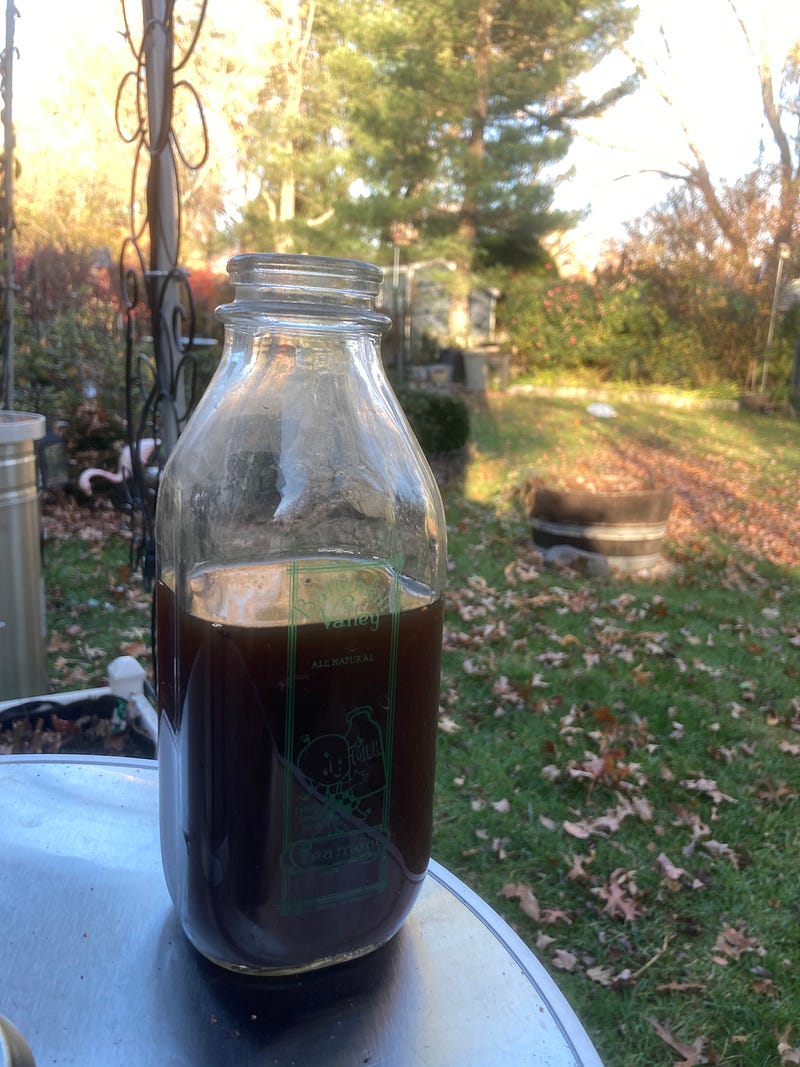
This is not iced tea or brown ale. It’s worm tea
And this is such great fertilizer for my plants. It’s all natural. The “tea” collect in the basin of my “Worm Hotel,” and then I just drain the tea from the spigot, and then pour more water onto the compost, making sure not to “dry out” the bins. That’s essential.
Maintenance of the lower bin is essential. The holes at the bottom will be clogged with worm casings, and that may cause a leak or two onto the floor.
Is it any wonder that I don’t keep the worm hotel in our clothes closet anymore? And by the way, there is absolutely no smell. If there is a smell, or an explosion of crazy bugs and maggots, you’re doing something very wrong.
Like placing ham or chicken bones in there. Just no. Think organic!
Expect a few fruit flies now and again. It’s just Nature, man.
Also, keep a small bin for fruits and potato peels and carrot shavings, and tea bags, on the counter. When full, dump in to the compost. Then rinse with hot water.
Even if you just compost a little, or get leaf compost delivered to your house, or use a shovel and buckets the way I used to back in the day at the local compost heap, you’ll be doing Mother Earth a huge favor. And your children and grandchildren too.
Just how much sense does it make to strip your yard of needed nutrients, and then spray a bunch of expensive chemicals on the lawn or flowers just to make it “look nice.”
Crazy, right?
Happy gardening, People of the World!
You may read the following articles to know a little more about the joys of gardening.
You can also inspire others to experience the beauty of this lovely planet. Just click the below image and be a writer for The Environment


