avatarWalter Bowne

Free AI web copilot to create summaries, insights and extended knowledge, download it at here

3908

Abstract

al. It just may save your life and the planet.</p><p id="9b26">If you watch my video of this lecture, you can see the bees all over this very weed-like perennial. It’s weed-like not because of any THC properties or ugly features — it just grows “like a weed.”</p><figure id="4df3"><img src="https://cdn-images-1.readmedium.com/v2/resize:fit:800/1*-CUd-M5oqGpcRhpOAoA0WQ.jpeg"><figcaption>Bee balm, or wild bergamot. Photo by author.</figcaption></figure><h1 id="2ea0">Here is another native — and a prolific grower</h1><p id="63d9">It’s called bee balm, or wild bergamot. It comes in a variety of colors. I just have purple here — a ton of it, in fact.</p><p id="8c0f">When it was first coming up, I was like — “Is this a weed?” I had one plant from a plant exchange — but the next season I had twenty plants — and the next year — I just to start taking some out. It can really take over. But the great thing is — these plants don’t mind being ripped out and placed in a plastic container with soil and being donated to friends and neighbors.</p><p id="0389" type="7">Hey — everyone needs more pollinators, right?</p><p id="9214">And the bees take to this stuff like crack cocaine — but it’s a natural high. <a href="https://savannahbee.com/blog/what-ever-became-of-the-drunken-bee#:~:text=Honey%20bees%2C%20like%20humans%2C%20can,alcohol%20as%20we%20humans%20do.&amp;text=After%20sucking%20on%20fermented%20limes,it%20back%2C%20that%20is).">Bees can actually get drunk</a> and die with too much nectar, but that’s another story. The bees just love rolling around in this stuff.</p><p id="30b4">It makes me want to roll around in pollen. Well, not really — but what would I love to roll around in? Well, I could tell you, but this is a family essay, so I keep those images private.</p><p id="4efa">It’s just great stuff, right? And this stuff is so easy to grow. It just takes some time in the early spring to dig up what is not needed and they some stakes to keep it upright.</p><figure id="8cad"><img src="https://cdn-images-1.readmedium.com/v2/resize:fit:800/1*WzWqBCyaXNfEfHKilyE7ww.jpeg"><figcaption>Dwarf butterfly bush, after only its second year has tripled in size. Photo by author.</figcaption></figure><h1 id="373f">Again, you want to plant flowers that are going to attract the pollinators</h1><p id="9792">Plants such as sedum, yarrow, milkweed for the Monarchs, Joe-Pye Weed, and especially <a href="https://www.plantdelights.com/blogs/articles/butterfly-garden-plants-host-attract-butterflies">dwarf butterfly bushes or butterfly weeds </a>— so we can rescue the butterfly population. And certain flowers, too, like my tropical Mandevilla — or fuchsia — and Rose of Sharon can attract the hummingbirds. I have over-wintered these plants and many are now thriving again — in spite of harsh New Jersey winters.</p><p id="1d69">If you’re lucky and live in hot climates, grow the amazing bougainvillea. I was crazy in love with that plant when traveling along the Mediterranean.</p><figure id="9391"><img src="https://cdn-images-1.readmedium.com/v2/resize:fit:800/1*Tg-GlZGO72pYxm1zrtXygg.jpeg"><figcaption>Broadleaf hydrangea. Photo by author.</figcaption></figure><h1 id="1dd4">Here is broadleaf hydrangea that I purchased at a steal from Home Depot</h1><p id="ed8f">This was years ago when it was a tiny, discount plant — like a Charlie Brown Christmas tree at the end of the season. And I just gave it love.</p><p id="2b6c">That’s a secret — purchase during the off-season after the plant has flowered. But make sure you have the right climate, soil, and sun/shade conditions for the plant.</p><p id="9163">This is also called a Japanese snowball. Not sure how “native” it is, but the bees and the pollinators love it. So we’re both happy.</p><p id="84c9">It’s fragrant. Make sure not to cut off the dead flowers. Some hydrangeas you cut all the way back to the ground for flowers, and some yo

Options

u just leave alone. Research the types of hydrangea you have, and then proceed with care and attention — and you will make mistakes. Believe me. I know.</p><p id="b096" type="7">So hopefully I’ve encouraged you to plant some pollinators. Get those bees going. Plant some veggies. Become your own farm to table household.</p><p id="f8c3">Eat healthy. Take care of the planet! Don’t expect big corporations or politicians to do that, right?</p><figure id="f748"><img src="https://cdn-images-1.readmedium.com/v2/resize:fit:800/1*-JouxaP4SOCrJSTGhZunfg.jpeg"><figcaption>What a difference two months make in the garden. May 2021. Photo by author.</figcaption></figure><p id="9e98"><b><i>Thank you for reading!</i></b><i> You can also watch my <a href="https://www.youtube.com/watch?v=ks6ZgiyJaLc">gardening video</a> on <a href="https://www.youtube.com/watch?v=ks6ZgiyJaLc">YouTube</a>.</i></p><p id="2de0"><i>You may read the following articles to know a little more about the joys of gardening.</i></p><div id="e780" class="link-block"> <a href="https://the4bownes.medium.com/how-to-grow-clematis-like-a-maestro-of-flowers-4a15d7d0b46c"> <div> <div> <h2>How to Grow Clematis Like a Maestro of Flowers</h2> <div><h3>The varied blooms resemble water lilies — floating on liquid air</h3></div> <div><p>the4bownes.medium.com</p></div> </div> <div> <div style="background-image: url(https://miro.readmedium.com/v2/resize:fit:320/1*EpMv9n5tfSJ4HoC0DckOYA.jpeg)"></div> </div> </div> </a> </div><div id="2609" class="link-block"> <a href="https://readmedium.com/home-composting-made-easy-959341e9bce5"> <div> <div> <h2>Home Composting Made Easy</h2> <div><h3>That thumb can turn green rather quickly with these suggestions</h3></div> <div><p>medium.com</p></div> </div> <div> <div style="background-image: url(https://miro.readmedium.com/v2/resize:fit:320/1*bdehwjIRHy-7uyvC-k91Dw.png)"></div> </div> </div> </a> </div><div id="6d16" class="link-block"> <a href="https://readmedium.com/the-people-you-will-meet-at-the-compost-pile-5d1b483ecd9"> <div> <div> <h2>The People You Will Meet at the Compost Pile</h2> <div><h3>Our inner selves come out while shoveling free compost</h3></div> <div><p>medium.com</p></div> </div> <div> <div style="background-image: url(https://miro.readmedium.com/v2/resize:fit:320/1*WvEh2Qyq3Jrb1gggDLzkjA.jpeg)"></div> </div> </div> </a> </div><div id="e82d" class="link-block"> <a href="https://readmedium.com/this-is-what-you-shall-do-to-grow-amazing-tomatoes-47b7d35e5cc2"> <div> <div> <h2>This Is What You Shall Do to Grow Amazing Tomatoes</h2> <div><h3>Hey, everyone! It’s Walter Bowne — an aspiring Master Gardener!</h3></div> <div><p>medium.co</p></div> </div> <div> <div style="background-image: url(https://miro.readmedium.com/v2/resize:fit:320/1*spS6pUlK3jh8EgHu15voGg.png)"></div> </div> </div> </a> </div><p id="346f"><i>You can also share your love and concerns for this lovely planet. Just<b> click the below image</b> and be a <b>writer</b> for <a href="https://medium.com/the-environment"><b>The Environment</b></a></i></p><figure id="54f4"><img src="https://cdn-images-1.readmedium.com/v2/resize:fit:800/1*AZ0e8awj74i-geupQWoUqQ.png"><figcaption></figcaption></figure></article></body>

Plant Pollinators to Save the Planet

Let’s restore the bee and butterfly population by going native
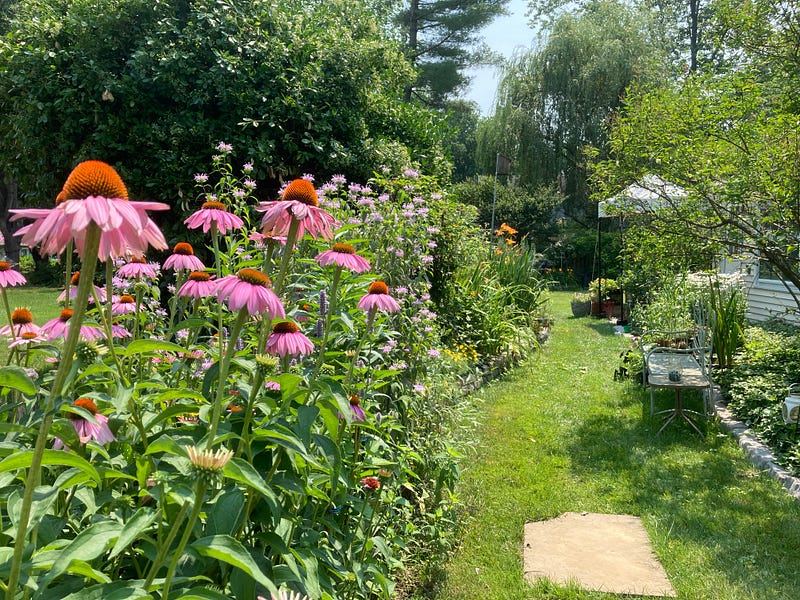
Photo of author’s New Jersey garden on July 6, 2021. Photo by author.

Hi, everyone! Walter Bowne here from the Garden State of New Jersey with another segment of ‘Down with Bowne’ and Gardening.

That may shock people — being the “garden state,” but you may have no idea that Hammonton, New Jersey is the blueberry capital of the world, and we have a ton of cranberry bogs and peach orchards and soy fields. And the Jersey tomato is probably the best damn tomato on earth.

Then again, I am biased, right?

Let’s talk about planting pollinators. We need bees. You may hate bees, but beers are our buddies. I’m sorry. Bees are buddies, and bees help pollinate the flowers that create the best stuff on earth.

The ones that hang out in your soda can during a picnic lunch — those types are bees — okay — they’re annoying and still needed, but I’m not talking about those yellow jackets.

Bees are essential for our survival and our food supply. Sure, you can, technically, pollinate the flowers in your garden with a pencil eraser, but who has that time to pollinate a trillion flowers in a field?

Here’s my garden in South Jersey — just ten miles east of The City of Brotherly Love — Philadelphia. I grow natives to the region. And these flowers are incredible pollinators for bees and butterflies and all sorts of fun bugs that fly around, having a good ‘ol time.
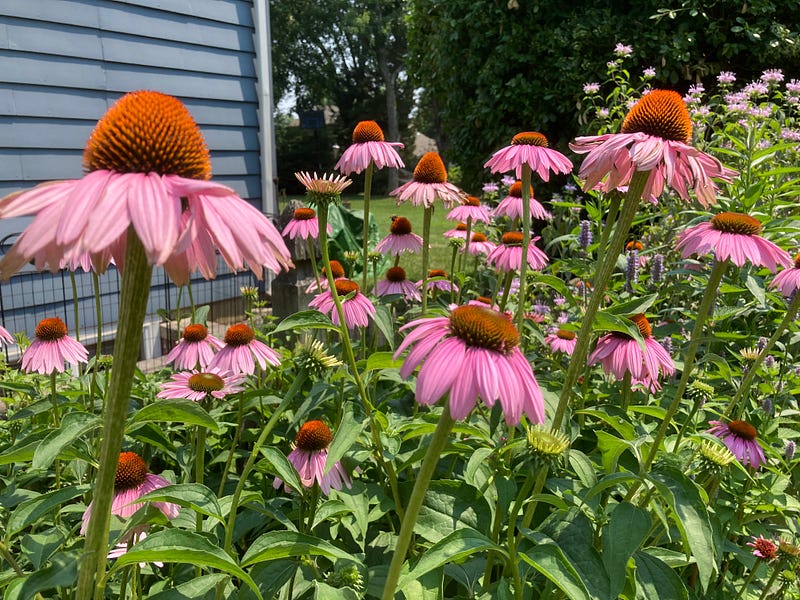
Echinacea. Photo by author.

Echinacea — its popular name is a coneflower

And it’s usually seen as purple, but it comes in many varieties and colors. What’s great about the echinacea, besides the medical properties, are the thistle seeds that feed my ever-expanding families of finches throughout the year — even deep into winter.

Don’t rip out the dead plants at the end of the season. These plants provide food and cover for wildlife.
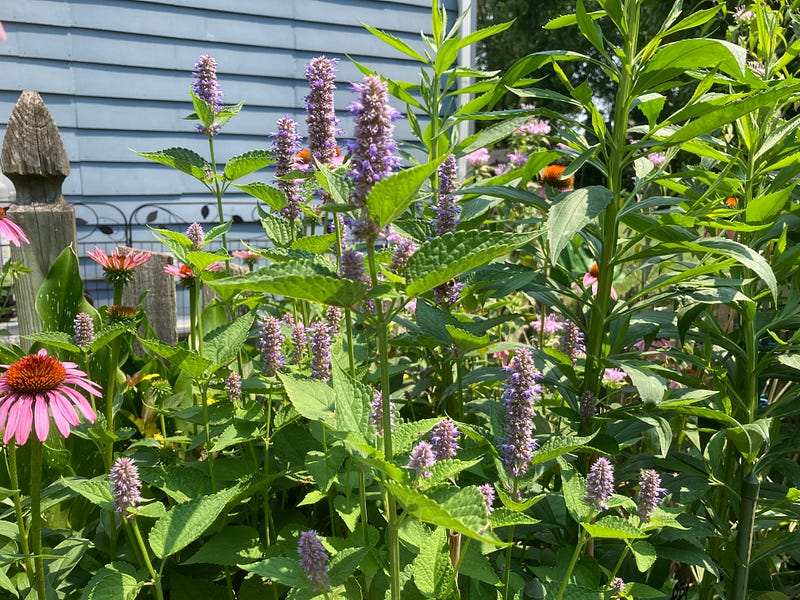
Anise Hyssop. Photo by author.

Here is another Jersey native: Anise Hyssop

The bees just love that stuff. It grows very well — and I constantly take cuttings and replant and donate and exchange at local plant swaps.

It just grows everywhere. I was just outside last night staking the stalks to keep everything upright. The bees don’t care, but I do like my garden looking stately and ordered.

The bees and the other pollinators just absolutely eat this up. My garden has been so productive over the years — and the pollinators have helped a hundredfold. My raspberries and tomatoes and peppers and beans and squash and eggplant all get attention.

If you plant it, they will come. Some regions can even certify your yard and garden as a natural habitat, but it must meet a lot of criteria — and namely, no pesticides and chemicals and lots of local species of plants.

In fact, if you use Round-Up, please, just stop reading this article and read up on that awful chemical. It just may save your life and the planet.

If you watch my video of this lecture, you can see the bees all over this very weed-like perennial. It’s weed-like not because of any THC properties or ugly features — it just grows “like a weed.”
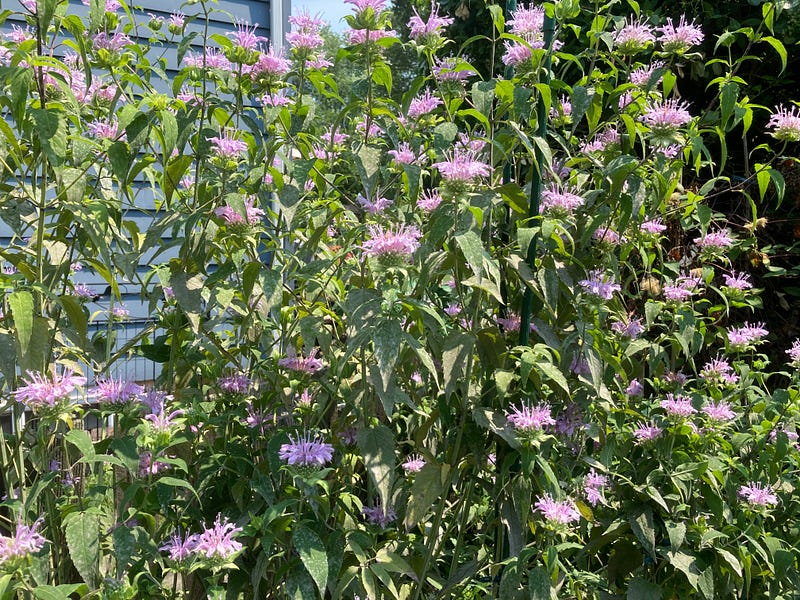
Bee balm, or wild bergamot. Photo by author.

Here is another native — and a prolific grower

It’s called bee balm, or wild bergamot. It comes in a variety of colors. I just have purple here — a ton of it, in fact.

When it was first coming up, I was like — “Is this a weed?” I had one plant from a plant exchange — but the next season I had twenty plants — and the next year — I just to start taking some out. It can really take over. But the great thing is — these plants don’t mind being ripped out and placed in a plastic container with soil and being donated to friends and neighbors.

Hey — everyone needs more pollinators, right?

And the bees take to this stuff like crack cocaine — but it’s a natural high. Bees can actually get drunk and die with too much nectar, but that’s another story. The bees just love rolling around in this stuff.

It makes me want to roll around in pollen. Well, not really — but what would I love to roll around in? Well, I could tell you, but this is a family essay, so I keep those images private.

It’s just great stuff, right? And this stuff is so easy to grow. It just takes some time in the early spring to dig up what is not needed and they some stakes to keep it upright.
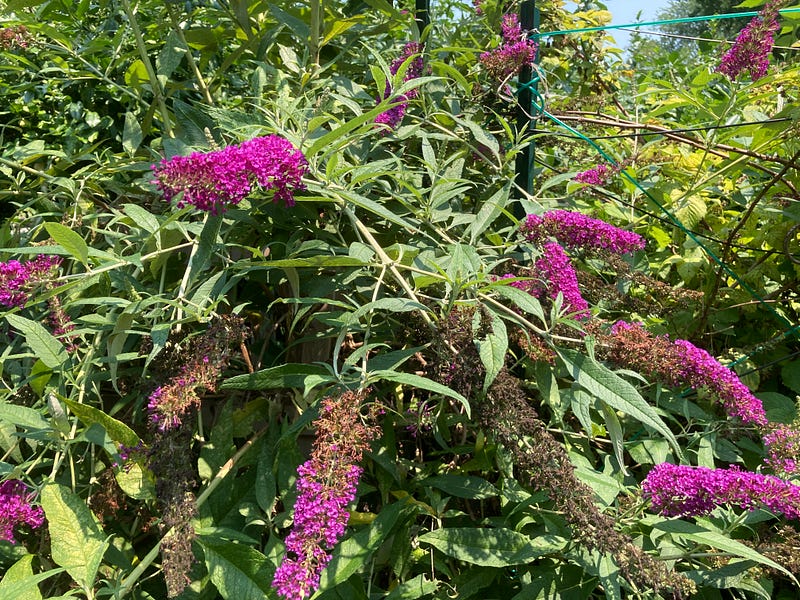
Dwarf butterfly bush, after only its second year has tripled in size. Photo by author.

Again, you want to plant flowers that are going to attract the pollinators

Plants such as sedum, yarrow, milkweed for the Monarchs, Joe-Pye Weed, and especially dwarf butterfly bushes or butterfly weeds — so we can rescue the butterfly population. And certain flowers, too, like my tropical Mandevilla — or fuchsia — and Rose of Sharon can attract the hummingbirds. I have over-wintered these plants and many are now thriving again — in spite of harsh New Jersey winters.

If you’re lucky and live in hot climates, grow the amazing bougainvillea. I was crazy in love with that plant when traveling along the Mediterranean.
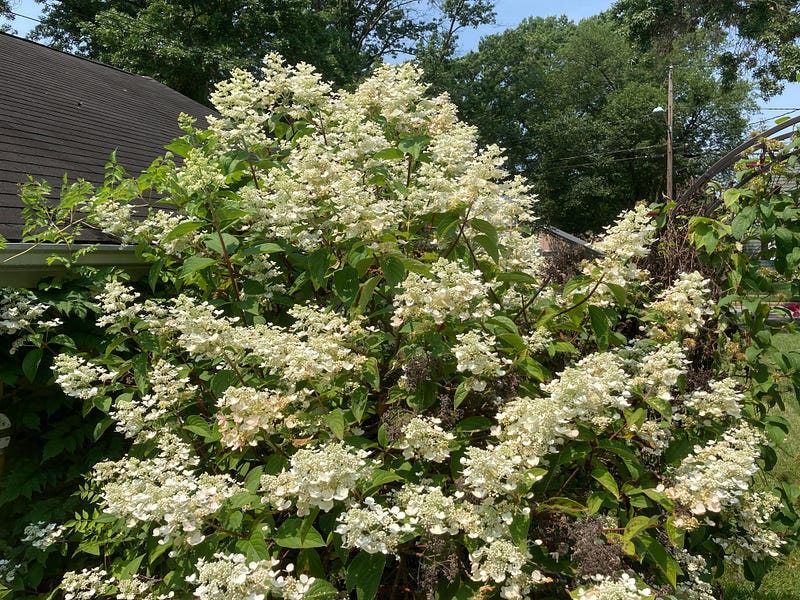
Broadleaf hydrangea. Photo by author.

Here is broadleaf hydrangea that I purchased at a steal from Home Depot

This was years ago when it was a tiny, discount plant — like a Charlie Brown Christmas tree at the end of the season. And I just gave it love.

That’s a secret — purchase during the off-season after the plant has flowered. But make sure you have the right climate, soil, and sun/shade conditions for the plant.

This is also called a Japanese snowball. Not sure how “native” it is, but the bees and the pollinators love it. So we’re both happy.

It’s fragrant. Make sure not to cut off the dead flowers. Some hydrangeas you cut all the way back to the ground for flowers, and some you just leave alone. Research the types of hydrangea you have, and then proceed with care and attention — and you will make mistakes. Believe me. I know.

So hopefully I’ve encouraged you to plant some pollinators. Get those bees going. Plant some veggies. Become your own farm to table household.

Eat healthy. Take care of the planet! Don’t expect big corporations or politicians to do that, right?
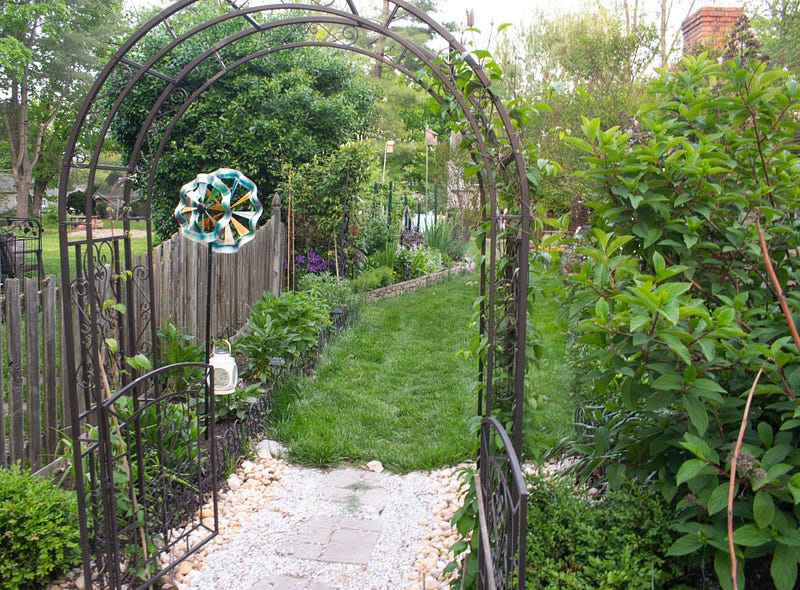
What a difference two months make in the garden. May 2021. Photo by author.

Thank you for reading! You can also watch my gardening video on YouTube.

You may read the following articles to know a little more about the joys of gardening.

You can also share your love and concerns for this lovely planet. Just click the below image and be a writer for The Environment

Nature
Gardening
Garden
Environment
Environmental Issues
Recommended from ReadMedium
avatarRuled By Venus ✨💖💫♎⚖️☯️🔮♀️
Why I Don’t Listen When Someone Says They Love Me

In one ear and out the other….

3 min read