
Home Composting Made Easy
That thumb can turn green rather quickly with these suggestions
Okay, Gardeners! Welcome!
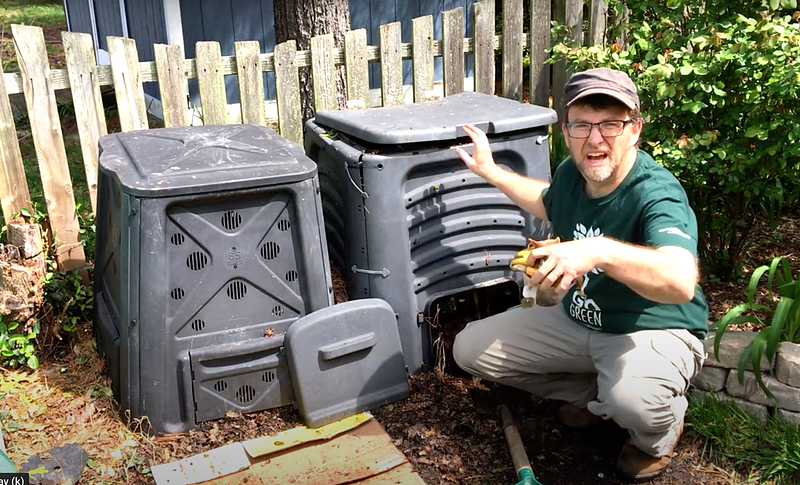
So here are my outdoor compost bins. I have bananas, tea bags, apples, and they go here, along with some lettuce, and I just cover up this natural stuff for it to go back to Nature rather than in some garbage dump or landfill.
With some decomposing things, like leaves, I cover it all up, and I let Nature take over. Then next year, or sooner, depending on the weather, and how moist I keep the bin, and if I add even more worms to the bin, I have soil rather than an icky and sticky banana peel.
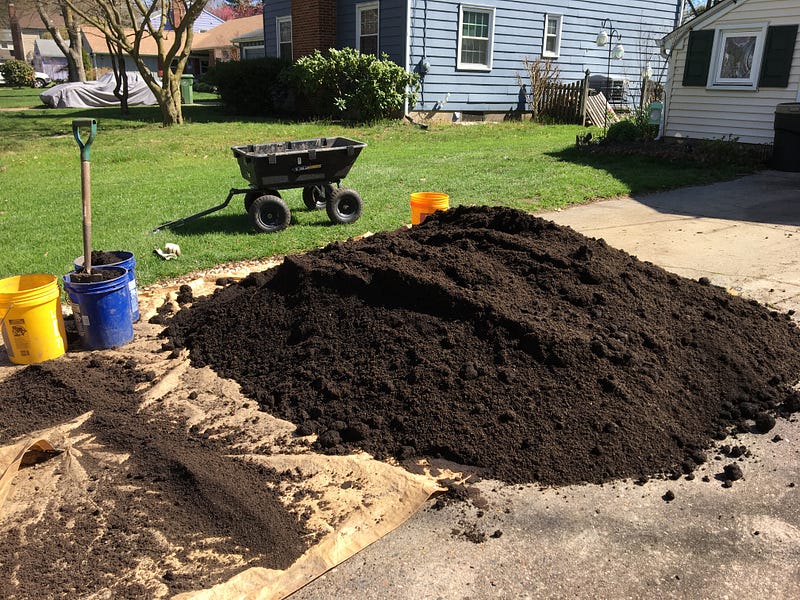
This soil gold. You can’t buy soil like this. Maybe you can — but it ain’t cheap, me hearties. I could sell it to you, or as a gardener with a huge heart, as most gardeners are sharers, I’d fill buckets for you for free. But I usually just have enough for all my various gardens around The Bowne Yard.
This soil is so nutrient-rich. You just stir it, move it, and shake it all around, and do the Hokey Pokey, and that’s what Nature is all about.
Decomposition, like bears, hibernates over the winter. So nothing really happens when this stuff is frozen. Again, it depends on your zone.
Now that the sun’s out, the bin closed, keeping the various contents hot — that’s why the bins are black — keeping moisture in; we’re going to have soil for the next season, and that not only cuts down on my gardening tabs, but it also makes for bigger tomatoes and larger flowers and heartier perennials.
When you find worms, just throw them in. It’s like finding a lonely dancer who's starving on the wet cement and throwing them into a Barcelona disco with 1,000 other rave-crazed partiers!
For serious worms — like the red wigglers, go on Amazon or Uncle Jim’s Worm Farm site, and order worms. I do it all the time — and these things, if treated right, will multiply and eat their weight in a day.
I’ve ordered 2,500 worms. They’re my only pets — well, the goldfish in my ponds, too. But do goldfish create luscious soil?
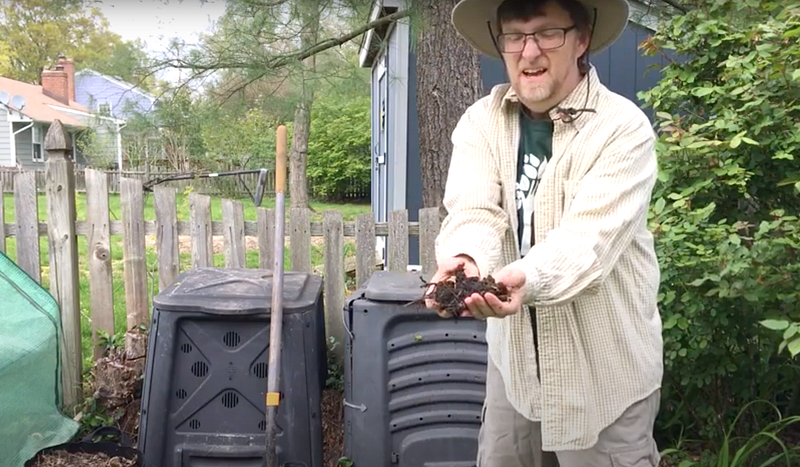
In the basement, I have an indoor worm composter. It’s like Marriott Worm Hotel. That stuff decomposes all year. I use those moist worm casings (okay — worm poop) as supplements to my indoor plants and veggie garden.
Here is my leaf composter. So when the leaves fall, I don’t bag anything to the curb. To the landfill — nothing, man. Compost it all! And I have three large trees, plus what I steal from the neighbors and Fox Chase Lane. I was 100 percent this year — and I was one mighty and pompous gardener with that stat, let me tell you.
There Are Numerous Reasons, All Great for You and Nature, to Use Natural Mulch
Whether it’s pine needles for your acidic-loving plants, or shredded leaves, or dried grass clippings, as long as it hasn’t been fertilized with awful chemicals — you’re doing your part to help the environment and keeping pesticides from the water supply and away from our critters and kiddies.
The organic mulch keeps the moisture around the plant — and keeps it from quickly evaporating. It’s like a lid for a pot or a blanket for plants.
The compost also does not compete with your plant. It will break down naturally, over time, and it will also keep the weeds at bay. We all know weeds compete to win.
The awful stuff from the Big Box Stores — the shredded wood mulch with colors not seen in Nature, well, they can place spores on your siding, and do you really want to strip nitrogen from the soil or have trees stripped from your mountains — or Canada’s mountains?
I’ve heard that licorice root is okay — and in the past, I have used this, as well as mushroom compost, which is highly organic, but do your research because some plants will hate the stuff. They die. I know — I’ve suffered.
I don’t even throw out cardboard boxes from Amazon. Rip them apart and use them as walkways. Place very loose leaf mulch on top — and it works so well. Eventually, the worms and the weather will nibble away, but isn’t organic matter better in the garden than in the landfill?
You betcha!
What’s Great About This?
Little is wasted. It’s like the Native Americans. Fishbones and scales are used as fertilizer. Beans grow up on corn stalks.
Now an inside worm composter is another essay. You don’t want any dairy or meat or even citrus fruits in the worm composter. Worms hate the stuff. I do sometimes toss orange peels outside. But remember to keep the worm compost moist and brown — lots of leaves and coffee grounds and newspapers — and add matter from the kitchen a little at a time.
If you don’t, you may have a problem like I had — crazy-ass bugs that were hatching and flying around the house. Yeah — my wife, Mary Jane was not happy about that. And when some worm tea was seeping out from the living room closet, well — that hotel was relegated to the basement.
I also had a problem with crazy worms trying to escape. When they arrive, they are super small and clumped together in peat moss. But once hydrated, OMG, they go crazy — but now I’ve learned my lesson, and I’ve had almost no Worm Escapees from the Marriott Worm Hotel.
You just shift the trays — and very quickly you’ll have a container full of warm worm casings — and the worms have moved to better sources of food in other trays. You’ll have to remove the worms that remain, or just place these worms into the garden with the casings.
And don’t forget to water and to collect the water. Use the worm tea for your plants. Your plants will thank you with huge flowers that you can cut for bouquets for the wife to apologize for the worms in her abode.
I have friends who bring me kitchen scraps — potato skins and coffee grounds, like my friend Kim from work and Jason from back in my old neighborhood.
Try to keep the garden as organic as possible. Use no pesticides. And when the food arrives on the table, or half the strawberries come inside after I ate the other half outside, sun-warmed and luscious, I know that I’m almost there to Master Gardener status.
And boy, was I bad at science in school. You know why? No application! Reading science from a book sucks — and lectures and tests suck too. And I’m a teacher — and I don’t teach that why. Just saying.
Happy gardening, from The Worm Man!
Thanks for reading! Follow me at Walter Bowne.
You can share your outstanding stories and inspire others. Just click the below image and be a writer for The Masterpiece.


