My Ten Favourite Controversial Films
Offensive, contentious, bracing movies are good for you.
I make no secret of my love for controversial, contentious cinema; films that challenge, offend, shock, and shake audiences out of their complacency. As part of a balanced cinematic diet, I contend that offensive films are good for you, especially amid the professionally offended climate in which we live. At a time when many get their knickers in a twist over “cancelling” this, that, or the other controversial classic, giving themselves pseudo-censorial sanctimonious nosebleeds in the process, I thought it an opportune time to celebrate movies that provoke outrage for one reason or another.
Film is a splendid art form to confront audiences with difficult, sometimes unpleasant ideas, particularly when compellingly scripted, performed, and directed. You may get to the end of such a film and hate it (as I sometimes do), but I would always rather be offended than bored. A strong visceral reaction is still a valid reaction, and I greatly admire filmmakers bold enough to jab raw nerves.
The consumption of offensive material requires a mental gear shift. Great films of this kind engage the intellect as well as the emotion, often through satire, black comedy, or by holding up a mirror to an audience. This can expose painful, perhaps even unconscious desires, motivations, attitudes, prejudices, and hypocrisies. The viewer is invited to grapple with the issues being raised, evaluating the intent of the filmmakers, and whether that intention correlates with what is depicted, literally or metaphorically.
Alternatively, the viewer can storm out in disgust. I fully accept that not everyone will be able to undertake such mental gymnastics. Inevitably, background, culture, personality, temperament, moral or religious beliefs, and any number of other factors come into play. However, for those made of stern stuff with strong stomachs, here are ten of my favourite controversial films.
A word on criteria: I’ve focused on films considered controversial or offensive that I also find interesting or entertaining. Contentious films that are merely physically repugnant (I’m looking at you The Human Centipede), or just plain boring (sorry Lars von Trier, but Nymphomaniac is repetitive and dull), are omitted. To reiterate, these are my ten favourite controversial films, not necessarily the ten most controversial. Nor should this list be considered exhaustive. Nonetheless, this bracing batch will prove catnip to those who rub their hands together with glee upon hearing those lovely words: “Contains scenes that some viewers may find disturbing”.
Reservoir Dogs (1992)
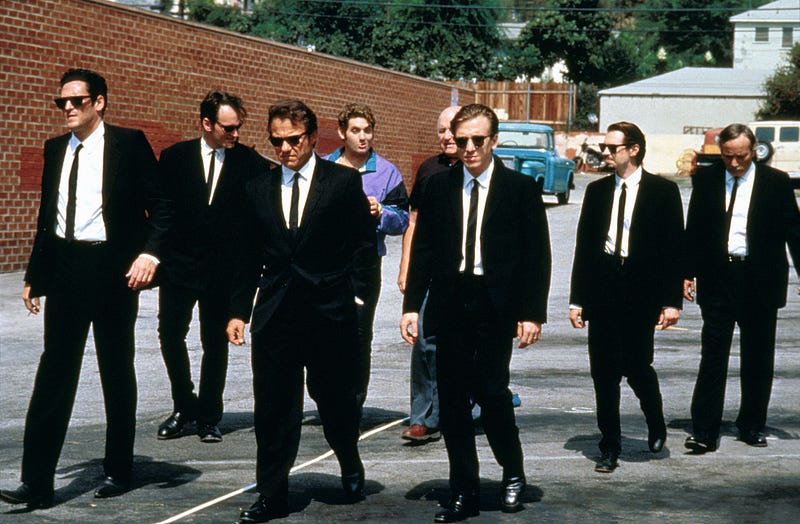
Quentin Tarantino’s groundbreaking non-linear heist-gone-wrong debut was an exhilarating blast of ultraviolent, foul-mouthed fresh air in the independent American movie scene at the beginning of the 1990s. However, the violence triggered outrage among some viewers, with Mr Blonde’s vicious, prolonged torture of a captive policeman proving particularly controversial. In the UK, the film was banned on video for some years, making it a cult smash at cinemas across the country, who kept playing it at midnight screenings.
To my mind, the brutality is integral to the narrative and character development. Tarantino uses dark comedy as clever counterpoint to the bloody mayhem, as the fugitive gang tries to figure out who grassed them up to the cops. Featuring a first-rate cast (Harvey Keitel, Tim Roth, Michael Madsen, and Steve Buscemi among them), superb twists, and some of the funniest dialogue you’ll ever hear (Buscemi’s tipping tirade is a stand-out), this is still my favourite Tarantino film. What does the title mean? I’ve absolutely no idea. It contains neither reservoirs nor dogs, and yet somehow the title is perfect.
The Exorcist (1973)
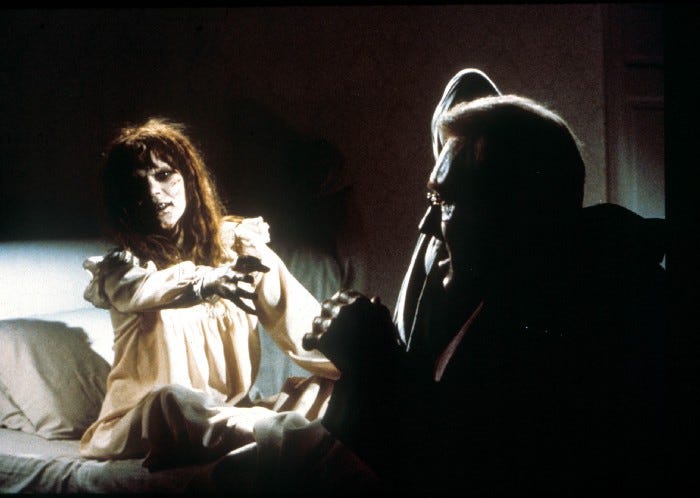
An even more famous banned-on-video-in-the-UK example, William Friedkin’s masterful adaptation of William Peter Blatty’s novel proved controversial on both sides of the Atlantic, with calls for a ban from various pressure groups who considered this vivid depiction of demon-possessed twelve-year-old Linda Blair too fierce for good, decent, God-fearing folk. But some God-fearing folk endorsed the film, including many Catholic cardinals. On the other hand, evangelist Billy Graham condemned the film as containing evil embedded in the very celluloid itself.
My own relationship with The Exorcist is complicated, and I’ve written about it at length elsewhere. Suffice to say, this isn’t a film I approach lightly, but I do consider it the greatest horror film ever made. I also consider it a force for potential good, rather than evil. However, I fully accept not everyone sees it that way, and on whichever side of the debate you sit, one fact remains: The film is a bracing, stomach-twisting, terrifying experience.
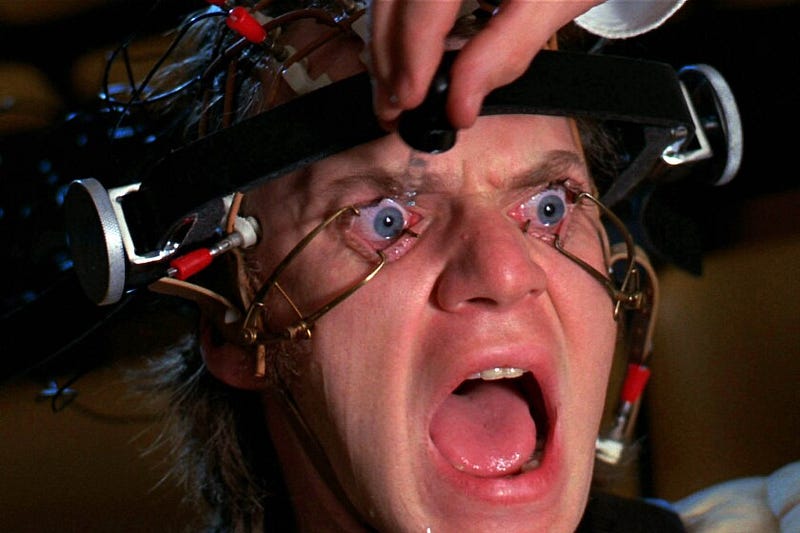
A Clockwork Orange (1971)
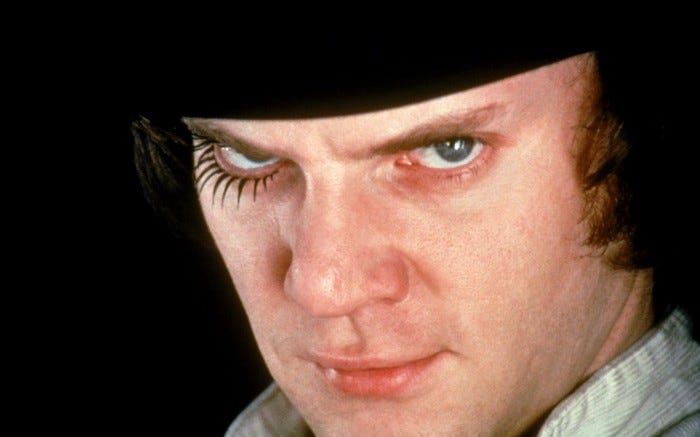
Here’s a film that proved even more controversial in Britain. Stanley Kubrick’s adaptation of Anthony Burgess’s dystopian satire was alleged to have inspired a real-life series of muggings, assaults, and rapes across the UK. When Kubrick wound up getting death threats, he quietly withdrew the film from circulation, and a few years later, when cinema clubs found they couldn’t obtain prints for retrospective showings, the bad news finally sank in: A Clockwork Orange had been effectively banned in the UK — by its director.
Since Kubrick’s death, the film has been available in the UK once more, but it still jabs raw nerves today. This is mainly due to the opening act, where the viewer is provocatively encouraged to share the exhilaration Alex (Malcolm McDowell) experiences in his drug-enhanced gang fights, vandalism, thefts, and rapes. Yet after Alex is arrested for murder, he is brainwashed into being incapable of committing a crime by an authoritarian government tightening its grip on power. The film asks deep questions about free will; whether it is better to be able to choose between good and evil and choose evil, or to have no choice at all. It remains an infuriatingly thought-provoking, compelling, uncomfortable work, which I explore in a lot more detail in this article.
Life of Brian (1979)
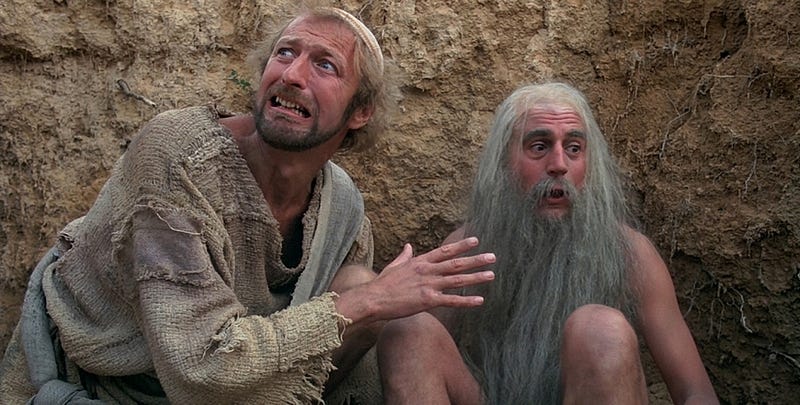
The Monty Python gang — John Cleese, Michael Palin, Eric Idle, Graham Chapman, Terry Jones, and Terry Gilliam — make a comedy about a man mistaken for the Messiah who lived at the same time as Jesus. He ends up with a huge following and getting crucified to the tune of Always Look on the Bright Side of Life. Clearly, that’s not going to offend anyone.
Needless to say, multitudes got hot under the dog collar, but a closer look at the film reveals it doesn’t really make fun of Jesus at all. He is only glimpsed at a distance in one scene, during the Sermon on the Mount, whereby someone at the periphery of the crowd mishears his words as “Blessed are the Cheesemakers”. Instead, the intent seems to be to satirise organised religion and denominational divisions (witness the absurd rivalry between the Judean People’s Front versus the People’s Front of Judea). It is also critiquing mindless, unquestioning following of leaders, religious or otherwise. More importantly, the film is hysterically funny in many scenes. The monumentally absurd stoning sequence is a personal favourite: “You’re only making it worse for yourself!”
Incidentally, these days, the film has also been deemed offensive by some trans-activists, over the “Loretta” scene. Other trans people have defended it. I’ll leave the clip here for you to make up your own minds.
The Passion of the Christ (2004)
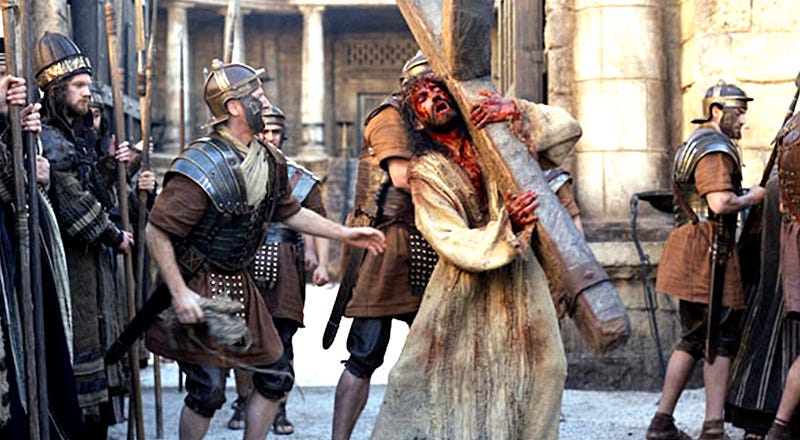
Portrayals of Jesus on film seem destined for controversy regardless of the treatment, and Mel Gibson’s spectacularly bloody take on the crucifixion narrative proved the most controversial of all. The charges against the film were twofold: First, that it was excessively violent, and second, that it is anti-Semitic. Frankly, I don’t buy either argument. Yes, Mel Gibson is clearly a troubled individual whose later public statements don’t help my case here, but in and of itself, the film sticks very closely to the New Testament accounts. Gibson even discreetly leaves a few of the Latin, Hebrew, and Aramaic lines untranslated that have been used out of context to perpetuate anti-Semitism (such as the notorious “blood-libel” of Matthew chapter 27).
As for the violence criticism, I considered that the height of hypocrisy, given the ultra-violent films those same critics recommend elsewhere. I will concede that the violence in The Passion of the Christ is incredibly intense. Unlike most violent films, which are voyeuristic as though the viewer were perpetuating the violence, here it feels as though it is being inflicted on the viewer. At one public screening I attended, someone in the row behind me was so distressed, he got up and started yelling: “Stop hitting him!” Nonetheless, the film is superbly shot and directed, with an astonishingly committed central performance from Jim Caviezel. I admire the way Gibson is so merciless and unrelenting in his focus, resulting in a peculiar simultaneous revulsion and gratitude for believers.
Do the Right Thing (1989)
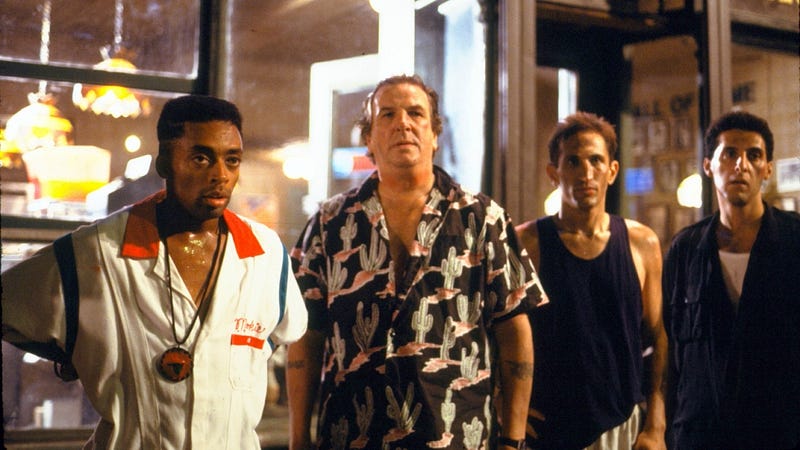
Spike Lee’s early masterpiece explores racial tensions in a Brooklyn neighbourhood between African-American residents and the owners of an Italian-American pizzeria, during a hot summer day. The violent escalations of the final act provoked widespread condemnation from reviewers claiming it could incite riots. Lee hit back at what he considered racist hypocrisy, stating of said reviewers: “I don’t remember people saying people were going to come out of theatres killing people after they watched Arnold Schwarzenegger films.”
From my perspective, the only thing the film incites is deep thought. Interpretations of actions from key characters Mookie (Lee) and Sal (Danny Aeillo) in the finale can be read in different ways, depending on whether the debate is framed around death or damage to property. Lee even ends the film with quotes from Martin Luther King Jr and Malcolm X, one advocating non-violence, the other advocating armed self-defence when necessary. It is left to the viewer to draw conclusions, as Lee carefully avoids spoon-feeding the viewer with one view or the other.
Peeping Tom (1960)
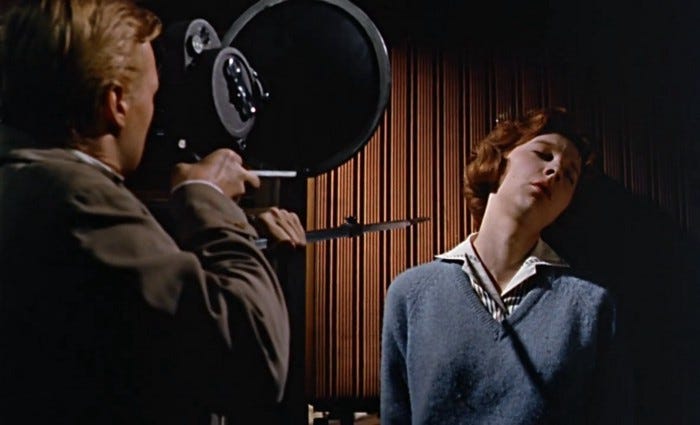
Michael Powell directed this still shocking tale of a psychotic filmmaker who murders his female subjects on camera via a blade at the end of a tripod leg. It pretty much ended Powell’s career. Perhaps long-time creative partner Emeric Pressburger knew it would, choosing to sit this one out. Critics slated the film, and public outrage was intense. Yet in later years, it was rediscovered as something of a neglected masterpiece.
Viewed today, in an age where misogyny and violent online pornography seem rampant, Peeping Tom feels eerily prescient and creepily relevant. Although severely cut on original release, the uncut version is now available. It isn’t particularly graphic, but the disturbing subject matter gets under the skin, thanks to superb direction and an unsettling central performance from Karlheinz Bohm.
The Devils (1971)
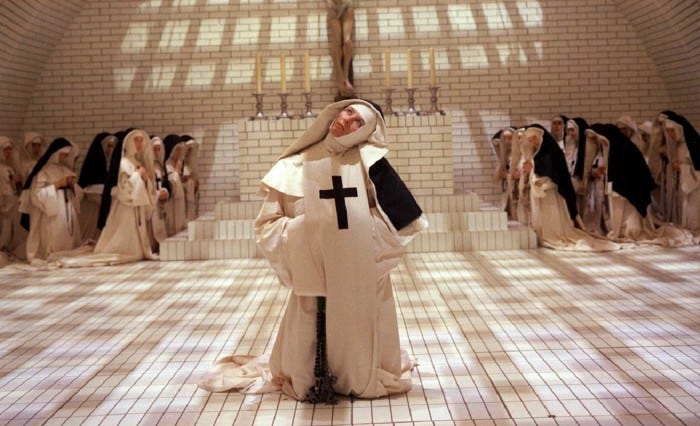
Ken Russell’s most controversial film was savaged at the hands of UK censors, resulting in the removal of two entire scenes considered beyond the pale, and numerous snips elsewhere. When finally released, this dramatisation of notorious 17th-century Catholic priest Urbain Grandier (Oliver Reed) — who finds himself at the centre of a political trial after accusations of witchcraft following the supposed demonic possession of nuns in Loudun — shocked British viewers and became the target of many pressure groups (including evangelical Christians) who wanted it banned. Across the Atlantic, Warner Brothers demanded Russell “cut every pubic hair” for the American release, resulting in an even more heavily censored version.
What is doubly shocking is The Devils is still not legally available uncut anywhere in the world. In fact, the only place the uncut version can be legally seen is the British Film Institute in London, which has occasional screenings of their fully restored print. Despite a lot of campaigning, Warner Brothers still refuse to release this full version elsewhere. It makes one wonder whether the Vatican is pulling their strings, as this film deeply offended many Catholics. Then again, the powerful message about separation of church and state comes across loud and clear, despite the lurid, fiery spectacle of sexual derangement and religious violence. I’ve written in more detail about the censoring of The Devils in this article (and yes, I have seen the full version).
Watership Down (1978)
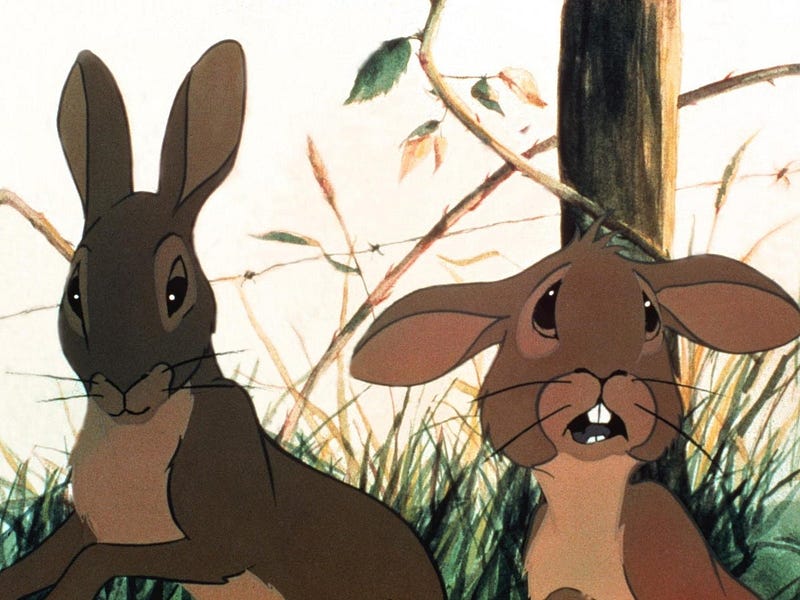
Not all controversial films are released at the upper end of the certification spectrum. In 1978, Martin Rosen’s animated adaptation of Richard Adams’s animal fiction classic received a ‘U’ certificate from the British Board of Film Classification (akin to ‘G’ in America). To this day, the board continues to receive complaints about this lenient rating. My generation in particular seems to have suffered severe trauma as a result of being allowed to see this film by parents expecting something like a Disney animation. Just mention Watership Down to anyone roughly my age, and they glaze over in shock, as though experiencing ‘Nam flashbacks.
Personally, I’ve never entirely understood the controversy. I read Watership Down at an impressionable age (nine) and was deeply moved by its powerful, uncompromising message about (among other things) nature, survival, life, death, the dangers of authoritarian dictatorship, and how freedom is worth fighting for. I also very much enjoyed the film, and thought its vivid, frightening imagery (Fiver’s vision of the warren’s destruction, the bloody fights between rival rabbits, and the terrifying General Woundwort) entirely in keeping with the tone of the book. Still, parents everywhere disagreed, as their small charges suffered tenfold nightmares.
Love Exposure (2008)

The transgressive films of Sion Sono are a wonder to behold, but none more than this singular masterpiece; a four-hour melodrama telling the most extraordinarily twisted love story. It concerns a peculiar love triangle between a young Catholic who, for complicated reasons, takes “upskirt” photographs, the misandric object of his affection, and another girl recruiting on behalf of a cult. You’ll either love it (as I did) or despise it. I doubt there is much middle ground.
This wildly stylish, flagrantly disreputable, immensely entertaining brew of sex crime, romance, religion, black comedy, satire, and shocking bloody violence (including, at one point, a severed penis) is almost impossible to describe. It has to be experienced. And yes — it provoked considerable controversy, including several walkouts at festival screenings. Personally, I admire Sono’s tenacious dexterity in pushing the film to such extremes. Beneath everything, I found Love Exposure oddly poignant and touching. It also has genuinely interesting things to say about the terrifying way people are brainwashed in cults.
Bonus: Elle (2016)
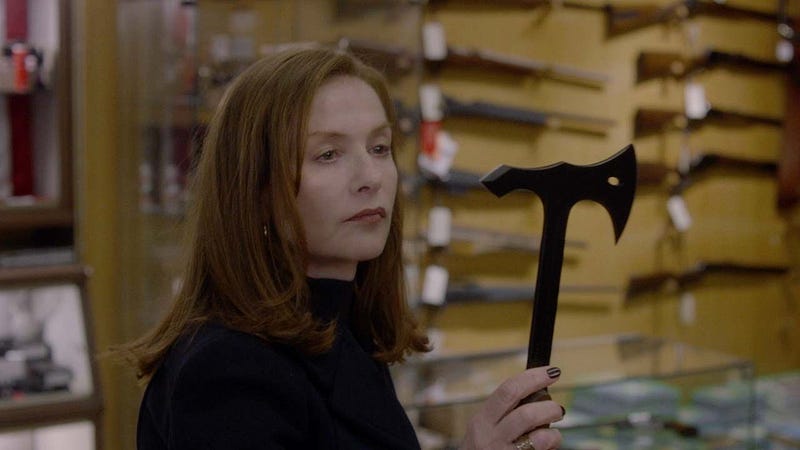
It’s no good. It has to be eleven, even though I’m breaking my ten-year rule. Isabelle Huppert’s superb performance anchors Paul Verhoeven’s Elle, a rape-revenge thriller exploring exceedingly dark corners of sexual desire via whodunnit guessing games and pitch-black comedy. It caused a furore on release, with a plethora of academics, critics, and indeed rape victims both condemning and defending the film. The rape in question occurs when Huppert is attacked by a masked man who has broken into her home. The camera remains mostly fixed on the face of her cat, so the sequence initially appears relatively restrained. But heaven forbid good taste prevail in a Paul Verhoeven film so yes, we get it again via flashback, in graphic detail.
Why? Well, perhaps pathological deep-seated masochism has kicked in. Huppert appears to shrug off the experience by taking a bath and saying nothing to the police. Instead, she pursues her own investigation, to somewhat ambiguous ends. Does that make the film a misogynist fantasy, a satire, or — through bizarre ironies later revealed — a statement about the empowerment of women? I can’t say too much more without getting into spoilers. Then again, many audience members at the screening I attended didn’t get that far. They stormed out whilst I sat squirming in my seat, feeling vaguely guilty for finding the film so outrageously compelling.
What famous provocateurs have I missed? I can think of several not represented here — John Waters, Lars von Trier, Alejandro Jodorowsky, Lucio Fulci, Michael Haneke, Yorgos Lanthimos, Catherin Breillat, Abel Ferrara, David Cronenberg, Michael Moore, Werner Herzog, Harmony Korine, and Sacha Baron Cohen are just a few that leap to mind. Let me know your favourite controversial or contentious films in the comments, and I’ll reply with my thoughts.
Author’s note: I hope you enjoyed this article. For more about me and my writing on Medium, please click here. For information on my writing outside Medium, please click here. For a list of my published novels and other works, please click here.