What Makes a Film Great?
The Dillon Empire methodology for applying cinematic classic status.

I recently received several requests for film reviewing tips and obliged with this piece. Now I’ve been asked to expand that article by laying out my criteria for what I consider a great film. That’s a very thorny question, fraught with subjective ideas. However, since film is like oxygen to me, perhaps I am reasonably well placed to offer a modestly solid definition, which you can take to heart or disregard.
You might argue any film you enjoyed is great. Or at least, it was for you, so who cares what critics or academics think? I don’t altogether go along with that. For one thing, per my article on film reviewing, I believe there’s a substantial difference between favourite and greatest. The former can be stated without argument. If you were to say Transformers: Revenge of the Fallen is your favourite film, I might think you have terrible taste, but beyond that, no argument can be made. On the other hand, if you were to seriously claim Transformers: Revenge of the Fallen is a great film, I would: 1) Recommend urgent psychiatric treatment, and 2) Request that you substantiate your claim along the lines listed below (mainly to humour you, before the men in white coats arrive).
A Great Film Must First Be a Good Film
Objectively speaking, a film can only qualify for potential greatness if the component parts — acting, direction, screenplay, cinematography, score, sound, special effects, production design, locations, editing, art direction, and so forth — are all good to start with. That doesn’t necessarily mean the film isn’t flawed in some respects, provided that the cumulative effect is excellence.
For example, Apocalypse Now is sprawling and self-indulgent. Yet it is also magnificent. It has a singular quality unlike any other film in cinema history, with its reflections on the evil in the souls of mankind resonating with every subsequent generation. The film has an astonishing power that remains undiminished over forty years later, and as such the flaws are easy to overlook.
If a film satisfies the above criteria, it qualifies for potential greatness. However, the following tests must also be applied.
The Ten-Year Rule
I won’t label a film with classic status until at least ten years have passed. Great films are like fine wines or single malts, maturing with age. Citizen Kane, Vertigo, Blade Runner, It’s a Wonderful Life, Peeping Tom, and Barry Lyndon are all examples of films that weren’t universally acclaimed upon initial release, but became classics via subsequent critical reappraisal, popular rediscovery, or both.
Conversely, some films that first appear great prove far less impressive with the passage of time. Crash may have won Best Picture and been a critical darling, but it diminishes with subsequent viewings, and has hardly endured in the manner of The Searchers or Some Like it Hot.
Popularity
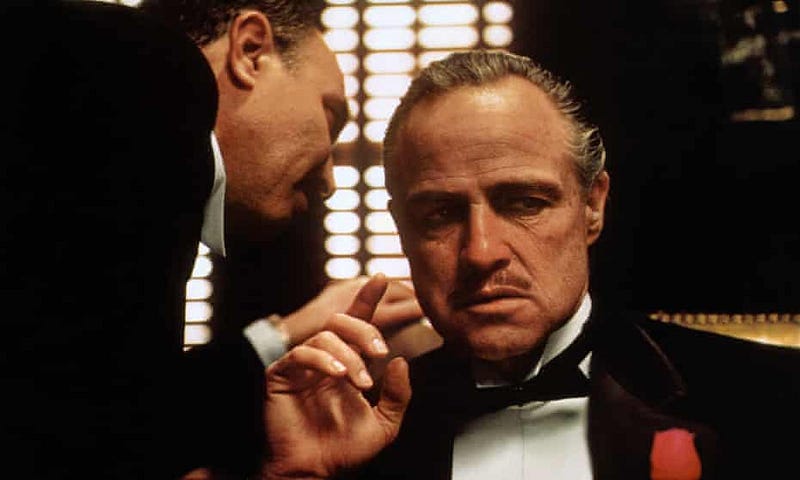
There are films that, as time goes by, prove popular with subsequent generations and wind up permanently embedded in the cultural consciousness. Casablanca, Gone with the Wind, and The Godfather are all fine examples. That isn’t to say less popular films or even films that are actively disliked can’t be considered great.
For instance, Ingmar Bergman’s Cries and Whispers and Darren Aronofsky’s Requiem for a Dream are astonishingly bleak, and I doubt most people would want to see them more than once, but I’d argue both are masterpieces. Rewatchability doesn’t necessarily equal greatness. I find Hudson Hawk — a truly ridiculous guilty pleasure — very rewatchable. But I’d never put it forward as a classic.
Heaviness Doesn’t Necessarily Equal Greatness
Why do some films endure when others don’t? It isn’t always because they have something deep and profound to say. After all, Bringing Up Baby and The Lady Eve may be classic romantic comedies, but they aren’t exactly bursting with incisive social commentary. Rather, they are witty, sublimely crafted escapist entertainment, light as a souffle, and all the better for it.
Conversely, films that self-consciously set themselves up as important often end up as tedious, plodding bores. Citation: Any number of worthy-but-dull awards contenders clogging up the nominations at Oscar time. The aforementioned Crash is a case in point. It thinks it has something profound to say about racism, but the film amounts to little more than a couple of intense dramatic scenes inside a deeply forgettable framework.
That isn’t to say socially important themes can’t exist in a great film. Staying with the subject of racism, Boyz n the Hood is an example of an exceptionally powerful drama that in 1991 was both cinematically innovative and a powerful comment on contemporary issues. Sadly, very little has changed, and the issues remain as contemporary as ever. But Boyz n the Hood has also stood the test of time as great cinema in and of itself.
Landmarks of Cinema
Films can become classics because they are influential landmarks, singular and groundbreaking. This applies to cinematic game-changers from Battleship Potemkin to Snow White and the Seven Dwarfs, Rashomon, A Bout De Souffle, Rome Open City, Lawrence of Arabia, and 2001: A Space Odyssey. Some films are so influential they divide cinema history into distinct eras, BC/AD style. Star Wars is the ultimate example.
The Problem of Nostalgia
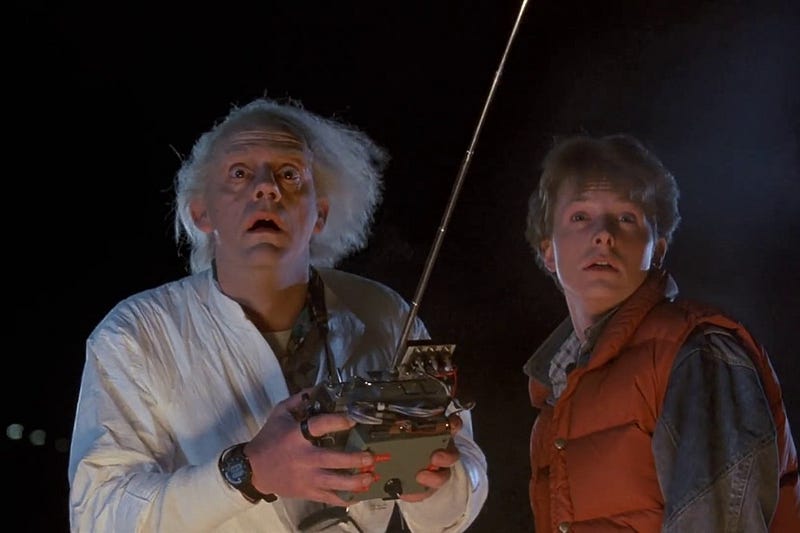
I take a dim view of any definition of a film as great without applying due diligence to the critical process outlined above, as rose-tinted nostalgia can come into effect. For example, a film isn’t necessarily great just because you saw it at a formative age and loved it. As a case study, consider two films: The Goonies and Back to the Future. Both were released in 1985, and I saw both at the cinema, at the age of ten, shortly after their UK release late that year.
I have immense nostalgic love for The Goonies. My father took me to see it as a special treat, and I was undoubtedly the target audience. However, viewed objectively, it’s a fun albeit rather noisy and obnoxious treasure hunt adventure, degenerating into pantomime in the final act. Entertaining? Yes. Weapons-grade nostalgia? Absolutely. But a great film? I’m not convinced.
What about Back to the Future? I saw that around the same time — again with my father, again at the perfect age, and again, I have a Mount Everest of nostalgic reasons to love that film. However, I’d argue in this case it is a great film. Every element — from performances to direction, screenplay, music, and so on — is objectively outstanding. Back to the Future is thrilling, funny, emotionally resonant, and I’d argue as close to cinematic perfection as you can get. The enduring popularity of this sublimely crafted entertainment is well-deserved, and not based solely on nostalgia.
To take another hugely popular example, what happened with the Harry Potter films? I don’t think any of them are objectively great (though JK Rowling’s novels undoubtedly are). They exist at a lower level, ranging from adequate to very good (I’d say The Prisoner of Azkaban and the final part of Deathly Hallows are the high points). However, once again, the nostalgia effect comes into play, as it does with The Goonies, whereby people label them great without engaging their critical faculties.
The Philosopher’s Stone in particular features many an unconvincing performance, and a plodding screenplay so slavishly faithful it misses obvious show-don’t-tell adaptation principles. For example, this film ought to have opened with Voldemort’s scary, murderous attack on Harry’s parents. It also ought to have made much more of the pivotal Mirror of Erised, giving it the emotional resonance it deserved. The only outstanding contributor to that first film is John Williams.
By contrast, Peter Jackson’s adaptation of The Lord of the Rings ticks the boxes of being superbly made (in all departments — acting, screenplay, direction, and so forth), groundbreaking, and massively popular, more than earning its place in the pantheon of genuinely great cinema. Again, many people are nostaligic about these films, but their affection is not based on nostalgia alone. As such, the bestowment of classic status is justified, and those films continue to stand the test of time.
‘Favourite’ as a Sneaky Tiebreaker
In conclusion, I wish to reemphasise that I offer the above as a set of principles by which to define great cinema, as opposed to merely very fine cinema. Within that, arguments will inevitably ensue as to where any given film fits, but thinking through these points serves as a good hyperbole deterrent.
It should again be noted that a list of my 100 favourite films would be significantly different from a list of what I consider the 100 greatest films. However, there is overlap as some titles would appear on both lists. To that end, the favourite question proves a convenient tiebreaker, if you decide to rank a list of the greatest films of all time. In line with Sight and Sound’s famous once-a-decade critics poll, I consider Vertigo a greater film than Citizen Kane. Why? I just like it more. Although perhaps that’s a foolish statement, as it could be argued such an admission undermines everything I’ve just said in this article.
Author’s note: I hope you enjoyed this article. For more about me and my writing on Medium, please click here. For information on my writing outside Medium, please click here. For a list of my published novels and other works, please click here.