Feature
Ban this Sick Filth: A Brief History of UK Film Censorship
‘Video nasties’, tabloid scapegoats, nunchucks, a director who banned his own film, and other outrages.

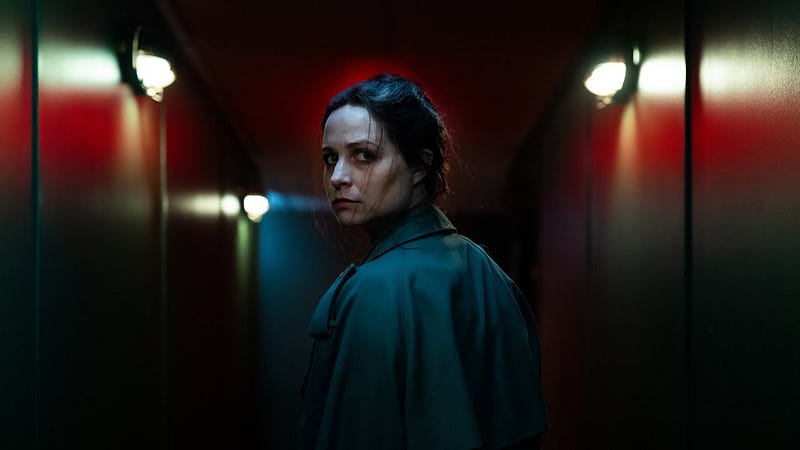
An intriguing new horror film from director Prano Bailey-Bond called Censor (2021) has just been released in the UK. Set during the 1980s ‘video nasties’ moral panic, it concerns a crusading, uptight young woman working as a film censor, who’s particularly dedicated to cutting gratuitous sex and violence. Traumatised by the disappearance of her younger sister as a child, her sanity begins to unravel when she sees a horror film featuring an actress she believes might be her long-lost sibling.
Complimenting earlier metatextual horror gems with similar subject matter such as Berberian Sound Studio (2012) and Blow Out (1981), Censor raises the question of whether exposure to horrific imagery can corrupt the viewer, but largely through a satirical, nostalgic lens. The opulent, lurid style will appeal to extreme cinema connoisseurs of a certain age, who now look back on those times of censorial uncertainty with a certain smug self-satisfaction, given that they essentially won the argument. Today, the British Board of Film Classification (BBFC) is far more liberal, and doesn’t censor for adults unless the material in question violates UK law.
The Birth of the BBFC
Despite our present more enlightened times, the history of film censorship in Britain is littered with tales of outrage, mollycoddling, and classist hypocrisy. Most intriguingly, the initial Board of Film Censors (before “Censors” was changed to the less Orwellian “Classification”) kept the identities of their members secret, which added a pseudo-MI6 aura of mystique. Set up in 1912 as an independent, non-governmental, non-profit organisation, funded by fee-paying distributors, the board set out to standardise film ratings across the UK (though local councils could overrule if they pleased).
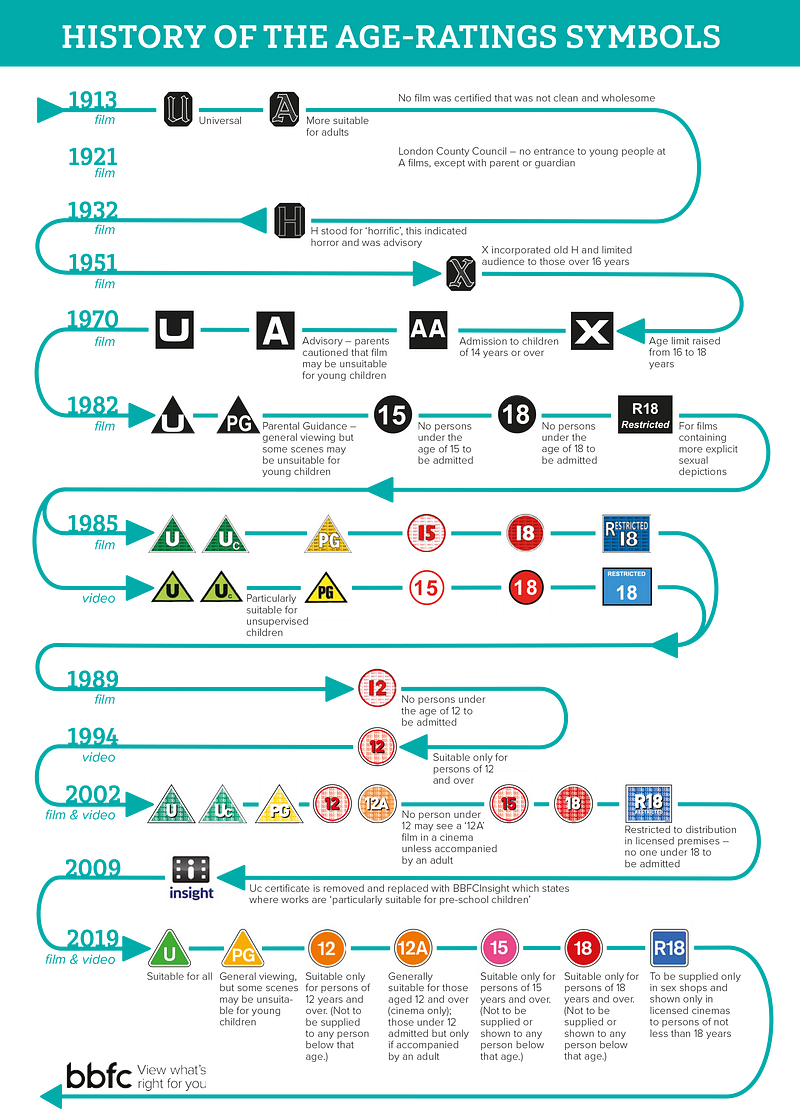
At that point, the BBFC had no published guidelines but sought to reflect public attitudes. Their two certificates “U” and “A” meant “Universal: Suitable for all audiences” and “Adult: More suited to adult audiences”. However, children were not barred from any films.
The first example of a film being banned in the UK is the Anchor Film Company’s production £1,000 Reward (1913). Filmed on the Isle of Portland in Dorset, it concerns an escape from prison. The Home Office was concerned the film would give real prisoners ideas, so the board ruled it could not be shown.
Sergei Eisenstein’s seminal Battleship Potemkin (1925), with its extraordinary plural protagonist (the entire working class) rising up against oppressors, is one of the greatest films ever made. The celebrated Odessa Steps sequence is revered to this day. Yet the BBFC would not allow the film to be shown in Britain until the death of Joseph Stalin, due to “inflammatory subtitles and Bolshevist propaganda”.
By contrast, The Phantom of the Opera (1925), featuring the legendary Lon Chaney, was banned for being too horrific. The unmasking scene in particular reportedly caused screaming and fainting in the US. There were several different cuts of the film, including a later sound version that was permitted in the UK in 1930.
Freaks and the “H” Certificate
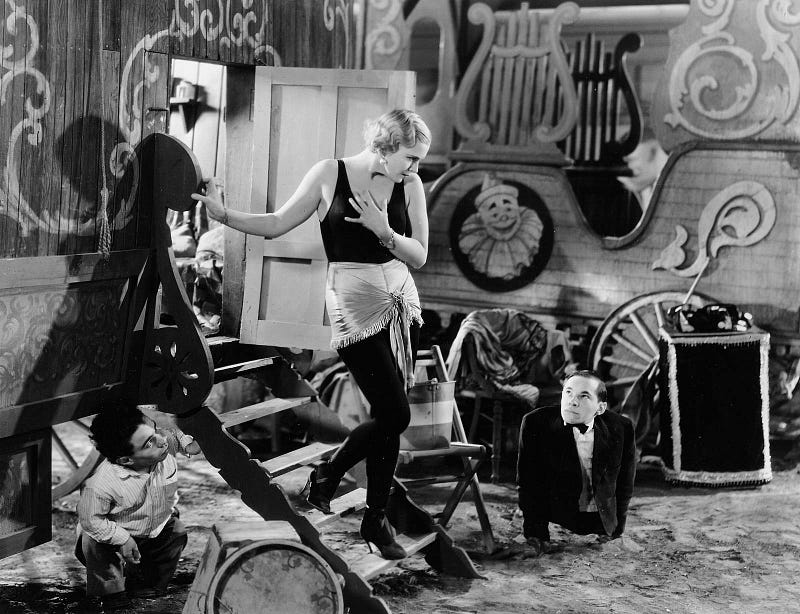
Prior to the introduction of America’s restrictive Hays Code, a clutch of fascinating movies emerged during the early days of the sound era. One of the most notorious was Tod Browning’s Freaks (1932). Adapted from the short story Spurs by Tod Robbins, the film concerns a trapeze artist who plans to seduce and murder a dwarf by joining a carnival sideshow. It caused outrage upon its US release, and several cuts were demanded. In the UK Freaks was banned for three decades, before finally being granted an “X” certificate in 1964. (“X” having rather different connotations when introduced in the UK compared with the US. In Britain “X” denoted grown-up subject matter, not necessarily sex and pornography.)
Freaks has been posthumously reappraised by modern critics, many of whom consider it more sympathetic to the sideshow characters. Over the years, metaphorical applications have been made to the narrative including class conflict and the Great Depression. It is also cited as anti-eugenics. My own view is that despite Browning’s good intentions, the film does contain some problematic elements viewed through 21st-century eyes, particularly in the finale. But exploitative or otherwise, Freaks remains a key film in British censorship history.
In the aftermath of rejecting Freaks, as well as passing James Whale’s Frankenstein (1931), the BBFC introduced the “H” certificate, to warn of horror. The certificate still did not bar children from attending the films but was intended to warn parents. However, some local councils began to make the “H” certificate a mandatory adults-only category.
Cruelty to Animals
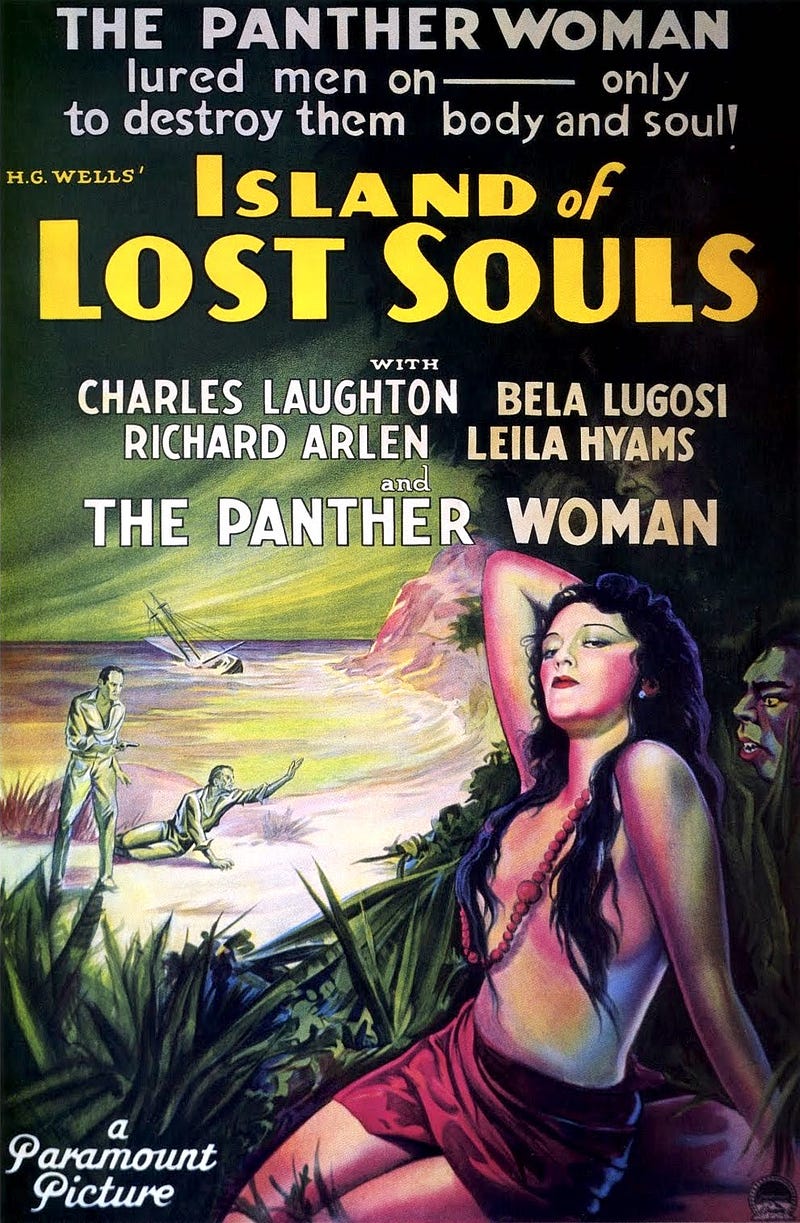
As an aside, it’s worth noting that throughout its history, the BBFC has censored or even banned films deemed to have fallen foul of the 1937 Cinematograph Films (Animals) Act, which forbids the portrayal of cruelty to animals in feature films released in Britain. Island of Lost Souls (1932), an adaptation of HG Wells’s The Island of Dr Moreau, was banned for this reason, in 1933, 1951, and 1957, as the film was regularly resubmitted. It was finally passed as an “X” certificate with cuts in 1958, and not released uncut until 2011, with a “PG” certificate. The cause for the furore is likely to have centred around the vivisection scenes.
Additional examples of cruelty to animals censorship can be found in the removal of cockfights in films as diverse as Far From the Madding Crowd (1967) and Angel Heart (1987). On the other hand, directors like Pedro Almodovar exploit a loophole that allows cockfights if it isn’t footage shot himself but “found footage”. Furthermore, images showing the killing of animals doesn’t necessarily fall foul of the aforementioned Act. A documentary showing the swift killing of a chicken in the context of an industrial process wouldn’t necessarily be deeded “cruelty”, which is perhaps why Willy Wonka and the Chocolate Factory (1971) got away with including a chicken decapitation as a subliminal image during the notorious tunnel of terror sequence, “U” certificate and all!
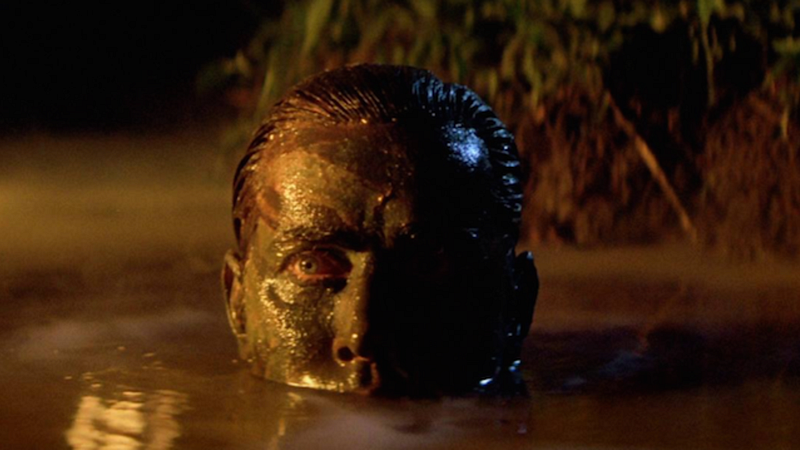
In a similar way, the killing of the water buffalo in Apocalypse Now (1979) was deemed acceptable because the indigenous tribe was going to kill the animal in any case, not because Francis Ford Coppola and his crew had arranged it. Again, the BBFC took the view that because the animal was killed quickly, the images didn’t constitute “cruelty” and were acceptable in the context of the film. However, not everyone agrees, and the scene remains controversial.
On the other hand, the BBFC did make cuts to the rat submersion scene in James Cameron’s The Abyss (1989), as well as to countless older westerns as they turn up for reclassification, due to horse falls where animals were deliberately tripped. With all the regulations surrounding treatment of animals on film sets today, I don’t personally see the point of posthumously removing horse fall shots in older westerns, since it hardly makes a difference when what’s done is done. On the other hand, there’s no excuse for causing deliberate cruelty to animals on a film set, especially today when CGI can be deployed for trickier shots. Not that I necessarily advocate CGI in all cases. For instance, Togo (2020), which featured real animals, was a much better film than the recent take on The Call of the Wild (2020), which featured all-CGI animals, and lost something in the telling as a result.
The “X” Certificate and Hays Code Export Issues
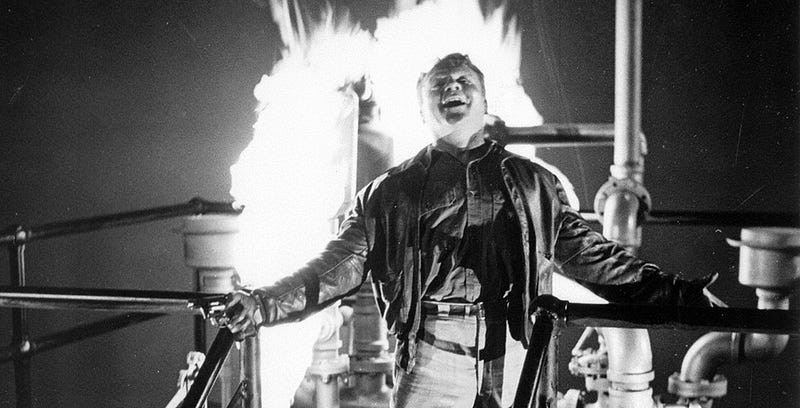
British censorship controversies were relatively few and far between during the Hays Code era, though the BBFC often expressed concern over the violence in films of gangster pictures such as Raoul Walsh’s White Heat (1949). Extraordinarily enough, that film was originally released with an “A” certificate but is now rated “15”. The posthumous certificate bumping of films from the Hays Code era is a relatively recent phenomenon, and I’ll touch on that further in a bit.
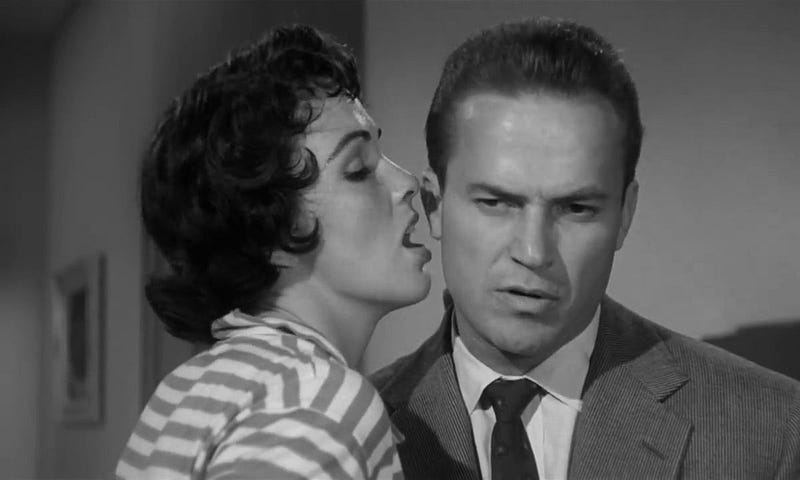
The introduction of the “X” certificate in 1951 meant that for the first time in Britain, children were legally barred from certain pictures if they were under sixteen. This certificate was often applied to science fiction and horror films, including everything from creature features such as Them! (1954) to Night of the Demon (1957), both of which were censored, but subsequently released uncut during the 1980s. Hard-boiled noir also met the wrong end of the scissors on occasion. Robert Aldridge’s seminal Kiss Me Deadly (1955) features a scene where Cloris Leachman’s character is tortured with pliers, which was removed entirely from the UK release.
Because the Hays Code didn’t necessarily align with the BBFC’s more fluid ideas about what the British public would find acceptable, during this period, there were occasional challenges exporting British films to America. One amusing example is that of classic Ealing comedy Whisky Galore! (1949). Not only did the title have to be changed to Tight Little Island to avoid upsetting the Bible belt, but the final sequence is a splendid joke at the expense of Britain’s more puritanical cousins across the pond. A wry narration informs the viewer that the contraband whisky eventually ran out, prices went up, and none of the islanders could afford to drink whisky anymore, so they all lived unhappily ever after — except the central romantic protagonists, who were not whisky drinkers. “And if that’s not a moral tale,” the narrator mockingly intones, “I don’t know what is.”
Peeping Toms and Psychos
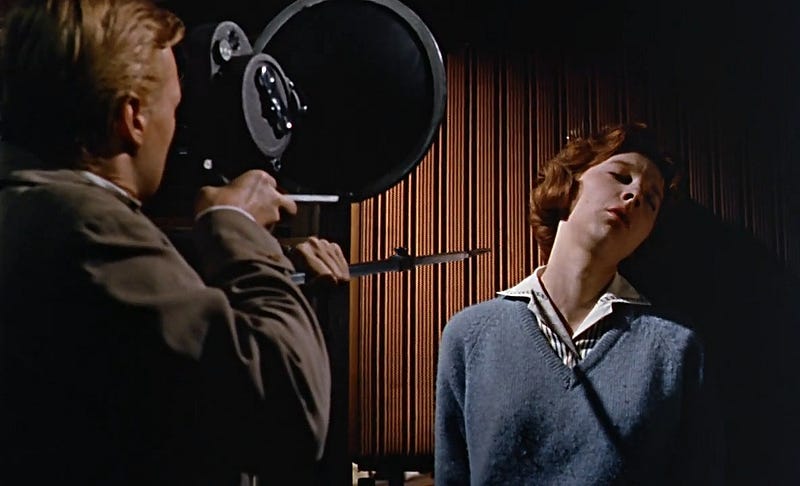
Michael Powell’s Peeping Tom (1960) caused a huge stir with the British public, even after cuts. Critics eviscerated this tale of a disturbed filmmaker who murders his female subjects whilst filming, using a tripod leg with a blade. Audiences were likewise appalled. Yet those same shocked audiences seemed happy enough embracing Alfred Hitchcock’s Psycho (1960), which manage to pass the BBFC relatively unscathed (thanks to some clever negotiation and sleight of hand from Hitchcock). Peeping Tom has since been re-evaluated by critics as something of a masterpiece.
Incidentally, it is worth noting that American censors seemed quite happy leaving the violent scenes in Psycho intact, but took exception to a scene where Janet Leigh removes her bra. By contrast, in the UK the innocuous bra removal remained intact, whilst the shower and landing killings were slightly snipped. This demonstrates an important difference between UK and US film censors that persists to this day; namely that the US seems more concerned with sex, and the UK more concerned with violence. This distinction is important, and I’ll return to it later in this article.
Banning Counter-Culture
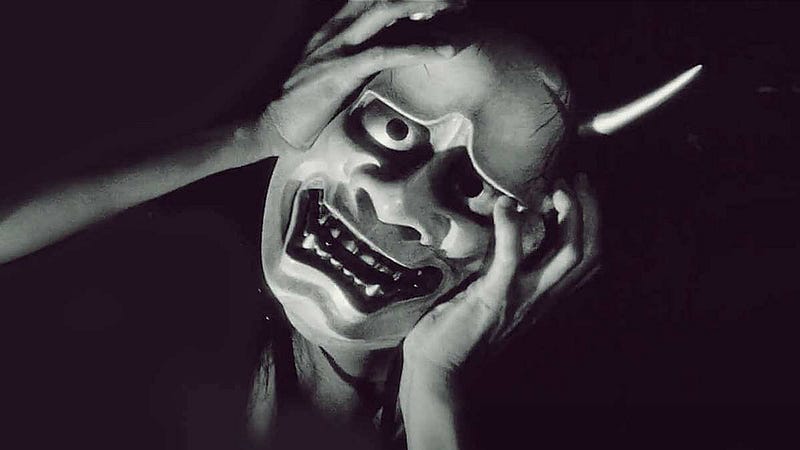
Despite the counter-culture movements of the 1960s, several films were still banned outright in the UK during the decade. These included The Wild One (1961), which examiners feared would encourage anti-social behaviour. The film was finally granted a release in 1967. Other films initially banned in this decade included Mario Bava’s Black Sunday (1960), the Sam Fuller double-whammy of Shock Corridor (1963) and The Naked Kiss (1964), Kaneto Shindo’s horror classic Onibaba (1964), Roger Corman’s The Trip (1968), and Sergio Corbucci’s cult western Django (1966). The latter two weren’t released until 2002 and 1993, due to extreme violence and the uncritical condoning of LSD use, respectively.
In the 1970s, the BBFC eased up somewhat, despite an extraordinary run of controversial films unprecedented in cinema history. Certificates were revised once more so that “AA” (suitable only for persons aged fourteen and over) was added to the “U”, “A”, and “X” certificates already in use. The minimum age of admission for the “X” certificate was also increased to eighteen.
The Devils: Still Not Available Uncut
Don Siegal’s controversially violent Dirty Harry (1971) passed uncut, and Mike Hodges’s grim revenge drama par excellence Get Carter (1971) only suffered one minor snip. However, Ken Russell’s The Devils (1971) proved a more difficult beast. Of all the controversial films released in the 1970s, The Devils is particularly worth pausing to examine, as it is still not available anywhere in the world completely uncut.
The Devils was conceived as a dramatisation of a 17th-century incident involving Roman Catholic priest Urbain Grandier, who was accused of witchcraft following the supposed demonic possession of nuns in Loudun. The drama also concerns Sister Jeanne des Anges, a repressed nun who secretly lusts after Grandier. Featuring a strong central performance from Oliver Reed, vivid production design courtesy of Derek Jarman, and absolutely bonkers direction from Russell, this fiery spectacle of sexual derangement and religious violence is without precedent in cinema history. It also contains serious messages about abuse of power, political and religious corruption, and the clear need for separation of church and state.
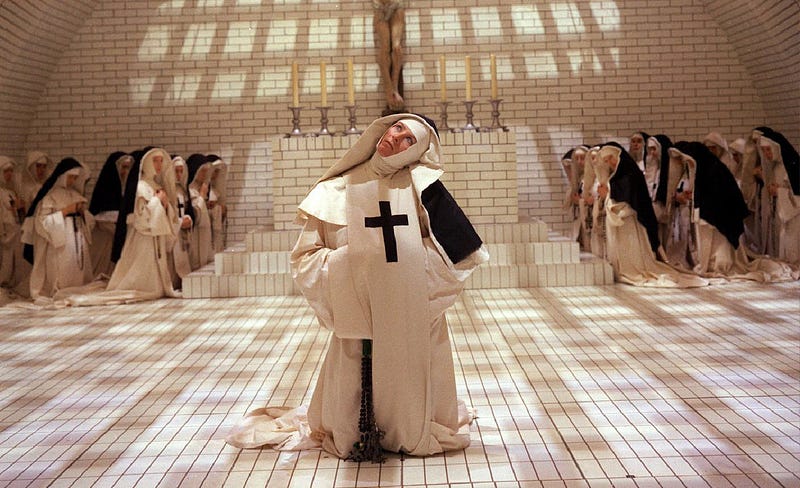
Needless to say, when the incendiary, provocative film was shown in full to the BBFC, the scissors came out. A demented orgy sequence known as the “rape of Christ” (where deranged nuns pretend to be possessed and straddle a statue of Christ on a crucifix) was removed entirely, and there were other cuts made to sexual content, nudity, and violence, including the brutal torture scenes, and horrific burning at the stake sequence. Russell went back and forth to the BBFC multiple times, gradually reducing a moment where Reed’s knee is smashed by torturers. When the sequence was reduced to one blow, the BBFC instructed Russell to put some footage back, as one blow was even more wince-inducing!
After the conclusion of this farcical censorial wrangling, The Devils was finally granted an “X” certificate in this watered-down 111-minute form. That didn’t stop it from being publicly denounced by the Vatican. In addition, the film drew condemnation from Mary Whitehouse and other evangelical Christians in the Festival of Light movement, which also targeted other controversial films of the period. Warner Brothers were equally dismayed with the finished product, with edicts issued to “cut every pubic hair” for the American cut.
Latterly, thanks to the efforts of UK film critic Mark Kermode, The Devils has been restored to something close to the original cut, including the notorious “rape of Christ” sequence. But this restoration can only be seen legally at occasional BFI screenings in London. Despite a loud and vocal campaign from film scholars around the world, Warner Brothers have continually refused to release the uncut version.
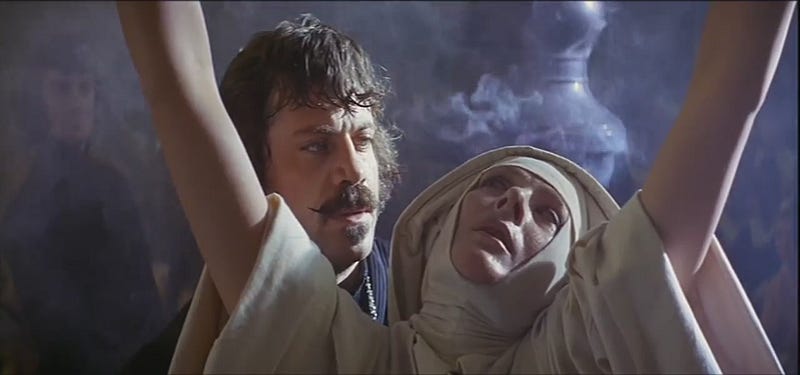
Having viewed the censored footage of The Devils, my own view of the notorious deleted material is that it isn’t strictly needed. The film is already swamped in Russell’s trademark excess. Nonetheless, this is an important cinematic artefact, and I’m thankful that the BFI at least is ensuring the full version is properly preserved.
Straw Dogs, A Clockwork Orange, and The Exorcist
Other censorial cans of worms from the period included Sam Peckinpah’s Straw Dogs (1973). Although released uncut, it features a prurient and lengthy rape scene that to my mind falls on the wrong side of gratuitous and misogynistic. The film was banned on VHS for decades as a result. A similar fate befell Michael Winner’s even more morally repugnant Death Wish (1973), which likewise features an unnecessarily protracted rape sequence.
Graphic rape also features in Ralph Nelson’s Soldier Blue (1970) and Stanley Kubrick’s adaptation of Anthony Burgess’s A Clockwork Orange (1971). The scissors came out for the former, not just for the rape scene but for the violent climax in general. However, the latter was passed uncut.
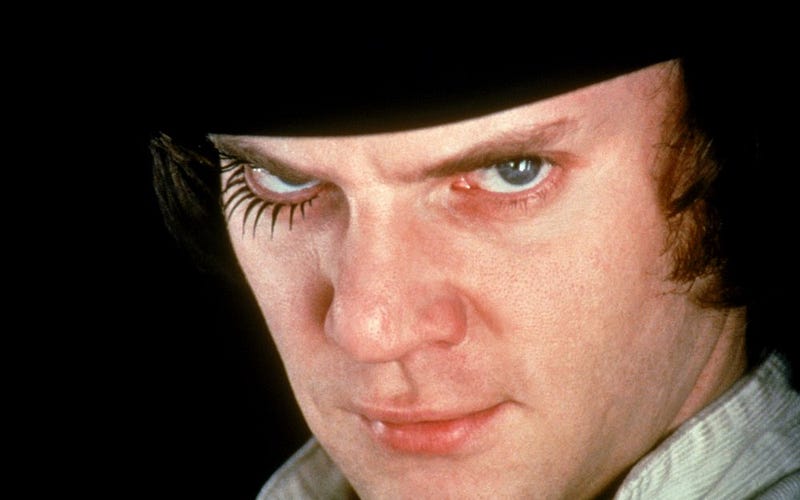
A Clockwork Orange is a particularly interesting feature in British censorship history because it wasn’t banned by the BBFC, but by its own director. After the furore it provoked in the UK, with alleged copycat crimes and death threats sent to Kubrick and his family, Kubrick quietly withdrew the film from circulation in the UK. It took a couple of years for everyone to realise what had happened, but soon it became clear enough: A Clockwork Orange could not legally be shown in the UK whilst Stanley Kubrick remained alive; not at cinemas, not on video, and not on television. As a result, the film represented a cinematic Holy Grail for budding cineastes growing up during the late 1970s, 1980s, and 1990s (including yours truly).
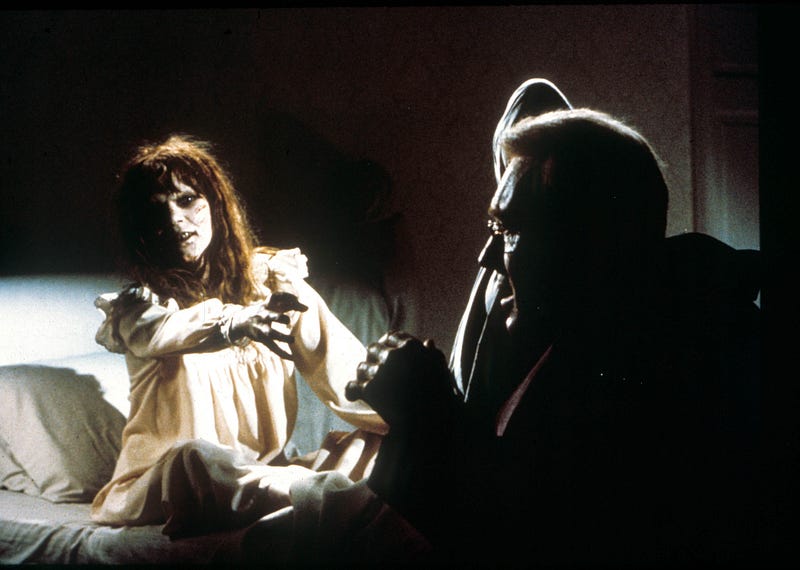
The BBFC didn’t cut or ban William Friedkin’s The Exorcist (1973) either, despite the hysteria around the film. However, when James Ferman became head of the BBFC, he ultimately did ban the film on VHS, claiming it was too powerful to be allowed in UK homes where underage children might end up seeing it. Ferman’s successor Robin Duval finally allowed the film to be released on VHS and DVD in 1999.
The James Ferman Era
When Ferman took over from beleaguered predecessors John Trevelyan and Stephen Murphy, it heralded one of the most difficult periods in the BBFC’s history. Ferman’s attitude throughout his tenure proved inconsistent to say the least, frustrating filmmakers on several occasions. As for film fans, Ferman is mainly remembered as the bad guy.
Initially, Ferman cut a lot of sexually explicit works, including In the Realm of the Senses (1976), Emmanuelle (1974), and The Story of O (1975). He refused certificates to Salo: 120 Days of Sodom (1975) and Maitresse (1975), and made severe cuts to Cruising (1980). On the other hand, he allowed cuts made to Last Tango in Paris (1972) to be restored.
Changes came to the BBFC once more in 1982, when the certification system was overhauled to make it less confusing. “U”, “PG”, “15”, and “18” replaced “U”, “A”, “AA”, and “X”, with “12” and later “12A” being added to deal with films that sat awkwardly between “PG” and “15”. (R18 was introduced purely to classify pornography, for sale only in licensed sex shops.)
‘Video Nasties’
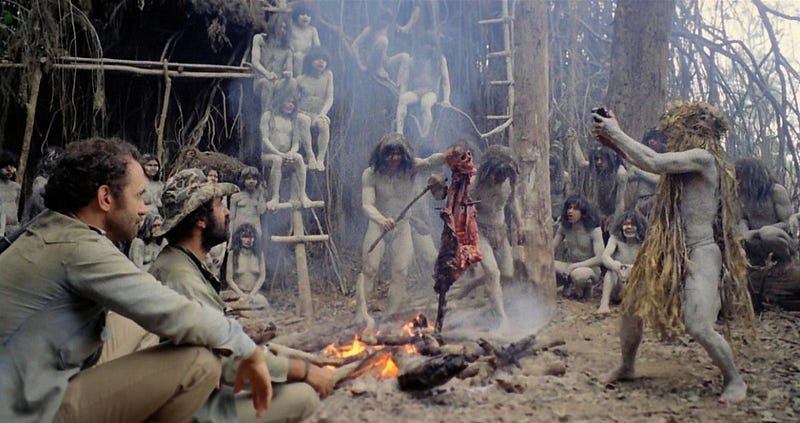
When the video nasties moral panic hit in the early-1980s, the Video Recordings Act 1984 handed the BBFC the legal power to ensure all VHS tapes were classified, not just cinema releases. This was triggered by concerns about people watching violent scenes again and again out of context, rewinding videotapes. Some of the films in question had gone straight to video, and there were existential fears about new technology underpinning much of the paranoia (just as we have today, around the internet, social media, and so forth). Violent videos also made a convenient political scapegoat in Thatcher’s Britain, where social unrest, strikes, and unpopular austerity measures were in full force.
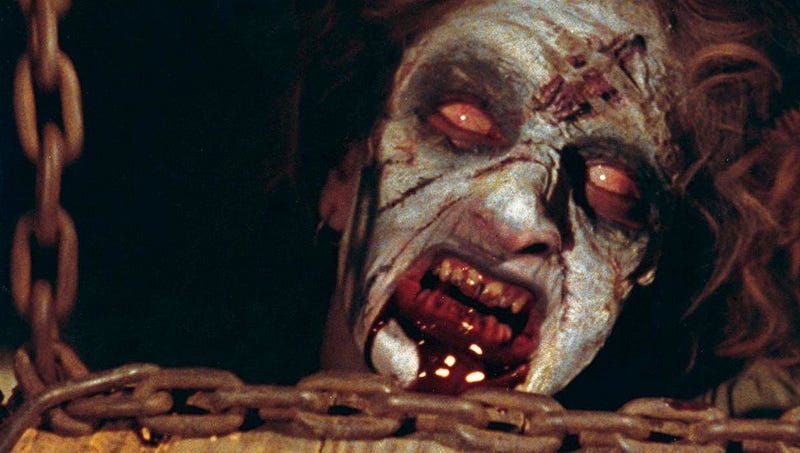
As a result, a huge list of titles got hit with a blanket ban, including Cannibal Holocaust (1980), Zombie Flesh Eaters (1979), The New York Ripper (1982), and notorious rape-revenge exploitation flick I Spit on Your Grave (1978). Alongside such lurid, disreputable titles, horror gems such as The Evil Dead (1981) and Possession (1981) also ended up on the list. The former was later released in greatly watered-down form in 1990, and not released fully uncut until 2001. The latter wasn’t released again until 1991. Most of the titles on the video nasties list are now available in the UK completely uncut.
Cavalier “PG” Films and Nunchucks
At the same time, James Ferman presided over what I call the age of the cavalier “PG” rating. Jaws (1975), Raiders of the Lost Ark (1981), Ghostbusters (1984), and many other titles exhilarated and sometimes traumatised children growing up in the 1980s, since “PG” had a very broad envelope. “Some scenes may be unsuitable for young children” covered a multitude of sins, and going to see them proved a Russian roulette thrill.
Occasionally, a potentially kid-friendly film got shunted into the “15” category; Gremlins (1984) for instance. Also, sometimes the scissors did come out. Romancing the Stone (1984) was cut to get a “PG”, as was Indiana Jones and the Temple of Doom (1984). The latter had a whopping one minute six seconds of footage trimmed, mainly from the human sacrifice sequence. Ferman could also be cavalier with the “U” rating. Watership Down (1978) is the most notorious example. The BBFC receives complaints about the U rating to this day, though they say they would certify the film differently, should it ever be officially resubmitted.
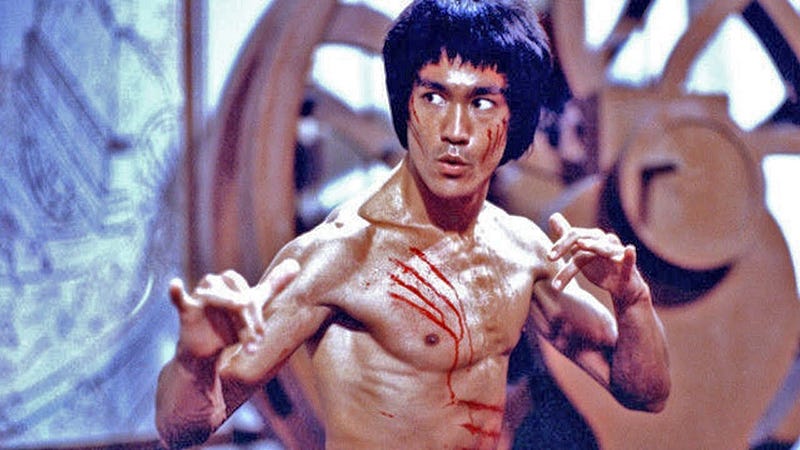
Inconsistency was the order of the day with Ferman in charge at the BBFC. Some of his more curious cut-on-sight directives included a baffling attitude to nunchucks. Everything from Enter the Dragon (1973) to Teenage Mutant Ninja Turtles (1990) were slashed for this reason. In one of the most hair-clutching cases, the producers of A Very Brady Sequel (1996) ended up in a bizarre stand-off with Ferman over a comedic nunchuck sequence. Ferman said the film uncut would merit an “18” certificate. Rightly dismissing such absurdity out of hand, the producers decided to forgo a UK cinema release. The film was later released on VHS with a still preposterous “15” certificate, with cuts. The film is now available uncut, with a “12" certificate.
The Second Video Violence Panic
On a more serious note, Ferman found himself at the centre of a controversy in the early-1990s, when violence on video became a concern a second time in the wake of the tragic murder of toddler James Bulger. Upon finding the child killers guilty, the judge made an offhand remark to the effect of he didn’t know why the killers chose to act as they did, but wondered if violent videos had something to do with it. As usual, the UK press seized on this remark, eager for a scapegoat to sell papers. Never mind the social services, the teachers, or the parents. It was all Chucky the killer doll’s fault. The tabloids smothered images of Child’s Play 3 (1991) all over their front pages, but as Inspector Ray Simpson of Merseyside police said at the time: “If you are going to link this murder to a film, you might as well link it to The Railway Children (1970).”
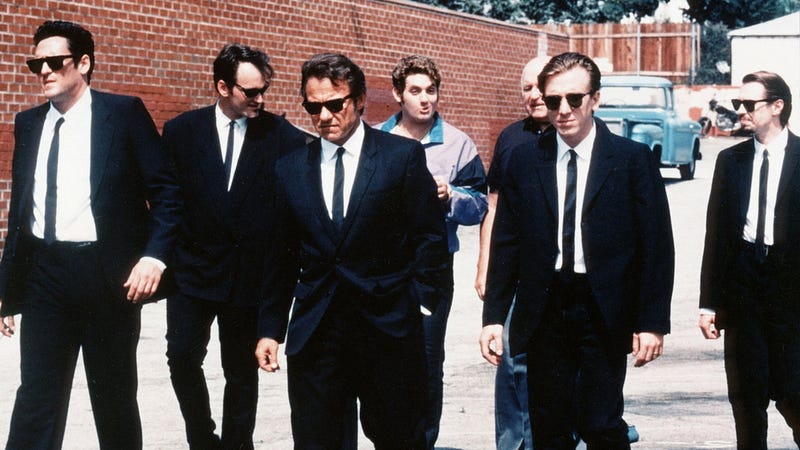
The result was many of the more violent pictures of the time, including Quentin Tarantino’s Reservoir Dogs (1992), were banned on video for some years. Even worse, Ferman’s notoriously classist views came to the surface once more. He was apparently quite happy to give Man Bites Dog (1992) a video certificate, because it was black and white and had subtitles. Perhaps the arthouse crowd was less likely to be corrupted and depraved than the Reservoir Dogs crowd. Remember, this is the man who, after an uncut screening of The Texas Chain Saw Massacre (1974) to members of the British Film Institute in London, commented to those present with the immortal gaffe: “It’s all right for you middle-class cineastes to see this film, but what would happen if a factory worker in Manchester happened to see it?”
Other films fell under the censorial hammer during this time when it came to home viewing. Abel Ferrara’s Bad Lieutenant (1992) was permitted in cinemas uncut but censored on video. Oliver Stone’s Natural Born Killers (1994) was another film that met the sharp end of the BBFC at the time, being refused even a cinema release for some months. Bizarrely, Carl Franklin’s One False Move (1992) was released uncut but had its poster censored in the UK.
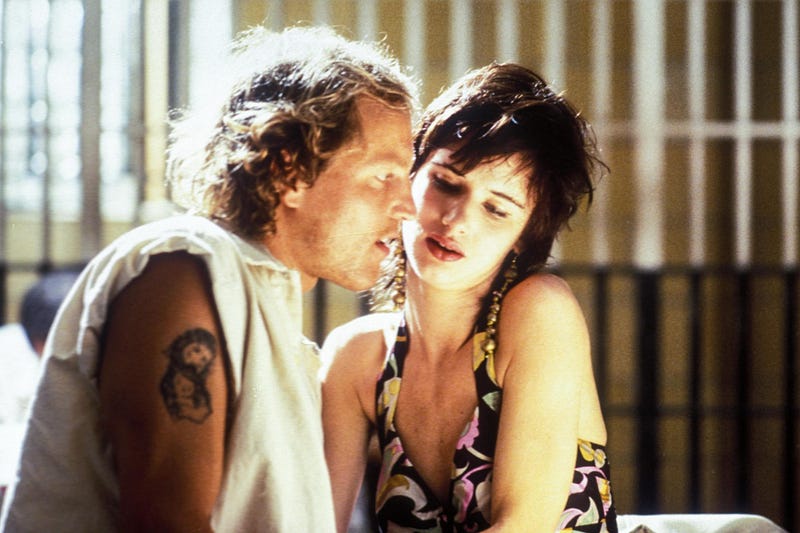
Despite such controversies, it is also worth noting that as ever, violence rather than sex tended to be the concern for the BBFC in the 1990s. In contrast to America, where censorial scissors were deployed to get erotic thrillers like Basic Instinct (1992), Body of Evidence (1993), and Sliver (1993) down to an R rating, in the UK they were left uncut. However, in certain contexts, sex could prove just as controversial to British viewers. During the latter part of the 1990s, there were further furores over films such as Larry Clark’s Kids (1995) and David Cronenberg’s Crash (1996). Again, on both occasions, the controversies were fuelled by tabloids and right-wing papers like the Daily Mail (plenty of “Ban This Sick Filth!” headlines). The BBFC demanded proof the young actors of Kids were not underage, given the sexual activities depicted onscreen. A few trims were made. As for Crash, Cronenberg’s tale of sex and wrecks caused quite a kerfuffle, but the film was released uncut.
Post-Ferman: The Modern BBFC
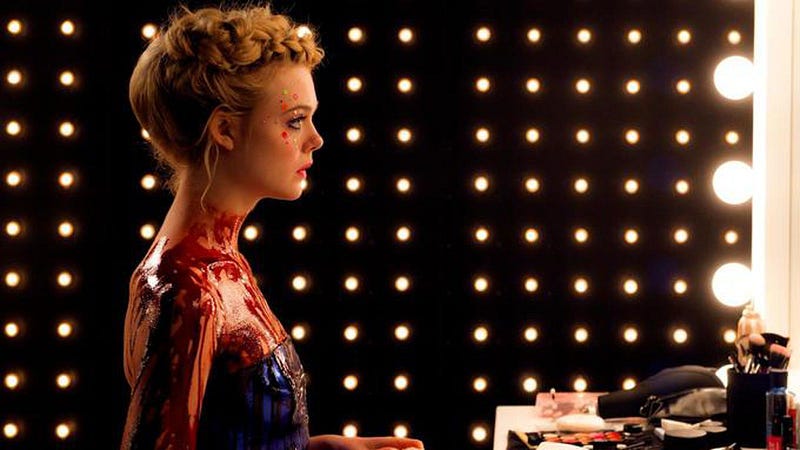
In the 21st-century, following the departure of James Ferman from the BBFC, censorship rows seemed to disappear. Occasional flickers of controversy were stirred by the likes of Irreversible (2002), A Serbian Film (2010), The Human Centipede 2: Full Sequence (2011), and The Neon Demon (2016), but on the whole, the BBFC changed a great deal, reforming themselves so they were much more transparent. Regular public consultations ensued, and it is safe to say the organisation today, whilst not perfect, is a lot more accountable.
Certification guidelines are a lot stricter around the “PG” level, with many of the films I grew up with as a child pushed up to “12” or “12A” ratings. Also, with concerns about racism, sexism, and other forms of prejudice and discrimination much more to the forefront of public opinion, older films made during the Hays Code period sometimes find themselves being pushed up a rating or two. For example, The African Queen (1951) and Kind Hearts and Coronets (1949) are now both rated “PG” instead of “U” due to potentially racist stereotypes and use of the n-word, respectively.
At the upper end of the scale, the BBFC recognise and respect the right of adults to choose their own entertainment within the law. For that reason, “18” ratings are seldom cut for any reason these days, which I think is as it should be. I may have criticisms of some of the films I’ve discussed in this article, but except for cases where material contravenes the law, I remain firmly anti-censorship. I for one would not like to see a return to the paranoid time depicted in Censor, when violent films provided a convenient scapegoat for social ills.
Author’s note: I hope you enjoyed this article. For more about me and my writing, please click here.
Header image: The Evil Dead © New Line Cinema.