
Measuring Growth, Accepting Emotions and the Wrestle Between Self-Acceptance and Self-Improvement
KTHT reflection prompts, here I come!

I’ve always approached 𝘋𝘪𝘢𝘯𝘢 𝘊.’s prompts as poetry prompts, because that’s the easiest way for me to get my thoughts and emotions out, especially when they feel like they’re stuck in little circles of rumination in my mind.
This time, however, I’m going to try something different. I was inspired by others who contribute to these weekly prompts, who take that step to share these thoughts without hiding behind the rhyme (though let’s be real, I never actually use rhymes in my poems). It’s brave because instead of showing the most distilled form of your thoughts, imperfections chiselled away, a lot of people share the rawest form that came up for them.
There’s value in showing up like that, in showing that the world shouldn’t be comprised of highlight reels, because we’re so often comparing our view of all our successes and our failures, to someone else’s publicized and polished successes.
So, here goes! This week, we’re tackling three questions instead of five, and I’m doing them all in one go.
Monday: How do you measure personal growth? How do you know when you’ve grown as a person?
Numbers
I think a lot of people shy away from this because there can be an obvious downside to this. In my poetry, I’ve reflected on how in the past, grades, how the number on a scale took over my definition of my life.
Back then, I had a “perfect” score that I needed to get, a perfect “weight” I had to be. That’s when numbers can make life miserable.
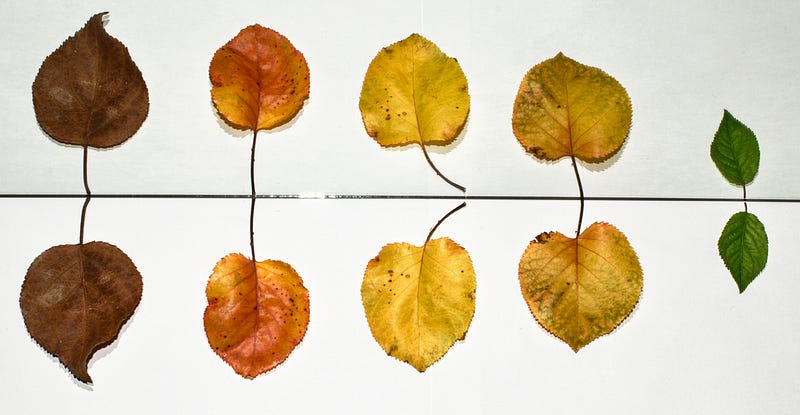
When I say I use numbers to measure personal growth, it’s more about visualization and seeing patterns over time for things that don’t seem to be tangible.
For example, I rate moods over time and rather than striving to have “the best mood”, I’m learning about the contexts, people, things that contribute to a foul mood versus a good one. I’m learning how these environmental factors and also how I respond to them accordingly can impact those moods over time. In visualizing that, I’m tapping into my strength in understanding the world through numbers.
Writing and documentation
Similar to numbers, writing is a complementary aspect of it. Encased in the words that I write at any time are the mannerisms, common phrases that I embody. Fifteen years ago, I didn’t talk or write like this. In fifteen years, I imagine my writing voice will also change.
One tangible way that I’m hoping will be a regular reflection point is the Proust Questionnaire. The saddest thing is that I did complete a bunch when I first entered high school, but I have no idea where they’re saved now. I started completing the questionnaire again this year. Here’s hoping that in documenting it on Medium that it’ll be easy for me to revisit these same questions next year and see my growth.
Even without a copy of the previous questionnaires filled out, simply writing and reflecting on these questions helped me see just how much I’ve grown. Peppered throughout the writing I was surprised to see myself truly and honestly write down thoughts like “I am perfectly happy now”, showing contentment and enjoyment in my life that I don’t ever recall ever having prior to this.
In answering these questions, I was able to name certain things that really helped me grow — setting boundaries, understanding things from my perception (e.g., others calling me lazy vs. understanding that I have different values and am channelling my effort into different priorities than others are).
In journalling for myself but also in writing for others, I see quite a similar set of messages come out. I value self-care now, I approach with curiosity rather than fight out of fear and scarcity.
In those words, I find empowerment within myself.
Wednesday: What emotions do you find it hardest to accept within yourself?

I wanted to skip this question at first.
For me, the journey with accepting emotions seems further ahead than I truly am, because, for a lot of the time, I’m still understanding or learning how to notice these emotions first.
You’d think that most people know what emotions feel like, but I honestly spent so much time being told that I wasn’t allowed to be or that I wasn’t truly feeling (angry/scared/sad etc.) that it took some time for me to unlearn that. It took me some time to relearn that some of these physical symptoms I felt aren’t me being physically ill, but actually a component of the anxiety I’m pretending not to have.
But, after spending Monday’s reflection discussing the importance of writing and documentation so that future me can look back at this rough journey and recognize the growth, I decided to go for it.
I’m surprised that after some thought, my answer for this question — isn’t fear. I accept that I’m a highly anxious person and that my threat system quite automatically reacts to a lot of things that are usually safe. I grew up in an environment where those things were absolutely not safe, but because everyone else perceived that they were, I was told repeatedly that they do.
Which explains why we’re here and I often find myself pretending that something is okay (because everyone else thinks it’s okay and it’s actually quite inconvenient to be reacting to something that’s theoretically innocent) when it’s not okay. That’s something I accept. I accept that because of how I spent the first two decades of my life, my body continues to automatically react in a way consistent with that even though I’m in a completely different environment now. And I accept that it’s going to take some time to undo two decades of that.
So what emotion do I think is most difficult to accept in myself?
I think it’s depression and/or sadness.
It’s because feeling upset or sadness genuinely differs from how I perceive myself, and this is a perception that I genuinely like about myself. That I’ve always been naturally positive, and even in adversity, I don’t have nightmares — I dream about solutions.
Linking back to Monday’s post, I’ve also noticed that this depression or sadness comes from being rejected in the community that I worked so hard to qualify to be in: academia.
Even as I worked towards this, I was told I wasn’t good enough or that I was lazy and a poor planner by people who didn’t understand how privilege made it much easier for some to appear like they planned years ahead and meet requirements, yet others would be tripped up by $20.
The sadness comes from not being able to find a community in my immediate surroundings especially when everyone touts how easy it was to build community, and how collaborative it’s been. It comes from seeing quite clearly that the bar is higher for me; that I have to speak twice as much to get the same grade in discussion-based courses, that I have to justify my work in three different ways where others require none.
This emotion of depression from being rejected from something that I genuinely had so much hope and belief in — I haven’t been able to accept it.
It all comes down to expecting more from the community. It comes down to asking to be treated no differently, and being told that they’re already trying so hard to accommodate people like me already and that I’m asking too much. It comes from asking for more and getting a clear picture that things are quite worse than before.
It’s hard to accept within myself because it’s not something I can single-handedly solve. It’s not something that should be placed on the shoulders of a few BIPOC students to take on the burden to make these changes.
It’s hard to accept because it’s not a personal issue — it’s a systemic issue. It is not my position to accept, but rather my position to push forward for change, amplify the voices of those who are not heard, and to advocate that this burden doesn’t fall solely on a certain subset of people.
It’s also the community’s position and responsibility to reciprocate and support, which is most lacking.
It’s hard to accept within myself because I’m told that instead of that reciprocality and shared responsibility of the community, I’m told to just solve it on my own by dampening my voice, or otherwise to carry through the burden for all the change.
So tell me. What would you do?
Friday: How do you balance self-acceptance and self-improvement?
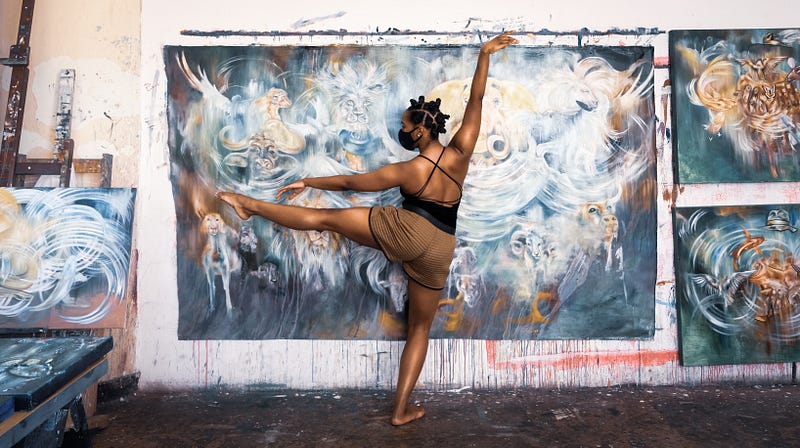
Sometimes I see commentary that if you were to truly accept yourself, then you would abandon the “toxicity” of self-improvement, with accompanying criticism that those on the true journey of self-improvement abandon “self-acceptance” because this would stagnate your growth.
I feel like both views are quite extreme and differ from my understanding of how these overlap. I feel like I went through all the combinations there could be with these concepts, and where I’ve landed is that both can co-exist harmoniously.
No self-acceptance and no self-improvement
We start the story in high school, where my self-acceptance was at an all-time low and I virtually had no self-improvement. Though I talk a lot about how I was a perfectionist, wanting to have straight A grades or be a certain exact weight, any “improvement” I had on that end in terms of inching closer to this numerical goal wasn’t a real improvement.
Those numbers were empty to me, defined by others as “good” or “enough”. Any “growth” I had towards these goals didn’t translate to anything bigger and was mostly motivated out of fear.
No self-acceptance and self-improvement
I learned that this way of living wasn’t enough and that those numbers would never truly satiate whatever it was in me. The numbers were empty and I didn’t actually have any guiding principles or values other than “do as teachers or parents tell you to do”.
My road to self-improvement came out of realizing that what I was doing wasn’t working for me and that I didn’t like who I was. I worked on developing my values while simultaneously not accepting and not liking my past. There was movement forward, but it was out of fear and self-hatred.
Self-acceptance and no self-improvement
Given that last sentence, you can probably see why I stopped. When I was embarking on self-improvement and trying to “change” things for the better, but from a position where it was done to erase a past that I saw was imperfect and not enough, self-improvement itself became toxic to me.
This time, instead of chasing numbers, I was chasing ideals that still came out of hating a portion of me. I abandoned all of it. I said I didn’t need to be better, I just need to be me. I wanted to be a version of me that accepted who I was, whoever I was.
And I thought that self-improvement necessarily had to be at odds with that.
It doesn’t.
Self-acceptance and self-improvement
This brings me to the final stage: both co-existing in harmony. I think when you finally give yourself that self-acceptance, and that genuine tender, love and care, that builds a strong foundation for anything.
At first, it was to tackle the harm that self-improvement out of self-hatred had done. But as time went by, when you start from a foundation of accepting who you are, any new changes or new directions become out of curiosity.
There it was. The opposite of being fueled or shoved forward by this sense of primal fear of scarcity, or of being not worthy for something and thus needing to improve.
To me, self-improvement is something I become curious about. Some new experiments, new habits, new ways of life I want to see incorporated into my life not because I wasn’t whole and thriving before, but because I’m curious about how something new might bring yet another flavour into how I exist.
Fear is a withdrawal emotion, even when it’s being used to push forward for change. That’s why when change doesn’t occur, I winced and felt dejected.
Curiosity is an approach emotion. When change doesn’t occur or, as I like to put it now, doesn’t fit, that’s okay. I’m not particularly lacking in something when something of chance doesn’t work out. There are other ways of making it happen if I’m still interested, and if I’m not, now I’m clear on that. I wouldn’t have known until I tried it out, and that’s the aspect of self-improvement that I like.
Constantly Changing But Never Forgetting or Abandoning Who I Am
Sometimes, that feels like an oxymoron. Yet, I embrace this phrase because in seemingly contrasting values exist a natural kind of harmony. Sometimes it works out. This is where I’m at right now, giving my circumstances.
There’s a chance that maybe yet a fifth combination might come out, depending on what might happen in the future.
And now, instead of fearing that change, I can firmly feel comfortable where I am now while making space to be curious about the future.
And fam, does that bring a smile to my face as I write :)
Wrap-up Thoughts
Can you believe that I’ve written 2.3k words? Can you believe that you’ve read 2.3k of them alongside me? That’s wild, I didn’t think I’d have so many thoughts on just three seemingly innocent and straightforward questions.
What are your thoughts? Are we similar? Do we differ? Do you have suggestions or experiences that you think I might like to hear, now having read mine? Happy to hear them!
Thank you, once again to 𝘋𝘪𝘢𝘯𝘢 𝘊., for these amazing prompts!
Lucy (The Eggcademic) [she/her]’s fingers are tired from writing all of this whoa! That was such a workout, for my fingers and my brain! She can’t wait to take some more time to write longer essay-based reflections in place of the usual poetry now that she has a bit more time in her days!
🐰🌌 Bookmark & read these pieces by me and James G Brennan


