
Food | Bulgaria | Sauce | Lutenitsa
Learning How To Make Lutenitsa
A traditional Bulgarian sauce made the traditional way.
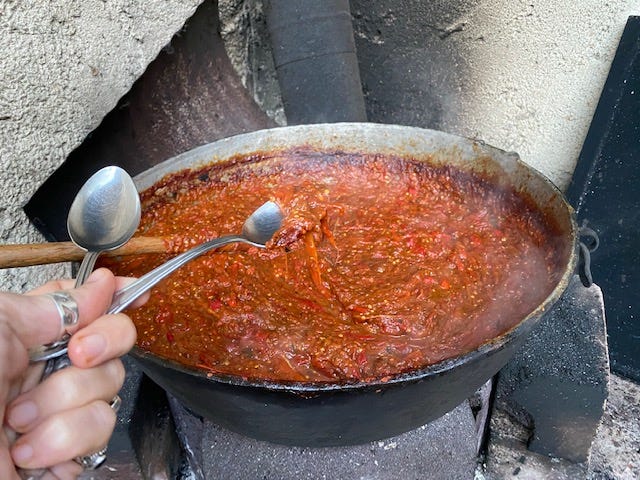
Chris and I recently arrived to a property in Bulgaria where we are volunteering for 2–3 weeks. We applied for this gig on a platform called HelpX and we are going to be mostly helping with gardening projects.
While we initially thought that it was a farm, we now realize that it definitely is not. But it does have its fair share of fruit trees that need tending to, and our landscaping and gardening experience will certainly come in handy.
However, on our first full day here, before we got started on gardening tasks, our host wanted us to help her make a popular Bulgarian sauce called Lutenitsa. Traditionally it is made in large batches and with many people taking part.
So when she knew we were coming, she decided that it would be a good time to take on this project.
These sorts of experiences are the true reason that we like to volunteer and get involved in the places that we are traveling through. It’s in these learning opportunities where we truly get to deep dive into cultures and learn about how they are and have been, surviving on the planet.
To me, this is what travel is really all about.
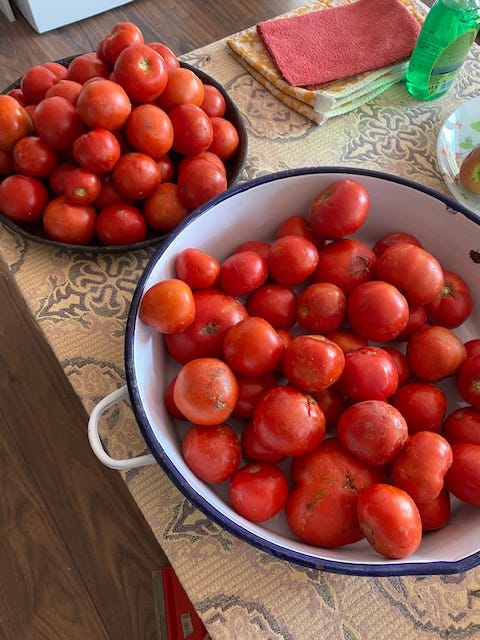
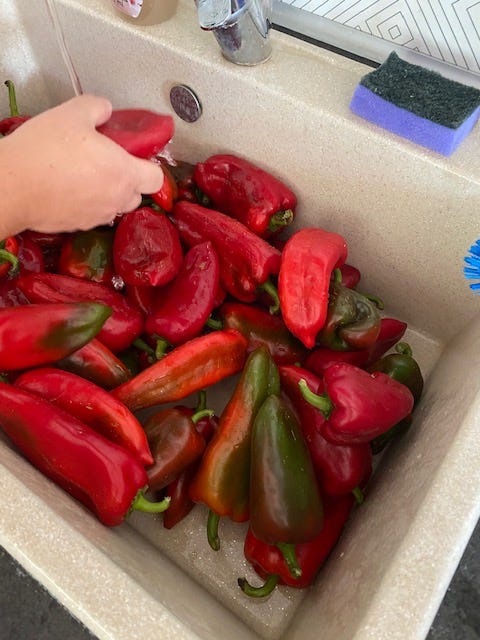
When we arrived we saw mountains of tomatoes on the counters in various vessels, which she said we would be using to make it. But we didn’t know about the 44 kilos of red peppers that she had waiting in her pantry. That is, at least, until she carted them out in large garbage bags and started dumping them into the sink to wash.
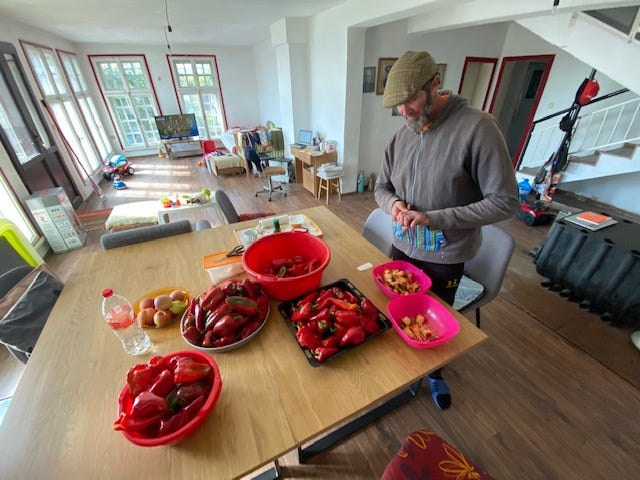
Our first task of the day was to pull the cores and seeds out of each one. Though we didn’t count how many we did, a rough estimate is that there were around 200 of them.
After a while, I noticed her outside doing something and I got curious to see what was going on. It was then that I found her roasting large eggplants on an outside fire.
I didn’t know it at the time, but the whole process would be done outside!
As I started bringing the peppers out, she started adding them to the roasting surface as well.
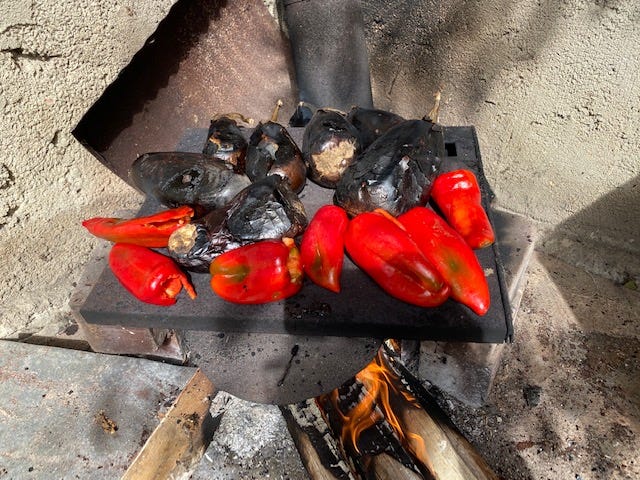
The point is to pretty much char the skin of both vegetables, then, you have to take the time to peel the burnt parts off. This is the really time-consuming part and we spent 2-3 hours doing this in total.
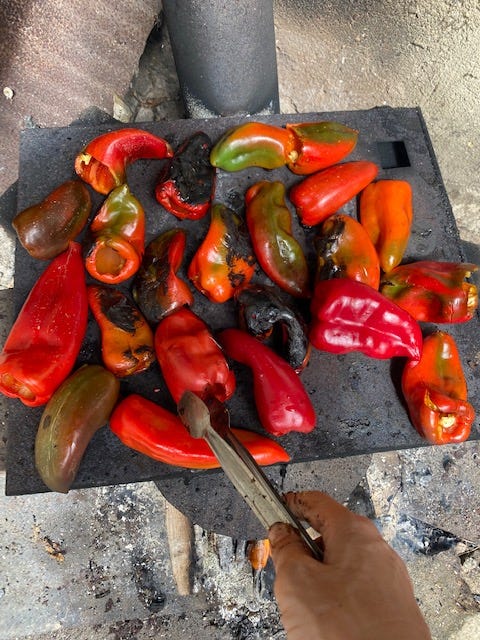
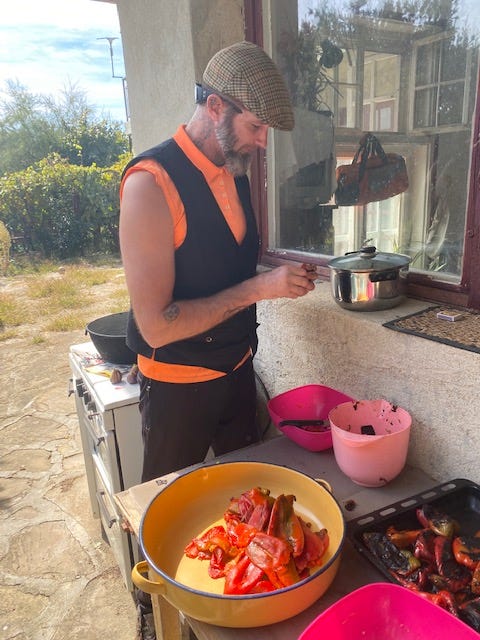
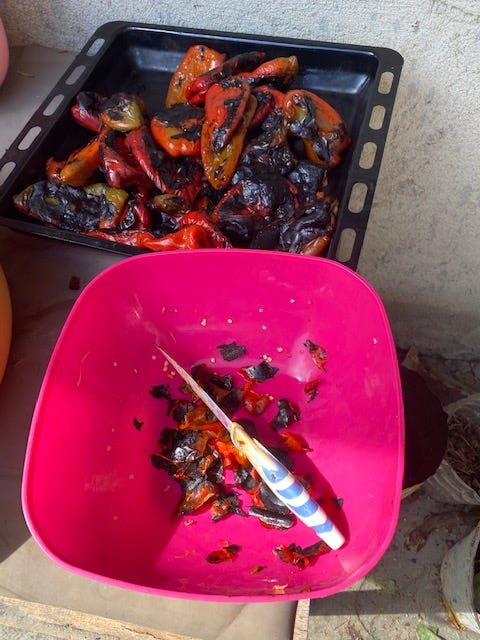
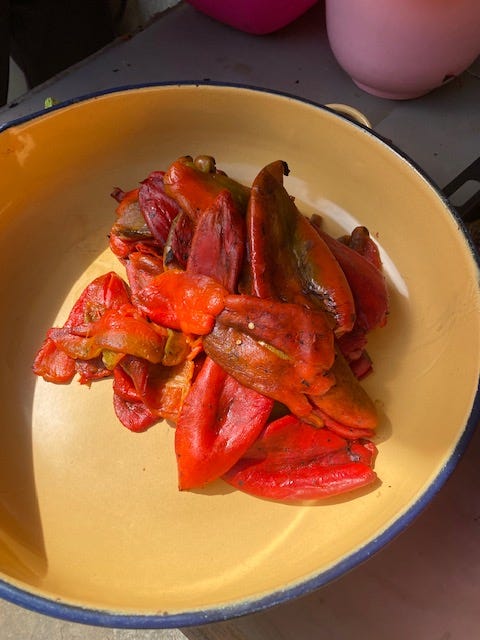
Our host left us to it for a bit while she went to attend to other things inside. It was pretty interesting managing it all. For one, I had to continuously keep flipping the peppers so that they didn’t get too burnt, but I also had to make sure that the fire didn’t go out.
It was a very busy time!
At about 2:00 our host came outside and told us that lunch was ready. We had just loaded the last batch of peppers on the roasting surface and she told us she would manage it while we ate.
Before coming out to help me roast and peel the peppers, Chris spent about 30 minutes inside chopping all of the tomatoes. I was amazed that they all fit in one large metal tub.
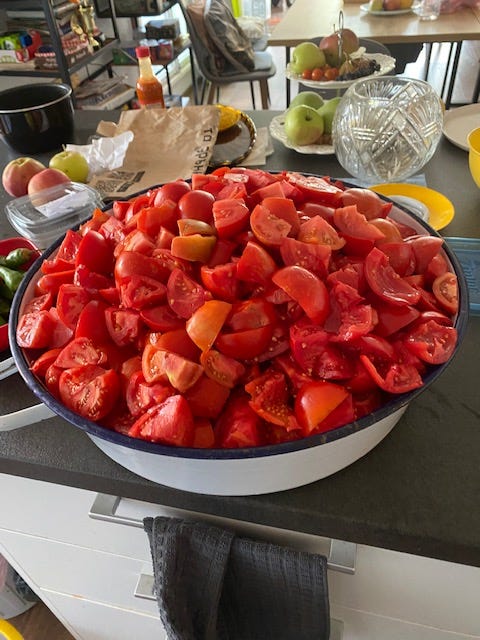
While we were eating lunch, our host finished roasting the peppers, then came in and got the tomatoes. I finished lunch and then headed outside to see what she was up to.
Again, I was surprised that she was cooking everything on the fire outside.
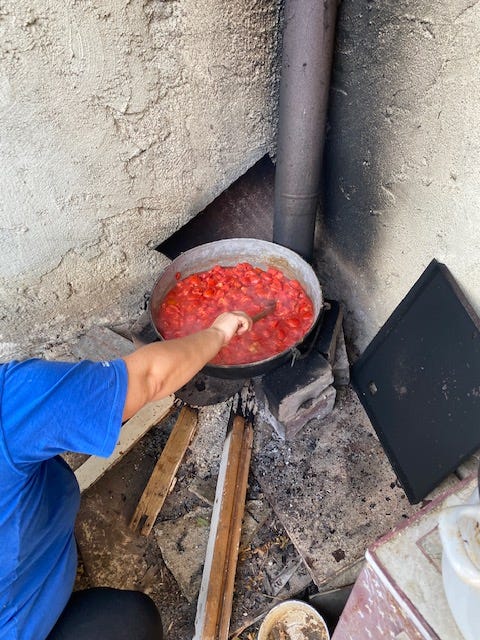
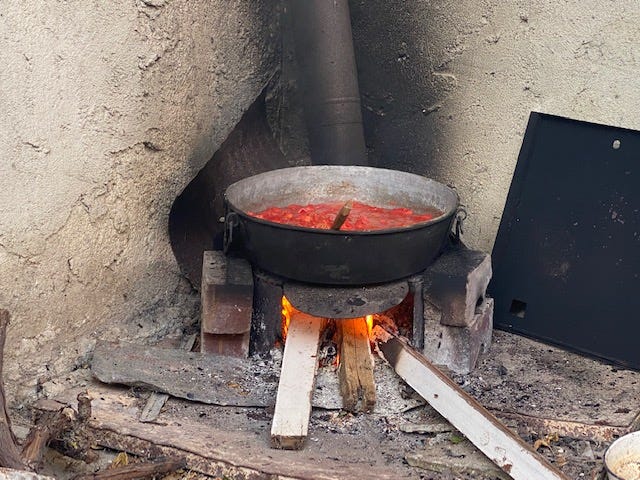
At this point, she told us that there wasn’t much to do. She was going to add the roasted eggplant and peppers soon, and it would be cooking for a while.
We were both tired from our traveling to get there, and hadn’t slept well our first night, so we decided to go to our room for a bit of a nap. We fell asleep quickly and I was amazed when I woke up to realize that we had slept for 3 hours!
I was scared that we had missed part of the process so I raced downstairs, camera in hand. By then it was 6:30 pm and we had been at this since about 10:30 in the morning!
I found our host outside, still manning the pot, but this time it had turned a much darker brown/red with the addition of the peppers and eggplant.
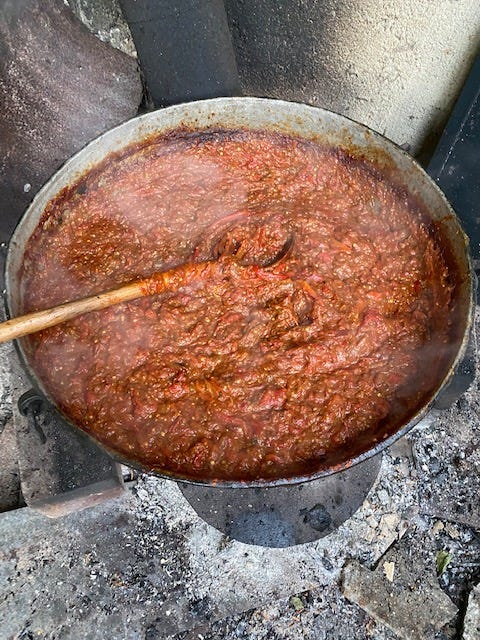
She said that she was just at the end stage of the process. She added almost one liter of sunflower oil, a bunch of salt, and some honey to make it sweet.
She also told me that some people will add cumin, onions and garlic, depending on their taste preferences.
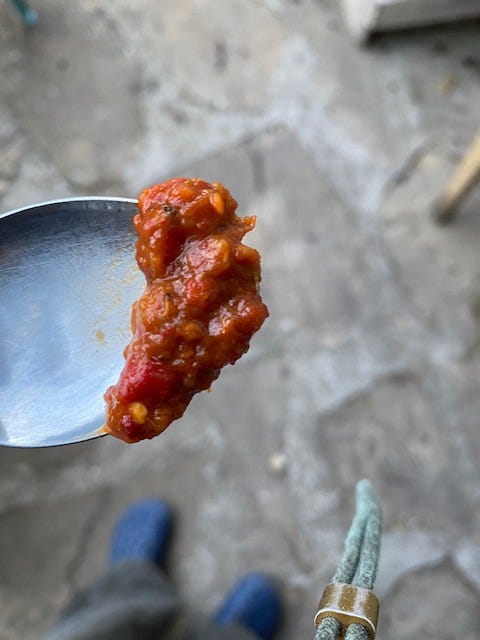
According to the Feastern Europe website (how great is that name?), Lutenitsa is defined as:
The Bulgarian roasted pepper relish. This spicy-sweet condiment makes a delicious snack or appetizer. Spread it on a toasted bread round or cracker, serve it with meatballs or sausage, or simply spread it on a cold cut sandwich.
The website link also has a recipe with it, though they don’t use eggplant in theirs, they use hot peppers instead. It seems that there are many ways to make this popular dish and you can adjust the flavor to your own tastes.
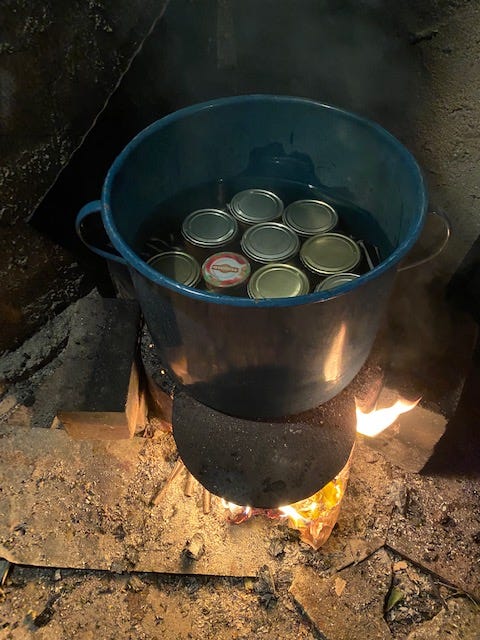
After putting the sauce into jars, and again processing them in the pot, on the outside fire, our host gave us some to have with our dinner of roasted chicken and baked potatoes.
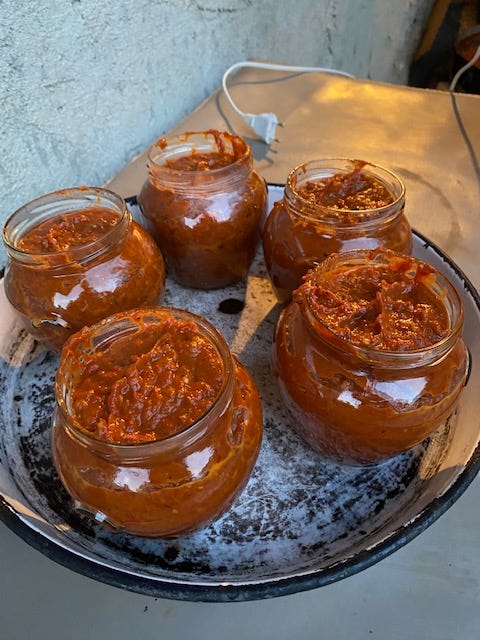
I can tell you with authority, that Lutenitsa is DELICIOUS!
The smoky flavor is what seals the deal with this delightful spread and doing it on the outside fire is surely the ticket to making it taste so good!
I can certainly see why this is a Bulgarian staple in the household, and its uses are so varied. Our host made about 20 jars of it, and it will keep over the winter and into next summer when she will repeat the whole process again.
All told, processing the Lutenitsa took about 12 hours! Truly a whole day's work!
Of course, our host said that you can make small batches as well, which is outlined in the Featstern Europe website recipe, but she also said that it is always a lot of work and it’s best to just do a bunch of it all at once.
The rewards will be well worth the effort while they enjoy it throughout the winter season, and we will certainly be having as much as we can while we are here for the next 2–3 weeks as well!
Thanks for learning about Lutenitsa! It truly is a very Bulgarian dish.
Happy travels!
xo Jill
To write for my publication Sharing Food, click below!
Stories from other contributors:

More food stories from me:
Hi there, we are 2 Canadians, Jill and Chris from Artistic Voyages. We have been nomadic since 2017 living in numerous different countries, and experiencing the life and diversity of our planet on the ground and firsthand. We paint FREE murals in exchange for accommodation. Consider tipping us on Ko-fi!
Subscribe to Medium through my referral link (I will earn a small commission) to get full access to my writing plus thousands of others! Plus sign up here to get my articles by email!
Join our adventure by hitting the links below!
Website | Instagram | Facebook | Twitter | Patreon| YouTube | Medium


