avatarJoshua Davis

Free AI web copilot to create summaries, insights and extended knowledge, download it at here

5522

Abstract

it forum. Finally, it would be relatively trivial for me to build a team of developers and crowdfund a few million dollars of capital. By some conservative estimates, my app could then go mainstream by the summer of 2018. What could possibly go wrong?</p><p id="701f">This was how Ethereum started, if Vitalik Buterin could do it then why not me? Forget taking a few years to work for another successful startup to gain valuable experience or perspective. This step was unnecessary for the founders of other apps on Ethereum such as Augur or MakerDAO. Forget trying to publish in a peer-reviewed journal, what would be the point of that? Sure, occasionally I might doubt myself, who doesn’t. From time to time I might wonder if failing to publish in a reputable journal made my ideas seem more fringe. Then I’d immediately invoke the Bitcoin whitepaper as if that was the ultimate vindication of publishing to an obscure internet forum 🤣(<a href="https://en.wikipedia.org/wiki/Anchoring">anchoring bias</a>).</p><p id="36e1">I’m reminded of the <a href="https://en.wikipedia.org/wiki/Dunning%E2%80%93Kruger_effect">Dunning–Kruger effect</a>. Developed by social psychologists David Dunning and Justin Kruger, their poster child was a man who, after learning that lemon juice could be used as a type of invisible ink, decided to rob a bank using this insight. “(he) robbed banks while his face was covered with lemon juice because he believed it would make him invisible to the surveillance cameras.” People can talk themselves into believing anything I suppose.</p><blockquote id="6142"><p>“Obviously everyone’s terrible when they start (doing something) … you need to have a certain amount of <b>self-delusion</b> to persist despite all evidence to the contrary … If you haven’t got enough <b>self-delusion</b> you won’t persist, you’ll give up. But, if you got too much and you never get any good you just get stuck in this loop of doing terrible gigs. Thankfully I was <b>delusional </b>enough, or you know adamant enough, (to say) I’m gonna do this and so I think I would have definitely persisted.”<i><a href="https://youtu.be/18kehjRa_Ig?t=1886">Matt Parker</a></i></p></blockquote><p id="1287">Is it really impossible that someone without formal training in insurance markets would ever develop a viable model for peer-to-peer insurance? It’s certainly unlikely but not impossible.</p><p id="055a">You have to convince people. Conviction and confidence go hand in hand. Although I might have been publishing my <i>research</i> on Medium and Reddit that doesn’t mean I couldn’t publish in a peer-reviewed journal if I really wanted to. To overcome the fact that I was not working at a major university or affiliated institution, I just needed to express an even stronger conviction. Whatever authority I lacked I could simply make up for by sheer confidence and force of will. Is it impossible that some significant insight might be published on these platforms by somebody who was previously unknown? Unlikely but not impossible.</p><h1 id="4a3e">The outcome of four years</h1><p id="2440">I have written over 150,000 words on the topic of peer-to-peer insurance and I’m still writing because it’s an important topic. I learn more as I continue to research and write. I wouldn’t continue if I wasn’t convinced that there was value in doing so.</p><h1 id="090b">Traditional Insurance is flawed</h1><figure id="f9d9"><img src="https://cdn-images-1.readmedium.com/v2/resize:fit:800/1*9ROJJFnSOUP3SfOvQpiX-Q.png"><figcaption>The health insurance trap</figcaption></figure><p id="bca8">TandaPay’s approach was developed in response to a fundamental flaw in markets for healthcare insurance..</p><h2 id="00ec">The most obvious flaw in healthcare insurance markets</h2><p id="c39a">Traditional insurance is flawed in that it uses one premium to both <b>pay claims</b>, and <b>provide profit</b> for the insurer. In healthcare this has led to a <a href="https://healthinformatics.uic.edu/blog/shift-from-volume-based-care-to-value-based-care/">volume-based payment system</a>. Such a system incentivizes insurers to focus on the total number of tests, operations, surgeries and treatments administered to patients. This focus on volume seems to confuse patient outcomes with the volume of services required to reach those outcomes.</p><blockquote id="6359"><p><a href="https://www.hfma.org/content/dam/hfma/document/comment_letter/PDF/5440.pdf">rewarding desirable outcomes should not mean rewarding an excessive volume of services to achieve those outcomes</a>.”</p></blockquote><p id="2bb3">If you are an insurer and you want to increase your profits what do you do? <b>Insurers cannot make their slice of the pie bigger</b> by increasing the share of a premium that is used for administrative costs. The Affordable Care Act places specific limits on what percentage of a premium becomes an insurer’s profits. Insurers can only make the entire pie bigger which gives all of the providers in the system (the insurer included) more pie. This requires an insurer to increase the total volume of services consumed by policyholders.</p><blockquote id="75d7"><p><a href="https://stanmed.stanford.edu/2017spring/how-health-insurance-changed-from-protecting-patients-to-seeking-profit.html">The framers of the Affordable Care Act tried to curb insurers’ profits and their executives’ salaries, which were some of the highest in the U.S. health care industry, by requiring them to spend 80 to 85 percent of every premium dol

Options

lar on patient care.</a></p></blockquote><p id="b985">When the ACA fixed the percentage of a premium which could be used for administrative costs it didn’t lower the total cost of insurance. On the contrary it resulted in an increase in consumption of healthcare services. After the ACA passed the only way an insurer could increase their profit was if the total spent on healthcare increased.</p><blockquote id="eb56"><p><a href="https://www.npr.org/sections/health-shots/2018/05/25/613685732/why-your-health-insurer-doesnt-care-about-your-big-bills">These insurers and providers have a symbiotic relationship, There’s not a great deal of incentive on the part of any players to bring the costs down.</a></p></blockquote><p id="d111">The chart below gives you a clear visualization of this effect and you can watch <a href="https://www.youtube.com/watch?v=tNla9nyRMmQ">this video</a> if you need further explanation. If you want to watch a great documentary on this subject I highly recommend <a href="https://tubitv.com/movies/312523/money_and_medicine"><i>Money and Medicine</i></a> and the associated <a href="https://www.pppdocs.com/moneyandmedicine/MandMViewerGuide.pdf">viewer’s guide</a>.</p><figure id="60f2"><img src="https://cdn-images-1.readmedium.com/v2/resize:fit:800/1*FlhxMLBGL4_nFGDirxAf-Q.png"><figcaption></figcaption></figure><h2 id="b026">The most obvious solution</h2><p id="8a1f">It’s clear that we need to decouple <b>premiums</b> used to pay claims from <b>administrative fees</b> paid to providers. This change would require that 100% of every premium dollar must be used to pay claims and rebates to policyholders. It means that an insurer can’t make more profit simply by increasing the volume of services consumed.</p><p id="320e" type="7">What would happen if we built a system where 100% of the premiums were used to pay claims and rebates?</p><p id="ce4b">This was the starting point of all of my research into peer-to-peer insurance. What would happen if we built a system where 100% of the premiums were used to pay claims and rebates? Once I started down this path, however, the results led me in a totally unexpected direction. That direction became TandaPay.</p><h2 id="b133">An unexpected result</h2><p id="3775">If you are curious to see what makes TandaPay a really unique protocol you should start with this post:</p><ul><li><a href="https://readmedium.com/concerns-about-fraud-within-tandapay-a414ea8c0e0"><b>Fraud Protections within TandaPay</b></a></li></ul><p id="8194">Once you finish that post you are primed to read the most important thing I’ve ever written:</p><ul><li><a href="https://readmedium.com/the-politics-of-sexual-harassment-data-8265203e6fd9"><b>The Politics of Sexual Harassment Data</b></a></li></ul><p id="6725">The post I wrote on sexual harassment data was a completely unexpected result. The significant limitations which constrained the protocol likely helped to produce this finding.</p><p id="58bd">These are just a few of the constraints which limit the protocol:</p><ul><li>Insurance pools must be small groups of 50 to 100 policyholders.</li><li>Policyholders should be local to each other or part of the same social network.</li><li>The value of a claim should be relatively low, for the US market this is less than $1000.</li><li>All claims submitted to the group for approval need to be paid an identical amount.</li></ul><p id="946c">As a result of these limitations the protocol isn’t very good at providing coverage which is comparable to a traditional insurer. This forced me to research other use cases. The use case which holds the most promise is completely unrelated to insurance.</p><p id="64a4">Given our recent political turmoil most people are familiar with the term “<a href="https://en.wikipedia.org/wiki/Trump%E2%80%93Ukraine_scandal#Whistleblower_complaints">whistleblower</a>.” What people may find unfamiliar is that some companies use software solutions to protect the anonymity of individuals who attempt to file <a href="https://en.wikipedia.org/wiki/Complaint_system">complaints</a>. The TandaPay protocol is a special variant of a whistleblower complaint system. It uses financial incentives to guarantee that the content of complaints submitted by whistleblowers are true. It requires that participants, within the group from which the whistleblower complaint originated, verify the facts of the complaint.</p><p id="d016">There are no publications on the internet which I have found that provide a description of a software system like TandaPay. TandaPay functions by combining a system for <a href="https://readmedium.com/kerner-commissions-prescription-for-effective-grievance-response-d40c6a8d1a2"><b>complaint validation</b></a> with a system of <a href="https://joshuad31.com/concerns-about-fraud-within-tandapay-a414ea8c0e0"><b>financial incentives</b></a>. I believe that if this type of system could be deployed, it would represent a new innovation which has never previously existed. My final conclusion is that the TandaPay protocol would provide more value when integrated into whistleblower software than it would as a protocol for insurance.</p><p id="7d2a">If you can understand what I wrote and reach the same conclusions about what the protocol does then the value of my research is self-evident. One only needs to read what I wrote to understand why this is true. More information regarding my research into TandaPay can be found in <a href="http://www.tandapay.com">this post</a>.</p></article></body>

Blockchain retrospective

A look at the cognitive biases that led me here

Justin Metz — The Economist Sept. 18, 2021

Introduction

My name is Joshua Davis. In 2016 I took a multi-year leave of absence from a salaried position in order to research peer-to-peer architecture. My intent was to build an app for decentralized insurance. Progress has been slow. Mostly I’ve waited for Ethereum infrastructure to mature and for scaling solutions to lower network fees. While waiting for the ecosystem to mature I’ve applied for several patents.

The most important thing I did over the past five years was to become convinced that communities can insure themselves. To understand the problem I’m trying to solve start with this blog post. This architecture sidesteps regulation which has prevented communities from forming these types of self-insured collectives in the past.

Mistakes, I’ve had a few. But then again…

Mistakes were made 😄

Taking a step back and seeing our mistakes can sometimes be awkward but may also prove to be profitable. My start was misguided. But after I persisted the result was valuable.

I made progress toward building a blockchain app. My start lacked a lot of rational judgement but I continued to evaluate architectures that were flawed until I found one that was good. The result was a new type of insurance architecture that eliminates the need for a centralized entity to hold reserves.

In a previous post, I explained why I started this journey. In this post, I provide perspective as to what I’ve gained up till now.

Without cognitive biases I wouldn’t have been foolish enough to even bother to try

Fake Internet Money

The ICO craze was fueled by intense speculation. The blockchain minted several virtual millionaires within the span of a few months in the first half of 2017. All that money may have gone to people’s heads. Many realized that if they could predict the next Ethereum they were a heartbeat away from becoming multi-millionaires. Being an early investor in cryptocurrency definitely strengthened my own delusional views 📈🤑. Gaining hundreds of thousands or even millions of dollars within a year without having earned it felt like a vindication of my intuitive prowess 🤣😂.

No harm in the memes
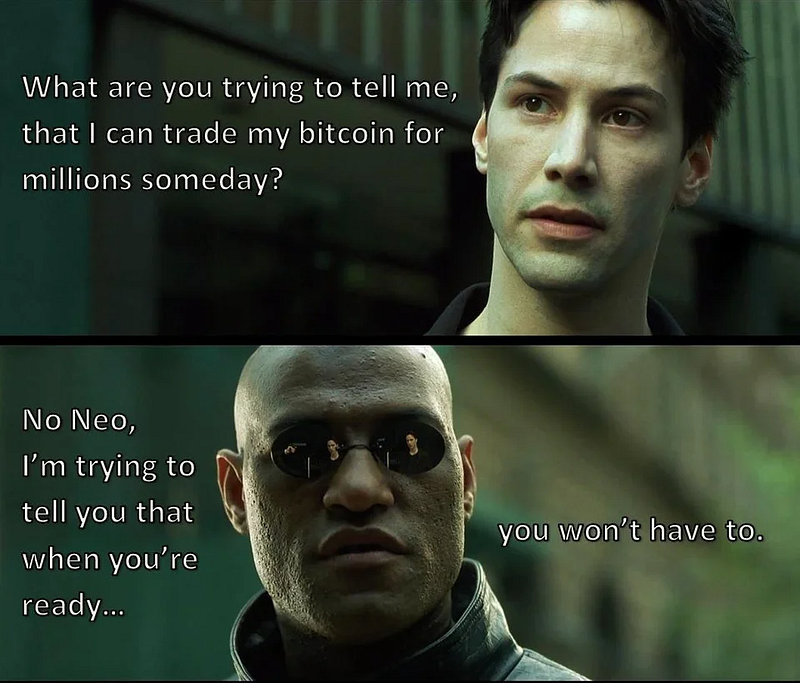
I‘m not Neo and this isn’t the Matrix

Now that I look back, I can clearly see how the integration of memes into the discussion of cryptocurrency played a role. Changing an idea into a meme makes it much easier to change a person’s inner narrative.

“Bitcoin and things like it are the equivalent of the red pill.” — Chamath Palihapitiya

This is speculation on my part, perhaps future researchers will become convinced that cryptocurrency communities on Reddit circa 2016–2017 entered into a type of group perceptive psychosis. People are being told that they are the equivalent of Neo from the matrix. If you are the star of your own inner narrative, the hero of the world, the one that has “taken the red pill,” how can you then go back to your life prior to crypto? That would be like saying, “you know what, I just realized I was never really that special, and all these ‘newfound friends’ are not really my friends.” This is the power of groupthink (collective self-deception). If you ever tried waking up from the dream then your friends would immediately gaslight you into thinking that you were crazy for wanting to “plug yourself back into the matrix.” I suspect that this is the real power of memes, they change our inner working narrative. When memes are integrated into Reddit alongside scholarly whitepapers they have all the more authority to keep people down the rabbit hole (authority bias).

Dunning-Kruger Effect
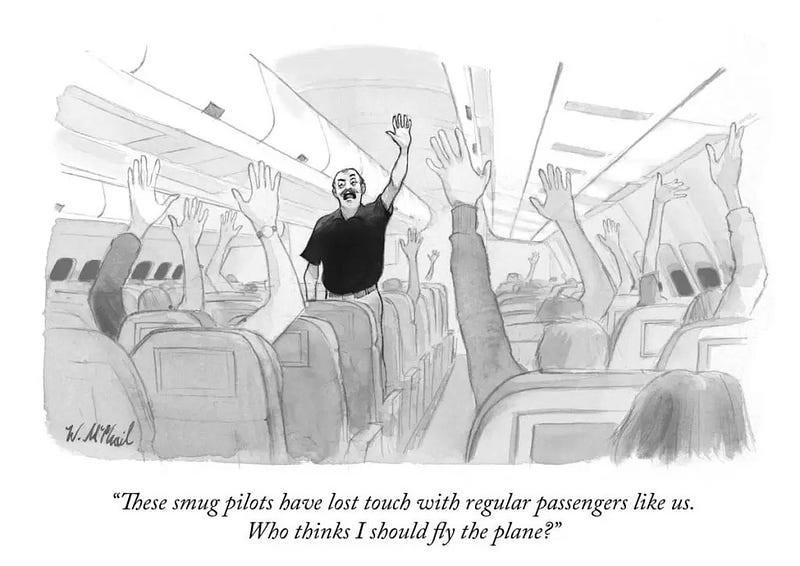
the Dunning-Kruger effect

My plan was simple. First I needed to create a stylish website to host my whitepaper. Then I would publish my brilliant insights on the Ethereum Reddit forum. Finally, it would be relatively trivial for me to build a team of developers and crowdfund a few million dollars of capital. By some conservative estimates, my app could then go mainstream by the summer of 2018. What could possibly go wrong?

This was how Ethereum started, if Vitalik Buterin could do it then why not me? Forget taking a few years to work for another successful startup to gain valuable experience or perspective. This step was unnecessary for the founders of other apps on Ethereum such as Augur or MakerDAO. Forget trying to publish in a peer-reviewed journal, what would be the point of that? Sure, occasionally I might doubt myself, who doesn’t. From time to time I might wonder if failing to publish in a reputable journal made my ideas seem more fringe. Then I’d immediately invoke the Bitcoin whitepaper as if that was the ultimate vindication of publishing to an obscure internet forum 🤣(anchoring bias).

I’m reminded of the Dunning–Kruger effect. Developed by social psychologists David Dunning and Justin Kruger, their poster child was a man who, after learning that lemon juice could be used as a type of invisible ink, decided to rob a bank using this insight. “(he) robbed banks while his face was covered with lemon juice because he believed it would make him invisible to the surveillance cameras.” People can talk themselves into believing anything I suppose.

“Obviously everyone’s terrible when they start (doing something) … you need to have a certain amount of self-delusion to persist despite all evidence to the contrary … If you haven’t got enough self-delusion you won’t persist, you’ll give up. But, if you got too much and you never get any good you just get stuck in this loop of doing terrible gigs. Thankfully I was delusional enough, or you know adamant enough, (to say) I’m gonna do this and so I think I would have definitely persisted.”Matt Parker

Is it really impossible that someone without formal training in insurance markets would ever develop a viable model for peer-to-peer insurance? It’s certainly unlikely but not impossible.

You have to convince people. Conviction and confidence go hand in hand. Although I might have been publishing my research on Medium and Reddit that doesn’t mean I couldn’t publish in a peer-reviewed journal if I really wanted to. To overcome the fact that I was not working at a major university or affiliated institution, I just needed to express an even stronger conviction. Whatever authority I lacked I could simply make up for by sheer confidence and force of will. Is it impossible that some significant insight might be published on these platforms by somebody who was previously unknown? Unlikely but not impossible.

The outcome of four years

I have written over 150,000 words on the topic of peer-to-peer insurance and I’m still writing because it’s an important topic. I learn more as I continue to research and write. I wouldn’t continue if I wasn’t convinced that there was value in doing so.

Traditional Insurance is flawed

The health insurance trap

TandaPay’s approach was developed in response to a fundamental flaw in markets for healthcare insurance..

The most obvious flaw in healthcare insurance markets

Traditional insurance is flawed in that it uses one premium to both pay claims, and provide profit for the insurer. In healthcare this has led to a volume-based payment system. Such a system incentivizes insurers to focus on the total number of tests, operations, surgeries and treatments administered to patients. This focus on volume seems to confuse patient outcomes with the volume of services required to reach those outcomes.

rewarding desirable outcomes should not mean rewarding an excessive volume of services to achieve those outcomes.”

If you are an insurer and you want to increase your profits what do you do? Insurers cannot make their slice of the pie bigger by increasing the share of a premium that is used for administrative costs. The Affordable Care Act places specific limits on what percentage of a premium becomes an insurer’s profits. Insurers can only make the entire pie bigger which gives all of the providers in the system (the insurer included) more pie. This requires an insurer to increase the total volume of services consumed by policyholders.

The framers of the Affordable Care Act tried to curb insurers’ profits and their executives’ salaries, which were some of the highest in the U.S. health care industry, by requiring them to spend 80 to 85 percent of every premium dollar on patient care.

When the ACA fixed the percentage of a premium which could be used for administrative costs it didn’t lower the total cost of insurance. On the contrary it resulted in an increase in consumption of healthcare services. After the ACA passed the only way an insurer could increase their profit was if the total spent on healthcare increased.

These insurers and providers have a symbiotic relationship, There’s not a great deal of incentive on the part of any players to bring the costs down.

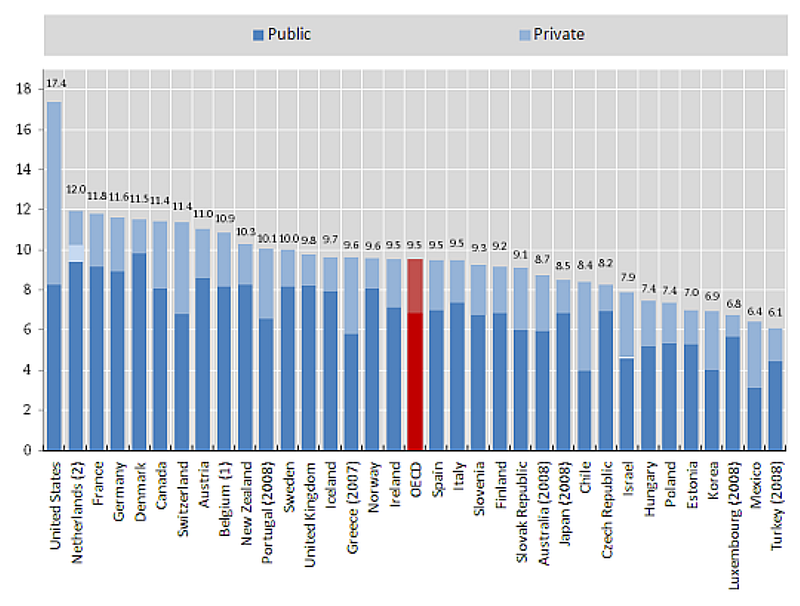
The chart below gives you a clear visualization of this effect and you can watch this video if you need further explanation. If you want to watch a great documentary on this subject I highly recommend Money and Medicine and the associated viewer’s guide.
The most obvious solution

It’s clear that we need to decouple premiums used to pay claims from administrative fees paid to providers. This change would require that 100% of every premium dollar must be used to pay claims and rebates to policyholders. It means that an insurer can’t make more profit simply by increasing the volume of services consumed.

What would happen if we built a system where 100% of the premiums were used to pay claims and rebates?

This was the starting point of all of my research into peer-to-peer insurance. What would happen if we built a system where 100% of the premiums were used to pay claims and rebates? Once I started down this path, however, the results led me in a totally unexpected direction. That direction became TandaPay.

An unexpected result

If you are curious to see what makes TandaPay a really unique protocol you should start with this post:

Once you finish that post you are primed to read the most important thing I’ve ever written:

The post I wrote on sexual harassment data was a completely unexpected result. The significant limitations which constrained the protocol likely helped to produce this finding.

These are just a few of the constraints which limit the protocol:

  • Insurance pools must be small groups of 50 to 100 policyholders.
  • Policyholders should be local to each other or part of the same social network.
  • The value of a claim should be relatively low, for the US market this is less than $1000.
  • All claims submitted to the group for approval need to be paid an identical amount.

As a result of these limitations the protocol isn’t very good at providing coverage which is comparable to a traditional insurer. This forced me to research other use cases. The use case which holds the most promise is completely unrelated to insurance.

Given our recent political turmoil most people are familiar with the term “whistleblower.” What people may find unfamiliar is that some companies use software solutions to protect the anonymity of individuals who attempt to file complaints. The TandaPay protocol is a special variant of a whistleblower complaint system. It uses financial incentives to guarantee that the content of complaints submitted by whistleblowers are true. It requires that participants, within the group from which the whistleblower complaint originated, verify the facts of the complaint.

There are no publications on the internet which I have found that provide a description of a software system like TandaPay. TandaPay functions by combining a system for complaint validation with a system of financial incentives. I believe that if this type of system could be deployed, it would represent a new innovation which has never previously existed. My final conclusion is that the TandaPay protocol would provide more value when integrated into whistleblower software than it would as a protocol for insurance.

If you can understand what I wrote and reach the same conclusions about what the protocol does then the value of my research is self-evident. One only needs to read what I wrote to understand why this is true. More information regarding my research into TandaPay can be found in this post.

Writing
Authors
Illumination
About Me
Self
Recommended from ReadMedium