avatarMartine Nyx

Free AI web copilot to create summaries, insights and extended knowledge, download it at here

3496

Abstract

alogue in a masterful way that combines an unmistakable underlying statement with just enough subtlety to make it effortlessly blend into the general allegory of the story: the “sunken place” represents the mental state of subjugation that the African American population has been forced into for centuries. And the “transplant procedure” employed in the movie ensures that the “black host” is a <i>passive observer</i> of the will and control of their white masters:</p><blockquote id="b6a1"><p>You won’t be “gone”, not completely. A sliver of you will still be in there, somewhere, limited consciousness. […] Your existence will be as a passenger. An audience. You’ll live in the sunken place.</p></blockquote><p id="9622">Then there’s a third layer, one that is even more covert and elusive than the previous one. Elements of dialogue or general mise-en-scène belonging to this layer are so subtle they might go completely unnoticed unless one pays real attention to them. One such example is Dean’s seemingly out-of-place observations on the “unwanted presence” of deer in the forest:</p><blockquote id="89dd"><p>You know what I say? I say “one down, a couple hundred thousand to go”. I don’t mean to get on my high horse but I’m telling ya, I do not like the deer. I’m sick of it. They’re taking over. They’re like rats. […] I see a dead deer on the side of the road, I think to myself: that’s a start.</p></blockquote><p id="a738">Once again, upon watching the movie a second or a third time, Dean’s words gain a much deeper, much darker meaning. It isn’t deer he is concerned with.</p><p id="560a">In yet another subtle commentary on contemporary American society, the Armitage family is never portrayed as <i>openly</i> racist. In fact, most family members go a long way to prove that they are <i>not</i> racist (hence the numerous references to Obama), and one might even suggest that, in their own distorted worldview, they do <i>not</i> even consider themselves as such, regardless of their appalling actions.</p><p id="5b5d">When Chris specifically inquires as to why the Armitages target black people in particular, he is met with a shrug and a dismissive: “Who knows?” quickly followed by a defensive “Please don’t lump me in with that. I could give a shit what color you are”.</p><p id="cca4">But, as the well-aware audience that we are, we know that there are multiple factors playing into this decision. For once, people belonging to racial minorities, particularly black people, are statistically <a href="https://harvardpolitics.com/missing-people-of-color/">much less likely to be found when missing</a> compared to white people.</p><p id="df3c">The subtlety with which Peele approaches the subject of the Armitage family’s racism seems to be a clever choice reminding the audience that <b>racism exists in many different forms</b>, <b>and not all of them are obvious</b>. Indeed, some of us might even think of ourselves as not being racist or as being anti-racist when oftentimes we ourselves still hold unconscious or semi-conscious racial bias.*</p><p id="e5f3">Non-explicit racism is just as big of an issue, if not even more so, than explicit racism, because it infiltrates public and private spaces more subtly and “discreetly,” denying its discriminatory nature while continuing to perpetuate its social injustices.</p><p id="f647">By not portraying the Armitage family as “traditionally racist,” Peele gives us an idea of how pervasive and oftentimes “invisible” raci

Options

al discrimination is in American society.</p><p id="2223"><i>Follow for <a href="https://readmedium.com/shadow-of-american-inequality-jordan-peeles-us-aa4170892571">Part 2: “Us”</a> and Part 3: “Nope.”</i></p><p id="65a0">* For a deeper look into this, please refer to <i>Blind Spot: Hidden Biases of Good People</i> (2013) by Mahzarin Banaji and Anthony Greenwald.</p><p id="7029"><b>Want to keep reading? Check out these similar articles:</b></p><div id="3e0b" class="link-block"> <a href="https://readmedium.com/shadow-of-american-inequality-jordan-peeles-us-aa4170892571"> <div> <div> <h2>Shadow of American Inequality: Jordan Peele’s “Us”</h2> <div><h3>Jordan Peele’s Multilayered Portrayal of Race in America, Part 2</h3></div> <div><p>medium.com</p></div> </div> <div> <div style="background-image: url(https://miro.readmedium.com/v2/resize:fit:320/1*[email protected])"></div> </div> </div> </a> </div><div id="8b8c" class="link-block"> <a href="https://readmedium.com/christopher-nolan-holds-up-a-mirror-to-oppenheimer-history-and-humanity-ff7255179cf0"> <div> <div> <h2>Christopher Nolan Holds Up A Mirror to Oppenheimer, History, and Humanity</h2> <div><h3>"Oppenheimer" Discusses the Subject of Nuclear Weapons With Brutal Honesty</h3></div> <div><p>medium.com</p></div> </div> <div> <div style="background-image: url(https://miro.readmedium.com/v2/resize:fit:320/1*AR_yB2H43dFUfNMVXyz-TQ.png)"></div> </div> </div> </a> </div><div id="20b9" class="link-block"> <a href="https://readmedium.com/the-art-of-yorgos-lanthimos-man-or-animal-c6839120080d"> <div> <div> <h2>The Art of Yorgos Lanthimos: Man or Animal?</h2> <div><h3>There is a recurrent theme unifying all of Yorgos Lanthimos’ films: what separates man from animal?</h3></div> <div><p>medium.com</p></div> </div> <div> <div style="background-image: url(https://miro.readmedium.com/v2/resize:fit:320/1*sGgjlB_kUPZUlHI-9qwRDA.jpeg)"></div> </div> </div> </a> </div><div id="36f0" class="link-block"> <a href="https://readmedium.com/how-ari-aster-singlehandedly-redefined-the-language-of-cinema-with-beau-is-afraid-b78d08776007"> <div> <div> <h2>How Ari Aster Singlehandedly Redefined the Language of Cinema with “Beau is Afraid”</h2> <div><h3>Aster’s latest film expands the limits of cinematic storytelling</h3></div> <div><p>medium.com</p></div> </div> <div> <div style="background-image: url(https://miro.readmedium.com/v2/resize:fit:320/1*G8E95wJT-yUxibmzB0tdcg.png)"></div> </div> </div> </a> </div><p id="ee0e"><b><i>Sign up for Medium through the author’s <a href="https://medium.com/@martinep1296/membership">affiliate link</a> and get instant access to unlimited articles, or show the author your support and appreciation by <a href="https://ko-fi.com/martinenyx">buying her a coffee</a>!</i></b></p></article></body>

Jordan Peele’s Multilayered Portrayal of Race in America

Part 1: Get Out
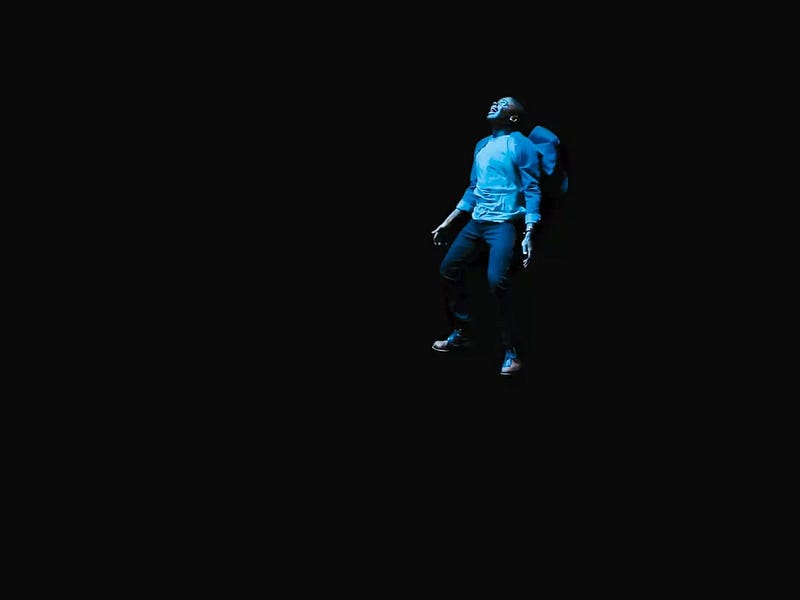
Screenshot from “Get Out” (2017) | Property of Universal Pictures

The discourse around race in America is omnipresent in Jordan Peele’s work, whether it be overtly so or more subtly. Indeed, it is often in the more subtle and almost unnoticeable ways that the filmmaker makes his most powerful statements on the subject. Let’s see how Peele accomplishes this in each of his movies:

Warning: Spoilers Ahead!

Part 1: Get Out

Among Peele’s movies, Get Out is the one that tackles the issue of racial discrimination in the most explicit way. The plot revolves around Chris, a young photographer based in New York City, who is visiting his white girlfriend’s family for the first time and is visibly concerned about it. “Do they know I’m black?” he asks Rose, who reassures him that her parents “would’ve legit voted for Obama a third time if they could’ve.”

And while all goes initially well, Chris soon finds himself trapped in a nightmare he could have never imagined.

Get Out is essentially a story of white people exploiting black people. Specifically, of white people appropriating themselves, yet again (from a historical perspective) of black bodies.

In the film, people like Chris are selected as “ideal specimens” to be “inhabited” by the minds of elderly white individuals who are no longer in their prime. Scenes such as the one where the Armitage family is bidding for Chris’ body are an overtly terrifying re-enactment of slave auctions, with Chris’ body being offered and sold as nothing more than a piece of meat.

The black individuals lured in by Rose are initially hypnotized and forced into something called “the sunken place,” which mentally places them at the mercy of their “masters,” forcing them into a state of fear and submission. Next, the family’s patriarch (Dean), who happens to be a neurosurgeon, performs a “brain transplant” so that one might live through the body of their chosen black “host.”

Thus, Get Out addresses the themes of racial discrimination and white supremacism in a rather explicit way, and yet, not all of the social commentary in the film is as explicit as one might think. In fact, there are three different layers employed by Peele to deliver his commentary on the history and practice of racial discrimination in America.

The first one, which is the most overt one, is evident in the general plot and in scenes such as the aforementioned “slave auction.”

The second one, which is slightly more subtle, usually emerges upon watching the movie a second time and re-experiencing it in the light of what we already know.

For instance, a scene that becomes frighteningly clear upon a second watch is the one when Dean takes Chris on a tour of the house. As he enters the kitchen, Dean announces: “My mother loved her kitchen, so we keep a piece of her in here,” just as the camera tellingly pans toward Georgina, who, as we now are aware, is “hosting” part of Dean’s mother inside her.

Indeed, Peele often employs dialogue in a masterful way that combines an unmistakable underlying statement with just enough subtlety to make it effortlessly blend into the general allegory of the story: the “sunken place” represents the mental state of subjugation that the African American population has been forced into for centuries. And the “transplant procedure” employed in the movie ensures that the “black host” is a passive observer of the will and control of their white masters:

You won’t be “gone”, not completely. A sliver of you will still be in there, somewhere, limited consciousness. […] Your existence will be as a passenger. An audience. You’ll live in the sunken place.

Then there’s a third layer, one that is even more covert and elusive than the previous one. Elements of dialogue or general mise-en-scène belonging to this layer are so subtle they might go completely unnoticed unless one pays real attention to them. One such example is Dean’s seemingly out-of-place observations on the “unwanted presence” of deer in the forest:

You know what I say? I say “one down, a couple hundred thousand to go”. I don’t mean to get on my high horse but I’m telling ya, I do not like the deer. I’m sick of it. They’re taking over. They’re like rats. […] I see a dead deer on the side of the road, I think to myself: that’s a start.

Once again, upon watching the movie a second or a third time, Dean’s words gain a much deeper, much darker meaning. It isn’t deer he is concerned with.

In yet another subtle commentary on contemporary American society, the Armitage family is never portrayed as openly racist. In fact, most family members go a long way to prove that they are not racist (hence the numerous references to Obama), and one might even suggest that, in their own distorted worldview, they do not even consider themselves as such, regardless of their appalling actions.

When Chris specifically inquires as to why the Armitages target black people in particular, he is met with a shrug and a dismissive: “Who knows?” quickly followed by a defensive “Please don’t lump me in with that. I could give a shit what color you are”.

But, as the well-aware audience that we are, we know that there are multiple factors playing into this decision. For once, people belonging to racial minorities, particularly black people, are statistically much less likely to be found when missing compared to white people.

The subtlety with which Peele approaches the subject of the Armitage family’s racism seems to be a clever choice reminding the audience that racism exists in many different forms, and not all of them are obvious. Indeed, some of us might even think of ourselves as not being racist or as being anti-racist when oftentimes we ourselves still hold unconscious or semi-conscious racial bias.*

Non-explicit racism is just as big of an issue, if not even more so, than explicit racism, because it infiltrates public and private spaces more subtly and “discreetly,” denying its discriminatory nature while continuing to perpetuate its social injustices.

By not portraying the Armitage family as “traditionally racist,” Peele gives us an idea of how pervasive and oftentimes “invisible” racial discrimination is in American society.

Follow for Part 2: “Us” and Part 3: “Nope.”

* For a deeper look into this, please refer to Blind Spot: Hidden Biases of Good People (2013) by Mahzarin Banaji and Anthony Greenwald.

Want to keep reading? Check out these similar articles:

Sign up for Medium through the author’s affiliate link and get instant access to unlimited articles, or show the author your support and appreciation by buying her a coffee!

Jordan Peele
Film
Race
Get Out
Film Analysis
Recommended from ReadMedium