avatarMartine Nyx

Free AI web copilot to create summaries, insights and extended knowledge, download it at here

2385

Abstract

n't a <i>desirable</i> outcome, it is a necessary one: a necessity that the increasing tensions among sovereign states worldwide have led to.</p><p id="aba9">Then there are the "against" arguments, which can be summarized as easily as:</p><blockquote id="cb12"><p>You gave them the power to destroy themselves, and the world is not prepared for it.</p></blockquote><p id="06ea">Even those who are most steadfast in blaming Oppenheimer for what he did — or at least greatly contributed to — can't help but admit that, as US President Harry Truman says himself in the movie, it wasn't Oppenheimer who ordered the bombing of Hiroshima and Nagasaki, it was President Truman.</p><p id="6d55"><i>Oppenheimer </i>forces the viewer to reckon with the multiple culprits behind the invention of a weapon capable of annihilating humanity, and these culprits go beyond the late generations who ordered the construction of the atomic bomb, or those who built one, or those who implemented the decision to <i>use</i> them against their fellow humans. And that is because the issue of the responsible use of nuclear weapons, as well as the ethical debate behind it, lives on in the present day: almost a hundred years after Hiroshima and Nagasaki, humanity has yet to learn how nuclear weapons should be used, or if they should be used at all. And with so much going on in our world — more wars, climate change, economic crises, social injustice, etc. — the issue is but one of <i>many</i>. And the world is <i>still</i> not prepared for it.</p><p id="61f8" type="7">Almost 60 years after Oppenheimer’s death, the world is still not prepared to handle the power he has given it.</p><p id="cf17">Since the Cold War, the world has held itself in a Mexican standoff: each country — or blocks of countries — wielding their arsenal of nuclear weapons against the others in a tacit but firm promise: given the proper excuse, they won't hesitate to resort to it.</p><p id="adf4">In <i>Oppenheimer</i>, director Christopher Nolan holds a mirror up not only to J. Robert Oppenheimer but also to history itself and to the entirety of humanity, which was given the gift of mass destruction just as humanity in ancient Greek mythology was given the gift of fire by Prometheus. Both history and humanity have accepted the gift, celebrated it, and wielded it against their fellow men. The final outcome is yet to b

Options

e written.</p><p id="5846"><b>Want to keep reading? Check out these similar articles!</b></p><div id="fa35" class="link-block"> <a href="https://readmedium.com/the-art-of-yorgos-lanthimos-man-or-animal-c6839120080d"> <div> <div> <h2>The Art of Yorgos Lanthimos: Man or Animal?</h2> <div><h3>There is a recurrent theme unifying all of Yorgos Lanthimos' films: what separates man from animal?</h3></div> <div><p>medium.com</p></div> </div> <div> <div style="background-image: url(https://miro.readmedium.com/v2/resize:fit:320/1*sGgjlB_kUPZUlHI-9qwRDA.jpeg)"></div> </div> </div> </a> </div><div id="ecbf" class="link-block"> <a href="https://readmedium.com/how-ari-aster-singlehandedly-redefined-the-language-of-cinema-with-beau-is-afraid-b78d08776007"> <div> <div> <h2>How Ari Aster Singlehandedly Redefined the Language of Cinema with "Beau is Afraid"</h2> <div><h3>Aster's latest film expands the limits of cinematic storytelling</h3></div> <div><p>medium.com</p></div> </div> <div> <div style="background-image: url(https://miro.readmedium.com/v2/resize:fit:320/1*G8E95wJT-yUxibmzB0tdcg.png)"></div> </div> </div> </a> </div><div id="609c" class="link-block"> <a href="https://readmedium.com/possum-and-martyrs-cinema-visualizing-trauma-a79676e2f36f"> <div> <div> <h2>"Possum" and "Martyrs": Cinema Visualizing Trauma</h2> <div><h3>SPOILERS AHEAD!</h3></div> <div><p>medium.com</p></div> </div> <div> <div style="background-image: url(https://miro.readmedium.com/v2/resize:fit:320/1*Tj-_btZzskp3ycA3DajxWQ.jpeg)"></div> </div> </div> </a> </div><p id="b9a0"><b><i>Sign up for Medium through the author’s <a href="https://medium.com/@martinep1296/membership">affiliate link</a> and get instant access to unlimited articles, or show the author your support and appreciation by <a href="https://ko-fi.com/martinenyx">buying her a coffee</a>!</i></b></p></article></body>

Christopher Nolan Holds Up A Mirror to Oppenheimer, History, and Humanity

"Oppenheimer" Discusses the Subject of Nuclear Weapons With Brutal Honesty
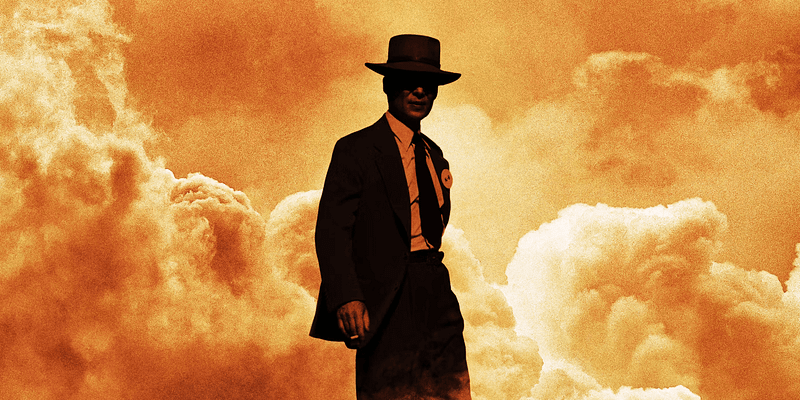
Poster for Oppenheimer (2023) | Property of Universal Pictures

Nuclear weapons hold the world in a state of balance and precariousness, thus establishing a rather odd equilibrium, a synthesis of peace and war among mankind. But such a balance has not been achieved through the responsible use of weapons of mass destruction: it has been achieved through the threat of their use.

As Thomas Hobbes would remind us, "homo homini lupus": a man is but a wolf among other wolves, and the only thing keeping him safe is the knowledge that others won't attack first for fear of retaliation.

Such is the unapologetic historical portrayal that Nolan paints in Oppenheimer: specific judgments on either the subject matter (nuclear weapons) or Oppenheimer's persona are left aside, offering us, instead, a 360° view of each actor's responsibility in the making of the most lethal weapon ever known to mankind.

And the irony is that, while the movie itself is named after J. Robert Oppenheimer, and him alone, Nolan doesn't hesitate in showing us every individual who contributed to the creation of the first atomic bomb, or rejoiced after its successful completion was achieved. Thus, instead of a single man thrown into the spotlight, we get a larger picture: one that includes individuals who were just as responsible, if not more so, than Oppenheimer himself.

Very few characters in the film are portrayed as entirely good or entirely evil: virtually every single character is granted the complexity and ambiguity that defines most human beings. Similarly, all possible stances on the subject of nuclear weapons are explored. There are the "pro" arguments, which mostly revolve around the idea of defense: if the Americans, or any of the Allies, hadn't preceded the Nazis in the invention of the atomic bomb, what would the outcome have been?

Another argument is the one that, even though the bomb isn't a desirable outcome, it is a necessary one: a necessity that the increasing tensions among sovereign states worldwide have led to.

Then there are the "against" arguments, which can be summarized as easily as:

You gave them the power to destroy themselves, and the world is not prepared for it.

Even those who are most steadfast in blaming Oppenheimer for what he did — or at least greatly contributed to — can't help but admit that, as US President Harry Truman says himself in the movie, it wasn't Oppenheimer who ordered the bombing of Hiroshima and Nagasaki, it was President Truman.

Oppenheimer forces the viewer to reckon with the multiple culprits behind the invention of a weapon capable of annihilating humanity, and these culprits go beyond the late generations who ordered the construction of the atomic bomb, or those who built one, or those who implemented the decision to use them against their fellow humans. And that is because the issue of the responsible use of nuclear weapons, as well as the ethical debate behind it, lives on in the present day: almost a hundred years after Hiroshima and Nagasaki, humanity has yet to learn how nuclear weapons should be used, or if they should be used at all. And with so much going on in our world — more wars, climate change, economic crises, social injustice, etc. — the issue is but one of many. And the world is still not prepared for it.

Almost 60 years after Oppenheimer’s death, the world is still not prepared to handle the power he has given it.

Since the Cold War, the world has held itself in a Mexican standoff: each country — or blocks of countries — wielding their arsenal of nuclear weapons against the others in a tacit but firm promise: given the proper excuse, they won't hesitate to resort to it.

In Oppenheimer, director Christopher Nolan holds a mirror up not only to J. Robert Oppenheimer but also to history itself and to the entirety of humanity, which was given the gift of mass destruction just as humanity in ancient Greek mythology was given the gift of fire by Prometheus. Both history and humanity have accepted the gift, celebrated it, and wielded it against their fellow men. The final outcome is yet to be written.

Want to keep reading? Check out these similar articles!

Sign up for Medium through the author’s affiliate link and get instant access to unlimited articles, or show the author your support and appreciation by buying her a coffee!

Oppenheimer
Christopher Nolan
Cinema
Nuclear Weapons
History
Recommended from ReadMedium