
The Art of Yorgos Lanthimos: Man or Animal?
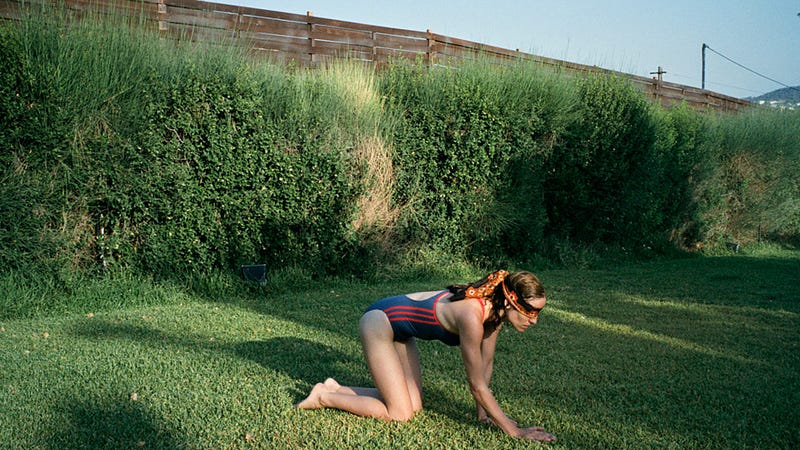
There is a recurrent theme unifying all of Yorgos Lanthimos’ films: what separates man from animal?
Lanthimos’ creations always revolve around the idea and metaphorical use of animals in their plots. And, in most cases, in their very titles as well: Dogtooth, The Lobster, The Killing of a Sacred Deer, etc.
Spoilers Ahead!
More often than not, humans in Lanthimos’ creations are treated like animals or reduced to ones.
Let’s start with what is perhaps the most literal example of this: The Lobster (2015) is set in a dystopian society where people are rounded up in closed-range institutions where they are “groomed” to mate and threatened to be transformed into animals in case they fail to fulfill their mission of finding a soulmate.
In The Killing of a Sacred Deer, based on the ancient Greek myth of Iphigenia, not only is Martin’s father slain by a careless drunk surgeon like a beast on a slab, but later on, in a mythical twist of events, Martin himself, like a vengeful god, demands that Steven, the guilty surgeon, sacrifices a member of his family to make amends for his actions. In the end, this turns out to be Steven’s youngest son, Bob, whose killing at the hands of his own father finally appeases the god’s — Martin’s — wrath.
And while the 2018 historical drama The Favourite would appear to be the one thematic exception in Lanthimos’ filmography, upon a deeper inspection, it is not: the film tells the story of Queen Anne’s two favorite ladies in 1705 Great Britain, but it really is a story of class conflict. In the memorable closing scene of the movie, the “new favorite”, Lady Abigail, who has climbed the social ladder and defeated her predecessor, Lady Sarah, attempts to squish a baby rabbit with her foot. Upon seeing this, Queen Anne forces Lady Abigail to her knees and instructs her to massage her leg, while pressing her hand against the Lady’s head, forcing her down with the same pressure Lady Abigail previously applied to the defenseless rabbit. In doing so, Queen Anne is reminding Lady Abigail of the social hierarchy that makes her inferior to the Queen. By virtue of her social status, the Queen has the right to use and abuse Lady Abigail however she wishes, treating her, if she so desires, as equal to, or less than, an animal.
And, finally, the darkest representation of the man vs animal dichotomy in Lanthimos’ filmography: Dogtooth.
Warning: graphic and disturbing content ahead.
In what is arguably Lanthimos’ most disturbing creation, two parents segregate their three adult children and keep them prisoners in their house, completely unaware of the outside world. They twist their notions of the world and human interactions to the point of altering their own vocabulary — the term “vagina” is replaced with “keyboard”, “salt” with “telephone”, etc.
The parents don’t shy away from utterly dehumanizing their children, to the point of making one of their daughters a sexual slave to their son, for the only purpose of sating the latter’s lust. In another, deeply disturbing scene, the Patriarch of the family convinces the remaining four members of the family to get on their hands and knees and bark like dogs to “scare the outside demons threatening their safety away”.
Lanthimos’ films have an inherently dark and disturbing quality to them, even when it is not apparently so. And because his creations are so complex and multi-layered, it can be difficult to pinpoint exactly the ultimate theme or message of his films. But Lanthimos’ constant references to the animal world help us make sense of his art by drawing a deeply disturbing parallel between the human and the animal condition. As Lanthimos skillfully blurs the lines between one and the other, we are forced to wonder: can man be reduced to animal? And what happens when he is?
Want to keep reading? Check out these similar articles:
Sign up for Medium through the author’s affiliate link and get instant access to unlimited articles, or show the author your support and appreciation by buying her a coffee!


