avatarVibrant Jellyfilsh

Free AI web copilot to create summaries, insights and extended knowledge, download it at here

5002

Abstract

ls that lack true tissues and organs, but possess specialized cells that perform different functions, such as feeding, respiration, and reproduction. Most sea sponges reproduce sexually, by releasing eggs and sperm into the water column, but some can also reproduce asexually, by budding or fragmentation.</p><p id="ef83">Among the more than 8,000 known species of sea sponges, there are a few that stand out for their extraordinary lifespan. One such species is the glass sponge (Hexactinellida), which can live for up to 15,000 years. These sponges are found in deep-sea environments and are characterized by their delicate, lattice-like skeletons made of silica. Another long-lived species is the giant barrel sponge (Xestospongia muta), which can live for several hundred years and can grow up to six feet tall. These sponges are found in the Caribbean and play an important ecological role as filter feeders and shelter for a variety of marine organisms.</p><p id="76d7">One of the most fascinating aspects of these long-lived sponges is their ability to regenerate and repair themselves. Like the immortal jellyfish and the hydra, these sponges are capable of regenerating damaged or lost body parts, allowing them to live indefinitely. This regeneration is thought to be due to the presence of specialized cells called totipotent cells, which have the ability to differentiate into any cell type needed to repair the sponge’s body.</p><p id="5261">The potential implications of these infinite lifespans are significant. Scientists are interested in studying these sponges to better understand the aging process and potential treatments for age-related diseases. Additionally, these sponges may hold important clues about the environmental conditions that allow for such long lifespans, and the potential impact of human activities on these fragile ecosystems.</p><p id="8b83">The sea sponge is a fascinating and complex organism that is capable of living for hundreds, if not thousands, of years. The glass sponge and the giant barrel sponge are two examples of long-lived species that are able to regenerate and repair themselves, allowing them to live indefinitely.</p><p id="26bb">These sponges hold important clues about the aging process and the potential impact of human activities on marine ecosystems. As we continue to explore the mysteries of the ocean, we may learn even more about these remarkable creatures and the secrets they hold.</p><figure id="7c19"><img src="https://cdn-images-1.readmedium.com/v2/resize:fit:800/1*0fcDDGC0IGOZsFMy4QkpMw.png"><figcaption>SEM image of Milnesium tardigradum in active state. <a href="https://doi.org/10.1371/journal.pone.0045682.g001">doi:10.1371/journal.pone.0045682.g001</a></figcaption></figure><h2 id="a60f">Tardigrades</h2><p id="a8f0">Tardigrades, also known as water bears, are microscopic animals that are renowned for their incredible ability to survive extreme environmental conditions.</p><p id="7ca3">Tardigrades are found in virtually every environment on Earth, from the deepest oceans to the highest mountains. They are tiny, measuring just a few hundred micrometers in length, and have a distinct barrel-shaped body with four pairs of stubby legs. Tardigrades are able to survive in a wide range of conditions, including extreme temperatures, pressure, radiation, and dehydration. They are also capable of surviving in the vacuum of space.</p><p id="9dfe">One of the most remarkable aspects of tardigrades is their ability to enter a state of suspended animation, known as cryptobiosis, in response to unfavorable environmental conditions. During cryptobiosis, tardigrades can survive for years without food, water, or oxygen. They do this by producing a sugar called trehalose, which protects their cells from damage caused by dehydration. When conditions improve, tardigrades can resume their normal activities as if nothing happened.</p><p id="7b0b">Another unique characteristic of tardigrades is their ability to repair their DNA. When exposed to high levels of radiation, tardigrades can repair their DNA much more effectively than other animals, which helps to prevent mutations and cancer.</p><p id="7145">The potential applications of tardigrades’ remarkable abilities are numerous. Scientists are interested in studying tardigrades to better understand how they are able to survive in extreme conditions, and to potentially apply their findings to medicine and space exploration. For example, understanding how tardigrades are able to repair their DNA could lead to new treatments for cancer. Additionally, tardigrades’ ability to survive in space could be useful for long-duration space missions, such as a manned mission to Mars.</p><h2 id="cb70">Wrap up</h2><p id="3fdb">These creatures are all very different from humans, they all have a simpler body structure, are found in aquatic environments and mostly brainless. (the tardigrades do have very simple brains, the hydra a nervous system but no brains and the je

Options

llyfish and sea sponge have no brains or nervous system at all.)</p><p id="9dd4">It is unlikely that we will be able to apply the techniques that they use to create immortality in humans (at least any time soon) but scientists are studying them, and what makes them immortal or regenerative or incredibly durable, and it is likely that we will be able to learn things from them that will be applied to medicine to improve our lifespans and our quality of life.</p><p id="6a5a">With enough time and research anyway.</p><figure id="6552"><img src="https://cdn-images-1.readmedium.com/v2/resize:fit:800/0*y20VLMNgK5QgPwnU.png"><figcaption></figcaption></figure><p id="57d7">If you enjoyed this article and would like to support me please consider becoming a medium member via my affiliated link:</p><div id="ba25" class="link-block"> <a href="https://medium.com/@valuable_mindaro_jellyfish_659/membership"> <div> <div> <h2>Join Medium with my referral link - Vibrant Jellyfilsh</h2> <div><h3>Read every story from Vibrant Jellyfilsh (and thousands of other writers on Medium). Your membership fee directly…</h3></div> <div><p>medium.com</p></div> </div> <div> <div style="background-image: url(https://miro.readmedium.com/v2/resize:fit:320/0*2ipTAVcoT167g7FE)"></div> </div> </div> </a> </div><figure id="e338"><img src="https://cdn-images-1.readmedium.com/v2/resize:fit:800/0*y20VLMNgK5QgPwnU.png"><figcaption></figcaption></figure><div id="cb61" class="link-block"> <a href="https://readmedium.com/bringing-extinct-species-back-to-life-may-soon-stop-being-hypothetical-3d074735a708"> <div> <div> <h2>Bringing Extinct Species Back To Life, May Soon Stop Being Hypothetical</h2> <div><h3>By using CRISPR technology to edit the genes of related species, scientists may be able to create “de-extinct”…</h3></div> <div><p>medium.com</p></div> </div> <div> <div style="background-image: url(https://miro.readmedium.com/v2/resize:fit:320/1*7wRrljScm_73HySqB0isqA.jpeg)"></div> </div> </div> </a> </div><div id="a38d" class="link-block"> <a href="https://readmedium.com/octopus-part-4-the-deadly-eb6d73f962eb"> <div> <div> <h2>Octopus (part 4): The Deadly</h2> <div><h3>Octopuses are fascinating creatures with a variety of incredible abilities. However, some octopuses are not just…</h3></div> <div><p>medium.com</p></div> </div> <div> <div style="background-image: url(https://miro.readmedium.com/v2/resize:fit:320/1*vAry7d5Z_tvA3EPsflbtyw.png)"></div> </div> </div> </a> </div><div id="c986" class="link-block"> <a href="https://readmedium.com/how-missing-grandparents-might-be-changing-the-world-for-the-worse-8d324f36a13b"> <div> <div> <h2>How Missing Grandparents Might Be Changing The World For The Worse</h2> <div><h3>Family structures have changed significantly over time, particularly in the last few centuries.</h3></div> <div><p>medium.com</p></div> </div> <div> <div style="background-image: url(https://miro.readmedium.com/v2/resize:fit:320/1*vpXV1mPBx3wY1BQXlXepnA.jpeg)"></div> </div> </div> </a> </div><div id="2057" class="link-block"> <a href="https://readmedium.com/developing-empathy-b5a1da35f6f5"> <div> <div> <h2>Developing Empathy</h2> <div><h3>Empathy is the ability to understand and share the feelings of others, and it is an essential component of healthy…</h3></div> <div><p>medium.com</p></div> </div> <div> <div style="background-image: url(https://miro.readmedium.com/v2/resize:fit:320/1*V_L8b-u1_FxKQPbbdl3qnA.jpeg)"></div> </div> </div> </a> </div><div id="54a4" class="link-block"> <a href="https://readmedium.com/all-about-octopus-part-1-fe794ad849b"> <div> <div> <h2>All About Octopus! (part 1)</h2> <div><h3>Octopuses are fascinating creatures that belong to the class Cephalopoda, which also includes squids, cuttlefish, and…</h3></div> <div><p>medium.com</p></div> </div> <div> <div style="background-image: url(https://miro.readmedium.com/v2/resize:fit:320/1*sb4P38SQEiA2qcjqGLeN-g.jpeg)"></div> </div> </div> </a> </div></article></body>

Immortality Is Real and It’s Already Here… In Animals.

Immortality is the concept of living forever, which has been a fascination for humans throughout history

Humans have long been fascinated by the concept of immortality, the idea of living forever. From ancient myths and legends to modern science fiction, the idea of immortality has captured our imagination and sparked countless stories and debates.

But Immortality is not only a cool fiction idea, for some creatures living on earth it is reality.
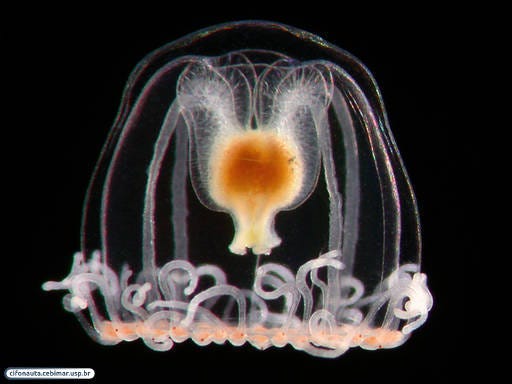
Image of an adult medusa of the Turritopsis nutricula species. Photography taken at Canal de São Sebatião, São Paulo, Brazil.

Immortal Jellyfish

Immortal jellyfish, also known as Turritopsis dohrnii, is a unique species of jellyfish that has captured the interest and fascination of scientists and the general public alike. This small jellyfish, which is native to the waters of the Mediterranean Sea, has the remarkable ability to regenerate its cells and transform itself back into a juvenile state, effectively allowing it to live indefinitely.

It is important to note that the term “immortal” in the context of the immortal jellyfish does not mean that the jellyfish is invincible or cannot be killed.

Rather, it refers to the fact that the jellyfish can continually rejuvenate its cells and regenerate its body, through a process called transdifferentiation, which transforms its mature cells into younger cells allowing it to effectively bypass the natural aging process that affects most other animals.

When faced with stress or environmental threats, the immortal jellyfish can transform its mature cells back into a juvenile state, effectively starting its life cycle anew.

This unique ability of the immortal jellyfish has captured the attention of scientists, who are interested in understanding how it works and what implications it might have for human health and aging. Some researchers have suggested that studying the mechanisms of cell regeneration in the jellyfish could lead to new insights into human aging and disease, potentially even unlocking the secrets of immortality in humans.

The immortal jellyfish is one of the few organisms that have been found to have the ability to potentially achieve biological immortality. However, there are a few other animals and organisms that have some form of extraordinary longevity or regenerative abilities.
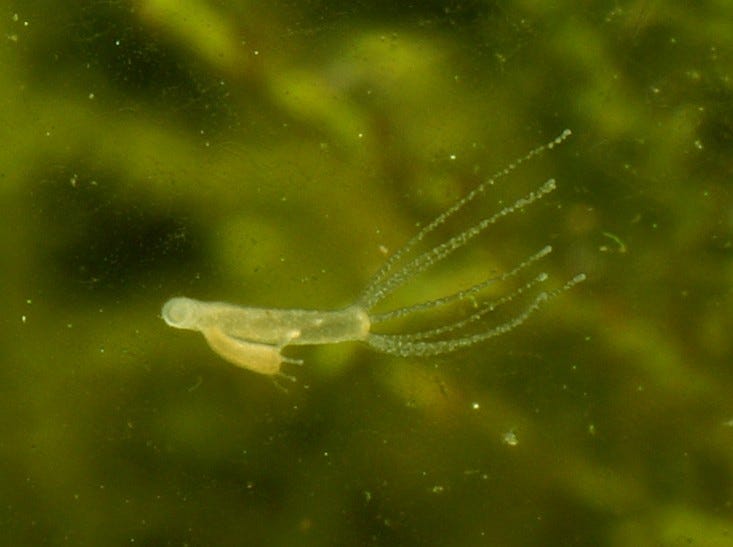
Hydra. Photo by: Przemysław Malkowski

Hydra

The hydra is a small freshwater polyp that has captured the attention of scientists and the public alike for its remarkable regenerative abilities. Like the immortal jellyfish, the hydra is capable of regenerating its body and effectively never dying of old age.

The hydra is a small, tubular organism that can be found in freshwater environments all over the world. It is a member of the phylum Cnidaria, which includes jellyfish, sea anemones, and coral. Despite its small size, the hydra is a complex organism with a specialized nervous system, digestive system, and reproductive system.

One of the most remarkable features of the hydra is its ability to regenerate its body. If a hydra is cut into pieces, each piece has the ability to regenerate and form a new, complete hydra. This is due to the presence of specialized cells called interstitial cells, which can differentiate into any cell type in the hydra’s body. Additionally, the hydra’s cells are not subject to the same aging process as other organisms, meaning that it can effectively live indefinitely.

This ability to regenerate and avoid aging has captured the attention of scientists, who are interested in understanding the mechanisms behind the hydra’s unique characteristics. Some researchers have suggested that studying the hydra could lead to new insights into the aging process and potential treatments for age-related diseases.
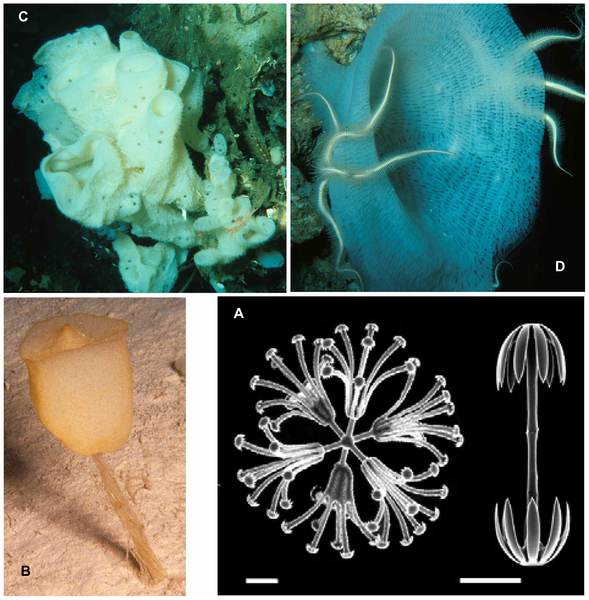
Photo From https://journals.plos.org/plosone/article?id=10.1371/journal.pone.0035105

Sea Sponges

While most sea sponges have a relatively short lifespan, there are a few species that are capable of living for hundreds, if not thousands, of years. Sea sponges are primitive animals that lack true tissues and organs, but possess specialized cells that perform different functions, such as feeding, respiration, and reproduction. Most sea sponges reproduce sexually, by releasing eggs and sperm into the water column, but some can also reproduce asexually, by budding or fragmentation.

Among the more than 8,000 known species of sea sponges, there are a few that stand out for their extraordinary lifespan. One such species is the glass sponge (Hexactinellida), which can live for up to 15,000 years. These sponges are found in deep-sea environments and are characterized by their delicate, lattice-like skeletons made of silica. Another long-lived species is the giant barrel sponge (Xestospongia muta), which can live for several hundred years and can grow up to six feet tall. These sponges are found in the Caribbean and play an important ecological role as filter feeders and shelter for a variety of marine organisms.

One of the most fascinating aspects of these long-lived sponges is their ability to regenerate and repair themselves. Like the immortal jellyfish and the hydra, these sponges are capable of regenerating damaged or lost body parts, allowing them to live indefinitely. This regeneration is thought to be due to the presence of specialized cells called totipotent cells, which have the ability to differentiate into any cell type needed to repair the sponge’s body.

The potential implications of these infinite lifespans are significant. Scientists are interested in studying these sponges to better understand the aging process and potential treatments for age-related diseases. Additionally, these sponges may hold important clues about the environmental conditions that allow for such long lifespans, and the potential impact of human activities on these fragile ecosystems.

The sea sponge is a fascinating and complex organism that is capable of living for hundreds, if not thousands, of years. The glass sponge and the giant barrel sponge are two examples of long-lived species that are able to regenerate and repair themselves, allowing them to live indefinitely.

These sponges hold important clues about the aging process and the potential impact of human activities on marine ecosystems. As we continue to explore the mysteries of the ocean, we may learn even more about these remarkable creatures and the secrets they hold.
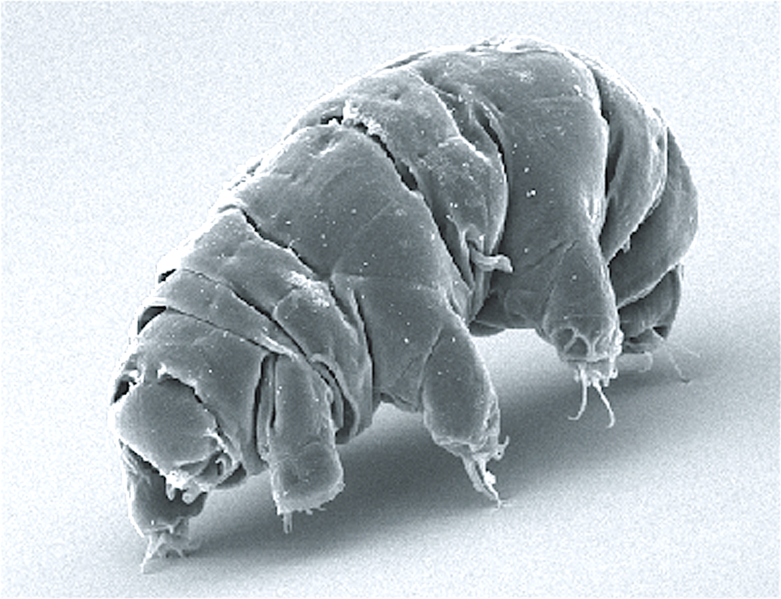
SEM image of Milnesium tardigradum in active state. doi:10.1371/journal.pone.0045682.g001

Tardigrades

Tardigrades, also known as water bears, are microscopic animals that are renowned for their incredible ability to survive extreme environmental conditions.

Tardigrades are found in virtually every environment on Earth, from the deepest oceans to the highest mountains. They are tiny, measuring just a few hundred micrometers in length, and have a distinct barrel-shaped body with four pairs of stubby legs. Tardigrades are able to survive in a wide range of conditions, including extreme temperatures, pressure, radiation, and dehydration. They are also capable of surviving in the vacuum of space.

One of the most remarkable aspects of tardigrades is their ability to enter a state of suspended animation, known as cryptobiosis, in response to unfavorable environmental conditions. During cryptobiosis, tardigrades can survive for years without food, water, or oxygen. They do this by producing a sugar called trehalose, which protects their cells from damage caused by dehydration. When conditions improve, tardigrades can resume their normal activities as if nothing happened.

Another unique characteristic of tardigrades is their ability to repair their DNA. When exposed to high levels of radiation, tardigrades can repair their DNA much more effectively than other animals, which helps to prevent mutations and cancer.

The potential applications of tardigrades’ remarkable abilities are numerous. Scientists are interested in studying tardigrades to better understand how they are able to survive in extreme conditions, and to potentially apply their findings to medicine and space exploration. For example, understanding how tardigrades are able to repair their DNA could lead to new treatments for cancer. Additionally, tardigrades’ ability to survive in space could be useful for long-duration space missions, such as a manned mission to Mars.

Wrap up

These creatures are all very different from humans, they all have a simpler body structure, are found in aquatic environments and mostly brainless. (the tardigrades do have very simple brains, the hydra a nervous system but no brains and the jellyfish and sea sponge have no brains or nervous system at all.)

It is unlikely that we will be able to apply the techniques that they use to create immortality in humans (at least any time soon) but scientists are studying them, and what makes them immortal or regenerative or incredibly durable, and it is likely that we will be able to learn things from them that will be applied to medicine to improve our lifespans and our quality of life.

With enough time and research anyway.

If you enjoyed this article and would like to support me please consider becoming a medium member via my affiliated link:

Immortality
Animals
Jellyfish
Tardigrade
Sea Sponges
Recommended from ReadMedium