
I Was a Sissy Boy: Why Drag Matters to Effeminate Gay Men
Subverting gender performance is celebration and rebellion
When I look at a hot guy, a buzz of sexual pleasure electrifies my body, but I’m more romantic than anything else. I fall in love at the drop of a pin. When I spend time with a man I really like, dopamine electrifies me with romantic warmth that paints a dopy smile on my face.
I was only 11 when I beamed my very first gap-toothed, dopy smile at a boy who was totally, not ever, going to beam one back. I didn’t understand what I was feeling, and all he wanted to do was play baseball, which I was OK with since I needed time to process powerful emotions leaving me breathless and stuttering.
I am a man. I like being a man. But I am not like most other men.
Within a year or two, I understood I was gay and learned to despise myself for falling in love with boys instead of girls. That’s a common-ish narrative, isn’t it? We LGBTQ folks write so often about knowing who we are as children that the stories get boring.
I’m not going to bore you today with a sexual-awaking story, I’m going to tell you what came before I fell madly in love with my baseball-playing boy.
Before I met him, I was an odd little kid passionate about reading big heavy books, making up fantasy stories in my head, and entertaining friends with them — mostly girlfriends. Other boys in school called me girly and kept their distance like they did from actual girls. I’ve heard recordings of my childhood voice, so I know those boys weren’t inventing things.
I was a stereotypical sissy. Can we just put that out there and move on?
My parents tried not to make me feel bad about it, but I could taste disappointment in the air even when Dad praised me for being really good at reading huge books, a thing he wasn’t good at and didn’t understand.
One summer that lasted a lifetime, my best friend was a girl whose house lay within bicycle range. Oh, the fun we had! I’d pedal over after breakfast and we’d do the random things kids did before helicopter parenting. Some of it was gender-nonspecific like wading in the creek to catch crawdads. Riding bikes. Racing down cracked sidewalks with strap-on skates.
But let me hasten to add, dear reader, that we spent a lot more time playing house with her Easy Bake Oven, stuffed animals, dolls, and pretend tea sets. Think Wonder Years, only with a little gay boy who could never imagine kissing Winnie. No, back up. A prissy little boy who doesn’t even know what gay means.
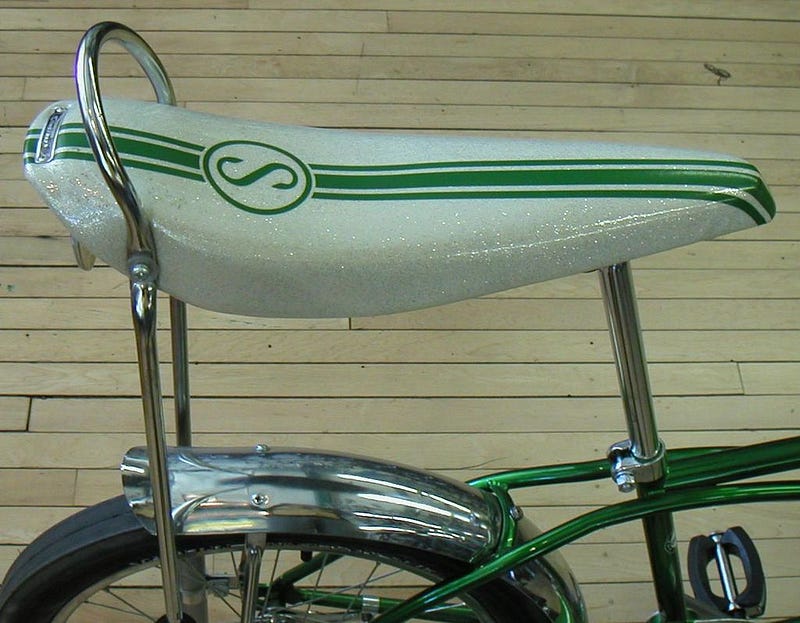
I just knew I loved the frilly tassels hanging from my friend’s handle bars. Loved ’em, wanted ’em, didn’t dare put ’em on my banana-seat Schwinn. I knew if I made my bike (or myself) look pretty, I would bring down the wrath of a mysterious force I dreaded with whatever passes for existential terror in a ten-year-old.
I dreaded being found out, even if I wasn’t sure what “found out” meant. I knew I was different in a fundamental way I could not change and society would never forgive, even though I couldn’t put words to the difference.
More than a year passed before I felt the forbidden urge to kiss my baseball-playing friend, but I’d already known for … forever … that I was, at my core, forbidden and wrong.
If you’ve met one gay man, you’ve met one gay man, but …
I am not like all gay men, but I am like a huge percentage of gay men: I was as a child, despite my environment, notably effeminate. Like many gay men branded as sissies as children, I have never doubted my gender identity. I am a man. I like being a man. But I am not like most other men.
I won’t bore you with the next few years of the story, with my struggles to stop acting and talking girly, with my rebellious act of joining the Marine Corps then the Air Force to prove something to myself and others. We’ll skip over my painful, awkward, halting coming-out.
I only fully came out after the end of an 8-year military stint. I won’t write about struggling to play sports and sometimes succeeding. I forced a lot, like learning how to be good with tools, learning to like fishing but not hunting, learning to act like (perform like) a typical man.
The Sissy Boy Syndrome
My coming-out was barely complete when I read sexologist Richard Green’s controversial “The Sissy Boy Syndrome” and the Development of Homosexuality, in which he notes that effeminate little boys often grow up to be gay. Green’s work is troubling and harmful because he seems incapable of understanding the difference between sexual orientation and gender identity. Queer theorists have condemned his conclusions, which are inescapably transphobic and have been leveraged by anti-LGBTQ activists to assert that parents can cause homosexuality or make their kids transgender.
Newly landed in New York City Queer Nation and Act Up circles, however, I was struck by Green’s data, which are less troubling than his toxic conclusions. I found myself surrounded by unapologetically effeminate gay men. My friend Howie wore a beard and haunted leather bars, but he peppered his lilting voice with “girlfriend” and “Mary” so often he got on some people’s nerves.
“Has he always talked like this?” I asked his mom once.
“Oh, honey! You should have heard him in third grade. I had to storm the principal’s office once and make that man keep all the little bullies in line.”
Plenty of my gay friends in Queer Nation and Act Up defied stereotypes. Some were boy-next-door hunks who never had to work to enjoy sports or talk like a man. But it didn’t take me long to understand most of us (or at least a large plurality) embodied the effeminate stereotype. I feel uncomfortable saying that, because we gay men work hard to counter bigoted presumptions and toxic labels, but it’s still true and I know very few gay men who would sincerely dispute my observation.
Hell, we femme shame OURSELVES
If you follow gay culture at all, you know femme shaming is a problem in gay male communities, especially on dating apps where “no femme” messages fight for toxic predominance with body shaming and racism. We sometimes fight the self loathing burned into us when we were effeminate little boys by lashing out at our peers, despising in them what we unintentionally despise in ourselves. And we do it a LOT, because effeminacy among gay men is very real.
Enter Drag and celebrations of campy queens
Gay men have been embracing and celebrating our effeminacy — rejecting masculine performance requirements — for centuries. Do you know the term “Camp?” Brits tend to use the word as both a noun and an adjective, while we Americans are more likely to differentiate by using “campy” as a modifier. As in, that kween is campy as, to refer to a finger-snapping, joke cracking, fabulously flouncing gay man holding court in a gay bar.
Camp is winking parody. It’s a knowing, often self-effacing exaggeration of art or culture for comedic or rebellious effect. When a gay man deliberately exaggerates his feminine or fey qualities to entertain his friends or annoy his detractors, he is being campy.
Drag is High Camp, an exaggeration of performance art as ironic criticism or commentary.
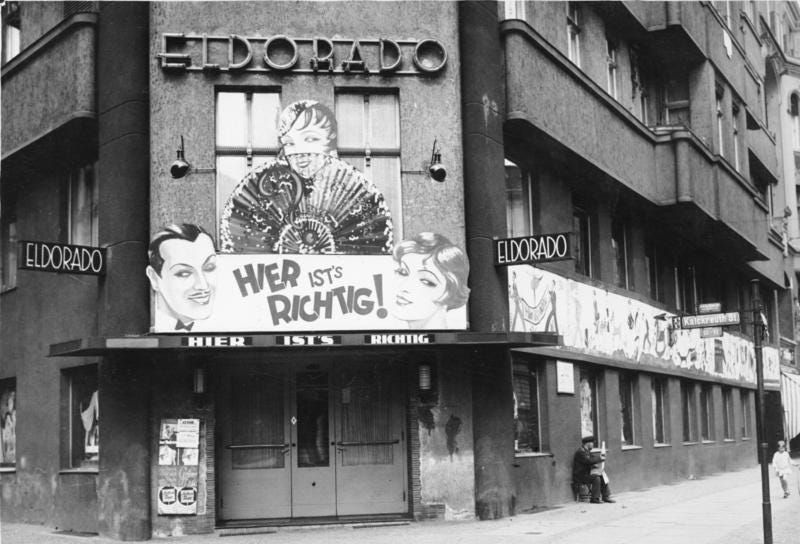
Gay men and lesbians have been doing formal drag shows in cities like New York, Amsterdam, Paris, Chicago, London, and Berlin since the late 19th century, most famously in the 1920s when a mostly forgotten push for queer equality burst out of the shadows.
The first man to describe himself as a “queen of drag” may have been the formerly enslaved Black man, William Dorsey Swann, who associated with known gay men and staged “drag balls” in 1880s and 90s Washington DC. He was arrested numerous times for “female impersonation.” Decades would pass before drag become fashionable, but it did.
By the early twentieth century, formal drag shows had become rebellion and entertainment at the same time, made possible in Berlin and New York by laws that remained on the books from the days when boys or young men customarily played women’s roles on the stage. Gay men and lesbians (and more than a few trans people) staged drag shows because camp as criticism was the only legal means available to comment on queer oppression.
Fascism destroyed the nascent queer movement on both sides of the Atlantic, but queer people never forgot drag. The Broadway musical and film Cabaret, loosely adapted from Christopher Isherwood’s classic Berlin Stories, are a cultural memory of drag’s turbulent birth.
Today, many of us celebrate our difference with Drag
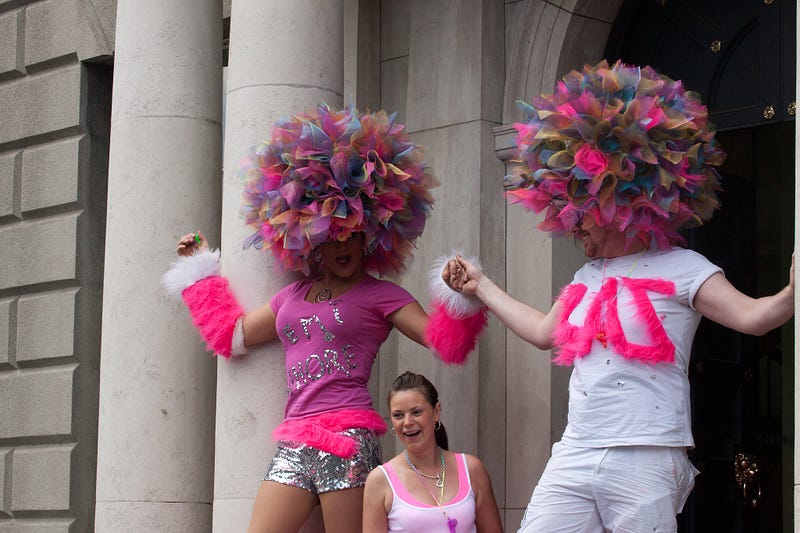
Drag means many things to many people. Offensive to some, boring to others or hard to understand, the art form continues to speak powerfully to gay men who recognize in ourselves a fundamental difference, who know we are men who are not like other men.
When we dare to celebrate transgressive gender performance, we embrace our inner sissy even as we declare the necessary death of gender-presentation mandates that give “sissy” its sting. We remember our cultural history (or not) even as we employ camp as a contemporary tool to dismantle systems of oppression.
We snap, raise a cocktail, stand up with Pride, and flounce our way toward a world in which effeminate little boys need no longer feel shame.
My writing is always free to readers who follow my links from Twitter and Facebook, but if you’d like to browse more, click here to join Medium and help support my work at the same time. Want an email when I publish a new story? Click here.
James Finn is a former Air Force intelligence analyst, long-time LGBTQ activist, an alumnus of Queer Nation and Act Up NY, a regular columnist for queer news outlets, and an “agented” but unpublished novelist. Send questions, comments, and story ideas to [email protected].

This story is a response to the Prism & Pen writing prompt, Let’s Talk About Drag! Pro, Con, in Between.


