
Drag Queens and Me
The difference between being cisgender and transgender

Let’s Talk About Drag! Pro, Con, in Between: A Prism & Pen writing prompt
I wrote this earlier this year and drew some criticism for my opinion regarding drag queens. I have emphasized particular points that I think were ignored or overlooked by many people. Hopefully it makes my point clearer.
I have nothing against drag queens.
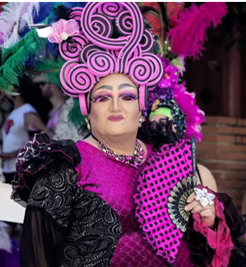
They have an absolute right to express themselves any way they choose. Being transgender, who am I to throw stones? They are essentially clowns who use extremes for maximum comedic effect. They are cisgender men who exaggerate elements of femininity to show flaws and generate laughs. They are an art form.
I get it.
But I never liked circus clowns. They have always been disturbing to me. Thank you, Steven King and John Wayne Gacy.
I have always cringed watching clowns at circuses, both as a child and even as an adult. But I have also always cringed whenever I have watched drag queens perform as well. It wasn’t until I became aware, through my gender dysphoria, that I was transgender, and was, in fact, a trans woman, that I began to understand my aversion to drag queens.
I spent a lifetime suppressing my female gender but I always connected with women in a way that I could not explain. Over the last four years of discovery and therapy, I have been fighting my own internal gender battle: the heavily binary, deeply socialized and testosterone-fueled physical male versus a mysterious fetus-wired female gendered brain.
In that battle I recognize my crushing need for both external and internal validation of my female gender. I am trying to understand this powerful drive to transition my male body into a female one at 65 years of age and I still don’t trust what my brain is telling me.
I am measuring a part of my success in transitioning by how well I will pass (being perceived as female), to the satisfaction of myself and my world. It may seem shallow and possibly vain but gender dysphoria has created an emotional vulnerability that I have never experienced in my life. I am desperate for validation. For 65 years I have been a guy and socially accepted as a guy. I am now forcing friends, family and myself to accept me as a woman. My success needs to be very visual and not just spiritual.
Unfortunately, I live in a very physical world that requires observable facts to reinforce understanding and acceptance. I am asking an impossible task from everyone in my life to suddenly accept me as a woman. That is asking a lot and, for some people, that may be asking the impossible. My transition will need visual support to help accept a new and very difficult set of facts.
I recognizing that I probably will be less than my ideal when all the surgeries and personal efforts are done. Whatever the results, I will judge and be judged and I will need to sort out my own priorities to be happy and at peace with my decision. I would just like a decent chance to just be me and accepted as me.
I know I am being overly sensitive and that may be due to the extraordinary pressures of gender dysphoria and the concept of transitioning on me, but, unfortunately, drag queens muddy the water for me. They are men parading around in an extreme caricature of women and I am a person simply trying to correct a birth defect. Unfortunately, society can’t seem to distinguish the difference between the two of us.
Drag queens make fun of gender in a way that I find personally upsetting particularly as I come to grips with finally acknowledging my suppressed female gender. I have to assume some women feel the same sense of unflattering mockery that I take offense to. It reminds me of the countless sexist, racist and ethnic jokes that I have had to listen to in silence over a lifetime, generally in a bar with a bunch of guys. They can be sadly funny but very mean at the same time and particularly if you are the subject of the joke. I never liked mean humor.
To be fair, the popular media has also done a fine job of labeling trans woman as unhinged, murdering psychopaths in books and TV, bathroom stalkers or at the very least emotionally unstable men dressed as women. It is this image that creates the fear that will block me from going to the lady’s room to just urinate.
I admit that I may be overly sensitive but modern social sensitivity has banished whites doing black-face comedy publicly or Chinese characters on stage or in films. Society finally grew up and recognized that the biases of that type of humor exposed an even more dangerous ignorance that included hate and intolerance against minorities.
Perhaps drag queen humor will follow the same path… or maybe I am just showing my own gender vulnerability at my weakest time.
Emma Holiday

This story is a response to the Prism & Pen writing prompt, Let’s Talk About Drag! Pro, Con, in Between.


