
I Have a Single Sentence Warning for Women
Before they decide to become a stay-at-home mother
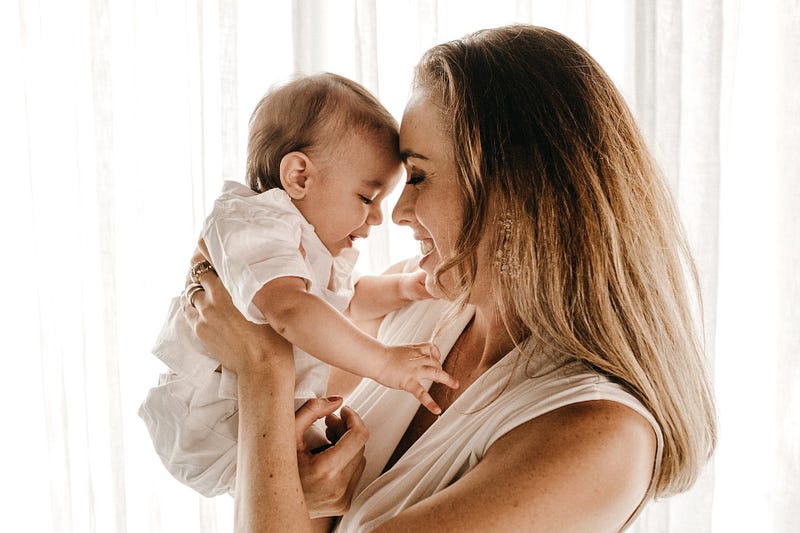
One day my townhouse friends and I are outside with our babies. Our neighbor arrives home from work and comes over to chat with us.
“I don’t know how you girls do it,” she says. “I have no desire to be a stay-at-home mother. I like going to my job every day.”
She told us she didn’t have the patience to spend all day with her kids. We got what she was saying because we respected her. Everyone should do their own thing.
It’s a super personal choice.
A choice driven by emotion, financial needs, and what’s best for your family.
I had other friends who weren’t working by choice. They were working by necessity. It’s hard starting out our lives. There are a lot of financial demands.
“You’re so lucky,” they would say. “I can’t afford to be a stay-at-home mother.”
That was it.
The extent of the stay-at-home mother conversations.
No one said a single sentence warning.
“You’re giving away your power and making yourself extremely vulnerable to a man.”
I think I would have followed by…
“What do you mean?”
They probably would have said…
“You are surrending yourself. You are abandoning all of your own financial freedom. You are potentially making yourself powerless to another individual. You could spend years devoting yourself to your family and end up with nothing.”
I would have said…
“That isn’t true. My husband and I made a joint decision for me to become a stay-at-home mother. We both agreed. We own a business together. Technically, we would have had to replace me either at home or in the office. I have security.”
They would have said…
“Approximately half of marriages end in a divorce.”
I would have said…
“Oh, not mine. We’ve been together forever. We’re college sweethearts.”
They would have said…
“Some spouses are abusive in divorce. They will leave you with nothing.”
I would have said…
“Not my husband. I met him at Catholic college in Scranton, Pennsylvania. He’s not the kind of man who would ever do that to me. He’s my best friend, the love of my life, and all around good guy. Plus, I built the business with him and investment properties.”
They would have said…
“You don’t accurately know who you married until you divorce them. The same man who benefited from you being a stay-at-home mother will now say you didn’t contribute anything to the family. Worse, society won’t value you either. In a divorce, they will say you are a woman taking advantage of a man. The divorce system may not have your back either. Stay-at-home mothers can be labeled. The woman looking for more than she deserves.”
I would have said…
“None of this will ever happen to me.”
They would have said…
“If it does, you could find yourself without food to feed your children. You could be threatened with homelessness. You could be left without electricity, health insurance, and transportation. All of your basic needs may be threatened.”
I would have said…
“Oh my gosh, what kind of man would do that to a woman? I don’t know any men like that and certainly not my man.”
They would have said…
“Men whose wives have walked away from themselves. Women who have given all of their power to a man by becoming a stay-at-home mother. Women who have made themselves dangerously financially vulnerable by becoming a stay-at-home mother. Women who abandoned their financial independence and security for the sake of their families.”
I would have said…
“I trust my husband.”
They would have said…
“So did those women.”
I would have said.
“I’m too smart to let that happen. I was raised by a strong single mother. I worked through high school and college. I paid for school and bought my own car. My husband and I paid for our wedding and our house. I manage the finances so I haven’t truly given up my financial power.”
They would have said…
“You don’t have to be dumb to be left with nothing in a divorce. People lie, cheat, manipulate, and steal to get the outcomes they desire. Especially, the self-employed. They are responsible for some of the greatest financial abuse in divorce. They can manipulate, lower, and hide income. Otherwise smart people can be trusting and naive when they love someone. And you manage the finances now. You may not manage them in the future. The longer you are a stay-at-home mother the more vulnerable you become.”
I would have said…
“I feel good about my decision to be a stay-at-home mother. I’m a strong woman and I’m no shrinking violet. I made a conscious decision to become a stay-at-home mother. I am in control of my life. I haven’t given any of my power away. It was my choice.”
They would have said…
“That’s what you think now.”
I would have said…
“I’m a capable woman. I’m not worried.”
They would have said…
“You should be. You should always expect the best but plan for the worst. It’s not any different than any other financial provision you make in your life. You get a insurance policy hoping you won’t need it. You do it to protect yourself. If you choose to be a stay-at-home mother you need to protect yourself.
I would have said…
“That’s different.”
They would have said…
“You are failing to protect yourself. You are lacking self-protective instincts and boundaries. You are putting all of your faith in one man. You are choosing to become beholden to someone in your life.”
I would have said…
“I don’t see it that way.”
They would have said…
“Your choice to become a stay-at-home mother increases the probability of extreme financial abuse in a divorce and the inability to take care of yourself and retire one day. That’s the financial aspect of divorce for a stay-at-home mother. The professional aspect may be a huge hill to climb because you’ve been out of the workforce for too long. The emotional aspect is equally devastating. You will feel degraded and doubt yourself. You will feel like you gave your whole life to someone who devalued your worth. You will struggle like you would have never imagined possible. You will feel like a man used you and then stole everything from you.”
I would have said…
“I’m resourceful. I would have no problem starting over.”
They would have said..
“You think that now at your young age.”
I would have said…
“Thanks, I appreciate your concern but I’m just not worried.”
They would have said…
“After everything I’ve told you, how could that be?”
I would have said…
“Because that will never happen to me.”


