
How Your New Beauty Routine Can Turn the Tables on White Supremacy
Black women should embrace their natural glow
In the classic fairytale, Snow White, the evil queen peers into a magic mirror. Then she asks her famous question, “Mirror, mirror on the wall. Who is the fairest of them all?” She expected the mirror to tell her that she was the most beautiful woman in the kingdom. It seems almost comical that the powerful Queen awaits validation from the enchanted mirror instead of treasuring her beauty. Nevertheless, many women can relate to looking outside of themselves for approval at least a time or two. Furthermore, the word “fair” is doing a lot in this context.
Fair is an archaic word for beautiful. In modern usage, it usually refers to a light complexion — and it’s hard to forget that we’re talking about a story where the main character’s claim to fame is that her skin is extraordinarily pale (Domonoske, 2014).
Snow White’s story reflects the European beauty standard so vividly. To become the most beautiful throughout the kingdom, one must also be fair and thus very light-skinned.
In English literature, authors like Shakespeare often referred to beautiful women as “fair.” Culturally, the word fair has come to mean just, reasonable, and legitimate. It becomes clear that calling their women “fair,” and then associating their skin with the same term places moral legitimacy on their skin color while dismissing the validity of darker-skinned women.
Associating beauty with fairness makes sense in a homogenous culture. However, Americans live in a diverse culture. Europeans colonized Africa and enslaved African people in America, the Caribbean, and South America, thus placing themselves at the highest peak on the social hierarchy. This oppressive relationship makes their selective praise sustenance for white dominance.
The conflation of beauty and paleness hardly came out of nowhere. Petrarch’s Laura, the archetypal object of love poetry, was golden-haired. The idealized beauties of Renaissance paintings were alabaster-skinned (though the presence of people of color in medieval and Renaissance art shouldn’t be ignored). And when Elizabethan women wore skin-lightening makeup, they followed a tradition hearkening back to the Roman era (Domonoske, 2014).
Traditional English writers associate darkness with immorality, as seen in the terms “black mail, black magic,” and “blackhearted.” The Standard English language perpetuates a consistent degradation of Blackness and a worshiping of whiteness. Even in the modern era, a simple Google search for synonyms for dark will reveal terms like tragic, disastrous, catastrophic, cataclysmic, ruinous, devastating, hideous, gruesome, grisly, monstrous, and wretched, to name a few. Thus, the societal connotations have not changed as much as many would like to believe. White cultural fixation on fair-skinned women comes from historical and contemporary exposure to negative systemic linguistic associations.

That association between beauty and whiteness has proved hard to shake (Donnella, 2019).
Many say that beauty is in the beholder’s eyes, making them akin to our story’s enchanted mirror. This saying gives the viewer the unearned sovereignty to assess someone’s aesthetic value. Sure, we all have opinions about someone’s appearance and even our own. However, our perspective is only an interpretation of reality. Denying someone’s beauty does not undermine their beauty but instead reflects the observer’s inability to value their unique qualities. Eurocentric culture should not get to dictate who is beautiful and who is unsightly.
In America, the beauty industry is only beginning to diversify examples of beautiful women. Much of their depictions over the years displayed mainly white women, placing them at the center of hair, skincare, and makeup commercials. Limiting portrayals of beautiful Black and multicultural women memorialized the falsehood that only women with fair skin deserve tribute.
The beauty industry did not change by chance or through an admission of guilt. Instead, it bent under tremendous pressure from Black women who changed their buying habits away from self-alteration products to self-adoration products.
This journey involves a lot of self-reflection and asking tough questions, and it may be uncomfortable at times, but it’s necessary to grow and evolve (Driver, 2020).
Many women reject European beauty norms within the Black Liberation movement to embrace their body’s natural characteristics. This movement began to make a dent in the beauty industry’s earnings as many women engaged in transformative economic resistance. Hair relaxer sales have steadily declined since the late 1990s, reflecting a cultural shift in the Black community. In addition to hair care companies, many beauty companies had to take their skin bleaching products off of shelves, while others decreased sales.
Black women and women of color have been demanding more from their beauty products. Many want cruelty-free, vegan, and environmentally sustainable products. While the mainstream beauty lines have always been behind the curve in catering to Black women’s needs, small independent businesses cropped up to fill in the gap.
This decolonization journey has brought me to some incredible Black-owned and largely female-owned skincare brands. A lot of them are natural, with beautifully clean ingredients (Walton, 2020).
Every Black woman deserves to live in a world that appreciates her and does not denigrate her for being a Black person. However, Black women should not wait for some arbitrary moment of clarity with white women or the beauty industry. Instead, they must chart their way forward, embracing their brown skin. If Black women want to turn the tables on white supremacy, they must commit to decolonization.
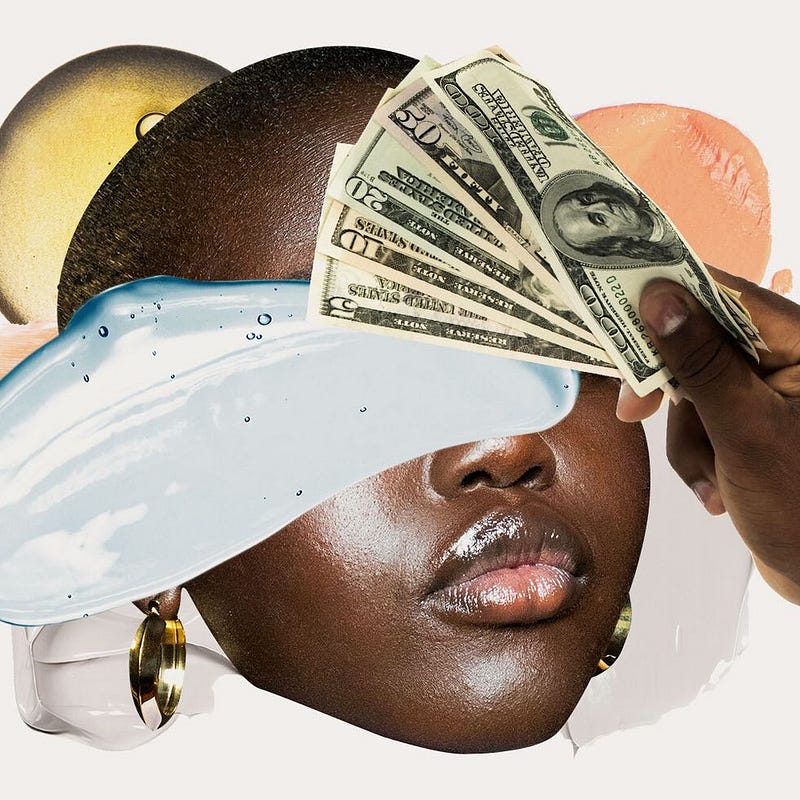
The decolonization starts with skincare
The human body’s largest organ is the skin. Any good beauty routine will consist of a practice that prioritizes skincare. Women often buy cleansers, toners, antioxidant serums, eye creams, spot treatments, and moisturizers. However, women should continue to evaluate the value of the products they use, their efficacy, and business practices.
Each woman has the right to develop her skincare treatment. However, some skin care treatments are hazardous. Let’s face it; skin bleaching needs to come to a full-stop.
Now, the word “fair” pops up frequently in skin-lightening products. Fair and Lovely. Fair and White. Fair and Flawless. Fashion Fair. “Fair” is the magical, alluring word — and in the pursuit of fairness, women risk serious damage to their skin and health (Domonoske, 2014).
There is no rationale for distorting your skin color to appease European societal norms. Research shows there are no health benefits to skin bleaching, and results are not guaranteed. Often, women see splotches on their skin after use, showing a lack of consistency. Cosmetic companies make skin-bleaching products from dangerous chemicals like mercury, hydroquinone, and corticosteroids. Black women and women of color who use these products increase the likelihood of scarring, kidney, liver, nerve damage, skin thinning, blood vessel abnormalities, and their babies’ increased chance of congenital disabilities. There are no grounds for a debate on this issue; Black women and women of color should stop using skin-bleaching products and realized that dark skin is beautiful. Yes, this includes Indian, Indigenous, Afro Latinas. Men should also fall back from using these harsh products.
While people have different beauty ideals, they should consider the brutal tradition which created white dominance. White people do not need to find Black people attractive. However, they should work to gain cross-cultural appreciation. They should question why the Queen in Snow White thought she had to be the fair of them all to maintain her value and power. Yet, Snow White became the heroine with high moral clarity. It’s no wonder many think that light-skinned women are considered the fairest of them all.
Instead of becoming more light-skinned, Black women and women of color should embrace their complexion wherever it falls on the Brown Paper Bag Test Scale. To embrace their inner beauty, Black women should support brands of makeup that match their skin color with the precision it merits. Women who want to decolonize their beauty routine should consider supporting brands created by and for Black women. Skincare products should reflect an appreciation for women with dark complexion while facilitating community growth.
Since Eurocentric society places whiteness as the gold standard of beauty, the Black Liberation movement should continue its move towards embracing Blackness. That means even when we buy skin toner or moisturizer, we consider supporting Black businesses. Mainstream brands that Black women support should respect their consumers and present advertisements that highlight authentic representations of Black beauty. If their advocacy is only performative, leave it on the shelf. Women of color should listen to Black women’s recommendations for beauty products. After all, we know what products work for our skin best, and changing our skin is not the goal. Good skincare revolves around care, not transformation.
The decolonization continues with haircare
With many expelling the traumatic memories of scalp burns and the toxic smell, African Americans have made steps to decolonize their beauty routines. In the 1900’s Garrett Augustus Morgan created the hair straightening prototype. Since then this product has made its way into many Black homes, pushing the stigma that straighter is better (Jones, 2020).
While all Black women should wear their hair in any style they enjoy, natural hairstyles are glamorous to wear. An added layer of excitement comes as African American girls and women participate in the reclamation of African culture. While rocking natural hairstyles comes at a cost, Black women can not base their haircare decisions on white school administrators or employers’ whims. Self-love is the Black community is revolutionary. There is hardly a better way to show your love than to take care of your natural curls.
Black women’s hair varies in texture, curl density, and color and there is no universal path to natural hair care. Black glamour liberation begins when a woman takes an interest in decolonizing her routine. In doing so, she rejects the colonial taming of Africans. Women can start by realizing that decolonizing centers around embracing the hair’s natural texture, avoiding harsh chemicals, and debilitating health problems.
Black hair is not nappy; it is incredibly curly. While much white hair care focuses on repeatedly washing hair to cleanse it of excessive oils, Black hair is not naturally oily. Thus, Black hair care prioritizes moisturizing. A good moisturizer should help to style natural hair with ought weighing it down. Many favor products that include shea butter and cocoa butter because they have natural plant fat. Black women love to mix up their style. You might see her in afro puffs on a Monday and then with beautiful box braids on a Saturday night. The name of the game is love; in accepting themselves, Black women can embrace their beauty. In a society that often rejects Black women’s aesthetic legitimacy, wearing natural hairstyles is nothing less than an act of revolution.
Women should embrace their uniqueness
While walking in the French Quarter one evening, I noticed a bunch of fliers on the ground. Some words stood out — dress to impress. Instantly, my mind began to envision men wearing button-up shirts and women wearing fitted dresses with heels. There are so many unsaid expectations. While I enjoy dressing up, I could not shake the feeling that “dress to impress” referred to impressing other people. However, assessing your value is more relevant than other people’s opinions. We are doing it all wrong if we frequently alter ourselves to impress other people.
No woman will look like another, and that makes each beautiful and valuable. Black women need to embrace their uniqueness to decolonize. Many white people say Black women have big noses, but broad noses are just as beautiful as thin ones. When they call a Black woman’s nose big, they say that in comparison to white women. Otherwise, how could a nose be big if there weren’t such a standard? As long as American society embraces white women as the gold-standard for beauty, Black beauty will reflect counterculture. Women of color should embrace their uniqueness and reject artificial restraints on aesthetic interpretations.
The Black liberation movement does not set out to delegitimize white beauty but rather to erase the notion of white supremacy. Black women of all shades, shapes, and colors are beautiful and to say otherwise is par for the course. Each Black woman has something that no one can buy — class, intellect, and beauty. Embracing the authenticity of Black beauty can help women to reclaim their power.
What Can you Gain from Decolonizing?
Many people describe the fight against white supremacy as a taxing endeavor. The conversation over self-care often focuses around rest. Too often, authors emphasize the harsh expectations of Black women and women of color which is valid. However, they never warn about the dangers of complacency, which maintains white supremacy. They act like decolonizing is something painful when, in reality, positive action can alleviate stress. Liberation is relaxing, and self-care gurus should stop berating activism as harmful.
While it is not an easy feat, turning the table on white supremacy is worth the conflicts and commitment. Women can care for themselves while also changing the world. We do not have to choose between civil rights advocacy and self-care. However, decolonization is a personal decision that each woman must consider. No one can decolonize someone else; they have to want it for themselves.
Decolonization is not just an action; it is an ongoing mindset that includes a lot of self-reflection and learning (Driver, 2020).
Black women benefit from decolonizing because they develop a healthy sense of amour proper. They break their dependence on brands that do not respect Black depictions of beauty. Also, women of color can support small businesses that offer natural, sustainable products. Rejecting European beauty routines helps to stimulate the Black economy. Many brands give back to their communities. Unlike Eurocentric brands, Black-owned businesses value their customers by placing Black women first.
A beauty routine should ensure that women stay healthy and feel good presenting themselves at work, home, and during leisure. Decolonizing does not need to be an expensive ritual. Each Black woman can find her path of flipping the table on white supremacy.
Where we go from here
In de-Christopher Columbus-ing my skincare, I am not just getting great products but supporting — and engaging with — my community in a way that hits different (Walton, 2020).
Black women are making changes because they believe in themselves. No one needs to have fair skin to be beautiful. Maybe the evil Queen would never have asked the question if she could have believed in herself. She became jealous of a woman who was born fairer than her.
Beauty reflects self-love and confidence. The Black Liberation movement does not only focus on dismantling systems but also creating new ones. De-colonizing, your beauty routines takes time and introspection. It means you may have to toss out some products you grew to love, accepting yourself in a raw form, and standing up to others who question your authenticity.
Flipping the table on white supremacists means not caring what a white employer, friend, or spouse thinks about your beauty routine. It means ignoring the microaggressions that ask us to tame ourselves for others; their opinions are null and void. Decolonizing takes power out of the hands of white supremacists who do not value dark-skinned women. If women of color eradicate their dependence on Eurocentric products, they can flip the table of white supremacy.
Curated Articles about Race, Equality, Women, and History:
We Don’t Need to Aspire to European Beauty Standards
Women in every culture are beautiful
medium.com
References:
DeColonaise (Ed.). (2020). About DeColonaise. Retrieved November 17, 2020, from https://decolonaise.com/pages/about
Driver, I. (2020, September 14). A step-by-step guide to decolonizing your skincare routine. Retrieved November 17, 2020, from https://verygoodlight.com/2020/09/14/decolonizing-your-skincare-routine/
Donnella, L. (2019, February 06). Is Beauty In The Eyes Of The Colonizer? Retrieved November 17, 2020, from https://www.npr.org/sections/codeswitch/2019/02/06/685506578/is-beauty-in-the-eyes-of-the-colonizer
Domonoske, C. (2014, May 18). Mirror, Mirror: Does ‘Fairest’ Mean Most Beautiful Or Most White? Retrieved November 17, 2020, from https://www.npr.org/sections/codeswitch/2014/05/16/313154674/mirror-mirror-does-fairest-mean-most-beautiful-or-most-white
Jones, H. (2020, September 24). Some beauty standards are dangerous and damaging. Retrieved November 17, 2020, from http://www.thefamuanonline.com/2020/09/24/some-beauty-standards-are-dangerous-and-damaging/
Walton, M. (2020, September 13). What I Learned From Decolonizing My Beauty Routine. Retrieved November 17, 2020, from https://www.elle.com/beauty/a33474767/decolonizing-beauty-routine/


