
African Americans Have the Right to Reclaim African Culture
We are not culturally appropriating

You can’t appropriate a culture that is, in fact, your own. Black or African-American culture, heritage and history are directly tied to Africa (Lockett, 2016).
When a bird wants to make a nest, it gathers twigs, straw, and grass from a vast area. Like all animals, it values its home and wants to protect its young. Nevertheless, if that nest is disturbed by humans, the bird may abandon its young. Despite the love it feels, a mother bird will reject its baby bird, asserting it is now tainted.
For Black people, Africa is the motherland, a carefully made nest, and a home. Starting in the 1500s, European colonists disturbed the nest. The Transatlantic slave trade ripped Black people away from the continent, against their will, bringing many to the Caribbean and the Americas. White colonists tampered with our nest, and as a result, some Africans disown African Americans.
Africans always remind us that Africa is a continent, not a country. Every single Black person knows that. We understand that Africans are not homogenous. The land is abundant, and many countries dot the landscape. Still, many do not acknowledge that for American Black people, unity is all we have. So, while Africans value diversity, African Americans find our strength in recognizing our shared values.
Through the Transatlantic slave trade, Europeans stole Africans, taking us away from our nest. We could no longer cling to the nations that once divided us. Instead, we had to believe in the dream of one Africa. This theme resonates in Bob Marley’s Pan African song, Africa Unite.
Imagine being packed onto boats in conditions unfit for animals. Many died due to the inhumane treatment along the way. Those who survived became slaves in the Caribbean and the Americas. At that point, no one cared what nation someone was from; we lost that privilege. Our ancestors all endured the same dehumanizing experience. Through abuse, Europeans made Africans cast aside nationality.
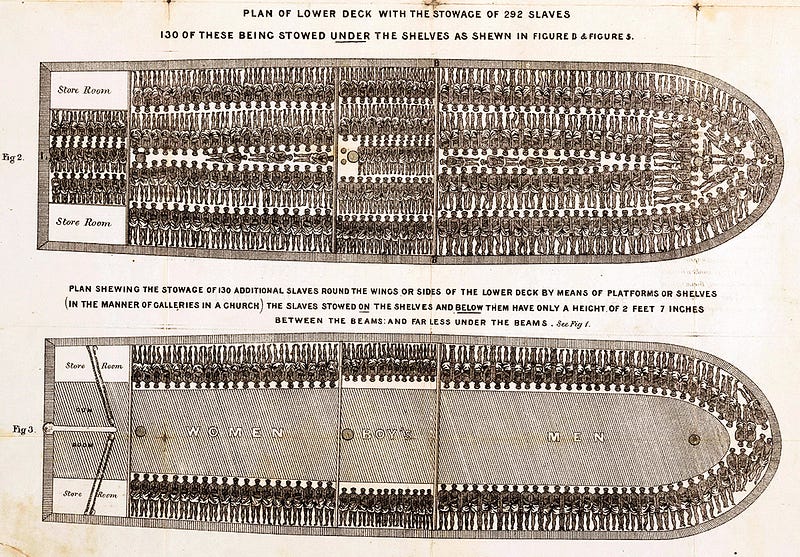
Once Africans arrived in the Americas, European colonists forbid Africans from using their original dialects, forcing them to assimilate using English, Spanish, and French instead. Black people, before anyone could consider them Americans, were beaten into submitting to Eurocentric culture. That is where we left our tribes — at the whipping post.
They took away our names and our ancestral rights and replaced them with European surnames and no civil rights. They made Black people take the names of their slave masters as if they fathered them. After African Americans crossed the Atlantic, they lost their beautiful songs, unique clothing, and traditions.
They could not write letters to their African nations because no one would deliver them. Nor could they plead to colonists because they already decided to treat them like cattle.
The majority of Africans fought valiantly against colonization and the slave trade. Queen Nzinga of Ndongo is a prime example. She fought against the Portuguese and provided a safe harbor for slaves. However, this is only part of the story. While the majority of Africans opposed this brutal conquest, some profited from the institution. Though it is a hard pill to swallow, some Africans sold Black people into slavery. Specifically, in the area that is now called Nigeria, many profited from selling fellow Africans.
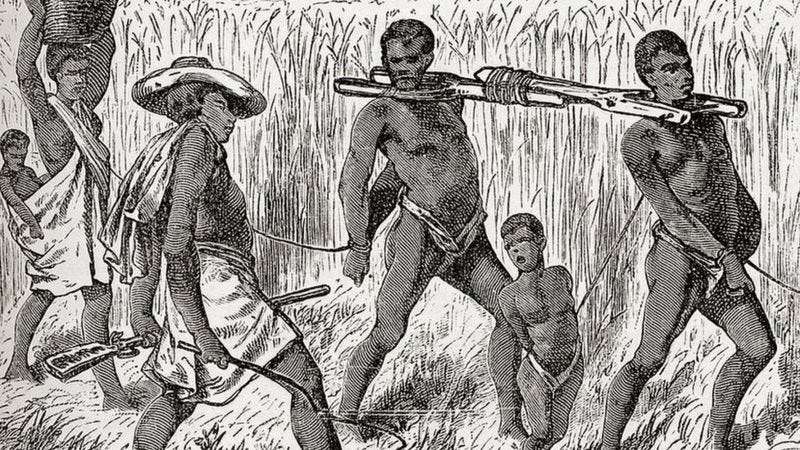
When Africans accuse African Americans of cultural appropriation, it is as if they forgot that we are also Africans. Black people did not leave en masse because they hated their homeland; colonists kidnapped them. This dynamic makes it especially disparaging when people lecture African Americans about cultural appropriation. Because colonists tampered with us, it is as if they are willing to cut their losses like the mother bird.
Black people have made efforts to reclaim and assert pride in their roots for centuries, which is completely different from any incidence of cultural appropriation (Lockett, 2016).
It took the Civil War and the passing of the Emancipation Proclamation to free African Americans from the cold grip of slavery. Civil Rights activists still fight for equal treatment. While we are no longer in physical bondage, nothing can replace our unique African cultures. It should shock no one that we want to embrace our African culture. In doing so, we liberate ourselves from Eurocentric dominance. African Americans want to know the truth about their heritage but wanting and having are oceans apart.
Thus, African Americans differ from Black people who live in Africa today. We live in the diaspora and, as a result, made an independent culture. While most Africans know which country their family comes from, African Americans do not have this privilege. While some get offended by those who refer to the entire continent rather than specific countries, this type of generalization makes perfect sense for African Americans. After all, we lost our heritage. Our continental homeland is all that unifies us.
The majority of African Americans have ancestors from Western and West-Central Africa; some came from Senegambia, including the modern-day nations of Senegal, Gambia, Guinea-Bissau, and Mali. Others came from the areas now called Angola, Congo, and Gabon.
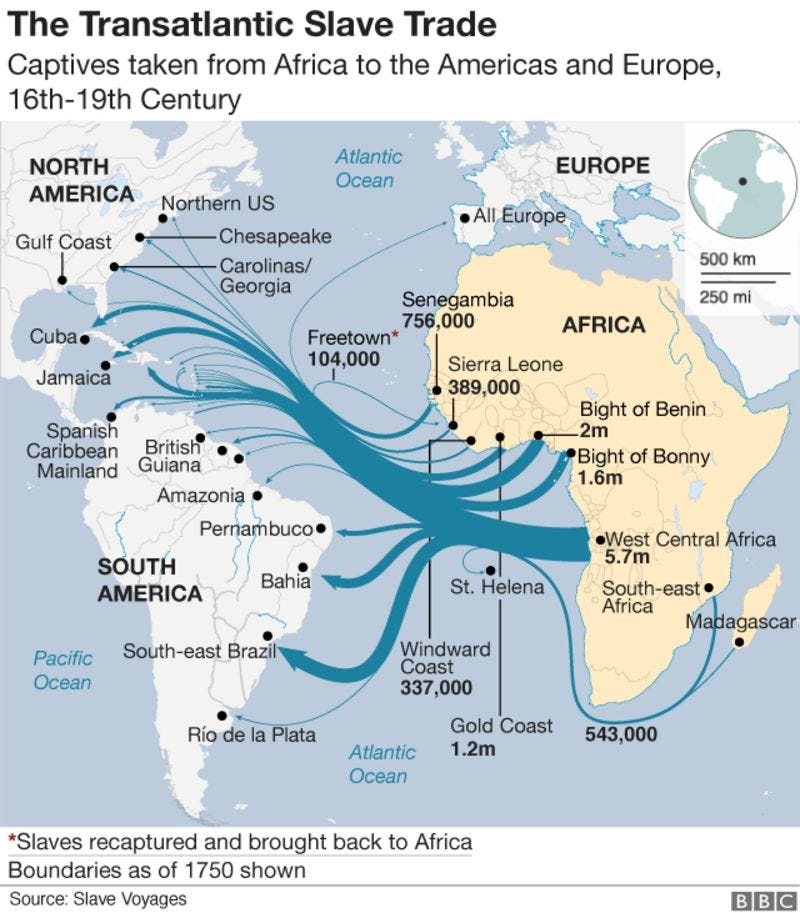
On plantations, no one cared if someone was from Mali, and others were from Senegal. Africans mixed on plantations with one another and Indigenous people. We tragically mixed with Europeans through systemic abuse. It made no sense for us to separate who was from which nation. The institution of slavery laid waste to our understanding of African history. Therefore, when we say “Africa,” we refer to our unique relationship with the continent. It is our homeland, but society denies our claim to it.
The clothes we wear and the Ebonics we speak derive from a forced commingling of cultures. African Americans are not guilty of culturally appropriating Africa; we are Africans. We reflect the diaspora and do not lay claim to any particular country. Colonists took that from us.
Many African Americans attempt to nurture their own culture in the modern era, influenced by our homeland. Accusing African Americans of cultural appropriation is like kicking us out for being colonized even though it was no fault of our own. Africans should not treat African Americans like an abandoned baby bird, left to perish. Instead, they should encourage us to reclaim our culture.
In the absence of this warm embrace, critics then try to force European culture down our throats. We do not have to limit ourselves to wearing jeans and flannel shirts because some from our homeland say we lay no claim to traditional African culture. Rejecting African Americans fits into white supremacist ideology in asserting we do not belong anywhere, that we have no culture but the ones colonists gave us.
If I have ancestors from Nigeria and the Congo, which culture should I adhere to, which items are taboo for me to wear? It makes no sense for African Americans to limit themselves to African representations of attire. We are baby birds that feel lucky to have survived the ordeal. African Americans are winging it.
The only thing that makes African culture more sanctified than African American culture is time and distance. We are still Africans, and we create African culture even if we do not have an official tribal name or affiliation. Our shared experiences make us a tribe. African Americans are a group of Black people in need of acceptance.
If you’re not from an African tribe, please leave off wearing the tribal marks,” she says, ignoring the fact that the ancestors of American Blacks did belong to African tribes. Thanks to the peculiar institution of slavery, which incredibly Gene never mentions, the average African American can’t trace her roots to a particular tribe without the help of a DNA test. Yet, it’s well documented that the forefathers of American Blacks mostly hailed from West Africa, where the slave trade flourished (Nittle, 2015).
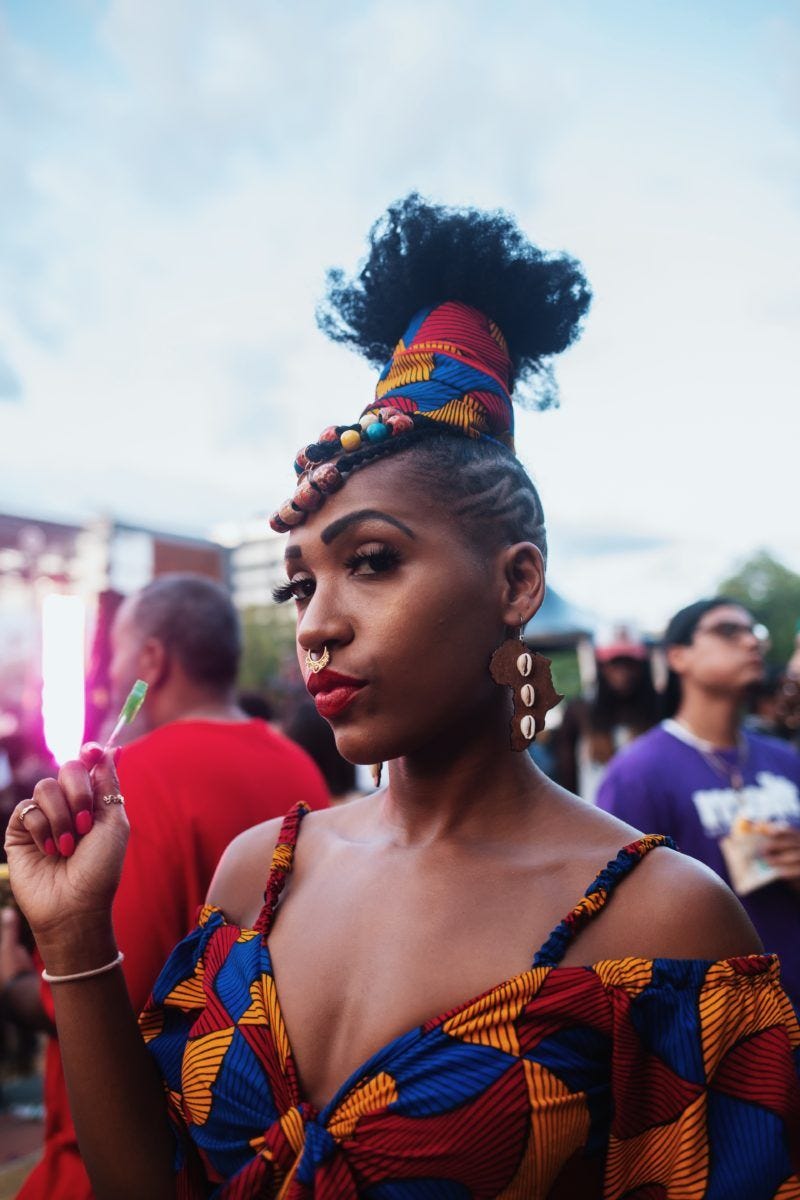
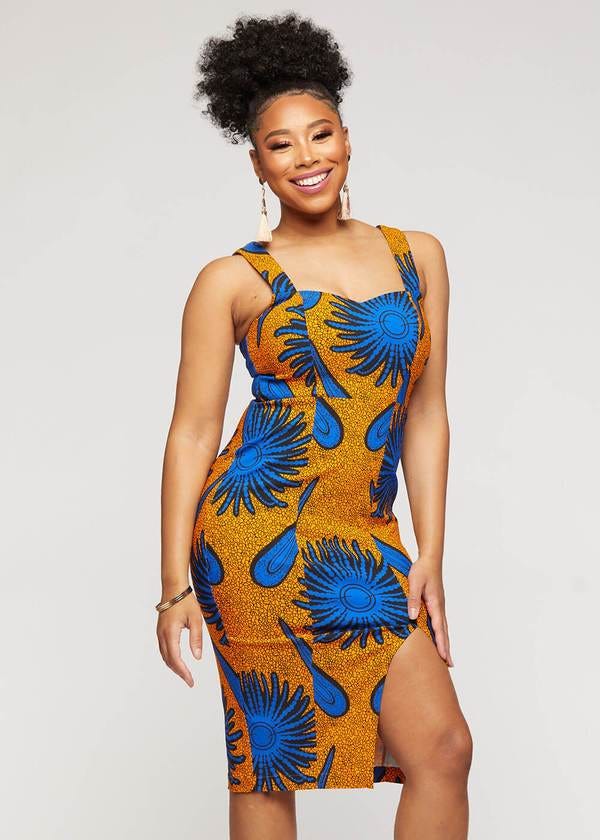
African American people are descendants of West African tribes, and we have every right to express ourselves. When we wear African clothes and jewelry, we engage in self-love and cultural-discovery. African Americans are not doing this to hurt Africans. They, of all people, should understand our intent.
Too many tell African Americans, “you are doing it wrong.” This rhetoric is condescending and abusive. It implies we lay no claim to our ancestral lands. Our brown skin and kinky hair reveal our roots even if people refuse to acknowledge them. African Americans are products of the Transatlantic slave trade. Our diverse nations had various styles of cooking, dressing, speaking, and worshiping. In America, all these cultural remnants got put into a blender; the result is African American culture.
Colonialism’s most lethal weapon was the division it created between highly-functioning African nations — and in many ways, it still persists. The proof is in the myriad pieces lambasting Black people for appropriating African culture, something that by definition isn’t even possible (Kwateng-Clark, 2018).
African Americans embraced African culture
Throughout American history, Black people have always tried to maintain what pieces of African culture they could. In the fields, many sang hymns they adapted from West African dialects. However, over time many of these traditions faded away. Persecution watered down heritage.
Black liberation means different things to different groups of people. However, African Americans view freedom as physical, sociopolitical, economic, and cultural autonomy.
The Black Power Movement, taking place from roughly 1965–1975, showcased a rise in the expression of black pride and heritage. During this time, elements of African style, such as vibrant colors and beaded jewelry, were reincorporated into African-Americans’ daily lives or special occasions (Lockett, 2016).
In America, Black culture is the counter culture. While white people loved Elvis, we admired artists like James Brown. When he sang his song, “Say It Loud, I’m Black, and I’m Proud”, it filled the ears and hearts of African Americans. We have always found our way of managing our oppressive circumstances. Our ancestors come from West Africa, so we do not have to embrace American culture. Imagine someone saying you must love your captors’ rituals. In denying African Americans of African culture, the result is an assertion that we should accept inferiority.
African Americans do not adhere to American culture because this culture disregarded our autonomy. It is unrealistic to expect us to embrace a culture that denied our humanity through forced servitude. Many African Americans do not find joy in wearing only Eurocentric clothes and hairstyles.
American blacks embraced dashikis to reconnect with their roots, reject white supremacist ideas about themselves and their ancestors, and to show solidarity with the African nations recently liberated from colonial rule (Nittle, 2015).
It is bad enough for the American government to never reckon with the institution of slavery, never engaging in restorative justice. However, when Africans accuse African Americans of cultural appropriation, it is like throwing salt in the wound. It is a micro-aggression with a clear message — you cannot sit with us.
On the flip side, African Americans often felt a deep sense of solidarity with Africans. Colonization negatively impacted Africans on the continent and the ones who Europeans took away. The majority understood that their sociopolitical circumstances had notable similarities.
American blacks saw a parallel between Africa’s struggle for independence and their own struggle for equal rights in the United States (Nittle, 2015).
African Americans have the right to reclaim the culture
Their interest in African fashion never stemmed from a desire to rip off African peoples and popularize their customs for profit, as is often the case with cultural appropriation. It stemmed from the desire to carve out a new racial identity in a nation that had treated them as sub-humans and taught them to buy into damaging stereotypes about their ancestral homeland, further instilling in them a sense of inferiority (Nittle, 2015).
Some people assume African Americans need special permission to wear traditional African clothing. However, this way of thinking implies African Americans are inferior. Only then would they need special permission to express themselves, and only under those circumstances would anyone doubt their ability to be authentic African people.
Any non-traditional use of African attire is due to the oppressive tactics that obscured an understanding of direct ancestral lineage. Black people in America walk on eggshells in a country that once enslaved them. Accusing African Americans of cultural appropriation is equivalent to calling them, imposters.
While most agree that African Americans had a rough set of circumstances, they assert that each piece of culture has its meaning, and it disrespects existing tribes to use these pieces out of context. That line of thinking implies that African Americans have ill intent.
Wanting to regain parts of African culture lost due to the slave trade is a natural response to oppression. Also, African Americans do not have to limit their use of attire to how Africans use them. We have the right to modify the style in a way that makes geographical, cultural sense. After all, tribes mixed on plantations. Cultural cues that make no sense to Africans have dynamic meanings for African Americans.
African culture is not limited to the continent. Africans in the Caribbean, America, Europe, Canada, and Latin America have different experiences and use African culture differently.
This dynamic seems unique between Africans on the continent and Africans living in the diaspora. Chinese people do not usually accuse the third generation of Chinese Americans of cultural appropriation. Likewise, Indians do not accuse Indian Americans of misrepresenting their culture. Perhaps the institution of slavery caused this peculiar rift. African Americans would love to have a better understanding of traditional African tribes. However, they did not decide to drive this rift.
While some claim African Americans should not wear African attire, they should understand that this perspective results from a forced erasure of their culture. If society does not allow them to explore their African heritage, they deny them the autonomy they deserve.
Looking ahead
It is important to understand that Black peoples’ interactions with other cultures are not based on a historically violent relationship of taking from and benefiting from those cultures, which is what appropriation consists of (Ziyad, 2017).
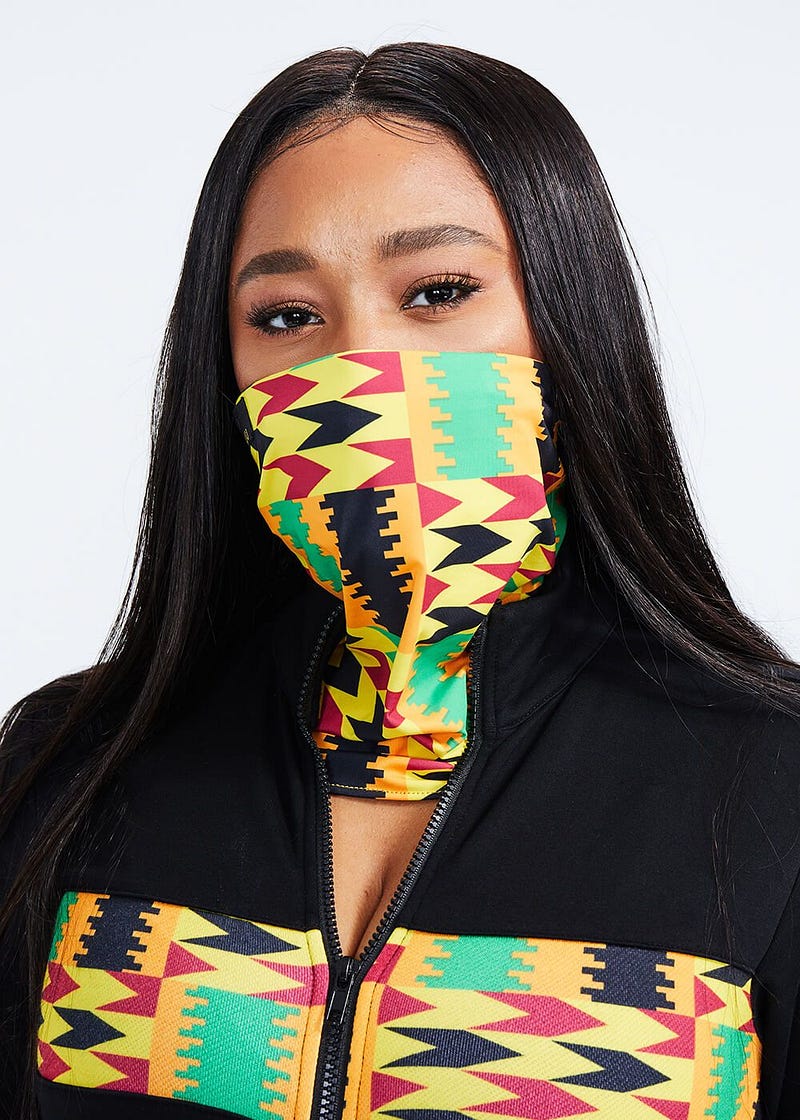
African Americans do not benefit from a power structure that makes them capable of cultural appropriation. When you see a woman wearing a dashiki, she is expressing her pride in her African history. This pride is essential for African Americans historically forced to abandon all ties to their West African tribes. African Americans cannot appropriate in their own culture.
Throughout history, African Americans felt unified through their ancestral homeland. After everything endured in the diaspora, Africa owes it to African Americans to give them a seat at the table. Once Africans acknowledge the dynamics that produced non-traditional African expressions, perhaps they will feel a sense of renewed unity.
We need unity because as much as our cultures differ, we have so many notions that tie us together. African people living on the continent and abroad maintain traditions in any way they can. Through understanding one another, we can foster an international movement to confront systemic racism.
Curated Articles about Race, Equality, Women, and History:
We Don’t Need to Aspire to European Beauty Standards
Women in every culture are beautiful
medium.com
Amazing Anti-Racism Writers:
References:
Kwateng-Clark, D. (2018, February 23). African-Americans Can’t Appropriate African Fashion So Stop Accusing Them. Retrieved November 08, 2020, from https://www.teenvogue.com/story/african-fashion-cultural-appropriation-black-panther-african-american
Lockett, C. (2016, September 15). The Complex Art of Reclaiming African Culture. Retrieved November 07, 2020, from https://www.huffpost.com/entry/the-complex-art-of-reclai_b_8107390
Nittle, N. (2015, September 15). Accusing Black Americans of Appropriating African Clothing Misses the Point. Retrieved November 07, 2020, from https://www.racked.com/2015/9/15/9325959/african-american-appropriation-afropunk-fashion-history-zipporah-gene
Ziyad, H. (2017, October 18). Black people cannot be guilty of cultural appropriation. Period. Retrieved November 08, 2020, from https://afropunk.com/2017/10/black-people-cannot-guilty-cultural-appropriation-period/


