
How Code-Switching Causes More Harm Than Good
Let’s talk about how we feel impacted by switching it up

When you see a chameleon, you may notice it possesses a unique ability. It can use camouflage, concealing itself in plain sight. These reptiles adapt their appearance for self-protection. Similarly, people assimilate into a variety of social circumstances. When social environments require strict codes of behavior, we often feel that assimilation benefits us — changing ourselves to fit in at school, work, and informal spaces. However, we do not make changes for the same reasons. Black people and other minorities often make changes to avoid prejudice, which causes more harm than good.
Changing the way you speak, particularly in the face of discrimination, can take a mental toll (Retta, 2019).
While it is perfectly normal to modify your behavior, it can harm your health when that transition happens under duress. Within America, Black people experience intense pressure to assimilate because of a resounding rejection of Black culture in the mainstream. White people incentivize compliance by providing better educational and professional opportunities to Black people who successfully adopt Europeanized behaviors. They also use negative reinforcement by engaging in microaggressions to curve nonconformist behavior. When white people laugh at a minority’s speech, fashion, or lifestyle, they ensure that this behavior will be less likely to occur in white-dominated spaces.
Some white people are only beginning to understand “the talk” that Black parents must have with their children. Our parents try to prepare us for a world that views us as a threat. However, there is another kind of “talk” that Black parents must give. They have to teach their children how to assimilate when around white people. As a child, I felt joy in my heart when my father proudly told me, “You speak the King’s English.” I knew that he discouraged my siblings and me from using the word “ain’t.” He did not want us to use African American Vernacular English (AAVE) because he wanted to protect us from ridicule.
Black children know that they must assimilate, but they must do so because their culture is considered inferior. Like a chameleon, Black people change their behavior as a form of self-defense. It is through demonstrating proficient use of American Standard English that Black people feel welcome in white spaces. It is their way of letting white people know that they understand American Standard English, attempting to counter stereotypes that Black people are intellectually inferior.
No matter the situation, it is clear that a person who must present different versions of themselves in different environments will be faced with feelings of stress, confusion, frustration, or even inferiority. These feelings can affect that person’s mental health (Adikwu, 2020).
When we see a chameleon change its hues, we often revel at the beauty. Nevertheless, we rarely consider that fear that motivates this behavior. Similarly, white people may admire a Black person’s ability to assimilate without understanding why they feel the need to do so. Given the discrimination that Black people and other minorities experience, code-switching is an extra burden to bear.
Code-switching, when it happens out of obligation, does more harm than good. When Black people and other minorities associate making changes with compliance to white people’s expectations, it normalizes systematic racism. As long as society treats European culture as the standard, we will live in a society that justifies discrimination. If we want to live in a more inclusive community, it must begin by accepting linguistic diversity in professional and educational settings.
Finding acceptance in white spaces
While we all measure success differently, we all need acceptance and support to turn our dreams into reality. Just like every other group of Americans, Black people want to succeed. However, we have to find acceptance in white-dominated spaces to climb the ladder to advancement.
In the 1970s, a sitcom called The Jeffersons inspired the Black community with its theme song. The phrase, “we’re moving on up,” meant so much because we knew how difficult upward mobility is for Black people. In the iconic show, Mr. Jefferson earned money by starting several drycleaning businesses. Their family’s story captivated the hearts of many because of his independence. When minorities make money without needed to assimilate into white-dominated spaces, it helps to preserve Black culture. Unfortunately, most Black people do need some level of acceptance to succeed.
For Black people, it’s a constant shift between African American Vernacular English (AAVE) and white standard English, but it can also be the difference between succeeding and failing in white-dominated spaces (Retta, 2019).
American diversity is not a problem. Instead, it is the rejection of particular cultures in favor of others that causes difficulty. We do not need to live in a color-blind, culture-blind society. Instead, we need to embrace the value of diverse groups within our population. When someone code-switches, they want approval. Otherwise, they would speak how they feel most comfortable. Code-switching causes more harm than good because it creates tension between self-expression and social acceptance.
The cost of code-switching is immense as it causes minorities to spend time worrying about cultural compatibility, rather than dwelling on things that do matter,” she said. For people of color, this can often be frustrating, and it can have a negative effect on their mental health and wellbeing — Chandra Arthur (Adikwu, 2020).
Code-switching distracts Black people from focusing on important matters. Many feel added anxiety from this experience and find themselves walking on eggshells in white-dominated spaces. Code-switching is a distraction from meaningful social engagement. It is not the use of Standard English that is problematic but rather the rejection of AAVE that causes the most harm.
A chameleon knows that changing into the wrong color while a predator is present puts them in danger. Similarly, Black people know that using ebonics in front of white people can lead to ridicule. Even if white people do not openly make fun of the Black person, they may engage in microaggressions that let them know that their behavior is unacceptable.
Continually trying to rephrase things in your mind to fit Standard English can cause unnecessary stress, depriving Black people of liberty in white-dominated spaces.
When black people can be killed for simply being themselves, code-switching presents itself as a form of self-protection (McWilliams, 2018).
To protect themselves and ensure an opportunity at upward mobility, Black people try to adapt, speaking the King’s English whenever possible. Many Black community leaders engage in respectability politics. This theory asserts that Black people who assimilate will become free from racism. However, historical evidence does not support the idea. For example, President Obama graduated from Harvard Law, speaks very fluent Standard English, and wears clothes that fit into Europeanized standards. Nevertheless, he experienced racism when an opponent questioned his citizenship.
Telling Black people that cultural assimilation will save them from discrimination is harmful because it causes false hope. Even if Black people master the art of code-switching, white people recognize the color of our skin. Thus, it is not our behavior that must change, but the actions of those who fail to acknowledge Black cultural value.
Code-switching in the classroom and professional settings
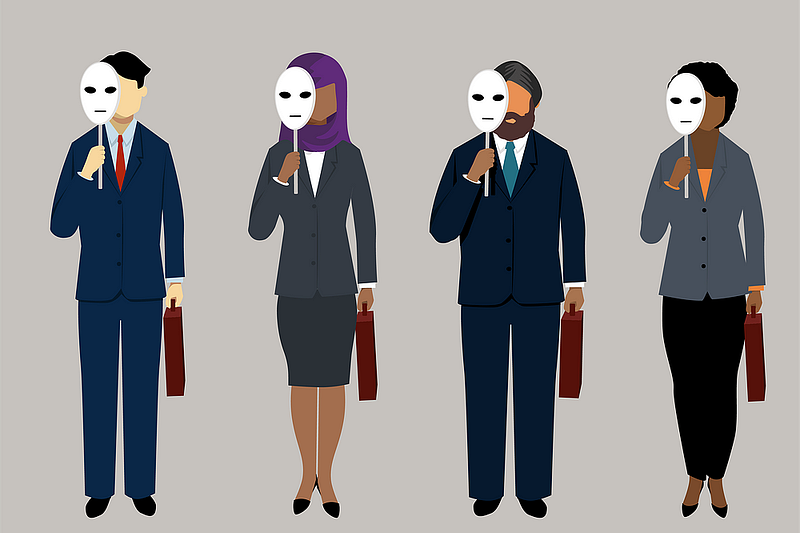
To excel in professional settings, Black children must first learn to code-switch in classrooms. Public schools discourage children from using AAVE, which causes unnecessary stress on children. Already feeling the pressure of learning new things, they must also learn to speak in a way their teachers find acceptable. When a Black student uses ebonics, educators often feel dissatisfied with their performance. They favor students who can readily assimilate or show a willingness to do so.
For the students who feel they must conform to that to succeed, a code-switch can be not only an inconvenience, but a huge emotional toll and a detriment to mental health (Retta, 2019).
As an English teacher, I understand the value of standardization. Without creating a model for writing and speech, we cannot correct it. Thus, teaching Standard English is not problematic in itself. Teachers who correct or admonish Black students who use AAVE cause tension because they treat Standard English as the only acceptable version.
Instead, we should be teaching black children — and all children from communities unconstrained by standard English — to love their most natural forms of expression. Rather than criticizing code-switching, we should criticize the conditions under which it occurs. After all, for black people, loving ourselves means loving the way we express ourselves to each other (McWilliams, 2018).
Teachers should encourage students to use Standard English while providing much-needed nuance to the curriculum to understand the value of self-expression. The last thing we want is for students to feel the way their family members communicate is illegitimate.
After school, students face an uphill battle, trying to assimilate to white-dominated workspaces. If they master code-switching in school, they may find that it comes second-nature later in life. My friends and I found it amusing to pretend to be white women on the phone. It was our way of poking fun at the ways they wanted us to speak. While I can speak and write using Standard English in white-spaces, I feel much more relaxed speaking with my close friends and family; they accept me. Still, I could not acquire the jobs I have without code-switching.
The use of African American Vernacular English (AAVE) by Black Americans is, often wrongly, seen as unprofessional or inappropriate, limiting their opportunities in the areas of work and study (Adikwu, 2020).
If a Black person wants upward mobility, they must not use ebonics in an interview because American culture dictates that AAVE is par for the course. Within our community, there is an assumption that all Black people can code-switch. Some struggle to do so and, as a result, find it hard to attend prestigious colleges and well-paying jobs. American Standard English is a gatekeeper that lets discrimination thrive in our school and workplaces. Speaking ebonics does not make someone illiterate, and we should fight against stigmas that deprive Black students, applicants, and employees of equal opportunities.
The opposite of code-switching is cultural appropriation
Just because the chameleon changes its colors doesn’t mean its predator, the eagle, should do so as well. When Black people use Standard English, they do so because it is a necessity. Without the current system that discriminates against Black culture, many Black people would behave consistently with Europeanized standards. While many white people attempt to justify their use of AAVE, this is a false equivalency.
This reverse code-switch is a particular form of cultural appropriation that allows the dominant culture to explore and enjoy a form of Black culture without judgement in a way that African Americans are not afforded (Retta, 2019).
When a white person uses ebonics, they often parody Black culture instead of assimilating themselves. Even when they do so without mockery, they do not face the same discrimination Black people do when using the same language. When minorities complain that white people misuse their culture, they often brush it off as a superfluous complaint. However, we want white people to appreciate and respect our culture, not hijack it.
While society makes Black people and other minorities use Standard English following strict grammatical rules, white people treat ebonics as something they can freely modify. They often misuse words like “woke” and “rachet,” adding their additional, counterproductive meanings. We need cultural acceptance, not cultural appropriation.
Some white people grow up in majority Black communities and thus pick up cultural cues and mannerisms that do not fit Europeanized standards. However, these incidents are the exception, not the rule. Typically, when a Black person uses ebonics, it’s best to respond using your way of communicating rather than mimicking their jargon. In America and many other countries, the relationship between Black and white people centers around dominance. To counter this dynamic, white people should respect Black people’s cultural autonomy, starting with our manner of speaking.
Comedian Dave Chappelle –Every black American is bilingual. All of us. We speak street vernacular, and we speak job interview (McWilliams, 2018)
Latinos code-switch under pressure
Latino people also experience extreme pressure to assimilate culturally. A large swath of their population self-identifies as bilingual. Many Latino people experience microaggressions when speaking Spanish or Chicano English, especially in educational and professional settings. Like AAVE, Latino people have their variation of English.
Chicano English- A variety of English spoken by many people of Hispanic descent in the Southwestern United States and California. It differs in systematic ways from Standard American English (PBS, 2005).
Bilingual students face additional pressure to speak using Standard English even when Spanish is their primary language. Older students, in particular, may struggle to code-switch in the classroom. The educational curriculum is offered in English for students, making cultural assimilation necessary for academic success. White people often judge a Hispanic person’s intelligence through their ability to assimilate.
As Bilingual students, they often struggle on standardized tests, which often act as gatekeepers for higher educational opportunities. In Standardized Test Architects are Racist Gatekeepers, I discussed how Black and Hispanic students often receive lower standardized test scores. White students have an advantage because of their proficient use of Standard English. These tests are an essential indicator of success in higher education programs. Thus, linguistic discrimination against bilingual students continues to limit educational opportunities.
Learning a second language is not easy, and we should acknowledge their courageous spirits in trying to learn and grow. Unfortunately, many white people feel that Latinos should try harder to fit in.
The former White House chief of staff, John Kelly, said last year that Central Americans crossing the border are “not people who would easily assimilate.” NBC journalist Tom Brokaw recently said Hispanics “should work harder at assimilation,” and should make sure their children learn to speak English (Gamboa, 2020).
Like Black people, Hispanic people also face pressure to assimilate in white-dominated spaces. Many suffer from racial and linguistic discrimination. White people often openly judge or mock them for speaking Spanish. In the video below, a white woman told a Hispanic worker that they must speak English.
One of the cruelest aspects of experiencing racism is that minorities cannot respond to it. If they do, white people will label them as provocateurs. It is difficult for Hispanic people to endure this treatment and respond in a dignified way. When she said he needed to get out of her country, it hurt. The white woman said an illegal alien raped her, using this as an excuse to treat all Latino people poorly. She solidified her use of white privilege against marginalized people, solidifying her status as a “Karen.”
Code-switching to assimilate is not an easy process. While we often hear that minorities need to try harder to fit into white-dominated spaces, I believe it causes more harm than good. The stress they endure to live up to the standards set by others is disheartening. We need cultural acceptance to rule the day and stop treating minorities as inferior for not speaking Standardized English.
Looking ahead
No one should fear being judged based on the way they communicate (Adikwu, 2020).
Language is one of the unique qualities humans possess. White people dehumanize Black people and people of color by insisting that only Standard English is legitimate. Black people living in the diaspora did not receive the opportunity to hold onto their African dialect. Assimilation is not benign. Just as a chameleon hides in plain sight to maintain distance from a hawk, minorities must also try to fit in to avoid discrimination in white-dominated spaces. We should not live in fear of judgment for communicating. It is a demonstrable effort to delegitimize Black voices.
A closer look at its complexities shows that, when people feel obligated to code-switch in order to thrive in a particular environment, it can have serious consequences (Adikwu, 2020)
America forces assimilation onto Black people and marginalized groups. While historians often portray America as a melting pot, they rarely talk about the horrific social dynamics that put us in the same pot. If we want to create inclusivity, we must acknowledge that code-switching does more harm than good. Teaching people that their method of communicating is wrong causes negative psychological impacts. It also codifies racism by encouraging white people to correct minorities.
Code-switching will always happen, but we need to fight against the mandatory nature of this skill. All is not lost. We must drink from the quintessential fountain of hope. Change can happen when we agree to live in a society that embraces cultural diversity.
Curated Articles about Race, Equality, Women, and History:
References:
Adikwu, M. (2020, June 01). The Mental Health Costs of Code-Switching. Retrieved October 27, 2020, from https://www.talkspace.com/blog/code-switching-what-is/
Dunn, A. (2020, May 30). Younger, college-educated black Americans are most likely to feel the need to ‘code-switch.’ Retrieved October 27, 2020, from https://www.pewresearch.org/fact-tank/2019/09/24/younger-college-educated-black-americans-are-most-likely-to-feel-need-to-code-switch/
Gamboa, S. (2020, July 09). Racism, not a lack of assimilation, is the real problem facing Latinos in America. Retrieved October 28, 2020, from https://www.nbcnews.com/news/latino/racism-not-lack-assimilation-real-problem-facing-latinos-america-n974021
McWilliams, A. (2018, July 25). Sorry to Bother You, black Americans, and the power and peril of code-switching | AT McWilliams. Retrieved October 27, 2020, from https://www.theguardian.com/film/2018/jul/25/sorry-to-bother-you-white-voice-code-switching
PBS (Ed.). (, 2005). Do You Speak American? About the Broadcast. Retrieved October 29, 2020, from https://www.pbs.org/speak/about/guide/
Retta, M. (2019, September 18). The Mental Health Cost of Code-Switching on Campus. Retrieved October 27, 2020, from https://www.teenvogue.com/story/the-mental-health-cost-of-code-switching-on-campus
Author’s Note: While this article focuses on the code-switching Black and Latino communities engage in, all marginalized groups adjust to white-dominated spaces.


