
How to close 50% of deals as a digital agency.
I crafted around 1000 proposals, with a closing rate of approximately 50%. I have no idea if it’s good or bad, but I wanted to share some learnings from this journey, I split them into 5 steps:
Step 1: Grab the data
When I receive a lead (usually a contact email or an intro from somebody), I will gather as much information as I can:
- Size of the company, its market, main clients, revenue, positioning, history, shareholders, press, news, EBITDA, number of employees, common contacts within the company, direct access to the CEO? etc.
- I will stalk the person who contacted me, I want to know if he/she is married or not, where they travel in the summer, what they write online, and what their position is in the company hierarchy.
Why doing that?
It gives you a better understanding of what kind of project this client really wants. “E-commerce” can mean 5K$ Shopify project or 30M$ Car rental company e-commerce.
But more importantly, it will help you break the ice, and create intimacy with your prospect faster because you will have only 30 minutes to do that.
Step 2: First call
80% of the time deal is virtually closed during the first call. I would even say during the first 10 minutes of that call.
You will know if you have the deal after that call, within a few years of experience.
You need to put all the odds on your side :
- Be prepared, gather examples of similar work you’ve done and some examples of similar projects from their competition
- Break the ice, and create intimacy from the first second. Smile, relax, and carefully test jokes.
- Appear focused but absolutely calm, and relaxed. Talk slowly, and make pauses. Don’t rush.
- Ask questions. You must refrain from talking about your company. DO NOT TALK ABOUT YOURSELF.

- Choose questions carefully. They are the only way to talk about yourself indirectly. Some of them must show your experience (“How do you manage the copy-circulation workflow inside your newsroom?” sounds more professional and industry-oriented than, the very same question: “How the content is validated before going live on your website?”). Others are here to show that you’re focused, motivated, and genuinely interested in the client’s project (“So let me summarize, please correct me if I’m wrong, but what you actually want to build is a Web3 OnlyFans version”). Summarizing is a very strong technique because it forces your prospect to agree with you, you train them to agree.
- You need to learn more about the client during this call: How urgent/important is the project, Who are the stakeholders, and Why do they launch this project now? Who decides what, do they have any technical preferences?
- You need to present at least 2 or 3 similar projects you’ve done, by asking questions (“Oh look, we worked on “DiorKnow” project, a very cool LMS project, do you think you need the same 3 columns landing page?”)
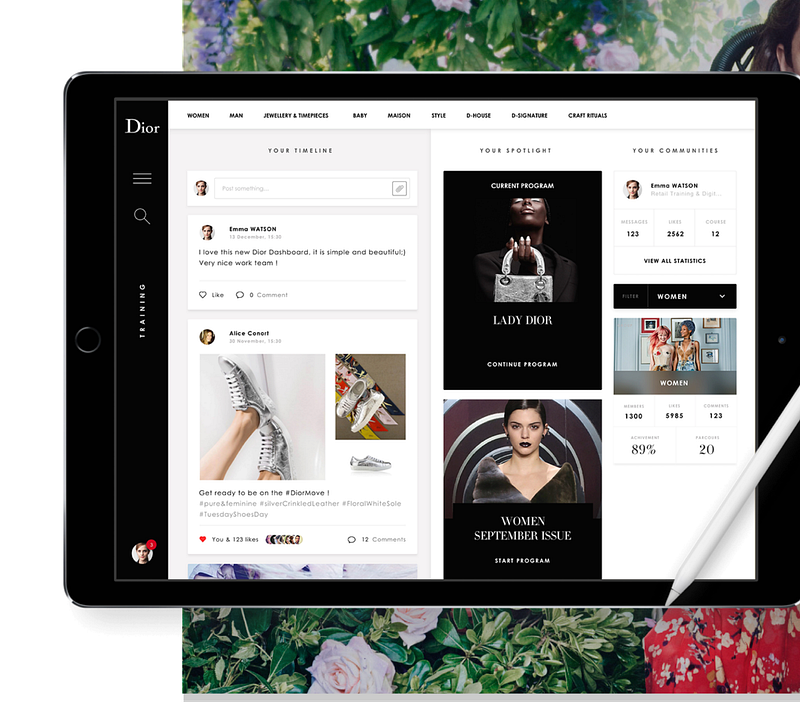
- You need to show your expertise (without being mundane or paternalistic, you need to speak with simple phrases) and how fast you understand the client’s industry (summarizing is a very good technique).
“I suppose that you’ve already operated the reversal of the copy circulation from print-first to web-first. But I wanted to know how do you manage backward updates, do you create a master version or the web-version is used as master one?”
At this point, I classify my prospects into 3 categories:
A. Client has good experience managing digital projects. Technically savvy. Vital or important project. They want to start within 1–3 months.
B. Clients have no idea of what they want. But they have big pockets and enormous potential for growth.
C. Small and flurry client. Have no idea of how to manage an IT project. Knows nothing about digital. Unclear responsibilities of your contact. No urgency to start.
Each typology of prospects will come with different strategies to close them :
A’s clients: You need to put in the maximum effort to close the deal. Precise estimates, architecture, and clean proposals are key here. You’ll need to immediately map the client’s hierarchy, talk to stakeholders, and know how you could help your contact internally. But the most important: you need to move fast.
B’s clients: No need to rush. Build trust. Offer free consulting hours. Play politics game. Invite them to the launch and dinner. Get to know them personally. Nourish them with valuable content. You need to become the nice guy who they call each time they face an obstacle/question/idea.
C’s clients: I would remain silent after the call. No proposal. No pricing. Nothing. Let them chase you first. If they don’t, means that you would lose the RFP anyway, but you avoided losing your time and energy on it. If they really want to work with you they’ll get back to you asap, and will desire you.
Step 3: The Proposal
I’ve written a complete article about digital agencies' RFP proposal crafting. So I just put the link here, if you’re interested, go ahead :
And if you want a more precise focus on how to produce detailed estimates during an RFP process, here is a specific article about that :
Step 4: The final presentation
It must be a story.
Slides should only support your story. No more than 1–2 phrases per slide. Strong image or graphic. Nothing else. You do not want to distract your audience from yourself.
You need focus. Focus can be tricked with suspense.
Slow down and take your time. This will help build suspense and keep your listeners engaged. Don’t let excitement or nerves rush the presentation — the pauses and breaks you take are just as important as the words you speak.
I create a story spine for my proposals.
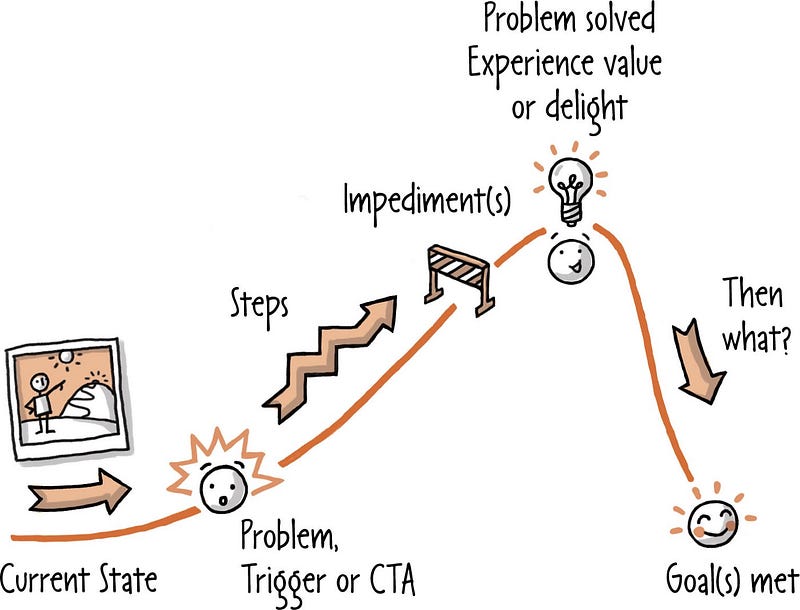
To illustrate the spine, I’ll take a fictional company “AAA” which works for 1200 notaries, helping them to find descendants in case of death and taking 30% of the inheritance, whatever it is (1000 USD or 1.000.000 USD)
- I introduce the client’s own world and his own challenges. His daily routine (around the subject of the tender). Example: “AAA is a 150 years old family company that built a 4 generations name, reputation, and a leader in its market. You deal with 1200 brokers that bring you 650M$ revenues a year. You work with around 15.000 deals a year, requiring around 60 hours of manual work of genealogists and data scientists, giving a rough cost of each deal around 6,000 USD.”
- I present then a tension, a unique change, or an event, that will unroll a series of consequences. For example, with our AA client: “But there are fears around the law that may change at any time, start-ups that can overtake the market, complexities in international M&A integration.”
- I let the tension grow, I create an artificial feeling of seriousness. Down your voice, slow down. “You are slowed down by your 10 years old IT system, consisting of 367 different databases and WinDev desktop applications. That’s why it requires 60 man-hours of work. It’s also absolutely impossible to integrate the companies you’ve acquired and benefit from economies of scale and larger databases. In case of a law change, you will be unprepared and overwhelmed by competition that will outplay you within 2 years, destroying almost 150 years of history.”
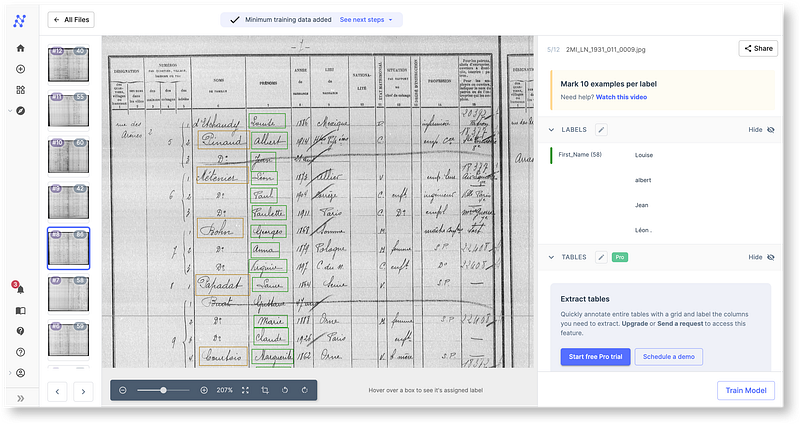
- The climax, your proposal, solution. You embark on the client on the path of success, you release the tension. You accelerate your speech rate and make your voice LOUDER. “We offer you a 6-month path to a totally new IT ecosystem, built around the latest technologies, giving a leapfrog into the future. We’ll create a system based on Azure Data Pipelines, no/low code solutions, Azure Functions, and heavy integration with 15 external APIs. We also tested a solution to completely automate old documents' handwriting recognition using the Nanonets engine.”
- In the end, I portray the future routine, the new world of my client. “With the new system, you can leverage a global unique database of registries in more than 5 countries. You can automate at least 30 to 40 hours of manual work with our OCR partner Nanonets. And the integration of external APIs will provide a new level product for your teams able to build the genealogy history within hours instead of weeks. This project will cost you between 200k$ and 270k$ and will last between 6 and 8 months. We will be able to reduce the range after the first 2 sprints of 2 weeks. We can start in 3 weeks. The team is here with us. Do you have any questions?”
How to launch a migration project
A detailed checklist to start a re-platforming project.
medium.com
Step 5: The closing
Once you’ve done your presentation start the closing itself. At the beginning of my career, I overplayed this part. I was persuaded that everything happens at that moment. The Decision. The Moment of Truth.
But with experience, I tend to think that the First call makes 50% of the decision. The presentation is 40%. The only thing you can manage during that period is price/offer adaptation. If you’re more flexible than the competition (not cheaper!!!) you can add 10% of chances on your side.
That’s what they need to desire you since the very first contact. For that, you’ll need to establish distance and trust.
As distance creates desire, and trust turns desire into love. Let them come to you, and chase you during the whole RFP process.

If you want to test this method in real life, drop me your next RFP!


