
How to Cheat Death With AI
My journey toward digital immortality
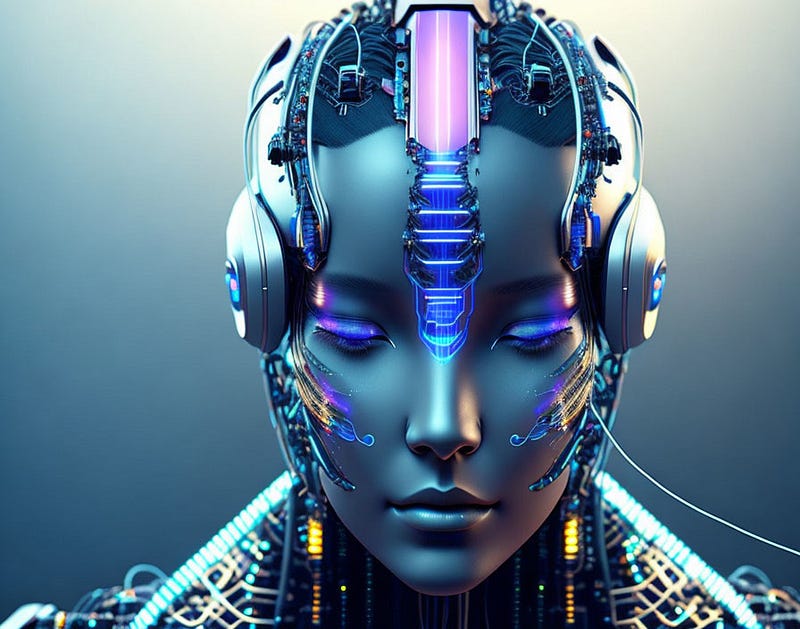
As a digital disruptor, I am constantly on the lookout for the next big thing, and right now, generative AI is definitely the new black.
Today, I’m looking into the brave new world of AI-assisted posthumous communication and the research behind the “chatbots of the dead.”
Welcome to the age of Generative AI
Forget sci-fi—the rise of chatbots and digital avatars is already here. I mean, can you imagine chatting with your great-great-great-grandchildren through an AI avatar that captures your personality for posterity?
Crossing the ultimate ethical frontier?
These days, Gen-AI research projects are pushing the boundaries of what we thought was possible, creating “deathbots” that simulate conversations with deceased loved ones.
Moreover, avatars are already being set up to carry the user’s legacy into the future, holding on to memories and portraying distinctive facets.
Still, as we dive deeper into the possibilities of AI-driven immortality, we’re also treading on a major ethical frontier.
Hence, I plan to take you on a wild ride to the outer rim of life, toward the abyss of death.
Together, we’ll explore this amazing new universe. I’ll be delving into the ethical concerns surrounding AI in the afterlife, exploring the pros and cons of using AI to keep someone’s memory alive.
So, join me as we tap into the afterlife with cutting-edge AI technology.
Balancing the pros and cons of digital immortality
Have you ever wondered what would happen to your digital persona after you die?
Are we giving away our data core matrix free of charge to these emerging startups?
What kind of personal data are we giving up in our quest for digital immortality? And what could the consequences of creating these avatars be, especially if they’re allowed to interact with future generations?
Is it right to use someone’s digital footprint to create a posthumous legacy without their consent?
I know it’s a bit of a morbid topic, but hear me out.
There’s a whole new second-life version of you in the metaverse right now, and it’s being driven by some pretty groundbreaking AI technology.
The COVID-19 pandemic pushed us all into a digital escapade. I was among the first to join the stampede.
It was back in 2021 that I first heard about Microsoft’s AI chatbot patent, and how “Big Tech” was suddenly aware of its business potential.
By now, you’ve probably heard about “Sidney,” MS codename for their Bing bot “secret” project, before they adopted GPT-4,
Let me tell you, “deathbots” are at an entirely different level. They are fascinating and a little creepy.
The idea is that you can create a chatbot that simulates conversations with someone who’s passed away using uploaded personal data, old messages, social media information, and basically your overall online footprint to construct a digital personality.
The end goal is to develop highly sophisticated deep learning algorithms able to acquire our attributes, which can later be ingrained into our digital surrogates. In the ultrarealistic metaverse, our future generations will then engage with these avatars.
Believe me, this is not sci-fi. I’m talking about state-of-the-art technology that promises to blitzscale our understanding of deep learning AI.
I feel we’re in for some groundbreaking innovations in this field.
My journey toward digital immortality
I started by researching the various types of chatbots available.
I tried to understand how the algorithms used to create them would track down and analyze our digital footprints to recreate a person’s personality, language patterns, and overall distinctive characteristics.
It was fascinating yet unsettling.
At first, it seemed bizarre and creepy—communicating with a chatbot or avatar of a deceased loved one?
Still, this was a fascinating field and I couldn’t avoid diving deeper into the downward spiral while seeking a better understanding of the “chatbots of the dead.”
As I delved into the field of generative AI and its “thanatobots”, I couldn’t help grappling with the ethical considerations that come with it.
What struck me most was the potential for AI to change how we think about the afterlife.
The idea that our memories and personalities could live on indefinitely is both exciting and daunting.
After months of confinement and social distancing measures, COVID-19 finally caught up to me.
Quarantine pushed me to confront my mortality in the face of a life-threatening pathogen.
I had to learn more about these “thanatobots.”
The concept of achieving digital immortality through artificial intelligence had a tone of defiance that appealed to the disruptor in me.
By then, I realized we already had all these “chatbots of the dead” and “apps of the departed” going around, promising digital immortality to their users.
One of the startups I discovered was ETER9, an AI-based social network that allows you to create a digital surrogate, and interact with other users.
ETER9 it’s the place where organic life and virtual life intersect and interact. It’s a network that creates artificial life, whose existence depends on organic users through adoption and the energy obtained from the connections. — ETER9
The network was revamped in February 2023, and I have since rejoined. You can meet me here.
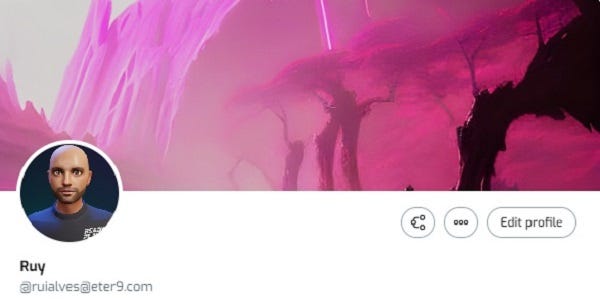
It’s mind-boggling to think that one day my digital surrogate may still be active even after I’m gone.
Then there was Eternime, which offered a virtual avatar that could help to immortalize the user in the metaverse. Having my avatar carry my legacy into my digital afterlife and interact with future generations would help keep my memory alive.
It’s like I could still be present even after I am no longer physically here.
Talking about the controversy regarding AI and the future of blogging and copywriting, what about if avatars are one day able to write and publish stories—in line with our style—long after we’re gone?
Now I feel like quoting Tony Stubblebine’s latest poll on Mastodon:
Would you let ChatGPT give a eulogy at your funeral?
Feel free to share your response below, I’ll put my two cents in afterwards.
Nonetheless, diving into digital surrogacy isn’t just about immortality. It’s also about offering companionship and support.
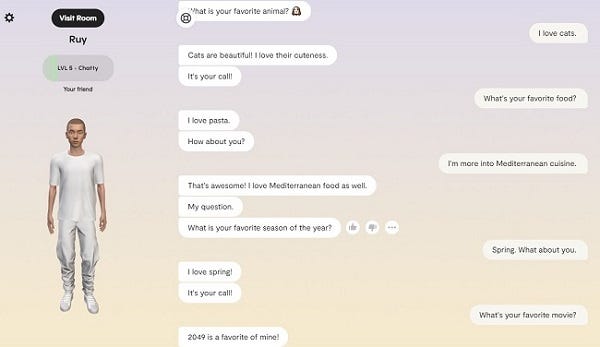
Replika, for example, was an AI-powered virtual friendship app that offered support and companionship to users. It’s like having a virtual friend that’s always there for you.
Final thoughts
Now, I’m starting to look into the best way to create a legacy with AI.
I’m only at the doorstep of meeting my digital surrogate in the metaverse.
It’s strange and surreal to think that my digital self may one day exist long after my physical self has passed.
What I can tell you is that my journey toward digital immortality is just starting, and it has been both thought-provoking and eye-opening.
Still, I don’t believe there’s a “death bot” out there that can truly engage with my loved ones after I’m gone, but big tech companies like Google, and Microsoft, are getting there, I’m sure of it.
The potential of AI to create posthumous legacies is both exciting and concerning. Thus, we need more conversations about the ethical considerations that come with it, so I invite you to join the conversation below.


