
AlphaFold: How Google’s AI Helps Science Answer a Biology Problem
It only took Google’s AlphaFold around 48 hours to crack a 50-year-old biology problem and make a revolution in science.
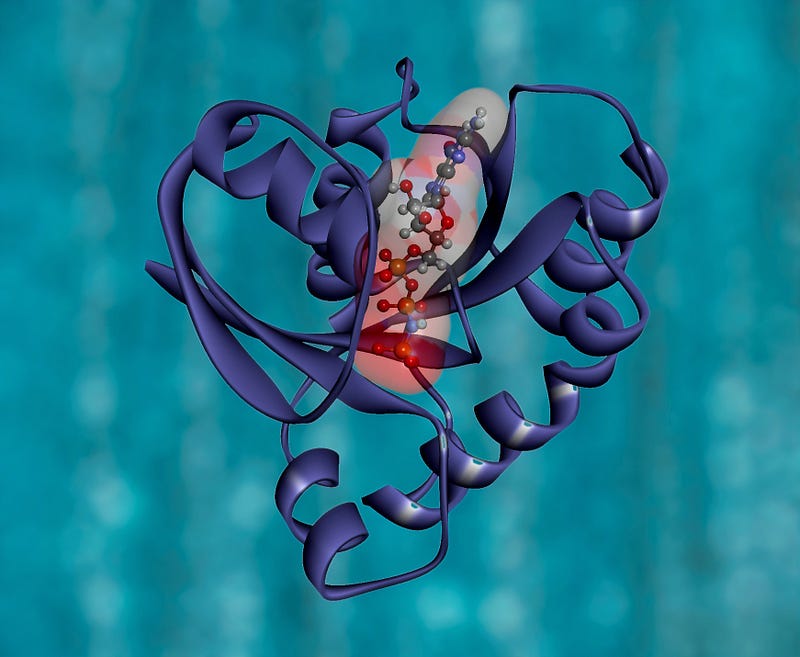
The protein folding problem was one of the biggest biology challenges, as it baffled scientists for the last fifty years. Google’s AlphaFold AI cracked it in 48 hours by determining the three-dimensional shape of almost all proteins in the human proteome by predicting their amino acid sequence.
Scientists explained how AlphaFold findings might bring forward a new era in science by paving the way for potential cures for several human diseases, from hereditary to infectious.
“Artificial intelligence will reach human levels by around 2029. Follow that out further to, say, 2045, and we will have multiplied the intelligence — the human biological machine intelligence of our civilization — a billion-fold.” — Ray Kurzweil
AlphaGo
Demis Hassabis founded DeepMind, a London-based AI company, in 2010. The British AI researcher, neuroscientist, and entrepreneur were focused on building the deep-learning architecture of the future.
DeepMind¹ developed the AlphaGo program by teaching the algorithm to play video games close to that of humans. By 2013, the company's first creation had taught itself to play and win at various video games on an Atari console.
When Google’s parent company, Alphabet, bought DeepMind in 2014, we knew great things were about to happen for machine-learning technology.
Then in 2016, the AlphaGo program baffled the world when it beat Lee Sedol, the world champion, in a five-games Go tournament, which became the subject of a documentary film.
Director Greg Kohs released the documentary AlphaGo (2017), starring Ioannis Antonoglou, Lucas Baker, and Nick Bostrom.
The ancient Chinese board game of ‘Go’ holds more potential configurations than we find atoms in the Universe and has long been considered an excellent challenge for Artificial Intelligence.
The documentary depicts the chain of events taking place on March 9, 2016, during Google’s DeepMind Challenge Match. When the AlphaGo AI challenged (and defeated) the champion and world’s greatest Go master.
From training AI’s with board and video games, DeepMind developers went on to solve one of the most significant challenges in biology: the amino acid molecular chain structure inside proteins that holds the secrets for life on Earth.
“The coming era of Artificial Intelligence will not be the era of war, but be the era of deep compassion, non-violence, and love.” Amit Ray
AlphaFold
AlphaFold is an artificial intelligence (AI) deep learning system developed by Google’s DeepMind. The initial version (2018) placed first in the 13th Critical Assessment of Techniques for Protein Structure Prediction (CASP) competition.
Then in 2020, AlphaFold 2 reiterated the placement in the CASP, achieving a groundbreaking level of accuracy and showing similar results to those attained with laboratory experiments, which require far more time and money.
AlphaFold released the structure of every protein known to science
The AlphaFold Protein Structure Database was launched online on July 22, 2021, as a joint effort between DeepMind and the European Bioinformatics Institute, based at the European Molecular Biology Laboratory (EBI-EMBL) near Cambridge, UK.²
Every cell has in its DNA all the information required for the proteins in it to function. AlphaFold reads the sequence of amino acids and then extrapolates from the available data to predict the structure of each protein.
Half a century ago, it was inconceivable the number of calculations required to unveil the configurations of a single protein from its amino acids sequence, the basic building blocks of life.
Surprisingly, it only took AlphaFold about 48 hours to produce 350,000 predictions. A giant leap in human biology studies, thinking how Google’s AI started the arduous task by determining the structure for virtually all human proteins.
Final Thoughts
DeepMind predictions cover more than 350,000 structures, including about 20,000 human proteins and molecules from 20 other organisms.
This was an unprecedented achievement, and I was surprised and thrilled by it after having learned about it now. Last Wednesday, July 28, I wrote a piece about the importance of AI in life sciences. However, I was projecting such a breakthrough on a seemingly far-flung future.
The future is already here! Hence, AlphaFold’s findings have unfathomable consequences, thinking how such a breakthrough happened much earlier than experts had predicted.
The COVID pandemic put proteins back on the forefront of scientific investigation as it became clear, in layman’s terms, how life’s building blocks are behind every disease and its cure.
“If we do it right, we might be able to evolve a form of work that taps into our uniquely human capabilities and restores our humanity. The ultimate paradox is that this technology may become a powerful catalyst that we need to reclaim our humanity.” — John Hagel
⭐️ Sign up through this link. Support your favorite platform and its talented authors. You’ll boost our community’s success and support my work with a small commission, all while gaining exclusive perks and benefits as a member.

References:
- “About DeepMind” on the official website: https://deepmind.com/about
- Jumper, J., Evans, R., Pritzel, A. et al. Highly accurate protein structure prediction with AlphaFold. Nature (2021). https://doi.org/10.1038/s41586-021-03819-2