
The Journey to Digital Immortality
Could an AI avatar collect all your thoughts and memories, then become a digital clone of yourself and “live” forever?
It is 2015 and we are closer to launching the Eternime avatar that will eventually become your digital alter ego, your immortal bits-and-bytes clone. Two years, two pivots, all personal savings invested, a new team, more than 30,000 people waiting for it, and we’re one step further on this amazing journey, ready to launch and start fundraising for the next chapter. The past two years have been “part poetry, part hero’s journey, part weird Tarantino movie” as a friend of mine says, so here’s the story of the Eternime journey until today.
I’m not sure when the dream started. Seeds were planted in my mind by watching Blade Runner, The Final Cut or Charlie Brooker’s Black Mirror, by reading Philip K. Dick’s Ubik or end-of-life rituals in Mircea Eliade’s works, and by experimenting with Alice bot and AIML as a conversational web interface back in 2001.
I remember having a conversation a few years ago about Second Life with someone and wondering what happens to one’s Second Life avatar after they pass away? Does it stay there as a zombie, bumping into other avatars with lifeless eyes, or could you connect it to your Facebook account so it would be able to talk to other avatars? Or something crazier, that would allow you to chat or Skype with avatars of any dead person reconstructed from their digital footprints. Back then I quickly dismissed the idea as being too scifi-ish, or at least too early for the current state of artificial intelligence.
This was also fueled by a very personal story. My grandmother died four years ago, after fighting Alzheimer’s for the last years of her life. Shortly after she passed away, I realized I only had a few photos left from her, and my own memories about the moments we spent together and the stories she told. I became angry with myself for not spending more time with her, but also frustrated when I realized that my grandmother’s life story (she was almost 90 when she passed away)—full of struggle, joy, love, desperation and faith—left behind only a few photos and memories. Everything else was lost forever.
Ignition: The MIT Entrepreneurship Development Program
In January 2014 I was one of the 120 people accepted in MIT’s intensive program for entrepreneurs. Intensive as in learn & experiment for 20 hours or more per day with some of the top minds in the world, aiming to transform an idea into a fully-thought potential startup. It seemed the best opportunity to take the crazy “Skype with the dead” idea to the next level and get onboard with mavericks that could bring this absurd thing closer to being real.
I pitched it in the first day of the program, hacking the whole pitching process (that’s another story) to get the most votes out of all 120 ideas. This did not mean any perks, except that I could choose the best people first (or that they could choose my team first). We were a dream team: Rida (a Moroccan-Canadian tech genius, CEO of a search company), Nicolas (CTO of a social network in Canada), Trevor (a US venture capitalist with tech background), Frans (CEO of a South-African software company), Pallavi (an experienced Indian marketer), Matt (a German expert in Intellectual Property) and Rajat (an Indian operations mean machine).
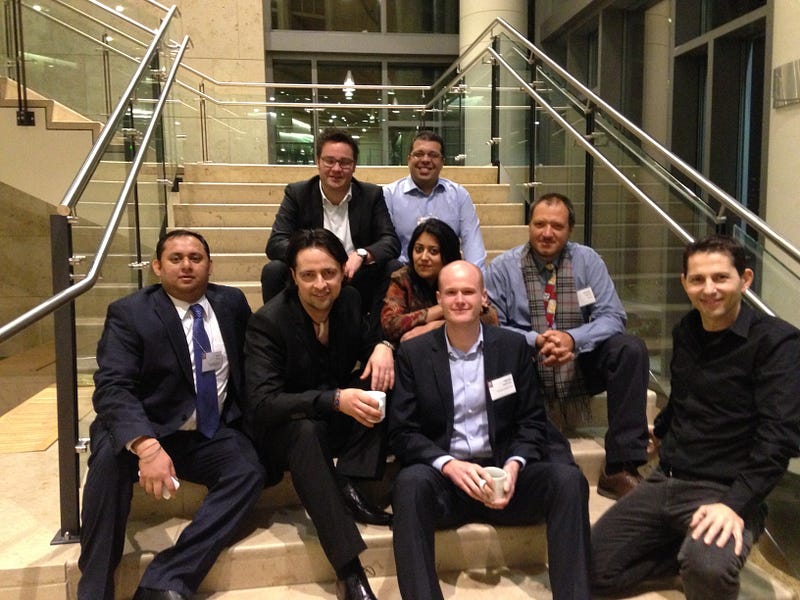
We were attempting the impossible, but that’s something de facto when you’re at MIT. You’re not there to build the next Yo app. With Bill Aulet’s supervision and help, we took the absurd “Skype with the dead” idea through MIT’s Disciplined Entrepreneurship framework, and broke it apart then put it back together in a way that made more sense. Everything started to become realistic when we turned it from an app to reconstruct a dead person’s mind from a minuscule digital footprint, into a tool that you could use for the rest of your life to collect all your thoughts, stories and memories. Those would then be processed and curated by the avatar that would become more and more like you. In other words, you would be uploading your mind into a digital clone for the next 30–40 years of your life by talking to an artificially inteligent biographer. Something less spectacular but more pragmatic.
Explosion: Becoming famous overnight
One step in the Disciplined Entrepreneurship process is interviewing as many potential users as possible. So we built a one-page website that described the idea, with the purpose of making it more appealing to more than the 20–30 friends and acquaintances we’d been talking to during the previous days. We came up with the Eternime name at 3am in one night, and launched the website next day, on January 29, 2014 at 1pm. We then went back to working on the project.
It was 3pm the same day when someone (I don’t remember who) messaged us. “There’s an article in Boston Globe about you, guys!”. We could not believe it, but it was true. It took less time to receive the next call, which was from a local TV station who wanted to shoot a news piece about the idea. “What the hell, let’s do it!”, we thought. The TV crew showed up and in the evening we were on air. People started dropping by our website.
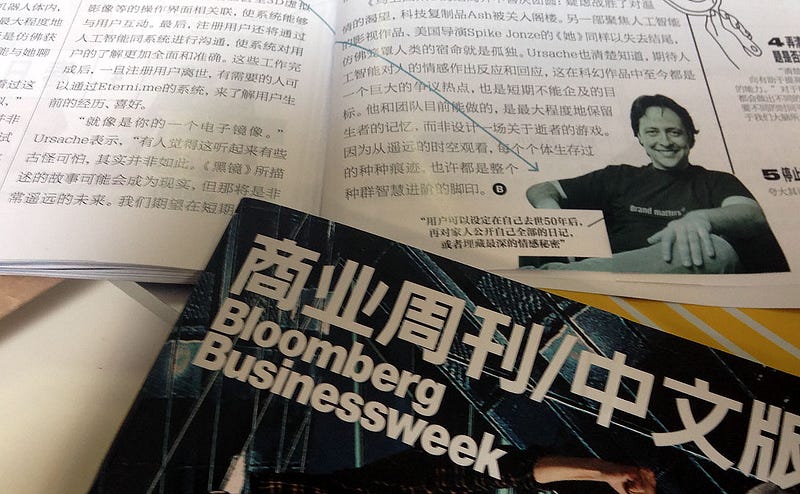
Then CNN took over the news and broadcasted it all over US. Emails and calls started pouring in. FastCompany, Wired, NBC, Times of India, The New Yorker, BBC and many more. We stopped everything, and almost the whole team was replying to or being interviewed by journalists. We were taken by surprise, and the madness went on. People started signing up on our site. We had expected maybe to get 100 new people to interview, but we got more than 3,000 by the end of the first 48 hours since launching the website.
Hundreds of emails started flooding from all over the world. Most of them were supportive, showing incredible enthusiasm and interest. Probably 20% of them were on the other end of the spectre, skeptics accusing us of lack of empathy, of human values, or of any kind of respect for grieving people. We received two death threats, and a Reddit message said about us that
“they look like a bunch of con artists who will steal your organs and then drop your body on the side of the road”
Everyone seemed to be excited in one way or another, to the point of awkward-how-would-we-reply kind of messages from people who misunderstood what we were doing — like someone who wrote to us “Hello mom, how are you?”.
Hard times: Slowing down
Once the MIT program ended, everyone was puzzled by what had happened. I mean, we’d expected that the whole MIT experience would be transformational but no one could predict this would happen. I talked to the team and asked who would be willing to continue. I believe for most of them it was a tough decision, the eternal dilemma whether to choose a crazy big idea or a secure job. A few remained committed to the idea so we started building a proof-of concept in the following weeks. However, a startup requires energy and dedication, and being a dad with a C-level fulltime job doesn’t leave you much time for risky projects cooked up in the MIT basement. They tried hard, but they decided to stop after the first three months.
I was living with the same burden on my shoulders. My personal commitments only included a girlfriend and a dog, but I was also a full-time manager for Grapefruit, a UX agency. It was clear to me that if I wanted to continue building Eternime, that would not work as a side project.
I wanted to continue, but I had a huge problem. Despite hundreds of articles around the world, thousands of emails and more than 30,000 people who had signed up for the beta, I was alone with this big dream.
Our end goal is to preserve the thoughts, stories and memories of entire generations and create a library of human memories, one where you could ask people in the past about their individual or collective experiences and thoughts.
Something else was really troubling me. A few emails out of thousands we had received were from people with cancer, leukemia, Alzheimer’s and other critical terminal situations. They all wanted an Eternime account, as soon as possible, and they were willing to pay anything. I was speechless, as it was impossible to tell them this was not going to continue beyond the MIT experiment.
Those emails reminded me of my grandmother, and were the push I needed. I decided to do what many people around me thought reckless, sort of a suicide mission: quit my job and the company I grew for 15 years, and invest all my savings in pursuing an impossible dream by myself, no matter what it would take.
Back to full speed: Santiago, Chile
Before my teammates gave up we had applied to Startup Chile, an accelerator program financed by the Chilean government. Eternime was one of the 100 startups selected out of 2,500 applications so I moved to Santiago Chile starting November 2014, fully committed to build a strong team and continue the project.
Finding a cofounder especially for this endeavor is anything but easy. I will not bother you with the desperation, excitement, disappointment, and all the other feelings you go through in the process. Meeting hundreds of people and talking about the idea with them was worth the months I spent in Boston, San Francisco and Los Angeles. I got countless ideas, examples and points of view, references to books, movies and even found other startups tackling the same challenge. I made a lot a new connections and friends who’ve been extremely helpful and supportive in this journey, once both my savings and personal comfort were gone (among other things, I broke up with my girlfriend).
You know what they say about finding diamonds in your own backyard, after traveling the globe in search of them? After bouncing ideas and AI news, countless Facetime brainstorming chats and help, Laurian Gridinoc agreed to join.
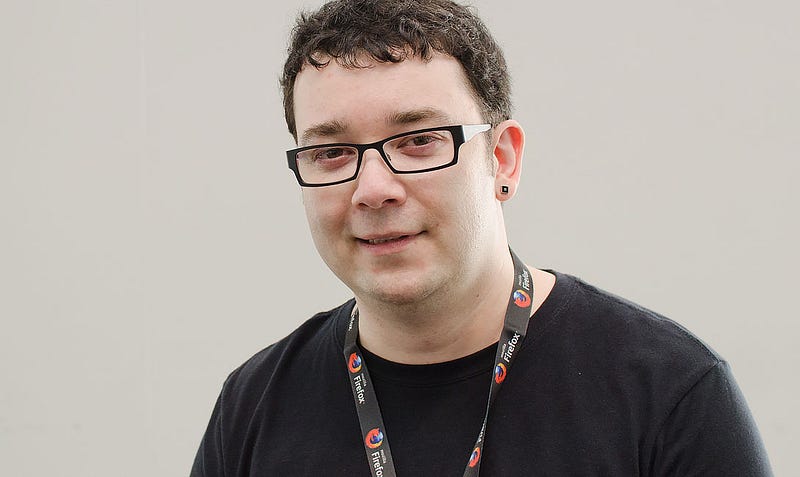
It was funny not realizing I had one of the best choices in my backyard. Me and Laurian have a long history. We both studied medicine (we both hold MD degrees). We were employed by the same company before starting Grapefruit 16 years ago, and then worked together for another 7 years. He’s been wandering around the world from London to Qatar, and from Zürich to Bali, and is one of the most visionary technologists I’ve ever worked with. He knows what’s next and how to find the magic needed to awe people, when technology is not there. He doesn’t call himself creative technologist for nothing, drawing inspiration from computational linguistics and AI studies, his passion for disruptive technology, medicine and journalism (he’s a former Mozilla Knight Fellow at BBC).
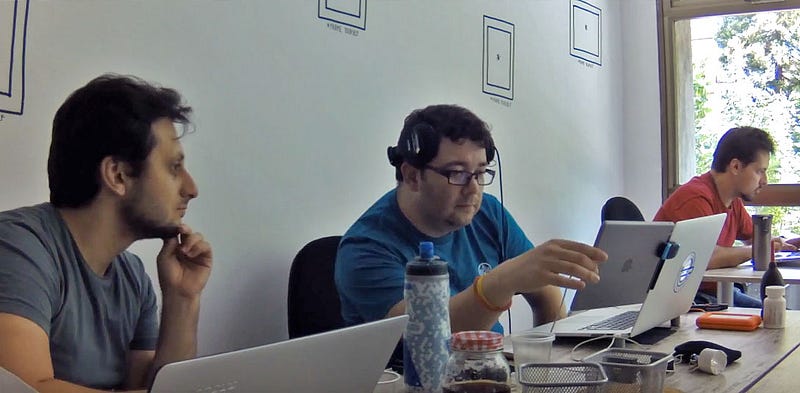
We started prototyping and brainstorming, and our team grew in the first months of 2015 with two more software developers based in Macedonia. Darko is addicted to freshly roasted coffee and JavaScript, and has a lot of experience working with video encoding. Marijan is a virtuoso metal guitar player, and also a virtuoso in big data & chatbot scripting. Both of them are the kind of wicked genius developers you can only find in Eastern Europe, and the kind of people I know will always walk the extra one hundred miles.
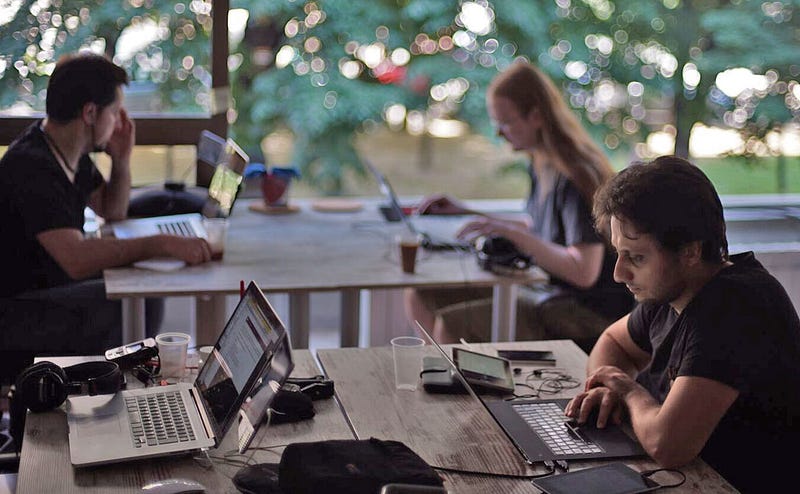
First fail: Alpha One
We set out to work, Laurian moved to Chile for a while, and with the help of the Macedonian devils we put out a first alpha version in April 2015. You know what they say… “If you’re not ashamed of your product, you’ve launched too late”. Unfortunately we launched in time. The feedback we got from the first 30 people who got access to the product was disappointing—for them and for us as well.
You can see a brief screencast below, and I will spare you the desperation that hit us seeing the feedback. We analyzed it and decided to switch the approach.
We dropped video which from previous talks with people seemed the only way to avoid the dreaded uncanny valley effect. We agreed to postpone the difficult questions despite people asking for answers to those exact questions (“What do you want to be remembered for?” is one example). We debated and re-debated, explored multiple scenarios, and eventually decided to start working on the AI part, despite being the hardest path ahead. In June we decided to drop the work of the previous six months, and start fresh.
One step further: Alpha Two
Here we are, finally closer to launching the version that we’ve been cooking for the past six months. It is only a first, maybe some will say minuscule, step towards achieving what more than 30,000+ people are waiting from us. This number is growing with hundreds of people every month, without any marketing. And there are more and more emails coming in each week asking us “When are you launching?”.
The new alpha, which is in internal testing now, is a different approach than the first. We decided to focus on bringing the avatar to life, despite the creepiness criticism. It’s a bet that might or might not be the right one, but it’s not like we’re doing something that has been done before and just trying to make it better. We’re trying to create new behaviors in people, have uncomfortable conversations about the end of life and encourage users to invest their next 40 years into building their digital alter egos that will live on for aeons.
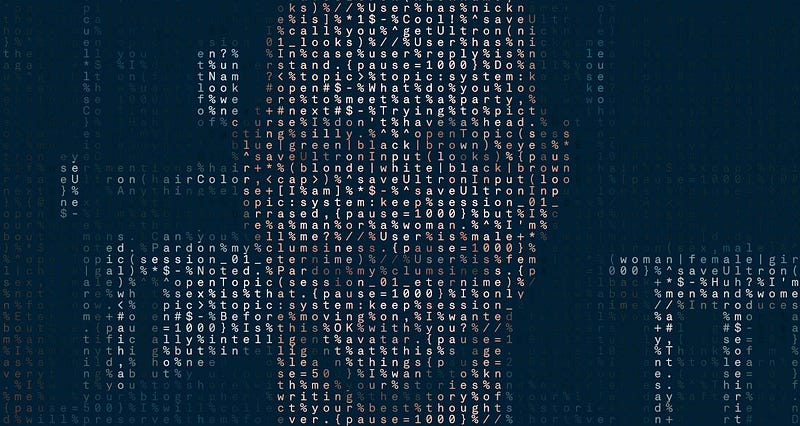
The new Eternime avatar will be your personal biographer. It will want to learn as many things about you as possible, picking up cues from your social media, email or smartphone. It will try to find meaning and context in everything you do, and it will try to have short chats with you everyday in order to get more information about you. If you want to upload your thoughts, your personality and (maybe in the future) your consciousness, there’s no cable now. You will have to do it a little bit every day, for the rest of your life. Ten minutes every day will add up to thousands of hours telling your story. Fact by fact.
Your avatar will start like a tamagotchi. It will only have small bursts of intelligence in the beginning, but the more you talk to it, and the more information you give it access to, the smarter it will become. Think of it as a kid who has to learn a lot until he/she turns into a beautiful human being.
“the more information you give the avatar access to, the smarter it will become”
The avatar will replace diaries and become your main path to personal development. It will help you reflect on the events on your life, to recall the memories you never wrote down, and to ask yourself the right questions. It will make you a better person along this process, and you won’t have to worry about what you leave behind.
Eternime has transformed as product, but not as vision. Our end goal is to preserve the thoughts, stories and memories of entire generations and create a library of human memories, one where you could ask people in the past about their individual or collective experiences and thoughts.
What’s next: You
It’s the most exciting period since the wild media rollercoaster happened. We’re a solid team, thrilled with excitement when we get something right, or desperation when a bug or question keeps us awake for days. We received a lot of advice and help from some amazing people (thank you Bill, Paul and Rob). And now we’re at the point where there are only a few weeks away from launching the avatar to the first 100 beta users, then starting fundraising for the next stage.
This the moment where you, who had the patience to read through this to the end can help us make a difference:
- Share this article with your friends and followers
- Get in touch with us. We’re always excited to talk to people who believe in us and our vision.
- Help us with fundraising so we can move faster (we’ll be soon starting raising our seed round).
That’s it for now. We’re glad to be together in this exciting journey. Stay close and help us write the next chapter of the story.


