
How Learning Languages Has Enriched My Life
And why everyone should be multilingual — Chapter 4
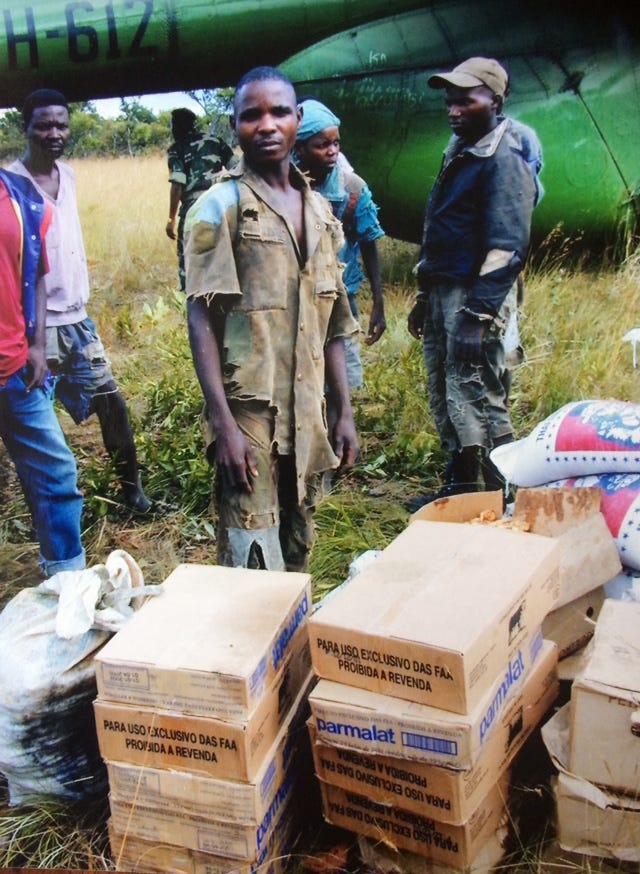
I was five years in Angola — as journalist, researcher and aid worker. I’ve since been married to an Angolan for a further fifteen years. That decimated country has irrevocably shaped my life. I lived through three years of the civil war, then returned for the first two years of peace. I have written thousands of words about the country, the conflict and the people — for radio, TV and print media, academic journals, UN agencies, a Master’s thesis and a book. It gets under your skin.
I picked up Portuguese in Angola, sprinkled with a garnish of words and expressions from the country’s dozens of native languages. With Russian and Arabic under my belt, and with French and Latin to build on, it came quite easily. I speak it with an Angolan accent and idiom, which is an amusing source of confusion in my interlocutors. I can see them trying to process the jarring contrast of my appearance and my speech. It helps to jolt them out of their preconceptions.
Which words should I choose to sum up two decades of having Angola entwined in my life?
Deslocado — internally displaced person. A refugee trapped within their own country and therefore not entitled to the protections extended to refugees who cross borders. At one point around one third of the total population.
Desminagem — demining. The painstaking process of trying to rid a country of the millions of landmines shipped in by foreign backers and sown by passing armies to render fertile farm land lethal for generations.
Amputado — amputee. Someone who has the misfortune to tread on a landmine. Children — who are often drawn to play with attractive shiny things — are usually killed outright.
Garimpeiro — an illegal diamond miner. They dive the dangerous, racing rivers of the Lunda provinces in search of baubles that fund conflict and adorn engagement rings in far off places.
Catchindele — “white person”. This is Ovimbundu, the Portuguese would be “branca”. Whispered behind hands of those whose lives have been so circumscribed by war and isolation that they’ve rarely had cause to see one. Sometimes screamed in fear by children cowering behind their mothers’ skirts who think they’ve been visited by a pale ghost. The world might be a kinder place if we had all experienced the sensation of living as a visible minority.
Fome — hunger. Starvation in a land of plenty, that leaves children with grotesque distended bellies and raw, peeling skin, showing we’re all pink on the inside.
Imbondeiro — the glorious, improbable baobab tree. Its fruit — mucua — can be made into a kind of ice cream. A few miles inland, where Angola’s parched coastal fringe begins to climb into the lush green hills, there are forests of baobabs, hundreds of years old. What must they have witnessed? Chained captives trudging down towards the slave ships. Soviet tanks trundling back up into the bush.
Planalto — the high plain, beyond the baobabs and the jungle-clad hills. Land of rich soils, rolling hills, wide open skies. All but emptied of people by four centuries of slavery and four decades of fighting.
Kizomba — Angola’s national music and dance. Unlike anything else found in Africa. Blending African and Latin rhythms, played at parties that never start before midnight. Danced by scantily clad, sweat slick couples clasped so close they become gyrating four-legged creatures, swaying and spinning to the beat. My attempts are terribly wooden.
Confusao — literally “confusion”. A wonderful Angolan understatement, used to describe anything from a brawl at a Kizomba party, to a full blown battle between pitched armies on the Planalto.
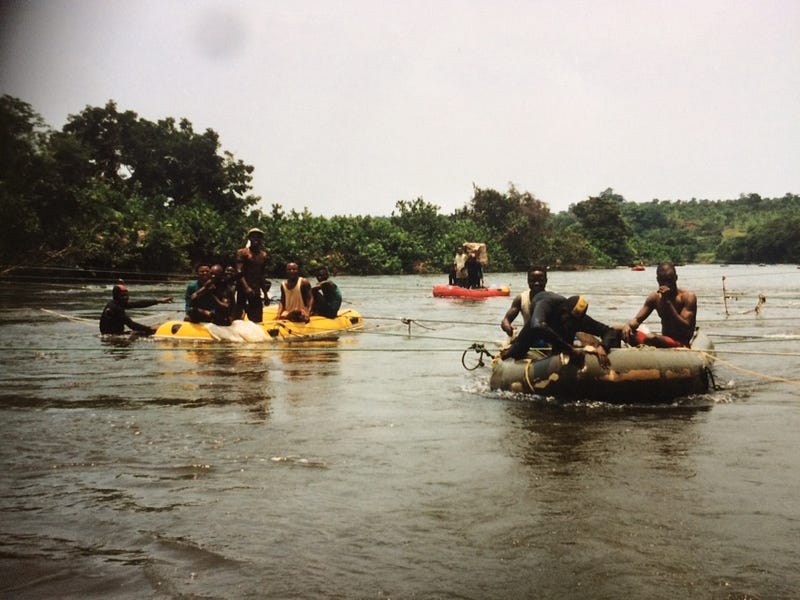
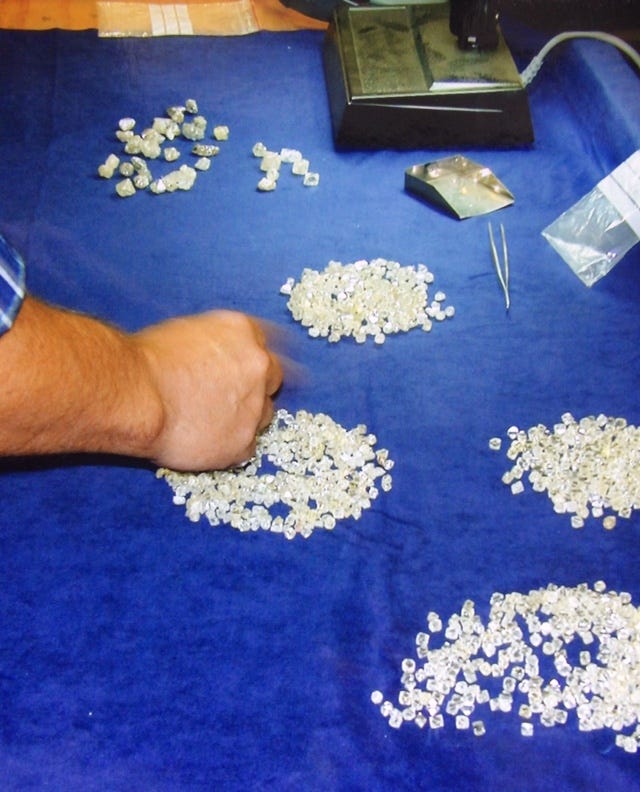
The juxtaposition in Angola of startling beauty and natural riches, with unspeakable, man-made misery and injustice is breath taking. From slavery and colonisation, through Cold War proxy conflicts, resource wars fuelled by oil and diamonds, post-colonial civil war, and staggeringly inventive kleptocracy — there is no better case study to showcase what happens when every greedy evil invented by man is visited on an Eden over the span of five centuries.
I arrived in Angola, aged 25, to report on the dying days of a UN peace process. I stayed through two and half years of a conflict so cynical, needless and sick that it left me curled in a ball, rocking in the corner of the room where I worked.
And yet, as ever, life goes on amidst horror. People everywhere use humour to both deflect and reflect trauma. Humour, surely, is one of the things that makes us uniquely human. It is a wonderful feeling when you reach the point of being able to understand, and even make jokes in a second language.
I, predictably, particularly enjoy jokes based on word play. These are a strong feature of British humour and are often impossible to explain even to other Anglophones from different cultures. In Angola they are used to profound and melancholy effect. For example, the once communist, now kleptocratic MPLA government liked to parrot this slogan:
“A luta continua, a vitoria e certa” — chanted by involuntary supporters with a fist raised above the head.
“The struggle continues, victory is certain.”
War weary Angolans tweaked this into:
“A luta continua, a Victoria foi a praca.”
“The struggle continues, Victoria’s gone to market.”
Geddit? These jokes always fall flat in translation…
In Angola’s capital, Luanda, the attempt to carve out a semblance of normality was particularly surreal amidst the transient expats who wash around the world from one crisis to another. Angola had the usual population of aid workers and UN lifers. Diplomats and dodgy, swaggering military types. Complemented by a large collection of oil workers intent on finding and extracting the huge reserves that lay, safely out of the reach of the war, under the Atlantic coastal shelf. There were no other foreign journalists though, I was the only one crazy enough to try to decipher what was going on, and attempt fruitlessly to get the rest of the world to care.
It is a curious fact that when you live in and through a different language, the very world changes shape. Angola barely features in the consciousness of the Anglophone world; trying to convince commissioning editors to take an interest was an uphill struggle. But, through the lens of the Lusaphone media, the news agenda took on an entirely different shape. Brazil, Portugal, Mozambique, but also places I’d never heard of like Guinea Bissau, Sao Tome and East Timor filled the bulletins. It forces you to reassess what you have previously considered of note, and why.
I then further complicated this upended world view by hooking up with a French oil worker. After a while I moved into his apartment in a curious French enclave parachuted down into the heart of Luanda, complete with French school, French food shop and French satellite TV. My world now took on a hybrid lusaphone-francophone perspective. Outside the building, street children were living in the gutters and playing in the flood waters sweeping down the road. But inside housewives were engaged in competitive tarte aux pommes baking, Basque festivals were celebrated complete with red berets and neckerchiefs, and we watched French rugby and Quebecois police dramas on the TV.
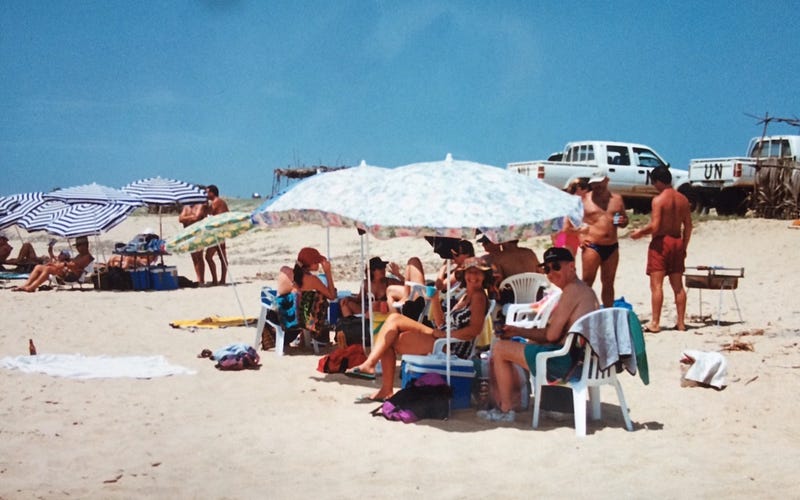
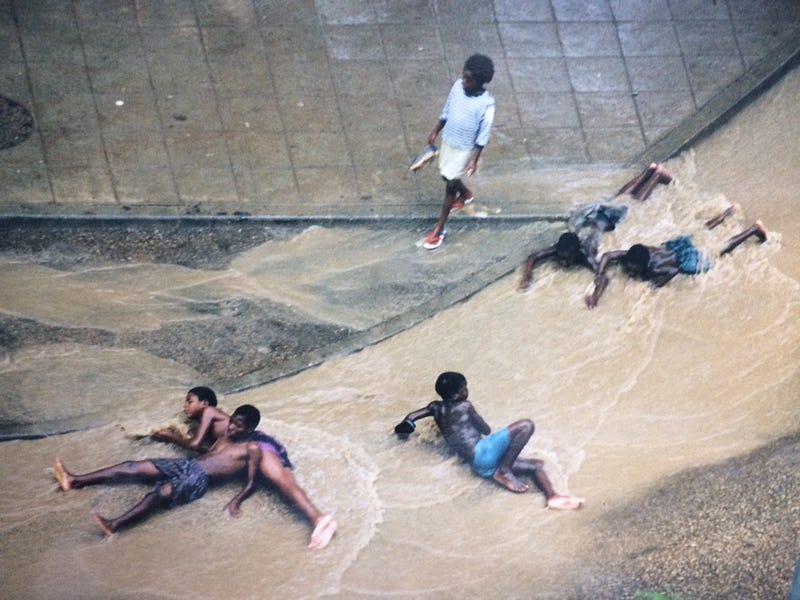
I regularly fled this bizarre existence at dawn to climb aboard tiny UN planes to the interior, where we were forced to perform spiralling cheek-sucking descents from 30,000 feet to dodge surface to air missiles. The UNITA rebels had rampaged across the countryside with the resumption of hostilities, taking control of the majority of the bush, and leaving the government hemmed into a handful of cities and towns. These besieged enclaves were brimming with desperate deslocados. One lady, who had spent many years with UNITA, astutely summed this up:
“O governo e apenas governo do asfalto”.
“The government is only the government of the tarmac.”
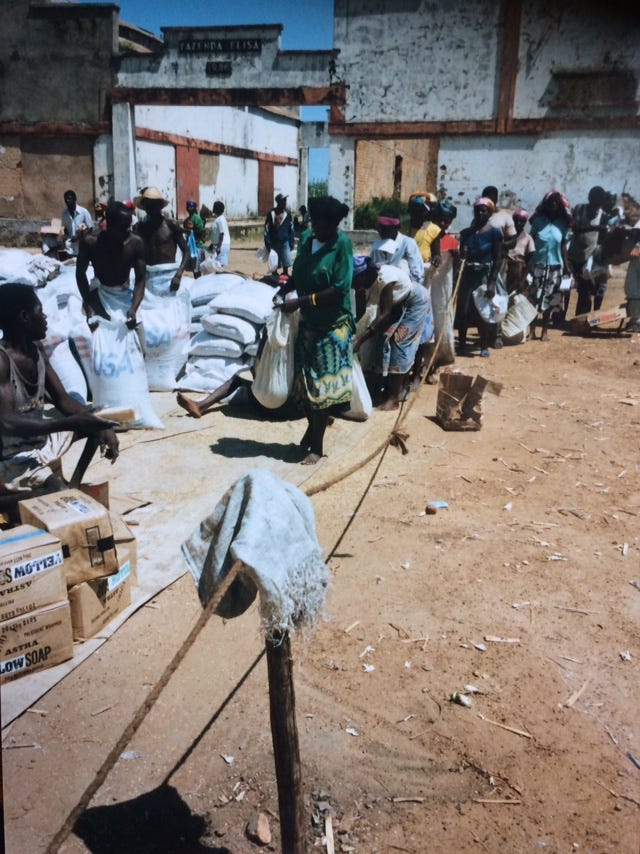
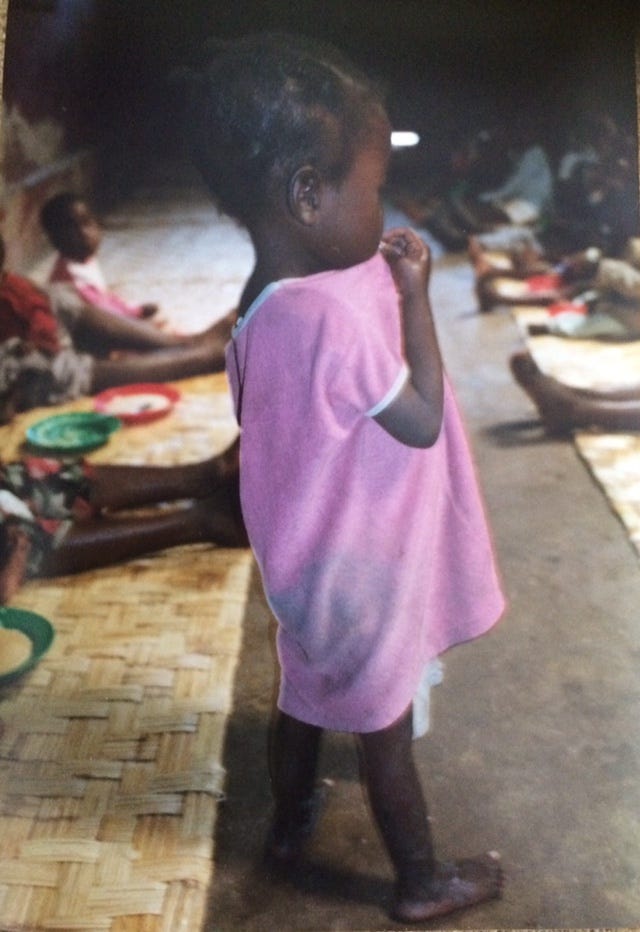
That time switching between a francophone cocoon and the brutal lusaphone reality of the Angolan conflict is the only time when I have lived directly between two foreign languages, without passing through the intermediary of English. It was almost as if I could feel the cogs in my brain grinding with the effort.
There is strong evidence that learning languages causes changes in brain structure that can help to improve memory, and delay dementia. I hope that this is true — dementia runs in the maternal side of my family. I instinctively feel that it must be true. Thinking and working in different languages stretches the consciousness, engineering new synapses and connections. This brain strain must surely help fend off atrophy.
After my first three years in Angola, ground down by the horrors of the conflict, with no end in sight, I’d had enough. I became a journalist to help make the world a better place, but reporting on Angola was never going to have an impact on a conflict fuelled by self-interest, greed and natural resources. Journalism began to feel distastefully vicarious. So I left, and returned to the gentle embrace of Cambridge, to attempt, through a Master’s in International Relations, to make sense of everything I had seen. How had an Angola been created, how was it allowed to continue?
I decided to focus my Master’s dissertation on assessing the long term societal consequences of mass war trauma. My interest in war trauma was first piqued in the West Bank and had been reinforced with every further conflict I had visited — particularly civil wars.
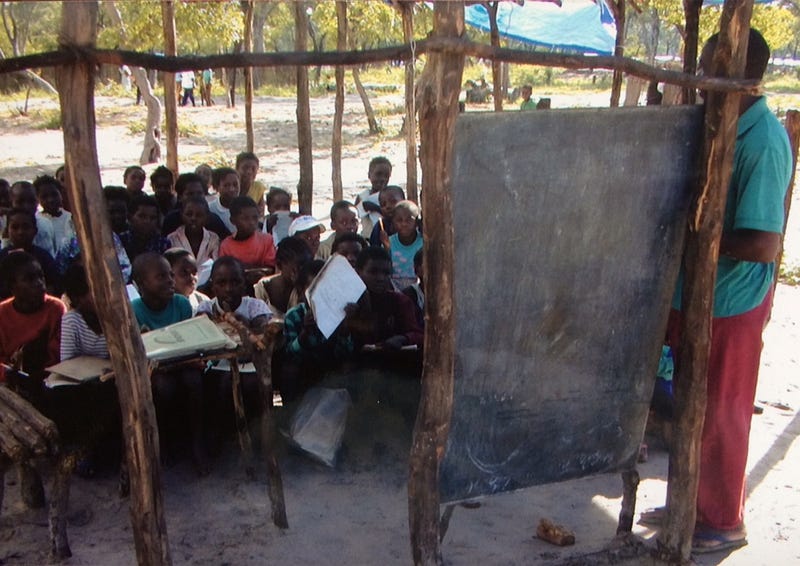
To conduct my field work I travelled to the far west of Zambia, on the border with Angola, to the string of refugee camps housing fugitives who had managed to escape the UNITA-controlled areas of the bush across the frontier. Some of these were civilians, many were people who by choice or circumstance had joined the rebels.
Inside Angola it had been lethally impossible to have any contact with UNITA. For three years I had attempted to report on a conflict without any access to one half of it. So, to put this right, I spent two months living in an adobe hut with Medecins sans Frontieres medics in a refugee camp, completing a series of interviews and questionnaires — in Portuguese — to assess exposure of men, women and a great many children to violence and post traumatic stress disorder. Two months of listening to their stories left me reeling from secondary trauma.
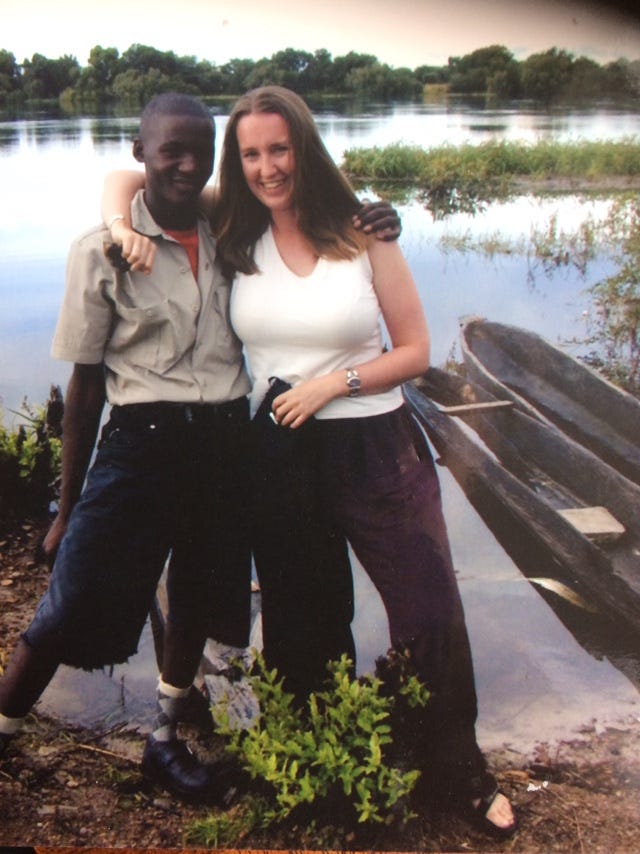
The MSF team had recruited one of the refugees, Pedro, to work as their cook. A short, wiry man, he had been a camp cook for UNITA troops for decades. He had a very small larder of ingredients, and an even smaller repertoire of dishes. The nearest shop was four hours drive away, on the other side of the Zambezi. The team went shopping at most once a month, to stock up on rice, pasta, flour and a few short-lived perishables. Electricity came only from a generator, and was intermittent. Refrigeration was fleeting. The occasional tomato, potato or leafy green could sometimes be bought from the refugees.
After a month of eating little but rice and an insipid stew of tomatoes, onion and greens for every single meal, I decided to intervene. My Portuguese was very good by this point, I could converse easily with Pedro. I offered to teach him how to cook some different meals from his limited larder — starting with pizza (we’d just been shopping, we had cheese!)
“You make bread — like you normally do but roll it out thin and flat,” I explained one morning, before work, “Then you make a tomato sauce by chopping up and cooking down your tomatoes. You spread the sauce over the dough, and then you top it with any other ingredients you have like ham, or vegetables or that sort of thing, and then you cover it with grated cheese and bake.”
We all went off to work in the camp. I was smugly looking forward to my lunchtime pizza. When we returned to the house for lunch we were greeted by a very good approximation of a pizza, except for one thing — it was topped with tooth-jarring dried rice, smothered in precious melted cheese.
I had forgotten that communication is more than just language, but also a translation of culture and context. Poor Pedro had listened carefully to my instructions to top the pizza with “any other ingredients you have” and interpreted them very literally. He had no way of knowing what passed for an acceptable pizza topping, how could he have? That ruined pizza stands in my memory as a powerful reminder to always question your perspective and assumptions, to see things from another’s point of view.
My MSF hosts and house mates (one Zambian, one Dutch, one Indian) were unimpressed. When I returned home I wrote them a booklet entitled “Cooking in Adversity”, listing all the recipes I could think of that they could prepare with the ingredients available to them, supplemented by a stock of basic herbs and spices. I sent it to them by way of an apology.
In February 2002 Jonas Savimbi, founder and leader of UNITA, was killed by the Angolan army in the endless forests of Eastern Angola. The war abruptly halted. Hundreds of thousands of people trapped on UNITA’s side of the conflict — just like those in the refugee camps — emerged from the bush, starving and exhausted, and massed in “demobilisation camps” across the country.
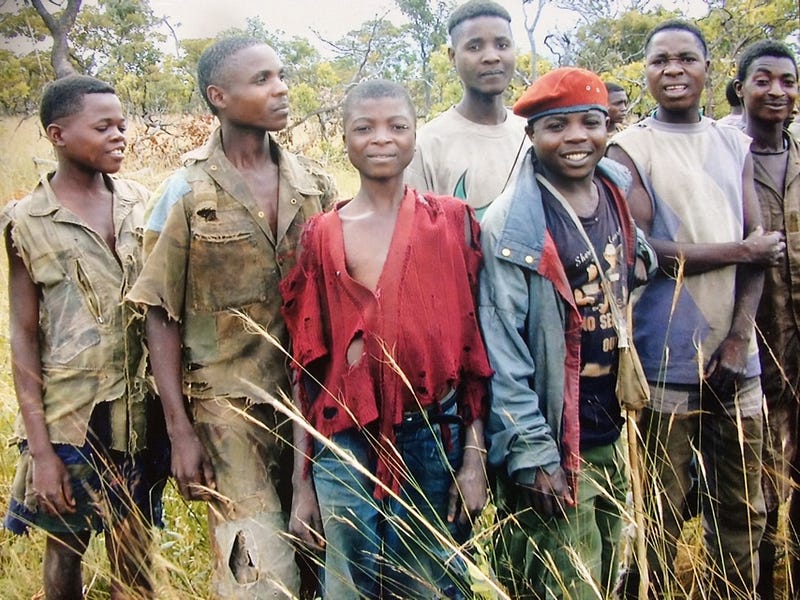
For the first time in decades the demon of UNITA was visible within Angola and it was manifest in hordes of desperately weary, traumatised, and chillingly disciplined people. I felt that I had to go back, to finally see that vast country “beyond the tarmac”, and to do anything I could to help knit it back together.
A few months later I had joined Medecins sans Frontieres myself — the most dynamic and principled of all aid agencies — as part of a team setting up medical facilities in the demobilisation camps, and collecting the testimonies of their inhabitants.
I ended up compiling a book of those testimonies for MSF — including some collected during my time in Zambia. We called it “Voices from the Silence.” I also met my husband — an Angolan colleague who had seen all sides of the conflict, and lived in one of those refugee camps in Zambia for 12 years. I’ve written about that here:
I stayed another two years in Angola, leaving MSF to set up a humanitarian radio project for the UN — broadcasting voices and stories across the divide. And creating Angola’s first radio soap opera — which we called Camatondo — a fictional name for an imaginary village that could have been any one of a thousand real villages.
Our characters represented all sides of the conflict, and navigated the complex path to peace in their daily lives. We had story lines about reconciliation and conflict within divided families, remembering how to farm in a country that could finally stay home, avoiding landmines, malaria and the newly looming threat of HIV.
I was reduced to screaming in a corridor within a month by the idiotic obduracy of UN bureaucracy. But that is a different story. And it was worth it — across the country we met enthralled audiences who genuinely believed that Camatondo was real, and for the first time found their own realities reflected on the national airwaves. It stayed on air for a decade after I left.
Unwittingly I had become a pioneer in the newly emerging field of “media for development”. Worn down by Angola I returned to the UK and the BBC, joining BBC Media Action — the corporation’s international development charity. For another six years I worked on media for development projects across Africa and the Middle East — dredging up my rusty French and Arabic as well as my Portuguese.
We made radio programmes to teach Somali pastoralists to read and write, a TV drama to break down stigma about HIV in Nigeria, and humanitarian radio broadcasts to provide life-saving information to fugitives displaced by the conflict in Darfur. That last one got me into trouble with the Sudanese authorities for a second time.
Then I acquired a daughter and a step daughter simultaneously and could no longer spend my time in trouble zones with no mobile phone signal. I moved into the domestic BBC, and to the North of England. Dabbled in corporate strategy, and launched award winning apps for preschoolers, before escaping office life to work in the environmental sector. Now I head up projects developing large tracts of land on the edge of Manchester into gardens, an urban farm and eco-park. I haven’t used my languages for work for a decade now. But they are still ever present in my life.
My husband speaks at least nine languages. I’ve never met an African who could only speak one language, but even by those standards, Angelo is an exceptional linguist. He speaks Portuguese, Spanish (with a Cuban accent), English (with a Zambian accent), French (with a Congolese accent), four or five Angolan languages, Lingala, Swahili and Bembe. His languages and accents trace the tumultuous path of his life. He also writes exquisite poetry, which must be rooted in his linguistic dexterity and sensibility.
A few days ago there was a story on the radio about a population of plovers being reintroduced to a Scottish Island and then absconding.
“What’s a plover?” he asked
“It’s a pretty wading bird,” I explained. “And abscond means….”
He interrupted before I could get any further,
“Oh, I know that word very well. Very, very well. There was a sign at the entrance to Maheba: “Absconding is prohibited”. I saw it every single time I left the camp.”
Maheba was the refugee camp where he lived in Zambia. The way you acquire language paints memories on your soul.
We are fortunate that we both spoke each other’s mother tongue before we met. This means we’ve always been able to switch things around. Our conversation is a word salad of English and Portuguese with French and Kimbundu words thrown in. The best or easiest words or expressions rise to the surface. If one language doesn’t offer the right nuance, idea or association, we draw on a different one that does. I realise that I think, and we speak, in memories, pictures and feelings — not words. I can remember what happened, what I felt, but the language that it took place in is incidental.
Beyond the practical functionality of speaking languages, they also open up whole cultural universes. Our bookshelves bear books in six languages. Angelo loves a Mexican TV drama. And our house is full of music from across the globe. Reflecting on some of my favourite songs and singers I realise that although I connect with their melody and rhythm, it’s always the lyrics that capture me.
Jean Jacques Goldman sings some soaring ballads in French about the irresistible pull to travel, coupled with the sacrifices that result from leaving.
Majida Roumi is a Lebanese singer who belts out aching laments charting the travails of her country and compatriots. “Ya Beirut” is particularly poignant given recent events.
And Paolo Flores is an Angolan singer with the soul of a political poet who couples jaunty semba beats with lyrics that evoke with agonising poignancy the struggles of a people trapped in a nightmare fabricated to enrich their rulers.
Para comprar vitamina… o dinheiro nao chega, Para por gasolina…. o dinheiro nao chega, Comprar stricanina p’ra ver se me mata…. tambem nao chega.
To buy vitamins… the money’s not enough, To fill up with petrol… the money’s not enough, To buy strychnine to see if I kill myself…. it’s also not enough.
My daughter is 11 now. She has grown up in a multi-cultural, multi-lingual melting pot. Right from when she was a tiny baby I made a conscious decision not to speak to her in baby language, not to assume that she couldn’t understand, but rather to use the full breadth of my vocabulary with her to ensure that she would understand.
I have also — because I cannot help it — routinely explained the etymology and construction of words to her. And now, every day, I see that she has internalised this way of thinking. Is that nature or nurture — we will never know. But what I do know is that it will enrich her life in turn. Last week we were watching Disney’s Moana together.
“Mummy — Google Te Fiti and Te Fana — what do they mean? Why do they both start with Te?”
For those of you who have been missed Moana, Te Fiti and Te Fana are the good and evil manifestations of the same goddess.
The week before we were watching Malificent.
“Malificent comes from Latin you know”, I dropped in, “Mal is evil and facere is to make, so it’s means Maker of Evil. Like in Portuguese — Mal and Fazer.”
“There’s a character in my book called Malfas.” she responded, “Is that the same thing?”
That’s my girl.
When she was younger, and I needed help to juggle childcare and work, we hosted a succession of young people from around the world who came to us through a website called Helpx. We welcomed them into our family, gave them board and lodging, and in exchange they did a few hours’ work a day. This was a way of having the world come to us, now that we could no longer travel the world.
I used to pick people — in part — because they came from interesting places, or would offer a chance to speak particular languages. Over the course of three years we had helpers from Taiwan, China, Italy, France, Germany, Latvia and the US.
After two months with a formidable young lady from Taiwan, my daughter knew all of her colours in Mandarin. Then, one day I was speaking to one of a succession of helpers from France. She was struggling with her English so I switched into French. My daughter, aged about six, listened intently and then joined in our conversation — in English. She’d clearly imbibed enough French to understand. I feel sure that she too will go on to speak many languages — with all the resulting benefits.
It is impossible to imagine my life without languages. It would undoubtedly have been more impoverished, constrained and limited. Safer, to be sure, but infinitely more dull. Languages have enhanced my vocabulary and idiom, but also my ability to listen, communicate and influence. They have given me access to thousands of people, stories and some madcap adventures. They have given me the opportunity to do some amazing jobs in some fascinating places. They have resulted in my meeting and marrying my husband. In my becoming a step mother and mother. They have made me more reflective, more empathic, less judgemental. Anti-racist. They have offered me access to a rich palette of alternative cultural influences. They have taught me to see situations and opinions from alternate perspectives.
I’ve also realised, in writing this series, that there are two key themes that run through my life and work which, on reflection, I would ascribe to learning languages.
The first is the drive to bridge gaps, divides, and front lines. To see all sides of a situation, bring different people together and expose what they have in common, rather than what tears them apart.
The second is the wide-ranging and unconventional path of my career. Routinely when I describe to people my journey through journalism, international development, digital media, tourism, environmentalism, strategy, fundraising and so much else I’m greeted with a variation on the same theme:
“What a — err — unusual career. How did you manage that?”
I know that most people cannot see the links and common threads between these very different roles and sectors. But to me there are clear themes that tie them together — being interested in people, being prepared to listen and learn and bring different perspectives together. This in turn enables me to see connections and commonalities that others may not notice. To draw lessons from one specialism, and apply them to another, and therefore to spot creative solutions and opportunities that others with a narrower field of vision may miss. Those additional, lateral synapses forged in my brain by multilingualism also deliver sparks and insights in every other part of my life and work.
I only wish that more of my compatriots had had similar exposure to multiple languages and perspectives. I am convinced that the UK would not now be on the dispiriting and self-destructive path to Brexit, had that been the case.
Thank you for reading. You can find Chapters 1, 2 and 3 of this series here:
I’d love to hear about your own adventures through languages — how have they impacted your own life, career and creativity?