
How Learning Languages Has Enriched My Life
And why everyone should be multilingual — Chapter 3
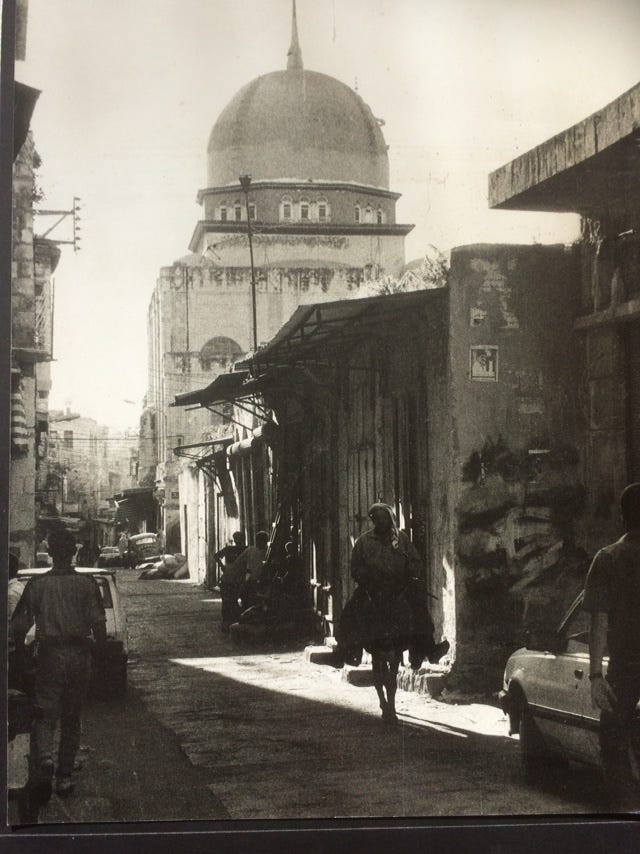
These are a few expressions learnt from a year under Israeli occupation in the West Bank:
Mana’a tajawal. Literally “forbidden to circulate”. Military curfew.
Ghaz ad-dumua’a. Tear gas.
Nuqta aj-jeish. Army lookout point.
Dum dum. A bullet that explodes on impact.
Awlaad a’mnaa. Literally “children of our uncle”. Cousins. Ironic Palestinian term for the Israelis, referring to their shared Old Testament roots.
And yet, the world over amidst the turmoil of conflict, ordinary people try as best they can to carry on with ordinary life. An illusion of normality captured in poetic musicality:
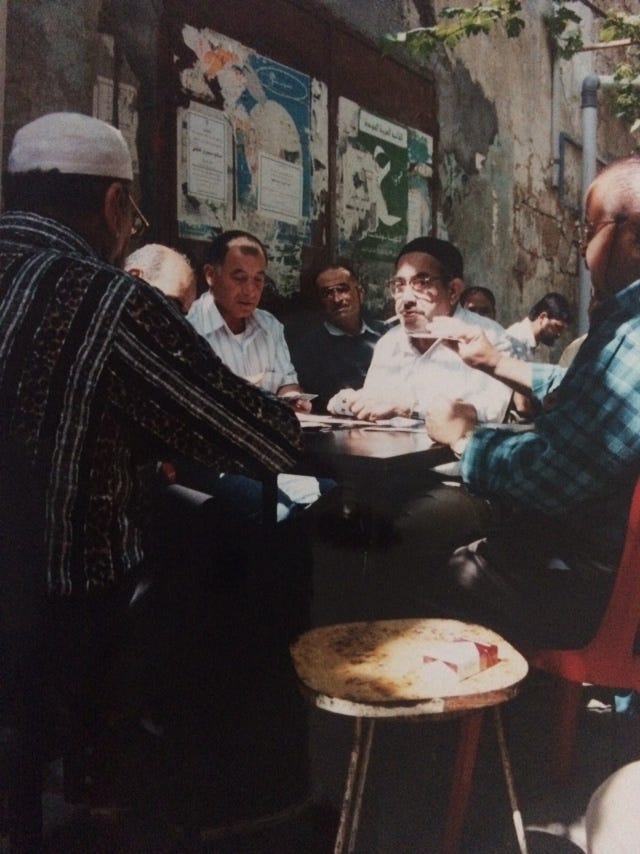
Sheish-beish. Backgammon. Played by old men in parks and at cafes, when they’re not under curfew or doused in tear gas.
Maqlubeh. Literally “upside down”. A delicious, unctuous, slow-cooked dish of chicken, onions and rice.
Azkaa dunia. Literally “the most delicious thing in the world”. A gorgeous, honeyed yellow fruit that grows on a large arching tree with thick waxy leaves. I still don’t know what it’s called in English.
Waraq Dawaali. Literally “country leaves”. Vine leaves stuffed with rice, minced lamb and spices, cooked in a tomato sauce.
Palestinian cuisine is sublime, but oh so time consuming. The food of stay at home wives. This is perhaps one of the very few advantages of being stuck at home under military curfew for weeks on end — there is plenty of time for complex cooking, provided you have the required ingredients. I made waraq dawaali just the once at the home of a Palestinian colleague. It took us five hours to prepare and was consumed in about five minutes.
Bukra b’il mishmish. One of my favourite expressions. Literally, “tomorrow in the apricot”. With a similar meaning to the English “pigs might fly” but so much more evocative. For example:
“Maybe one day we’ll be able to live a normal life here …. B’il mishmish.”
That year in the West Bank was the third year of my undergraduate degree, an opportunity to refine my spoken Arabic. I was 20 years old. I came away with a thick Nabulsi accent, a comfortable grasp of Palestinian idiom, and an outraged sense of injustice. I also learnt some new English expressions, including “Post Traumatic Stress Disorder”. Readjusting first to the security of my red brick family home, and then to my final year in the protective, golden stone cloisters of Cambridge was a real struggle. Life in the UK felt so trivial.
In addition to enhancing my Arabic, that year in the West Bank also cemented one of the guiding tenets of my life. I concluded that everyone, everywhere feels stress, it is a necessary part of what drives us to keep striving. I developed a theory that we all have a natural range of stress, and we will always manifest our maximum stress reaction to whatever is the most taxing pressure in our lives at a particular time. That may be passing exams, or getting to the office on time, or it may be finding food for one’s children in a time of famine or making sure they get to school without being shot.
I decided, after that year in the West Bank, that if I was going to be stressed it should always be about things that really matter. And so I went on, for the next fifteen years, to work in a series of other conflict zones. My languages were frequently the key that unlocked those opportunities for me.
Four years later I took three months unpaid leave from my job as a radio producer in the Arabic Service of the BBC World Service in London to travel to Sudan, Eritrea and Ethiopia to report from all sides of the conflict in Blue Nile region of Sudan. On that occasion my Arabic saved my skin.
Alongside the conventional army, the Sudanese government had drummed up an amateur militia of young religious fanatics to join the fight. One baking, bone dry Sunday morning, this chilling militia was massed in the dusty heart of the Sudanese capital, Khartoum (which means elephant trunk and, therefore, hose pipe by the way). They had come to march and chant and drum up their militant fervour before being shipped to the butchery of the frontline.
This was the fleeting era of the minidisc recorder — remember them? I concealed my recorder and microphone in my bag, and set out to mingle amongst the militia to capture the sounds of their fervent fanaticism.
At one point I reached into my bag to activate the recorder, and a couple of girls, in olive green uniforms and marching military-issue hijabs, became suspicious. They grabbed me, and dragged me out of the throng, down a side street to the building housing their commanders.
“What are you doing?” they challenged me in Arabic, “What do you have in your bag?”
I feigned ignorance and innocence. I pretended that I didn’t understand them.
“Where are we going, what’s the matter?”
I was shoved into a bare room occupied by a gaggle of uniformed men in charge of orchestrating the demonstration.
“This woman was at the march Sir,” my captors announced to their commander, “We think she is hiding something in her bag.”
Their commander gestured at my bag and indicated that I should reveal its contents. I felt sick with dread. At the sight of the small silver recorder and bulbous black microphone they were outraged and jubilant in equal measure. They discussed me and my crime excitedly,
“We’ll take her to the barracks. There are people there that can speak English. They will interrogate her.”
It’s surprisingly hard to pretend that you don’t understand people, when actually you do. Heart hammering in my chest I concentrated on keeping a bemused, affronted look on my face. I was taken outside and shoved into the back of a military jeep. Two men jumped in the front and we set off on a lengthy drive, right out of town, through the suburbs and into the flat barren countryside.
They foolishly left my recorder with me. Skin prickling with heat and fear, I tried desperately to remember the instructions from my minidisc training on how to delete recorded tracks. Surreptitiously I fumbled in my bag, briefly glancing down at the small digital display: press play, then push this button together with that one. I attempted to get rid of everything I’d recorded that morning. I had no idea if I’d managed it.
We arrived at a sprawling military camp encircled in razor wire.
“We’re taking this foreign spy to the commander,” the driver informed the guards on the gate.
We drove to a low, flat prefab at the heart of the base. I was escorted form the jeep to an office and made to sit in front of a desk. Around fifteen minutes later a large, portly man in uniform came in accompanied by one of my escort. He seemed quite friendly and a bit weary. Going through the motions.
“I understand you have been making illegal recordings?” he stated in admirable English.
“I didn’t record anything,” I claimed, desperately praying that I’d managed to erase the evidence, “I was just watching the march”.
He instructed me to take out the minidisc recorder and play him the recordings on it, starting with the last ones. Luckily for me none of them had ever seen a minidisc and they didn’t know how to work it. Dry mouthed with dread I pressed play on the final track.
The office filled with the sound of birdsong.
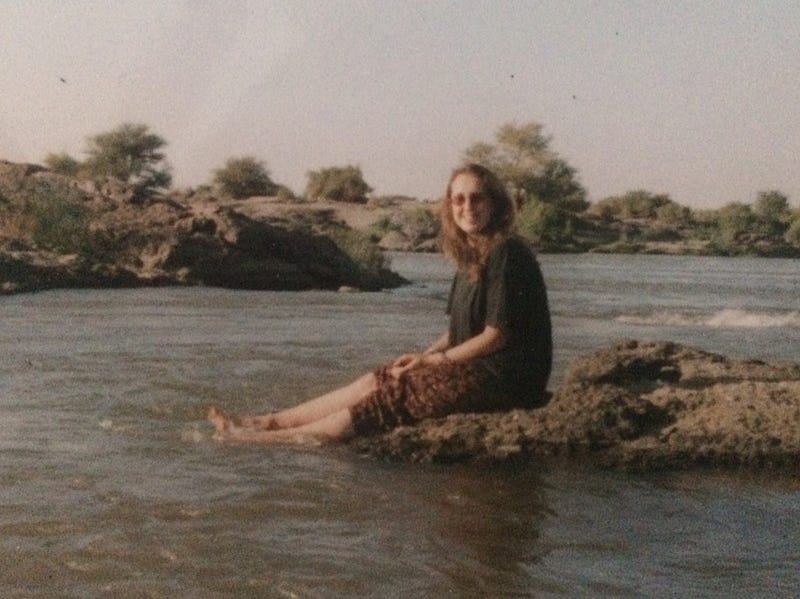
The week before I had travelled south to the lush Nile Delta to record a feature on the cotton growing industry in Sudan.
“Play the one before.”
The gushing sound of the Nile waters.
“The one before.”
A recording of me interviewing a cotton farmer. In very clear Arabic.
I watched realisation strike him, his face stiffened, eyes lifted and fixed on mine. My deception was unmasked. He switched into Arabic.
“Turn it over, play the other side.”
“You can’t, it only plays on one side.” I responded. In Arabic.
They kept me there for a few more hours, just because. They knew they’d been had. But they didn’t have any evidence. Eventually they bundled me, minidisc and microphone back into the Jeep and ferried me back to the city centre where I was shoved out into the street. I’ve rarely felt so weak with relief.
My next stop on that eventful trip was the breath-taking Art Deco capital of Eritrea, Asmara. Avenues of exquisite pastel painted villas, built by the ltalians in the early 1900’s high in the thin clear air of the mountains. It is unlike anywhere else I have ever been. A branch of the Sudanese opposition was holed up there, under the protection of the Eritrean government. While there I interviewed a former Sudanese Prime Minister, now in exile, along with the intimidating Eritrean President — Isaias Afewerki. He’s still in power, all these many years later, and that beautiful other-worldly country has become one of the world’s leading exporters of refugees, thanks to the brutality of his regime.
I stayed in a large, airy baby blue villa, converted into a guest house. Which is where my languages again came into play. One of my fellow residents was a young, very handsome, Italian named Leo. We spotted each other across the breakfast buffet and tried to strike up conversation. I didn’t speak Italian. He couldn’t speak English. But we soon discovered that we could both speak reasonable French. So that is how we communicated.
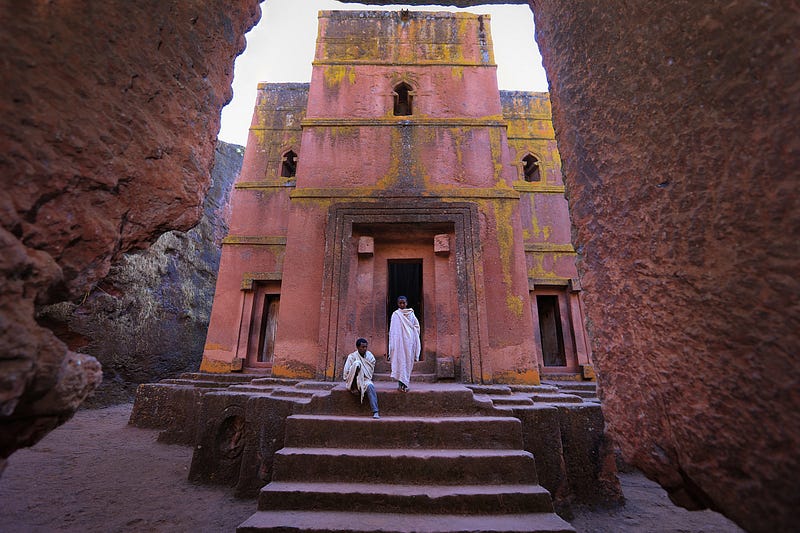
When I’d finished my work in Eritrea we decided to travel on together to Ethiopia, to the south, to visit the astounding carved rock churches of Lalibela. We piled onto a crawling, bumpy bus for the long journey across the border. The only other foreigner on board was a middle-aged American lady. She observed our exchanges in confusion for a while, before exclaiming,
“Oh wow! A Brit and an Italian, talking in French. I love Europe!”
Years earlier, at the age of 16, I had similarly found my way across the stepping stones of a shared second language to communicate, and join my journey, with strangers. It was the summer of 1989 and I was in the Soviet Union, just a few months before the fall of the Berlin Wall. But we didn’t know that then. I was on a six week study trip to take my classroom Russian and transform it into a language of communication. The Soviet Union, and indeed the rest of Eastern Europe, had been locked away behind the Iron Curtain for over 40 years. This was before the internet, social media, satellite TV or mobile phones. Landing in Moscow was like teleporting to a different planet.
One day, visiting the imposing grandeur of Red Square, I met a friendly, open faced couple who looked like they’d stepped out of a 1920’s Soviet poster celebrating the working classes. He was strapping and square jawed; she was beautiful with a long, thick swaying blonde plait. They wouldn’t have looked out of place clasping a sickle and a sheaf of corn. Standing in a queue together we attempted to strike up conversation. It turned out that they came from the then Czechoslovakia, and were called Martin and Pavla. Both were studying Architecture in Prague and, as part of their contribution to the Communist motherland, were expected to spend their summer in the Soviet Union on work projects. I spoke no Czech and they knew no English, but we managed to make friends in Russian.
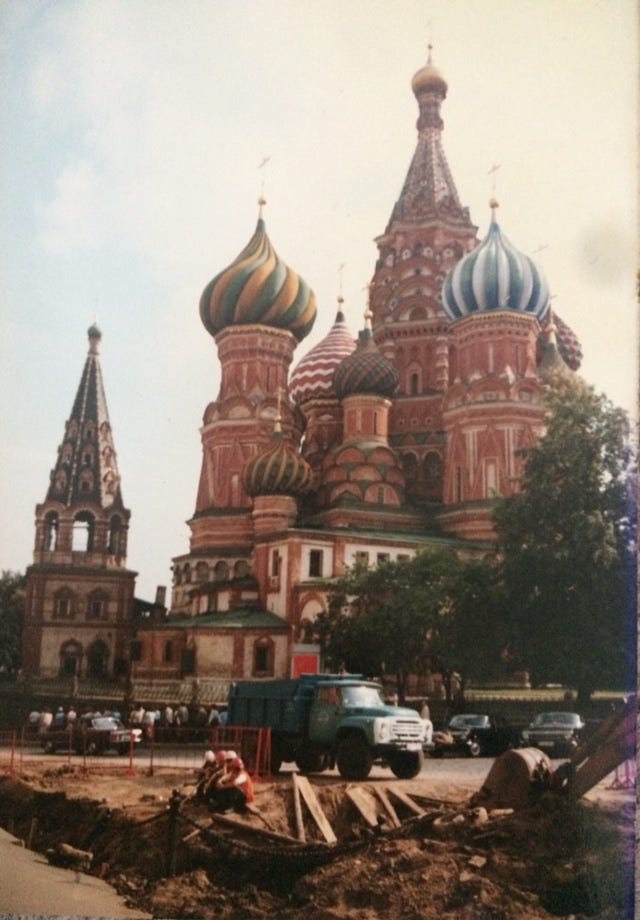
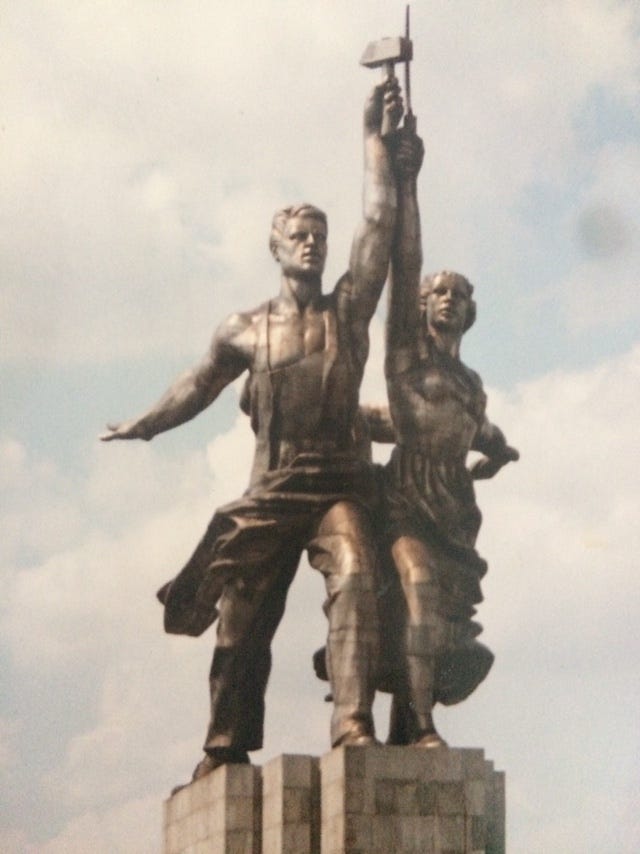
A few weeks later we met up again, by arrangement, in Leningrad and toured that stunning city’s palaces, canals and cathedrals together. As we bade our farewells we agreed that I must some day come to visit them in Czechoslovakia. It was unthinkable that they would ever be permitted to visit me in the UK.
Just three months later, back at school in the UK, I watched in amazement as the crowds surged through the Berlin Wall and hacked chunks out of it. Days later we saw the images of the Velvet Revolution, sweeping through Czechoslovakia, with thousands of protesters massing in Wenceslas Square in Prague. A few months after that a letter arrived from Martin. He was planning to celebrate this new found and utterly unexpected freedom by hitch hiking to the UK the following summer. He had no funds for a plane ticket. Could he come and visit my parents’ house?
He turned up in the summer of 1990 after a two week hitch hike from one side of Europe to the other. My parents invented a series of DIY jobs for him to do so he could stay without feeling like a parasite. A few years later he returned with Pavla. A few years after that my parents visited them in the new Czech Republic on a rare holiday. 30 years on and they are married, with four grown up children. They still send Christmas cards and letters every year.
So it is that my languages have left threads stretching out across frontiers, front lines and insurmountable divides, knitting all these different people, places and perspectives into my story. Making me who I am.
I parted company with Leo in Lalibela. He returned to Eritrea, I travelled on to Addis Ababa to stay with the BBC’s then Ethiopia correspondent. I was due, a few months later to succeed her in post. Unfortunately, the BBC then fell out with the authoritarian Ethiopian Government. The correspondent was expelled and nobody was allowed to replace her. The BBC’s then Africa Editor, the inimitable Robin White, spotted an opportunity.
“Well, you could wait indefinitely to be allowed into Addis,” said he, back in the BBC’s Bush House in London, “Or you could always go to Angola instead.”
Little did I know that he’d been struggling to convince anyone to take on the tribulations of war shattered Angola. I knew next to nothing about the place. Had no idea how draining it was to achieve the slightest thing in that decimated country. But, I reasoned, it would be a lot easier to learn Portuguese than Amharic. I was craving escape from the mundanity of the UK. And it would be nice to return to Southern Africa where I’d spent a year between school and University. So it was, with just six weeks’ notice, and without a word of Portuguese, that I moved to Angola as the BBC and Reuters correspondent.
Thankyou for reading. You can find Chapters 1, 2 and 4 of this series here: