How Learning Languages Has Enriched My Life
And why everyone should be multilingual - Chapter 1
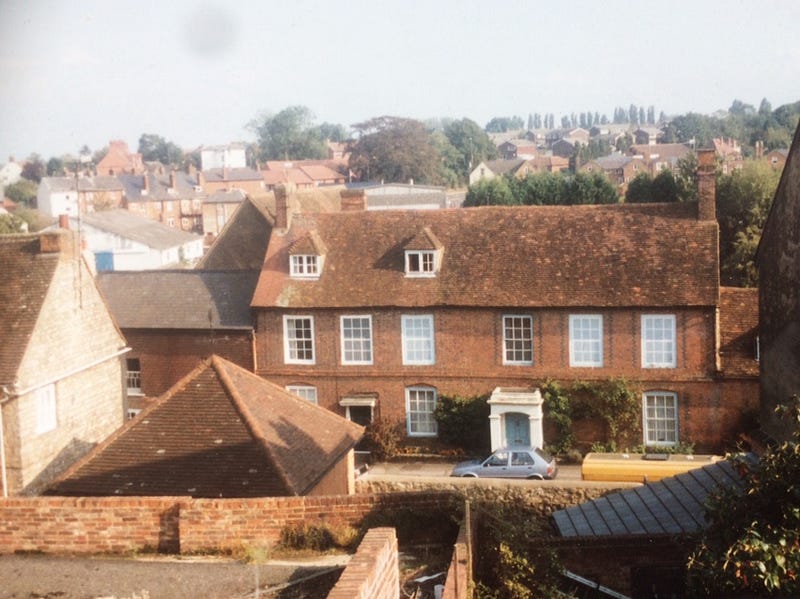
My parents live in a 300-year-old house in the heart of England. The house has many eccentricities, including a curious arrangement with two bathrooms either side of a wall that only extends three-quarters of the way to the ceiling. Two people can lie in two baths, on either side of this wall, and chat over the gap.
As children my brother and I used to do this — he in the yellow bath and me in the blue. For reasons I’ve never understood he attended a private prep school where they studied French, Latin and Greek, while I attended the state primary up the road where we did sums and spelling. I clearly remember, aged about six, lying in the bath and insisting that he make up for this injustice by teaching me the Greek alphabet over the wall.
“Alpha… beta… epsilon…theta… again, tell me again!”
When I was ten we were on holiday in the South of France, staying on my grandfather’s barge on the Canal du Midi. After a day at the beach, we returned to the barge to find a man wandering about on deck. My father enquired politely, in French,
“Est-ce qu’on peut vous aider?”
“Can we help you?”
The man gesticulated expansively and responded in a different, more staccato language. This turned out to be Italian, although I didn’t know that at the time. I was astonished and grudgingly impressed when my father immediately switched into this strange language and started chattering away with the intruder. I’d lived a decade without realising that my dad could speak Italian. He also speaks French, German, passable Dutch, some Danish.
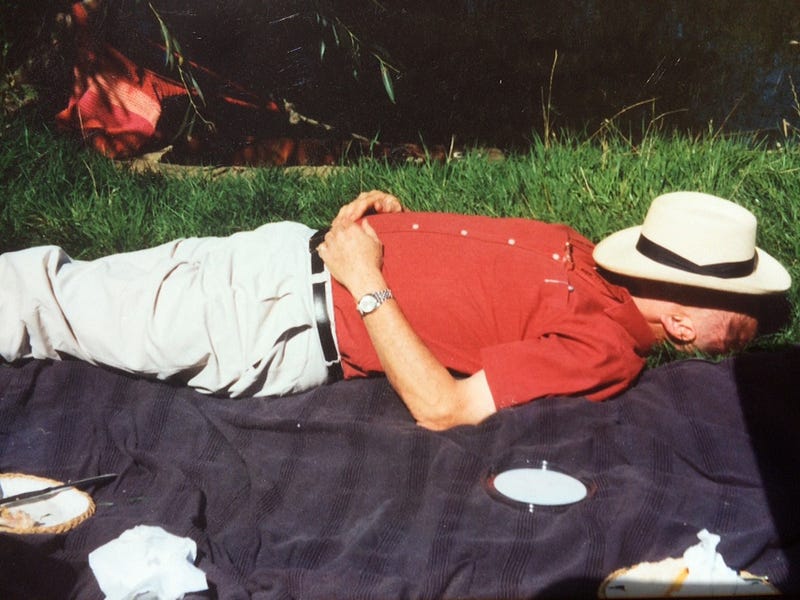
My father’s linguistic dexterity is the more striking because we Brits are, for the most part, dismally bad at learning other languages. We — and perhaps most Anglophones — are brought up to assume that we don’t need to learn other people’s languages because enough of them will learn ours. Languages are taught less and less in our schools. In the UK it is almost a badge of honour to boast how bad we are as a nation at learning foreign languages. But we are not intrinsically poor at language learning, we just don’t appreciate or value the outcomes enough to make the effort. And with that arrogant laziness we impoverish our lives, our culture and now our nation immeasurably.
My father passed his gift and love for languages to me. Along with a strong desire to study languages that he didn’t know, and therefore couldn’t correct me in. I went on, through school, University, work and life to learn Latin, French, Russian, Arabic and Portuguese. Thanks to the derivations and intersections of these languages I can also decipher a decent amount of Farsi, Spanish, Polish and Italian.
In my mind’s eye I see the history of human migration spilling across the world, leaving a interlacing trail of language as different dialects have flowed into and over one another. Language is a map by which to navigate and peel back the human journey.
When I arrived in Angola as a BBC reporter at the age of 25 and started learning Portuguese there was something in the conjugation of the verbs that set off an itch in the back of my brain.
“Why is this familiar?” I wondered, “How is it that I know what comes next?”
I compared it to French, could that be the key? No, completely different. And then I realised, it’s Latin! Migrated across two millennia and the Mediterranean. Dredged up from years spent sitting stiffly on a hard wooden bench in a draughty classroom resentfully reciting conjugations.
Amo, amas, amat.
Now, if I’m in a Spanish speaking country I feel like I’m listening to Portuguese spoken through a layer of treacle. If I strain my Portuguese brain I can decipher most of it, by taking a step backwards down the linguistic family tree, unpicking the last stage in Latin’s westwards evolutionary journey before it stalled at the Atlantic.
My peerless friend, Paul Salopek, is seven years into a journey walking around the world, tracing the footsteps of the first humans as they spread from East Africa across the globe (check out www.outofedenwalk.com ). I’ve been thinking my way along his linguistic path. Imagining all the languages that he has paced through. I wonder how he notices the changing of the prevalent tongue as he traverses tribe and territory at a walking pace? Is it a gentle elision, a layering, as one language melts into the next? Many of the languages along his route are related, deriving from the same root. Amharic, Somali, Arabic. Or is it an abrupt jolt as one language family bumps up against the next, often at a topographical boundary? For example, up in the mountains, where Georgian meets Azeri and Armenian, overlaid with a smothering of Russian.
In recent years, since the introduction of extortionate University tuition fees in the UK, I have regretfully reflected that, were I now choosing what to study, I probably wouldn’t pick languages. They prepare you for no obvious profession; offer no guarantee of ever casting off the crushing yoke of student debt. They feel like a luxury, an indulgence.
And yet, in recent months, observing the Black Lives Matter protests and the UK’s relentless and dispiriting march towards Brexit, reflecting on the causes and consequences of racism and xenophobia, I have realised how critical the learning of languages can be in breaking down prejudice, building empathy, and boosting creativity and resilience. There is a saying that to learn a second language is to have a second soul. And a third, fourth, fifth for every subsequent language mastered. Learning, speaking, living and loving in different languages has enriched my life beyond measure.
Most obviously, learning other languages has enriched my vocabulary and idiom — including in English. It has given me the tools to express myself in more colourful and nuanced ways. It has armed me with words and expressions for things that don’t even exist in English.
It has taught me where my words come from, what their component parts and heritage are, how to weigh and interweave them. It has, therefore, improved my writing.
It has given me the ability to communicate with hundreds, thousands of people who — believe it or not — do not all speak English. It has given me access to their lives, views and stories.
It has enabled me to travel to places and immerse myself in experiences which would otherwise have been beyond my reach.
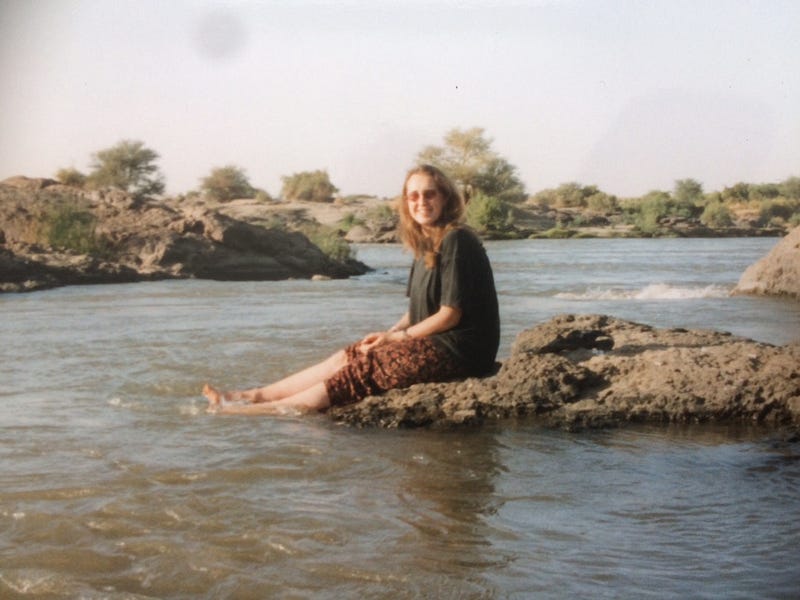
It has enriched my career — leading me to live and work all over Africa and the Middle East. Speaking Arabic opened the hallowed doors of the BBC to me.
It has resulted in my meeting and marrying my husband. In my becoming a step mother and mother.
Without my languages none of this would have happened. But these, I suppose, are the obvious, literal consequences of learning other tongues. There are also, I now realise, so many other, indirect and esoteric consequences.
I have learnt humility and self reflection; to see and hear myself as others do. To see my country and culture through the eyes and values of others.
I have had to learn to listen. To what people say. How they say it. And what they don’t say.
I do not see what divides people. I see, or hear, their common humanity and what unites them. My natural empathy has been deepened by decades of absorbing the ways that others express themselves. Communication across language barriers breaks down stereotypes, fears, prejudice. It exposes racism for the superficial nonsense that it is and reveals the soul beneath the skin.
Learning languages has given me access to alternative cultural universes, opening up vast libraries of music, literature, film and poetry. Architecture, folklore and faith. Which in turn offer additional tools for self-reflection and representation.
And I increasingly believe — looking at the meandering and unconventional path of my career through journalism to international development then environmentalism via a detour into children’s digital content — that it is the learning of languages that has given me the mental versatility, resilience and flexibility to range so widely, and see connections and solutions that others might not.
I will explore each of these gifts in greater detail in the remainder of this series. You can read Chapters 2 and 3 here: