
How China becomes Chinazi (III B)
My memories and reflection of what I learnt during Chinese History lessons in secondary school
As the article for my studies in Chinese History in Secondary 3 is too long to be read, I have to split it into two. This one is the second part but you can still go and see the ones before below.
Chinese History from My Memory (Continued)
Disclaimer: Once again, the following comes from my memory only. They may be wrong.As the Chinese Empire was torn down because of a revolution, the new sovereignty faced a lot of challenges and let’s see what happened next.
May the Fourth Be with You
The First World War started soon after the establishment of the Republic of China. After it ended, the Chinese people were discontented over the parts related to China's own territory in the Treaty of Versailles. They were angry that the Chinese land taken by Germany in the past were given to Japan instead of being given back to China.
Inside China, people realised a lot of problems. One of the main problems was language; but in general, the younger generation thought the whole culture was a problem.
Chinese writing was still like Latin to modern Latin languages in early 20th Century. The spoken language evolved a lot while the writing was still similar to those written in Ming, Sung, Han, and even Chou dynasties. This was nearly impossible for the general public to understand.
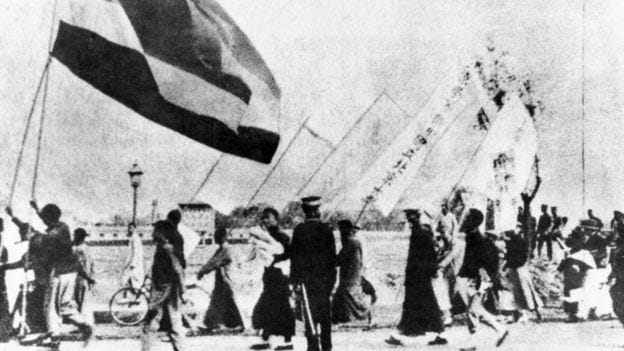
Therefore, the students decided to renew the cultures. They encouraged people to write as what they said. They ought to abandon the archaic Chinese writing.
They wanted to learn from the west so much that they wanted the Chinese language to be like the European ones. Their ultimate goal for the language was to make Chinese a syllabic language.
Side note: Vietnamese did change their language from Chinese-like to syllabic all thanks to the French people who colonised them.Moreover, they introduced western values to the country. The students also introduced two misters, Mr D (德先生, 德莫科拉斯. Democracy, 民主) and Mr S (賽先生, 賽恩斯. Science, 科學), to enlighten the people all around the country which was newly established and under-developed.
This was called the May 4th Movement (五四運動) as the first mass rally by students was held on 4th May 1919.
“The Revolution Isn’t Over. Comrades, Keep It Up.”
10 years after the empire fell, China was still in a mess. Even though the country had a democratic government, it was still governed by several warlords fighting against one another to gain power and influence across the country.
Sun Yat-sen thought that it was a great problem and discussed the matter with the government. It was decided that Sun became the Provisional President of China to fight against the warlords.
They fought from Canton to the north, and the fight was successful. It ended the Warlord Era. However, Sun Yat-sen did not live long enough to see the success. He left the phrase “The revolution isn’t over. Comrades, keep it up.” (「革命尚未成功,同志仍須努力。」) to encourage his followers to continue the dream.
Fights Against Japanese (Especially WWII)
China and Japan had been rivals since Ming dynasty. During that dynasty, Japanese going to China were mostly pirates who took China’s resources on the shores. Therefore, China used to be harsh towards Japanese.
During late Ch’ing dynasty, Japan beat China after their technological advance. This made China angry for quite long but this also boosted China’s eagerness to learn from the west. China lost some of their tributary states and their own territories, such as Korea, Ryukyu Islands, and Taiwan, to Japan during those wars.
Japan’s rapid expansion was inevitable. It was understandable as Japan lacks resources and is prone to natural disasters. It was reasonable for them to find a place to move their people to a easier place to live.
However, Japan wanted to get the lands by force and they targeted China (as they did for long). They only needed a reason.
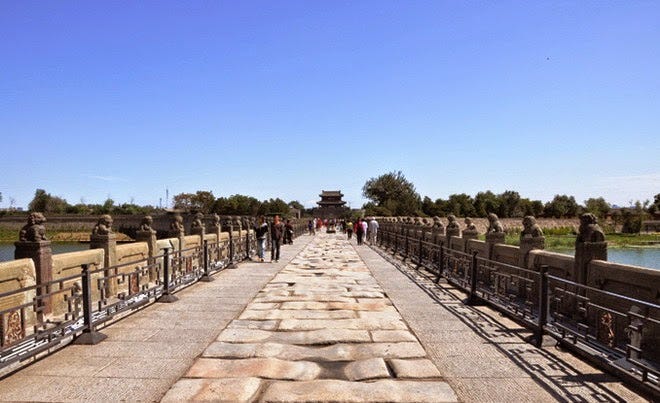
They found a reason to invade China on 7th July 1937. Japan told China that they found one of their soldiers missing near Lukou Bridge (盧溝橋) in Peking after a military exercise, and they asked if they could cross the bridge to search. China, of course, thought it was unreasonable for a Japanese military officer to cross the bridge to China’s territory during an exercise in the first place, so China denied Japan’s access across the bridge.
Japan was angry about that and so they fought. And so war started. It didn’t stop until Japan surrendered in August 1945.
However, this war cost China a lot. China got defeated by Japan all the way and they needed to move their capital city temporarily from Nanking to Chungking. There was a massacre in Nanking by Japanese military. A lot of Chinese people fled towards somewhere safer such as Hong Kong, but those places were all invaded and became parts of the Greater East Asia Co-Prosperity Sphere (大東亞共榮圈). Millions of Chinese were killed, numerous were raped. Even Hong Kong’s population plummeted during Japanese rule for three years and eight months.
Sadly, the war against Japan during WWII messed up China’s plans.
Say “Yes” to Commies
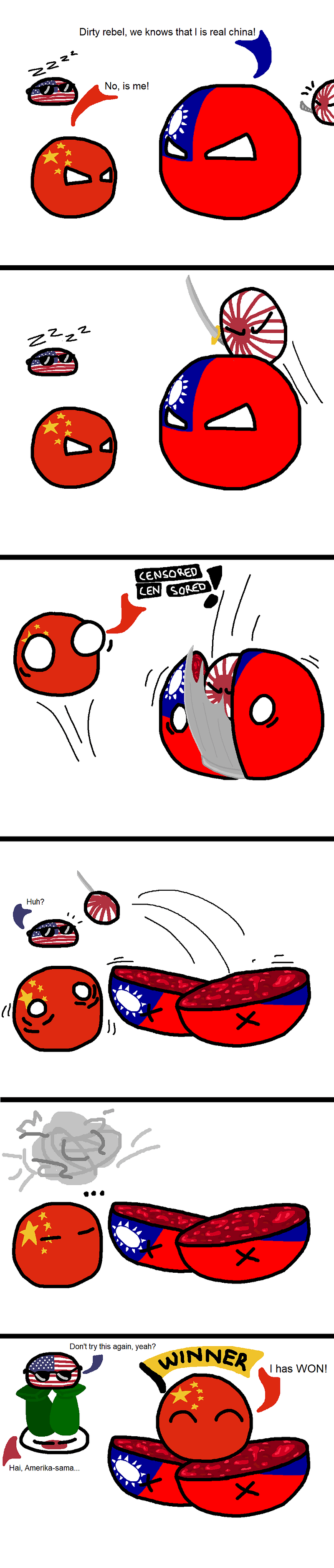
Originally, China wanted to right the wrong which Sun Yat-sen made before he passed away. It was to eliminate all communists in China.
During 1920s, Sun Yat-sen agreed the ideologies of communism could be spread in China as they needed Russia’s force. (聯俄容共, should it be Soviet Union? But the Chinese words says “Russia”.) As a result, the Chinese Communist Party was established.
Later, China realised that it was such a bad idea to let communism come in. The Communist Party got supports from the Soviet Union to fight against China.
Before WWII, the Chinese leader Chiang Kai-shek (蔣介石) decided that they should settle all the threats from inside before dealing with those from outside (先安內後攘外).
At first, the nationalist government beat the communists so hard that the Communist Party nearly died. However, the world war messed up with that. Chiang’s cabinet asked him to fight against Japan before the communists. This gave time for the communists to have a rest, got back together and persuaded the working class while the nationalist government was fighting against imperial Japan.
As the war was over, the civil war kicked off again. Unfortunately for the nationalist government, the communist rebels kicked arse because of supports from the working class. Moreover, the economic crisis inside China, including serious inflation, angered a lot of people.
Back when my Chinese History teacher taught this part of nationalist government losing, I still remember she said, “It is quite understandable why the Chinese people chose communism over nationalism.”So the communists pushed the nationalists away from the Chinese mainland. The nationalist government brought tonnes of treasures and fled to the island of Taiwan, which was freshly claimed back to China after the great war.
The Republic of China, as a dynasty in mainland China, ended as the communist Chinese leader Mao Zedong (毛澤東) chanted on 1st October 1949 that the People’s Republic of China (中華人民共和國) was founded.
New China Arise
The new China, being a very different era than before, made a lot of new things for the people.
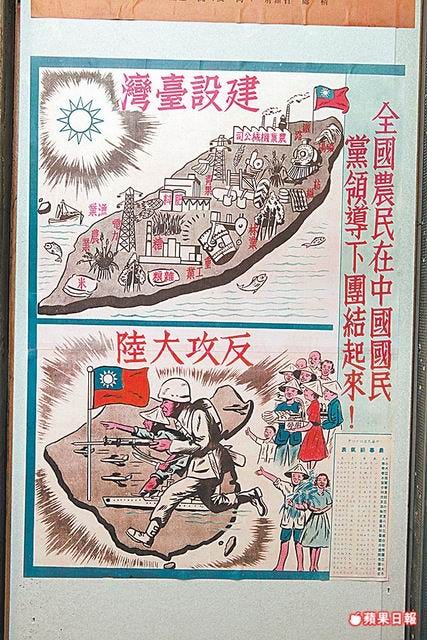
First of all, they made salaries of all the people the same (36 RMB) because they were communists. All the revenues, as well as capitals, should be shared among all the people. Food and other necessary products for daily lives were distributed by the government.
Secondly, they let the people write to the presses what the government could do better. This showed the people had more freedoms in this new government than all those before.
Thirdly, they thought that they should surpass the UK and at least be right after the US (超英趕美) very quickly since they were a big and great country. Therefore, they introduced the Great Leap Forward (大躍進) such that all the people in the country could contribute in making steel.
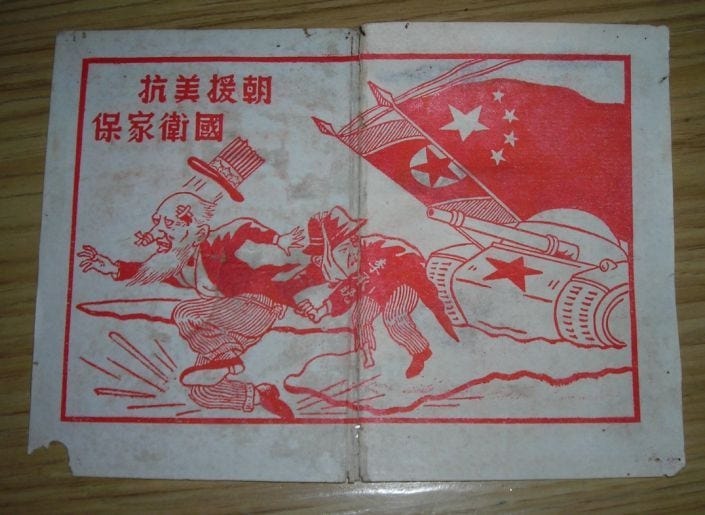
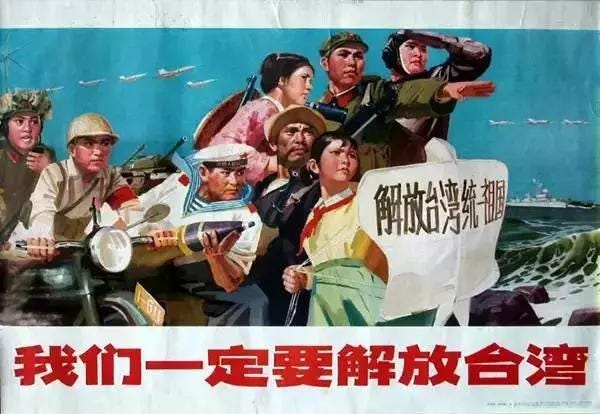
Last but not least, the new China was still very eager in liberating their neighbours. They were active in the Korean War, trying to liberate the whole Korean Peninsula. Moreover, there were widespread propaganda inside the mainland about liberating the remaining capitalist part of China, Taiwan.
The results of this drastic change were brutal.
China’s productivity would have been great had all the Chinese people been robots. Since all the salaries were given no matter how the people did, they realised that they could still earn the same amount of money no matter whether they were hard-working or not. A lot of people became lazy for that and so their productivity was low.
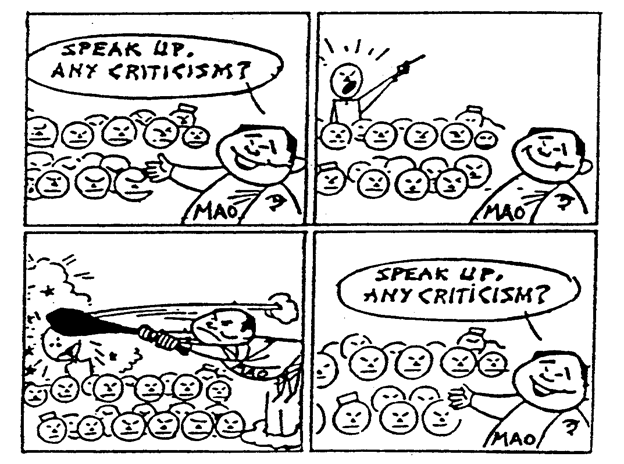
Letting people speak out was a trap. Later, the government accused those who had spoken out for ideas to improve the governance of being capitalist. Being capitalist was a big no-no in communist China as this was an idea of bringing “old China” back. Therefore, the government decided to “re-educate” them by sending those people to less prosperous provinces, such as Sinkiang and Kansu, to let them learn the communist ideologies through hard work and develop those areas.
The Great Leap Forward was a catastrophe. The quality of steel produced by the people was bad. My teacher told us that the people gave some uncleaned used cooking utensils, such as a wok with a greasy vegetable, for the production of steel. That would give a lot of impurities in the making and that was why the quality was pretty bad.
What made things worse was a great famine after the Great Leap Forward. You could see that all the people went to make steel and no one was farming. The yield was bad in the following years and was not enough for all the people to eat.
No, there were people farming during the Great Leap Forward. Just this year I read an article stating what China did for agriculture during that period. They asked the farmers to kill all the birds and insects because the “experts” said that those were all bad for the crops. This made disastrous yield for the years following because the birds and insects actually helped the crops pollinate which could help with the yield.With the “re-education migration”, the war and the famine combined, countless people lost their lives during the first ten years of communist ruling of China. It would take decades for China to recover the loss.
Mao Zedong stepped down.
Culture’s Revolting
It was the 1960s. China was still trying to recover from the famine. However, remember what happened half a century ago? China’s culture was awful and revolting. Especially those Confucian ideas made people stupid, following your parents, teachers, and your supervisors is always right?
No way. This culture needs revolting. The communists thought.
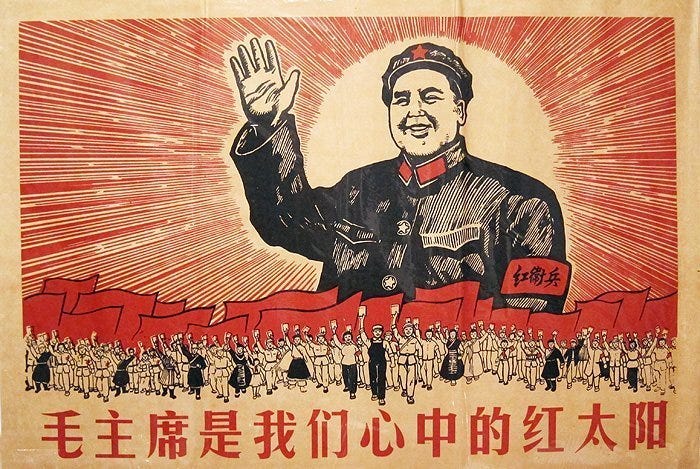
This turned very bad, and those ten years ruined basically everything in China. This was all because the Cultural Revolution (文化大革命) turned into Mao worshiping.
All the Confucian things were bad, so they abandon the ideology. They broke all the old Confucian temples. Later, temples of all religions were destroyed because communists were atheists.
Many slogans and propaganda were saying that Mao Zedong was the best. One even was taught in the first lesson in primary schools: Mum and Dad aren’t as close as Chairman Mao (爹親娘親不如毛主席親). Everybody had a copy of Quotations from Chairman Mao Tse-tung (毛語錄) and they needed to study it.
The worst thing happened. During that decade, the red guards (紅衛兵), Mao’s followers, used all their wills to frame people of not loving the country, not obeying Mao, or not obeying the laws. Those people framed were taken to a struggle session (批鬥) and were very badly punished. Those punishments included kneeling onto shattered glass and being thrown from a building.
A lot of people were killed during the decade. Some scholars were casualties in this “revolution” as well, such as Tschen YinKo, Lao She, and Tian Han, the lyricist of the Chinese national anthem.
This could not stop until Mao finally died in mid-1970s.
This was so revolting that I don’t want to talk about it anymore.China Reopens
China needed to recover from the Cultural Revolution. Also, China’s relations with the Soviet Union turned sour. China ought to find a new strong friend quickly (or else they would probably be liberated by Taiwan).
Luckily, they found one. I don’t know the reason behind it, but China and the USA started to have some diplomatic interactions between each other. (Remember those ping-pong balls?) Finally, China could make themselves into the United Nation, make almost all countries in the world to break ties with Taiwan.
Then, China started to reopen themselves. They agreed to let some of the people to get rich, and then tried to make the rest to follow. They started to develop Shumchun, Chuhai, Swatow and Amoy to become Special Economic Zones in China.
Many industries in Hong Kong moved to China as they could provide cheaper labours. China’s economy boomed in just ten years, and the country was quickly developing. Sadly, as industries were gone, Hong Kong had to find another way to prosper. Hong Kong became an international business hub and fortunately proved this change successful.
We Saw Teachers Sobbing
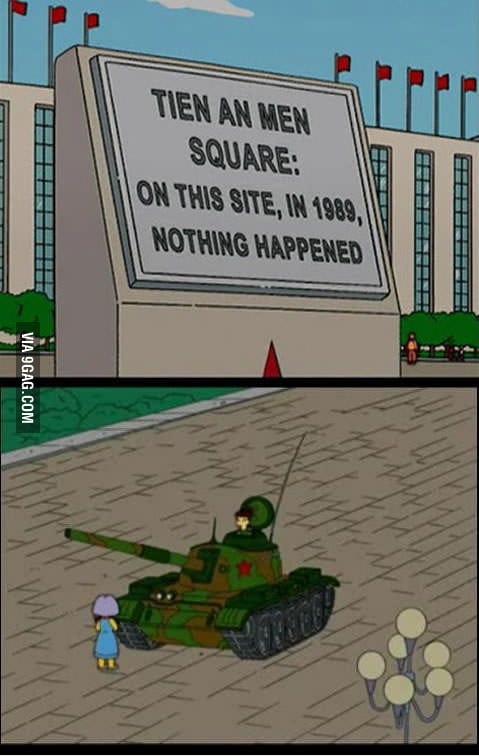
THERE WERE LITERALLY THREE LINES ABOUT THIS INCIDENT IN THE TEXTBOOK!
However, we could still feel our teachers’ emotions when they talked about what were shown on newspapers the days before, what happened in Hong Kong’s rallies to support the students in Peking, what they saw on TV that night, the blank spaces on newspapers (especially the editorials) the day after.
Reminder: I was born after the T’ienanmen Massacre in 1989 so I could only depend on what were told to get a grasp.Hong Kong and Macau Returned Home
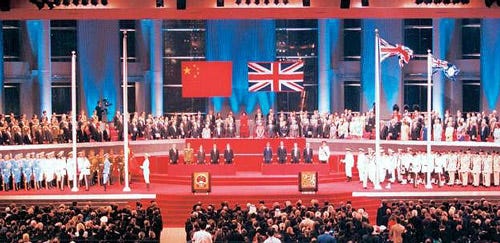
After Margaret Thatcher’s fall in Peking, it was destined that Hong Kong, the whole city including those given up in Ch’ing dynasty, had to return to China on 1st July 1997. The Basic Law which began in use on that day was established. Chinese leader Deng Xiaoping (鄧小平) promised Hong Kong that the Pearl of the Orient would remain unchanged for 50 years.
Deng wished to watch the handover ceremony in person but he died a few months before that.
Macau followed suit on 20th December 1999.
This was the end of my Secondary 3 curriculum in Chinese History.
You can see the rest on the news now.
I never expected that I learnt so many things in that year as I nearly failed this subject that year. It took me so long to finish writing it.
I believe that what I learnt in those three years were oversimplified. The situations in different period should be more complicated than what I wrote, which I tried to simplify. However, I understand that more complicated issues would be discussed in higher levels, such as for the public examinations, and even in tertiary curricula.
In the next part, I will be writing what I feel about the whole Chinese history that I learnt, and more importantly, how China becomes Chinazi.


