
How China becomes Chinazi (I)
My memories and reflection of what I learnt during Chinese History lessons in secondary school
As I wrote I found that I have written around 4000 words and Medium shows that it would be a 16-minute read but I haven’t finished writing all of the histories. I haven’t even started my reflection part.So I decide to split it into 4 parts. The first part is the Chinese history I learnt in Secondary 1. The second part is for Secondary 2, third for Secondary 3. And the final part is my reflection.I’m writing the third part, and the second part is coming up soon. Thanks.September 2003, the school year after SARS outbreak in Hong Kong, I started secondary school. When starting secondary school, local students have more subjects to study than primary school. Chinese History and World History are two of the extra subjects.
Yes, I needed to take two history subjects at the same time. However, Chinese history was relatively unimportant in World History because it had a separate subject. It had a small part related to the history of Hong Kong in World History instead.
Time flies, now I hear that some schools have no history classes at all (not my alma mater). What are the reasons for the people to learn history? There are several, but I can only remember one: not to repeat the mistakes made in the past. Unfortunately, those students nowadays have no chance to learn those mistakes. Even worse, China can’t learn from the mistakes throughout their 5000 years of history.
Explaining Hong Kong’s school curriculum is not easy. The simplest way I can put it for my generation is: Students had to study a lot of subjects in the first three years of secondary school, then they needed to decide what subjects they wanted to further study for the public exams. I opted science subjects and so I left histories alone after secondary 3.

In those three years, both subjects started from beginning of civilisations and ended in around the Millennium. But when I look back into Chinese History now, I feel strongly that it is just another “Make China Great Again” slogan, and the subject itself is like a nationalist propaganda. It is disgusting.
Let’s start talking about Chinese history, shall we?
Chinese History from My Memory
Disclaimer: The following comes from my memory only. They may be wrong.How China Began
China originates from Yellow River civilisation on Loess Plateau (黃土高原). People lived in caves before someone called Yellow Emperor (黃帝) began the civilisation. People started building houses, setting fires, having herbs (which developed into Chinese medicine) and so on with help from excellent people/gods. Yellow Emperor’s wife developed the silk industry.
Yellow Emperor fought against barbarians from the west and the defeated fled southwards.
Yellow Emperor was a wise man. He decided to pass the throne to another wise man. This way of passing ended after the fifth one decided to pass the throne to his son.
This wise man was called Yu (禹). Simply speaking, he became a wise man because he solved a problem which his dad couldn’t.
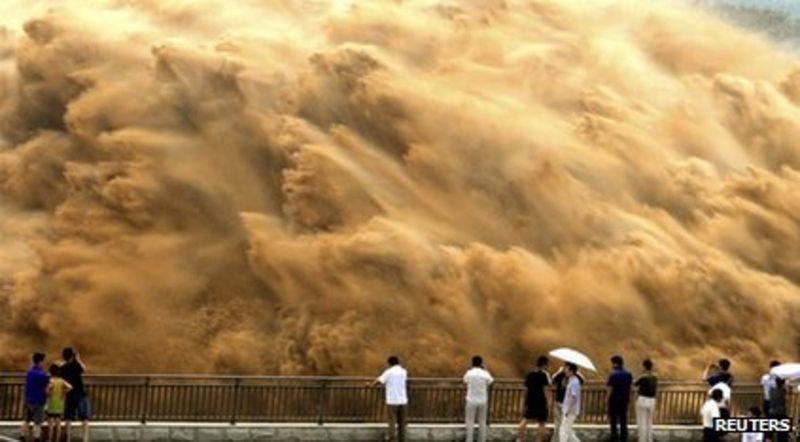
The problem was a great flood of Yellow River. Yu’s dad had built walls/dams to prevent the river water from flooding but in vain. The son instead went to the river and dug out the mud and redirected the river flow, which solved the flooding problem.
In order to get rid of the flooding, Yu passed his house 3 times during the works but didn’t enter. This showed his determination.
Oh, 3 means “a lot” in archaic Chinese. So do its multiples. So it only meant that Yu did not enter his home several times before the works finished.So he got to ruling China, and this became the first dynasty of China namely Hsia (夏).
Divided and Then Reunited
There weren’t much documents about those histories that were long ago. Anyway, bad rulers ruined China and then some people rebelled, took over the country and established a new dynasty. They usually expanded China further from the Plateau.
Chou (周) dynasty, the third dynasty of China, reformed the country and introduced hereditary titles to the royalty. The king ruled the capital directly and the whole country indirectly. It was down to the dukes and other titled royalties to rule the rest of the country, divided by states, directly.
However, history repeats itself. A king of Chou ruined the country. That made the dukes rebel, kill the king and give up on the capital. Anyway, the dynasty survived and the new king decided to move the capital city eastwards.
The reaction from the states? You may move your capital, but we don’t care about you anymore. You may keep your title as the king of Chou China but it’s just an honorary title. Oh, only the capital city is yours.
The Spring and Autumn (春秋) period of China began. Later, as one of the biggest power was divided into three (三家分晉), China stepped into its Warring States (戰國) period. The states fought against one another. It was the worst of time.
This was also the best of time. The people in various states had a strong sense of reuniting the states to become one big country. Therefore, people had a lot of strategies and thus came to different ideologies. Some of the famous ones were Confucianism (儒家), Legalism (法家) and Mohism (墨家). This spectrum of ideas spread through the country and all the states were free to adopt one of the various ideologies.
However, a legalist state of Ch’in (秦) won the battle to reunite all the states. The duke believed that he did a great job and so he decided to become the First Emperor of Ch’in (秦始皇帝), the first emperor in Chinese history.
The Chou capital was long gone by the time First Emperor of Ch'in reunited China. Apart from that, Yellow Emperor is just a translation problem. He does not count as an emperor of China in its history.Adoptions of Ideology
Not only did the First Emperor of Ch’in reunited the country, he also “unified” all the systems, such as measurement system and writing, by forcing the other parts of the country to adopt the one in the state of Ch’in.
The country was legalist, so you would risk your lives if you didn’t follow.
At the later time of the First Emperor, a eunuch (宦官) close to the emperor went in and ruled the country. He made even harsher ruling to the country. Everywhere were injustice.
When injustice becomes law, resistance becomes duty. (Thomas Jefferson)
So people resisted and then rebelled. The Ch’in dynasty ended only 15 years after the First Emperor beat all states. It was the period of the Second Emperor of Ch’in (秦二世皇帝). It ended.
The story between when Ch’in ended and when the next dynasty started is famous. A lot of TV series are made based on this story. Simply speaking: Two clans, Ch’u (楚) and Han (漢) fought against each other. Han won. Han became the next Chinese dynasty.
Understanding that legalism made the governing very centralised and harsh, Han emperors introduced dukedoms to some important generals and direct relatives of the emperor at the beginning of the dynasty. This helped decentralise the governing. Also, the royalty adopted Taoism (道家) to let the Chinese people rest from the civil war and the former legalist government.
After a few generations, a young, new emperor decided to retrieve all hereditary titles to maintain his power (because one of his uncle was a duke and the duke was ambitious) and changed the ideology of the country. This new emperor adopted Confucianism, which guided the population to obey the ones of higher status (relative to the people) with reason. This was the Emperor Wu of Han (漢武帝).
Make China Great (Season 1): East Meets West
Emperor Wu was also ambitious. After adopting the new ideology, he decided to expand the country as well as kick out the barbarians in the north. The territory stretched from Loess Plateau to current Vietnam and Sinkiang, and of course the coasts. He also sent ambassadors to outside of the territory to ask the rulers of the other tribes/countries to pay tribute to China.
One of the ambassadors was lost for nearly two decades, but he was an important person of Chinese history. He was Chang Ch’ien (張騫). History marks him as the person who opened the Silk Road.
Silk Road was an important way for the East and West to meet, and international business started between China and the West. Silk and porcelain were two main products that earned a lot.
Fail State
After Emperor Wu’s reign, China could not maintain its greatness. The emperors had no real power. The power went around the eunuch and the extended families of the emperors.
The country kept failing but it still lasted for more than a century. (Let’s forget one prime minister seized the throne but still failed the country.)
The monarchs were so weak in general, and so they failed to rule the people. At the end of the dynasty, one minister “kidnapped”the emperor and so he could ask the dukes to do whatever he wanted (挾天子以令諸侯).
Han dynasty stepped into its coffin.
The Romance of Three Kingdoms and What Was Next
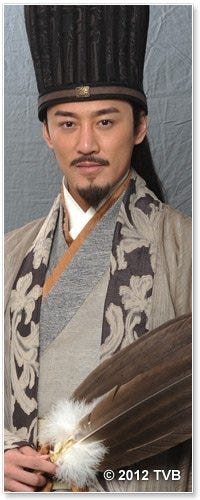
When Han dynasty ended, it was the time for the Three Kingdoms (三國) period. The Romance of Three Kingdoms (三國志演義) itself was based on the historical events in this period. This is a romance and so some plots were altered or exaggerated.
In brief, China split into three kingdoms and they fought against each other. The one at the north defeated the one at the south. A minister from the north seized the throne, and then united China. The period of Three Kingdoms ended.
The new dynasty was Chin (晉). Chin was not a great power anyway and the ministers were not very clever. One of the emperors was so wise as Marie Antoinette.
Speaking of great power, the barbarians from the north were much more powerful than Chin. Chin was defeated and moved the capital away from Yellow River for the first time.
North-South Divide
The new capital city of Chin was present-day Nanking, and the country could no longer rule anywhere north of Yangtze River. This marked the first North-South divide and another major China division.
Chin collapsed later on. The northern part ruled by barbarians adopted Chinese ideologies but they still were fighting and arguing all the time. China was divided into several states.
Anyway, China was so messy and not much people really cared about what was happening in their states. Drug overdose was a trend at that period.
So this is the end of my first year of Chinese History. There were undoubtedly some miscellaneous matters/important matters that I have forgotten. I would not put those in because I depended on my memory writing it down.
Stay tuned for what I learnt the following year.